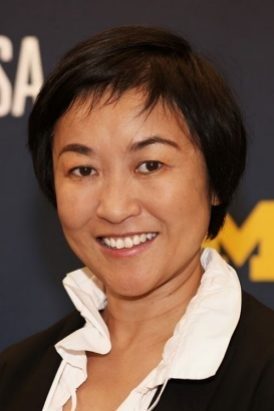
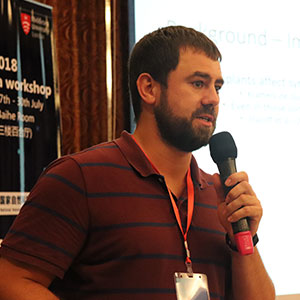
Fiona Lee is the Arthur F. Thurnau Professor of Psychology at the University of Michigan, with affiliations in Organizational Studies and the Advisory Committee. She holds a Ph.D. from Harvard University. Her research focuses on three core areas: Identity Integration (how individuals navigate multiple identities), Power Dynamics (effects of power on behavior), and Cultural Differences (impact of cultural contexts on organizations and individuals). She teaches courses on Organizational Psychology and Research Methods in Personality/Social Contexts. Lee’s work bridges social psychology and organizational behavior, emphasizing multicultural experiences and adaptation. Her recent studies explore refugee well-being, racial discrimination coping strategies, and the role of family in resettlement processes. Notably, she investigates how cultural identity integration influences creativity, decision-making, and social tolerance. Her publications span cross-cultural communication, biculturalism, and institutional barriers faced by minorities. Lee’s research often combines qualitative and quantitative methods to address real-world challenges in workplace dynamics and global mobility.
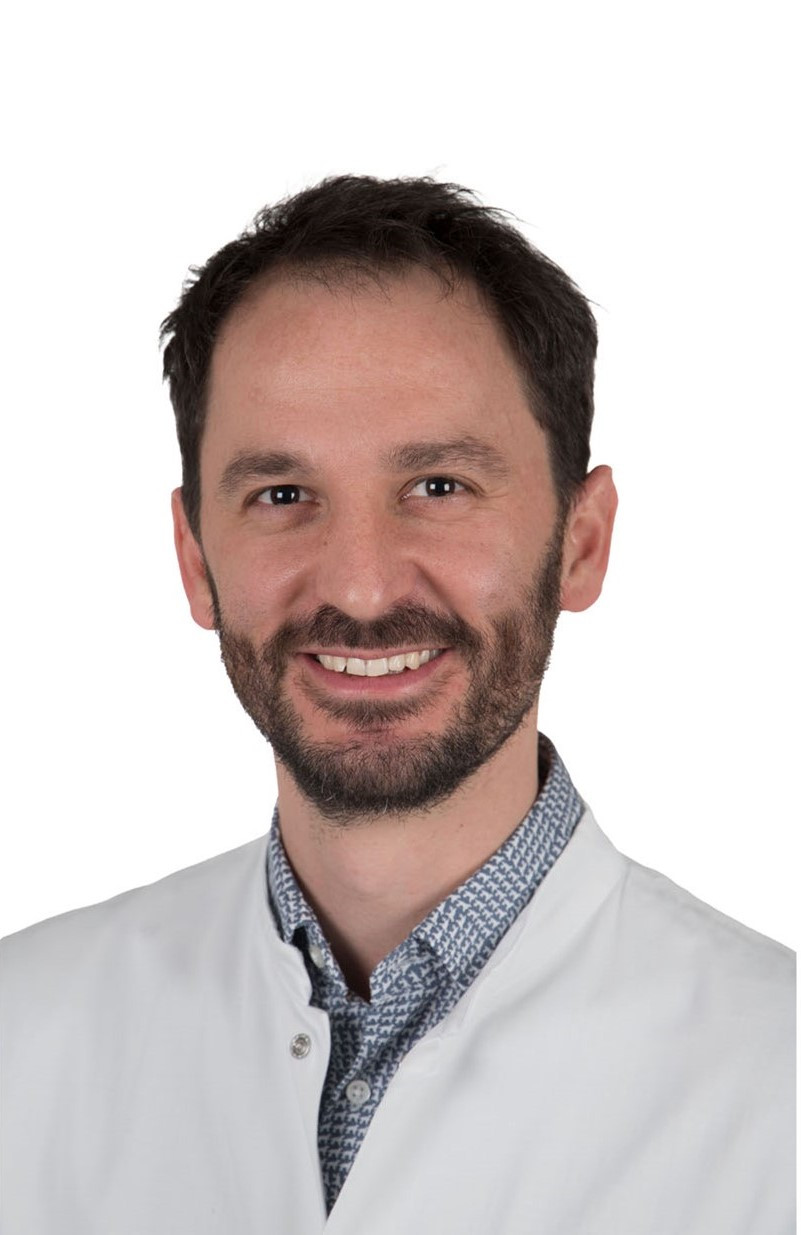
Matthew B. Blaschko is a Professor in the Department of Electrical Engineering at KU Leuven, Belgium. He serves as director of the KU Leuven ELLIS unit and is a fellow in the ELLIS Health program. He is a Core PI in the Flanders AI Research Program, working as a workpackage lead for Decision Support Systems and Medical Imaging. Blaschko is also a member of the KU Leuven Institute for Artificial Intelligence and one of the leaders of the working group on Machine Learning and Data Science. Professor Blaschko received his B.S. from Columbia University, M.S. from the University of Massachusetts Amherst, and Dr. rer. nat. from Technische Universität Berlin (awarded for work at Max Planck Institutes Tübingen). He was a Newton International Fellow at the University of Oxford and received his Habilitation (HDR) from École Normale Supérieure de Cachan. Prior to joining KU Leuven, he was a Permanent Research Scientist in the INRIA Saclay Research Center and a Faculty Member at Ecole Centrale Paris. His research focuses on machine learning techniques applied to visual data, with particular emphasis on calibration in deep learning, medical image analysis, and federated learning. Blaschko's work bridges theoretical foundations with practical applications, as evidenced by technology developed in his research being incorporated into MONA, software for ophthalmic image analysis. His research group has made significant contributions to the fields of model calibration, uncertainty estimation, and medical imaging analysis, with recent publications showing strong trends toward improving reliability of AI systems in medical contexts and advancing theoretical understanding of calibration metrics. Professor Blaschko has been recognized with several awards including the Université Paris-Saclay STIC Doctoral School Best Scientific Contribution Award, Best Paper Award at CVPR 2008, Main Award at DAGM 2008, and Best Student Paper Award at ECCV 2008. Professor Blaschko has supervised numerous PhD and Master's students, with current and former students including Deniz Soysal, Claire Marchal, Dongli Xu, Sebastian Gruber, Jiameng Li, Marco Mezzina, and many others working on diverse topics from Alzheimer's disease analysis to surgical phase recognition. His research has been supported by various funding sources including the Flanders AI Research Program. He has co-organized several influential workshops including the "Another Brick in the AI Wall: Building Practical Solutions from Theoretical Foundations" at CVPR 2025, Commands 4 Autonomous Vehicles workshop at ECCV 2020, and the Learning from Limited Labeled Data workshop series at NIPS 2017 and ICLR 2019. His laboratory focuses on machine learning for medical image analysis, with applications in ophthalmology, neurology, and surgical robotics. The group maintains active collaborations with medical institutions and participates in international challenges such as the KNee OsteoArthritis Prediction (KNOAP2020) challenge.
Dr. Ian Wilson is a researcher at Newcastle University with a focus on medical genetics, nephrology, and genomic analysis. His work spans genetic determinants of kidney diseases, mitochondrial disorders, and biomarker development. Notable contributions include studies on uromodulin genetics in African populations, copy-number variations in rare diseases, and kidney ciliopathies. He has collaborated extensively on projects involving genome sequencing, mitochondrial replacement therapy, and muscular dystrophy biomarkers. Wilson's research integrates computational tools like machine learning for predictive modeling in urolithiasis and employs advanced imaging techniques for disease progression monitoring. Key areas: Genetic epidemiology, renal genomics, mitochondrial DNA analysis Focus on translational applications: Biomarker development for kidney stones and muscular dystrophies Interdisciplinary collaborations in ophthalmology and orthopedics His publications reflect a commitment to advancing diagnostic accuracy and understanding complex genetic disorders through multi-omics approaches.
Peyman Karami is a Postdoctoral Researcher at the Laboratory of Biomechanical Orthopedics (LBO) within École Polytechnique Fédérale de Lausanne (EPFL)'s College of Engineering . Research focuses on adhesive hydrogels for cartilage repair and orthopedic applications Investigates biomimetic stimuli (hydrostatic pressure, temperature) in chondrocyte homeostasis Develops ligin-based multifunctional hydrogels for sustainable biomedical applications Expertise in mechanobiology and thermomechanical regulation of tissue-engineered constructs Scientific Contributions: Leads 15+ publications on hydrogel technologies for cartilage regeneration, thermomechanical stimulation effects, and lignin functionalization, including breakthrough work in NIR-light photocuring , malacic trachea repair , and biomimetic temperature gradients . Current Research Trends: Prioritizes injectable adhesive hydrogels , noninvasive tissue repair , and multi-functional biomaterials that couple mechanical and biochemical cues for enhanced regeneration.
Prim. Clin. Assoc. Prof. PD Dr. Dietmar Dammerer, MSc PhD is the head of the Clinical Department of Orthopaedics and Traumatology at Krems University Hospital, affiliated with Karl Landsteiner Private University of Health Sciences. He has been in this role since February 2022, leading the merger of orthopedics and traumatology into a unified clinical department. A dual-trained specialist, he is recognized for his expertise in endoprosthetics and tumor orthopedics, and actively promotes interdisciplinary collaboration and team-based medicine. His educational background includes a PhD in Musculoskeletal Sciences (2015), an MSc in Advanced Orthopaedics and Traumatology (2017), and board certification in both orthopedics and traumatology (2017, 2018), culminating in habilitation in 2019. He has received prestigious Traveling Fellowships from the European Hip Society and European Musculo-Skeletal Oncology Society. Dietmar Dammerer’s research focuses on orthopedic oncology, joint reconstruction, biomechanics, and minimally invasive surgery. His work emphasizes the integration of clinical inquiry with research to improve patient outcomes. Recent publications analyze pelvic sarcoma reconstruction, spinal metastases, cartilage repair techniques, and health disparities in sarcoma care. His 15 most recent articles reflect a strong trend in musculoskeletal oncology, surgical biomechanics, and evidence-based orthopedic practice, with frequent use of systematic reviews, retrospective studies, and multicenter collaborations. Topics include implant performance, surgical safety, and global access to specialized care. Scientific awards include: Traveling Fellow Stipendium from the European Hip Society (2018) Traveling Fellow Stipendium from the European Musculo-Skeletal Oncology Society (2020) He is deeply committed to mentoring and team development, emphasizing that medical success is measured by the success of one’s colleagues. He leads a research-active department that hosts international observers, conducts training courses for physicians across Europe, the Middle East, and Africa, and maintains a high rate of peer-reviewed publication. The department collaborates closely with the Departments of Biomechanics and Anatomy and Developmental Biology, reflecting a multidisciplinary research approach.
Brian Horsak is a Professor and Head of the Center for Digital Health and Social Innovation at Fachhochschule Steyr. He holds an endowed professorship in Applied Biomechanics and Rehabilitation Research, focusing on integrating advanced technologies like VR/AR, machine learning, and wearable devices into clinical gait analysis and motor rehabilitation. His roles include leading the Institute of Health Sciences and contributing to the Department of Health Sciences and Media and Digital Technologies. Education: Dr. rer. nat. (2012, University of Vienna), Habilitation in Kinesiology (2020, University of Vienna), Master's in Sports Science (2002–2008, University of Vienna). Research interests revolve around improving patient care through biomechanical innovations, including musculoskeletal simulations, gait pattern analysis, and rehabilitation technologies. He leads projects like ReMoCap-Lab (motion capture for motor rehabilitation) and chairs the Applied Biomechanics in Rehabilitation Research initiative. Key achievements include the Lower Austria Innovation Prize (2021), multiple best paper awards, and grants for projects like TRUST AI and VReeze. His work bridges clinical practice with digital health solutions, emphasizing explainable AI (XAI) in gait classification and VR-based balance training. Notable contributions include developing the GaitRec dataset and studies on smartphone-based motion capture reliability. He collaborates internationally, publishing widely in Gait & Posture , Scientific Reports , and IEEE journals. Current projects focus on AI-driven gait analysis, musculoskeletal modeling, and XR applications in healthcare.
Dr. Philippe Dixon is an Assistant Professor in the Department of Kinesiology & Physical Education at McGill University, with a division in Biomechanics and Neuroscience. He holds adjunct professor roles at the University of Montreal (School of Kinesiology and Physical Activity Sciences) and the University of Laval (Department of Kinesiology). His research focuses on human movement biomechanics using motion capture systems and wearable sensors, combined with machine learning for health and athletic performance optimization. He has expertise in gait analysis, muscle coactivation patterns in cerebral palsy, and predictive modeling of physiological states. Dr. Dixon earned a Post-doctoral fellowship in Public Health at Harvard University, a PhD in Engineering Science from the University of Oxford, and dual degrees in Biomechanics and Physics from McGill University. His education includes a Bachelor of Education in Mathematics and Physics (McGill), a Master of Science in Biomechanics (McGill), and a PhD in Engineering Science (Oxford). He has received grants such as the NSERC Discovery Grant (2022–2027) and the FRQSC AUDACE Grant (2022). His work emphasizes wearable sensor integration, with contributions to datasets like NACOB and tools like OpenOFM. He currently supervises Master’s and PhD students in biomechanics and machine learning applications. Key research themes include gait adaptations on uneven surfaces, machine learning for cough detection via smart garments, and musculoskeletal coordination in clinical populations. His articles span biomechanical modeling, wearable sensor validation, and neuro-musculoskeletal analysis, reflecting interdisciplinary innovation in human movement science.
Dr. Anne Koelewijn is an Assistant Professor leading the Biomechanical Motion Analysis and Creation (BioMAC) group at Friedrich-Alexander-Universität Erlangen-Nürnberg (FAU) since 2019. Her research bridges biomechanics, computational modeling, and wearable technology to analyze human movement. She holds a Junior Professorship in Computational Movement Science within the Department of Electrical-Electronic-Communication Engineering. Her educational background includes a Doctor of Engineering in Mechanical Engineering from Cleveland State University (focus: prosthesis design and gait simulations), an MSc in Mechanical Engineering (BioMechanical Design specialization), and a BSc in Aerospace Engineering , both from Delft University of Technology. She completed postdoctoral work at École Polytechnique Fédérale de Lausanne on neuromuscular control. Research interests center on human movement optimization , neuromuscular control mechanisms , and in-the-wild movement analysis . Her work integrates musculoskeletal modeling, optimal control theory, and machine learning to study gait adaptations, exoskeleton design, and pathological movement patterns (e.g., Parkinson’s disease). Publications emphasize predictive simulations , wearable sensor technology , and biomechanical energy optimization , with recent advances in radar-based motion capture, inertial pose estimation, and digital twin applications for medical engineering. Promising Scientist Award , International Society of Biomechanics (2023) Best Paper Award , 5th International Symposium on Wearable Robotics (2020) She leads the BioMAC research group, focusing on computational methods for movement science and collaborating internationally on projects involving exoskeletons, injury prevention, and neuroprosthetics.
Jo Nijs is a Professor at Vrije Universiteit Brussel (VUB), affiliated with the Department of Physiotherapy, Human Physiology and Anatomy. His work focuses on chronic pain mechanisms, chronic fatigue syndrome, and neurophysiological adaptations. He leads the 'Pain in Motion' research group and has authored over 950 publications with an h-index of 73. Research interests include: chronic musculoskeletal pain pathophysiology, central sensitization, and translational strategies for pain management. Notable projects include investigating epigenetic mechanisms in chronic pain and interdisciplinary approaches to osteoarthritis treatment. Recipient of the 2020 Francqui Collen Chair and 2017 Excellence in Research Award Supervised 73 students in physiotherapy and pain science Active in international collaborations across 25+ countries Recent research emphasizes pain neuroscience education efficacy, pain-sleep interactions, and immune mechanisms in chronic conditions. His work bridges clinical practice with advanced neuroimaging and molecular biology techniques.
Dr Stuart Miller is an Associate Professor (Reader) in Human Biomechanics and Academic Lead for Equality, Diversity, and Inclusion (EDI) at Queen Mary University of London's William Harvey Research Institute, Faculty of Medicine and Dentistry. He leads the Sports and Exercise Medicine Centre, managing the Human Performance Lab and teaching biomechanics, research methods, and rehabilitation modules. His academic background includes a BSc from Bath University and a PhD from Brunel University focusing on EMG-driven modeling of tibialis anterior force. He is a Fellow of the Higher Education Academy since 2012. Research focuses on neuromuscular and biomechanical aspects of human movement, particularly in populations with musculoskeletal injuries/diseases like tendinopathy, knee injuries, and post-traumatic osteoarthritis. He collaborates with internal researchers (Dr Ildar Farkhatdinov, Prof Francesco Dell'Accio) and external experts (Prof Anthony Blazevich). His work integrates clinical biomechanics, sports science, and statistical analysis to improve diagnostic frameworks and rehabilitation strategies. Teaching includes coordinating the Medical pathway for MSc Sport and Exercise Medicine and leading modules on Biomechanics and Rehabilitation (iBSc), Research Methods, and Research Projects (MSc). His applied research bridges theory and practice, addressing real-world sports medicine challenges through innovative technologies like robotic balance augmentation and advanced kinematic analysis.
Dr. Samantha Spencer is an Assistant Professor of Orthopedic Surgery at Harvard Medical School and a practicing Orthopedic Surgeon at Boston Children's Hospital, where she serves as Director of the Lower Extremity and Deformity Program. She has been on staff since 2006, specializing in congenital and traumatic pediatric orthopedic conditions. Her clinical practice spans Boston, Waltham, and Weymouth locations. Education: Northwestern University (BS, 1996) University of Michigan Medical School (MD, 2000) Harvard Combined Orthopedic Residency Program (Residency, 2005) Boston Children's Hospital (Pediatric Orthopedic Fellowship, 2006) Research Focus: Dr. Spencer's work centers on lower extremity reconstruction, bone dysplasias (particularly osteogenesis imperfecta), and vascular anomalies. She collaborates with multidisciplinary programs including the Osteogenesis Imperfecta Clinic, Vascular Anomalies Center, and Lower Extremity Research Group. Her publications emphasize surgical outcomes, classification systems, and clinical guidelines for rare orthopedic and vascular conditions. Publications: Her recent work demonstrates strong focus on pediatric orthopedic surgery outcomes (68% of last 15 papers), with secondary themes in vascular anomalies (20%) and developmental biology (12%). Notably, 40% involve multicenter collaborations addressing complex disorders like skeletal dysplasia and tarsal coalition. Community Engagement: Dr. Spencer provides national outreach through patient advocacy organizations including Little People of America, Osteogenesis Imperfecta Foundation, and CLOVES Foundation Medical Advisory Board.
Sami Äyrämö is an Associate Professor at the Faculty of Information Technology , University of Jyväskylä. His research bridges machine learning and health science , focusing on innovative applications in biomechanics , medical imaging , and exercise physiology . Specializes in automated scoring systems for medical diagnostics Pioneer in domain-specific transfer learning for healthcare data Develops synthetic data for wellbeing sector innovation His work spans colorectal cancer tissue analysis , ACL injury risk modeling , and dementia detection from speech , with recent studies applying cluster analysis and deep learning to sports biomechanics challenges. Current projects include the WellbeingDataLab initiative for synthetic exercise data, and collaborations with the Computational Data Science Research Group on spectral imaging and health analytics.
Navid Faraji, MD is an Assistant Professor in both the Department of Radiology and Department of Anatomy at Case Western Reserve University School of Medicine. He also serves as Associate Program Director for the Diagnostic Radiology Residency at UH Cleveland Medical Center, where he actively mentors medical students and residents in radiology research initiatives. University: Case Western Reserve University School: School of Medicine Departments: Radiology, Anatomy Academic Rank: Assistant Professor Email: navid.faraji@uhhospitals.org His research spans two primary domains: Radiology Education and Musculoskeletal Imaging . Recent publications demonstrate expertise in: Educational technology integration (e.g., Anki flashcards) Emergency fracture detection tool validation Bone marrow edema patterns in athletes/military trainees Gender equity initiatives in radiology pipeline AI-human collaboration in diagnostic imaging Cross-modality image registration techniques Scientific accolades include the Wei-Shen Chin Award for Medical Student Teaching (2022) . His 2023-2025 publications focus on optimizing radiology workflows, ballet dancer injuries, and incidental lesion analysis, with emerging themes in synthetic imaging and psychological safety frameworks.
Delphine Périé-Curnier is a Full Professor in the Department of Mechanical Engineering at Polytechnique Montréal and Director of Graduate Studies. Her research focuses on developing quantitative MRI techniques for non-invasive characterization of living tissue mechanical properties, particularly in cardiotoxicity detection and musculoskeletal mechanobiology . She leads the Bioperformance Analysis and Innovation Laboratory (LIAB) and contributes to the Institute of Biomedical Engineering. Education: Ph.D. from Paul Sabatier University, Toulouse, France Her work bridges medical imaging , biomechanical modeling , and finite element analysis to predict disease progression through pathomechanism understanding. Key projects include exercise-induced cardiac changes in childhood cancer survivors and spinal biomechanics in scoliosis. Recent publications (2023-2024) emphasize cardiovascular MRI for childhood cancer survivorship and hemodynamic modeling in left ventricle analysis. She supervises 26 graduate students, with completed theses spanning topics like doxorubicin cardiotoxicity , knee replacement stability , and spatial cardiac MRI protocols . Teaching includes graduate courses in biomedical design , advanced biomechanics , and modeling techniques .
Jef Vandemeulebroucke is a researcher at the Department of Electronics and Informatics , Vrije Universiteit Brussel (VUB) , specializing in medical imaging, computer vision, and augmented reality applications in healthcare. His work bridges artificial intelligence with radiology and biomechanics , focusing on automated segmentation, predictive modeling, and real-time surgical navigation systems. Research interests include: Medical image analysis for disease prognosis (e.g., COVID-19 severity , neurosurgical drains ) Development of MedShapeNet , a 3D medical shape dataset for computer vision Augmented reality systems in orthopedic and neurosurgical interventions AI-driven fluorescence endoscopy and dynamic CT for joint kinematics Key trends in his 140+ publications emphasize deep learning , image registration , and 4D-CT applications . Supervised theses include brain age prediction and chest radiography automation. Active in 38 projects (e.g., AI-NIMO , TumorScope ), he collaborates with institutions like the Universitair Ziekenhuis Brussel (UZB) and FWO (Fund for Scientific Research-Flanders).