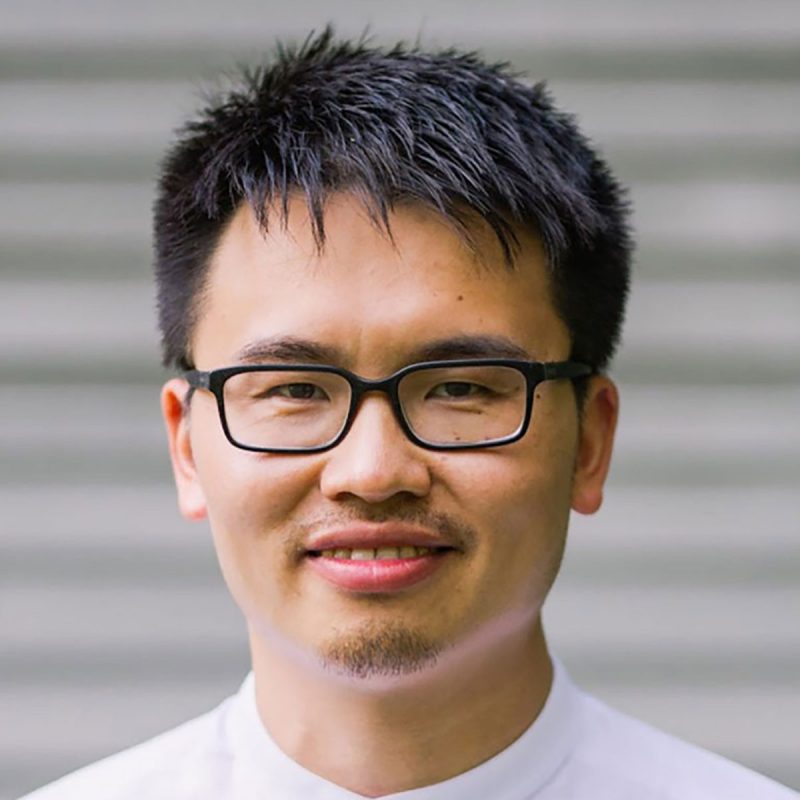
Prof. Dr. Dennis Säring is a faculty member at the University of Applied Sciences Wedel , specifically affiliated with the School of Engineering. His academic and research activities focus on Deep Learning , Medical Image Analysis , and applications of Artificial Intelligence in healthcare and biomedical imaging. He has led seminars on Deep Learning topics and supervised student projects in Autonomous Driving at Audi's AADC 2018 competition. Research Highlights : Cardiovascular imaging, forensic age estimation via MRI, neural network-based bone segmentation, and cerebrovascular aneurysm analysis. Technical Expertise : Cardiac MRI, 3D/4D image processing, parametric mapping, and spatiotemporal data fusion. His recent publications (2018-2023) emphasize 3D MR segmentation for age assessment, CMR strain analysis in athletes, and T1/T2 mapping for myocarditis. Key collaborations include institutions like the University Medical Center Hamburg-Eppendorf and Wedler Hochschulbund, with funding for autonomous vehicle research. While no explicit scientific awards are listed, his work spans clinical cardiology, forensic radiology, and AI-driven medical diagnostics.
Professor Mark King is a leading academic in Sports Biomechanics at Loughborough University, affiliated with the School of Sport, Exercise and Health Sciences, where he serves as Lead for the Sport Performance Research Theme. He holds a BSc (1993) and PhD (1998) in Mathematics and Sports Science from Loughborough, with career progression from Lecturer (1999) to Senior Lecturer (2006), Reader (2012), and Professor (2019). He is also Warden of Royce Hall since 1999, overseeing 375 students' welfare. Education: BSc in Mathematics and Sports Science (1993), PhD in subject-specific computer simulation of dynamic jumping (1998). Affiliations: England and Wales Cricket Board (ECB), International Cricket Council (ICC), Badminton World Federation, Lawn Tennis Association. His research focuses on optimizing elite sport performance through biomechanical analysis, particularly in cricket and badminton. Key areas include injury prevention (e.g., ACL risks in badminton, lumbar stress injuries in cricket bowlers) and technique optimization. He has pioneered ICC-accredited testing for illegal bowling actions and explored machine learning applications in data collection. His work highlights trends in cricket fast bowling kinematics, racket sports smash mechanics, and gender-specific performance metrics. He actively collaborates with national and international sports organizations to translate research into practical guidelines for athletes and coaches. Awards: None explicitly mentioned in the text. Grants/Advising: No listed advisees, but extensive industry partnerships support his research. Labs/Teams: National Centre for Sport and Exercise Medicine (NCSEM), part of his research infrastructure.
Dr. Seyyed Hamed Hosseini Nasab is a Lecturer at the Department of Health Sciences and Technology at ETH Zürich, affiliated with the Institute for Biomechanics and the Laboratory for Movement Biomechanics. His research focuses on biomechanical analysis of musculoskeletal systems, particularly knee mechanics, implant design, and ligament behavior in total knee arthroplasty. He integrates experimental, computational, and clinical approaches to improve surgical techniques and prosthetic design. Key research interests include knee joint loading, ligament elongation patterns, and the influence of implant conformity on post-surgical outcomes. He has contributed to standardized methods for measuring tibiofemoral implant loads and kinematics, earning the European Society of Biomechanics SM Perren Award in 2022. His publications emphasize computational modeling, in vivo testing, and finite element analysis to address challenges in orthopedic engineering. Recent work explores artificial neural networks for real-time knee contact force estimation and the biomechanical implications of surgical procedures like posterior cruciate ligament substitution.
Dr. Rene Ferdinands is a Lecturer at the University of Sydney's School of Health Sciences, specializing in sports biomechanics, particularly in cricket and golf. He leads research programs focused on optimizing techniques and minimizing injury risks, such as lumbar load analysis in fast bowlers and spin bowling biomechanics. His work includes developing 3D models for analyzing bowling actions and spin delivery mechanics. Education: MSc and PhD from the University of Waikato. Research Themes: Cricket biomechanics, golf swing dynamics, equine biomechanics, and injury prevention. Professional Roles: Editor of the Cricket Coaching Information service for the International Society of Biomechanics in Sports, Honours Committee Member. His research interests span biomechanical analyses of sports techniques, including the development of smart cricket balls for performance assessment and injury mitigation. Key contributions include refining bowling action legality criteria and advancing understanding of lumbar kinetics in elite athletes. He actively supervises Honours and PhD students in biomechanics research across cricket, golf, and other sports. Notable grants include studies on hydration status in cricket performance (2008), lumbar injury prevention (2013), and biomechanical modeling of fast bowling (2009). His work bridges applied research with practical applications in sports technology and athlete development. Dr. Ferdinands collaborates with the Biomechanics Research Team at the University of Sydney, focusing on innovative tools like smart balls and advanced motion analysis techniques to improve sports performance and safety.
Dr. Christina Allen is a Professor of Orthopaedics & Rehabilitation at Yale School of Medicine, where she serves as Chief of Yale Sports Medicine and Vice Chair of Athletic Medicine and Community Outreach. She is the Orthopaedic Team Physician for Yale Athletics and has extensive experience with U.S. national teams, including U.S. Soccer and USA Taekwondo. Education: BS in Biomedical Engineering, Duke University (1983); MD, UCLA School of Medicine (1995) Training: Orthopaedic Residency and Sports Medicine Fellowship, University of Pittsburgh Research Interests focus on: Revision ACL reconstruction outcomes and predictors Meniscus transplantation and cartilage repair Proximal hamstring avulsion repair Quantitative MRI for joint kinematics and cartilage changes Post-ACL revision infection risk factors Scientific Awards include: Kappa Delta Ann Doner Vaughn Award (2019) NIH R01 Competitive Renewal Grant (2017) AOSSM O’Donoghue Award (2014) Clinical Roles span: Team physician for U.S. Soccer (Women's/Men's National Teams) Former team physician for San Francisco Deltas (NASL Champions 2017) Medical Board member, World Taekwondo (London Olympics 2012, Rio Olympics 2016) Publications highlight a 20-year longitudinal focus on: Machine learning models for surgical outcome prediction Graft choice impact on revision ACL longevity Cartilage degeneration after meniscectomy Biomechanical MRI analysis of joint kinematics Infection rates in revision surgeries Return-to-sport protocols for athletes
Professor Amin Abbosh is a faculty member at the School of Electrical Engineering and Computer Science, University of Queensland. His research focuses on Medical Microwave Imaging and Millimeter-wave Engineering, with contributions to advanced imaging systems, antenna design, and communication technologies. He leads projects in electromagnetic medical sensing, including portable brain scanners and wearable diagnostic systems. His work integrates applied electromagnetics with AI-driven algorithms, addressing challenges in stroke detection, liver health monitoring, and deep vein thrombosis diagnosis. With over 16 patents and collaborations across biomedical and engineering domains, his research bridges clinical needs with cutting-edge electromagnetic techniques. Key projects include the development of low-cost healthcare monitoring systems and reconfigurable antennas for satellite communications. Research interests span medical imaging systems, antenna array design, and signal processing for healthcare applications. His team innovates in areas like phased arrays, dielectric property analysis, and non-invasive diagnostics. Recent advancements include synthetic microwave focusing techniques and self-supervised deep learning models for clutter removal in imaging. Publications highlight contributions in IEEE journals and conferences, emphasizing clinical applications and device prototyping. Collaborations with institutions like the University of Queensland’s medical faculty and industry partners ensure practical implementation of his research.
Qingguo Li is a Professor and Associate Head at the Department of Mechanical and Materials Engineering , Queen's University , and a member of the Ingenuity Labs Research Institute . He specializes in biomechanical system design, energy harvesting, wearable sensors, gait analysis, and load carriage systems. His research integrates robotics, biomedical engineering, and sensor technology to develop human-centric devices and mobility aids. Current Roles : Professor, Associate Head, Queen's University Research Institute : Ingenuity Labs Research Institute Lab : Bio-Mechatronics and Robotics Laboratory His work focuses on biomechanical energy harvesting , IMU-based motion analysis , and assistive device development . Key applications include stroke rehabilitation, gait monitoring, and wearable power generation systems. Articles span cable-driven robots , smart walkers , and 3D printing mechanisms , emphasizing human-robot interaction and dynamic modeling . The lab explores sensor calibration , adaptive control algorithms , and human movement optimization . Areas of impact include rehabilitation engineering , load carriage stability , wearable sensor accuracy , and assistive robotics . His team develops solutions for gait asymmetry detection , post-stroke mobility , and low-cost energy systems , leveraging machine learning and kinetic modeling .
Anastassios Karistinos, M.D., is an Assistant Professor in the Department of Orthopedic Surgery at Baylor College of Medicine. He holds clinical roles at Ben Taub Hospital, Baylor Clinic, and the Michael E. DeBakey VA Medical Center in Houston, Texas. Dr. Karistinos completed his medical degree (MD) at Aristotle University of Thessaloniki (1993), followed by residency at Louisiana State University Health Sciences Center (2005) and a fellowship in Advanced Orthopaedics and Sports Medicine (2005). His professional interests focus on complex musculoskeletal conditions including multi-ligament knee injuries, meniscal transplantation, cartilage restoration techniques (OATS, ACI), knee osteotomies, shoulder instability, rotator cuff injuries, and shoulder arthroplasty. He emphasizes patient safety and critical evaluation of emerging medical technologies, prioritizing evidence-based treatments. Dr. Karistinos is certified by the American Board of Orthopaedic Surgery in both Orthopaedic Surgery and Orthopaedic Sports Medicine. He is a Fellow of the American Academy of Orthopaedic Surgeons and specializes in sports medicine, arthroscopic surgery, and trauma care. His research integrates anatomical insights with clinical outcomes to improve surgical techniques and patient recovery processes.
Matthew Garver is a Professor and Chair of the Department of Nutrition, Kinesiology, and Health at the University of Central Missouri (UCM). He joined UCM in Fall 2016 after completing his Ph.D. in Exercise Science at The Ohio State University and teaching for five years in Abilene, Texas. Education: Ph.D. in Exercise Science (The Ohio State University) Garver’s research focuses on applied human performance, with emphasis on resistance training, interlimb asymmetry in athletes, and the intersection of exercise science with diversity, equity, and inclusion (DEI). His work spans collegiate sports, track and field, and health interventions for special populations. Recent publications highlight his exploration of artificial intelligence in sport science ethics, DEI initiatives in exercise research, and position-specific training in collegiate female soccer. His studies also address exercise-induced bronchoconstriction, biomechanical asymmetry in American football players, and affective responses to resistance training. Garver has contributed to understanding physical activity’s role in older adults, particularly patients with knee osteoarthritis, through the IMPACT-P trial. His interdisciplinary approach bridges kinesiology, physiology, and social science in promoting health and athletic performance. At UCM, he teaches courses in Kinesiology and leads research initiatives aimed at optimizing human performance and health outcomes through evidence-based strategies.
Dr. Shirley Coyle is an Assistant Professor in the School of Electronic Engineering at Dublin City University (DCU) and Programme Chair for the BSc Global Challenges. She holds a BEng in Electronic Engineering from DCU (2000) and a PhD in Biomedical Engineering from NUI Maynooth (2005). Her career includes roles as a Telecoms Engineer at Siemens, Research Fellow at the National Centre for Sensor Research, and Team Leader of Wearable Sensors in the INSIGHT Centre for Data Analytics. She also studied part-time at the Grafton Academy for Fashion Design and later founded a consultancy in wearable technologies. Her research focuses on smart garments, wearable sensors, and sustainable textiles, with applications in healthcare, sports performance, and S.T.E.A.M. integration. Key interests include developing wearable chemical sensors, energy-autonomous sensing systems, and IoT-enabled rehabilitation devices. She has pioneered work on wearable sensors for monitoring chronic diseases, athlete training, and home rehabilitation using VR. Dr. Coyle’s work spans interdisciplinary collaboration, combining biomedical engineering with textile design. Her contributions include innovations in electrospun textiles, self-powered sensors, and sensor integration with microfluidics. She has held leadership roles in DCU’s Governing Authority and promotes STEM education through design-focused initiatives.
Dr. Kris Beattie is a Lecturer in the Department of Sport and Health Science at Technological University Dublin (TU Dublin). He specializes in sports science education, coordinating modules such as Human Physiology 2, Sport & Exercise Physiology, and Applied Coaching Science. His research focuses on the physiological adaptations of strength, speed, and endurance training in athletes, particularly in endurance athletes and combat sports like boxing. Beattie holds a PhD from the University of Limerick (2012–2016), an MSc in Sports Physiology from Liverpool John Moores University (2008–2009), and a BSc (Hons) in Sport and Exercise Sciences from Ulster University (2005–2008). He is a UKSCA-accredited Strength & Conditioning coach. Beattie’s research interests include strength training modalities for sprint performance, physiological adaptations in Gaelic football and boxing, and the biomechanics of athletic movements. His work bridges theoretical and applied aspects of sports science, emphasizing practical applications in coaching and athlete development. Recent studies explore sprint testing methods in Gaelic games, strength characteristics of female athletes, and the role of maximal strength in punch impact force in boxing. His publications span peer-reviewed journals like the International Journal of Performance Analysis in Sport and Journal of Strength and Conditioning Research , with a focus on systematic reviews and empirical studies. Though no specific awards are listed, his h-index of 7 reflects growing recognition in sports physiology. Beattie actively collaborates with sports organizations and coaches to inform evidence-based training practices. He currently contributes to TU Dublin’s BSc (Hons) Sports Science with Exercise Physiology program, integrating his research into teaching. Future work likely continues exploring interdisciplinary approaches to athlete development and performance optimization.
Yan Ma serves as Professor and Chair of Biostatistics at the University of Pittsburgh, with additional appointments in Orthopaedic Surgery and Clinical and Translational Science. Previously, he was Professor and Vice Chair at George Washington University Milken Institute of Public Health (2014-2022) and Assistant Professor at Hospital for Special Surgery/Weill Cornell Medical College (2008-2014). His educational background includes: PhD in Statistics, University of Rochester (2008) MA in Statistics, University of Rochester (2004) MS in Mathematics, Syracuse University (2003) BS in Statistics, Beijing Normal University (2001) Ma's research centers on advanced statistical methodologies including missing data imputation, machine learning, meta-analysis, causal inference, and longitudinal methods, applied across orthopedics, anesthesiology, health disparities, and emergency medicine through team science and translational research frameworks. His publication trajectory demonstrates sustained innovation from methodological foundations (2008-2012) to contemporary applications in health disparities and machine learning (2016-2022), consistently addressing complex biomedical challenges through high-impact journals like JAMA and Health Services Research. His scientific recognition includes: ASA's Statistics in Epidemiology Young Investigator Award (2010) Interorganizational Team Science Award (2012) ORISE FDA Research Fellowship (2017) APHA Achievement in Academia Award Ma has secured R01 funding from NIH/AHRQ for missing data methods in health disparities research while serving as Associate Editor for ASA journals and reviewer for NIH/PCORI/VA panels, demonstrating leadership in statistical methodology development and interdisciplinary collaboration. His team-science approach bridges statistical innovation with clinical implementation across orthopedics and anesthesiology, driving evidence-based practice through methodological rigor and cross-disciplinary partnerships.
Anthony A Gatti is a Postdoctoral Scholar at Stanford University's Wu Tsai Human Performance Alliance and School of Medicine. His research integrates biomechanics , medical imaging , and machine learning to advance musculoskeletal health diagnostics, particularly focusing on knee osteoarthritis and exercise physiology. Education : Ph.D. in Rehabilitation Science (McMaster University, 2021), M.Sc. in Rehabilitation Science (McMaster University, 2015), B.Sc. in Kinesiology (McMaster University, 2013) His research develops automated tools for quantifying knee anatomy and integrating anatomical data with biomechanical models . These methods analyze acute responses to exercise and long-term joint degeneration, leveraging MRI , deep learning , and statistical shape modeling . Recent publications emphasize AI-driven segmentation , exercise-induced cartilage changes , and biomechanical simulations , spanning journals like Magnetic Resonance in Medicine and Arthritis & Rheumatology . Trends include machine learning validation for clinical predictions and open-source tool development for musculoskeletal analysis. Scientific Awards : CIHR Postdoctoral Fellowship (top 1%), Mitacs Accelerate Entrepreneur, Forge Student Start-Up Competition Winner, multiple scholarships from McMaster University He founded NeuralSeg , a company commercializing deep learning-based MRI segmentation technology. Collaborations include Stanford's Digital Athlete Moonshot Project with advisors like Scott Delp and Garry Gold.
Suyi Li is an Associate Professor in the Department of Mechanical Engineering at Virginia Tech's College of Engineering, where he leads the Dynamic and Architected Robot and structurE (DARE) Lab. Previously, he served as an Assistant Professor at Clemson University from 2016-2022 after completing postdoctoral research at the University of Michigan. Ph.D. in Mechanical Engineering, University of Michigan, Ann Arbor (2014) M.Sc. in Mechanical Engineering, Pennsylvania State University (2008) B.S. Summa Cum Laude in Mechanical Engineering, University of Michigan, Ann Arbor (2006) Dr. Li's research focuses on pioneering new paradigms of intelligent robots and functional structures by exploiting the interplay between geometry, mechanics, actuation, and computation. His work spans origami-inspired morphing structures, physically computing materials that perform machine learning tasks without traditional electronics, and soft/reconfigurable robots that can move like animals or grow like plants. His innovative approach combines mechanical engineering principles with computational thinking to create systems with 'mechano-intelligence'. Analysis of Dr. Li's recent publications reveals a strong trajectory toward embodied intelligence and mechanical computing, where physical structures themselves perform computational tasks. His work increasingly integrates origami/kirigami principles with advanced materials to create systems that can sense, process information, and actuate without conventional electronics. The research shows progression from fundamental mechanics of adaptive structures to sophisticated applications in robotics and computing. Dean's Awards of Excellence – Faculty Fellow, Virginia Tech (2024) C.D. Mote Jr Early Career Award, ASME Design Engineering Division (2022) Gary Anderson Early Achievement Award, ASME Aerospace Division (2021) Junior Researcher of the Year Award, College of Engineering, Clemson University (2020) CECAS Dean's Faculty Fellow, Clemson University (2018) CAREER Award, National Science Foundation (2018) ASME Freudenstein Young Investigator Award Dr. Li has secured nearly two million dollars in research funding, including the prestigious NSF CAREER award and an NSF EFRI project to build mechano-bio hybrid reservoir computers. He advises multiple Ph.D. and Master's students in the DARE Lab, with recent successes including Vishrut Deshpande's Ph.D. defense. His research has generated close to 80 journal and conference papers, demonstrating significant impact in the fields of adaptive structures and materials systems. Dr. Li also serves on editorial boards for several prominent journals including Journal of Intelligent Material Systems and Structures and Philosophical Transactions of the Royal Society A. The DARE Lab at Virginia Tech comprises a multidisciplinary team of researchers working on origami-inspired meta-structures, physically computing materials, and soft robotics. Current projects include developing electronics-free crawling robots with mechanical central pattern generators, creating kirigami-based wearable medical devices, and engineering metamaterials with programmable mechanical properties. The lab actively collaborates with institutions across the country and has received recognition for its innovative approaches to combining mechanical design with computational capabilities.
Dr. James Ashton-Miller is a prominent faculty member in the Department of Mechanical Engineering at the University of Michigan, where he directs the Biomechanics Research Laboratory. He serves as a Center Member of the University of Michigan Injury Prevention Center and maintains affiliations with the Institute of Gerontology. His interdisciplinary work bridges engineering principles with medical applications, focusing on injury prevention across sports medicine, obstetrics, and geriatrics. Dr. Ashton-Miller's educational background includes: PhD from the University of Oslo, Oslo, Norway (1978-1983) MSME from M.I.T., Cambridge, MA, U.S.A (1972-1974) B.SC. (Hons) from the University of Newcastle-upon-Tyne, Newcastle-upon-Tyne, England (1967-1972) His research focuses on the biomechanics of injury prevention across multiple critical domains. In sports medicine, he has demonstrated that some ACL injuries are overuse injuries resulting from too many sub-maximal loading cycles that prevent healing of collagen damage. In women's health, his work on childbirth injuries addresses conditions that affect more women than breast cancer. His research on fall-related injuries in older adults reveals the dual threat of physical and cognitive factors. He also investigates sciatica, disc degeneration, and develops new medical devices for screening, diagnosis and treatment. Dr. Ashton-Miller's recent publications show a strong trend toward developing practical clinical applications from fundamental biomechanical research, with emphasis on advanced imaging methods, wearable sensors, and computational modeling for pelvic floor function assessment. His work consistently aims to translate engineering insights into clinical solutions for injury prevention. His research insights have earned him numerous national and international research awards, though specific awards aren't detailed in the available information. His work involves close collaboration with clinicians and surgeons who meet weekly to discuss progress and next steps. Dr. Ashton-Miller is deeply committed to mentoring, working with NIH K-series fellows along with 1-2 post-doctoral fellows, 3-5 PhD students, 2-4 M.S. students, 4-5 undergraduate students, and 2-4 young clinicians. His research is generously supported by the National Institutes of Health, National Science Foundation, National Basketball Association, Fortune 500 companies, and startup companies including Procter & Gamble and Hologic, Inc. He directs the Biomechanics Research Laboratory and co-leads the Pelvic Floor Research Group, where his teams develop new medical devices to improve screening, diagnosis, and treatment of various biomechanical conditions. These laboratories maintain strong clinical connections, ensuring research remains grounded in real-world medical challenges.