Danny Raz is a Professor at the Technion - Israel Institute of Technology, specializing in computer science and networking. His work focuses on cloud computing, network function virtualization (NFV), resource allocation, and online algorithms. Institution: Technion - Israel Institute of Technology, Haifa, Israel Research interests include: Network Function Virtualization (NFV) and service chaining Stochastic and dynamic resource allocation Online algorithms in random-order models 5G/edge computing infrastructure Blockchain network analytics Over the past decade, his publications in venues like IEEE/ACM Transactions on Networking and INFOCOM address: Optimal deployment of cloud services TCAM-based classification and flow measurement Game-theoretic approaches to load balancing Cost-aware live migration and fault recovery Wireless network optimization (4G/5G) Collaborations with researchers like Yuval Shavitt, Joseph Naor, and Haim Kaplan highlight his interdisciplinary work bridging theory and practice in networking and cloud systems.
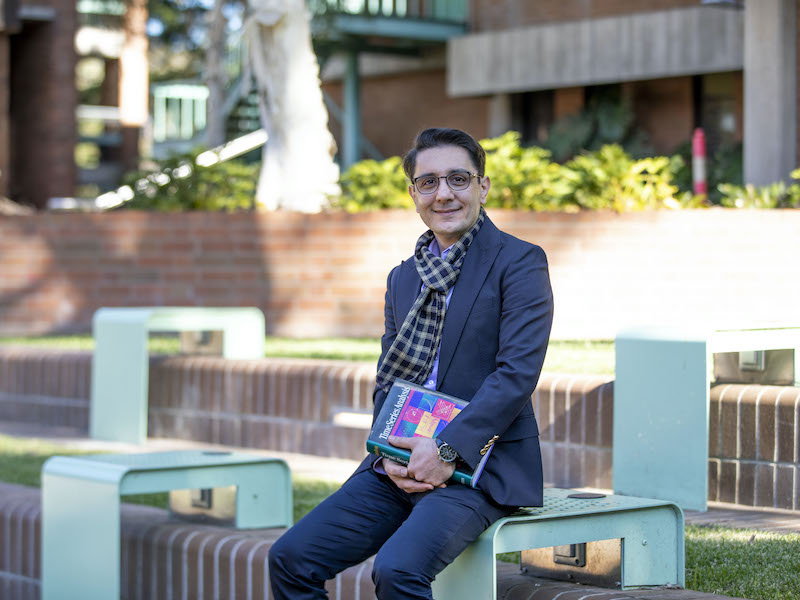
Dr. Ali Eshragh is an Honorary Senior Lecturer at the University of Newcastle's School of Information and Physical Sciences, specializing in statistical modeling and machine learning for big data analysis. His research focuses on developing automated forecasting systems to analyze big time series data and generate accurate future predictions, with applications spanning energy demand forecasting, supply chain optimization, and pandemic modeling. Dr. Eshragh holds a PhD from the University of South Australia and a BSc from Sharif University of Technology in Iran. His research expertise spans Time Series Forecasting (30%), Operations Research (30%), and Stochastic Analysis and Modeling (40%), as reflected in his Fields of Research codes. He has established the ForBiD (Forecasting and Big Data) research group, which has rapidly grown to include members from the University of Newcastle, University of Queensland, Monash University, UC Berkeley, and Yale University. His publication record demonstrates a strong trajectory in applying advanced statistical methods to real-world problems, with recent work focusing on reinforcement learning for combinatorial optimization, efficient algorithms for big time series data analysis, and probabilistic modeling of complex systems like pandemics. His research bridges theoretical advances in randomized numerical linear algebra with practical applications in forecasting. Dr. Eshragh has received the Australian Society for Operations Research 2017 Rising Star Award and has secured over $3.6 million in research funding from various sources including the Australian Research Council, Department of Education, and industry partners like Coca Cola Amatil and Sanitarium. He actively supervises PhD and honors students in areas including reinforcement learning algorithms, big time series data analysis, and Markov decision processes. His industry collaborations with Australian food and beverage supply chains have directly motivated his academic research, reflecting his commitment to translating theoretical advances into practical solutions.
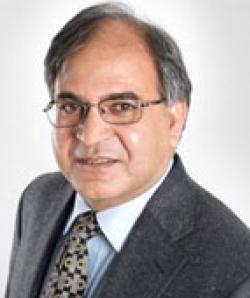
Kamlesh Mathur is a Professor and Chair of the Operations Department at the Weatherhead School of Management, Case Western Reserve University. He has been affiliated with the institution since his initial appointment in 1980 and contributes to supply chain logistics, vehicle routing, and service center location optimization. Education: PhD (Case Western Reserve University, 1980), MS (Wayne State University, 1976), MTech (IIT Kanpur, 1975), BE (Engineering College Jodhpur, 1972) His research focuses on supply chain distribution, emphasizing vehicle routing efficiency and service center location strategies . Recent publications highlight stochastic optimization, multi-echelon logistics, and reverse supply chain design, with applications in manufacturing and telecommunications. Key trends in his work include location-allocation modeling , heuristic algorithm development , and interactive software systems for operations research problems, reflecting interdisciplinary applications from biomedical engineering to radio frequency management. Dr. Mathur teaches courses in business statistics, predictive modeling, and global supply chain logistics. He serves on the editorial review board of the Journal of Business Logistics and is a long-standing member of INFORMS.
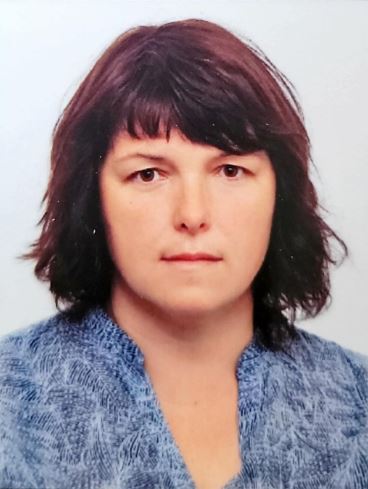
Olha Matsyi serves as an Assistant Professor (post-doc) within the Division of Applications of Contemporary Mathematical Analysis at Lodz University of Technology, with contact details including email olha.matsyi@p.lodz.pl and phone (+48) 42 631-36-17. Her research focuses on Operations Research and Mathematical Optimization, specializing in combinatorial algorithms for location theory, knapsack problems, community detection, and VLSI routing. She employs metaheuristic and bio-inspired methods to solve NP-hard optimization challenges, bridging theoretical mathematics with engineering applications in healthcare logistics and crisis management. Publications from 2020-2025 demonstrate increasing emphasis on real-world implementations like mobile medical service optimization and decision support systems, alongside theoretical advances in continuous coverage and constrained classification. Collaborative work with researchers such as Oksana Pichugina highlights her interdisciplinary approach to algorithm design. No scientific awards were documented. Information regarding student mentorship, research grants, or specific laboratory teams was not provided in the source material.
Rui Zhang is an Assistant Professor in the Department of Electrical Engineering at the School of Engineering and Applied Sciences , State University of New York at Buffalo. Her research focuses on next-generation communication systems , including fiber-wireless integration , statistical signal processing , integrated communication and sensing , and optical wireless networking . PhD, School of Electrical and Computer Engineering, Georgia Institute of Technology, 2022 BS in Electrical Engineering and BA in Economics, Peking University, 2017 She has made significant contributions to 6G wireless research and hybrid optical-wireless networks . Her recent publications explore integrated communication-sensing systems , high-capacity data center links , and nonlinear signal equalization . Notably, her work on OFDM reference signal design and self-homodyne coherent systems has received recognition at top conferences. Rui Zhang has been honored with the prestigious 2022 Marconi Young Scholar Award and received the Top-scored Paper Award at OFC 2022. She actively mentors students, currently advising Zijun Wang , a PhD candidate. Her industry experience includes a Staff Engineer role at MediaTek USA (2022–2023), where she worked on 6G wireless systems.
Michele Ciavotta is an Associate Professor at the University of Milano-Bicocca's Department of Computer Science, Systems, and Communication, specializing in AI-driven optimization for complex systems. His research integrates reinforcement learning, graph neural networks, and metaheuristics applied to distributed computing and physical systems like smart mobility and production lines. Research spans cloud/edge computing optimization, industrial production systems, smart city applications, and graph-based learning methods. Recent publications demonstrate focus on decentralized AI systems, geospatial data processing, and hypergraph neural networks for chemical and urban applications. Extensive involvement in European R&D projects addresses challenges in cloud computing infrastructure, Industry 4.0 implementations, and distributed AI solutions.
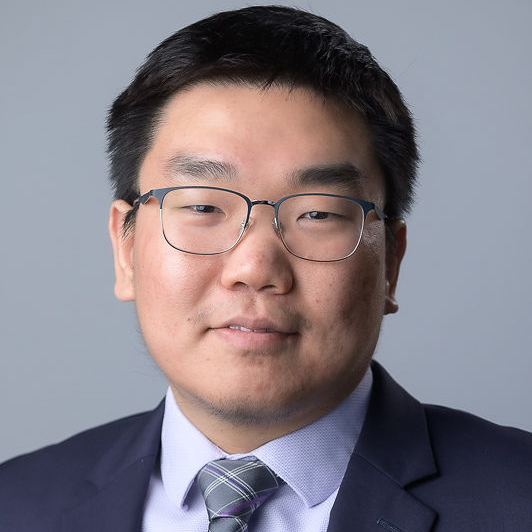
Miao Bai is an Assistant Professor in the Department of Operations and Information Management at the University of Connecticut (Storrs, CT) and a research collaborator at Mayo Clinic (Rochester, MN). His research focuses on optimizing healthcare operations, public health policy, and applying advanced analytical methods to solve complex operational challenges. Education: Ph.D. in Industrial and Systems Engineering, Lehigh University (2017) B.Eng. in Industrial and Systems Engineering, The Hong Kong Polytechnic University (2011) His expertise spans Healthcare Analytics , Operations Research , and Data-Driven Decision Making . Recent work addresses vaccination policy optimization, ridesharing impact on emergency care access, and surgical capacity allocation strategies. Collaborations with Mayo Clinic emphasize practical healthcare system improvements. Research interests include: - Healthcare operations efficiency - Policy analysis for public health interventions - Mathematical modeling for resource allocation - Analytics in radiation therapy outcomes Labs/Teams: Active contributor to Mayo Clinic's Center for the Science of Health Care Delivery and University of Connecticut's Operations and Information Management research group.
Anna Gál is a Professor in the Department of Computer Science at the University of Texas at Austin, part of the College of Natural Sciences. She is a member of the Algorithms and Computational Theory (ACT) group and teaches core theoretical computer science courses such as Algorithms and Complexity, Theory of Computation, and Analysis of Boolean Functions. Her Ph.D. in Computer Science was awarded by the University of Chicago in 1995 under the supervision of János Simon. Ph.D. in Computer Science, University of Chicago, 1995 Her research focuses on foundational aspects of computation, including computational complexity, communication complexity, coding theory, circuit complexity, and combinatorics. She investigates lower bound methods and the structural properties of Boolean functions, often employing algebraic and combinatorial techniques. Her work has significant implications for understanding the limits of efficient computation. The recent publications demonstrate a consistent focus on complexity measures of Boolean functions, circuit lower bounds, communication models, and coding theory. There is a strong emphasis on sensitivity, block sensitivity, formula size, and locally decodable codes, reflecting deep engagement with open problems in theoretical computer science. Her scientific achievements have been recognized through prestigious awards: Machtey Award for best student paper at FOCS 1991 EATCS best paper award at Track A of ICALP 2003 She has successfully advised multiple Ph.D. students, including Jeff Ford, Vladimir Trifonov, Andrew Mills, Keith Jing-Tang Jang, and Siddhesh Chaubal, whose theses contributed to multiparty communication complexity, circuit complexity, and locally decodable codes. While specific grant details are not listed, her sustained publication record in top venues suggests active funding support. Her role in the ACT group indicates collaboration with other leading researchers in algorithms and complexity. Anna Gál leads a research program centered on the Algorithms and Computational Theory group at UT Austin, mentoring students and contributing to the advancement of theoretical computer science through rigorous mathematical analysis and innovative problem-solving.
Sven O. Krumke is a Professor in the Department of Mathematics at the Rheinland-Pfälzische Technische Universität Kaiserslautern-Landau (RPTU), where he has been a faculty member since 2004. He currently serves as the Dean of the Faculty of Mathematics, overseeing academic and administrative affairs. His research is centered in combinatorial optimization and algorithmic game theory, with strong applications in logistics, emergency response, and network design. PhD, University of Würzburg (1997) Habilitation, Technical University of Berlin (2002) Professor, RPTU Kaiserslautern-Landau (since 2004) His research interests include combinatorial optimization, approximation and online algorithms, robust scheduling, algorithmic game theory, and graph-theoretic applications. He has led major interdisciplinary projects such as GRK 2982: MIMO (Mathematics of Interdisciplinary Multiobjective Optimization) and ONE PLAN , focusing on optimizing emergency medical services in Rhineland-Palatinate. His work often bridges theoretical computer science and real-world decision-making systems. His recent publications (2016–2022) emphasize robust optimization , pandemic response logistics , decision-support systems in healthcare , and online routing . These works span domains such as vaccine location strategies, ambulance dispatch, car-sharing relocation, and scheduling under uncertainty. The recurring themes are efficiency, resilience, and algorithmic fairness in dynamic environments. Notable scientific contributions include work on network design, flow problems with budget constraints, and game-theoretic models of routing. While no specific awards are listed, his leadership in DFG-funded research groups underscores his academic standing. He actively supervises bachelor's and master's theses and teaches courses such as Grundlagen der Mathematik I: Analysis . He has collaborated with researchers across Germany and internationally, particularly in algorithmic game theory and optimization under uncertainty. Dr. Krumke leads and contributes to research teams in: AG Optimierung (Optimization Research Group) at RPTU GRK 2982: MIMO – interdisciplinary multiobjective optimization ONE PLAN – optimization in emergency medical response
Troels Martin Range is an Associate Professor at the Department of Clinical Research, University of Southern Denmark, affiliated with Odense University Hospital (OUH) and the Research Unit of Emergency Medicine in Odense. His work bridges operational research and clinical medicine, focusing on optimizing healthcare delivery systems. His research interests lie primarily in operational research , stochastic optimization , and healthcare analytics . He investigates emergency department patient flow , surgery scheduling , and resource allocation using advanced mathematical models such as column generation , simulation modeling , and machine learning techniques . His work often integrates real-world data including meteorological and calendar variables to improve forecasting accuracy. The analysis of his recent publications reveals a consistent trend toward applying rigorous mathematical and computational methods to solve complex problems in healthcare operations. His work spans both theoretical contributions in Mathematical Programming and practical implementations in hospital settings, particularly in emergency and surgical care. He frequently employs stochastic modeling , decision forests , and neural networks to address uncertainty in medical systems. Editor, International Journal of Advanced Operations Management Member, Dansk Selskab for Operationsanalyse (DORS) Guest Lecturer on hospital staff rostering and resource planning He has taught courses in operations analysis and has supervised academic work, though specific advisees are not listed. His research has been supported through academic collaborations and implementation projects in hospital environments. He is actively involved in knowledge transfer between academia and healthcare institutions. Dr. Range is part of a research network focused on emergency medicine and operational efficiency, contributing to both national and international collaborations. His lab or team context centers on the Research Unit of Emergency Medicine at OUH, where data-driven approaches are developed to enhance clinical decision-making and system performance.
Palash Dey is an Assistant Professor in the Department of Computer Science and Engineering at the Indian Institute of Technology, Kharagpur. His research lies at the intersection of theoretical computer science and algorithmic game theory, with a primary focus on computational social choice, voting theory, and parameterized algorithms. His research interests include: Theoretical Computer Science Parameterized Algorithms Approximation Algorithms Algorithmic Game Theory Computational Social Choice Voting Theory Algorithmic Fairness Network Games His recent publications, spanning from 2023 to 2025, demonstrate a strong and consistent research trajectory in the analysis of voting systems, manipulation, and fairness. The articles focus on complex problems such as bribery, gerrymandering, rank aggregation, and networked public goods, primarily using tools from parameterized complexity and algorithmic game theory. Key venues for his work include AAMAS, IJCAI, AAAI, and Theoretical Computer Science, indicating a high impact in the fields of AI and theoretical computer science. His professional service includes being the Newsletter and Social Media Chair of the IEEE Kharagpur Section and serving on the Senior Program Committee for AAAI (2021-2024) and the Program Committee for AAAI, IJCAI, AAMAS, and COMSOC. He has also organized significant workshops such as CALDAM 2019 and GAME-ARTS. Palash Dey actively advises Ph.D. students, including Sipra Singh, Koustav De, Ashlesha Hota, and Narayan Sharma. He teaches courses such as Algorithms II, Randomized Algorithm Design, and Algorithmic Game Theory. His email is palash.dey@cse.iitkgp.ac.in.
Professor Tatiana Kalganova is a faculty member at Brunel University London, affiliated with the Department of Electronic and Electrical Engineering and the College of Engineering, Design and Physical Sciences. With a career spanning over two decades at Brunel, she has established expertise in Artificial Intelligence, Evolvable Hardware, and Operational Research. Education: PhD in Evolutionary Computing, Napier University MSc (distinction) in Informatics, Belarusian State University of Informatics and Radio-Electronics Research-Engineer Degree, Belarusian State University of Informatics and Radio-Electronics Her research focuses on Evolutionary Design , Swarm Optimization , and Robotics , with applications in supply chain modeling, neuromorphic computing, and intelligent systems. Recent publications emphasize Large Language Models and data-efficient machine learning techniques. Scientific Awards: 2nd place in Caterpillar's Research and Innovation in Demand Strategy Competition (2012) AFWERX Challenge Award (2019-2020) Professor Kalganova has supervised numerous PhD students on topics like 3D Autorouting Systems and Ambidextrous Robot Hands . Her funded projects include the Horizon Europe Guarantee's ReCharged initiative for climate-resilient infrastructure and collaborations with Intel, Caterpillar, and the Nuffield Foundation.
Joan Faye Boyar is a Professor at the Department of Mathematics and Computer Science, University of Southern Denmark. Her research focuses on online algorithms , combinatorial optimization , cryptology , and complexity theory , with applications in privacy-preserving protocols and adaptive systems. Education: PhD in Computer Science, University of California, Berkeley (1983) Her research explores the efficiency of online algorithms through competitive analysis , addressing challenges in knapsack problems and privacy-preserving verification . Recent work integrates machine learning predictions into traditional algorithmic frameworks. Key projects include leadership roles in Villum Fonden and DIREC Digital Centre Denmark grants. Her scientific outreach includes media contributions on digital ethics and fake news. Teaching Experience: DM860: Online Algorithms (2019-2021) DM854: Cryptology (2019-2022) MM850: Complexity and Computability (2020-2022) Research Groups: Digital Democracy Centre Algorithms VIP
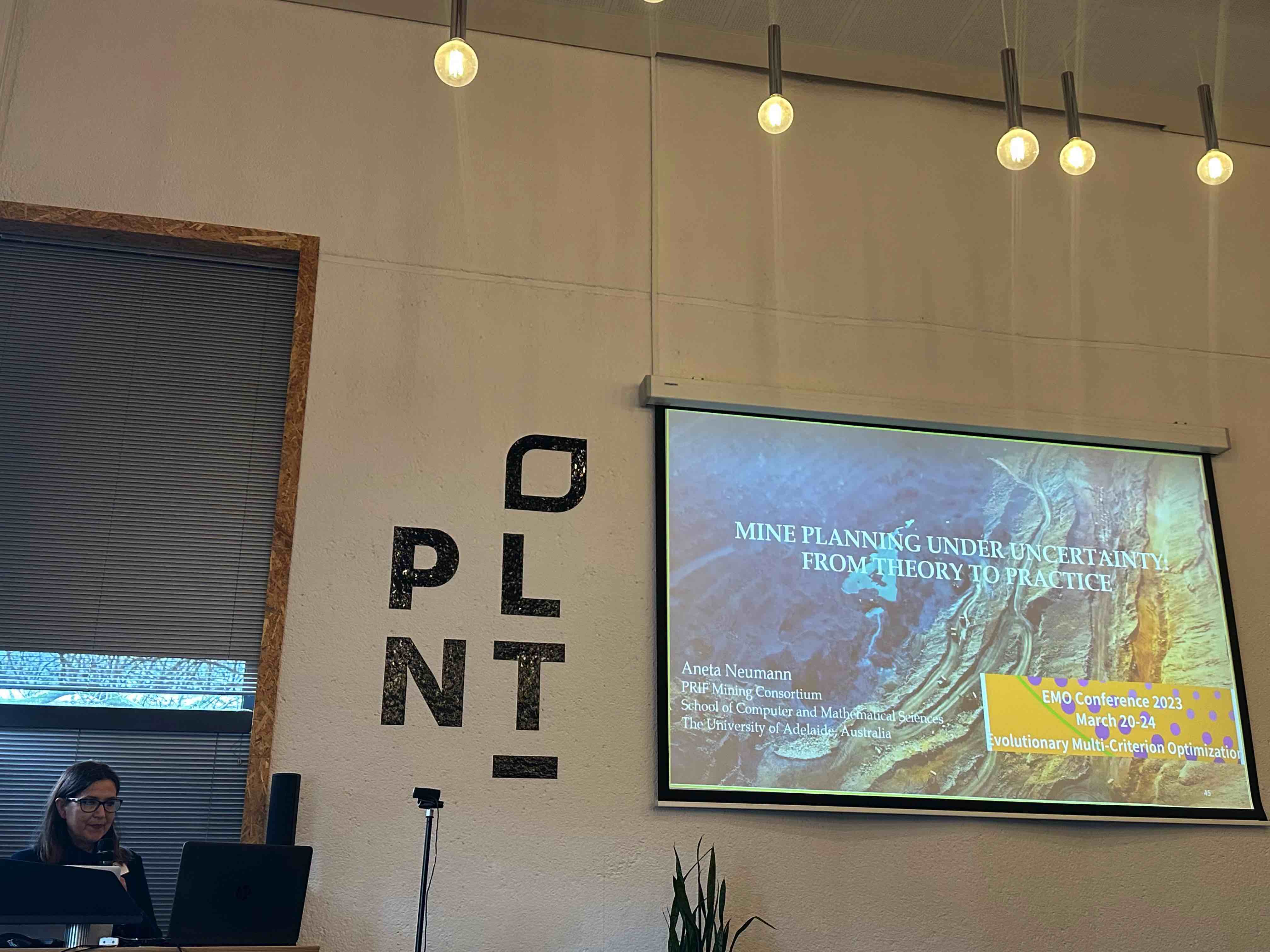
Aneta Neumann is a Researcher at the School of Computer and Mathematical Sciences within the University of Adelaide. Her work bridges bio-inspired computation with machine learning and computational creativity , focusing on dynamic and stochastic multi-objective optimization for real-world applications in mining, renewable energy, cybersecurity, and public health. Education : B.Sc. in Computer Science from Christian-Albrechts-University of Kiel, Germany; Ph.D. from University of Adelaide, Australia. Her research explores evolutionary diversity optimization to generate innovative solutions for complex problems like the Traveling Thief Problem , Chance-Constrained Knapsack , and Time-Use Planning . She investigates theoretical foundations through runtime analysis and applies these insights to industrial software integration in mining and energy sectors. Recent work emphasizes AI-based optimization trends , particularly in quantum computing benchmarks (e.g., Maximum Cut) and health outcomes via time-use scheduling. Her publications span top venues like GECCO , AAAI , NeurIPS , and Algorithmica . Scientific Awards : ACM-W Scholarship (2018), Hans-Juergen and Marianna Ohff Research Grant, Best Paper Award at GECCO 2024, multiple Best Paper Nominations at GECCO (2019, 2021, 2022). She co-organizes key conferences ( AI-OPT 2025 , EMO 2025 ) and serves as track co-chair for Genetic Algorithms at GECCO. Her teaching includes the Big Data Fundamentals course in the University of Adelaide's MicroMasters program.
Professor Henry Wolkowicz at the University of Waterloo's Department of Combinatorics and Optimization is a leading figure in mathematical optimization, with significant contributions to semidefinite programming, conic optimization, and matrix completion problems. His career spans decades of academic service and technical innovation. Fields Institute Fellow SIAM Fellow (2015) Outstanding Performance in Scholarship Award (2019) Research focuses on optimization theory , numerical methods , and applications in mathematical biology . His software developments like SPROS for protein structure determination demonstrate practical implementations of theoretical concepts. Publications address both foundational mathematical problems and modern algorithmic challenges. Recent work includes: Advancements in facial reduction techniques Analysis of conic optimization degeneracy SDP relaxations for quadratic assignment problems Academic leadership includes: Organizing Midwest Optimization Meetings Contributing to the Handbook of Semidefinite Programming Active participation in international mathematical communities Students and collaborators include: Leo Jung (PhD candidate) Tyler Weames (Master's student) David Torregrosa-Belen (visiting PhD)