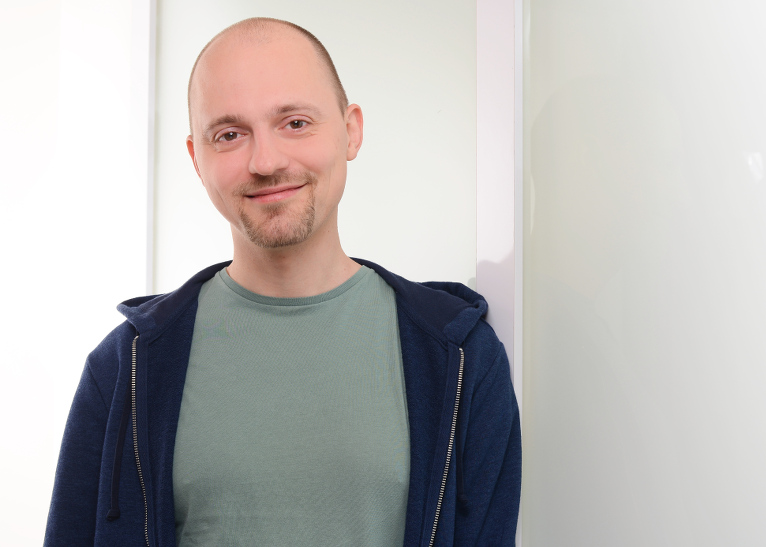
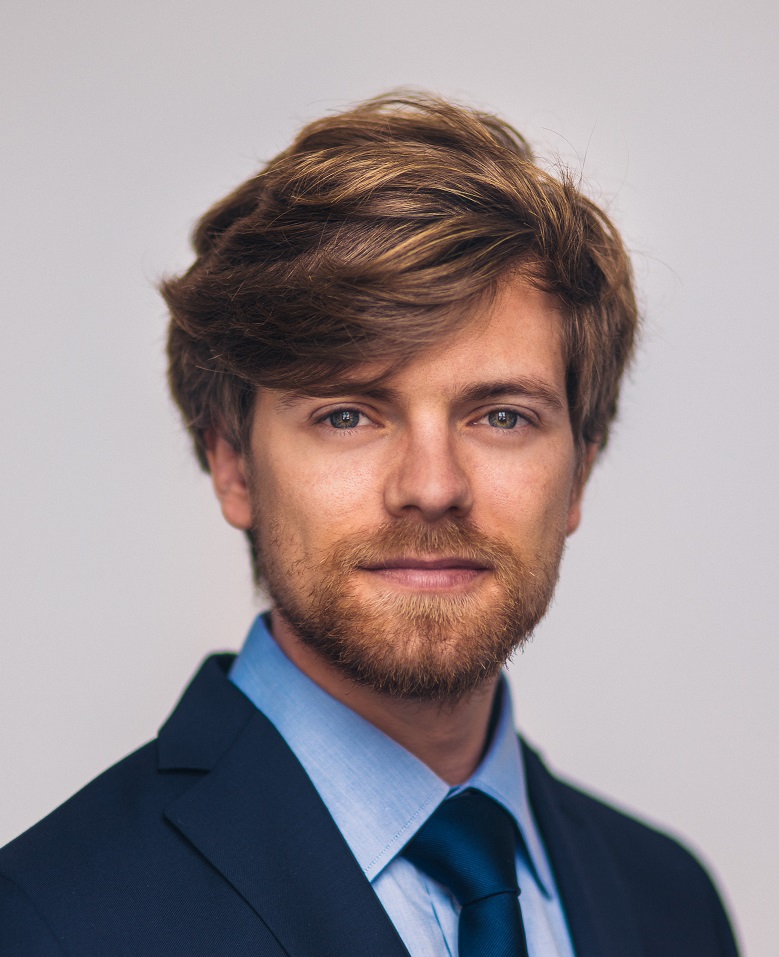
Lennart Binkowski is a doctoral candidate and scientific staff member at the Institute of Theoretical Physics , part of the Faculty of Mathematics and Physics at Leibniz University Hannover. His research focuses on quantum computing, particularly quantum algorithms and combinatorial optimization. University: Leibniz University Hannover School: Faculty of Mathematics and Physics Department: Institute of Theoretical Physics Email: lennart.binkowski@itp.uni-hannover.de Lennart's research interests span quantum algorithms, quantum walks, and optimization frameworks. His work explores quantum programming languages, Pauli transfer matrices, and hybrid quantum-classical systems. Recent publications highlight advancements in QAOA, quantum permutation generation, and tensor network applications. Lennart's 15 most recent articles focus on quantum computing trends, including algorithm design, constraint handling, and tensor structures. No scientific awards are mentioned in the provided data. Contact details: Schneiderberg 32, 30167 Hanover, Germany (Building 3702, Room 013).
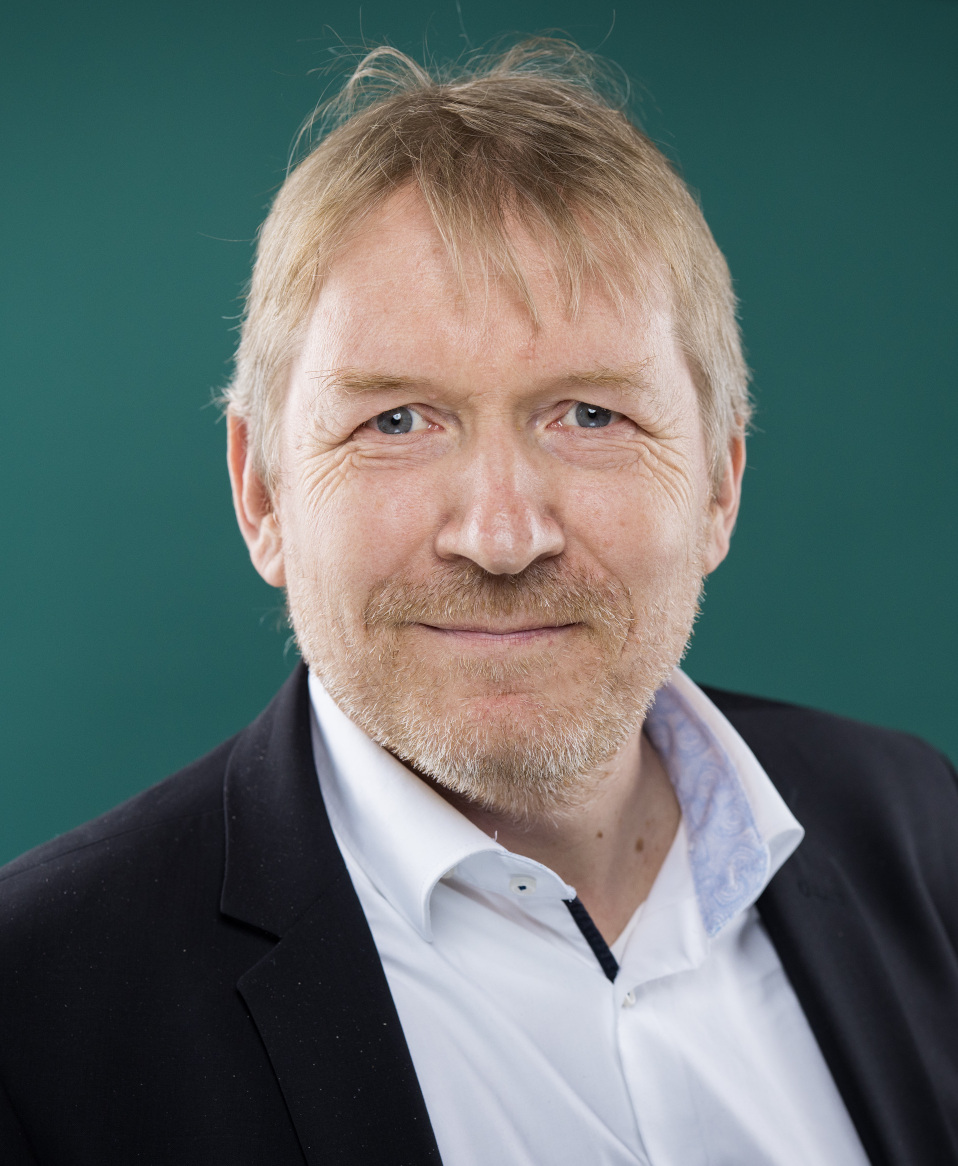
Karl Bringmann is a Professor at Saarland University since November 2019 and is affiliated with the Max Planck Institute for Informatics, where he works in the Department of Algorithms and Complexity. He has established himself as a leading researcher in theoretical computer science, particularly in fine-grained complexity and algorithm design. His work bridges theoretical insights with practical applications in optimization problems. Bringmann's research focuses on conditional lower bounds (often based on the Strong Exponential Time Hypothesis) and algorithm design, with particular emphasis on optimization problems, string algorithms, and computational geometry. His work has significant implications for fundamental problems like Subset Sum, Knapsack, and Integer Programming, with applications ranging from scheduling to post-quantum cryptography. He develops innovative approaches combining modern algorithmic techniques, mathematical structure theory, and fine-grained complexity to design faster algorithms and establish optimality. His publication record shows a consistent trend toward developing near-optimal algorithms for fundamental problems, with significant contributions to fine-grained complexity theory. His work often establishes tight conditional lower bounds while simultaneously providing matching upper bounds, creating a comprehensive understanding of problem complexity. He has made notable advances in string algorithms (particularly edit distance), geometric problems, and optimization. ERC Starting Grant 2019: Technology Transfer between Integer Programming and Efficient Algorithms (TIPEA) EATCS Presburger Award for Young Scientists 2019 Heinz Maier-Leibnitz-Prize 2019 EATCS Distinguished Dissertation Award 2015 Google European Doctoral Fellowship 2012-2014 Bringmann leads the ERC-funded TIPEA project (2019-2024), which investigates fundamental optimization problems with the goal of developing next-generation industrial solvers. He advises several PhD students including Nick Fischer, Alejandro Cassis, and Vasileios Nakos, and has served on numerous program committees for top theoretical computer science conferences including STOC, FOCS, SODA, and ICALP. His teaching includes advanced courses on Fine-Grained Complexity Theory and Competitive Programming.
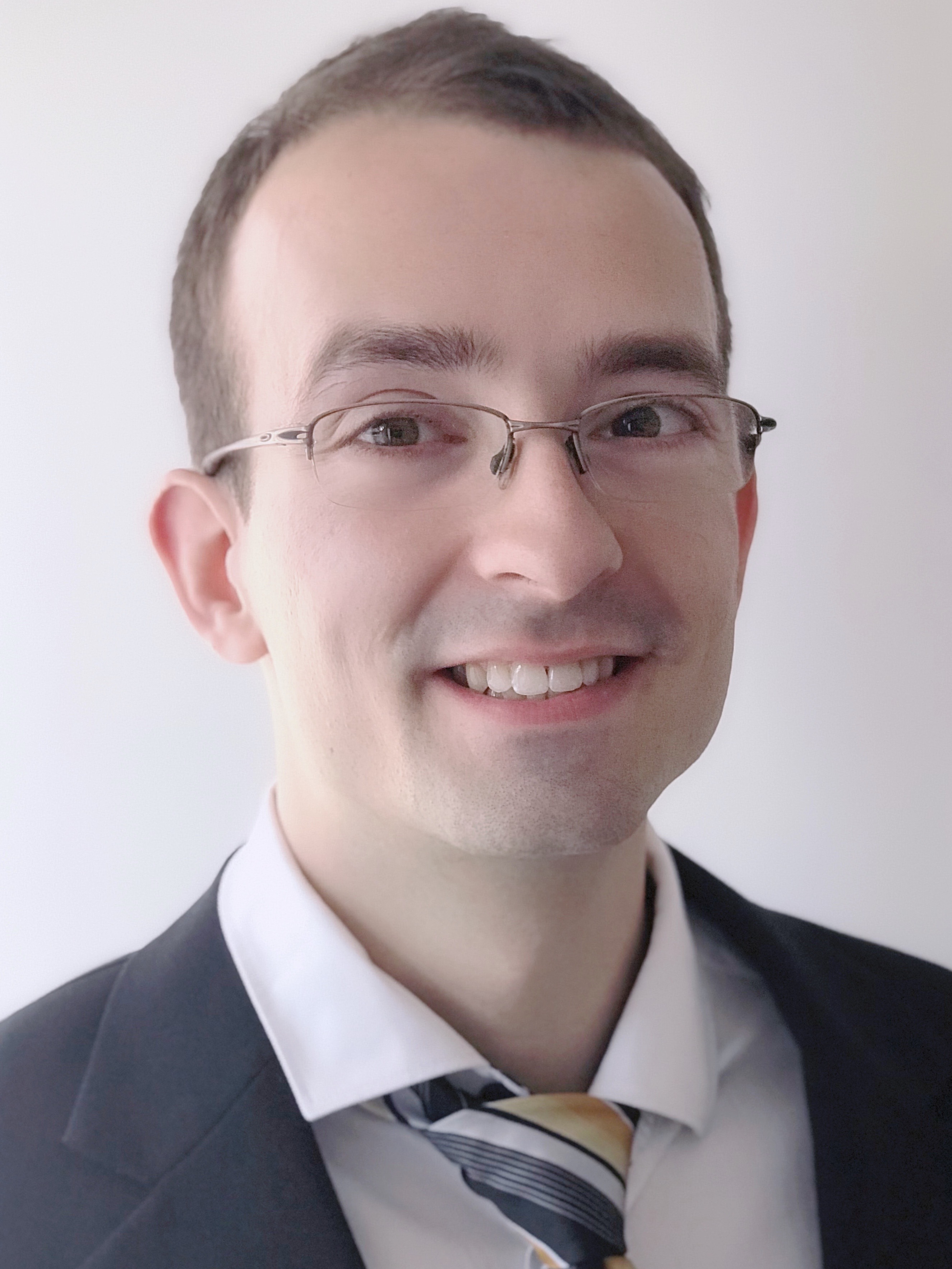
Michael Figelius is a postdoctoral researcher at the University of Siegen's Department of Electrical Engineering and Computer Science, supervised by Markus Lohrey. His work bridges theoretical computer science and mathematics. His research focuses on Algorithmic Group Theory , Number Theory , and their applications in IT-Security and Blockchain Technology . Key areas include automata theory, computational complexity, and cryptographic algorithm design. Recent publications (2020–2022) highlight his contributions to group-theoretical problems, complexity analysis of word problems, and algorithmic properties of wreath products and HNN-extensions. These works intersect with theoretical computer science, algebraic structures, and cryptographic security. He has taught courses such as Formal Languages and Automata , Computability and Logic , and Complexity Theory at the University of Siegen since 2016, including undergraduate mathematics instruction (2013–2017) in algebra, complex analysis, and statistics.
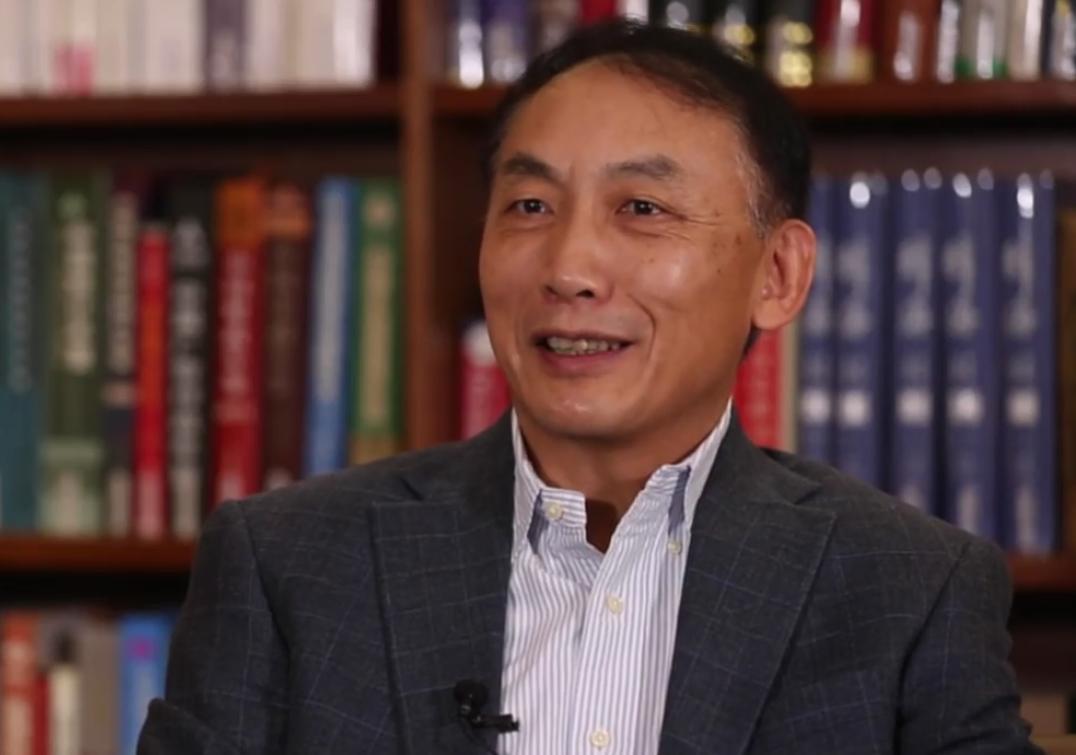
Professor Yu Gang serves as Professor of Management Practice of Innovation and Entrepreneurship at Cheung Kong Graduate School of Business (CKGSB), where he bridges academic theory with real-world business applications. He concurrently holds the position of Executive Chairman at New Peak Group (111.com.cn), demonstrating his dual commitment to academia and industry leadership in China's e-commerce sector. His academic foundation includes: Bachelor of Science from Wuhan University Master of Science from Cornell University PhD from the Wharton School of the University of Pennsylvania Professor Yu's research centers on operations management and supply chain optimization , with specialized focus on e-commerce logistics, healthcare systems, and internet-driven business models. His work consistently applies advanced mathematical frameworks to solve complex resource allocation problems across aviation, telecommunications, and retail sectors, emphasizing practical implementation in dynamic markets. His publication history reveals a sustained trajectory from theoretical optimization models in the 1990s toward applied solutions for digital commerce and healthcare logistics in the 2000s. The research demonstrates evolving expertise from airline crew scheduling to e-commerce supply chains, reflecting China's technological transformation. His distinguished recognition includes: 2002 Franz Edelman Management Science Achievement Award (INFORMS) 2002 IIE Transaction Award for Best Application Paper 2003 Outstanding IIE Publication Award 2012 Martin K. Starr Excellence Award (POMS) Professor Yu's industry experience as Vice President at Amazon and Dell directly informs his academic perspective, though specific grant details remain undisclosed. His leadership in founding CALEB Technologies and co-creating Yihaodian provides unparalleled case studies for entrepreneurship education at CKGSB. While current lab affiliations aren't specified, his past directorship of UT Austin's Center for Management of Operations and Logistics indicates his capacity for leading interdisciplinary research teams focused on operational excellence.
Ariel Kulik is a Senior Lecturer in the Department of Industrial Engineering and Management at Ben-Gurion University. He previously held postdoctoral positions at the Technion (hosted by Roy Schwartz) and CISPA (hosted by Dániel Marx). His research focuses on parameterized approximation algorithms, polynomial-time approximation algorithms for resource allocation problems (e.g., knapsack, bin packing, submodular maximization), and algorithmic optimization under constraints. Education: Ph.D. (2021) in Computer Science from Technion IIT, supervised by Hadas Shachnai; M.Sc. (2011) in Computer Science from Technion, Summa Cum Laude; B.A. (2005) in Mathematics and Computer Science from The Open University, Summa Cum Laude. Key research areas include parameterized complexity, approximation algorithms for combinatorial optimization problems, and submodular function maximization. His work often addresses knapsack variants, matroid optimization, and the development of efficient approximation methods under budget or structural constraints. Notable contributions include advancements in FPTAS/FPTAS for budgeted matroid independent sets, parameterized approximation techniques for vector knapsack, and exponential-time approximation algorithms leveraging novel algorithmic frameworks. His research bridges theoretical foundations with practical algorithm design for resource allocation challenges. He has advised Ph.D. student Ilan Doron-Arad (joint with Hadas Shachnai). His publications span top venues in theoretical computer science and optimization, including FOCS, SODA, ICALP, and Algorithmica.
Sven O. Krumke is a Professor in the Department of Mathematics at the Rheinland-Pfälzische Technische Universität Kaiserslautern-Landau (RPTU), where he has been a faculty member since 2004. He currently serves as the Dean of the Faculty of Mathematics, overseeing academic and administrative affairs. His research is centered in combinatorial optimization and algorithmic game theory, with strong applications in logistics, emergency response, and network design. PhD, University of Würzburg (1997) Habilitation, Technical University of Berlin (2002) Professor, RPTU Kaiserslautern-Landau (since 2004) His research interests include combinatorial optimization, approximation and online algorithms, robust scheduling, algorithmic game theory, and graph-theoretic applications. He has led major interdisciplinary projects such as GRK 2982: MIMO (Mathematics of Interdisciplinary Multiobjective Optimization) and ONE PLAN , focusing on optimizing emergency medical services in Rhineland-Palatinate. His work often bridges theoretical computer science and real-world decision-making systems. His recent publications (2016–2022) emphasize robust optimization , pandemic response logistics , decision-support systems in healthcare , and online routing . These works span domains such as vaccine location strategies, ambulance dispatch, car-sharing relocation, and scheduling under uncertainty. The recurring themes are efficiency, resilience, and algorithmic fairness in dynamic environments. Notable scientific contributions include work on network design, flow problems with budget constraints, and game-theoretic models of routing. While no specific awards are listed, his leadership in DFG-funded research groups underscores his academic standing. He actively supervises bachelor's and master's theses and teaches courses such as Grundlagen der Mathematik I: Analysis . He has collaborated with researchers across Germany and internationally, particularly in algorithmic game theory and optimization under uncertainty. Dr. Krumke leads and contributes to research teams in: AG Optimierung (Optimization Research Group) at RPTU GRK 2982: MIMO – interdisciplinary multiobjective optimization ONE PLAN – optimization in emergency medical response
Prof. Martin Skutella holds the Einstein Professorship in Mathematics and Computer Science at Technische Universität Berlin (TU Berlin), where he is part of Faculty II – Mathematics and Natural Sciences and the Department of Mathematics. His research focuses on combinatorial optimization, network flows, scheduling, and algorithmic game theory. He leads major initiatives such as the Berlin Mathematics Research Center MATH+ and previously served as Chair of MATHEON. Skutella is renowned for contributions to dynamic network flows, evacuation planning, and scheduling under uncertainty. His work bridges theoretical advancements with practical applications, including transportation systems, robotic welding, and gas network optimization. He has been recognized with awards like the Einstein Professorship (2015) and the Best Teaching Award (2004). Skutella advises numerous PhD students and collaborates internationally on projects funded by DFG, EU, and industry grants. Key roles include organizing the 2012 International Symposium on Mathematical Programming and editing the Notices of the German Mathematical Society. His lab focuses on discrete optimization and graph algorithms, with applications in logistics, transportation, and energy systems.
Prof. Dr. Stefan Ruzika is a full professor (W3) in the Department of Mathematics at the Rheinland-Palatinate Technological University Kaiserslautern-Landau. He leads the Competence Center for Mathematical Modelling in MINT Projects in Schools (KOMMS) and chairs the DFG-funded Graduate School 'Mathematics of Interdisciplinary Multiobjective Optimization' (MIMO), starting in 2024. His research focuses on multi-criteria optimization, integer programming, mathematical modeling, and network optimization. He teaches courses such as 'Multicriteria Optimization' and supervises Bachelor’s and Master’s theses. Education: PhD (2007, TU Kaiserslautern), Master of Science (2002, Clemson University), Diplom in Mathematics (2003, TU Kaiserslautern). Positions include professorships at TU Kaiserslautern (2017–present) and University of Koblenz-Landau (2012–2017), and postdoctoral roles at TU Kaiserslautern (2003–2007). Research interests include optimization on networks, approximation algorithms, and decision support systems for sustainable urban planning. Projects include 'Ageing Smart' (decision support for elderly quality of life) and 'GRK 2982: MIMO' (multiobjective optimization research).
Vincent Meisner is a Researcher at Humboldt-Universität zu Berlin's School of Business and Economics, affiliated with the Economics department. He holds a Ph.D. (Dr.rer.pol.) in Economics from the University of Mannheim (2016), preceded by an M.Sc. (2012) and B.Sc. (2010) in Economics from the same institution. His research focuses on Micro Theory, Mechanism Design, and Market Design, with notable contributions to strategy-proof mechanisms and behavioral economic models. Prior to HU Berlin, he served as a Research Associate at TU Berlin (2016-2023). His publications address topics like school-choice mechanisms, knapsack procurement, and digital market design. Active in academic networks, he maintains a Google Scholar profile and engages with CDSE (Competitive Dynamics and Strategic Economics) research initiatives. No specific labs or teams are associated with his current role, though collaborations with institutions like the German Institute of Economic Research are implied through cross-listed professorships.
Dr. Franziska Eberle is the Head of the MATH+ Junior Research Group in the Institute of Mathematics at Technische Universität Berlin. She leads research in approximation algorithms, focusing on uncertain environments such as online and stochastic models. Her work addresses scheduling, resource allocation, and combinatorial optimization under uncertainty. Education: PhD in Computer Science, Universität Bremen (2020) M.Sc. in Mathematics for Operations Research, TU München (2016) B.Sc. in Mathematics, TU München (2014) Research Interests: Franziska’s research spans approximation algorithms for stochastic and online scheduling, robust optimization, and algorithmic frameworks for commitment models. She has contributed to load balancing, matroid optimization, and learning-augmented algorithms. Her work bridges theoretical foundations and practical applications in scheduling and resource management. Recent Contributions: Developed algorithms for configuration balancing under stochastic requests (Mathematical Programming, 2024) Optimal online throughput maximization for unrelated machines (ACM Transactions on Algorithms, 2023) Robust scheduling frameworks for speed-uncertain machines (Mathematical Programming, 2023) Teaching: Franziska has taught courses on approximation algorithms, discrete optimization, and practical optimization modeling. Recent offerings include advanced topics in online optimization (Summer 2024). Labs/Teams: Her research group includes PhD student Sebastian Bruchhold, focusing on cutting-edge problems in optimization under uncertainty.
Prof. Dr. Stefan Weltge is a Professor of Discrete Mathematics at the Department of Mathematics, Technical University of Munich (TUM). He holds a PhD in Mathematics from Otto von Guericke University Magdeburg (2016) and was a postdoctoral researcher at ETH Zurich. His research focuses on combinatorial optimization, integer programming, and polyhedral combinatorics, with notable contributions to extension complexity and mixed-integer programming. He has received multiple teaching awards at TUM, including the TUM Supervisory Award (2022) and Best Lecturer recognitions in 2019 and 2021/22. His work has been published in leading journals such as the Journal of the ACM and Journal of Combinatorial Theory B. Prof. Weltge’s academic contributions include groundbreaking research on the complexity of mixed-integer programs, polyhedral representations, and combinatorial optimization problems. He has organized conferences like OR 2024 and the Cargese Workshops on Combinatorial Optimization, and serves on program committees for IPCO, MIP, and ISCO. His research is supported by DFG grants, including the Individual Grant (NextGen) and the AdONE PhD Program. He advises PhD students working on topics such as integer programming, algorithm design, and optimization theory. His publications span theoretical advancements in convex optimization, linear programming relaxations, and applications in logistics and operations research. Notable articles include work on bounded subdeterminants in integer programs and the complexity of stable set problems. His research bridges discrete mathematics with practical algorithmic solutions, influencing both theoretical and applied domains.
Pallavi Jain is an Assistant Professor in the Department of Computer Science and Engineering at the Indian Institute of Technology Jodhpur, a position she has held since 2020. Previously, she was a Postdoctoral Fellow at Ben-Gurion University of the Negev, Israel (2019–2020) and the Institute of Mathematical Sciences, Chennai (2017–2019). Ph.D., Dayalbagh Educational Institute, Agra (2012–2017) Postdoctoral Fellow, Ben-Gurion University of the Negev, Israel (2019–2020) Postdoctoral Fellow, Institute of Mathematical Sciences, Chennai (2017–2019) Her research focuses on theoretical computer science, particularly in Parameterized Complexity , Kernelization , Computational Social Choice Theory , and Graph Algorithms . She explores algorithmic aspects of voting, fair division, and combinatorial optimization under structural and parameterized paradigms. Her work often bridges theoretical foundations with real-world applications in multiagent systems and participatory decision-making. Her recent publications span top-tier journals and conferences including Algorithmica , ACM Transactions on Computation Theory , AAAI , AAMAS , ICALP , and IJCAI . The publications reflect a strong trend in parameterized algorithms, fairness in allocation, committee selection, and voting under complex constraints. She has also contributed to heuristic methods in graph optimization problems. Best Paper Runner-Up Award at EUMAS 2022 SERB National Postdoctoral Fellowship (2017–2019) Maulana Azad National Fellowship (2014–2016) Institute Seed Grant (2022–2025) Indo-German Project Grant (2023–2025) Pallavi Jain actively advises BTech and MTech students and has mentored numerous interns from institutions like CMI, University of Calcutta, and Aligarh Muslim University. She has secured research funding from SERB and other national and international bodies. She serves on the program committees of major conferences including IJCAI, AAAI, AAMAS, and ECAI, and has co-organized workshops such as the Winter School on Algorithms for Graphs and Games and COSCOE 2023. She teaches courses such as Advanced Data Structures and Algorithms , Graph Theoretic Algorithms , and Computational Microeconomics . She leads a vibrant research group focused on algorithms and computational social choice, collaborating with leading researchers like Saket Saurabh, Nimrod Talmon, and Sushmita Gupta. Her lab emphasizes theoretical rigor and practical relevance in solving complex computational problems in social systems.
Prof. Dr. Andreas Wiese is an Associate Professor at the Technical University of Munich (TUM), affiliated with the TUM School of Computation, Information and Technology and the Department of Mathematics. He previously held academic positions at the Vrije Universiteit Amsterdam (2021-2022), Universidad de Chile (2016-2021), and the Max-Planck-Institut für Informatik (2012-2016). Andreas Wiese earned his PhD in Mathematics from TU Berlin (2008-2011) and studied Mathematics and Computer Science at TU Berlin (2002-2008). His research focuses on combinatorial optimization , approximation algorithms , and geometric problem-solving , particularly for NP-hard problems in packing, scheduling, and network flow. His recent work includes A 2024 SODA publication on outlier-aware minimum sum of radii approximation A 2023 STOC paper improving weighted flow time minimization Foundational contributions to unsplittable flow and geometric knapsack problems with consistent appearances at top-tier conferences like STOC, FOCS, and SODA. Andreas Wiese leads the Discrete Optimization research group at TUM, supervising PhD students Alexander Armbruster, Elisa Dell'Arriva, and Sandy Heydrich. He has organized major conferences including LATIN 2024 and ADFOCS 2015 , and served on program committees for STOC, FOCS, and SODA.
Lilly Palackal is a Researcher and External PhD candidate at the Technical University of Munich (TUM) School of CIT, affiliated with the Department of Computer Science. She collaborates closely with Infineon Technologies AG on quantum computing research. Her work focuses on quantum algorithms for optimization problems, co-design of quantum software/hardware, and quantum error correction/mitigation. Education: BSc (2018) and MSc (2021) in Mathematics from TUM, with thesis topics in quantum error correction and interactive quantum communication. Current PhD research bridges academic and industrial quantum computing challenges. Research interests include developing quantum solutions for logistics (e.g., vehicle routing), optimization (e.g., knapsack problems), and hardware-aware algorithm design. She supervises multiple student projects across mathematics, physics, and engineering disciplines at TUM and partner institutions. Recent publications explore hybrid quantum-classical methods, QAOA applications, and efficient algorithm encodings for quantum systems. Her work emphasizes practical implementations of quantum technologies in real-world scenarios.
Ahmad Abdi is an Associate Professor in the Department of Mathematics at the London School of Economics and Political Science (LSE). He joined LSE as a tenure-track Assistant Professor in 2018 and was promoted to Associate Professor in 2023. He holds a PhD in Mathematics from the University of Waterloo, supervised by Bertrand Guenin, and completed a postdoctoral fellowship at Carnegie Mellon University under Gérard Cornuéjols. His research focuses on Combinatorial Optimization, Integer and Linear Programming, Matroid Theory, and Graph Theory, particularly the study of Ideal Clutters and their applications to open conjectures like Woodall’s and the Generalized Berge-Fulkerson conjecture. Education: PhD in Mathematics, University of Waterloo (2018) Postdoctoral Fellow, Carnegie Mellon University (2018–2019) Research Interests: Combinatorial Optimization and its applications to conjectures in Graph Theory (e.g., Woodall’s conjecture) Ideal Clutters and their connections to Linear Programming Matroid Theory and structural graph properties Grants: EPSRC New Investigator Award (2023–2026) for research on Woodall’s conjecture and the Generalized Berge-Fulkerson conjecture Students and Postdocs: PhD Students: Ruilan Wang (since 2019), Mahsa Dalirrooyfard (since 2022) Postdoctoral Fellows: Meike Neuwohner (since 2024), Tamás Schwarz (since 2025) Teaching: MA431 Spectral Graph Theory (2021/22) Combinatorial Optimization: Packing, Partitioning, and Covering (2023) Workshops: Co-organized the Cargese Workshop on Combinatorial Optimization (2022, 2024) and ACO@CMU Workshop (2020).