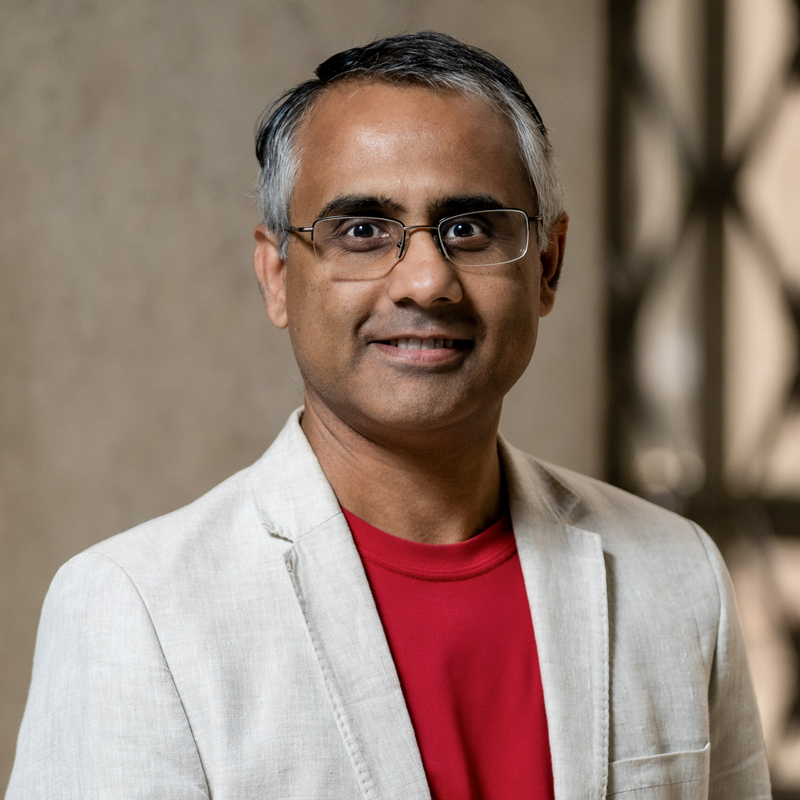
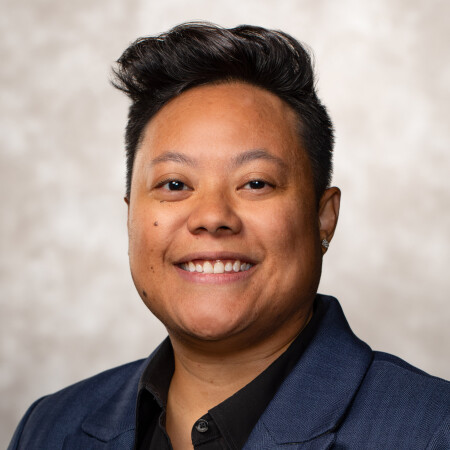
Jennifer Kitchen is an Associate Professor at the School of Electrical, Computer and Energy Engineering, Arizona State University. She joined ASU in 2013 and has focused on efficiency enhancement and linearization techniques for RF power amplifiers, high-efficiency power management systems using gallium-nitride (GaN), and integrated circuit design for wireless and SATCOM applications. Education: Ph.D. in Electrical Engineering, Arizona State University (2007). Research Interests: Her work spans RF integrated transceivers on silicon and III-V processes (GaN), power management systems for green energy (solar arrays, batteries), and programmable broadband transceivers for 5G wireless communication. She explores exotic materials like GaN to improve circuit integration and energy efficiency. Scientific Awards: Recognized as a National Science Foundation Graduate Fellow and Semiconductor Research Corporation Master’s Scholar during her graduate studies. Teaching: She teaches courses such as EEE 334: Circuits II and EEE 335: Analog and Digital Circuits , alongside advising graduate students in research, thesis, and dissertation projects. Industry Experience: Prior to her academic role, she worked at Motorola Inc., Freescale Semiconductor, and held leadership positions at Ubidyne Inc. and ViaSat Inc., focusing on wireless basestations and military-grade integrated circuits.
Madison Moore is an artist-scholar and Assistant Professor of Modern Culture and Media at Brown University. Their research focuses on Black queer aesthetics, nightlife, and resistance through performance, fashion, and electronic music. They hold a PhD in American Studies from Yale University and have held positions at institutions including USC Roski School of Art and Design and King's College London. Moore’s work explores how queer and trans people of color use art and nightlife as survival strategies. Their first book, *Fabulous: The Rise of the Beautiful Eccentric* (2018), analyzes the cultural significance of fabulousness in Black and queer communities. Education: PhD in American Studies, Yale University (2012) MA in American Studies, Yale University (2007) Postdoctoral Research: European Research Council at King’s College London (2014–2018) Research Themes: Moore’s work centers Black queer worldmaking, focusing on nightlife, electronic dance music, and subcultural resistance. Their current book project, *How to Get Your (Night) Life*, examines Black queer nightlife as a site of resilience and pleasure. Publications & Projects: Moore co-edited the *e-flux* special issue *BLACK RAVE* (2022), curated residencies at The Kitchen (NY), and produced DJ mixes blending activism and theory. Their articles address topics like techno as insurrection, queer maximalism, and digital pandemic culture. Awards: Excellence in Scholarship Award (Virginia Commonwealth University, 2021) Ford Foundation Pre-Doctoral Fellowship (2006–2009) Beinecke Brothers Undergraduate Fellowship (2005–2010) Teaching:** Courses include *Queer Nightlife* and *Hyper/Pop*, emphasizing interdisciplinary approaches to media and performance.
Erin Brady is an Associate Professor in Human-Computer Interaction at the Luddy School of Informatics, Computing, and Engineering, Indiana University Indianapolis. Her work focuses on accessibility, disability, and technology's role in social contexts. She holds a Ph.D. in Computer Science from the University of Rochester (2015), an M.S. from the same institution (2011), and a B.S. in Computer Science and Mathematics from the University of Richmond (2010). Her research explores accessibility challenges in technology, crowdsourcing solutions for real-time assistance, and how people with disabilities use social media for activism. Notable projects include designing inclusive kitchens for those with cognitive impairments and analyzing online advocacy around mental health conditions like bipolar disorder and schizophrenia. She has also investigated remote identification of physical accessibility barriers. Brady’s professional experience includes internships at Google (web accessibility improvements) and Microsoft Research India, as well as prior roles as a Research Assistant at the University of Rochester (2010–2013) and Visiting Researcher at Carnegie Mellon University (2013–2015).
Shamari Reid (he/him/his) is an Assistant Professor in the Department of Teaching and Learning at New York University’s Steinhardt School of Culture, Education, and Human Development. His work focuses on reimagining schools as equitable spaces for Black LGBTQ+ youth, drawing from ballroom culture and radical love as moral imperatives. Dr. Reid holds a doctoral degree in Curriculum and Teaching from Teachers College, Columbia University, an M.A. in Teaching Spanish as a Foreign Language and TESOL from NYU, and a B.A. in Spanish and Education from Oklahoma City University. His interdisciplinary education underscores his commitment to culturally sustaining practices and intersectional equity. His research explores Black trans and queer youth agency, systemic oppression in schools, and the role of imagination in liberatory education. Reid emphasizes the need for school leaders to protect radical creativity and advocates for anti-oppressive policies. He also critiques the lack of queer/gender studies in teacher training programs, urging educators to embrace intersectional frameworks. In 2022, his dissertation analyzing NYC ballroom culture’s impact on Black LGBTQ+ youth agency earned the Dissertation of the Year Award from AERA’s Queer Studies SIG. His recent book Humans who teach (2024) provides actionable strategies for centering love and justice in classrooms. Reid collaborates on initiatives like the English Education program to foster affirming school environments. His work intersects with theorists like José Esteban Muñoz and Toni Morrison, emphasizing the transformative potential of communal imagination.
Barış Çallı is a Professor at the Department of Environmental Technology, Faculty of Engineering, Marmara University (Turkey). He earned his Ph.D. in Environmental Technology from Boğaziçi University (2003) and received the Marie Curie Intra European Fellowship (2006) for his work on fermentative hydrogen production in Belgium. Since 2008, he has served as a full-time professor, leading 20 research projects focused on environmental bioprocesses, anaerobic digestion, biogas technology, resource recovery, and solid waste management. Ph.D. in Environmental Technology, Boğaziçi University (2003) Marie Curie Intra European Fellowship (2006) His research integrates bioprocess engineering with sustainable waste management, emphasizing biogas production, membrane technologies, and circular economy principles. Recent publications (2025-2021) address energy-neutral wastewater treatment, heavy metal recovery from sludge, and VFA-driven fermentation. Key subfields include anaerobic digestion , bioleaching , membrane reactor design , and agricultural waste valorization . Marie Curie Intra European Fellowship (2006) With 116 WoS publications and an H-index of 33 (Scholar), he has supervised 17 thesis advisories and contributed to 20 projects. His work aligns with UN Sustainable Development Goals (6, 7, 11, 12).
Professor George Ghinea is a distinguished academic in the Department of Computer Science at Brunel University London's College of Engineering, Design and Physical Sciences. With over 350 publications and 33 successfully supervised PhD students, he leads cutting-edge research at the intersection of computer science, media studies, and psychology. His educational background includes a PhD from the University of Reading (1999) where he pioneered the Quality of Perception (QoP) metric - a precursor to today's widely adopted Quality of Experience (QoE) concept. He holds multiple degrees with distinction from the University of the Witwatersrand in South Africa, including BSc, BSc (Hons), and MSc in Computer Science. Professor Ghinea's research focuses on perceptual multimedia quality and human-centered e-systems, with particular emphasis on mulsemedia (multiple sensorial media) - his own conceptual framework extending multimedia to engage non-traditional senses. His work spans eye-tracking applications, telemedicine, multi-modal interaction, and ubiquitous computing. Current research explores mulsemedia integration in autonomous vehicles, security-enhanced systems, and accessibility solutions. His publications reveal strong trends in multisensory computing (42% of recent works), telemedicine applications (28%), accessibility research (18%), and network optimization (12%). The work consistently bridges theoretical frameworks with practical implementations, often incorporating physiological data and user perception metrics. Distinguished Visiting Fellow of the Royal Academy of Engineering (2018) SPARC DUO-India 2020 Fellowship Programme recipient Principal Investigator for multiple EU Horizon 2020 projects Research featured in major media including BBC, Forbes, and Daily Telegraph Professor Ghinea has secured substantial research funding through projects like the EU H2020 NEWTON initiative, Royal Academy of Engineering partnerships, and multiple Newton Fund collaborations. His supervision portfolio includes 33 PhD completions with diverse research spanning security behavior in Ghana, physiological QoE in VR, smart city adoption in Oman, and sustainable digital transformation in Qatar. He leads the IMUSY research group focusing on mulsemedia systems and human perception. His laboratory work centers on the IMUSY research group where they develop mulsemedia applications integrating thermal, wind, and olfactory devices for enhanced user experiences. Current team projects include mulsemedia in autonomous vehicles (MulsEAV), physiological data for QoE assessment, and smart city adoption studies.
Denny Yu is an Associate Professor at the Edwardson School of Industrial Engineering, Purdue University. His work bridges human factors, neuroergonomics, and healthcare safety through advanced sensor systems and AI. Primary Affiliation : Edwardson School of Industrial Engineering, Purdue University Research Themes : Surgical ergonomics, autonomous vehicle human factors, cognitive workload assessment, multimodal physiological sensing Dr. Yu's research focuses on neuroergonomics and human-robot interaction , particularly in surgical and transportation contexts. His team develops sensor-based systems for workload monitoring, including: EEG-eye tracking fusion for situation awareness Wearable exoskeletons for surgical posture support Computer vision tools for lifting task risk analysis Smart infusion pump usability frameworks AI-driven surgical coaching systems Recent publications emphasize deep learning applications in soft tissue deformation estimation and real-time adaptive systems for robotic surgery augmentation. His work spans both occupational health (veterinary surgeons, airport workers) and medical device innovation domains.
Dr. Katharina Graf is a Research Fellow at the Institute of Cultural Anthropology and European Ethnology, Faculty of Linguistics, Cultures and Arts, Goethe University Frankfurt. She leads the DFG-funded ethnographic research project Cyborg Cook – Domestic Cooking in the Digital Age , investigating how digital technologies transform domestic cooking practices, knowledge reproduction, and socio-political negotiations around gender, class, and race in German households. Previously, she was a Postdoctoral Research Fellow at the SOAS Food Studies Centre, University of London, where she conducted research on bread as a measure of urban stability in Morocco, funded by the AXA Research Fund. Her educational background includes a PhD in Social Anthropology from SOAS, University of London (2016), with fieldwork in Marrakech, and a Diplom in Geography from the universities of Tübingen, Bonn, and Cologne, focusing on water supply in rural Morocco. Katharina Graf’s research lies at the intersection of cultural anthropology, food studies, gender, urban life, and science and technology studies. She explores how everyday practices—especially cooking—reflect and shape broader social, political, and technological transformations. Her work emphasizes the entanglement of material culture, digitalization, and human agency, particularly in domestic spaces. She investigates how food serves as a lens for understanding political legitimacy, social change, and human-machine relations. Her recent publications and blog posts from the Cyborg Cook project reveal a strong trend toward understanding digital domesticity through ethnographic, sensory, and feminist lenses. Themes include the role of mothers as technological pioneers, the disruption of routines by smart devices, and the multisensory experience of digital cooking practices. Her earlier work on bread in Morocco highlights how food security and culinary practices are deeply tied to political stability and state-society relations. Postdoctoral Fellowship, AXA Research Fund Principal Investigator, DFG-funded 'Cyborg Cook' project Dr. Graf has supervised undergraduate and postgraduate students at SOAS and Goethe University. While no specific grants beyond DFG and AXA are named, her role as principal investigator indicates leadership in competitive research funding. She is actively involved in academic service, including as associate book reviews editor for the FoodAnthropology Blog (Society for the Anthropology of Food and Nutrition) and former co-convenor of the Anthropology of Food Network at EASA. She disseminates research through innovative public formats such as photo exhibitions, cookery classes, and comedy clubs, reflecting a commitment to engaged scholarship. She is affiliated with the Cyborg Cook research team at Goethe University, an interdisciplinary group using ethnographic methods to study digital kitchen technologies. The project emphasizes collaborative, sensory, and participatory research approaches, often involving co-creation with participants through shared meals and observational cooking sessions.
Anahita Sal Moslehian is a Postdoctoral Research Fellow with the HOME Strategic Research & Innovation Centre at Deakin University's School of Architecture & Built Environment. With a PhD in Architecture from Deakin University (2022), her work focuses on the intersection of architectural design and human wellbeing, specializing in evidence-based approaches to creating health-promoting environments. Her educational background includes: PhD in Architecture, Deakin University (2022) Dr. Moslehian's research spans healthcare architecture, particularly hospital design evolution and innovation, while also exploring social and affordable housing, family-friendly apartment design, and biophilic design principles. She employs mixed methods approaches, including grounded theory, to understand how the built environment affects human health, behavior, and social outcomes across diverse populations and contexts. Her work often examines the socio-political dimensions that shape architectural design and its real-world impacts. Analysis of her publication record reveals strong thematic consistency with recurring emphasis on health-promoting environments, design innovation in healthcare facilities, and innovative housing solutions for vulnerable populations. Her research combines architectural theory with practical applications, particularly in the Australian context, demonstrating how spatial design affects specific activities (like cooking and dining) and how innovative housing models can address homelessness through well-designed transitional solutions. Dr. Moslehian is an EDAC-certified researcher (Evidence-Based Design Accreditation and Certification), reflecting her commitment to rigorous, evidence-based approaches in architectural design. Her collaborative projects with the Biophilia Lab on mental health facilities and community housing providers on transitional housing models demonstrate her dedication to practical, impactful research that addresses pressing social issues through thoughtful architectural design. Her current work with the HOME Research Centre includes evaluating compact modular units for homeless men and applying biophilic design frameworks in mental health facilities, representing a careful integration of housing-first and treatment-first approaches to create supportive transitional environments that promote independence, safety, and community connectedness.
Kelly Grindrod is an Associate Professor at the University of Waterloo School of Pharmacy and Associate Director of Clinical Education. She works part-time as a clinical pharmacist at the Kitchener Downtown Community Health Centre and is cross-appointed to the School of Public Health & Health Systems at Waterloo. Academic Rank: Associate Professor Part-Time Clinical Practice: Kitchener Downtown Community Health Centre Professional Affiliations: Ontario College of Pharmacists, Ontario Pharmacy Association Research Interests: Dr. Grindrod specializes in leveraging digital technologies to improve medication management. Her work examines clinician-patient communication, technology adoption among older adults and vulnerable populations, and systemic changes in pharmacy practice. Publication Trends: Recent studies focus on mobile health applications ( ClereMed ), pharmacist-led clinical services, and knowledge translation in primary care. Key themes include medication safety, digital health equity, and interprofessional collaboration. Awards & Recognition: 2017 Outstanding Performance Award 2014 Canadian Foundation for Pharmacy Wellspring Leadership Award 2014 & 2013 Canadian Pharmacists Journal Best Paper of the Year CIHR Travel Award (2011), CIHR Summer Institute participant (2010) Teaching & Professional Contributions: Dr. Grindrod teaches culturally safe patient care and professional practice courses. Her research bridges pharmacy practice with digital health innovation, emphasizing patient engagement and healthcare accessibility.
Casper Boks is Professor in Design for Sustainability at the Department of Design, NTNU Norwegian University of Science and Technology within the Faculty of Architecture and Design. He has held significant leadership roles including Vice Dean for Research and Innovation (2017-2021) and Head of Department (2013-2017). His research focuses on sustainable product and service design with specific expertise in design for sustainable behavior, circular economy implementation, societal sustainability narratives, and citizen engagement. With over 200 publications and an h-index of 42 on Google Scholar, his work bridges theoretical frameworks with practical industry applications to advance sustainability through design innovation. His recent publications demonstrate a strong focus on contemporary sustainability challenges, particularly lithium-ion battery repurposing, second-hand consumption barriers, plastic consumption patterns, and the emotional dimensions of sustainable behavior. His interdisciplinary approach connects design methodology with behavioral psychology, business model innovation, and systems thinking to address complex sustainability challenges. Professor Boks has supervised numerous PhD candidates as both main and co-supervisor, along with over 60 Master's theses at NTNU. His extensive project portfolio includes leadership in international initiatives such as NOTRAP (2025-2029), HolE-LiB (2022-2026), and TRANS-URBAN-EU-CHINA (2018-2021). He serves on numerous national and international committees including as Leader of the national committee for publication in Architecture, Design and Art (2024-present), and as a member of the Norwegian Academy of Technological Sciences. His international recognition extends to serving as an external assessor for academic positions worldwide and as a jury member for international design awards.
Associate Professor Fiona Andrews is a leading academic at Deakin University , affiliated with the Faculty of Health and the School of Health and Social Development . As co-Leader of the HOME Research Hub, she bridges health, built environment, and social sciences to address Australia's housing crisis through interdisciplinary approaches. Doctor of Philosophy, University of Birmingham Master of Health Science, La Trobe University Diploma in Community Health, La Trobe University Bachelor of Science, University of Reading Her research focuses on the intersection of health and the built environment , emphasizing: Family-friendly apartment design Health impacts of housing quality Social integration in microvillages Public space equity Urban sustainability Qualitative methodologies (especially photo-narrative) Recent publications analyze: Kitchen design impacts on health Apartment communal spaces Co-housing models Future-proof hospital architecture Interim housing solutions Policy-informed urban planning Scientific Recognition : 2018 School of Health & Social Development Research Excellence Award She supervises doctoral candidates in architecture and health fields, chairs postgraduate thesis units, and secures grants from organizations including City of Greater Geelong and Lord Mayor's Charitable Foundation . Her work directly influences Victorian government housing policies through commissioned research.
Subha R. Das is an Associate Professor of Chemistry at Carnegie Mellon University's Mellon College of Science. His research focuses on nucleic acid-polymer biohybrids, nanobiotechnology, and automated science. He holds a Ph.D. from Auburn University (2000) and has been on the faculty since 2006. Key projects include engineering DNA/RNA nanostructures, developing click-chemistry tools for RNA labeling, and creating exosome-polymer hybrids for biomedical applications. His research interests span organic chemistry, biomaterials, and nanotechnology. Notable contributions include backbone-branched DNA/RNA design for precise nanostructure assembly and RNA lariat synthesis to study splicing mechanisms. He also pioneered the Kitchen Chemistry Sessions course, linking molecular gastronomy to chemistry education. Education: Ph.D. in Chemistry (Auburn University, 2000), M.S.C. in Chemistry (BITS Pilani, 1994), B.E. in Computer Science (BITS Pilani, 1994) Key Research Themes: Nucleic acid-polymer hybrids, automated polymer synthesis, RNA nanotechnology, biomaterials for drug delivery Recent Trends in Publications: Focus on ATRP-driven biohybrid systems, RNA functionalization, and exosome engineering His lab collaborates extensively with the Matyjaszewski group on controlled radical polymerization techniques and has developed novel methods for biomolecule-polymer integration. Research spans from fundamental nucleic acid chemistry to applied biomedical systems.
Rowena Pedrena is an Emmy- and Peabody Award-winning Assistant Professor of Film and Media Production at the University of Texas at Dallas within the Harry W. Bass Jr. School of Arts, Humanities, and Technology . With over a decade of professional experience, she has worked across scripted, reality, and documentary formats for major networks including Netflix, ABC, NBC, CBS, CNBC, PBS, TLC, History Channel, NatGeo, Food Network, and Discovery Channel. Her scholarly and creative work centers on the intersection of scripted and unscripted media, applying cinematic storytelling techniques to elevate documentary and reality formats. Core research interests include: Reality TV development and production Documentary film and television production Scripted screenwriting and narrative directing Cinematography and field production management As a multi-hyphenate artist—writer, producer, and director—she integrates industry practice with academic pedagogy, emphasizing service learning and community partnerships in curriculum design. Scientific and Industry Awards: 2024 Emmy Nominee, "Ed & Day in the 'Burgh" – Mid-America Emmy's 2024 Gold Telly Winner, "Finding Adventure" – Telly Awards 2023 Emmy Winner, "Blind Kitchen Boston" – Boston/New England Regional Emmy's 2023 Bronze Telly Winner, "Restaurants on the Radar" – Telly Awards 2023 Emmy Nominee, "Restaurants on the Radar" – Suncoast Regional Emmy's 2020 Peabody Award Winner, "Asian Americans" – PBS/WETA Professional Preparation & Education: M.F.A. in Film Production – Ohio University, 2013 B.A. in Political Science – Mount Saint Mary's University, 2005 Previously, she served as Supervising Producer for Hearst Television’s streaming app Very Local , where she developed and delivered 80+ episodes across travel, food, renovation, and human-interest genres. She is an active member of the Producers Guild of America , Broadcast Education Association , and A-Doc: Asian American Documentary Network .
Prof. Dr. Çiğdem Kaya is a distinguished academic at Istanbul Technical University's Faculty of Architecture, Department of Industrial Product Design. She has held significant roles such as Department Chair (2024–present) and Dean of the Department of Industrial Design. Her research focuses on the historical, cultural, and social contexts of design, theory and methodology in industrial design, and product design innovation. Kaya has led numerous research projects, including studies on sustainable design practices, maker cultures, and design education. She has been awarded the ODTÜ Prof.Dr. Mustafa Parlar Foundation Research Incentive Award (2020) and is a member of Marie Curie Alumni Association and the Design Research Society. Education: She earned her PhD in Industrial Product Design from Istanbul Technical University (2011) and holds master's and bachelor's degrees in Industrial Design from the same institution. Her academic journey includes international research experiences, such as a visiting scholar at Sheffield Hallam University (2009–2010). Research Interests: Kaya explores intersections between design and culture, sustainability, and collaborative practices. Notable projects include investigations into craft knowledge transfer, maker ecologies, and the impact of remote collaboration during the pandemic. Her work bridges theoretical frameworks with practical applications, emphasizing socially responsible design. Grants & Projects: She has secured funding for projects like 'Afet Sonrası İyileşme Sürecinde Sürdürülebilir Sosyal Girişimcilik' (2023) and 'Trans-making' (EU Horizon 2020), focusing on placemaking and cultural democratization. Over 20+ research outputs span journals like Futures , Design Issues , and Journal of Consumer Behaviour . Labs/Teams: Kaya leads design studios and collaborative research teams, fostering innovation in product design and educational methodologies. Her supervision of over 15 graduate theses highlights her commitment to mentoring next-generation designers.