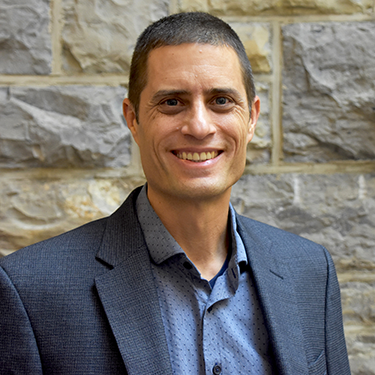
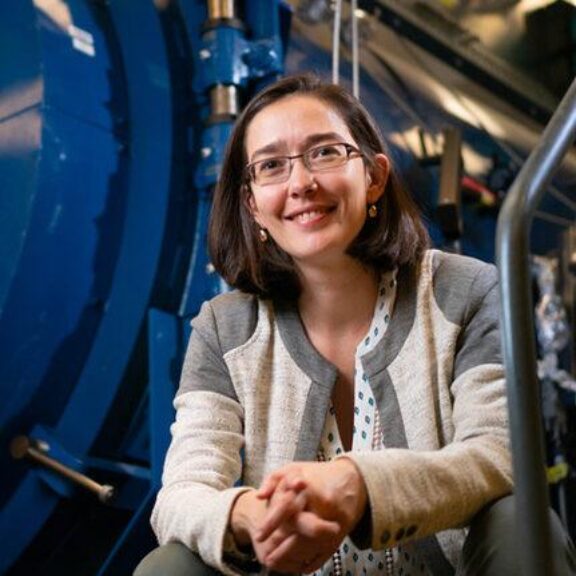
John R. Morris is a Professor of Chemistry and Associate Dean for Research at the College of Science, Virginia Tech. He holds the Dr. A.C. Lilly Jr. Faculty Fellowship in Nanoscience. His research focuses on interfacial chemistry, with emphasis on gas-surface reactions, catalysis, and chemical sensing. Key projects include chemical warfare agent detection, environmental pollutant interactions, and energy materials. Education: B.S., Aquinas College, 1991 Ph.D., University of Notre Dame, 1996 Postdoctoral Associate, University of Wisconsin-Madison, 1996–1999 Research Interests: Dr. Morris explores molecular mechanisms in gas-surface interactions using advanced techniques like molecular beam scattering and ultrahigh vacuum spectroscopy. His work addresses environmental chemistry (e.g., atmospheric pollutants), energy storage (e.g., MOFs for diborane), and defense applications (e.g., nerve agent decomposition). Recent studies include photocatalytic oxidation mechanisms on Au/TiO₂ and the development of novel sensors for volatile organic compounds. Awards: National Science Foundation CAREER Award (2001) Army Research Office Young Investigator Award (2001) Schug Research Award (2012) Advising & Grants: Morris has mentored over 10 students and led projects funded by NSF, DoD, and industry. His lab (005 Hahn Hall South) focuses on interdisciplinary collaborations in materials science and environmental chemistry. Labs/Teams: The Morris Group operates a state-of-the-art facility for studying gas-surface reactions, including custom-built chambers for CRDS and molecular beam experiments.
Dr. Bas Vriens is an Assistant Professor at Queen's University, Department of Geological Sciences and Geological Engineering, within the Faculty of Arts and Science. He leads the NFRF-Exploration Project and holds cross-appointments at the Beaty Water Research Centre. His research focuses on metal contaminants in mine wastes and the Great Lakes basin, integrating environmental geochemistry, hydrology, and engineering to quantify anthropogenic pollutant impacts. Education : Ph.D. in Environmental System Sciences (2015), ETH Zurich M.E.Sci. in Environmental Geochemistry (2011), Utrecht University B.Sc. in Chemical Engineering (2009), Avans Hogeschool Breda Research Interests : He investigates metal mobilization from mine wastes and emerging contaminants in wastewater. His work integrates interdisciplinary methods, including geochemical modeling, geospatial statistics, and field monitoring. Key areas include: Mine waste management and metal recovery Trace metal biogeochemistry in aquatic systems Wastewater effluent and biosolids management Advising & Grants : Current advisees span MSc to postdoctoral researchers (e.g., Nathan Beckner-Stetson, Mehran Mahdian). He supervises projects on surface water quality, watershed modeling, and industrial waste analysis. Labs & Teams : His research group collaborates with industry and government partners, focusing on lab-scale experiments, field studies, and computational modeling. Active projects include the Great Lakes trace metal budget and mine waste-rock weathering dynamics.
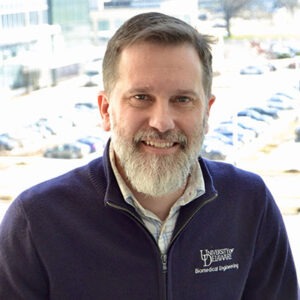
Christopher Price is an Associate Professor at the Ammon Pinizzotto Biopharmaceutical Innovation Center, University of Delaware. His research focuses on musculoskeletal biomechanics, bone adaptation, and cartilage degeneration, with a particular emphasis on mechanotransduction and fluid flow dynamics in tissues. He holds a Ph.D. in Biomedical Sciences from Mount Sinai School of Medicine (2008) and a B.Sc. in Biomedical Engineering from Boston University (2000). Dr. Price’s research interests include the role of load-induced fluid flow in bone and cartilage health, advanced bioimaging techniques, and the development of disease-modifying therapies for osteoporosis and osteoarthritis. His work has received national/international recognition, including the Orthopaedics Research Society’s New Investigator Recognition Award (2010) and multiple Young Investigator Awards (2009–2010). Research focuses on mechanobiology, mechanosensory pathways, and tissue adaptation in musculoskeletal systems. Key areas: post-traumatic osteoarthritis, cartilage lubrication, and aging-related bone fragility. Utilizes cross-disciplinary methods: biomechanics, imaging, cell biology, and animal models. Publications span topics like solute transport in bone, cartilage tribology, and genetic influences on bone healing. His lab explores translational applications of mechanotransduction research to develop therapies targeting musculoskeletal diseases.
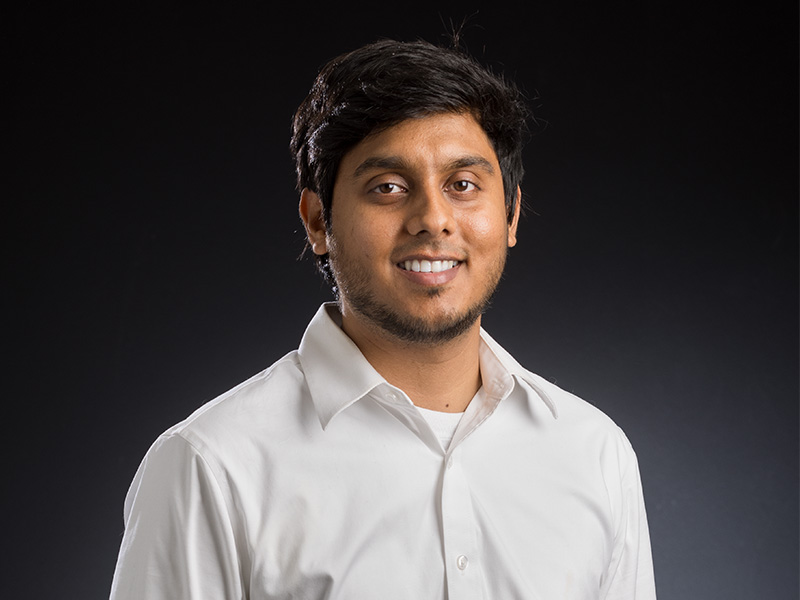
Dr. Srikanthan Ramesh serves as an Assistant Professor in the School of Industrial Engineering and Management within Oklahoma State University's College of Engineering, Architecture and Technology. Since establishing the Advanced Materials and Additive Manufacturing Laboratory in August 2022, he has led interdisciplinary research at the intersection of materials science, physical phenomena, and advanced manufacturing technologies, with applications spanning healthcare, aerospace, and electronics sectors. His educational foundation includes a Ph.D. in Mechanical and Industrial Engineering from Rochester Institute of Technology (2022) and an M.S. in Industrial and Manufacturing Systems Engineering from Iowa State University (2017). This academic background enables his innovative approach to manufacturing science. Dr. Ramesh's research program focuses on biological and micro-scale additive manufacturing (bio-AM), specializing in biomaterial development for tissue engineering and regenerative medicine. His work integrates computational fluid dynamics, machine learning, and real-time process monitoring to achieve precise control over mechanical, biological, and electrical properties of manufactured structures. He develops experimental tools and process frameworks for droplet-based and extrusion-based AM systems, with particular emphasis on wound healing applications and space-compatible microelectronics. Analysis of his 14 publications from 2020-2025 reveals a strong trajectory toward AI-driven manufacturing solutions, with increasing emphasis on multi-objective Bayesian optimization for bioink design, aerosol jet printing process refinement, and bioprinted tissue construct development. His recent work demonstrates sophisticated integration of machine learning with physical manufacturing processes to solve complex biomedical challenges. His scientific recognition includes: Doctoral Dissertation Pitch Competition (Runner-up), IISE, 2021 Best Oral Presentation, Graduate Showcase, Rochester Institute of Technology, 2019 Gilbreth Memorial Fellowship, IISE, 2018-2019 Wakonse College Teaching Fellowship, Iowa State University, 2018-2019 Graduate Research Excellence Award, Iowa State University, 2017 Best Overall Oral Presentation, Nano@IAstate, Iowa State University, 2017 Dr. Ramesh currently leads significant research initiatives including as Principal Investigator for an NSF REU Site on Additive Manufacturing and Cybersecurity ($464,606, 2025-2028) and a NASA EPSCoR Travel Grant for aerosol jet printing in space missions (2024-2025). As Co-PI on an NSF grant for Privacy-aware Collaborative Design in additive biofabrication ($599,981, 2025-2028), he develops frameworks for mass personalization in medical applications while addressing data security challenges. These projects support his lab's mission to advance manufacturing science through rigorous experimentation and computational innovation. The Advanced Materials and Additive Manufacturing Laboratory operates as a collaborative hub where Dr. Ramesh directs research teams in developing novel biomaterials, optimizing printing processes, and creating functional prototypes for wound dressings, liver tissue models, and space-rated microelectronics. The lab's interdisciplinary approach combines expertise in materials characterization, computational modeling, and machine learning to push the boundaries of what's possible in additive manufacturing for critical applications.
Lydia Tabernero is a Professor of Structural Biology & Drug Discovery at the University of Manchester, affiliated with the Division of Evolution, Infection and Genomics. Her research focuses on structural and chemical biology of protein phosphatases and signaling proteins, with a particular emphasis on drug discovery targeting cancer and infectious diseases. She leads projects investigating molecular mechanisms of disease, including tuberculosis and fungal infections, using X-ray crystallography, biochemical methods, and computational tools. Her research interests include: Reversible phosphorylation in signaling pathways Structure-based drug design for protein phosphatases In vitro screening and computational methods for inhibitor discovery Collaborative preclinical trials across Europe and the US Recent articles highlight work on Mycobacterium tuberculosis inhibitors, fungal pathogen metabolism, and drug discovery tools like VSpipe-GUI. Her work contributes to UN Sustainable Development Goals related to health and well-being. She has supervised 9 students and collaborated on projects such as the High-resolution cyclic ion mobility HDX mass spectrometry initiative. Notable contributions include advancing non-antibiotic tuberculosis treatments and identifying novel drug targets in pathogens. Her lab is part of the Lydia Becker Institute and Christabel Pankhurst Institute, fostering interdisciplinary research in drug development and structural biology.
Prof. Dr.-Ing. habil. Konrad Koch is a Professor at the Technical University of Munich (TUM), leading the working group on energy-efficient wastewater treatment since 2012. He holds the Chair of Urban Water Management within the TUM School of Engineering and Design. His career includes a habilitation in 2018 and appointment as an Extraordinary Professor (Apl.-Prof.) in 2023. He previously worked at the Bavarian State Research Center for Agriculture and earned his PhD from TUM in 2010. Education: PhD (Dr.-Ing.), Technical University of Munich (2010) Diploma in Waste Management and Contaminated Sites, TU Dresden (2007) Research at TU Hamburg-Harburg (2006–2007) Research focuses on sustainable use of organic waste streams, anaerobic digestion, wastewater treatment innovation, and energy recovery. Key areas include biological methanation, CO₂ utilization, and process optimization for resource efficiency. Koch actively bridges lab-scale to full-scale applications, emphasizing practical implementation in urban wastewater systems. Publications highlight advancements in biogas potential testing standardization, microbial methanation, and co-digestion strategies. His work addresses challenges like nitrogen oxide emissions and substrate selection for anaerobic processes. Lab affiliation: Chair of Urban Water Management, TUM. Collaborates with interdisciplinary teams on projects like ENCOVER, CANDO, and the Urban Water-Energy-Food Nexus. Editor for Bioresource Technology and Environmental Technology & Innovation .
Maria Cascio is a Research Fellow at the University of Aberdeen, currently serving as Senior Equality, Diversity and Inclusion Partner within the Directorate of People. She holds a PhD in Pharmaceutical Chemistry from the University of Fisciano, Salerno, Italy (2006) and has been based at the University of Aberdeen since 2007. Her academic journey includes significant research contributions in cannabinoid pharmacology and medicinal chemistry. PhD in Pharmaceutical Chemistry, 2006, University of Fisciano, Salerno, Italy Master in Chemistry and Pharmaceutical Technologies, 2002, University of Palermo, Italy Maria Cascio's primary research interests lie in the pharmacology and therapeutic potential of plant cannabinoids, with a focus on the endocannabinoid system in health and disease. Her work spans medicinal chemistry, allosteric modulation of cannabinoid receptors, and the development of novel CB1 and CB2 receptor ligands. She also investigates the anti-proliferative effects of omega-3 fatty acids and their derivatives in prostate cancer. Her research combines biochemical, pharmacological, and cell-based assays to characterize cannabinoid activity. Her recent publications reflect a strong trend in methodological development for cannabinoid receptor assays, pharmacological characterization of phytocannabinoids like THCV and CBD, and exploration of their therapeutic applications in inflammation, cancer, and neurological disorders. The work often involves interdisciplinary collaboration and synthetic chemistry approaches to probe receptor mechanisms. Maria Cascio is actively involved in university governance and inclusion initiatives, serving on multiple committees including the University Race Equality Strategy Group, the Equality, Diversity and Inclusion Committee, and as a Social Bias Observer in Promotions Committees. She has supervised both undergraduate and PhD students and has secured research funding from diverse sources including NIDA, NHS Grampian, Tenovus Scotland, and the University of Aberdeen. Her collaborations span institutions in the UK, Italy, and the US, reflecting the international scope of her research. She also contributes to the scientific community as a peer reviewer, book reviewer, and former Guest Associate Editor for Frontiers in Neuropharmacology. Maria Cascio leads and participates in several research teams focused on cannabinoid pharmacology, prostate cancer, diabetic nephropathy, anticonvulsant effects, and analgesia. Her work is supported by internal collaborators such as Dr Iain Brown, Professor Matteo Zanda, and Dr Mirela Delibegovic, and external partners across Europe and the United States.
Vera Slaveykova is a full professor in Environmental Biogeochemistry and Ecotoxicology at the Department of F.A. Forel for Environmental and Aquatic Sciences and the Institute for Environmental Sciences at the University of Geneva. She has held leadership roles including Director of the Department and President of the School of Earth and Environmental Sciences. She currently serves on the National Research Council of the Swiss National Science Foundation and represents the University of Geneva in the UNEP Global Mercury Partnership. She is also the Specialty Chief Editor for Biogeochemical Dynamics in Frontiers in Environmental Science. Research Interests: Her work centers on the behavior and impacts of trace elements, nanoparticles, and microplastics in aquatic systems. Key areas include: Speciation and bioavailability of trace elements and nanoparticles Aquatic toxicology of inorganic contaminants, nanoparticles, and microplastics Transcriptomics and metabolomics in environmental stress responses Community ecotoxicology and biodiversity in aquatic ecosystems Publication Trends: Her recent articles (2023–2025) show a strong focus on mercury speciation and transformations, nanoplastic and nanoparticle toxicity, eco-corona formation, and advanced analytical techniques like single-cell Raman spectroscopy and asymmetric flow field-flow fractionation. There is a clear emphasis on mechanistic understanding of pollutant-organism interactions across multiple biological levels. Scientific Leadership: She plays a major editorial and advisory role in environmental science, particularly in mercury research and nanoparticle ecotoxicology. Advising and Grants: She has supervised numerous doctoral students whose theses focus on mercury cycling, nanoparticle bioaccumulation, and ecotoxicological methods. Her research is likely supported by Swiss and international funding bodies, given her leadership in national science councils and global partnerships. Labs and Teams: She leads a research group focused on biogeochemical dynamics and ecotoxicology, collaborating with experts in analytical chemistry, microbiology, and environmental engineering, particularly through the Institute for Environmental Sciences and the F.A. Forel Department.
Ashwani Gupta is a distinguished University Professor of Mechanical Engineering at the University of Maryland. His research focuses on combustion science, pyrolysis, and waste-to-energy technologies. Key areas include swirl flows, fuel sprays, high-temperature combustion, and environmental pollution mitigation. He has pioneered studies on catalytic pyrolysis of biomass/plastics and CO2-assisted gasification. Education details are not explicitly stated, but his academic role suggests advanced qualifications in mechanical engineering. Research interests span thermal sciences, renewable energy, and sustainable processes. Over 50 peer-reviewed articles (2022–2024) highlight work on co-pyrolysis of biomass/plastics, hydrogen-enriched combustion, and distributed combustion regimes. Notable contributions include thermal barrier coating advancements and wastewater toxicity studies in Pisum sativum. Publications frequently address synergistic effects in thermochemical processes, waste valorization, and energy recovery from expired food/industrial waste. His work integrates experimental and computational methods, with applications in micro-combustor design and carbon-neutral technologies. No listed awards, but his high citation count reflects academic impact. Advising and grants details are not provided. Research teams likely focus on combustion dynamics and environmental engineering. Active in interdisciplinary projects, including clinical trials on yoga for diabetes prevention and Ayurvedic dietary interventions.
Kristopher Klein is an Associate Professor at the Lunar and Planetary Laboratory (LPL), University of Arizona, within the Department of Planetary Sciences, College of Science. He earned his Ph.D. from the University of Iowa in 2013 and has been a faculty member at LPL since 2017. His research focuses on theoretical and computational plasma physics in the context of solar and heliospheric systems. Education: Ph.D., 2013, University of Iowa Years with LPL: 2017–present Dr. Klein's research centers on fundamental plasma phenomena in the heliosphere, particularly turbulent heating, energization mechanisms, and departure from thermodynamic equilibrium in collisionless plasmas like the solar wind. He employs analytic theory, numerical simulations (e.g., AstroGK, HVM, gkeyll), and spacecraft data from missions such as Parker Solar Probe and HelioSwarm. He is a co-developer of the Arbitrary Linear Plasma Solver (ALPS), an open-source tool for dispersion analysis. His recent publications (2019–2025) reveal a strong focus on plasma turbulence, wave-particle interactions, kinetic instabilities, and solar wind heating mechanisms. The work frequently combines Parker Solar Probe observations with theoretical modeling to understand energy transfer at kinetic scales. Themes include ion and electron heating, stochastic heating, cyclotron damping, and multi-scale turbulence characterization. Scientific Awards: 2024 AAS Harvey Prize 2022 Landau-Spitzer Award for Outstanding Contributions to Plasma Physics Dr. Klein advises graduate students including Niranjana Shankarappa and Waverly Gorman, with former student Teddy Broeren (Ph.D., 2023). He leads major NASA-funded research projects related to the HelioSwarm and Parker Solar Probe missions. His involvement includes being Deputy Principal Investigator for HelioSwarm and Co-Investigator and Project Scientist for the SWEAP instrument on Parker Solar Probe. These roles involve significant grant leadership and collaboration with interdisciplinary teams. He is actively involved in instrumentation and data analysis, particularly through quasi-thermal noise spectroscopy and wave-particle correlation techniques. His work bridges theory, simulation, and observational data to advance understanding of space plasma physics.
Christoph Nething is a Doctoral Researcher at the Institute for Lightweight Design and Construction (ILEK) within the University of Stuttgart. His work focuses on interdisciplinary research combining architectural design with engineering principles, particularly in lightweight construction, adaptive facades, and sustainable building technologies. Position: Researcher Education: Master of Architecture (M.Arch.) Contact: +49 711 685 63765, Pfaffenwaldring 14, 70569 Stuttgart, Germany His research explores resource-efficient structures, gradient materials, and kinetic facades, aligning with ILEK’s emphasis on lifecycle optimization from design to disassembly. He contributes to projects like AP 35 – Exploit4InnoMat and collaborates within the Collaborative Research Center 1244 network. ILEK’s work spans textile-based and glass construction, advanced concrete systems, and ultra-lightweight adaptive designs, integrating digital tools and innovative fabrication methods.
Professor Neelesh A. Patankar is a faculty member in the Department of Mechanical Engineering at Northwestern University's McCormick School of Engineering, serving as Director of the Northwestern Academy for Interdisciplinary Science (NAISE). His academic rank is Professor, with a courtesy appointment in Engineering Sciences and Applied Mathematics. He holds a Ph.D. from the University of Pennsylvania and a B.Tech. from the Indian Institute of Technology Bombay. Research interests span three core areas: computational fluid dynamics (CFD) for fluid-structure interaction, biomechanical analysis of organs (e.g., esophagus, aorta), and phase transition engineering using surface roughness. His work bridges mechanics and clinical practice, with applications in anti-icing, boiling, and biomedical diagnostics. He teaches courses in CFD, microfluidics, and engineering analysis, and has developed innovative computational methods for neuromechanics and aquatic locomotion. Education: Ph.D., Mechanical Engineering, University of Pennsylvania M.S., Mechanical Engineering, University of Pennsylvania B.Tech., Mechanical Engineering, Indian Institute of Technology Bombay Awards: International Conference on Multiphase Flow Junior Award (2010) NSF CAREER Award (2002) Searle Junior Fellowship (2001) His research group, the Patankar Group, focuses on metasurface design, immersed body techniques, and applications in aquatic locomotion and biomedical systems. Collaborations include studies on esophageal transport, neuromuscular mechanics, and superhydrophobic surfaces. He advises numerous graduate students and postdoctoral researchers, contributing to over 100 publications and impactful interdisciplinary projects.
Taekjip Ha is a Professor at the University of Illinois at Urbana-Champaign (UIUC) in the Department of Physics, part of the Grainger College of Engineering. He also serves as a Bloomberg Distinguished Professor at Johns Hopkins University School of Medicine. His research focuses on single-molecule biophysical techniques to study molecular biology processes, including DNA dynamics, enzymology, and protein-DNA interactions. Ha has pioneered methods such as single-molecule fluorescence resonance energy transfer (FRET) and combined force-fluorescence spectroscopy. Ha earned his Ph.D. in Physics from UC Berkeley (1996) and held postdoctoral positions at Lawrence Berkeley National Lab and Stanford University. He is an Investigator at the Howard Hughes Medical Institute (2005) and co-director of UIUC’s Center for the Physics of Living Cells (2008–present). His honors include the American Physical Society Fellowship and election to the National Academy of Sciences. Research Interests: Developing novel single-molecule detection methods (super-resolution imaging, vesicular encapsulation) Studying DNA helicases, Holliday junctions, ribozymes, and chromatin remodeling Exploring mechanical perturbations of biomolecules in vitro and in vivo His lab actively engages undergraduates, with over 12 students proceeding to graduate programs, and collaborates on projects like helicase mutants and super-resolution imaging algorithms. The Center for the Physics of Living Cells, co-directed by Ha, trains the next generation of biophysical scientists. Awards: Howard Hughes Medical Institute Investigator (2005) Fellow, American Physical Society (2005) Michael and Kate Bárány Award (2007) NSF Award for Center for the Physics of Living Cells (2008) Labs/Teams: Leads the Single Molecule Nanometry Group (Ha Group) at Johns Hopkins and co-directs the Center for the Physics of Living Cells at UIUC.
Carmen Guerra-Garcia is the Charles Stark Draper Associate Professor of Aeronautics and Astronautics at MIT. She leads the Aerospace Plasma Group, focusing on the intersection of aerospace engineering, low-temperature plasma technologies, and gas discharge physics. Massachusetts Institute of Technology (PhD, SM) 2007-2014 Polytechnic University of Madrid (Ingeniero Aeronautico) 2007 Her research spans aircraft safety (lightning interaction, wind turbines, and charge control systems), plasma-assisted combustion , and space propulsion . She combines multi-physics modeling , computation , and experimentation to address challenges in carbon-free energy and aerospace electrification. Key trends in her recent work include plasma-assisted ignition of sustainable fuels , CO2 conversion for Mars ISRU , and dynamic interactions between plasmas and flames . Her articles highlight advancements in nanosecond pulsed discharges , self-pulsating streamers , and lightning risk mitigation . NSF CAREER Award (2024) Junior Bose Award for Excellence in Teaching (2024) Office of Naval Research Young Investigator Award (2021) International Fulbright Science and Technology Award (2009) First National Award in Aeronautical Engineering, Spanish Ministry of Education (2007) Guerra-Garcia’s grants include NSF CAREER funding for plasma-assisted combustion and ONR support for aerospace safety. She advises PhD students and collaborates with the Space Propulsion Lab and APS/AIAA technical committees.
Toan T. Nguyen is a Professor in the Department of Mathematics at Pennsylvania State University, affiliated with the Eberly College of Science. He holds a Ph.D. from Indiana University (2009). His research focuses on Partial Differential Equations, Mathematical Physics, Fluid Dynamics, and Kinetic Theory, with contributions to boundary layer stability, inviscid limits, and plasma physics. Education: Ph.D. in Mathematics, Indiana University, 2009. Affiliations: Editorial Board member of Kinetic & Related Models and SIAM Journal on Mathematical Analysis. Grants & Support: Recipient of Simons Fellowship (2019), Centennial Fellowship (2018). His work bridges theoretical analysis and applications, including nonlinear wave dynamics, fluid-structure interactions, and quantum kinetic models. He has organized international conferences, such as the VIASM Summer School in Mathematical Physics (2023–2024), and advised Ph.D. students like Chanjin You and Trinh T. Nguyen. Awards: T. Brooke Benjamin Prize (2022), highlighting his contributions to nonlinear waves and Landau damping. His research also explores instabilities in boundary layers and the mathematical foundations of plasma physics. Nguyen collaborates internationally, contributing to journals like the Journal of the American Mathematical Society and Communications in Mathematical Physics. His teaching includes advanced graduate courses on PDEs and kinetic theory.