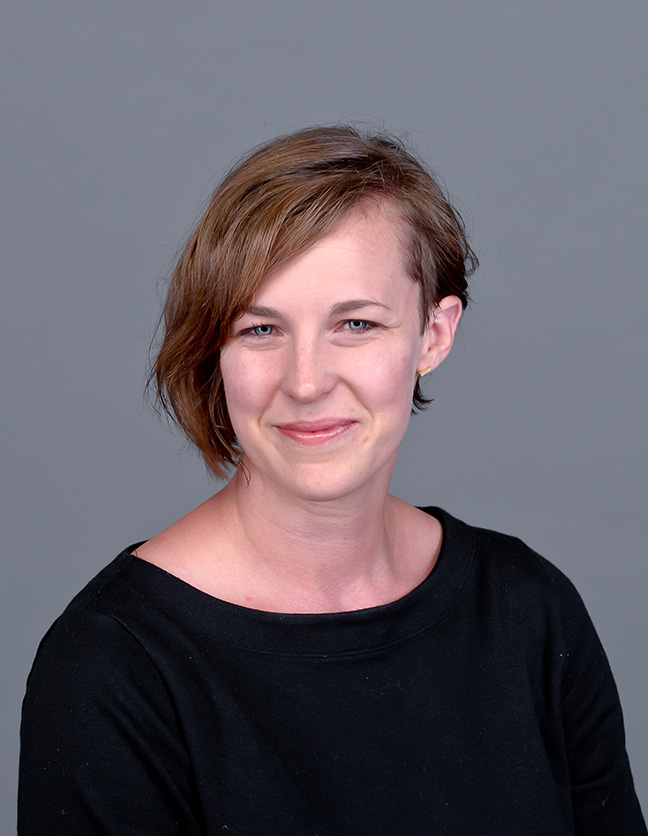
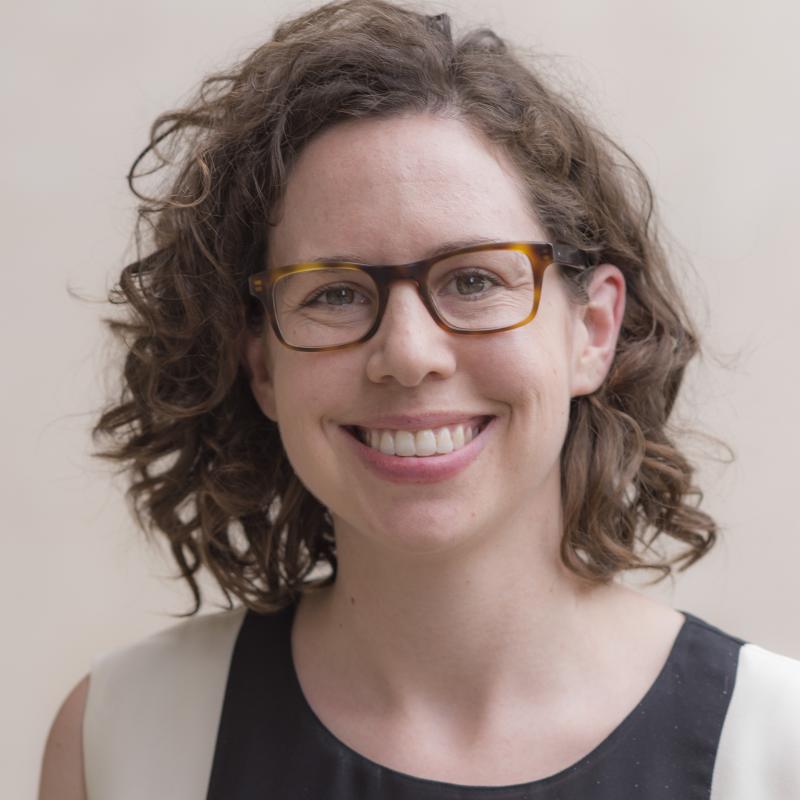
Lisa Walcott is an Associate Professor of Art at Hope College, where she has been a faculty member since 2018. She teaches sculpture courses, the capstone course for art majors, and a First-Year Seminar on artistic processes. Her studio practice focuses on kinetic sculptures and installations that explore themes of home, the everyday, and the feminine experience. MFA in Sculpture from Cranbrook Academy of Art (2010) B.A. from Trinity Christian College (2005) Walcott’s research intersects sculpture, installation art, and kinetic design, often recontextualizing domestic objects to investigate themes of interdependence, repair, and the unseen forces in everyday life. Her work frequently involves mechanical components and materials like wax, motors, and household items to create immersive, motion-driven installations. Her recent artworks, such as Making a Mountain (2024) and A Soft Punch to the Gut (2024), exemplify her focus on transforming utilitarian structures into emotive, kinetic pieces. These works, alongside digital collages like The Way I Figure It (2023), reveal a trajectory toward blending physical materials with conceptual frameworks to explore domestic ingenuity and tension. Walcott actively mentors students through faculty research collaborations and founded the Hope College Art Club. She exhibits nationally at institutions like the Eli and Edythe Broad Art Museum and The Sculpture Center, with solo exhibitions at venues including Manifest Gallery (Cincinnati) and the Urban Institute for Contemporary Art. Her studio practice integrates material investigations and workshops to refine techniques, which she translates into both pedagogy and art. Notable solo exhibitions include Swarm (2013) at the Broad Art Museum and Tight Spots (2021) at Saugatuck Center for the Arts.
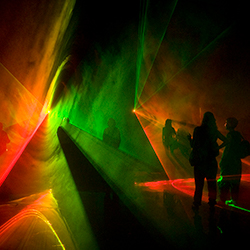
Edwin van der Heide is a part-time Lecturer and researcher at Leiden University, affiliated with the Leiden Institute of Advanced Computer Science (LIACS) and the Academy for Creative and Performing Arts (ACPA). His work bridges sound, space, and interaction through installations, performances, and environments. Key roles include: Co-head of ArtScience Interfaculty (Royal Conservatoire & Royal Academy of Art, The Hague) until 2016 Edgard Varèse Guest Professor at TU Berlin (2009) Invited artist at Le Fresnoy (France) and HKB Bern University of the Arts (2019) Research Interests: Spatial sound composition, audience interaction, interdisciplinary art, and the intersection of technology with auditory perception. Notable projects include Whispering Wind (permanent installation at Leiden University) and Spiral of Time (MACBA, Barcelona). Recent Articles & Exhibitions (2023–2024): Focus on large-scale installations like Pneumatic Sound Field and Spiral of Time , emphasizing public engagement and spatial acoustics. Awards: Witteveen+Bos Art+Technology Award (2009), Best Paper Award for BAI (摆) (2018). Grants & Labs: Collaborations with institutions like NCCA (Russia), MAXXI (Italy), and involvement in projects like Evolving Spark Network (global sound art initiatives).
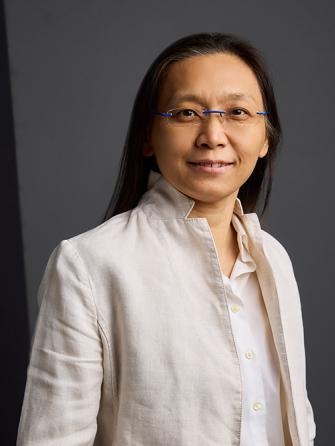
Dr. Wang Ruobing is a Lecturer in Fine Arts at LASALLE College of the Arts, Singapore. She is also an accomplished artist, educator, and independent curator. As co-founder of Comma Space (逗号空间), an artist-run experimental platform, she creates 'thinking spaces between commas.' Previously, she worked as a curator at the National Gallery Singapore before joining LASALLE. Dr. Wang holds a Doctor of Philosophy in Fine Art from Oxford University, UK; a Master of Arts from School of Oriental and African Studies and King's College London, University of London, UK; a Bachelor of Arts from Royal Melbourne Institute of Technology, Australia; and a Diploma of Arts from Nanyang Academy of Fine Arts, Singapore. Dr. Wang is deeply committed to exploring new ways of seeing and methods of knowledge production through her interdisciplinary artistic practice. Her work spans drawing, photography, sculpture, kinetic art, and installation, addressing critical environmental issues and engaging with transcultural discourses on identity and hybridity. With a particular focus on contemporary art in China and Southeast Asia, her research examines how artistic practices navigate cultural boundaries and create new forms of expression that reflect the complexities of our globalized world. She has presented her work at prestigious venues including National Gallery Singapore (2023), Yuan Contemporary Art Museum in Chongqing, China (2019), and Esplanade – Theatres on the Bay in Singapore (multiple exhibitions from 2004-2021). Dr. Wang's artistic trajectory shows a consistent evolution from individual identity explorations to broader environmental concerns. Recent works like 'Over the Horizon,' 'Beneath Tide, Running Water,' and 'Rainforest of the Sea' use marine debris to create kinetic sculptures that comment on ecological issues while maintaining aesthetic integrity. Her publications in Journal of Contemporary Chinese Art and Yishu demonstrate scholarly engagement with regional cultural development and cross-cultural artistic exchange. Dr. Wang has curated numerous significant exhibitions including 'Sites and Nature: A Collection of Remembering' (2023), 'Artist Conference' (2023), and 'Inbetween' (2021-2022). Her scholarly writings have appeared in respected publications such as the Journal of Contemporary Chinese Art (JCCA) and Yishu: Journal of Contemporary Chinese Art. Dr. Wang co-founded Comma Space (逗号空间), an artist-run experimental platform that serves as a laboratory for artistic experimentation and cross-disciplinary collaboration. Through this initiative and her teaching at LASALLE, she has created opportunities for emerging artists to develop their practices while engaging with critical social and environmental issues across Singapore and the broader Southeast Asian region.
Gordon Hughes is an Associate Professor of Art History in the Department of Art History at Rice University, specializing in early 20th-century European modernism with concentrated expertise in French painting and abstract art. His research significantly reinterprets foundational narratives of abstraction while extending into contemporary art and photographic history. His academic credentials include: Ph.D. in Art History from Princeton University (2004) M.A. from the University of Western Ontario (1996) M.F.A. in Studio Art from the University of Illinois at Chicago (1992) B.F.A. from the Nova Scotia College of Art and Design (1989) Professor Hughes' scholarship centers on re-examining abstract painting's origins through meticulous visual analysis, particularly focusing on Robert Delaunay's contributions to modernist vision. His work bridges pre-war European art with American conceptual practices from the 1960s-1980s, evidenced by influential publications on Fernand Léger, Georges Braque, Douglas Huebler, and Jenny Holzer. His theoretical approach integrates continental philosophy while prioritizing phenomenological engagement with artworks, reflected in his current book project Seeing Red: Murder, Abstraction, Machines which investigates intersections of art, technology, and violence. Analysis of his recent publications (2006-2022) reveals consistent scholarly engagement with French modernism's theoretical underpinnings while progressively incorporating contemporary critical frameworks. His work demonstrates evolving methodological sophistication through examinations of visual perception, medium specificity, and post-structuralist theory across diverse artistic movements from Cubism to Conceptual Art. His distinguished recognitions include: Getty Research Institute Scholar-in-Residence (2012-2013) Barr Ferree Foundation Publication Grant (2011) Terra Foundation for American Art support (2010) Professor Hughes mentors graduate students in Rice's Art History program with emphasis on close visual analysis and theoretical rigor. His research has received significant institutional support including Getty Research Institute residencies and major publication grants that facilitated his influential monograph Resisting Abstraction and editorial projects like October Files: Richard Serra .
Max Hattler is a media artist and Associate Professor at the School of Creative Media , City University of Hong Kong . He previously held Lecturer positions at Goldsmiths, University of London (2006-2014) and the Royal College of Art (2012-2014). His work explores intersections of abstraction/figuration , sound/image relationships , and creative media through experimental animation and audiovisual performance. Current Research Focus: Abstracted moving images as frameworks for rethinking power relations Recent Curatorial Work: Relentless Melt series (2021-2025) showcasing Hong Kong experimental animation Key Publications Trends : Recent articles examine stereoscopic innovation , graphical sound techniques , and abstract animation semiotics . His curatorial research in Hong Kong digital art and VR animation demonstrates technical and theoretical contributions. Major Awards : Cannes Lions (2013) Visual Music Awards (2010, 2011, 2014) CityU Teaching Excellence Award (2021-22) President's Award (2022) for research contributions Best Experimental Film at Reanima Festival (2017) International Presence : Regularly participates in Ars Electronica , Animafest Zagreb , and Society for Animation Studies conferences. Has conducted workshops at CalArts , Geneva University of Art and Design , and Floating Projects Hong Kong .
Gloria Sutton is an Associate Professor of Contemporary Art History and New Media at Northeastern University, with an affiliation in the Art, Culture, and Technology Program at MIT. She holds a PhD from UCLA and has held fellowships at the Getty Research Institute and Whitney Museum. Her research focuses on durational media’s impact on visual art since the 1960s, with particular attention to expanded cinema, digital networks, and post-internet art. Primary affiliations: Northeastern University (main appointment), MIT (affiliate) Key roles: Carpenter Center Scholar-in-Residence (2017-2018), co-curator of How Many Billboards Education: Doctorate in Art History from UCLA (specific year not stated). Research interests include: Critical analysis of network culture in visual art Material histories of time-based media Intersection of art, architecture, and technology (e.g., Le Corbusier studies) Publications include The Experience Machine (MIT Press) and edited volumes on Sara VanDerBeek and Renée Green. Current projects explore immersive art critique and Shigeko Kubota’s work. Awards: Andy Warhol Foundation Arts Writers Grant (recent) Emily Hall Tremaine Award (2008) Grants and residencies: Carpenter Center residency (2017-2018) Whitney Museum Independent Study Program fellowship Lecturing and collaborations include engagements at SFMoMA, Walker Art Center, and Harvard’s Carpenter Center for Visual Arts.
Michael Doolan is a Senior Lecturer at Sydney College of the Arts, University of Sydney. He holds a PhD from Monash University (2013), a Master of Arts (2001), and a Bachelor of Arts (1981). His work explores the intersection of memory, narrative, and objects, using ceramics and mixed media to create sculptures that interrogate childhood narratives and their influence on adult identity. Doolan’s installations often feature disorienting optical effects and fairy tale motifs, reinterpreting classic stories through a contemporary lens. Education: PhD, Faculty of Art Design & Architecture, Monash University (2013) Master of Arts, Monash University (2001) Bachelor of Arts, Monash University (1981) Research Interests: Doolan’s practice focuses on the legacy of fairy tales and their unresolved narratives. By combining handcrafted techniques with digital fabrication, his sculptures critique cultural narratives and materiality. His work often features uncanny, monochromatic ceramic forms that evoke childhood memories while questioning adult perceptions of selfhood. Exhibitions & Awards: Recent highlights include the Deakin University Small Sculpture Award 2024 , participation in the Korean International Ceramics Biennale 2019 , and solo exhibitions such as Stories with Endings Changed (2018) and World without World (2017). His work is featured in major public and private collections internationally. Associations: Member, Australian Network for Art & Technology (ANAT) Member, International Society for the Arts, Sciences and Technology (Leonardo) Current Projects: Researching new sculptural works that blend handcrafting with digital fabrication to reflect contemporary entanglements between human and machine processes.
Megan Sullivan is an Associate Professor of Art History at the University of Chicago, specializing in modern and contemporary Latin American art. She is affiliated with the Center for Latin American Studies and serves as co-editor of ArtMargins (MIT Press). Her research centers on Latin American modernism, with deep expertise in abstraction, craft practices, popular culture, and the relationship between aesthetic modernism and social/economic modernization outside the North Atlantic. She critically examines how indigenous and vernacular elements intersect with modern art, particularly in Peru, as seen in her analysis of artists like Lygia Clark and the Vargas brothers. Sullivan's publications reveal consistent engagement with tensions between high art and popular forms, abstraction and representation, and global-local dynamics. Her book Radical Form: Modernist Abstraction in South America (2022) and current Dedalus Fellowship-funded project on Peruvian modernism demonstrate her focus on decolonizing art history through indigenous perspectives. Scientific Awards: 2023 Dedalus Senior Fellowship She received the Dedalus Senior Fellowship for her book project Twentieth-Century Peruvian Art: Episodes in a History of Modernism and its Others and co-organized the international workshop Forging a History of Modern Art from the Andes with Ana Franco (Universidad de los Andes) in 2022.
Casey Reas is a Professor in the Department of Design Media Arts at the University of California, Los Angeles (UCLA), where he also co-directs UCLA Social Software. He holds a Master's in Media Arts and Sciences from MIT and a Bachelor's from the University of Cincinnati's College of Design. A pioneering figure in generative art and digital media, Reas co-founded the open-source programming language Processing, revolutionizing computational creativity for artists and designers. His work spans software installations, prints, and collaborative projects exhibited globally at institutions like the Centre Pompidou and the Whitney Museum. His research explores intersections of technology, art, and pedagogy, reflected in books such as Compressed Cinema and Making Pictures with Generative Adversarial Networks . Reas' practice emphasizes algorithmic processes and machine learning, exemplified in series like Untitled Film Stills and Compressed Cinema . He actively contributes to initiatives like UCLA’s Game Lab and the Conditional Studio, fostering interdisciplinary innovation. His work balances technical rigor with aesthetic exploration, bridging art, science, and technology.
Alexander Refsum Jensenius is a Professor of Music Technology and Director of the RITMO Centre for Interdisciplinary Studies in Rhythm, Time and Motion at the University of Oslo. He also leads the fourMs Lab and co-founded the MishMash Centre for AI and Creativity. His work bridges musicology, psychology, and technology, focusing on embodied music cognition, human motion analysis, and creative applications of AI. Notably, he pioneered research on air guitar motion and human micromotion through projects like the Oslo Standstill Database . Educated at the University of Oslo (BA in Music and Mathematics, MA in Musicology) and Chalmers University of Technology (MSc in Applied IT), Jensenius holds a PhD in Music Technology from UiO. He has held visiting researcher roles at UC Berkeley, McGill University, and KTH. Leadership roles include Department of Musicology Head (2013–2016) and Steering Committee Chair for the International Conference on New Interfaces for Musical Expression (NIME, 2011–2022). Research interests span music-related body motion, AI in creative contexts, and open research practices. Key contributions include the Music Moves and Motion Capture MOOCs, the Musical Gestures Toolbox software, and monographs like Sound Actions and Sonic Design . His work emphasizes interdisciplinary collaboration, with projects addressing ventilation systems' acoustic properties and cell culture vibrational effects. Awards include the European Open Data Champion recognition. He advocates for open science and maintains extensive digital archives of research materials, emphasizing institutional web pages as critical research infrastructure.
Patrik Kovačovský is a Professor and Studio Manager at the Department of Sculpture, Object, Installation at the Academy of Fine Arts in Bratislava. He works at the intersection of sculpture, architecture, and digital space, focusing on innovative artistic research and practice. Academy of Fine Arts in Bratislava (Department of Sculpture, 1990–1996) Art.D. studies, Academy of Fine Arts, 2001–2003 His research integrates traditional sculpture with virtual reality and architectural contexts, producing installations that explore memory, cosmic themes, and cultural identity. Recent works include Fluid Pictures (2011) and Kosmos (2006). 1996 Young Artist of the Year, Slovak National Gallery 2000 Annual Award, Galéria Klatovy/Klenová 2008 Visegrad Artist Residency 2010 Prohelvetia Residency in Zurich
John Douglas Powers is a Professor in the Department of Sculpture + Time-Based Art at the University of Tennessee Knoxville's School of Art. His work integrates motion, sound, and technology to explore themes like memory, time, and self-identity through interdisciplinary lenses. Education: M.F.A. in Sculpture (with distinction), University of Georgia B.A. in Art History, Vanderbilt University Research Focus: Investigates intersections of cinema, computation, music, and physical space. Explores intangible concepts like emotion and language through sculptural installations involving kinetic elements and multimedia. Influences include natural history, architectural theory, and technological history. Exhibitions & Media: Featured in The New York Times , Sculpture Magazine , CBS News Sunday Morning , and exhibited at institutions like Crystal Bridges Museum of American Art and MIT Museum. Awards: Guggenheim Fellowship Virginia A Groot Foundation Award Joan Mitchell Foundation MFA Grant Active in university resources like smART Lab and Wood Shop. Supervises artist residencies and internships through UT's Art department.
Professor Scott Palmer is a distinguished academic at the University of Leeds, serving as Professor of Light and Performance within the School of Performance and Cultural Industries (Faculty of Arts, Humanities and Cultures). With over 30 years of teaching and management experience in Higher Education, he was a founder member of the School in 2001 and has held numerous senior management roles including Interim Head of School, Director of Student Education (2019-2022), Director of Enterprise and Knowledge Transfer, and Programme Manager for BA (Hons) Performance Design for over a decade. In 2017-18, he was appointed to an Excellence and Innovation Fellowship at the Leeds Institute for Teaching Excellence & Innovation. PhD (Leeds) - Light, Scenography and the Choreography of Space Cert. Education (Manchester) BA Hons. Drama (Wales) Professor Palmer is a leading international advocate for scenography as an intellectual discipline. His research focuses on light, darkness and atmosphere in performance, designing for audience experience, and since 2017, the field of XR (Extended Reality). His influential monograph Light: Readings in Theatre Practice (Palgrave Macmillan, 2013) significantly contributed to establishing scenography as a scholarly field, exploring how light has influenced staging practices throughout history. He has co-edited major works including Scenography Expanded (Bloomsbury 2017) and the groundbreaking Contemporary Performance Lighting (2023), the first critical anthology focused specifically on performance lighting. His recent publications reveal evolving research trends from historical analyses of light in theatre to contemporary explorations of XR, immersive environments, and audience experience. Keywords across his work consistently emphasize scenography, audience experience, light design, and the integration of digital technologies in performance. His sub-field specializations span historical lighting techniques, immersive theatre practices, site-specific performance, 360-degree environments, and the theoretical frameworks connecting technological innovation with theatrical expression. Excellence and Innovation Fellowship at the Leeds Institute for Teaching Excellence & Innovation (2017-18) Research impact highlighted by AHRC as an exemplar case study Contributions to BBC Radio 3's Illuminating the Stage (broadcast December 25, 2017) Professor Palmer has supervised numerous PhD candidates and led collaborative student projects resulting in public performances including Pandora's Box (2009), Dream/Play (2010), Just Before Dawn (2011), Into the Dark (2012), Blood Wedding (2013), The Dreaming (2015), The Waiting Room (2017), and Within This House (2018). His research has been supported by significant grants including the AHRC-funded Projecting Performance (2006-08), UKRI-funded Surround Stories (XR Stories), and AHRC-funded Bridging the Gaps exploring Mixed Reality Performance of Chinese Opera. He plays an active role in international scholarly communities as co-convenor of the IFTR Scenography Working Group (2013-16), inaugural member of the TaPRA Scenography Working Group, and contributor to OISTAT Education and History and Theory Commissions. Professor Palmer is a member of the PLACE, Practice as Research, and Participation Research Groups at Leeds, and was co-instigator of the Leeds-based Performing Light Network. His SignalSpace web resource, developed with colleague Maria Kapsali, explores digital creativity and mobile phone applications in performance contexts. He regularly presents research outcomes at international conferences including IFTR, TaPRA, ICIDS, and ZipScene, demonstrating his commitment to advancing both theoretical understanding and practical applications of performance design.
Pamela Karimi is an Associate Professor in the Department of Architecture at Cornell University’s College of Architecture, Art, and Planning (AAP). She is a trained architect and historian of art and architecture with a focus on the modern and contemporary Middle East. Her interdisciplinary research bridges architecture, art, environmental studies, and socio-political dynamics, particularly in contexts of resistance, spatial justice, and sustainability. Ph.D., History, Theory & Criticism of Art and Architecture, MIT (2009) Previous teaching positions: University of Massachusetts Dartmouth, Brandeis University, NYU, Wellesley College Her research centers on critical spatial practice , artistic activism , and gendered spatial politics , especially in Iran. She explores how artists and architects navigate state restrictions to reclaim public space and foster democratic expression. Her work also extends to post-industrial cities in North America and the global politics of cultural heritage. Her recent publications include the award-winning Alternative Iran: Contemporary Art and Critical Spatial Practice (2022) and the newly released Women, Art, Freedom: Artists and Street Politics in Iran (2024), which examines the role of art in the 2022 Woman, Life, Freedom uprising. Her publications and curated exhibitions reveal a consistent focus on resistance, memory, and spatial transformation. Notable awards include the Sharmin and Bijan Mossavar-Rahmani Book Award (2024), a NEH Summer Stipend (2023), and grants from the Graham Foundation and the Käte Hamburger Institute . She has also received recognition for teaching excellence. She has curated impactful exhibitions such as Black Spaces Matter (2017–2019), which explored race and architecture in 19th-century New Bedford, MA, and has held leadership roles in academic organizations including the Aggregate Architectural History Collaborative and the Thresholds Journal . Her research is widely covered in media outlets like NPR, BBC, Al-Jazeera, and The Washington Post. She is currently working on a book titled Survival by Design: Desert Architecture at the End of the World and contributing to the Cultural History of Asian Art series, reflecting her broad and evolving scholarly engagement with global spatial and cultural issues.
Malgorzata Zboinska is an Associate Professor at Chalmers University of Technology within the Department of Architecture and Civil Engineering . She is a licensed architect and member of the Swedish Association of Architects and National Chamber of Architects of Poland . Hybrid architecture-technology-art research Focus on bio-based materials , digital fabrication , and creative robotics Development Leader of Chalmers' Robotic Fabrication Laboratory Editorial board member of TAD | Technology, Architecture + Design journal Research Themes bridge architecture , digital technology , and art , with expertise in: Sustainable and circular architectural practices 3D printing and robotic construction Material bioinnovation and upcycling Interactive and kinetic architectural solutions Her publications demonstrate strong output in digital fabrication , bio-material applications , and environmental architecture , with international exhibitions at Tempe Center for the Arts (USA) , Dutch Design Week (NL) , and Färgfabriken (Sweden) .