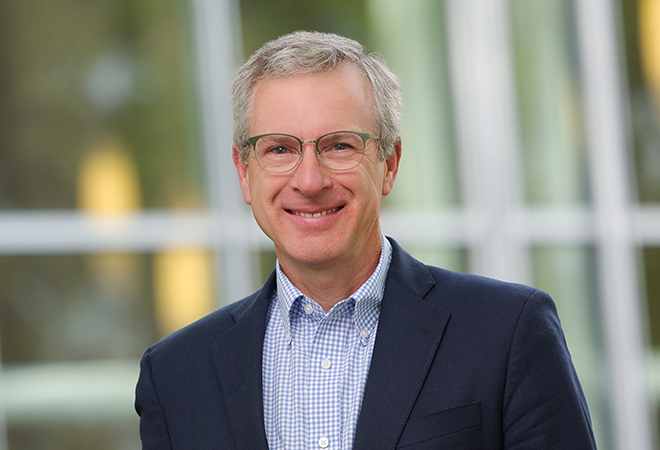
David Mazières is a Professor at Stanford University , affiliated with the School of Engineering and the Department of Computer Science . He serves as a software engineer at the Stellar Development Foundation . His work bridges academic research and industry applications in distributed systems and security. University: Stanford University Academic Rank: Professor Email: dm@scs.stanford.edu Research Interests: David Mazières' research focuses on distributed systems , cryptocurrencies , and computer security . Key areas include consensus protocols (e.g., Stellar ), low-latency scheduling ( Syrup , Shinjuku ), and cryptographic techniques for privacy and security ( SafetyPin , CCFI ). Key Achievements: His notable works include: TCP-ENO (RFC 8547) for secure transport protocols Stellar Consensus Protocol for decentralized finance SOSP 1999 Best Paper for 'Separating key management from file system security' Teaching Contributions: He has taught core and advanced courses at Stanford since 2005, including CS212 (Operating Systems) , CS240h (Functional Systems in Haskell) , and CS251 (Cryptocurrencies and Blockchain Technologies) . Previously taught courses at NYU (2001-2005).
Gene Tsudik is a Distinguished Professor of Computer Science at the University of California, Irvine (UCI), with a career spanning over two decades. He obtained his Ph.D. in Computer Science from the University of Southern California (USC) in 1991, focusing on access control in the Internet. His research spans multiple areas including computer and network security, applied cryptography, and digital privacy, with a recent emphasis on database privacy, genomic privacy, and usable security. His notable contributions include the Inter-Domain Policy Routing (IDPR) protocol, KryptoKnight for network security, and Tree-Based Group Key Agreement protocols. He has over 210 publications and 8 patents. From 2002 to 2007, he served as Associate Dean of Research and Graduate Studies at UCI's School of Information and Computer Sciences and currently directs the UCI Secure Computing and Networking Center (SCONCE). Research Keywords : Cybersecurity, Cryptography, Privacy, Network Security, Digital Signatures, Genomic Data Protection. Scientific Awards : IEEE Fellow (2012), ACM Fellow (2014), AAAS Fellow (2016), Fulbright Senior Scholar (2007), and IFIP Fellow (2020). Professor Tsudik has supervised 18 PhD students and held visiting positions at universities across Europe and Asia. His recent publications focus on secure hardware attestation, biometric authentication, and social media data privacy.
Qiang Tang is currently an Associate Professor (Level D) at the School of Computer Science of The University of Sydney. Previously, he was a Senior Lecturer (2021.1-2024.12) at USYD and an Assistant Professor at the Computer Science Department of New Jersey Institute of Technology (2016.8-2021.1), where he co-directed the JACOBI Blockchain Lab with Prof. Jian Pei and Prof. Zhenfeng Zhang. He completed his PhD at the University of Connecticut under Prof. Aggelos Kiayias and Prof. Alexander Russell, following postdoctoral research at Cornell University with Prof. Elaine Shi. His research spans applied and theoretical cryptography, blockchain technology, privacy, and computer security. His work is supported by ARC, Google, Ethereum Foundation, Stellar Foundation, Protocol Labs, Algorand Foundation, Oracle, and USYD. Previous funding includes NSF, JD.com, AFRL, DoE, and Particl Foundation. His research has led to significant contributions in consensus protocols, distributed randomness generation, secure multi-party computation, and privacy-preserving technologies. Tang's publications reveal a strong focus on practical cryptographic solutions for blockchain and distributed systems. His recent work demonstrates expertise in asynchronous consensus, optimal protocol design, and secure implementations for real-world applications. His research shows consistent innovation in improving efficiency, security, and scalability of distributed systems. Scientific Awards: 2025 DSN Best Paper Award 2024 ICDCS Distinguished Paper Award 2023 SOAR Prize, USYD 2023 Oracle for Research Award 2022 Stellar Foundation Research Awards 2022 Ethereum Academic Award 2019 MIT Technical Review, 35 Chinese Innovators Under 35 Tang actively mentors PhD and Master's students, with several alumni now holding faculty positions or research roles at institutions like City University Hong Kong, Chinese Academy of Sciences, and A*STAR Singapore. He has received significant research funding including a multi-year Google project on End-to-End Secure Cloud and an ARC DP grant on Order Fairness in Decentralized Systems. He leads the research in his lab focusing on blockchain protocols and cryptographic applications, with strong industry connections through collaborations with Google, Ethereum Foundation, Stellar Foundation, and Protocol Labs. His team regularly publishes in top security and cryptography venues including CRYPTO, CCS, USENIX Security, and S&P.
Aishwarya Ganesan is an Assistant Professor at the Siebel School of Computing and Data Science, University of Illinois Urbana-Champaign. Her research focuses on distributed systems, storage systems, and fault tolerance mechanisms, with emphasis on high-performance computing and datacenter infrastructure. She leads projects addressing challenges in replicated storage, consensus protocols, and system resilience. Her work explores fault tolerance in disaggregated datacenters, log abstractions for low-latency applications, and novel replication strategies for modern storage systems. She has developed frameworks like LazyLog and IONIA to improve system efficiency and reliability. Her research also extends to automatic reliability testing for cluster management controllers and analyzing distributed storage vulnerabilities. Key contributions include demonstrating how redundancy alone does not guarantee fault tolerance, and proposing consistency-aware durability mechanisms for storage systems. She received the NSF CAREER Award in 2024 for her research on storage-aware fault tolerance. Her work spans 21 peer-reviewed publications, with notable contributions in conferences like SOSP, EuroSys, and FAST. Current projects investigate fault tolerance in emerging memory technologies and system recovery protocols for consensus-based storage.
Anthony Forsyth is a Distinguished Professor in the School of Law at RMIT University's Graduate School of Business and Law. He specializes in labour and employment law, focusing on collective bargaining, trade unions, union education, labour hire, and the gig economy. His leadership roles include Director of Juris Doctor Programs (2012-2015) and Head of the Law Department (2019-2022), during which he developed RMIT's Bachelor of Laws and combined law/business degrees. He chairs the RMIT Law Advisory Board and the Higinbotham Lecture Series. His research explores the intersection of Australian and global workplace regulation, emphasizing equitable outcomes through evidence-based legal interventions. Key projects include the Victorian Government Inquiry into Labour Hire Industry and Insecure Work (2015-16), resulting in his book *The Future of Unions and Worker Representation: The Digital Picket Line* (2022). He collaborates with unions like the United Workers Union and Australian Council of Trade Unions. Anthony holds leadership positions such as President of the Australian Labour Law Association (since 2021) and advisory roles at the Centre for Future Work. His awards include multiple RMIT Media Stars Awards (2018-2021) and a Research Impact Award (2018). His work bridges academia and industry, addressing digital-age challenges for worker representation. **Education**: Extensive legal career before academia (pre-2000), including roles at Ashurst, Norton Rose, and Maurice Blackburn. **Grants & Projects**: Victorian Government Inquiry, industry collaborations with unions. He runs the *Labour Law Down Under Blog* and oversees RMIT's Centre for People, Organisation & Work. His recent articles analyze gig economy regulation, multi-employer bargaining reforms, and digital tools for worker mobilization.
Jonathan B. Wiener is the William R. Perkins Distinguished Professor of Law at Duke Law School, Professor of Environmental Policy at the Nicholas School of the Environment, and Professor of Public Policy at the Sanford School of Public Policy at Duke University. He serves as Co-Director of the Duke Center on Risk in the Science & Society Initiative and holds affiliations with Resources for the Future (RFF), the Administrative Conference of the United States (ACUS), Duke Kunshan University, and the Harvard Center for Risk Analysis. President, Society for Risk Analysis (2008) Co-Chair, SRA World Congress on Risk (2012) Founding Faculty Director, Duke Center for Environmental Solutions (2000-05) Co-Director, Rethinking Regulation Program (2015-19) His research focuses on comparative risk regulation , climate change policy , environmental economics , and international regulatory cooperation , with recent work on solar radiation modification governance , multirisk frameworks , and adaptive policy design . Key projects include the Duke Center on Risk and the Duke Rethinking Regulation initiative. Scientific awards include the Chauncey Starr Young Risk Analyst Award (SRA, 2003) Richard J. Burk Outstanding Service Award (SRA, 2014) University Fellow of Resources for the Future Senior Fellow of ACUS He has advised on climate treaties , international risk assessments , and regulatory reform , with grants from institutions like the Intergovernmental Panel on Climate Change and China Council for International Cooperation on Environment & Development . His work bridges law , policy , and decision sciences .
Cesla Amarelle serves as Full Professor and Chairholder of Public Law and Migration Law at the University of Neuchâtel's Faculty of Law. Her academic leadership extends to co-directing the Swiss Center for Migration Law (CDM) and contributing to national research initiatives including the National Center of Competence in Research (NCCR) 'On the Move'. She concurrently holds significant public appointments as Chair of the Institute of European Law at the University of Fribourg and Federal Commissioner for Women's Issues, with recent expert designation to the Federal Round Table on signature collection integrity for 2024. Her academic foundation includes a law degree from the University of Lausanne (1996), LL.M. in European and International Economic Law from the University of Fribourg, and doctoral thesis from the University of Lausanne (2004). Her career progression at the University of Neuchâtel spans assistant professor (2009-2014), extraordinary professor (2015-2016), and full professor positions since 2016, complemented by earlier research roles at Swiss National Science Foundation and University of Fribourg. Professor Amarelle's research centers on migration law frameworks, human rights protections in asylum systems, and constitutional dimensions of European integration. Her work critically examines the intersection of migration governance with digital technologies, climate change impacts, and gender equality. Current projects analyze temporary protection regimes, non-refoulement principles in technological contexts, and the evolving relationship between Swiss migration law and European legal frameworks. Her scholarship consistently bridges theoretical legal analysis with practical policy implementation challenges. Her extensive publication record demonstrates evolving focus from foundational migration law codification toward contemporary challenges including digital discrimination, child rights in emergency contexts, and sustainable finance frameworks. Recent scholarship reflects increasing engagement with technological impacts on migration governance and the humanitarian dimensions of temporary protection systems, while maintaining rigorous analysis of constitutional and European law interfaces. Professor Amarelle actively contributes to academic and public discourse through leadership in the Swiss Center for Migration Law and participation in the NCCR 'On the Move' consortium. Her public service includes significant political roles as Vaud State Councilor for Education (2017-2022) and National Councilor (2011-2017), where she chaired key committees on political institutions and finance while representing Swiss higher education interests nationally. She maintains active engagement with professional associations including the Swiss Conference of Higher Education Institutions and Conference of Directors of Public Education.
Sri AravindaKrishnan Thyagarajan is a Lecturer at The University of Sydney's School of Computer Science, specializing in cryptography. He focuses on enhancing security and fairness in distributed systems, blockchains, and multi-party computations with applications in post-quantum cryptography. His work spans top-tier conferences like ACM CCS and IEEE SP. Education: B.Tech, Computer Science & Engineering, National Institute of Technology Trichy, India (2011–2015) M.Sc., Computer Science, Saarland University, Germany (2015–2016) Ph.D., Applied Cryptography, Friedrich Alexander Universität Erlangen-Nürnberg, Germany (2016–2021) Research Interests: Cryptography (classical and post-quantum), blockchain security, cryptocurrencies, fairness in multi-party computations, privacy-preserving protocols, and decentralized systems. Recent Articles: Focus on cryptographic protocols for blockchains, threshold cryptography, verifiable randomness, and secure atomic swaps. Recent work includes advancements in post-quantum signatures, distributed randomness generation, and privacy-preserving payment systems. Awards: Nominated for GI Dissertationspreis 2021 Advising & Grants: Advising Ankit Kapoor. Active in program committees for CCS, IEEE SP, and FC. Currently Program Chair for Crypto Valley Conference 2025. Labs/Teams: Part of the Sydney Blockchain Centre and cybersecurity cluster at the University of Sydney. Collaborates globally with institutions like NTT Research, Carnegie Mellon University, and Bocconi University.
Vasil Georgiev Tsunizhev is a Professor of Computer Informatics at the Faculty of Mathematics and Informatics, Sofia University, with office hours Monday and Wednesday 13:00-14:00 in room FMI-110. Contact: v.georgiev@fmi.uni-sofia.bg, +359 2 8161-594. His research spans cloud computing, distributed systems, and grid technologies with emphasis on resource management, load balancing, and service modeling. Key contributions include numerical solutions for cloud servicing, distributed coordination mechanisms, and fault-tolerant information services. His work integrates open-source components and addresses scalability challenges in cloud environments. Analysis of his 2009-2015 publications reveals consistent focus on cloud infrastructure optimization, with recurring themes in resource frameworks, quality-of-service models, and distributed coordination. His research demonstrates strong technical depth in numerical modeling and system architecture while addressing real-world scalability and fault tolerance requirements. Professor Tsunizhev collaborates internationally through projects like CoreGRID (contributing to grid security white papers) and works with researchers including R. Zhelev and L. Kirchev. His laboratory work focuses on commodity grid platforms and lightweight resource management systems for distributed computing environments.
Professor Hakan Ali Çırpan is a distinguished faculty member at Istanbul Technical University's Faculty of Electrical and Electronics Engineering, where he serves as Professor in the Department of Electronics and Communication Engineering. He also holds the position of Vice Dean at Istanbul Technical University since 2021. With over three decades of academic experience, Professor Çırpan has established himself as a leading researcher in signal processing and communications. His educational background includes: PhD from Stevens Institute of Technology (1993-1997) Master's degree in Electrical-Electronic Engineering (with thesis) from Istanbul University (1989-1992) Bachelor's degree in Electrical and Electronic Engineering from Uludağ University (1985-1989) Professor Çırpan's research spans multiple domains within signal processing and communications. His primary interests include wireless communications, radar systems, machine learning applications in communications, and electronic warfare. His work on channel estimation, orthogonal frequency division multiplexing, and maximum likelihood methods has been particularly influential. He has pioneered research in areas such as source localization, spectrum sensing, and physical layer security. His recent work focuses on 5G/6G networks, AI-enhanced communications, and integrated sensing and communication systems. Analysis of his recent publications (2023-2025) reveals a strong focus on next-generation wireless technologies, particularly 5G/6G networks, AI integration in communications, and electronic warfare applications. His research demonstrates a consistent pattern of addressing fundamental challenges in signal processing while adapting to emerging technological needs. A significant portion of his recent work involves machine learning applications for spectrum management, optimization techniques for radar systems, and novel approaches to network slicing and resource allocation. His notable scientific achievements include: ASELSAN ACADEMY THESIS COMPETITION WINNER (2020) Professor Çırpan has supervised 59 theses throughout his career, mentoring numerous graduate students in the fields of signal processing and communications. He has secured significant research funding, including the "AI-Enhanced 5G/6G Networks with Integrated Camera and ISAC Systems" project (2023-2024) and the "Railway Vehicle Infrastructure New Generation Secure Communication Systems" TÜBİTAK project with a budget of ₺955,000. His research has practical applications in defense systems, railway communications, and next-generation wireless networks. His laboratory work focuses on wireless communications systems, radar signal processing, and AI-enhanced communication technologies. Professor Çırpan leads research teams working on projects related to 5G/6G networks, electronic warfare countermeasures, and secure communication systems. His group collaborates with industry partners like ASELSAN and conducts research with practical applications in national defense and critical infrastructure.
Michael Burke is a Professor and Earl P. and Ethel B. Koerner Chair in Strategy and Entrepreneurship at Tulane University’s A. B. Freeman School of Business. He holds affiliations with the Stone Center for Latin American Studies and serves as Chair of Tulane’s Social-Behavioral Institutional Review Board. His academic journey includes roles at New York University (1985–1991) and visiting professorships at the University of Sheffield (2004). Education: Ph.D. in Psychology (Illinois Institute of Technology, 1982), M.S. in Industrial Psychology (Purdue University, 1980), and B.A. in Psychology (University of Notre Dame, 1977). Burke’s research focuses on Organizational Behavior and Occupational Safety , with emphasis on teamwork effectiveness, safety training, and interrater agreement methodologies. His work spans cross-cultural studies (e.g., Peru, Colombia, Mexico) and integrates psychological principles with practical workplace applications. Key contributions include over 60 publications, including seminal articles on safety training efficacy, meta-analytic methods, and climate assessment. His awards include the 2023 Tulane Convergence Award for interdisciplinary collaboration and multiple Dean’s Excellence Awards (2014–2017). He has supervised 2 dissertations/theses in recent years and actively contributes to academic governance, serving as Editor of Personnel Psychology (2007–2010) and on editorial boards for major journals. Burke’s international experience includes collaborations in Latin America, Australia, and Europe, leveraging his fluency in French.
Gurjot Singh is a Research Fellow at the Department of Computer and Information Science (IDA) at Linköping University, Sweden. His research focuses on cybersecurity in aviation systems, next-generation communication networks, and industrial IoT security. He collaborates with prominent researchers like Andrei Gurtov and Suleman Khan, contributing to projects such as SEC-AIRSPACE and Post Quantum Secure Handover Mechanisms. His work spans vulnerability assessments, secure protocol design, and post-quantum cryptography applications. Education details are not explicitly stated, but his research aligns with advanced cybersecurity and network engineering domains. Key research interests include aviation cyber risk assessment, secure data link communications, and privacy-preserving authentication mechanisms for IoT and industrial environments. Publications emphasize cybersecurity challenges in aviation, industrial networks, and IoT, with recent work addressing quantum-resistant protocols and drone remote identification security. Collaborations include contributions to conferences like NordSec and AIAA DATC. He is affiliated with the cybersecurity lab at LiU, supporting educational programs like Digital4Business, which integrates AI and cybersecurity expertise. His role in the Database and Information Techniques (ADIT) division highlights involvement in interdisciplinary research groups.
Weichao Wang is a Professor and Chair of the Department of Software and Information Systems at the University of North Carolina at Charlotte (UNC Charlotte). He holds a Ph.D. in Computer Science from Purdue University (2005), with earlier degrees from Tsinghua University. His research focuses on securing pervasive systems, wireless networks, cloud computing, and critical infrastructures, integrating multi-disciplinary approaches like information theory and visualization. He leads efforts in cybersecurity education for K-12 and higher education. Key roles include organizing IEEE conferences (e.g., IPCCC) and editorial roles in journals like ITU Intelligent and Converged Networks. His awards include the 2024 AECT Crystal Award and multiple Distinguished TPC recognitions. Students under his advisement have contributed to areas like mobile cloud computing and network security. Professional contributions include service on over 50 conference committees and journal reviewing. Current research emphasizes cybersecurity in education, IoT defense, and AI-driven security systems. His lab explores immersive visualization for cybersecurity training and augmented reality applications.
Riham AlTawy is an Associate Professor and MTIS Program Director at the Department of Electrical and Computer Engineering, University of Victoria. She previously held positions as an NSERC Postdoctoral Fellow at the University of Waterloo and an NSERC Canada Graduate Scholar at Concordia University. Her research focuses on IoT security, blockchain consensus mechanisms, lightweight cryptographic primitives, and privacy-preserving protocols. She leads the IoTSec group, which develops application-specific cryptographic solutions for IoT authentication and privacy challenges. Education includes postdoctoral training at the Communication Security (ComSec) group (University of Waterloo) and doctoral studies at Concordia University. Her work has led to publications in top venues such as IEEE Transactions and CANS conferences. She actively seeks PhD research assistants and postdoctoral fellows in cryptographic research. Key research areas include authentication protocols for edge computing, privacy in cross-domain systems, and lightweight algorithms for constrained devices. Her group emphasizes practical solutions for real-world IoT security challenges.
Assistant Professor Aman Gebru at the University of Houston Law Center specializes in Intellectual Property Law , Copyright Law , and Traditional Knowledge governance. His research addresses challenges in protecting communal authorship (e.g., memes, collaborative projects) and bioprospecting frameworks for indigenous communities. Research Trends : Gebru's work spans 2024: Cultural Appropriation in trademark law 2023: Copyright's failure to address group creativity 2022: Knowledge Commons for bioprospecting 2021: Biopiracy solutions and vaccine IP during pandemics 2019-2012: Land rights in Ethiopia, bioprospecting regulations Key Contributions : He advocates for legal reforms in traditional knowledge protection , communal ownership , and fair benefit-sharing in resource exploitation. His articles propose frameworks for balancing proprietary rights with public goods.