Shu-Cherng Fang is a prominent academic in the fields of Operations Research , Optimization , and Machine Learning . His work spans theoretical advancements and practical applications in Mathematical programming Supply chain network design Fuzzy systems Support vector machines Algorithm development . While specific institutional affiliations and academic rank are not explicitly stated in the provided text, his extensive publication record in high-impact journals indicates a faculty-level role. Research interests include optimization under uncertainty , supply chain logistics , and kernel-free machine learning models . Key trends in recent articles focus on fourth-party logistics (4PL) network design distributionally robust optimization for machine learning mathematical modeling of customer behavior stochastic programming . Co-authors frequently include Min Huang, Zhibin Deng, Jian Luo, and Wenxun Xing, reflecting sustained collaborations. Articles emphasize interdisciplinary approaches combining fuzzy logic , game theory , and computational geometry to solve complex decision-making problems.
Prof. Felix Höfling holds a W2 non-tenure professorship for 'High-performance computing in molecular dynamics' at Freie Universität Berlin (since 2015). He leads the Computational Statistical & Biological Physics group within the Department of Mathematics and Computer Science. Prior roles include research associate positions at the Max Planck Institute for Intelligent Systems (2010–2015), postdoctoral research at the University of Oxford (2009), and doctoral work at Ludwig-Maximilians-Universität München (2006, summa cum laude). His research focuses on computational methods in statistical and biological physics, including molecular dynamics simulations, anomalous transport in crowded environments, and high-performance computing. Notable contributions include studies on liquid-vapor interfaces, colloidal dynamics, and the interplay between microscopic and macroscopic transport phenomena. His work integrates theoretical modeling, numerical simulations, and interdisciplinary applications in soft matter and biophysics. Editorial Board Member of Communications Physics (since 2023) Director of the CECAM node 'Mathematics and Computation in Molecular Simulation' (since 2022) Head of the MSc Examination Board for Computational Sciences (since 2019) His research articles explore topics such as surface tension modulation, confined fluids, and active matter systems. Key achievements include a highly cited review on anomalous transport in biological cells (2013) and contributions to the development of the H5MD molecular data format. Awarded 'Distinguished Referee' by the European Physical Journal (2013) Recipient of grants for projects on open systems and parallel computing Prof. Höfling oversees the Computational Statistical & Biological Physics lab, emphasizing collaborative research in computational physics and interdisciplinary applications.
Stefanos Fasoulas is a Professor of Space Transportation Technology and Managing Director of the Institute of Space Systems at the University of Stuttgart. He has held leadership roles including Dean of Faculty 6 - Aerospace Engineering and Geodesy and has been instrumental in advancing research in aerospace engineering, plasma dynamics, and orbital aerodynamics. Education: Studied Aerospace Engineering at the University of Stuttgart, earning his diploma (1990) and PhD (1995). His research spans space systems engineering, gas-surface interaction modeling, and life support technologies. Recent work focuses on machine learning for scattering kernels, drag-based collision avoidance, and heterogeneous catalytic reactions in spacecraft environments. Key trends in his publications include: Innovations in DSMC and PICLas simulations for reentry analysis Development of atmosphere-breathing propulsion systems Environmental impact assessments of launchers and space debris He has acquired numerous research grants, particularly for projects like DISCOVERER and planetary sunshade concepts. His leadership extends to founding roles in the Competence Center Aerospace Saxony/Thuringia and the University Center for Aerospace at TU Dresden.
Christian Holm is a Professor at the Institute for Computational Physics of the University of Stuttgart. His research focuses on computational modeling of soft matter systems with electrostatic and magnetic interactions, including polyelectrolytes, colloids, and hydrogels. Member of collaborative research centers SFB 716, SFB 1313, SFB 1333, FOR 2811, and MultiXscale Develops machine learning potentials and advanced simulation methods for complex molecular systems Co-developer of the ESPResSo simulation package for soft matter research His recent work explores: Mechanisms of polyelectrolyte complexation and gel swelling Machine learning approaches for quantum-accurate interatomic potentials Dynamics of active colloids and biofilm formation in porous media Multi-agent reinforcement learning for smart active systems He maintains affiliations with CECAM's Soft Matter and Statistical Mechanics node and contributes to open science initiatives through software development.
Prof. Dr. Frank Bauernöppel is a Lecturer in Computer Engineering at the Berlin University of Applied Sciences (HTW Berlin) , affiliated with the Department of Engineering - Energy and Information. His academic work focuses on embedded systems, software development for real-time operating systems, and computer architecture. Teaching areas: C/C++/C#/Python programming, Linux kernel development, OpenEmbedded/Yocto tools, FreeRTOS/ROS systems Research interests: Image processing with OpenCV/TensorFlow, algorithm optimization using CUDA/SIMD, computational complexity analysis Contact: Frank.Bauernoeppel@HTW-Berlin.de | Office hours by appointment
Lucas Vincenzo Davi is a Professor of Computer Science at the University of Duisburg-Essen and Director of the paluno - the Ruhr Institute for Software Technology . He leads the SYSSEC research group and is a Principal Investigator (PI) in the SFB CROSSING and CASA excellence cluster. His work focuses on practical software and systems security, including memory corruption vulnerabilities, exploit mitigation, and blockchain smart contract security. Davi holds an ERC Starting Grant for Smart Contract Security research. Education: PhD in IT Security, TU Darmstadt (2011–2015), Dissertation: "Code-Reuse Attacks and Defenses" Master of Science in IT Security, Ruhr-Universität Bochum (2007–2009) Diplom (FH) in Business Informatics, FOM Neuss (2003–2007) Research: Davi's work emphasizes real-world security challenges like runtime attacks, trusted execution environments (TEE), and secure embedded systems. His contributions include Wemby (WebAssembly security analysis), HCC (smart contract hardening), and rowhammer mitigations like CATT. His research has influenced industry practices, e.g., Microsoft EMET v5.1 improvements. Awards: Best Teacher Award (2025) Finalist German IT Security Prize (2022, 2020) ACM SIGSAC Dissertation Award (2016) CAST Förderpreis (2010) Grants & Leadership: ERC Starting Grant (Smart Contracts), SFB CROSSING PI, CASA Cluster PI, and leadership in interdisciplinary initiatives like Nano Security (DFG Priority Program). Labs/Teams: Director of paluno, SYSSEC group leader, and collaborator in projects like HERA (hotpatching for embedded systems) and DMA’n’Play (DMA-based attestation).
Witold Andrzejewski is an active researcher in computer science, focusing on data deduplication pipelines, co-location pattern mining, and GPU-accelerated algorithms. His work bridges academia and industry, with publications analyzing customer record deduplication in the financial sector, performance optimization of spatial data processing, and comparative studies of statistical modeling versus machine learning approaches. 2025: Co-location pattern mining with Euclidean metrics 2024: Customer data deduplication parameter tuning 2023: Text similarity measures in financial applications
Benjamin Recht is a Professor at the California Institute of Technology , affiliated with the Center for the Mathematics of Information . His work spans Machine Learning , Control Systems , Reinforcement Learning , and Optimization , with a focus on theoretical guarantees, adaptive algorithms, and real-world applications. His research includes: Control Systems : Certainty equivalence, adaptive control, LQR, and robustness in dynamic environments. Machine Learning : Generalization bounds, interpolation in classifiers, test set overuse, and ethical frameworks for systemic harm detection. Neural Rendering : K-Planes for explicit radiance fields in space-time-appearance modeling. Recent publications (2025-2018) highlight trends in automating adaptive control , ethical machine learning , distributed computing , and 3D reconstruction . No student lists, awards, or lab details are explicitly mentioned.
Prof. Dr. Matthias Keller is a leading researcher in discrete spectral theory and graph analysis, affiliated with the Institute of Mathematics at the University of Potsdam since 2015. His work bridges geometric properties of graphs with spectral theory, focusing on Dirichlet forms, Schrödinger operators, and functional inequalities. Key Collaborations : Daniel Lenz, Radoslaw Wojciechowski, Yehuda Pinchover Books Authored : Graphs and Discrete Dirichlet Spaces (Springer, 2021) His research explores non-positively curved graphs, stochastic completeness, and magnetic sparseness. Recent projects include optimal Hardy inequalities and spectral analysis of fractional Laplacians. Scientific Awards : Swiss Fellowship (2023) Golda Meir Fellowship (2012-2013) Klaus Murmann PhD Fellowship (2007-2010) He advises PhD and Master’s students such as Yannik Thomas , Matti Richter , and Philipp Bartmann , while maintaining active roles in DFG-funded projects and international workshops.
Marc Adrat is an Honorary Professor at RWTH Aachen University and Head of the Software Defined Radio research group at Fraunhofer Institute for Communication, Information Processing and Ergonomics (FKIE). His dual role combines academic teaching with cutting-edge industrial research in communications engineering. Education: Diplom-Ingenieur in Electrical Engineering (1997), RWTH Aachen University Dr.-Ing. (PhD) in 2003 from Institute of Communication Systems and Data Processing (IND), RWTH Aachen Research Focus: Prof. Adrat specializes in channel coding , modulation techniques , and iterative decoding with particular emphasis on polar codes , BICM-ID systems , and EXIT chart analysis . His work bridges theoretical foundations with practical implementations in software-defined radio systems. His recent research directions include applying machine learning techniques (particularly genetic algorithms) to optimize communication systems, developing autoencoder-based signal enhancement methods, and advancing spectrum monitoring technologies for cognitive radio applications. Awards & Recognition: Best Paper Award at ICMCIS 2022 for work on spectrum monitoring techniques Appointed Honorary Professor by RWTH Aachen University in June 2024 Teaching & Supervision: Since 2009, he has taught courses on Modern Channel Coding for Wireless Communications and Advanced Coding and Modulation at RWTH Aachen. His teaching covers both theoretical foundations and practical implementations of modern communication systems. Laboratories & Teams: At Fraunhofer FKIE, he leads the Software Defined Radio research group, focusing on developing flexible, reconfigurable radio systems for military and civilian applications. The group works extensively on real-time implementations of advanced coding and modulation schemes.
Stefan Sosnowski is a Research Fellow at the Chair of Information-Oriented Control, Technical University of Munich (TUM). He has been affiliated with TUM since 2007, including roles as a research assistant and PhD candidate. His work spans Control Systems , Robotics , and Human-Robot Interaction . PhD in Electrical Engineering (2014), TUM Diploma Engineer (2007), TUM B.Sc. in Electrical Engineering (2005), TUM His research focuses on Data-driven Control (e.g., Koopman Operator theory, Gaussian Processes), Human-Centered Control , and Bio-inspired Design for autonomous systems. Recent publications emphasize learning-based control frameworks and stability analysis for nonlinear systems. Notable projects include SeaClear2.0 , CO-MAN , and ReHyb . He coordinates external theses at ITR and has an Erdős number of 4.
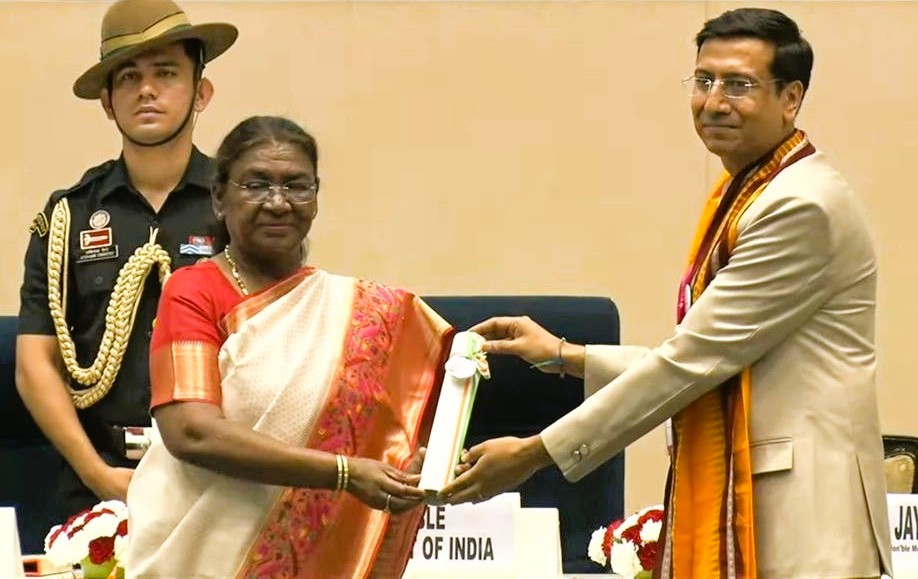
Prof. Kapil Ahuja is a Full Professor in the Department of Computer Science & Engineering at the Indian Institute of Technology Indore (IIT Indore), where he heads the Mathematics of Data Science and Simulation (MODSS) research lab. After completing dual Master's degrees and a Ph.D. from Virginia Tech (USA) followed by postdoctoral work at the Max Planck Institute in Germany, he has held visiting positions at UT Austin, IMT Atlantique, Sandia National Labs, TU Dresden, and TU Braunschweig. His administrative roles include founding Dean of International Affairs and former Head of Computer Science & Engineering at IIT Indore. Education: Ph.D. in Mathematics, Virginia Tech (2011) M.S. in Mathematics, Virginia Tech (2009) M.S. in Computer Science, Virginia Tech (2007) B.Tech. in Mechanical Engineering, IIT (BHU) Varanasi (2001) Research Focus: Prof. Ahuja's work bridges theoretical advances with real-world applications, emphasizing machine learning algorithms for plant/cancer studies, game-theoretic poverty reduction models, exascale climate modeling solvers, and drone trajectory optimization. His interdisciplinary approach integrates numerical linear algebra with network science to solve complex systems problems across healthcare, agriculture, and climate science, supported by 4.85 Crores INR in external funding. Publication Trends: Recent work demonstrates growing emphasis on AI-driven optimization for physical systems (drones, climate models) and biomedical applications (cancer classification). His publications increasingly feature cross-disciplinary collaborations between computer science, biology, and economics, with notable contributions in explainable AI for healthcare and resource allocation algorithms for social networks. Scientific Recognition: National Teacher's Award (2024) from the President of India Five-time recipient of IIT Indore's Best Teacher Award (2013-2023) Best Poster Award at International Workshop on Game Theory & Networks (2019) Steeneck Graduate Research Fellowship (Virginia Tech, 2011) Multiple SIAM travel awards for international conferences Mentorship & Service: Prof. Ahuja has graduated 5 Ph.D. and 4 M.S. (Research) students while mentoring 75 B.Tech. projects. He serves as Associate Editor for Applied Intelligence Journal (Springer Nature) and Knowledge and Information Systems, organizes international conferences, and reviews for 35+ academic sources. His administrative leadership significantly expanded IIT Indore's global partnerships through the Research Park initiative. Research Infrastructure: The MODSS lab maintains active collaborations with Oak Ridge National Lab, Sandia National Labs, and European institutions. Current projects include AI-optimized drone swarms for agricultural monitoring and game-theoretic models for poverty intervention, utilizing high-performance computing resources for large-scale simulations.
Maximilian Schüle serves as Assistant Professor in the Department of Data Engineering at the University of Bamberg's Faculty of Information Systems and Applied Computer Sciences since October 2022. Previously, he held research positions at Technical University of Munich (2017-2022). His research bridges database systems and machine learning through compiler-based approaches. His research focuses on in-database machine learning , GPU-accelerated query processing , and recursive SQL extensions . Key contributions include: Developing MLIR-based compilers for automatic differentiation in SQL (DuoLingo-AutoDiff) Creating GPU code generators for database kernels using NVRTC Designing higher-order lambda functions for expressive query languages Implementing end-to-end neural network training within database engines His recent publications (2023-2025) demonstrate consistent output in top venues including ICDE, VLDB workshops, and BTW conferences, with growing emphasis on hardware-aware optimization and compiler techniques for analytical workloads. He currently leads a DFG-funded project on elastic memory hierarchies for memory-intensive applications (2025-2028), supporting multiple PhD researchers. His supervision emphasizes open-source contributions to database systems like Umbra and practical implementation skills alongside theoretical foundations. As an active member of the database community, he serves as workshop chair for BTW 2025 and regularly reviews for ACM TODS, VLDB Journal, and Information Systems. His work on public transport analytics demonstrates real-world impact through collaborations with urban mobility initiatives in Bamberg.
Niki Kilbertus is a Professor in the Department of Informatics at the Technical University of Munich and a group leader at Helmholtz AI (Helmholtz Munich). They are also affiliated with MCML, the Konrad Zuse School relAI, and the Munich Unit of ELLIS. Since 2024, they have been a member of the Junge Akademie and received the Leopoldina Prize for Young Scientists. In 2025, they were awarded an ERC Starting Grant and achieved tenure at TUM. Professor Kilbertus's research focuses on causal machine learning, mechanistic ML, dynamical systems, and AI for science. Their work spans theoretical foundations of causal inference and practical applications across scientific domains. They have made significant contributions to causal effect estimation, causal discovery in stochastic processes, learning differential equations, and fair machine learning. Their research often bridges computer science with physics, biology, and climate science, demonstrating the interdisciplinary nature of their work. Professor Kilbertus has published extensively in top machine learning venues including NeurIPS, ICML, and ICLR, with numerous publications in 2024-2025. Their recent work shows a strong trend toward causal discovery in continuous-time systems, intervention modeling, and physics-informed machine learning applications. Scientific Awards: Leopoldina Prize for Young Scientists (2024) ERC Starting Grant (2025) Professor Kilbertus actively supervises multiple PhD students and collaborates with researchers across institutions including Max Planck Institutes and Helmholtz centers. They serve as an Action Editor for TMLR and regularly review for major ML conferences. The research group is well-funded through the ERC grant and institutional support from TUM and Helmholtz AI, enabling active recruitment of new PhD students and postdocs. Based at Technical University of Munich and Helmholtz AI, Professor Kilbertus's team works at the intersection of theoretical machine learning and scientific applications, with particular strengths in causal reasoning for complex dynamical systems.
Professor Oleg Davydov holds a Professorship for Numerical Analysis at the Department of Mathematics, University of Giessen, Germany. His research focuses on developing advanced numerical methods with strong theoretical foundations and practical applications. He maintains an active research program with numerous recent publications and international collaborations. Position: Professor of Numerical Analysis Institution: University of Giessen, Department of Mathematics Contact: Heinrich-Buff-Ring 44, 35392 Giessen, HRZ Room 117 Email: oleg.davydov@math.uni-giessen.de Homepage: https://oleg-davydov.de/ Professor Davydov's research interests center around meshless numerical methods, approximation theory, and computational mathematics. His primary focus areas include: Meshless Finite Difference Method - Developing robust meshless techniques that avoid the need for structured grids Finite Element Method - Particularly Bernstein-Bézier finite elements and specialized approaches for complex geometries Scattered Data Fitting - Creating efficient algorithms for approximating data on irregular domains Approximation Theory - Investigating theoretical properties of splines, radial basis functions, and other approximation tools His research has resulted in several software packages including mFDlab (Meshless Finite Difference Method), BBFEM (Bernstein-Bézier Finite Elements), and TSFIT (Two-Stage Scattered Data Fitting), demonstrating the practical implementation of his theoretical work. Analysis of Professor Davydov's recent publications shows a consistent focus on improving meshless methods, particularly in stencil selection, error analysis, and applications to complex problems. His work spans both theoretical developments (like error bounds and optimal approximation orders) and practical implementations (for fluid dynamics, manifold learning, and interface problems). A notable trend is the increasing sophistication of adaptive techniques and the handling of challenging geometries. Professor Davydov has supervised several doctoral students to completion, including: Gaelle Andriamaro Fabien Rabarison Abid Saeed Wee Ping Yeo His research group appears to maintain active collaborations with institutions worldwide, as evidenced by his extensive co-authorship network. The group focuses on developing both theoretical foundations and practical implementations of numerical methods, with particular attention to problems involving irregular domains, singularities, and complex geometries. Students in his group would gain experience in both theoretical analysis and software development for numerical methods.