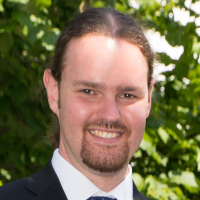
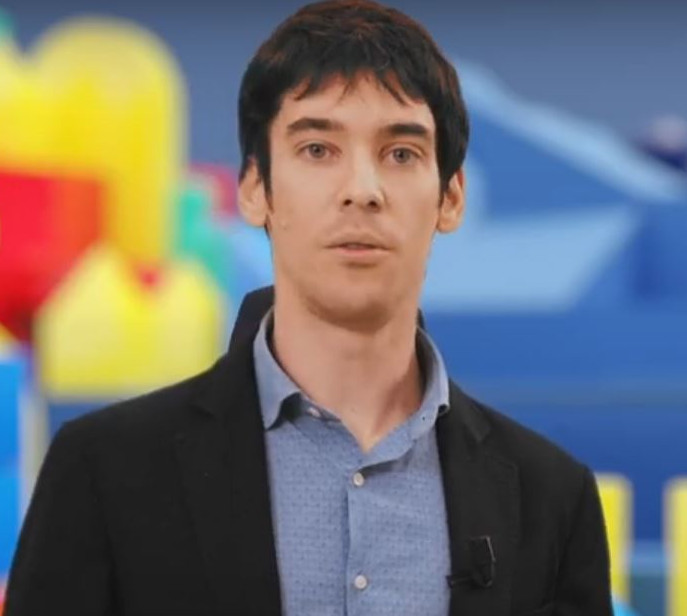
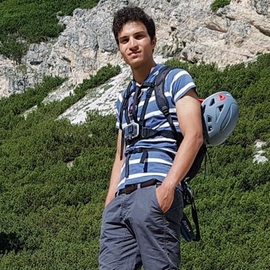
Edoardo Fadda is a Fixed-term tenure-track Assistant Professor at the Department of Mathematical Sciences (DISMA), Politecnico di Torino . He serves as a member of the College of Mathematical Engineering and College of Electronic, Telecommunications and Physics Engineering . Specializes in Operations Research and Mathematical Programming Active in stochastic optimization , reinforcement learning , and control applications Teaching roles include Optimization Methods for Control Applications and Stochastic Programming courses His research spans supply chain optimization , logistics , and AI-integrated decision systems , focusing on uncertainty modeling and multi-stage stochastic programming. He leads the Development of Decision Support Systems and the SUPERSONIC project for ecological logistics, alongside commercial consulting for RIDIX SPA through Fondimpresa contracts. Notable collaborations include Paolo Brandimarte and Francesca Maggioni . Edoardo supervises PhD candidates Alessia De Crescenzo (39th cycle) and Lorenzo Mazza (40th cycle). His publications emphasize stochastic customer behavior , perishable product policies , and kernel-based system identification , with applications in aerospace, smart cities, and industrial manufacturing.
Wolfgang Erb is an Associate Professor in Numerical Analysis at the Department of Mathematics “Tullio Levi-Civita”, University of Padua (Italy). He specializes in multivariate approximation and computational methods for inverse problems, with applications in biomedical imaging. Current Position: Associate Professor, University of Padua Previous Positions: Postdoctoral Fellow at University of Lübeck, Assistant Professor at University of Hawaii at Manoa Education: PhD in Mathematics, Technical University of Munich (2010) Research Interests: Wolfgang Erb's research focuses on mathematical models for signal processing, including: Lissajous curve-based approximation techniques Uncertainty principles applied to manifolds and graphs Kernel methods for learning on networks Fast reconstruction algorithms for inverse problems Applications in Magnetic Particle Imaging and biomedical imaging Recent Publications Trends: His work centers on numerical analysis and computational mathematics, particularly in polynomial interpolation frameworks and biomedical imaging applications. Facilities & Collaborations: Wolfgang engages with advanced university facilities including High Density EEG systems, MRI & PET scanners, and computational infrastructure at University of Padua. Teaching: He teaches “Mathematical Models and Numerical Methods for Big Data” in the Data Science master’s program.
Alvise Sommariva is an Associate Professor with Full Professor habilitation in Numerical Analysis (MATH-05/A) at the Department of Mathematics, University of Padua. He maintains an active research program in approximation theory and numerical analysis while contributing significantly to academic service through conference organization and editorial work. Department of Mathematics, Tullio Levi-Civita, University of Padua Visiting Professor at Jagiellonian University, Kraków Member of multiple scientific committees for international conferences Co-managing editor of Journal of Approximation Software His research focuses on Numerical Analysis and Approximation Theory, particularly Quadrature and Cubature Formulas, Multivariate Polynomial Approximation, and Meshless Methods. He develops practical computational tools for numerical integration and approximation across various geometric domains including intervals, triangles, squares, disks, spheres, and tetrahedrons. Professor Sommariva actively contributes to the approximation theory community through leadership in the RITA (Ricerca Italiana in Teoria dell'Approssimazione) research network and editorial work, including special issues dedicated to prominent researchers in the field. Editor of Special Issue Dedicated to Len Bos (2024) Scientific committee member for multiple international conferences through 2026 Regular presenter at major approximation theory conferences He teaches in the Doctoral Program in Mathematical Sciences and supervises bachelor students in the Laurea degree program at University of Padua, with particular recognition for his Numerical Analysis courses in Energy Engineering. Professor Sommariva maintains an extensive online presence with computational resources for approximation theory, including MATLAB and Python implementations of numerical methods, and actively collaborates with researchers across Europe and beyond.
Lorenzo Rosasco is a Full Professor at the Department of Computer Science, Bioengineering, Robotics and Systems Engineering (DIBRIS) at the University of Genoa. He holds roles including University contact for the thematic area "Artificial Intelligence" and membership on the Department Board. His research focuses on machine learning theory, kernel methods, optimization, robotics, and their applications in control systems, domain adaptation, and interdisciplinary fields like biomedical engineering. His educational background includes advanced expertise in mathematical foundations of machine learning, though specific academic credentials are not detailed here. Teaching responsibilities include courses such as MACHINE LEARNING, SEQUENTIAL PREDICTION AND REINFORCEMENT LEARNING, and INFORMATION THEORY AND INFERENCE at both undergraduate and graduate levels. Research interests revolve around developing efficient algorithms for large-scale machine learning, including iterative regularization, transfer learning, and control systems using Koopman operator theory. Notable contributions include work on fast kernel methods, optimization in neural networks, and applications in robotics for tasks like humanoid locomotion and tactile sensing. Recent publications explore topics such as double descent phenomena, sim-to-real transfer learning, and adaptive control strategies. His work bridges theoretical insights with practical applications, emphasizing computational efficiency and interdisciplinary impact.
Mirko Mazzoleni is an Associate Professor at the Department of Management, Information and Production Engineering, University of Bergamo, Italy. His research focuses on system identification, fault diagnosis, kernel methods, and Industry 4.0 applications. He holds a Master's in Computer Science Engineering (2014) and a Ph.D. in Engineering and Applied Sciences (2018). Before becoming an Associate Professor, he served as an Assistant Professor at the Control and Automation Laboratory (CAL) from 2019 to 2024. His work integrates data science, signal processing, and machine learning to develop robust algorithms for supervisory systems and fault detection in electromechanical actuators. Notable contributions include kernel-based identification methods, visualization tools for classification results (Confusion Star/Gear), and supervision frameworks for industrial equipment. He co-founded AISent srl, applying technological solutions to industry challenges. He teaches courses like Adaptive Learning and Estimation , System Identification , and Advanced Methods for Fault Diagnosis . His research spans aerospace applications (e.g., jamming detection in aircraft actuators), vibration signal analysis, and data-driven control strategies. Recent projects include robust filter design for electromechanical systems and guidelines for industrial supervision solutions.
Matteo Scandella is an Assistant Professor at the University of Bergamo , Italy, since February 2024. Previously, he served as a post-doctoral researcher at Imperial College London (2020–2024). He holds a PhD in Control Systems (2019) and advanced degrees in Computer Science Engineering from the University of Bergamo (Bachelor 2014, Master 2016). His research focuses on kernel-based machine learning techniques applied to system identification , nonlinear dynamics , and control systems , with emphasis on aerospace applications and mechatronics. He has developed methods for stable nonlinear system modeling, continuous-time system identification, and data-driven control strategies like SelfMPC. Education: Bachelor Degree in Computer Science Engineering (2014) – University of Bergamo Master Degree in Computer Science Engineering (2016) – University of Bergamo PhD in Control Systems (2019) – University of Bergamo Research interests span kernel methods (e.g., manifold regularization, RKHS), stability analysis of nonlinear systems, and data-driven control . His work bridges theoretical advancements with engineering applications such as health monitoring of aerospace actuators and urban traffic optimization. Recent publications highlight innovations in automated MPC tuning and graph-based system identification techniques. Teaching includes courses like Automatica (6 CFU) and laboratory modules in sustainable industrial systems. His research has been published in top journals like Automatica and conferences such as L4DC and SYSID.
Marco Rando serves as a Research Fellow at the Department of Computer Science, Bioengineering, Robotics, and Systems Engineering (DIBRIS) at the University of Genoa, Italy, focusing on advanced computational methodologies with practical engineering applications. His research expertise spans critical domains in modern computational science: Optimization (specializing in black-box and zeroth-order techniques) Robotics (particularly humanoid locomotion control systems) Machine Learning (kernel methods and stochastic optimization) Systems Engineering (data quality monitoring frameworks) Recent publications (2023-2024) reveal a concentrated research trajectory toward developing efficient structured optimization algorithms for non-smooth problems, with significant applications in robotic control systems and data integrity verification. His work consistently integrates gradient-free approaches to solve complex real-world engineering challenges. Scientific awards: No awards documented in available materials. Advising activities and research funding details remain unspecified in current records, with no student mentorship information provided. Laboratory affiliations and collaborative research teams are not explicitly referenced in the source documentation.
Giulia De Pasquale is an Assistant Professor at the Department of Electrical Engineering, Eindhoven University of Technology, specializing in Control Systems. Her research focuses on social network interventions, optimization algorithms, and fairness in AI systems. She leads the Control Systems Group, addressing challenges in distributed control, hypergraph reconstruction, and ethical algorithm design. Her work integrates machine learning, network science, and control theory to develop fair and safe recommendation systems. Recent projects include hypergradient-based optimization for social network interventions and optimal transport approaches to fairness in influence maximization. She actively collaborates with institutions like Santa Fe Institute and UC San Diego. Giulia organizes interdisciplinary workshops on algorithmic fairness and has presented at NeurIPS, CDC, and NetSci. She advises PhD students like Alessandro Casu and hosts visiting scholars such as Camilla Quaresmini. Her research has been published in prestigious venues including Nature Communications and ICML.
Marco Fumero is a PostDoctoral Researcher at the Institute of Science and Technology Austria (ISTA), where he conducts foundational research at the intersection of geometry and artificial intelligence. Previously, he completed his Ph.D. in Computer Science at Sapienza University of Rome as a core member of the GLADIA research group under Professor Emanuele Rodolà's supervision, establishing a trajectory bridging theoretical geometry with practical deep learning applications. Ph.D. in Computer Science, Sapienza University of Rome Dr. Fumero's research program centers on exploiting geometric structures to revolutionize artificial intelligence systems, with primary focus on geometric deep learning, geometry processing, and representation learning. He pioneers methodologies for analyzing neural network latent spaces through spectral geometry and dynamical systems theory, developing frameworks that enable cross-model communication and zero-shot transfer. His work systematically addresses challenges in representation alignment, latent space dynamics, and disentangled feature extraction, with direct applications in 3D shape analysis, multimodal learning, and quantum-inspired computing. This research demonstrates exceptional theoretical rigor while maintaining strong connections to real-world problems in computer vision and scientific computing. His publication record reveals a dominant trend toward unifying geometric principles with deep learning architectures, particularly through spectral methods and functional map theory. The 2024-2025 publications showcase a coherent evolution from foundational latent space analysis (e.g., attractor dynamics in autoencoders) to practical frameworks for cross-model communication (e.g., cycle-consistent merging and semantic alignment). Key thematic threads include zero-shot capability development, invariance exploitation, and the translation of classical geometry processing techniques into neural network contexts. These contributions have established new paradigms for latent space manipulation across computer vision, graphics, and multimodal AI. Spotlight presentation at ICLR 2024 for "From Bricks to Bridges: Product of Invariances to Enhance Latent Space Communication" Multiple papers accepted at NeurIPS 2024 including "Latent Functional Maps" and "C2M3" During his doctoral training at Sapienza, Dr. Fumero actively mentored junior researchers within the GLADIA group, contributing to the development of next-generation geometric AI specialists through collaborative projects and technical guidance. His research has been supported by institutional funding from Sapienza University and ISTA, with potential backing from European research initiatives targeting foundational AI advances. Current work focuses on scaling geometric deep learning frameworks to complex multimodal scenarios while maintaining theoretical guarantees. Dr. Fumero maintains strong ties to the GLADIA research group at Sapienza University of Rome, which specializes in geometric learning and data analysis. At ISTA, he operates within a highly collaborative interdisciplinary environment that emphasizes theoretical computer science and its applications, contributing to the institute's mission of advancing frontier research through mathematical rigor and computational innovation.
Simone Pezzuto is an Assistant Professor in the Department of Mathematics at the University of Trento, specializing in computational cardiac electrophysiology and mathematical biology. His research integrates mathematical modeling, numerical analysis, and biomedical applications. Research focuses on inverse problems in electrocardiography, arrhythmia mechanisms, and cardiac digital twins. Recent work (2024-2025) develops novel methods for Purkinje network reconstruction, atrial fibrillation source localization, and fibrosis-based inducibility prediction. Computational approaches include physics-informed neural networks, multirate schemes, and eikonal modeling for efficient simulations. Key innovations address cardiac conduction system identification from surface ECGs, ablation strategy optimization, and anatomically-accurate atrial modeling. Methodological contributions span regularization techniques for ill-posed problems and parallel-in-time algorithms for large-scale electrophysiology simulations.
Ilaria Fragalà is an Associate Professor at the Department of Mathematics, Politecnico di Milano. Her research focuses on calculus of variations, geometric analysis, and partial differential equations, with applications to optimization problems involving shapes, partitions, and nonlocal perimeters. She has contributed to fundamental results in optimal partitioning, eigenvalue optimization, and the honeycomb conjecture. Education: PhD in Mathematics (2000) with a thesis on elliptic approximations in Finsler geometry, and earlier academic work on functional inequalities and measure theory. Research interests include nonlocal perimeters, spectral geometry, free discontinuity problems, and the interplay between geometry and PDEs. Her recent work addresses optimal convex partitions, robustness of geometric structures, and symmetry properties in variational problems. She has organized conferences such as the Vito Volterra Meeting in Calculus of Variations (2025) and participated in workshops like the 'Matter of Shapes' (2025). Her publications emphasize rigorous analytical methods and geometric insights.
Giovanni Catino is a Professor of Mathematics at Politecnico di Milano, specializing in Differential Geometry and Partial Differential Equations. His research focuses on geometric analysis, Ricci solitons, Einstein manifolds, and curvature functionals. He has authored multiple influential papers and books, including the award-winning monograph 'A Perspective on Canonical Riemannian Metrics' (2020). Catino is actively involved in academic activities, organizing conferences like the 'Differential Geometry, Analysis and Epistemology in Milan' (2025) and 'Perspectives in Geometric Analysis' (2025). His work bridges geometric structures with analytical techniques, addressing rigidity phenomena, curvature inequalities, and geometric flows. Key contributions include studies on critical metrics for quadratic curvature functionals, Liouville theorems in sub-Riemannian geometries, and rigidity of Einstein manifolds. He has co-authored over 50 peer-reviewed publications and edited volumes on calculus and geometric analysis. Catino's research also extends to pedagogical contributions, such as textbooks on calculus and problem-solving for undergraduate students. His awards include the prestigious 2020 Ferran Sunyer i Balaguer Prize recognizing his monograph's impact on the field. Catino collaborates internationally, with publications in top journals like Journal of Differential Geometry and Advances in Mathematics , and frequently participates in seminars and workshops on geometric analysis.
Stefano De Marchi is a Full Professor of Numerical Analysis at the University of Padua, currently on sabbatical leave from October 1, 2024, through September 2025. He is affiliated with the Department of Mathematics "Tullio Levi-Civita" and has strong connections with multiple research centers including the Padova Neuroscience Center and Padova Center Network Medicine. His research focuses on Numerical Analysis , particularly Approximation Theory , Radial Basis Functions (RBF) , and Multivariate Polynomial Approximation . He has developed significant expertise in kernel methods, interpolation techniques, and computational mathematics with applications in scientific computing. De Marchi serves on the editorial boards of multiple prestigious journals including Axioms , Mathematics , BIT Numerical Mathematics , and Frontiers in Applied Mathematics and Statistics . His academic leadership extends to co-founding the CAA research group and participating in the Gruppo Nazionale di Calcolo Scientifico GNCS-INdAM. As an educator, he has taught numerous courses including Numerical Calculus for Mechanical Engineering and specialized courses on Approximation Theory and Applications. He has authored important educational resources including "Introduzione al Calcolo Numerico" and "Exercises of Numerical Calculus With Solutions in Matlab/Octave" as well as comprehensive lecture notes on multivariate polynomial approximation and radial basis functions. Beginning October 1, 2025, he will transition to the Department of Medicine (DIMED) at the University of Padua, reflecting the interdisciplinary nature of his work which bridges mathematical theory with medical applications.
Giuseppe Savaré is a Full Professor at Bocconi University in Milan. His research focuses on Optimal Transport, Gradient Flows, and Analysis in Metric-Measure Spaces, with contributions to the theory of rate-independent systems and calculus in non-smooth geometries. He has published extensively on topics like Wasserstein spaces, entropy-transport distances, and dissipative evolutions. Affiliations: Bocconi University (Full Professor), Member of the Calculus of Variations and PDE research group. Education: Not explicitly stated in text, inferred via academic rank and publications. His work bridges functional analysis, PDEs, and geometric measure theory. Key themes include the interplay between optimal transport and geometric structures, as well as applications to evolutionary problems in materials science and mathematical physics. Recent contributions include relaxations of unbalanced transport problems and the study of variational principles in metric measure spaces. He has organized workshops on Optimal Transport and Geometric Analysis, and his research has been supported by institutions like the Simons Foundation. His articles explore both theoretical foundations (e.g., gradient flows in Wasserstein spaces) and applied aspects (e.g., crack propagation models).
Andrea Mondino is a Full Professor at the University of Oxford, affiliated with the Department of Mathematics. His research focuses on geometric analysis, synthetic Ricci curvature, optimal transport, and metric measure spaces. He has authored/co-authored over 85 papers, exploring topics such as curvature constraints, isoperimetric inequalities, and geometric flows in both Riemannian and Lorentzian settings. His work bridges differential geometry with non-smooth analysis, addressing questions in global analysis, spectral geometry, and geometric measure theory. Recent studies include synthetic timelike Ricci curvature bounds in Lorentzian spaces, rectifiability of CD(K,N) spaces, and applications of optimal transport to relativity. Mondino has organized workshops like Valentia Geometrica 2026 and contributed to conferences on geometric analysis and optimal transport. His research often involves collaborations with leading mathematicians in geometric analysis and calculus of variations.