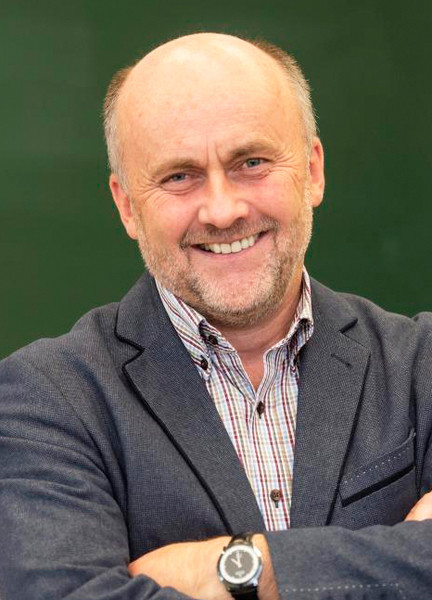
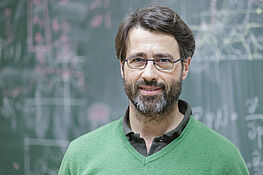
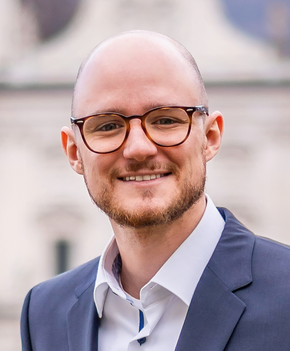
Karl-Theodor Sturm is a Professor of Mathematics at the University of Bonn, holding this position since 1997. He is affiliated with the Institute for Applied Mathematics and leads the Cluster of Excellence Hausdorff Center for Mathematics. His academic journey includes a PhD (1989) and habilitation (1993) from the University of Erlangen-Nürnberg, followed by postdoctoral positions at Zurich, Erlangen-Nürnberg, and the Max Planck Institute for Mathematics in the Sciences (MPI Leipzig). He has held visiting professorships at Stanford, Toulouse, Paris, and Bonn. Sturm's research focuses on stochastic analysis and geometric analysis, particularly in optimal transport, metric measure spaces, synthetic curvature bounds, and diffusion processes. His work on synthetic Ricci curvature bounds, developed in competition with Cédric Villani, has been highly influential. He received the ERC Advanced Grant (2016-2022) for research on metric measure spaces and Ricci curvature, and was a Plenary Speaker at the 2020 European Congress of Mathematics. His leadership roles include Vice Chairman of Collaborative Research Center SFB 611 (2002–2012), Managing Director of the Institute for Applied Mathematics (2007–2010), and Coordinator of the Hausdorff Center for Mathematics (2012–2019). Awards include the Heisenberg Fellowship (1994) and recognition through numerous invited lectures and editorial roles. His mentorship has shaped the careers of prominent researchers such as Nicola Gigli and Jan Maas.
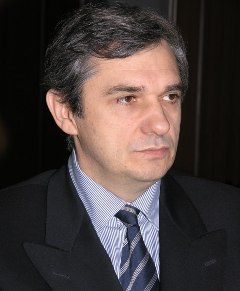
Ljubisa Stankovic is a Full Professor at the University of Montenegro with extensive academic and political experience. He has served as Rector of the University of Montenegro (2003-2008), Member of the National Academy of Sciences and Arts (CANU) since 1996, and Ambassador of Montenegro to the United Kingdom since 2010. As an IEEE Fellow (2012), he has made significant contributions to signal processing research. His research focuses on Signal Processing , particularly Time-Frequency Analysis , Data Processing in Joint Time and Frequency Domain , Analysis of Non-Stationary Signals , and Radar Signal Processing . With about 300 technical papers published (83 in leading international journals, mainly IEEE editions) and several textbooks in Signal Processing, his work has substantially influenced the field. The analysis of his recent publications reveals a consistent focus on advanced time-frequency methods applied to radar systems, non-stationary signal analysis, and emerging applications in machine learning and quantum processing. His research shows evolution from theoretical foundations toward practical implementations in communications, radar, and biomedical applications. His notable scientific achievements include: Member of the National Academy of Sciences and Arts (1996) Highest State award of Montenegro '13. jul' (1997) Fellow of the IEEE (2012) Fulbright fellowship (1984-1985) Alexander von Humboldt fellowship (1997) Volkswagen award grant (2001) Scientific Achievement Award by Montenegrin Academy of Science and Art (1991) Stankovic has held significant editorial positions including Associate Editor for IEEE Transactions on Image Processing, IEEE Signal Processing Letters, and IEEE Transactions on Signal Processing since 2003. He was also a member of the IEEE Signal Processing Society's Technical Committee on Theory and Methods (2002-2008). His research group received a Volkswagen Foundation research grant (2001-2003), demonstrating his ability to secure competitive funding. Beyond academia, he has held prominent political positions including Vice-president of Montenegro (1989-1991) and Member of Yugoslav Parliament (1992-1996).
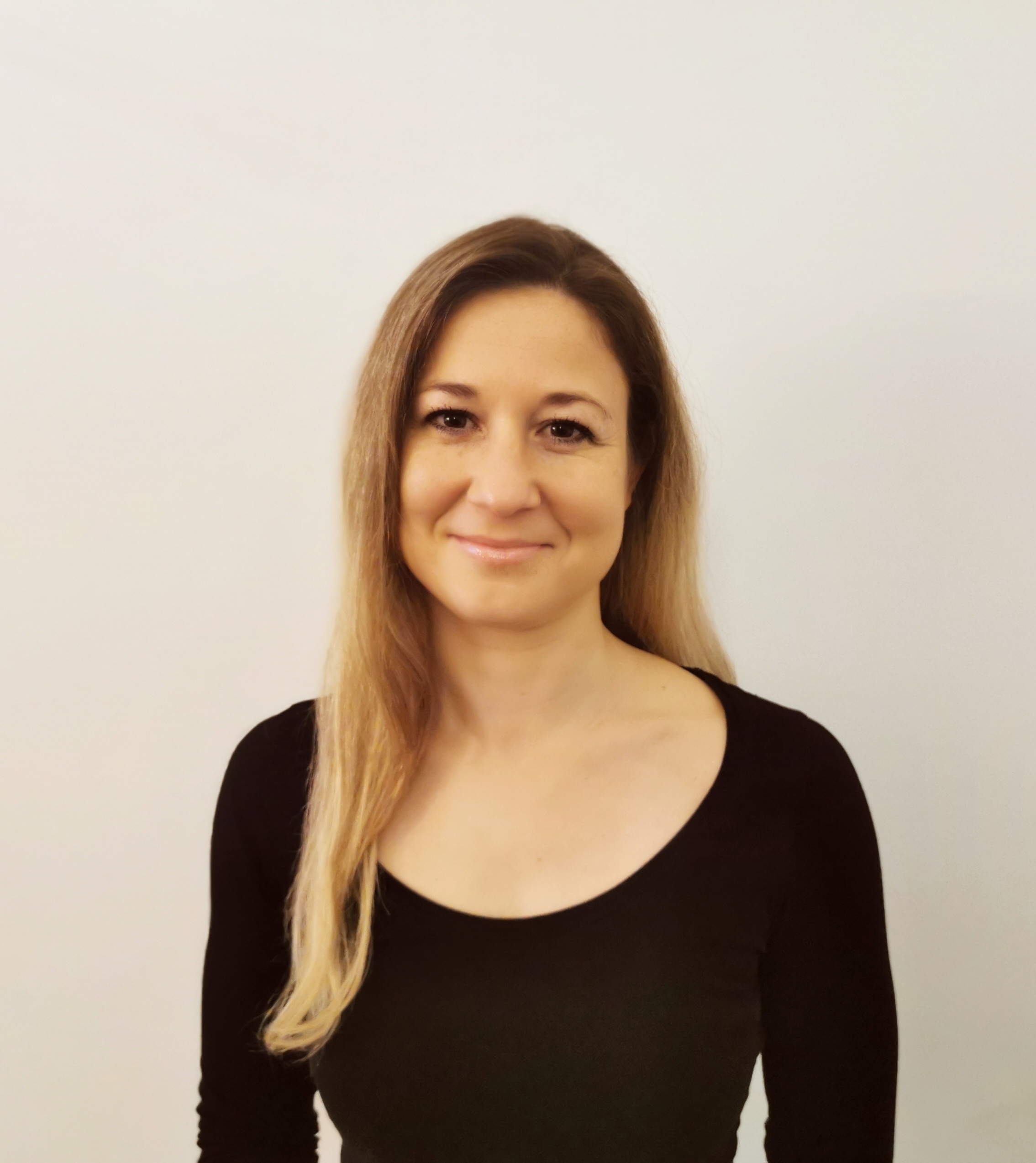
Christa Cuchiero is a Professor at the Department of Statistics and Operations Research , University of Vienna , and an elected member of the Austrian Young Academy (Junge Akademie) since 2020. Her research bridges rigorous mathematics and cutting-edge applications in finance, machine learning, and stochastic analysis. Education: Christa earned her M.Sc. in 2006 from TU Wien with a thesis on affine interest-rate models, her Ph.D. in 2011 from ETH Zürich on affine and polynomial processes, and completed her Habilitation at the University of Vienna in 2018 on high-dimensional finance beyond classical paradigms. Research Interests: Her work centers on affine and polynomial processes , stochastic portfolio theory , signature methods , and infinite-dimensional stochastic analysis . Recent projects explore signature-based neural SDEs for option calibration, measure-valued diffusions for energy markets, and universal approximation properties of signature transforms. Awards & Recognition: Among her accolades are the FWF START Award 2019 , the Bruti-Liberati Visiting Fellowship 2018 , the ETH Medal 2012 for an outstanding Ph.D. dissertation, and the Prix de l’Institut Europlace de Finance 2017 for the best paper in finance. Contact: christa.cuchiero@univie.ac.at , Kolingasse 14-16, 05.47, 1090 Wien, Austria.
Andreas Rauber is an Associate Professor in the Department of Data Science at Technical University of Vienna. He serves as Curriculum Coordinator for Bachelor and Master programs in Business Informatics and Data Science, and chairs the Curriculum Commission for Business Informatics. His research focuses on Information Systems Engineering, Logic and Computation, and Visual Computing, addressing challenges in data management, digital preservation, and reproducibility in e-science. He leads projects like OS Trails and FAIR-AI, emphasizing FAIR principles and trustworthy research infrastructures. Rauber has contributed to over 150 publications, including works on data citation frameworks, adversarial ML defenses, and reproducibility in IR. His work bridges technical innovation with policy, exemplified through roles in the EOSC Support Office Austria and RDA Austria initiatives. Key projects include establishing FAIR data practices across universities and advancing digital preservation through repositories like DBRepo. He coordinates international collaborations, such as the EU-funded EOSC-Life and EGI Advanced Computing projects. His teaching spans courses in machine learning, information retrieval, and research methods, fostering next-generation data scientists.
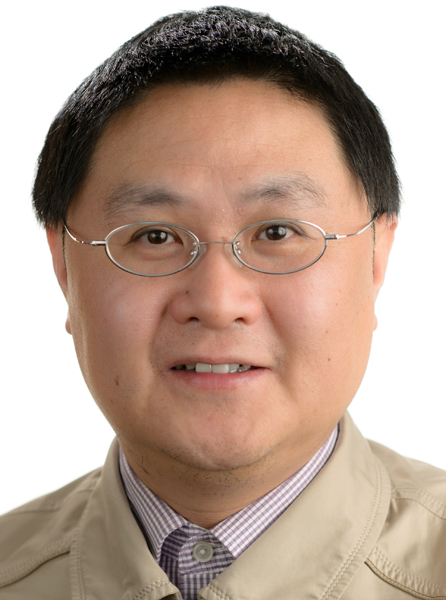
Professor Dong Xu is a Tenured Professor in the Department of Computer Science at the University of Hong Kong (HKU), part of the School of Computing and Data Science. He holds a B.Eng. and Ph.D. from the University of Science and Technology of China (USTC). His career includes tenured roles at Nanyang Technological University and the University of Sydney, alongside postdoctoral research at Columbia University. His research focuses on Artificial Intelligence, Computer Vision, Multimedia, and Machine Learning , with applications in autonomous driving, AR/VR, medical image analysis, and video surveillance. Xu has authored over 150 papers in top journals and conferences, including CVPR, ICCV, and IEEE Transactions. He actively contributes to the academic community as an editorial board member for journals like ACM Computing Surveys and IEEE Transactions, and through leadership roles in conferences such as ACM Multimedia and ICME. Notable awards include Fellowships from IEEE and IAPR, and the IEEE Signal Processing Society Distinguished Lecturer title (2021–2022). Education: B.Eng. (USTC, 2001), Ph.D. (USTC, 2005) Professional Service: Program Coordinator of ACM Multimedia 2024, Guest Editor of over ten special issues.
Christoph Dellago is a full Professor of Computational Physics at the Faculty of Physics of the University of Vienna, where he has been a faculty member since 2003. He currently serves as Director of the Erwin Schrödinger Institute for Mathematics and Physics, Head of the Computational and Soft Matter Physics Group, and Project lead of EuroCC Austria - National Competence Centre for Supercomputing. Previously, he served as Dean of the Faculty of Physics (2009-2012) and Coordinator of the Doctoral College Advanced Functional Materials (DCAFM). Full Professor, Faculty of Physics, University of Vienna (2003-present) Director, Erwin Schrödinger Institute for Mathematics and Physics (2017-present) Head, Computational Physics and Soft Matter Group (2024-present) Coordinator, Doctoral College Advanced Functional Materials (DCAFM) Austrian Representative, Council of CECAM Dellago received his PhD in Physics from the University of Vienna in 1996, followed by postdoctoral research at UC Berkeley as a Schrödinger Fellow of the Austrian Science Foundation. His research focuses on developing computational methods to study rare events in condensed matter systems, particularly transition path sampling methodology for simulating nucleation, chemical reactions, and biomolecular reorganizations. He has pioneered the application of machine learning to molecular structure recognition and potential energy surfaces. Recent work examines self-assembly of nanocrystals, biopolymer folding, aqueous interfaces, phase separation in alloys, thermo-polarization, cavitation, and freezing phenomena. Analysis of Dellago's recent publications (2023-2025) reveals a strong emphasis on machine learning applications in computational physics, particularly neural network potentials for simulating water interfaces, crystal defects, and phase transitions. His work bridges traditional statistical mechanics with modern computational techniques, creating powerful tools for studying complex dynamical processes that occur on timescales far beyond conventional molecular dynamics simulations. The publications demonstrate increasing integration of machine learning with rare event sampling methods, reflecting the cutting-edge direction of computational statistical mechanics. Förderpreis der Stiftung Futura zur Förderung junger Südtiroler im Ausland (1997) The Raymond and Beverly Sackler Prize in the Physical Sciences (2005) UNIVIE Teaching Award of the University of Vienna (2014) Dellago leads an active research group with multiple PhD students and postdocs, focusing on computational statistical mechanics. His group develops trajectory-based sampling methods and machine learning approaches for molecular simulation. He has secured significant funding through EuroCC Austria and various research platforms including the Research Platform Accelerating Photoreaction Discovery and the Research Platform Erwin Schrödinger International Institute for Mathematics and Physics. His research has been supported by numerous grants enabling advanced computational infrastructure for high-performance simulations. The Dellago Group operates within the Computational and Soft Matter Physics division at the University of Vienna, with strong connections to the Research Network Data Science. The group collaborates extensively with international research institutions and maintains close ties with the Erwin Schrödinger Institute, which Dellago directs. Their research environment combines theoretical physics, computational chemistry, and machine learning expertise to tackle fundamental questions in condensed matter physics and soft matter systems.
Thomas Gärtner is a Professor at the Institute of Logic and Computation within the Faculty of Informatics at Vienna University of Technology, leading the Machine Learning research group (E194-06). His work bridges theoretical machine learning with practical applications in chemistry, biology, and network analysis. His primary research focuses on graph neural networks (GNNs) and geometric deep learning, with significant contributions to GNN expressivity, graph transformations, and kernel methods for structured data. He explores fundamental questions about the limitations of message-passing architectures while developing practical enhancements like path-based extensions and expectation-complete representations. His chemical informatics work applies these techniques to binding affinity prediction, reaction classification, and solvent selection, demonstrating real-world impact in computational chemistry. Analysis of his 15 most recent publications (2023-2025) reveals three dominant research thrusts: theoretical GNN advancements (35% of articles), chemical informatics applications (40%), and novel learning frameworks (25%). The theoretical work increasingly addresses expressivity limitations through graph transformations and path-based approaches, while chemical applications show growing sophistication in molecular representation. Recent publications also indicate expanding interest in foundation models for graphs and robustness verification. He actively supervises master's students including Fabian Traxler (binding affinity prediction), Maximilian Plattner (SGD optimization), Fabian Jogl (graph transformations), and Thomas Schmied (reinforcement learning). His research is conducted through the Network Lab at TU Wien, where he serves as Principal Investigator for the Structured Data Learning with Generalized Similarities project.
Fabian Jogl is a PreDoc Researcher at the Vienna University of Technology (TU Wien) within the Faculty of Informatics, holding dual affiliations in the Department of Databases and Artificial Intelligence (Institute E192) and the Department of Machine Learning (Institute E194). His work centers on theoretical and applied aspects of graph neural networks under the StruDL (2023–2027) and VHH (2019–2023) research projects. His research focuses on the expressivity limits of graph neural networks, particularly investigating whether enhanced expressivity translates to better predictive performance. Key areas include outerplanar graph analysis, path-based GNN architectures, global feature integration, and connections to the Weisfeiler-Lehman hierarchy. He examines structural properties of GNNs through homomorphisms and graph transformations to advance graph representation learning. Recent publications reveal trends toward unifying theoretical expressivity frameworks with empirical validation across diverse graph datasets. His work bridges geometric deep learning for cell complexes and practical applications like historical film analysis via the Historian dataset. Jogl actively contributes to major conferences including NeurIPS, ICML, and LoG while co-supervising student projects in machine learning algorithms. As a core member of the StruDL project, he investigates deep learning model structures for graph data, extending prior work on historical film annotation under the VHH project. His technical contributions include novel GNN simulation techniques and methods for enhancing message-passing architectures through graph transformations.
Norbert Mauser is a full Professor in the Department of Mathematics at the University of Vienna, where he has been affiliated since 1999. His research bridges mathematical analysis, computational physics, and applied mathematics with a focus on developing and analyzing numerical methods for complex physical systems. Mauser's research interests center on mathematical physics, particularly partial differential equations arising in quantum mechanics and magnetism. His work spans Schrödinger-type equations, many-body quantum systems, micromagnetics, and more recently, the integration of machine learning techniques with physics-based modeling. He has made significant contributions to the mathematical analysis of quantum systems, numerical methods for micromagnetics, and computational approaches to Bose-Einstein condensates. His recent publications (2023-2025) reveal a growing emphasis on machine learning applications in micromagnetics, with multiple papers on physics-informed machine learning for magnetic energy minimization and spin wave dynamics. This represents an evolution from his earlier foundational work on Schrödinger equations and quantum systems toward more applied computational approaches that integrate AI with physical modeling. His research consistently demonstrates strong mathematical rigor combined with practical computational implementations. Mauser leads or participates in multiple significant research projects including 'Adaptive Splitting for Magneto-Hydrodynamics in Astrophysics' (2022-2026), 'Taming Complexity in Partial Differential Systems' (2017-2026), and 'Numerical simulation of A-type and white dwarf stars' (2021-2023). He has an extensive collaboration network across Europe, frequently working with researchers in computational physics and applied mathematics. His academic activities include organizing conferences such as 'Inverse-Design Magnonics' (2024) and presenting invited talks on absorbing boundary conditions for quantum wave equations. With over 80 publications spanning more than two decades, Mauser maintains an active research program that continues to evolve with contemporary challenges in computational mathematical physics.
Iris Agresti is a researcher affiliated with the Faculty of Physics at Politecnico di Milano , specializing in quantum computing, quantum information, and machine learning. Her work bridges quantum optics and computational advancements, with recent publications in high-impact journals like Nature Photonics and Physical Review Research . Education: PhD in Physics. Research focuses on photonic processors for quantum machine learning, quantum state superposition, and integrated photonic systems for generating GHZ entangled states. Her 2025 article explores kernel-based quantum-enhanced machine learning, while 2024 work investigates time-reversed quantum evolution and high-fidelity photon entanglement. She has participated in international collaborations and workshops, including visits to Politecnico di Milano, and is part of funded projects like Photonic Reservoir Computing for Quantum Correlation Sets (2022–2025). Her work garners attention from news outlets, social media, and academic platforms like Mendeley.
Prof. Matthias Harders is a Professor at the Department of Computer Science, University of Innsbruck. His work focuses on medical imaging, haptic systems, virtual reality, and data-driven simulation. He leads research in interactive visualization tools, medical device development, and machine learning applications in healthcare and environmental engineering. Research areas include haptic augmented reality for surgical training, deformable medical image registration, and synthetic data generation for retinal imaging. Notable projects include SPBView for eye movement analysis and the PoRi device for post-stroke rehabilitation. His work bridges computer science with biomedical applications, emphasizing real-world impact in healthcare technology. Publications span medical simulation, machine learning for biogas prediction, and perceptual interfaces. He collaborates on EU-funded projects involving VR/AR systems and has contributed to open-source tools for point cloud analysis and surgical planning.
Dr. Emma Izquierdo-Verdiguier is a Researcher at the Institute of Geomatics within the University of Natural Resources and Life Sciences, Vienna (BOKU) . She specializes in machine learning algorithms for remote sensing data analysis , with particular focus on land surface phenology and cloud computing environments like Google Earth Engine. Her research spans two decades, including postdoctoral work at the University of Valencia (2017-2018) and University of Twente (2014-2017). She has developed Matlab toolboxes for nonlinear feature extraction and transitioned to JavaScript/Python-based cloud computing solutions for high-resolution image classification. Key methodologies involve kernel methods , multispectral image analysis , and data cube clustering . Recent publications focus on climate change impact assessment (2025), carbon flux modeling (2023), and soil organic carbon monitoring (2025), demonstrating her expertise in Earth Observation and machine learning integration . Her work frequently employs Google Earth Engine for continental-scale analyses. Scientific Awards: 2018 Travel Award sponsored by Remote Sensing 2017 Best Youth Oral Paper Award (X. Wu), ISPRS 2012 2nd Best Paper Award, IEEE IGARSS Student Competition
Marianna Giancaterino is a postdoctoral research associate at the Institute of Food Technology, University of Natural Resources and Life Sciences, Vienna (BOKU). Her work focuses on integrating innovative non-thermal technologies like Pulsed Electric Fields (PEF) and Ohmic Heating into traditional food processing workflows to enhance efficiency and product quality. Institution: BOKU Vienna Department: Institute of Food Technology Research Period: 2018–Present Research Interests: Giancaterino's research combines non-thermal technologies with fruit and vegetable processing to modify plant material structures. Key areas include: Cellular permeabilization via PEF for improved drying/extraction Ohmic heating for rapid, uniform thermal processing Freeze-drying optimization with pre-treatment strategies Energy consumption reduction in food manufacturing Tailored process development for quality preservation Waste minimization through process intensification Scientific Contributions: Her work demonstrates how PEF alters cellular structures to enhance mass transfer during processing, with applications in peeling, cooking, and drying. She explores synergies between PEF and ohmic heating for vegetable processing. 2024: 4 major conference presentations 2023: 5 conference posters and talks 2022: 4 presentations at international events Education: 2016–2019 M.Sc. in Food Science and Technology, University of Teramo (Italy) 2013–2016 B.Sc. in Food Science and Technology, University of Teramo
Michael Pfarrhofer is an Assistant Professor at WU Vienna University of Economics and Business, Department of Economics, specializing in econometrics and macroeconomics. He previously held positions at the Universities of Vienna and Salzburg and contributes to the European Commission’s Joint Research Centre (JRC) in Ispra. His research focuses on Bayesian econometrics, time series analysis, forecasting, and empirical macroeconomics, with applications to business cycles and policy evaluation. Current Role: Tenure-track Assistant Professor Primary Affiliation: WU Vienna University of Economics and Business Collaborations: JRC (European Commission) Research interests include macroeconomic forecasting using advanced Bayesian methods, nonlinear time series analysis, and the impact of climate shocks on financial markets. His work bridges econometric theory and empirical applications, often involving large datasets and machine learning techniques. Publications span topics like tail-risk prediction, international financial spillovers, and nowcasting methodologies. He teaches courses such as Econometrics II and Economic Modeling, emphasizing practical applications of econometric tools. While no specific scientific awards are listed, his contributions to leading journals (e.g., Journal of Econometrics , Journal of Applied Econometrics ) highlight his scholarly impact. Advising and grant activities are not detailed in the provided texts, though his research often involves collaborative projects with institutions like the JRC.
Andreas Hauser is an Associate Professor at the Institute for Experimental Physics , Graz University of Technology. His research bridges theoretical molecular physics and quantum chemistry with practical applications in nanotechnology, catalysis, and machine learning-driven computational methods. He leads a dynamic group integrating theory with experimental collaborations, focusing on metallic cluster physics, molecular spectroscopy, and quantum technologies. Current projects include nuclear spin control, vibrational magnetism, and AI-enhanced material design. Recent publications highlight his work in: Quantum spin manipulation via laser pulses (2024) Machine learning for molecular energy surfaces (2023-2024) Non-adiabatic coupling in confined systems (2022) CO2 activation and nanomaterial stability (2019-2023) Helium droplet electron dynamics (2017) His team employs methods like Gaussian Process Regression, density functional theory, and custom Python toolkits while mentoring numerous PhD and Master's students in high-impact research areas.