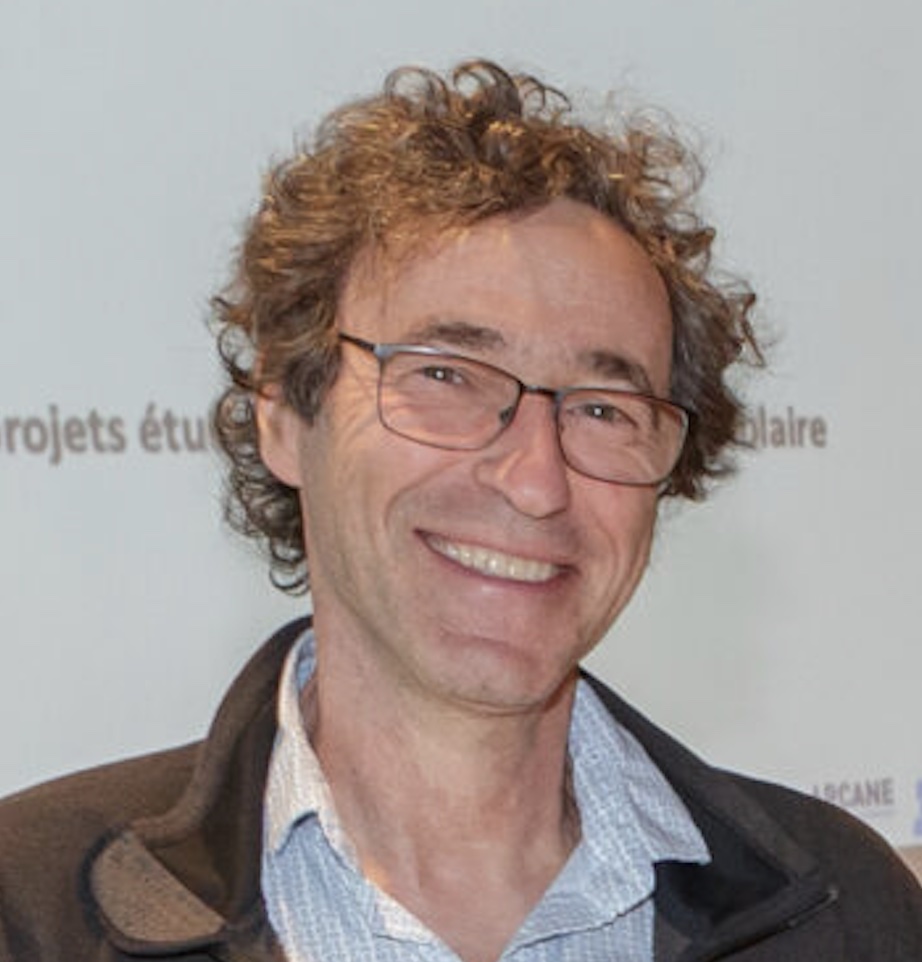
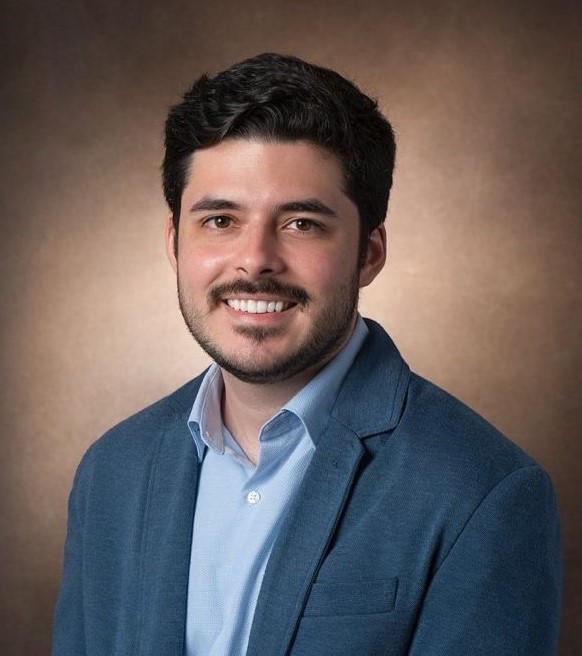
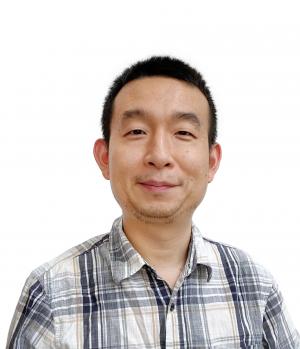
Bastian Bohn is a Researcher at the Institute for Numerical Simulation (University of Bonn). He focuses on Mathematics of Machine Learning , Approximation Theory , and High-dimensional Discretizations . His work bridges Sparse Grid Methods Numerical Analysis Scientific Computing with modern ML applications. His recent publication Algorithmic Mathematics in Machine Learning (2024) consolidates his work on algorithmic foundations for high-dimensional data analysis. Earlier studies investigate Deep Kernel Learning Explainable AI Dimensionality Reduction using sparse grid frameworks.
Nicola Cavallini is a Fixed-term Assistant Professor at the Department of Applied Science and Technology (DISAT) , Politecnico di Torino , and a member of the College of Chemical and Materials Engineering . He holds a Scientific Branch CHEM-06/A - Chemical Foundations of Technologies within Area 0003 - Chemical Sciences . Since 2020, he has been teaching Principles of Chemometrics and Practical Design of Experiments to PhD and undergraduate students in Chemical Engineering. 2025/26 : Course Lecturer for Principles of Chemometrics 2024/25 : Course Lecturer for Principles of Chemometrics 2023/24 : Course Lecturer for Principles of Chemometrics 2022/23 : Course Collaborator for Principles of Chemometrics 2021/22 : Course Collaborator for Principles of Chemometrics 2020/21 : Course Collaborator for Principles of Chemometrics His research focuses on Chemometrics , Analytical Chemistry , and Applied Spectroscopy , particularly in food authentication and materials characterization. He has developed methods for ethanol quantification in wine using NMR, rice variety classification via hyperspectral imaging, and fermentation monitoring with portable NIR sensors. Collaborative projects include polymer electrolyte optimization and textile waste valorization in biotechnological processes. Recent publications highlight his work on: Food Fraud Detection (Mechanically Separated Meat in processed products) Advanced Spectroscopic Techniques (NMR and NIR applications) Algorithm Development for FESEM image analysis Sustainable Material Processing (Polymer blends, textile waste) Plant-Microbe Interactions (β-ionone's role in mycorrhization)
Mario Marchand is a retired Professor in the Department of Computer Science and Software Engineering at Université Laval, Canada. His research focuses on machine learning theory, explainable AI, and computational biology. He has contributed to foundational work in PAC-Bayesian analysis, generalization bounds, and kernel methods. Marchand is affiliated with the Computer Vision and Systems Laboratory and the GRAAL research group. Though no longer supervising graduate students, his recent work addresses challenges in algorithmic stability, meta-learning, and feature attribution consensus. His publications span topics from neural network optimization to applications in bioinformatics and drug discovery. Research Interests: Machine Learning Theory, Explainable AI, Bioinformatics, Kernel Methods, Domain Adaptation, and Statistical Learning. Key Contributions: PAC-Bayesian risk bounds, decision tree analysis, and algorithms for mixture models. His work bridges theoretical guarantees and practical applications in healthcare and computational biology. Professional Activities: Taught courses including IFT-7002 (Foundations of Machine Learning) and contributed to international conferences. His methods are used in biomarker discovery and peptide design for drug development. Recent trends in his articles emphasize explainable AI (XAI) and resolving feature attribution disagreements, alongside foundational studies on generalization in meta-learning and multi-source domain adaptation. His collaborative projects include predicting molecular properties and advancing neural network stability.
Dr. Sharyn Hickey is a Senior Lecturer at the UWA School of Agriculture and Environment, affiliated with the UWA Oceans Institute and the Centre for Water and Spatial Science. Her research focuses on environmental systems, particularly coastal and marine habitats, utilizing GIS and remote sensing. She has attracted over $4 million in research funding and leads projects on habitat mapping, blue carbon, and marine conservation. She teaches GIS and remote sensing courses and coordinates units like ENVT4408 and ENVT3306. Awards include the 2024 Early-Career Research Award and 2022 Postgraduate Teaching Award. Education: PhD Research Interests: Remote sensing, GIS applications, marine ecology, coastal habitat dynamics, blue carbon assessment Key grants include the Mardie Offset Funding and projects on marine heatwaves and benthic habitat mapping. She has published extensively in journals like Remote Sensing in Ecology and Conservation and collaborates with institutions like AIMS and the Australian Institute of Marine Science. Media coverage highlights her work on mangrove discoveries and coral reef monitoring.
Dr. Jeffrey D. Naber is the Richard and Elizabeth Henes Endowed Professor of Mechanical and Aerospace Engineering at Michigan Technological University (MTU). He serves as Director of the Advanced Power Systems Research Center and Area Director of Energy-Thermo-Fluids (ETF). Previously, he worked in the automotive industry and at Sandia National Laboratories' Combustion Research Facility (CRF), focusing on engine management systems and combustion diagnostics. His research emphasizes internal combustion engines, hydrogen and biofuel applications, and advanced experimental techniques. Education: University of Wisconsin-Madison (Ph.D., Mechanical Engineering) Research Interests: Combustion processes and control in hydrogen and dual-fuel engines Biofuel production and application in advanced combustion systems Development of combustion measurement techniques for diesel, gasoline, and HCCI/PPCI engines Engine efficiency and emissions reduction strategies Labs & Teams: Directs the Advanced Internal Combustion (AICE) Laboratories at MTU, focusing on experimental combustion research and engine optimization. Grants & Collaborations: Leads federally funded projects on alternative fuels and low-emission engine technologies, collaborating with industry partners and national labs.
Dr. Jing-Hao Xue is a Professor of Statistical Pattern Recognition at the Department of Statistical Science, University College London. He is an active editorial board member for several IEEE journals, including Senior Area Editor for IEEE Transactions on Circuits and Systems for Video Technology (2025-), and has received awards like the Outstanding Associate Editor (2022) and Best Associate Editor Award (2021). His research focuses on statistical pattern recognition, machine learning, and computer vision, with contributions to few-shot learning, deep learning, and medical imaging applications. Education: Alumni of Tsinghua University, KU Leuven, and the University of Glasgow. He has mentored numerous PhD graduates, including Dr. Zhu Rui (now Senior Lecturer at City University) and Dr. Yang Xiaokang (Lecturer at the University of Glasgow). As an Alan Turing Institute Fellow (2018-2023), he contributes to foundational AI research. His work spans theoretical advancements and practical applications in computer vision, medical diagnostics, and federated learning systems. Research trends in his publications emphasize few-shot learning innovations, robust classifier design for imbalanced data, and interdisciplinary applications in healthcare and security. Recent articles highlight advancements in neural network architectures, anomaly detection, and text-driven panorama generation.
Gianluigi Pillonetto is an Assistant Professor at the Department of Information Engineering , University of Padova , where he has been employed since 2005. His academic career focuses on system identification, stochastic systems, and nonparametric regularization techniques. Born: January 21, 1975 in Montebelluna, Italy Education: Doctoral degree (1998) and PhD (2002) in Computer Science/Engineering Research roles: Visiting scholar (2000), Visiting scientist (2002), Research Associate (2002-2005) His research spans system identification, stochastic processes, and deconvolution problems, with a particular emphasis on Bayesian methods and kernel-based regularization. He has contributed to areas like distributed Gaussian regression, sparse system identification, and nonlinear stochastic modeling in physiological systems. Recent publications (2016-2021) examine Gaussian regression techniques for distributed systems, entropy-based kernel design, and nonlinear stochastic deconvolution. These works incorporate machine learning principles into control theory, focusing on applications in wireless communications, robotics, and biomedical engineering.
Mattia Zorzi is an Associate Professor in the Department of Information Engineering at the University of Padova, Italy. He has held academic positions since 2014, transitioning from Assistant Professor to Associate Professor in 2020. His research focuses on system identification, machine learning, and robust control, with applications in dynamic brain networks, robotic systems, and quantum information processing. Education: Ph.D. and M.S. in Information Engineering from University of Padova International Experience: Visiting Scientist at University of Cambridge (2013-2014), Research Associate at University of Liege (2013-2014) Zorzi's research integrates robust and distributed filtering, inverse dynamics learning, and nonparametric identification of Kronecker networks. His work bridges theoretical advancements in spectral estimation with practical applications in neuroscience (e.g., effective connectivity analysis) and control systems (e.g., robust Kalman filtering under uncertainty). Recent publications (2024-2023) demonstrate expertise in ARMA graphical models, kernel-based estimation, and optimal transport for Gaussian processes. He has contributed to the IEEE and IFAC communities as Associate Editor and actively participates in editorial roles for leading journals. Scientific Awards: IEEE Senior Member (2021) Member of IFAC Technical Committee TC 1.1 (2018) Associate Editor roles in Automatica, IEEE Control Systems Letters, and major conferences Grants & Collaborations: Collaborated on projects involving quantum channel estimation, free-space quantum communication, and biomedical signal processing.
Gustavo Freire serves as an Assistant Professor at the Econometric Institute within the Erasmus School of Economics at Erasmus University Rotterdam. He additionally holds significant research positions as a Research Fellow at the Tinbergen Institute and a Member at the Erasmus Research Institute of Management (ERIM), demonstrating his substantial contributions to Rotterdam's academic and research community. Dr. Freire's research program centers on the intersection of financial theory and advanced analytical methods, with primary focus areas in asset pricing , option pricing , financial economics , financial econometrics , and the innovative application of machine learning techniques to financial problems. His recent work explores high-frequency tail risk premiums, zero days to expiry (0DTE) options, nonparametric pricing methods using entropic estimators, and the application of autoencoders to financial modeling. He has demonstrated particular interest in how machine learning can correct and enhance traditional option pricing models, bridging computational science with financial theory. Dr. Freire actively participates in international academic discourse, having presented at the Society for Financial Econometrics (SoFiE) Conference in Seoul alongside researchers Lumsdaine and Tetereva. His publication record spans contemporary financial market analysis to historical economic patterns, as evidenced by his research on US industrial production from 1828-1915. This breadth demonstrates his capacity to integrate historical perspective with cutting-edge financial research. Current Position: Assistant Professor, Econometric Institute Additional Affiliations: Research Fellow (Tinbergen Institute), Member (ERIM) Contact: freire@ese.eur.nl
Miles Lopes is an Associate Professor in the Department of Statistics at the University of California, Davis. His research focuses on developing and analyzing bootstrap methods for high-dimensional statistical problems, with particular attention to error estimation in randomized algorithms and high-dimensional inference. He holds a Ph.D. from UC Berkeley. Research interests include bootstrap approximation techniques, high-dimensional covariance estimation, spectral statistics, and applications of randomized algorithms in numerical linear algebra. His work bridges theoretical statistics and computational methods, addressing challenges in modern data analysis. Recent publications emphasize bootstrap methods for eigenvalue analysis in high-dimensional PCA, operator norm approximation, and robust statistical inference in complex models. His methodologies have applications in functional data analysis, multivariate testing, and software development for randomized algorithms.
Angxiu Ni is an Assistant Professor in the Department of Mathematics at the University of California, Irvine. Their research focuses on Probability and Applied Dynamical Systems, with significant contributions to linear response theory for chaotic and high-dimensional systems. They developed computational tools such as the Fast Response Formula, Path-Kernel method, and Ergodic/Foliated kernel differentiation. PhD from UC Berkeley Mathematics Postdoctoral work at Peking University BICMR Former Assistant Professor at YMSC, Tsinghua University Research areas include: Linear response theory for hyperbolic systems Non-intrusive shadowing algorithms Adjoint theories and gradient explosion analysis Applications to fluids, geophysics, and machine learning They are mentored by prominent mathematicians including John Strain and Qing Nie, and have collaborated with Stefano Galatolo on optimal response problems.
Johan Sokrates Wind is a Research Fellow at the University of Oslo's Department of Mathematics, specializing in Differential Equations and Computational Mathematics. His primary affiliation is with the Faculty of Mathematics and Natural Sciences. He holds a Master's in Industrial Mathematics from the Norwegian University of Science and Technology (NTNU) and began his PhD in August 2021. Wind's research focuses on deep learning, neural networks, and overparameterized machine learning systems. He has explored topics such as the Neural Tangent Kernel, Deep Linear Networks, and implicit biases in optimization algorithms. His work bridges theoretical analysis with practical implementations, as evidenced by his blog The Good Minima , where he publishes technical insights on neural network behavior and training dynamics. Notably, he has contributed to projects like real-time visual odometry on smartphones during his part-time role at Arm Ltd. Wind is an active participant in competitive programming and Kaggle competitions, showcasing his problem-solving skills and algorithmic expertise. His research emphasizes analytically tractable models and the mathematical foundations of modern AI systems. Recent investigations include the RWKV language model architecture, efficient CIFAR-10 classification, and the role of initialization and learning rates in SGD's implicit bias. Wind’s publications highlight interdisciplinary approaches, combining elements of optimization theory, computational mathematics, and applied machine learning. He maintains an active blog with detailed technical posts, demonstrating a commitment to open science and knowledge-sharing. His academic journey reflects a balance between theoretical rigor and practical innovation, positioning him as a rising researcher in computational and mathematical aspects of deep learning.
Yue Zhao is a Researcher at the Department of Computational Mathematics, Science and Engineering (CMSE) within the College of Engineering and College of Natural Science at Michigan State University. Their work focuses on computational methods for molecular dynamics, kinetic theory, and numerical analysis. Key research interests include developing algorithms for efficient simulation of particle systems, variance reduction techniques, and scalable computational approaches for complex physical systems. Zhao's contributions span data-driven modeling, random batch methods, and energy-stable numerical schemes. Recent research trends reflect a strong emphasis on advancing computational tools for molecular dynamics, particularly in handling Coulomb interactions, improving algorithm scalability, and integrating machine learning for kinetic operator modeling. Their publications highlight innovations in both theoretical framework development and practical implementation for high-performance computing environments. No scientific awards or grants are explicitly mentioned in the provided information. Advising roles or student supervision details are not available. Zhao’s affiliation with the interdisciplinary CMSE program underscores a focus on bridging computational mathematics with engineering and natural science applications.
Alessandro Saccon is an Associate Professor in the Mechanical Engineering Department at Eindhoven University of Technology (TU/e). His research focuses on robotics, nonlinear control, and optimal control, particularly in dynamic robotic systems with intermittent contacts. He holds a PhD in Control System Theory from the University of Padova (2006) and has held postdoctoral and visiting positions at institutions including Instituto Superior Técnico (Lisbon) and the California Institute of Technology. His work contributes to UN Sustainable Development Goals related to innovation and infrastructure. Education: - PhD in Control System Theory, University of Padova, Italy (2006) - M.Sc. (Laurea) in Computer Engineering, University of Padova (with honors) - Visiting positions at University of Colorado Boulder, Caltech, and Australian National University. Research Interests: - Modeling and control of complex robotic systems - Nonlinear control and estimation - Optimal control and trajectory optimization - Impact-aware robotics and dynamic manipulation - Geometric mechanics and multibody dynamics Awards: Claudio Maffezzoni Best PhD Thesis Award (2006) Dutch Data Prize 2024 (Natural and Engineering Sciences) Advising & Grants: Supervised 64 works (students/research projects). Project Manager for FIDCOM RBT (2024-2029). Labs & Teams: Lead research on Impact-Aware Robotics, with datasets published on 4TU.Centre for Research Data.
Marta D'Elia is an Adjunct Professor at Stanford's Institute for Computational and Mathematical Engineering (ICME), specializing in Scientific Machine Learning and nonlocal modeling. Her research develops data-driven algorithms for multiscale/multiphysics simulations, integrating numerical analysis, uncertainty quantification, and fractional calculus. Core applications include subsurface transport, turbulence modeling, image processing, and materials science. She leads innovations in nonlocal operator regression, physics-informed neural networks, and fractional Laplacian formulations. Current work focuses on embedded machine learning for constitutive modeling, Bayesian uncertainty frameworks, and computational homogenization. D'Elia pioneered approaches for nonlocal-to-local model coupling and fractional Helmholtz decompositions, advancing simulation capabilities for anomalous transport phenomena. Her Ph.D. in Applied Mathematics (Emory University) underpins rigorous mathematical foundations, while collaborations with national labs address high-performance computing implementations. Research contributes to open-source scientific software and computational mathematics education through ICME courses on numerical methods and machine learning.