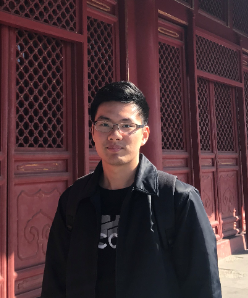
Heyuan Shi is an Associate Professor at the School of Electronic Information, Central South University since 2023. He earned his B.S. (2015) and Ph.D. (2020) from Central South University and Tsinghua University respectively. His research focuses on software quality assurance with emphasis on kernel fuzz testing , open source software security , and AI application security . Presided over 10+ projects including NSFC General Program (No.62472448) and National Key R&D Sub-Project Published 30+ CCF-A/B papers across software security, machine learning, and quantum testing Supervised 15+ graduate students in software quality assurance areas His recent 2024-2025 publications demonstrate expertise in: LLM-enhanced patch classification Quantum neural network verification Hypergraph adversarial attacks RTOS fuzzing techniques Scientific recognition includes: 2024 Beijing Science & Technology Progress Award (First Prize) Hunan Province Xiaohe Sci-Tech Talent (2023) China Association for Science & Technology Young Talent (2025-2027) Active in academic service as PC member for FM2024 and reviewer for IEEE Transactions journals. Leads industry collaborations with Alibaba and Beijing Institute of Aerospace Metrology.
Dr. LIANG Zhenkai is an Associate Professor and Chairman of the Department of Computer Science at the National University of Singapore's School of Computing. He also serves as the Lead Principal Investigator for the National Cybersecurity R&D Lab (NCL). With extensive experience in academic leadership and cybersecurity research, Dr. Liang has established himself as a prominent figure in the field of system and software security. Dr. Liang received his Ph.D. in Computer Science from Stony Brook University in 2006 and his B.S. degrees in Computer Science and Economics from Peking University in 1999. His dual background provides a unique perspective on security challenges that bridges technical expertise with economic understanding. Dr. Liang's research focuses on system and software security , with particular emphasis on security in emerging platforms including Web, mobile, and Internet-of-Things (IoT) systems. His specific research interests include program analysis, Web and IoT system security, and virtualization. As the leader of the Curiosity Research Group, his team pursues missions centered around "Understanding systems (理解系统), abstracting knowledge (提炼知识), and connecting facts (参悟规律)". This philosophical approach to security research has yielded numerous significant contributions to the field. Dr. Liang's recent publications demonstrate a strong evolution from fundamental security mechanisms to sophisticated solutions addressing AI security, blockchain, and advanced vulnerability analysis. His work increasingly integrates machine learning techniques with traditional security approaches, focusing on developing robust defenses against sophisticated attacks while maintaining system usability. The trend shows a progression toward addressing contemporary challenges in large language models, secure system observability, and vulnerability propagation analysis. Dr. Liang has received numerous prestigious awards recognizing his research excellence: Outstanding Paper Award at ACSAC (2003) Best Paper Award at USENIX Security Symposium (2007) ACM SIGSOFT Distinguished Paper at ESEC-FSE (2009) Best Paper Award at W2SP Workshop (2014) Annual Teaching Excellence Award at NUS (2014, 2015) As an educator, Dr. Liang has taught various undergraduate and graduate courses including CS3235 Computer Security, CS5231 Systems Security, and CS5321 Network Security. His teaching philosophy, which he has published on in "Tool, Technique, and Tao in Computer Security Education," emphasizes both technical expertise and philosophical understanding of security principles. He has successfully mentored numerous students and researchers in the cybersecurity field. Dr. Liang leads the Curiosity Research Group, which actively seeks curious minds to join their exploration of security systems. The group maintains strong connections with industry and government cybersecurity initiatives, particularly through the National Cybersecurity R&D Lab (NCL). Their research environment encourages innovative thinking with the requirement that "Curiosity is required, while mentality for repairing things (such as bicycles) is a plus."