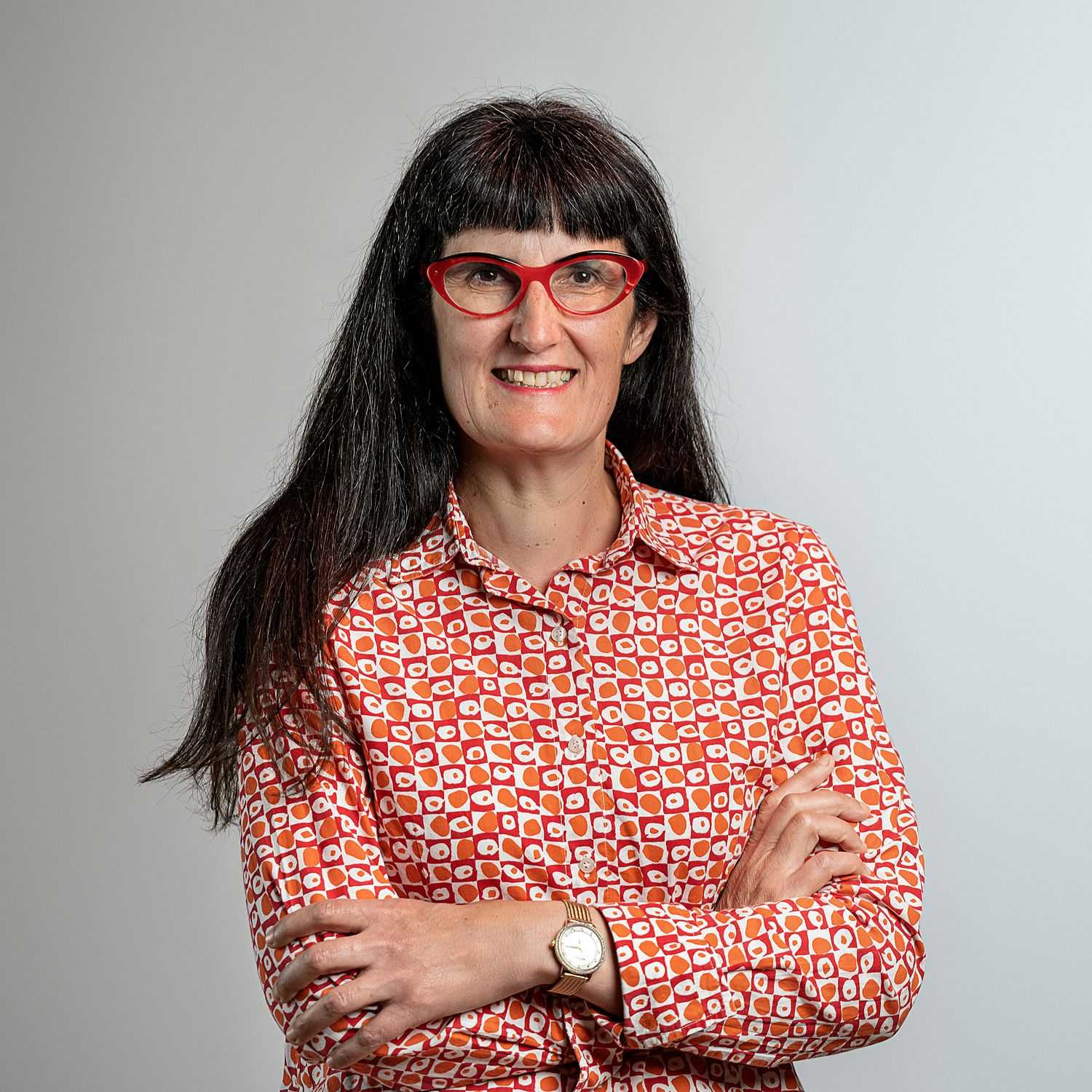
Juan Jose Nieto Roig is a Professor at the University of Santiago de Compostela (USC) in Spain, affiliated with the Department of Statistics, Mathematical Analysis and Optimization, and the Faculty of Mathematics. He is part of the research group EDNL (Nonlinear Differential Equations) and the Galician Mathematical Research and Technology Center (CITMAga). His research focuses on nonlinear differential equations, fractional calculus, mathematical biology, epidemiological modeling, and optimal control theory. Recent work includes studies on fractional differential operators, stochastic processes, and applications in climate science, epidemiology, and engineering. Publications Highlights: Explores fractional calculus in diverse contexts, including epidemiological models (e.g., Nipah virus, malaria) and reaction kinetics. Develops control strategies for complex systems, such as neural networks and stochastic systems with delays. Applies mathematical models to environmental challenges (e.g., global warming impacts on marine ecosystems). Awards: No awards explicitly mentioned in the provided texts. Grants and Labs: Active in interdisciplinary research through CITMAga, focusing on nonlinear dynamics and real-world applications.
Eva Cernadas García is an Associate Professor at the Escola Técnica Superior de Enxeñaría of the University of Santiago de Compostela (USC), where she conducts research at the intersection of machine learning, computer vision, and practical applications in medicine, food technology, and marine resource management. Her academic position is firmly established within the Computer Science department, where she has developed significant expertise in image segmentation, texture analysis, and shape recognition. Dr. Cernadas' research interests span multiple domains of artificial intelligence with a strong emphasis on practical implementations. She specializes in developing computer vision algorithms for medical diagnostics, including software tools like CystAnalyser for polycystic kidney disease detection, STERapp for stereological analysis, and PDApp for dental eruption prediction. Her work extends to food technology applications such as MarblingPredictor for ham quality assessment and Govocitos for fish fecundity estimation. Notably, she integrates gender perspective into her technical work, having been awarded by USC in 2021 for introducing gender perspective in machine learning teaching. Analysis of her recent publications reveals a strong focus on applying machine learning techniques to solve real-world problems across diverse fields. Her work demonstrates consistent innovation in developing efficient algorithms for classification and regression tasks, with increasing attention to gender issues in STEM education. The publications show progression from fundamental algorithm development to practical implementations in medical diagnostics, mental health assessment, and sustainable resource management. Awarded by the University of Santiago de Compostela for the introduction of the gender perspective in machine learning teaching in 2021 Dr. Cernadas actively promotes gender equality in STEM through various initiatives including designing workshops for primary education in the program 'Unha enxeñeira ou cientifica en cada cole', early childhood education programs, and promoting the 'INFORMATIZATE' video contest for non-university students. Her research includes significant grant-funded projects related to service robots, intelligent control scenarios, and development of new technologies for studying reproductive ecology in fishery. She collaborates extensively with researchers across multiple disciplines, particularly with Manuel Fernández-Delgado, with whom she has co-authored numerous publications. Her laboratory work focuses on developing practical software tools that bridge the gap between theoretical machine learning algorithms and real-world applications. The CITIUS research center at USC appears to be her primary research base, where she contributes to projects involving image analysis, pattern recognition, and development of user-friendly interfaces for domain experts in medicine and biology.
Juan Carlos Vidal Aguiar serves as an Associate Professor in the Department of Electronics and Computer Science at the University of Santiago de Compostela, Spain. With extensive experience in academic research and teaching, he has established himself as a prominent figure in process mining and business intelligence applications. His work bridges theoretical computer science with practical implementations across healthcare and educational domains. Dr. Vidal Aguiar earned his Bachelor Engineering degree in Computer Science from the University of La Coruña in 2000, followed by several years working as a senior IT consultant. He completed his PhD at the University of Santiago de Compostela in 2010, where he has remained as faculty since. His academic journey reflects a trajectory from foundational computer science toward specialized applications in process analytics. His research interests focus on knowledge discovery, semantic annotation, semantic modeling of workflows and services, and the application of artificial intelligence for business intelligence . Recent work demonstrates significant evolution toward healthcare applications, particularly in cardiac rehabilitation and glucose monitoring, while maintaining strong foundations in process mining techniques. His publications reveal a clear progression from theoretical workflow modeling to practical AI-driven business process solutions with real-world impact. Analysis of his publication trends shows increasing specialization in predictive process monitoring with deep learning approaches, particularly evident in his 2023-2025 work. His research spans both theoretical contributions in kernel methods and biclustering algorithms, and practical implementations like the VERONA Python library for benchmarking. The interdisciplinary nature of his work is particularly notable in healthcare applications where process mining techniques are adapted for medical contexts. Dr. Vidal Aguiar leads multiple significant research initiatives including Predictive monitoring and causality for cardiac rehabilitation, Responsible AI for Process Mining 2.0, GAMification techniques for entrepreneurial teacher development, and Soft computing for gamification analytics in cardiac rehabilitation . These projects demonstrate his ability to secure research funding across diverse domains while maintaining a cohesive research vision centered on process analytics. His research ecosystem includes collaborations with numerous colleagues including Manuel Lama, Pedro Gamallo-Fernandez, and Marcos Matabuena across various projects. The SoftLearn platform represents one of his notable contributions to educational technology, applying soft computing techniques to process mining in e-learning contexts. His work consistently bridges academic research with practical implementations that address real organizational challenges.