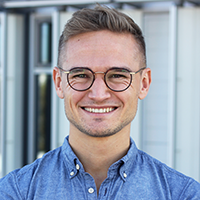
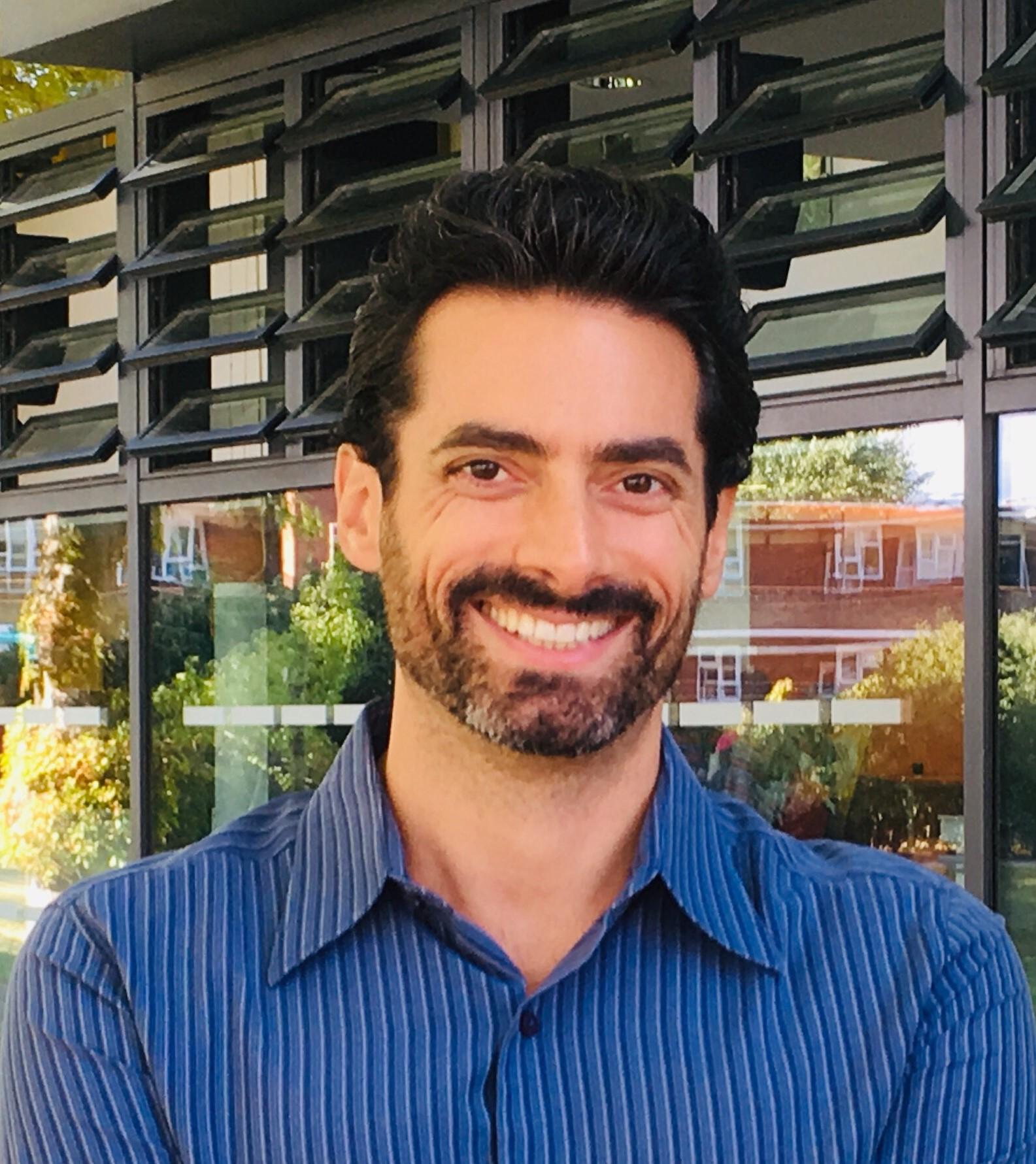
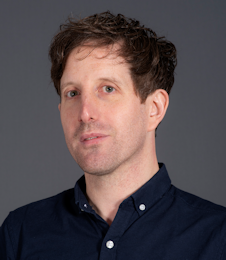
David Leopold is an Associate Professor of Political Theory at the Department of Politics and International Relations (DPIR), University of Oxford, and a Fellow of Mansfield College. He specializes in the political philosophy of G.W.F. Hegel, Karl Marx, and theoretical connections between them. His research also explores utopianism, methodological questions in political theory, and the history of socialist thought. Leopold holds an MA from Sussex University and a DPhil from the University of Oxford. His teaching includes undergraduate and graduate courses on political theory, research methods in the history of political thought, and the theories of Hegel and Marx. He advises doctoral students on Marx, Hegel, and related topics. Research interests span Marx's views on human flourishing (linked to capabilities approaches), Analytical Marxism, William Morris's utopianism, and the role of ideal theory in political philosophy. He critiques dismissals of utopian thinkers like Morris and engages with Engels's early communitarian socialism. Leopold is affiliated with the Political Theory Network and the Centre for Socio-Spatial Justice (CSSJ). His work bridges historical and contemporary political thought, emphasizing critical engagement with classical texts and their relevance to modern debates.
London School of Economics and Political Science (LSE)United Kingdom
Nora Waitkus is a Professor of Sociology at Heidelberg University's Max-Weber Institute of Sociology and an Assistant Professorial Research Fellow at the London School of Economics' International Inequalities Institute. Her research focuses on socio-economic stratification, wealth inequality, class dynamics, housing inequalities, and economic elites. She holds a PhD in Sociology from the University of Bremen, an M.A. in Political Science from Freie Universität Berlin, and a B.A. in Political Science from the University of Hamburg. Key research areas include: wealth concentration mechanisms, institutional drivers of inequality, cross-national comparative analysis, and media portrayals of economic elites. She employs methods like longitudinal household surveys, media data analysis, and survey experiments. Her recent work emphasizes how redistribution policies moderate income-wealth linkages, the role of inheritance in wealth legitimacy, and gender disparities in wealth accumulation across occupational classes. Awards: RC28 Significant Scholarship Award, Aleida Hagenaars Memorial Award, NWO Talent Grant (VENI) Grants: VENI project on Varieties of Wealth , Wealth Conflicts within Families (TiU Grant) She leads the Chair of Comparative Social Stratification at Heidelberg University and maintains active collaborations with institutions like Tilburg University and the University of Michigan.
Matt Vidal is Reader in Sociology and Political Economy at Loughborough University London's Institute for International Management and Entrepreneurship. He holds a PhD in Sociology from the University of Wisconsin-Madison and has previously been a postdoctoral fellow at the UCLA Institute for Research on Labor and Employment, a research fellow at the Weizenbaum Institute for the Networked Society, and a visiting researcher at Paris Dauphine University and the Max Planck Institute for the Study of Societies. His research focuses on work, organizations, employment relations, labor markets, capitalist growth regimes, and capitalist crises. Vidal has developed an original theoretical framework called 'organizational political economy,' which integrates concepts from organization theory into a classical Marxist framework. His work emphasizes how contradictory developments in labor management lead to divided management approaches, where some managers adopt best practices while others settle for 'good enough' solutions, making capitalist management increasingly a source of organizational inefficiency. Vidal's research methodology combines rich empirical fieldwork (including interviews with 109 individuals across 31 firms and 169 hours of direct observation) with rigorous theoretical synthesis. His work examines not only manufacturing but also extends to education, healthcare, software development, and other sectors where managers face contradictory pressures between standardization versus discretion and deskilling versus upskilling. His 2022 book Management Divided: Contradictions of Labor Management published by Oxford University Press has received significant acclaim from prominent scholars across multiple institutions, establishing him as an important voice in critical management studies and labor sociology. The book presents a synthetic theory explaining why capitalist management often adopts relatively inefficient practices despite the existence of better alternatives. Vidal has also edited The Oxford Handbook of Karl Marx and Comparative Political Economy of Work , and has published over twenty articles or book chapters on work, human resource management, employment relations, labor markets, comparative political economy, and social theory. His contributions have been praised for their theoretical depth, empirical richness, and interdisciplinary approach that bridges sociology of work, organization theory, institutional theory, and Marxist analysis. His work has been recognized through extensive scholarly reviews and endorsements from leading academics including Paul Adler (University of Southern California), Ruth Milkman (CUNY Graduate Center), and Nathan Wilmers (MIT), who commend his ability to develop complex theoretical frameworks grounded in rich empirical evidence from American manufacturing.
London School of Economics and Political Science (LSE)United Kingdom
Bruno Leipold is a political theorist and historian of political thought, currently a Research Fellow at the London School of Economics and Political Science (LSE) Department of Government. From September 2025, he will assume the role of Assistant Professor in Political Theory at LSE. His research focuses on Karl Marx’s intellectual development, the republican political tradition, and democratic theory. He holds a DPhil from the University of Oxford, with prior postdoctoral positions at The New Institute (Hamburg), the European University Institute (Florence), and Goethe University Frankfurt. Key publications include the monograph *Citizen Marx* (Princeton UP, 2024), co-editing *Radical Republicanism* (Oxford UP, 2020), and peer-reviewed articles exploring Marx’s analysis of class struggle, republican theory, and 19th-century political movements. His work bridges historical analysis with contemporary debates in political philosophy. Teaching responsibilities include courses on political theory foundations, contemporary justice debates, and liberal ideas of freedom. Leipold’s research emphasizes the intersections of republicanism, socialism, and democratic theory, with a particular focus on Marx’s intellectual legacy and radical political thought.
Tomás Rotta is a Senior Lecturer and Programme Director of Economics in the Institute of Management Studies at Goldsmiths, University of London. He is a member of the Structural Economic Analysis Research Unit and serves on the management committee of the Association for Heterodox Economics. Education: Post-graduate certificate in higher education (HEA fellow), 2015 PhD in Economics, University of Massachusetts Amherst, USA, 2014 MA in Economics, University of Massachusetts Amherst, USA, 2010 MSc in Economic Development, University of São Paulo, Brazil, 2008 BSc in Business Management, University of São Paulo, Brazil, 2004 Tomás’ research focuses on Political Economy, value theory, and input-output analysis. He investigates economic growth and distribution, the impact of intellectual monopoly on digital assets and the knowledge economy, and computational/quantitative methods in contemporary issues. His work often integrates Marxian theory with empirical modeling using R and Python. Recent publications analyze global value chains, income inequality in the United States, and comparative economic exploitation across 43 countries. These studies employ quantitative frameworks to explore how information rents and intellectual monopoly affect value creation, distribution, and productivity. Tomás’ affiliations include the Structural Economic Analysis Research Unit and the Association for Heterodox Economics. He teaches Advanced Econometrics, Econometrics, and Applied Quantitative Economics at postgraduate and undergraduate levels.
Doug Haynes is a Reader in American Literature and Visual Culture at the University of Sussex , affiliated with the School of Media, Arts and Humanities. His work bridges modern American literature and visual art with critical theory, focusing on affect, economy, and everyday life. He has supervised 13 PhD students, several of whom hold academic positions globally. Education: DPhil in American Literature, University of Sussex (2004) MA in Fine Art, Brighton University MA in Culture and Social Change, University of Southampton BA in English Literature, University of Southampton Haynes’ research explores humor, particularly 'dark humor,' in works by Thomas Pynchon, Nathanael West, and Mike Kelley, integrating critical theory and transnational perspectives. His recent publications analyze Pynchon’s narratives of economy and affect, while earlier work examines surrealism, Kafka’s influence, and Adorno’s philosophy. Scientific awards include editorial roles on Orbit: Readings Around Pynchon and Cogent OA , alongside organizing international symposia like Pynchonomics and Facing America . He leads the Sussex Centre for American Studies and serves on university committees including the Joint Negotiating Committee and Senate.
Dr Kieran Durkin is a Lecturer in the Department of Politics and International Relations at the University of York. He holds an MA (Hons.), MRes, and PhD from the University of Glasgow. His research focuses on Marxism, Marxist-humanism, critical theory, decolonial theory, and feminist theory, with an emphasis on reinserting humanism into critiques of capitalism. Durkin has held a Marie Skłodowska-Curie Global Fellowship (2018–2021), during which he was a Visiting Fellow at the University of California, Santa Barbara. Education: PhD in Politics, University of Glasgow MRes in Politics, University of Glasgow MA (Hons.) in Politics, University of Glasgow Teaching: Undergraduate: Karl Marx Politics, State, Economy, and Society, Politics of Gender Postgraduate: Critical Theories of International Political Economy His research explores intersections between Marxist-humanism, decolonial thought, and feminist theory to critique capital's impact on human agency. He has published widely on Erich Fromm, Raya Dunayevskaya, and the Marxist-Humanist tradition. Key works include The Radical Humanism of Erich Fromm (shortlisted for the Philip Abrams Memorial Prize) and edited volumes on Raya Dunayevskaya and Fromm’s critical theory. He has collaborated on projects such as the Marie Curie-funded Humanist Marxism (2018–2022) and engages in public scholarship through articles in Jacobin and podcast discussions on Erich Fromm’s legacy.
Ana Cecilia Dinerstein is Chair of Political Sociology and Critical Theory at the Department of Social and Policy Sciences, University of Bath. A Fellow of the Higher Education Academy, her work bridges critical theory, decolonial praxis, and grassroots social movements across Latin America, Europe, and the Global South. Research focuses on the Global Politics of Hope , connecting Ernst Bloch’s philosophy with radical organizing Key contributions: Subjectivity of Labour , Open Marxism , and Concrete Utopias framework Supervises research on Argentina’s social movements, prefigurative politics, and decolonial feminist theory Her 115+ publications include monographs like The Politics of Autonomy in Latin America (2015) and Open Marxism 4 (2019). She founded the Women on the Verge network, fostering decolonial feminist scholarship globally. Awards include the Fellow of the Higher Education Academy (2017). Current projects span EU Horizon 2020 and British Academy grants on urban solidarity economies and prefigurative politics.
Andrew McKinnon is Senior Lecturer in the Department of Sociology at the University of Aberdeen's School of Social Science. Trained at the Universities of British Columbia and Toronto, he has been at Aberdeen since 2008. His research bridges sociology of religion and social theory, with particular focus on metaphor/narrative analysis, secularization, and religious conflict. Key research themes include: Religion's role in social life and conflict dynamics Latent class modeling of religious data Demographic studies of Anglicanism in Sub-Saharan Africa Critical theory applications to religious phenomena Publications highlight his interdisciplinary approach across: Historical political sociology of religion Quantitative-qualitative methodology fusion Analysis of Durkheim, Ricoeur, and Weber Global Anglican sexuality disputes Current teaching includes postgraduate courses in Social Theory and Sociology of Religion, with experience supervising PhD projects about: Religion and conflict Religious metaphor systems Secularization theories
Dr. Onur Ulas Ince is Senior Lecturer in Political Theory at the Department of Politics and International Studies, SOAS University of London. He holds a Ph.D. from Cornell University's Department of Government (2013) and has previously held faculty positions at Koç University and Singapore Management University. His visiting fellowships include Princeton University, Brown University, and the National University of Singapore. His research focuses on the intersection of political theory, political economy, and colonial studies, examining how imperial frameworks shaped global capitalism. Major works include the award-winning Colonial Capitalism and the Dilemmas of Liberalism (Oxford UP, 2018), which received the 2020 David and Elaine Spitz Prize and was a finalist for the C.B. Macpherson Prize. Current projects include monographs on racial capitalism in Asia and liberal anti-imperialism under contract with Oxford University Press. Research spans: Imperial political economy and racial capitalism Liberal theory's engagement with colonialism Historical analyses of British imperial capitalism Trans-imperial frameworks for studying race and capital Publications demonstrate consistent focus on colonial capitalism, racialization processes, and critiques of liberalism through historical case studies (British India, Asian settlements) and engagement with Enlightenment thinkers (Smith, Hume, Burke). Recent work increasingly examines racialization within imperial economic systems. Awards and Honors: David and Elaine Spitz Prize (2020) C.B. Macpherson Prize Finalist (2020) Contact: ui2@soas.ac.uk | Personal website: www.ulasince.com
Dr. Tom O'Shea is a Lecturer in Political Theory at the University of Edinburgh's School of Social and Political Science. His research focuses on human freedom, particularly its relationship with social and economic power, with recent work developing a socialist republican approach to economic domination. He holds a doctorate in philosophy from the University of Sheffield and has previously held academic positions at Essex, Roehampton, and York Universities. Research Interests: Freedom and civic republicanism Socialism and radical political traditions Medical ethics, metaethics, and the history of moral thought At Edinburgh, he leads courses on Freedom and Slavery in Political Thought and War and Justice , and lectures on Political Thinkers. He convenes the Political Theory Research Group and serves as Associate Director of the CRITIQUE Centre. Future research plans include exploring conceptions of slavery in socialist, feminist, and black radical thought. Teaching and Roles: Convenes research groups and oversees interdisciplinary initiatives External examiner for Swansea University's Philosophy and PPE programs His work bridges political theory with the history of political thought, addressing contemporary issues such as economic justice, autonomy, and structural inequality.
Benjamin Noys is a Professor of Critical Theory at the University of Chichester and Coordinator of the MA English Literature program. He holds external affiliations with Goldsmiths, University of London (as an affiliate of the Centre for Philosophy and Critical Thought), and contributes to Angelaki: Journal of the Theoretical Humanities . His research focuses on critical and literary theory, psychoanalysis, film, and the avant-garde, with recent projects exploring contemporary politics and neurotic writing. Education: BSc (Brunel University), MA (Sussex University), DPhil (Sussex University). He teaches undergraduate modules like ENL 103 and 108, and coordinates MA courses such as MAEN01 and MAEN03. His PhD supervision specializes in critical theory, film, and intersections of literature and theory. Research interests include critical theory's role in modernity, cultural politics, and the avant-garde's textual and visual practices. Recent articles examine Leninist theory, Foucault's late work, and the materialism of cryptocurrency. His publications include Malign Velocities: Accelerationism and Capitalism (2014) and The Persistence of the Negative (2010). Current projects investigate neurosis and contemporary political crises. No awards are explicitly mentioned, though his editorial roles reflect academic prestige. Advising focuses on digital art archiving and pornography's cultural politics. No listed labs/teams, though his work intersects interdisciplinary groups in philosophy and cultural studies.
Jan Kandiyali is an Associate Professor in Political Theory at Durham University's School of Government and International Affairs, where he has been employed since 2021. He previously taught at the London School of Economics (2019-2021) and Istanbul Technical University (2015-2019). Kandiyali holds a PhD in Philosophy from the University of Sheffield. Research Focus His scholarship centers on three interconnected domains: Marxist theory - Re-examining concepts of alienation, labor, and communist society Political philosophy - Exploring justice, freedom, and ideological frameworks Ethics - Investigating moral dimensions of social systems and economic structures His forthcoming book Karl Marx's Vision of the Good Society: Work, Solidarity and Human Flourishing (Oxford University Press) presents a novel interpretation of Marx's social philosophy. Publication Trends Kandiyali's 10 most recent journal articles (2013-2025) demonstrate consistent focus on Marxist political theory, with evolving examinations of freedom-necessity dialectics, communist viability, socialist-republican compatibility, and distributive justice. His work frequently engages with contemporary applications of classical philosophy.
Christoph Schuringa is an Associate Professor and Associate Head of Faculty in the Philosophy Department at Northeastern University London. His academic journey includes a BA from the University of Cambridge (King’s College), an MA in History of Art from the Courtauld Institute of Art, and a PhD in Philosophy from Birkbeck, University of London. He has held teaching positions at Birkbeck and currently teaches courses on Kant and Post-Kantian Philosophy, as well as Values and Society. His research focuses on the history of philosophy (Aristotle and German idealism), Marx and Marxism, and social/political thought. He is the editor of the Hegel Bulletin and has reviewed for journals like European Journal of Philosophy and Mind . His current monographs under contract are A Social History of Analytic Philosophy (Verso) and Karl Marx and the Actualization of Philosophy (Cambridge University Press). Educations: PhD in Philosophy, Birkbeck, University of London (2012) MA in History of Art, Courtauld Institute of Art (2008) BA in Philosophy, University of Cambridge (2003) Professional Affiliations: Hegel Society of Great Britain (Executive Committee) Marx & Philosophy Society (Organising Group) Key Research Themes: History of Philosophy German Idealism Marxist Theory Social and Political Thought Nietzsche Studies Recent Publications Trends: His work bridges historical and contemporary philosophy, with a focus on reinterpreting foundational texts through modern frameworks. Recent articles (2020–2023) emphasize debates between Marx/Hegel, Nietzsche’s genealogical methods, and ethical/political ontology. His 2025 monograph traces the social dimensions of analytic philosophy’s development. Professional Activity: International speaker at universities including Oxford, Heidelberg, and St Andrews Peer reviewer for major philosophy journals