Ronald Dorn is a Professor of Geography at Arizona State University (ASU) since 1988, previously at Texas Tech University. He co-coordinates the Arizona Geographic Alliance, promoting K-12 geographic education. His academic affiliations include the School of Geographical Sciences and Urban Planning and the Water Institute at ASU. Education: Ph.D. (1985), M.A. (1982), and B.A. (1980) in Geography from UCLA and UC Berkeley. Active in research, teaching, and professional service, Dorn has held roles in curriculum development, grant leadership, and academic governance. Research interests span geomorphology, rock art conservation, mineral weathering, and geographic education. His work bridges physical and human geography, with a focus on arid environments and cultural heritage preservation. Recent articles emphasize erosion dynamics, rock coatings, and pedagogical innovations in geography education. Over 70 scientific awards and fellowships highlight his contributions, including the Guggenheim Fellowship (1996) and Wiley Award (1993). He has mentored 20+ graduate students, many advancing to academic or applied roles. Teaching includes courses on physical geography, Arizona landscapes, and urban studies. His research labs and teams focus on field-based studies, integrating geospatial technologies and interdisciplinary approaches.
Tonya J. Balch is a Professor in the Department of Applied Clinical and Educational Sciences at the Bayh College of Education, Indiana State University. She holds a Ph.D. in Educational Administration from the same institution and is actively engaged in teaching, research, and administrative leadership, currently serving as Interim Director since August 2024. Her work bridges counselor education, school leadership, and systemic student support. Dr. Balch earned her academic degrees from Indiana State University: Ph.D. in Educational Administration (2008), M.A. in School Counseling (2001), and B.S. in Physics (1989). Her educational background reflects a unique interdisciplinary foundation that informs her holistic approach to student development and educational leadership. Her research and professional interests center on school counseling, educational leadership, Professional Development Schools (PDS), student mental health, dropout prevention, and trauma-informed practices. She emphasizes collaboration between counselors and administrators, advocating for systemic models that support student wellness and academic success. Her work often integrates social justice, advocacy, and intercultural competence into educational frameworks. The recent publications and presentations highlight a consistent focus on team-based approaches in schools, transitions, mental health integration, and counselor preparation. The articles reflect a trajectory from foundational work on counseling skills and leadership to contemporary issues like anxiety, grief, and equity in student support systems. Provost’s Award for Excellence in Student Learning Assessment and Improvement (2023) Holmstedt Distinguished Professorship (2016) Indiana Counseling Association President's Award (2013) Exemplary Counselor Educator (2011) Trailblazer Award (2009) Distinguished Service Award (2006) Dr. Balch has been instrumental in securing major grants, including a $200,000 Lilly Endowment grant to enhance school counselor preparation and a $20,000 planning grant for comprehensive counseling initiatives. She has advised and consulted with numerous school districts and organizations, including the Indiana Youth Institute, Vigo County School Corporation, and Greencastle School Corporation. Her service extends to university committees, community boards, and national professional associations, reflecting a deep commitment to educational improvement and student well-being. She is actively involved in professional development through presentations at national conferences such as NAPDS and ATE, and she contributes to public scholarship via blog posts and technical reports. Her leadership in Counselor Day on Campus and other initiatives underscores her dedication to building strong educational communities.
Khalil Esper is a Researcher at the Department of Computer Science, Faculty of Engineering, Friedrich-Alexander-University Erlangen-Nuremberg (FAU), where he works at the Chair of Computer Science 12 (Hardware-Software Co-Design). His research focuses on verification, energy optimization, and runtime requirement enforcement in embedded systems and MPSoCs. His educational background includes: Informatics Engineering from Aleppo University, Syria (2010-2015) European Master in Embedded Computing Systems (EMECS) from Rhineland-Palatinate University of Technology Kaiserslautern-Landau (Germany) and Norwegian University of Science and Technology (Norway) (2017-2019) Esper's research interests center around verification and model checking, energy optimization on MPSoC, real-time systems and embedded systems, and autonomic computing. His work particularly focuses on runtime requirement enforcement mechanisms for non-functional properties in multi-processor systems-on-chip, with applications extending to medical devices and human-robot interaction systems. He has developed approaches using finite state machines, reinforcement learning, and evolutionary algorithms to ensure system properties are maintained during execution. His publication record shows a strong trend toward applying formal methods and runtime enforcement techniques to increasingly complex systems, with recent work expanding into safety-critical applications like orthoses and human-robot interaction. The interdisciplinary nature of his research bridges computer science, embedded systems engineering, and biomedical applications. Esper has supervised multiple theses including: Sascha H.: Runtime Requirement Enforcement of Non-Functional Requirements on MPSoCs Using Fuzzy Logic (2022) Iana S.: Feedback-Based Control of Non-functional Program Execution Properties on Linux (2023) Philipp L.: Runtime Requirement Enforcement of Functional and Non-Functional Requirements of a Knee Orthosis Based on a Digital Twin (2024) Avinash N.: Runtime Requirement Enforcement of Safety Properties of an Ankle Orthosis Based on a Digital Twin (2024) Zhiyi T.: Generation of Environment FSMs Using Machine Learning Techniques (2025) Moustafa A.: Runtime Requirement Enforcement of Safety Properties of Human-Robot Interaction Based on a Digital Twin (2025) Florian K.: Runtime Requirement Enforcement of Safety Properties of Human-Robot Interaction (2025) He has been actively teaching courses on Approximate Computing and Embedded Systems since the 2021/2022 academic year, demonstrating his commitment to academic instruction alongside his research activities. Esper is involved in the InvasIC research project, part of the DFG Transregional Collaborative Research Center 89 on Invasive Computing, which explores novel approaches to resource management in parallel computing systems.
Thomas Albright is an Associate Professor and Deputy Nevada State Climatologist at the University of Nevada, Reno (UNR), affiliated with the Department of Geography and the Ecology, Evolution & Conservation Biology Graduate Program. His work integrates landscape ecology, biogeography, and remote sensing to address environmental challenges at global and local scales. He has conducted international research across 15 countries, emphasizing conservation, climate impacts, and sustainability. Educated at the University of Wisconsin-Madison (Ph.D. in Zoology, 2007) and the University of California, Santa Barbara (M.A. in Geography), he has held roles including Postdoctoral Associate at UW-Madison and Senior Scientist at the USGS EROS Center. His teaching focuses on physical geography, remote sensing applications, and climate solutions, emphasizing active learning and mentorship. Research interests include conservation biogeography, ecoclimatology, and urban heat dynamics. Notable projects include studying invasive species in China and the US, avian responses to extreme weather, and Las Vegas urban heat hazards. He collaborates globally, including with Nicaraguan institutions and NASA initiatives. His lab, the Laboratory for Conservation Biogeography, emphasizes environmental justice, community engagement, and policy-relevant science. Key collaborators include USGS, NASA, and international universities. Advised students include D Mutiibwa, G Sadoti, Nicole Shaw, and Lauren Phillips.
B. F. Spencer Jr. is the Nathan M. and Anne M. Newmark Endowed Chair in Civil Engineering at the University of Illinois at Urbana-Champaign, where he directs the Multi-Axial Full-Scale Sub-Structured Testing & Simulation Facility and the Smart Structures Technology Laboratory. He joined the university in 2002 after serving as Leo E. and Patti Ruth Linbeck Professor of Engineering at the University of Notre Dame (1985-2002). Education includes: Ph.D. in Theoretical and Applied Mechanics, University of Illinois at Urbana-Champaign (1985) M.S. in Theoretical and Applied Mechanics, University of Illinois at Urbana-Champaign (1983) B.S. in Mechanical Engineering, University of Missouri-Rolla (1981) His research focuses on pioneering innovations in structural health monitoring, stochastic mechanics, and smart sensor technologies. Key areas include development of wireless sensor networks for real-time infrastructure assessment, seismic hazard mitigation strategies, and AI-driven damage detection systems. His work bridges theoretical computational mechanics with practical civil engineering applications to enhance resilience against natural disasters. Recent publications emphasize digital twins, UAV-based structural inspection, machine learning for damage identification, and advanced sensor networks. Trends show strong integration of AI, 3D visualization, and edge computing for rapid post-disaster evaluation and predictive maintenance of critical infrastructure. Major scientific honors: ASCE Housner Medal (2015) J.M. Ko Medal (2014) Foreign Member of Polish Academy of Sciences (2005) Structural Health Monitoring Person of the Year (2011) JSPS Fellowships (1999, 2000) He leads significant infrastructure projects including NSF-funded facilities and industry collaborations. Laboratory initiatives involve full-scale testing of bridges, gates, and seismic mitigation systems. Educational outreach includes K-12 STEM programs like 'Shakes and Quakes' to inspire future engineers.
Professor Jennifer Howell is Pro Vice-Chancellor (Global Engagement) at the University of Western Australia (UWA), overseeing internationalisation strategy and global partnerships. She holds a PhD from Queensland University of Technology and is a Harvard Graduate School of Education alumna. Her research focuses on digital pedagogy, online learning technologies, and the operationalisation of international collaborations. Key interests include digital badging for learning pathways and immersive virtual/augmented learning tools. With 21+ years in higher education leadership, her career spans roles as Associate Deputy Vice-Chancellor (Learning & Teaching) at Curtin University and Dean of Learning & Teaching in the Faculty of Humanities. She has pioneered strategic initiatives like micro-credentials, learning platforms, and offshore campus redevelopments. Howell actively contributes to education policy through roles on national committees including the Australian Council of Deans in Education and the Council for the Humanities, Arts and Social Sciences. Her $1.6M externally funded research explores STEM education through robotics, digital pedagogy frameworks, and accessibility in e-learning. Notable projects include usability studies for adaptive exercise apps and collaborative learning tools for students with disabilities. Howell advocates for embedding technology innovations into operational educational practices to ensure effective transformation. Education: PhD (Queensland University of Technology), Harvard Graduate School of Education Key Roles: Pro Vice-Chancellor (Global Engagement), UWA; Formerly Deputy VC (Learning & Teaching), Curtin Committees: Australian Technology Network (ATN) Universities Australia DVCA Group TEQSA (Tertiary Education Quality and Standards Agency) Grants: $1.6M in external research funding across international collaborations Her advisory work includes school boards (e.g., Lesmurdie Senior High School) and curriculum bodies like the School Curriculum and Standards Authority (SCASA). Howell’s publications emphasize bridging theory-practice gaps in digital learning and leveraging technology for inclusive education.
Benjamin Zwickl is an Associate Professor of Physics at the Rochester Institute of Technology (RIT) , located within the School of Physics and Astronomy under the College of Science . He also serves as Co-Director of the Center for Advancing Scholarship to Transform Learning (CASTLE) . His research focuses on Physics Education Research (PER), career pathways in STEM, and quantum technology education. Dr. Zwickl holds a Ph.D. in Physics from Yale University (2012) and a B.S. from Purdue University. His research interests include preparing students for careers in quantum technology, optics, and photonics, as well as improving laboratory education and understanding graduate student development. He has led initiatives to develop quantum education curricula and has secured grants such as an NSF-funded postdoctoral fellowship program. Zwickl’s work emphasizes bridging the gap between academic training and industry needs, particularly in fostering computational literacy and equity in STEM education. His publications highlight trends in PER, including analyses of remote research experiences, graduate student career decisions, and the role of admissions metrics in PhD outcomes. He actively contributes to RIT’s efforts to establish quantum education programs, including a minor in quantum information science and technology. Zwickl teaches courses like Quantum Technology Principles and Physics Education Research , reflecting his commitment to advancing pedagogy and student success.
Zane Cochran is a Clinical Assistant Professor of Creative Technologies in the Physics and Technology Department at Berry College, and Director of the HackBerry Lab. His teaching focuses on prototyping and design thinking within Berry's Creative Technologies program. Research interests include maker-oriented learning and embedded electronics in wearable technology, alongside consulting for K-12 schools developing STEM-based makerspaces. He actively exhibits interactive installations in museums, galleries, and fashion events, blending technical innovation with creative expression. His work emphasizes hands-on learning environments and cross-disciplinary collaboration. Located in the HackBerry Lab, Cochran's role integrates academic instruction with applied research, fostering student engagement in emerging technology fields. No specific grants or awards are listed in the provided information.
Dr. Erin R. Ottmar is an Associate Professor of Psychology and Learning Sciences at Worcester Polytechnic Institute (WPI), affiliated with the Department of Social Science & Policy Studies. She directs the MAPLE (Math Abstraction Play Learning Embodiment) Lab, focusing on educational technology and mathematics cognition. She holds a BA in Psychology and Elementary Education from the University of Richmond (2005) and a PhD in Educational Psychology: Applied Developmental Science from the University of Virginia (2011). Her postdoctoral training was completed at the University of Richmond. Her research integrates educational, cognitive, and developmental psychology to design interventions improving mathematics teaching/learning. Key projects include developing dynamic educational technologies like From Here to There and Graspable Math that embed perceptual learning and gesture-based interaction. Her current work examines how cognitive and non-cognitive pathways combine to enhance K-12 mathematics education, using classroom observations, longitudinal data, and multi-level modeling. Publications demonstrate consistent focus on: Perceptual learning mechanisms in mathematics Educational technology efficacy Classroom implementation studies Game-based learning analytics Cognitive factors in mathematical reasoning Awards include: NSF CAREER Award (2022) Sigma Xi Outstanding Junior Faculty Researcher Award (2022) AERA Early Career Fellow (2016) She actively mentors graduate/undergraduate students in the LST program and Psychology department. Major grants include NSF funding for projects on perceptual cues in algebra learning ($668K) and AI-supported teacher tools. She emphasizes interdisciplinary collaboration and real-world applications in her lab.
Glenn Ellis is a Professor of Engineering and Director of the Picker Engineering Program at Smith College. His career spans roles at Princeton University, Clarkson University, the U.S. Air Force Academy, and Kajima Corporation in Japan. Education : Ph.D. and M.A. from Princeton University; B.S. from Lehigh University. Ellis focuses on engineering education reform , emphasizing knowledge building , cognitive tools , and deep learning environments . His work includes K-12 outreach and developing the NSF-funded Through My Window educational platform. His recent publications highlight narrative-based curricula , transmedia storytelling , and STEM identity development for middle school learners. Scientific Awards : U.S. Professor of the Year (2007), Sherrerd Prize for Distinguished Teaching, Outstanding New Teacher Award, Tau Beta Pi Faculty Award. Ellis advocates for play-based learning and ethical education , balancing academic rigor with personal passions for outdoor activities and creative arts.
Anne Collard is a Researcher at the Institute for Research in Didactics and Education within the Faculty of Education and Training Sciences at the University of Namur (UNamur) . Her work focuses on digital media literacy, academic literacies, and critical education in artificial intelligence and robotics. Education : Degree and aggregation in Romance Philology (FUNDP and UCL), Special Bachelor of Theology (UCL), Diploma in Bookselling (UCL), Coaching Certification (BAO) Collard’s research explores the integration of digital tools in education, including formative assessment systems using ICT, media literacy for global citizenship, and critical approaches to recommendation algorithms. She is involved in projects like PUNCH 3.0 and LITME@WORK , emphasizing collaborative and distance work competencies. Her recent publications address topics such as AI education through role-playing games, conceptual metaphors in robotics, and the ethical implications of algorithmic datafication in media infrastructures. She actively contributes to interdisciplinary workshops and conferences on digital literacy.
Gloria M. Rodriguez is an Associate Professor at the University of California, Davis School of Education. Her work centers on educational leadership, school finance, and social justice, with a focus on low-income students of color in K-12 and community college settings. She is principal investigator for the Leadership for Real Impact (LRI) project and director of the Capital Area North Doctorate in Educational Leadership (CANDEL) Ed.D. Program. Education: Ph.D., Education: Administration and Policy Analysis with minor in Organizational Studies – Stanford University, 1997 M.P.A., Columbia University, School of International & Public Affairs, 1989 B.A., Economics – U.C. Santa Cruz, 1986 A.A., Business – College of the Sequoias, 1984 Research Interests: Dr. Rodriguez investigates educational investment frameworks that leverage community strengths to address needs, alongside political economic conditions affecting Chicana/o-Latina/o communities and marginalized populations in the U.S. Her projects include the LRI initiative, Project EXCEL, and the Testimonios book project. Scientific Awards: Teaching Award, UCD Education Graduate Students Association, 2008 Award for Excellence in Teaching, UTEP College of Education, 2000 Jean Flanigan Award for Outstanding Dissertation, 1997-98 American Education Finance Association award, 1998 National Hispanic Scholarship Fund, 1996 Chicana/o Fellows Program Fellowship, Stanford, 1994-1995 Professional Service: She serves on the board of the American Education Finance Association, editorial boards for Educational Administration Quarterly , Journal of Education Finance , and Educational Policy Analysis Archives , and is affiliated with UC Davis Designated Emphasis in Feminist Theory & Research and the Center for Poverty Research.
Wei Ai is an Assistant Professor at the University of Maryland, affiliated with the College of Information (INFO) and the Institute for Advanced Computer Studies (UMIACS). His research focuses on data science for social good (DSSG), integrating machine learning, causal inference, and experimental design to address societal challenges in education, virtual collaboration, and quantum computing. He leads the Center for Educational Data Science and Innovation (EDSI) and has secured grants from the NSF, Gates Foundation, and Walton Family Foundation for projects like M-Powering Teachers and classroom quality assessment tools. Education: PhD in Information from the University of Michigan (advised by Qiaozhu Mei). Previous academic roles include teaching at the University of Michigan and Peking University in courses like Data Mining and Information Retrieval. Research Interests: Machine Learning and Causal Inference, AI for Education, Virtual Teams and Social Identity, Large Language Models for Social Applications. He has published in venues such as PNAS, Management Science, ACL, and the Web Conference. Grants: Major awards include a NSF grant on middle-grade math instruction analysis (with Min Sun) and a Gates Foundation grant for classroom dataset development (with Jing Liu). Labs/Teams: CLIP Lab member, collaborating on interdisciplinary projects with UMIACS and the Joint Quantum Institute. Prospective students: Open to mentoring PhD students through INFO and Computer Science programs. Actively supervises current students in education technology and quantum computing domains.
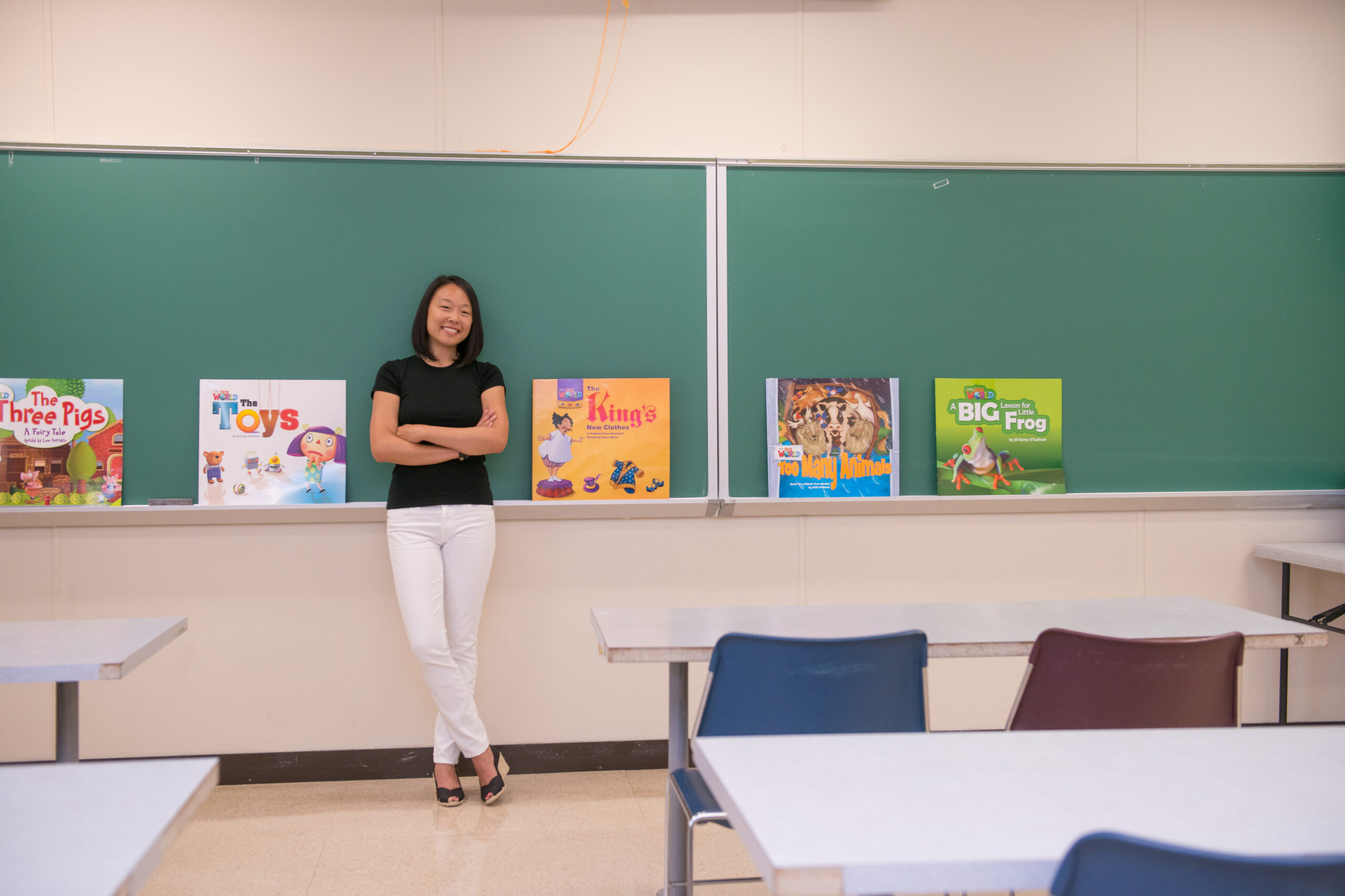
Dr. Joan K. Shin is a Professor of Education at George Mason University's College of Education and Human Development (CEHD). Currently serving as Associate Dean for Faculty Success and Director of CEHD's Global Online Teacher Education Center (GOTEC), she specializes in ESL/EFL/EAL education for young learners and teenagers. With professional development programs in over 100 countries, her work bridges in-person and online teacher training to build international virtual communities of practice. PhD in Language, Literacy & Culture from University of Maryland, Baltimore County (UMBC) MA in Bilingual/ESOL Education from UMBC BA in Economics from Cornell University Her research focuses on: Online TESOL education and MOOCs Visual and multimodal literacy for language learners Intercultural communication through storytelling Technology integration in teacher professional development Global virtual communities of practice Recent publications highlight trends in pandemic-era teacher training, MOOC camp effectiveness, and blended learning frameworks. She has secured over $12 million in grants, including Department of State-funded initiatives through FHI 360. Awards include: TESOL International Association's 30 Up and Coming Leaders (2016) U.S. State Department's Top 30 English Language Specialists (2021) Ben Warren International House Trust Prize (2013) HRH Duke of Edinburgh English Language Book Award (2014) As an English Language Specialist, she has conducted training across 20+ countries. Her full description outlines her Korean-American heritage, educational philosophy, and contributions to National Geographic Learning's award-winning textbook series.
Patrik Voštinár is an Assistant Professor at the Department of Computer Science , Faculty of Natural Sciences , Matej Bel University . Holding a PhD in Applied Computer Science from the same university (2014-2017), he teaches courses in Programming , Discrete Mathematics , Web Technologies , and Android Programming . As department head and study advisor, he actively shapes academic programs and student experiences. Matej Bel University (2017-present) Department of Computer Science Faculty of Natural Sciences His research focuses on computer science education and educational technology , with particular emphasis on: VR/AR applications in teaching Game-based learning environments Microcontroller programming pedagogy Mobile application development education Physical computing tools for K-12 Adaptive learning interfaces His work with MakeCode , micro:bit , and EEG-controlled games demonstrates innovative approaches to programming education. He has received multiple eLearning competition awards for educational courseware development. Heart on the palm (Project of the year 2019) 2nd price in eLearning competition (2023) for Discrete Mathematics course Price of České společnosti pro systémovou integraci (2023) for Web Technologies 1st price in eLearning competition (2023) for Geometry Didactics Voštinár actively contributes to academic communities through: Membership in DIDINFO conference program (since 2017) Editorial Board member of Elementary Mathematics Education Journal Organizing workshops for primary/secondary students Popularizing informatics through extracurricular programs