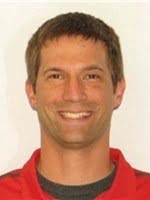
Brian Broll is a Vanderbilt University researcher in the College of Engineering with a focus on computer science education , distributed computing , and machine learning accessibility . He has collaborated extensively with Dr. Ákos Lédeczi and other researchers to develop educational tools like NetsBlox and DeepForge for K-12 and higher education contexts.
John Tansey serves as Professor and Department Chair in the Department of Chemistry at Otterbein University, where he has been a faculty member since 2002. His teaching portfolio spans General Chemistry, Survey of Organic and Biochemistry, Advanced Biochemistry, and cross-disciplinary courses in Nursing, Integrative Studies, and Honors programs. His academic credentials include: B.S. in Biochemistry and Molecular Biology from the University of Massachusetts Ph.D. in Biochemistry from Wake Forest University Postdoctoral fellowship at the National Institutes of Health under Dr. Dean (Constantine) Londos Dr. Tansey's research centers on the molecular mechanisms of PAT proteins in lipid storage and disease pathogenesis, with perilipin 5 as a primary model system. His laboratory employs biochemical, cellular, and structural approaches to investigate protein-lipid interactions, cellular trafficking, and metabolic regulation. Notably, all research is conducted exclusively with undergraduate students , providing exceptional hands-on training that has resulted in numerous national and international conference presentations. Recent publication trends (2022-2025) reveal dual research trajectories: (1) deep molecular characterization of perilipin 5 including hydrophobic cleft analysis, splice variants, and cellular trafficking mechanisms; and (2) innovative biochemistry education research focusing on AI-assisted learning tools, accreditation standards, and science communication training. This unique combination bridges fundamental biochemical research with pedagogical advancement. Recognition for his contributions includes: Best New Teacher Award (2004) Dr. Tansey has mentored dozens of undergraduate researchers and previously directed the Biochemistry and Molecular Biology interdisciplinary program. His leadership in the American Society for Biochemistry and Molecular Biology (ASBMB) includes accreditation program development and student chapter mentorship. Sustained research productivity indicates successful grant acquisition supporting undergraduate research experiences. The Tansey laboratory operates as an undergraduate research incubator, with projects directly tied to understanding lipid storage disorders. His work extends through the Otterbein ASBMB Student Chapter, which conducts community outreach and professional development activities while contributing to national biochemistry education initiatives.
Dr. Yapeng Tian is an Assistant Professor in the Computer Science Department within the Erik Jonsson School of Engineering and Computer Science at The University of Texas at Dallas. He leads the Computer Vision and Multimodal Computing (CVMC) Lab, where his research focuses on solving core problems in computer vision, computer audition, and machine learning with applications to multisensory perception, computational photography, AR/VR, accessibility, and healthcare. Dr. Tian received his PhD in Computer Science from the University of Rochester in 2022, Master's in Electronic Engineering from Tsinghua University in 2017, and Bachelor's in Electronic Engineering from Xidian University in 2013. Prior to joining UT Dallas, he completed research internships at Facebook and Adobe Research, and served as a Research Assistant at both University of Rochester and Tsinghua University. His research interests span audio-visual scene understanding, audio-visual scene generation, AI for accessibility and healthcare, and image/video processing. He has made significant contributions to multimodal learning, particularly in audio-visual integration, where his work has been recognized with numerous awards including the Amazon Research Award, Cisco Faculty Research Award, and AAAI New Faculty Highlights. Analysis of his recent publications reveals a strong focus on diffusion models for multimodal generation, audio-visual learning, accessibility applications, and efficient multimodal processing. His work increasingly integrates healthcare applications, particularly in autism assessment and assistive technologies for people with disabilities. Key awards and recognitions: Amazon Research Award [2024] UIST Belonging & Inclusion Best Paper Award [2024] ACCV Best Paper Honorable Mention Award [2024] IEEE ISMAR IDEATExR workshop Best Paper Award [2024] Cisco Faculty Research Award [2023] AAAI New Faculty Highlights [2023] Dr. Tian actively mentors students at multiple levels, including PhD candidates, undergraduate researchers, and even K-12 students through outreach programs. His lab has secured significant grant funding including an NIH R01 grant and an Amazon Research Award. Current research directions include developing AI/AR-assisted vision for people with low vision and creating tools for kitchen accessibility through wearable AR.
Jordy Kaufman is an Associate Professor in the School of Health Sciences at Swinburne University of Technology, where he conducts interdisciplinary research at the intersection of child development, psychology, and technology. His work explores how children interact with and learn from virtual reality, touchscreens, social robots, and language apps, using advanced methods such as EEG, neuroimaging, and behavioral studies. BSc in Cognitive Science, Carnegie Mellon University PhD in Psychology, Duke University Postdoctoral Training, Centre for Brain and Cognitive Development, University of London His research focuses on cognitive and social development in the digital age, with particular emphasis on learning technologies, screen media impacts, and safety training using immersive environments. He investigates how emerging technologies shape children’s cognition, empathy, and social behavior, and how these tools can be optimized for educational and clinical applications. His recent publications reveal a strong trend in the use of immersive virtual reality (IVR) for teaching water safety, problem-solving, and time-telling, as well as examining neural responses to language apps and ethical implications of child-robot interaction. His work demonstrates that IVR enhances engagement, knowledge retention, and transfer of learning compared to traditional methods. Marbach Castle Residency, Jacobs Foundation (2017) Editor, Child Development (2015–) Associate Editor, Infant and Child Development , PLoS ONE , Frontiers in Psychology Member, Guideline Development Group for Australian 24-hour Movement Guidelines Kaufman supervises numerous PhD and master’s students, with research topics spanning digital play, social cognition, autism interventions, and injury prevention. He has received grants from the Australian Department of Education, Life Saving Victoria, and international bodies to support applied research in technology-enhanced learning and child safety. He leads a lab that established Australia’s first infant cognitive neuroscience facility and continues to pioneer the use of immersive technologies in developmental psychology.
Sofia Papavlasopoulou is an Associate Professor at the Department of Computer Science, Norwegian University of Science and Technology (NTNU), since 2021. Her research focuses on designing and evaluating educational technologies to enhance learning experiences in Computing, STEM, Maker Education, and Coding across kindergarten to undergraduate levels. She leads interdisciplinary projects funded by Horizon 2020, Horizon Europe, and the Research Council of Norway. Current Projects: Surrounded by Science (Co-PI, Horizon 2020, 2021–2024) Exten.DT.² (PI, Horizon Europe, 2022–2025) DiCoTe (PI, Research Council of Norway, 2021–2025) Her research spans Child-Computer Interaction, Computational Thinking, Emerging Technologies, and Gamification. She employs Design-Based Research and Multimodal Learning Analytics to study children's engagement and learning outcomes. Her work involves collaborations with industry partners and public sector organizations through master-level courses. Scientific awards include: 2024 Best student paper award at ENASE 2023 Best educational paper at AIS 2022 Best Paper at IDC 2017 Best Paper at IFIP I3E’17
Rob H. Eggermont is an Assistant Professor in the Department of Mathematics and Computer Science at Eindhoven University of Technology (TU/e), affiliated with the Discrete Algebra and Geometry research group. His work focuses on algebraic structures with symmetry, particularly in infinite-dimensional and high-variable settings. His research interests include: Algebraic Geometry under symmetry Finiteness properties in infinite dimensions Polynomial and tensor representations Algorithmic applications in algebra Discrete Lie theory and combinatorics His recent publications explore symmetric matrix varieties, equivariant Noetherianity, and polynomial functors, often in collaboration with Jan Draisma. These works contribute to theoretical foundations with applications in phylogenetics, chemistry, and algebraic statistics. The articles show a consistent trend in leveraging symmetry to achieve finite descriptions of infinite-dimensional algebraic objects. Scientific award: NWO Veni Prize (2018) for 'Stability and structure in infinite-dimensional spaces' He has taught foundational and advanced courses such as Linear Algebra, Set Theory and Algebra, Graph Theory and Combinatorics, and Algebraic Structures. He has supervised 12 graduate-level research projects and theses. His research is supported by NWO and involves collaborations with institutions including the University of Michigan. He is active in academic networks and has participated in workshops at AIM, BIRS, and CIME, contributing to interdisciplinary research in tensor decomposition and representation stability.
Jason Hendrickson is an Assistant Professor in Engineering & Computer Science at The Master's University, specializing in cybersecurity, computer hardware, operating systems, cloud computing, project management, and network administration. With over 15 years of experience in higher education and information technology, he emphasizes hands-on learning through projects like cryptographic system development and secure network configuration using tools such as Wireshark, Snort, and Docker. B.S. in Computer Science (The Master's University) with minors in History and Music M.S. in Computer Science (Georgia Technical Institute, in progress) His industry certifications include CompTIA A+, Network+, Project+, and Microsoft Certified Technology Specialist credentials. At The Master's University, he served as Service and Application Manager and founded the Director of IT Innovation role in 2020, leading hybrid/remote teaching system deployments during the pandemic. He also consults for K-12 Christian schools and non-profits, modernizing network infrastructure. Interests: Music, History Personal life: Attends church with wife and three sons
Michael Scott is a Lecturer at the University of Texas at Austin in the Department of Computer Science. He holds a B.S. in Industrial Engineering from Stanford University and an M.S. in Computer Science from Rensselaer Polytechnic Institute . His office is located at GDC 6.304, and he can be reached at scottm@cs.utexas.edu . Research Interests: Michael focuses on Computer Science Education , particularly Introductory Programming and K-12 Computer Science Integration . His work emphasizes making computer science accessible and engaging at the undergraduate and high school levels. Teaching Honors: 2013 Inaugural Provost’s Teaching Fellow 2012 UT President’s Associates Teaching Excellence Award 2011 Regents’ Outstanding Teaching Award Multiple Sustained Outreach and Faculty Service Awards Additional Contributions: Michael has been instrumental in organizing the UTCS Hosts 5th Annual UIL Computing Contest and mentoring students through various outreach initiatives.
Shaundra Daily is the Cue Family Professor of the Practice in Electrical and Computer Engineering at Duke University's Pratt School of Engineering. She serves as Education and Workforce Director for the Athena AI Institute and leads initiatives like the Cultural Competence in Computing (3C) Fellows program and the Alliance for Identity-Inclusive Computing Education (AiiCE), which received a $10M NSF grant. Her career spans faculty roles at the University of Florida and Clemson University, with over $40M in research funding. Ph.D., MIT Media Lab (2010) M.S., Florida Agricultural and Mechanical University–Florida State University College of Engineering B.S., Florida Agricultural and Mechanical University–Florida State University College of Engineering Her research centers on identity-inclusive computing and human-centered design, focusing on sociotechnical systems that enable equitable STEM participation. She integrates artificial intelligence, affective computing, and embodied interaction to address justice-centered STEM education, particularly for underrepresented communities. Her work connects computational thinking with creative arts like dance and virtual environments. Recent publications highlight trends in using embodied interaction and virtual reality to enhance computational thinking, with subfields spanning dance-based learning, affective computing, and equity-focused educational technology. Her awards include the 2023 ACM Karl V. Karlstrom Outstanding Educator Award, 2022 ACHI Educator of the Year, and 2021 Pratt School of Engineering mentoring award. ACM Karl V. Karlstrom Outstanding Educator Award (2023) Achievement in Educational Technology, Black Data Processing Association (2013) Stanford University LIFE Center Fellow (2007) MIT Graduate Community Fellow (2006) At Duke, she directs the Duke Technology Scholars program and co-founded the national AiiCE alliance. Her courses include human-centered computing and specialized programs in engineering education. Media outlets like Nature Magazine and NPR have featured her work on STEM equity and sociotechnical system design.
Don Elmore is the Denise Kellen '68 Chair in the Health Sciences and Professor of Chemistry at Wellesley College. He conducts interdisciplinary research combining experimental and computational approaches to study membrane proteins, particularly histone-derived antimicrobial peptides (HDAPs), and their interactions with lipid membranes. His work spans biophysical characterization, molecular dynamics simulations, and pedagogical innovation in biochemistry education. Education : B.A. from Grinnell College, Ph.D. from California Institute of Technology Elmore's research focuses on elucidating the molecular mechanisms of HDAPs, designing novel peptides through hybridization and computational modeling, and investigating effects of macromolecular crowding on antimicrobial activity. His publications demonstrate sustained exploration of structure-function relationships, synergy with antibiotics, and computational prediction of peptide behavior. Collaborations with Louise Darling (Biological Sciences), Mala Radhakrishnan (Chemistry), and Joshua Maurer (Benét Laboratories) highlight his interdisciplinary approach. As an educator, he developed a computational chemistry course, integrated molecular dynamics into curricula, and pioneered the course Can Biochemistry Address Societal Problems for Wellesley's Calderwood Program in Public Writing. He has mentored over 95 undergraduate researchers since 2004, with many student co-authors on publications. His service roles include chairing the Chemistry Department (2019-2023), the Committee on Admissions and Financial Aid, and the Laboratory Safety Committee. Scientific Awards : Henry Dreyfus Teacher-Scholar Award (2011) Pinanski Prize in Teaching (2009) Elmore's research has been funded by the National Institutes of Health, National Science Foundation, and Research Corporation. He has served as Principal Investigator for three cycles of the Wellesley College Beckman Scholars Program and contributes to the Biochemistry and Molecular Biology Education editorial board.
Jakob Iversen serves as Professor of Information Systems and Associate Dean for the College of Business at the University of Wisconsin Oshkosh, where he has held academic and administrative roles since 2000. With a Ph.D. from Aalborg University focused on Software Process Improvement, he brings over two decades of experience in higher education teaching, research, and program development across undergraduate and graduate Information Systems programs. His educational credentials include: Ph.D. in Software Process Improvement, Aalborg University (2000) MS, Aalborg University (1996) Iversen's research spans software process improvement, mobile application development, programming pedagogy, and collaborative technology design, with recent emphasis on artificial intelligence in education and K-12 computer science pipeline development. His work consistently bridges theoretical frameworks with practical business applications, particularly in technology adoption and workforce development contexts. Analysis of his 15 most recent publications reveals a clear trajectory from foundational software engineering topics toward contemporary challenges in AI integration, educational technology, and collaborative solutions for IT talent shortages. His scholarship maintains strong connections between technical development practices and organizational behavior, with increasing focus on educational ecosystems and diversity in technology fields. His academic leadership has been recognized through: Faculty Advisor Excellence Award from WACADA (2018) UW Oshkosh Faculty/IAS Advisor Award (2017) As an administrator, Iversen spearheaded development of the Interactive Web Development Management major and Information Systems minor while directing College of Business technology infrastructure. His advising impact extends through industry partnerships addressing regional IT talent gaps and initiatives promoting women in technology. He maintains active editorial roles for the Journal of Midwest AIS and Journal of Cases on Information Technology while serving on multiple university committees including Academic Planning and Navigate Leadership teams. Iversen directs the College of Business Information Technology Services and leads the UWO MIS Team, focusing on technology strategy and support for academic programs while fostering regional collaborations through the NEW Digital Alliance and NEW IT Alliance.
Layne Henn serves as a Master of Education Instructor at Northwestern College, teaching graduate courses including Problem Solving and Algorithms (CSED500), Computers and Networks for a Connected World (CSED525), Programming Fundamentals for Educators (CSED550), and Methods of Teaching Computer Science (CSED575). He holds an M.A.Ed. and B.A. from Morningside College with concentrations in business/economics and instructional technology. Certified as a master teacher, he possesses licenses for business education/economics instruction plus PK-12 administration and coaching endorsements. Henn's professional focus centers on K-12 computer science curriculum development and technology integration, leveraging 27 years of experience in the Sioux City School District. His current role as Tier 1 Coordinator (2024-present) builds on prior positions including Digital Learning Coordinator (2020-2023) and Instructional Technology Consulting Teacher (2014-2020), emphasizing practical applications of programming, networking, and computational thinking in classroom settings.
Matt Van Schepen serves as a Lecturer in the Department of Education at Northwestern College, teaching graduate-level courses for the Computer Science Endorsement program within the Master of Education offerings. Concurrently, he holds full-time positions as Assistant Principal, Technology Coordinator, and Middle School Science/Computer/Math Instructor at Orange City Christian School in Orange City, IA. His educational credentials include: M.Ed. from Dordt College B.A. from Northwestern College His professional focus centers on Computer Science Education and Educational Technology integration for K-12 educators, specializing in preparing teachers for computer science endorsements through curriculum development and technology coordination. Current work emphasizes practical classroom applications of STEM pedagogy in middle school settings. Professional experience includes previous service as 8th Grade Science and Physical Education Instructor at Timothy Christian School, Elmhurst, IL. No scientific awards or research grants were documented in the source material.
Tyler Youngers is a Lecturer at Northwestern College, specializing in educational technology, curriculum development, and digital learning. His work focuses on professional development for educators and integrating technology into modern pedagogy. Education M.A. in Educational Leadership, Northwest Missouri State University M.A. in Instructional Technology, University of Northern Iowa His research interests include leveraging educational technology to enhance K-12 instruction, aligning teaching practices with computer science standards, and designing scalable training programs for teachers and staff. He holds certifications as a Google Certified Educator and OLLIE Certified Instructor, demonstrating expertise in digital learning platforms.
Rachelle Pedersen serves as an Assistant Professor in the Department of Curriculum & Instruction at Texas Tech University, specializing in Engineering Education. She is a founding board member of the Cosmic Leap Foundation, a non-profit organization developing space-STEM curricula for K-8 educators, and actively contributes to STEM CORE initiatives supporting undergraduate STEM students. Her educational background includes a Ph.D. and M.S. in Curriculum & Instruction with a focus on Engineering & Science Education from Texas A&M University, complemented by a B.S. in Engineering Science (Technology Education concentration) from Colorado State University. Prior industry experience as an engineer and classroom experience as a STEM teacher inform her equity-centered research approach. Dr. Pedersen's research investigates how motivation, mentoring, and social networks shape STEM identity development among historically underrepresented groups, particularly women and LatinX students. Her work examines how students navigate stereotypes, identify supportive mentors, and internalize scientific identities through social interactions, with implications for creating inclusive learning environments where all students can thrive. Recent publications (2022-2024) reveal three dominant research streams: (1) social network analysis of mentorship dynamics in STEM retention, (2) development of inquiry-based engineering activities for K-12 classrooms, and (3) faculty development strategies for inclusive pedagogy. Her work consistently bridges theoretical frameworks in motivation and social psychology with practical classroom applications. Through the Cosmic Leap Foundation, she leads outreach initiatives providing low-resource, high-impact STEM programming for underserved communities. Her advisory role in STEM CORE involves mentoring undergraduate researchers and supporting lab positions, though specific advisees are not publicly listed. Current projects focus on longitudinal studies of women's STEM major choices and community-based environmental science labs. Dr. Pedersen collaborates with interdisciplinary teams through STEM CORE to develop virtual lab resources and teacher professional development programs. Her work integrates engineering design principles with social justice frameworks, particularly evident in projects addressing air pollution in local communities and algorithm development through game-based learning.