

Jeroen van den Hoven is a Professor at the Faculty of Technology, Policy and Management at Delft University of Technology . He serves as Editor in Chief of Ethics and Information Technology (Springer) and Founding Chair of the CEPE conference . His affiliations include advisory roles in the EU Commissioner Reding's ICT group , grants from the Dutch Research Council , and collaborations with industry leaders like SUN, IBM, and Getronics . Research Interests Van den Hoven's work bridges ethics, artificial intelligence, and public policy . He focuses on value-sensitive design , responsible innovation , and moral philosophy applied to emerging technologies. His research addresses AI governance , privacy , and ethical frameworks for autonomous systems , with applications in healthcare, military technology, and smart cities . Scientific Contributions His recent publications explore trust in foundation models , transparency in AI , and human control over autonomous systems . Themes include epistemic dependence in healthcare AI , democratic integrity in digital eras , and ethical guidelines for military applications . Awards & Grants Recipient of multiple Dutch Research Council grants , he advocates for ethical design principles and chairs international conferences on computer ethics . His advisory roles span Dutch government commissions and EU ICT policies .
جستوجوی استاد و پژوهشگر
استاد راهنما، استاد دانشگاه یا پژوهشگر مناسب برای مسیر پژوهشیتان را پیدا کنید و با او ارتباط بگیرید.
نمایش ۴۶-۶۰ از ۲۳۸ استاد راهنما
اطلاعات این پروفایلها از صفحات عمومی دانشگاهها جمعآوری شده و ممکن است بهروز نباشد.
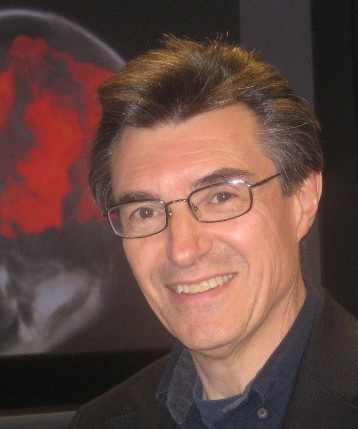
Marcel Just is the D.O. Hebb University Professor of Psychology and Biomedical Engineering at Carnegie Mellon University, where he also serves as the Director of the Center for Cognitive Brain Imaging. His academic journey began with a B.Sc. in Honors Psychology from McGill University in 1968, followed by a Ph.D. from Stanford University in 1972. Over his distinguished career, Just has pioneered the application of fMRI technology to investigate the neural basis of cognitive processes. His research focuses on understanding how concepts are neurally represented in the brain, with particular emphasis on: How familiar and technical concepts are represented through fMRI-measured brain activation patterns The decomposition of these patterns into meaningful components (e.g., how motor regions represent the action of holding an apple) Applications for diagnosing psychiatric illnesses by detecting alterations in concept representations Assessing how students learn new technical concepts in educational settings Just's work has made significant contributions to both conceptual and language processing research (funded by ONR and NIMH grants) and autism research (funded by NICHD). His laboratory developed the influential frontal-posterior underconnectivity theory of autism, which has shaped understanding of neural connectivity differences in autism spectrum disorders. His research employs machine learning and dimension reduction techniques applied to fMRI data, bridging cognitive psychology with advanced neuroimaging methodologies. This interdisciplinary approach has yielded insights across multiple domains including language comprehension, visual thinking, problem-solving, working memory, social judgment, and multi-tasking. Among his notable scientific awards are: Appointment as University Professor at Carnegie Mellon (2013) Distinguished Scientific Contribution Award from the Society for Text & Discourse (2012) Outstanding Research Award from the Advisory Board on Autism and Related Disorders (2001) NIMH Senior Scientist Award (1997) Throughout his career, Just has mentored numerous researchers and collaborated extensively with colleagues across disciplines. His work has been supported by multiple grants from organizations including the Office of Naval Research (ONR), National Institute of Mental Health (NIMH), and National Institute of Child Health and Human Development (NICHD). These collaborations have led to innovative applications of neuroimaging in understanding both typical cognitive processes and clinical conditions. At the Center for Cognitive Brain Imaging, Just leads a multidisciplinary team that combines expertise in psychology, neuroscience, biomedical engineering, and machine learning to advance the field of cognitive neuroimaging. The center serves as a hub for cutting-edge research that continues to deepen our understanding of the relationship between brain activity and cognitive processes.
Susan Murphy is the Mallinckrodt Professor of Statistics and of Computer Science at Harvard University, affiliated with the Kempner Institute. Her research focuses on statistical reinforcement learning and adaptive interventions in healthcare, particularly Just-in-Time Adaptive Interventions (JITAIs) delivered via mobile health (mHealth) technologies. Her work emphasizes developing data-driven algorithms for personalized treatment strategies and optimizing clinical trial designs. Her primary affiliations include the Harvard Statistics Department, Harvard Computer Science Department, and the Kempner Institute. Research funding comes from institutions like the National Institute on Drug Abuse and the National Heart, Lung, and Blood Institute. Key contributions include pioneering micro-randomized trials (MRT) to evaluate adaptive interventions and developing frameworks for JITAIs. She has been recognized with a MacArthur Fellowship (2013), election to the National Academy of Medicine (2014), and the National Academy of Sciences (2016). Her lab collaborates with groups like d3Lab and mDOT to translate research into practice, focusing on digital health applications for chronic disease management and behavioral health. Ongoing work includes optimizing algorithms for real-time treatment delivery and evaluating intervention fidelity in clinical settings.
Jiaxin Lingمشاهده پروفایل
پژوهشگر ارشد
- Digital Twin
- Augmented Reality
- Virtual Reality
- +۶ مورد دیگر
Dr. Jiaxin Ling serves as a Research Fellow in Digital Twin and AR/VR for Heritage Buildings at The Bartlett School of Sustainable Construction, University College London. His work bridges digital innovation with sustainable construction practices, focusing on heritage preservation in complex urban environments. Academic background includes: PhD in Civil Engineering, Tongji University (2018-2024), recognized as an Outstanding Graduate of Shanghai Bachelor's in Civil Engineering, Wuhan University (2014-2018) His research spans Digital Twin for tunnels/buildings, Building Information Modeling (BIM) , and AI/ML applications in construction engineering. He pioneers AR/VR solutions for fire safety, tunnel lighting optimization, and intelligent infrastructure, directly supporting UN Sustainable Development Goals 11 (Sustainable Cities) and 9 (Industry Innovation). Analysis of recent publications reveals a cohesive trajectory in applying digital twin technology to solve critical challenges in tunnel safety, energy efficiency, and real-time construction monitoring through hybrid knowledge-data approaches. Key recognition: Outstanding Graduate of Shanghai (top doctoral honor) Dr. Ling contributes to major research initiatives funded by the European Union Horizon Programme and National Natural Science Foundation of China (NSFC) , collaborating across international teams to advance sustainable construction methodologies. His work operates within UCL's interdisciplinary research ecosystem, focusing on heritage building preservation through cutting-edge digital workflows and sensor-integrated monitoring systems.

Brian E. Perron is a Professor at the University of Michigan School of Social Work, where he has established himself as a leading researcher at the intersection of data science and social work practice. His academic journey includes a PhD in Social Work from Washington University (2007), an MSW from the University of Wisconsin (1998), and a BA in Psychology from The College of St. Scholastica (1995). Currently teaching courses including Data Visualization Applications, Quantitative Methodologies for Socially Just Inquiry, and Project and Program Design through Spring/Summer 2025, he maintains an active presence in both classroom instruction and cutting-edge research. Dr. Perron's research interests focus on service research, data science, artificial intelligence applications in social work, and non-profit data consulting. He has developed expertise in helping community-based organizations implement data management systems and create interactive visualizations for non-technical users. His work with the Child & Adolescent Data Lab examines services for vulnerable youth and families in the child welfare system. Notably, he has become a pioneer in exploring the ethical application of AI tools like machine learning and natural language processing within social work contexts, publishing extensively on retrieval-augmented generation systems, word embeddings, and API integration for social work research. His publication record reveals a significant shift toward AI integration in social work, with 12 of his 15 most recent articles (2023-2025) focusing on artificial intelligence applications. These works demonstrate his leadership in developing practical AI tools for social workers while addressing critical ethical considerations. His research spans child welfare systems, substance abuse, mental health services, and educational curriculum development, with particular attention to racial disparities and data privacy concerns in vulnerable populations. Among his scientific achievements, Dr. Perron received an award from Casey Family Programs and has secured research funding from the National Institutes of Health, Department of Veterans Affairs, and the state of Michigan. His work on prenatal cannabis exposure and child maltreatment has generated significant policy implications, particularly regarding racial bias in newborn drug testing practices. As an educator, Dr. Perron specializes in making research and data analysis accessible to students without strong math backgrounds while also teaching diagnosis and treatment of mental health and substance use disorders. He maintains his expertise through continuous learning, including participation in MOOCs to stay current with technological developments. His work with the Child & Adolescent Data Lab represents a significant institutional contribution to improving service outcomes for vulnerable youth through data-driven approaches.
Weihang Wangمشاهده پروفایل
استادیار
Weihang Wang is a Volunteer Assistant Professor in the Department of Computer Science and Engineering at the University of Southern California (USC), part of the School of Engineering and Applied Sciences. His research focuses on WebAssembly security, program analysis, and static/dynamic analysis frameworks. He holds a PhD and has published extensively on topics like WebAssembly obfuscation, decompilation techniques, and flaky test mitigation. Research interests include cybersecurity, software engineering, and the application of AI in program analysis. His work addresses challenges in cross-compilation for WebAssembly, decompilation accuracy, and automated detection of security vulnerabilities in web applications. Notable projects include WaSCR (side channel repairer), WBSan (bug detection), and Wefix (flaky test automation). He has received NSF travel grants for IEEE Security Development (SecDev) conferences in 2022 and 2023. His articles span 2010–2025, showing sustained contributions to web security, compiler optimization, and program transformation. His work intersects with practical applications like ad-blocking systems (Adhere) and bird flu outbreak prediction using migration data (2010–2013). Grants and awards include NSF funding for travel and research, reflecting his active role in academic conferences. He is affiliated with USC's computer science department and maintains an active Google Scholar profile with over 30 publications listed.
Chengming Zhangمشاهده پروفایل
استادیار
- Efficient machine learning systems
- AI algorithm-hardware Co-design
- Effective efficiency algorithms
- +۵ مورد دیگر
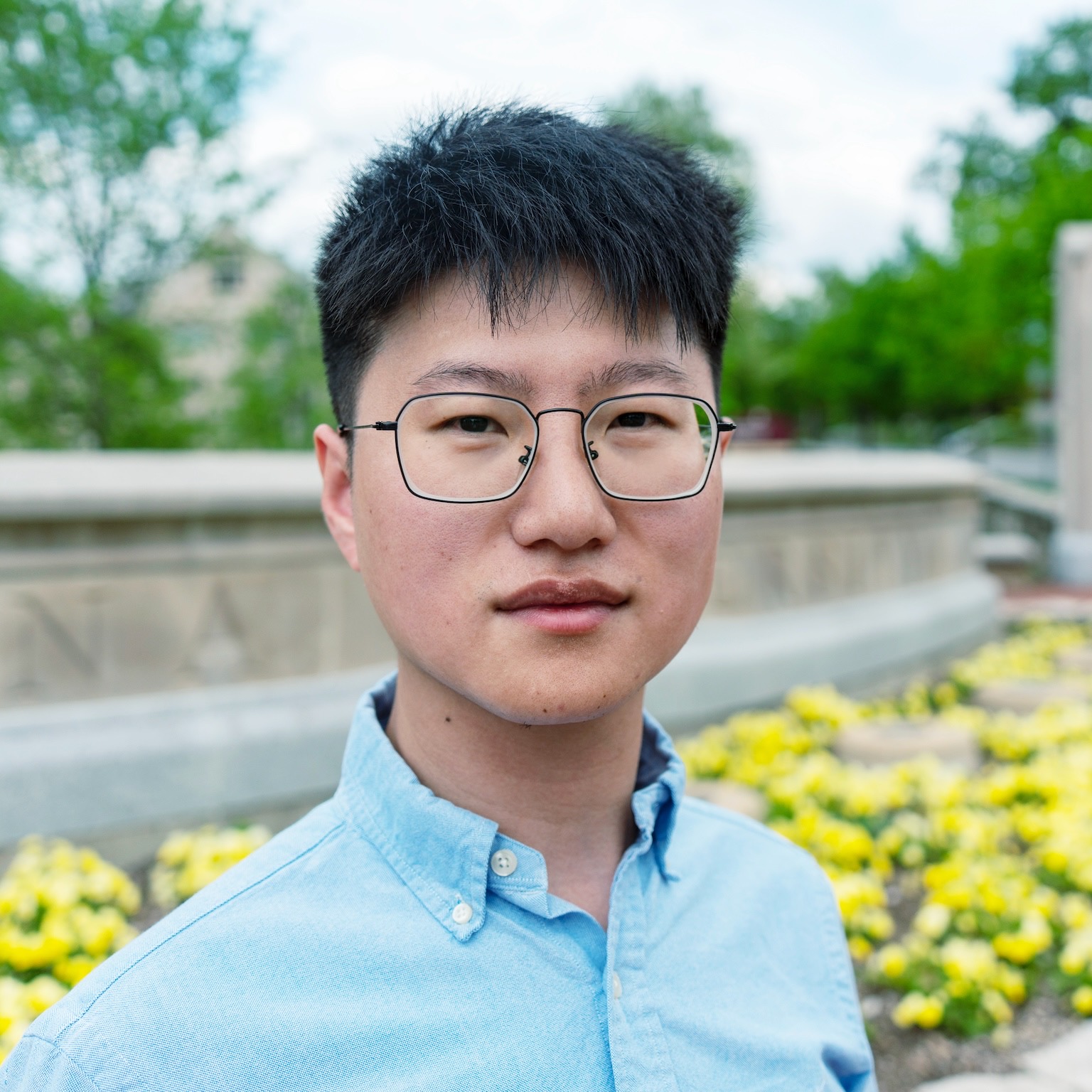
Chengming Zhang is a tenure-track assistant professor in the Computer Science Department at the University of Houston. He recently completed his Ph.D. in Computer Engineering from Indiana University in May 2024, where he was a member of the HiPDAC group working on building efficient and scalable deep learning systems under the advisement of Prof. Dingwen Tao. He has extensive industry research experience with multiple projects at Microsoft Research, Meta Reality Labs, and Argonne National Laboratory. His educational background includes: Ph.D. in Computer Engineering, Indiana University (May 2024) Dr. Zhang's research focuses on creating efficient machine learning systems that can operate effectively across diverse hardware platforms. His work bridges the gap between theoretical algorithms and practical implementation with particular emphasis on efficient machine learning systems for training and inference on parallel, distributed, and heterogeneous hardware; AI algorithm-hardware co-design, particularly for GPU architectures; effective efficiency algorithms including model compression, data efficiency, and parameter-efficient tuning; and large-scale deep learning applications such as Large Language Models, Agents, and Image/Video Generation systems. His publication record demonstrates a consistent focus on optimizing deep learning systems through hardware-aware approaches. The majority of his work centers around making deep learning more efficient through techniques like model compression, hardware-algorithm co-design, and memory optimization. His research spans both theoretical algorithm development and practical system implementation, with publications in top-tier conferences including the International Conference on Supercomputing, PPoPP, and AAAI. A notable trend in his work is the emphasis on practical efficiency - not just theoretical improvements but solutions that deliver real-world performance gains on actual hardware. Dr. Zhang is actively building his research group at the University of Houston and has secured significant computational resources for his lab, including multiple high-performance computing servers worth a total of $130K (two 8-Ada6000 servers and one dual-4090 servers).

Dr. Nisha C. Gottfredson O'Shea is an Associate Professor in the Department of Health Behavior at the University of North Carolina at Chapel Hill's Gillings School of Global Public Health. She specializes in quantitative methodology, applying techniques such as factor analysis and longitudinal modeling to study health behaviors, particularly substance use prevention in adolescents and young adults. Her work emphasizes optimizing mHealth interventions and understanding co-occurring mental health outcomes. Education: PhD in Psychology (Quantitative), UNC Chapel Hill (2011) MA in Psychology (Quantitative), UNC Chapel Hill (2008) BA in Psychology and Mathematics, Pitzer College (2006) Research Interests: Prevention science, substance use, machine learning in intervention design, and statistical methodologies. Dr. Gottfredson collaborates across disciplines, including with colleagues from Maternal and Child Health, Psychiatry, and Journalism. Key Projects: R21 grant developing machine learning tools for just-in-time interventions R34 grant addressing early substance use via pediatric checkups Data Core co-lead on a P01 project improving HPV vaccination Labs/Teams: Collaborates with the Gillings School's Communicating for Health Impact Lab and leads quantitative efforts in multidisciplinary public health initiatives.
Beau Schelbleمشاهده پروفایل
استادیار
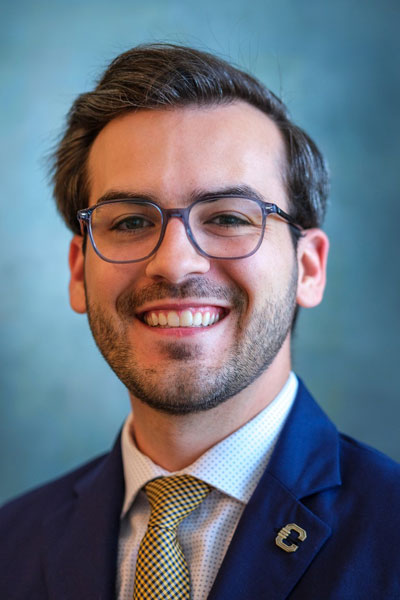
Beau Schelble is an Assistant Professor in the Department of Industrial and Systems Engineering at the University of Tennessee, Knoxville, within the Tickle College of Engineering. He is the founding director of the AI and Robotics for Collaborative Systems (ARCS) Lab, where he leads interdisciplinary research on human-AI teaming, responsible AI, and team cognition. His work bridges human factors, systems engineering, and artificial intelligence, with applications in advanced manufacturing, healthcare, emergency response, and defense. Education: PhD in Human-Centered Computing, Clemson University, 2023 BS in Psychology, Clemson University, 2018 Dr. Schelble's research focuses on optimizing collaborative systems involving humans and AI. Key interests include trust development, situational awareness, shared knowledge, and ethical AI integration. He employs mixed-methods approaches—qualitative, quantitative, and computational—to study human-AI interaction in complex environments. His work has resulted in over 30 peer-reviewed publications in top-tier venues across human factors, HCI, and systems engineering. The 15 most recent articles reflect a strong trend toward ethical AI, explainability, autonomy adaptation, and team cognition in human-AI systems. Topics span healthcare applications, collaborative technologies, training methods, and emotional expression in AI teammates, demonstrating a broad yet cohesive research agenda centered on responsible and effective human-AI collaboration. Scientific Awards and Recognitions: NSF Research Traineeship (THINKER) Scholarship, August 2019 Multiple best paper awards and nominations (5 total) in human factors and systems engineering conferences Dr. Schelble actively mentors students and leads a dynamic research lab. He has secured research support through academic collaborations and professional engagement with IEEE, HFES, ACM, and IISE. His lab, ARCS, fosters innovation in AI-driven collaborative systems. Future work includes expanding frameworks for outpatient care, adaptive autonomy in healthcare, and deeper integration of human teaming principles into AI design. He continues to publish extensively and contribute to shaping the future of human-AI teaming.
Hoa Khanh Dam is Professor and Deputy Head of School (Research) & Head of Postgraduate Studies in the School of Computing and Information Technology at the University of Wollongong, Australia. He serves as Co-Director of the Decision System Lab where he leads research at the intersection of Software Engineering and Artificial Intelligence. His research focuses on developing AI-driven solutions for software quality, cybersecurity, and productivity enhancement. Key interest areas include: AI/IoT autonomous and cyber resilient systems Software Analytics and Mining Software Repositories Large Language Models for software engineering tasks Defect prediction and vulnerability analysis Agile project management optimization Analysis of Dam's 12 publications from 2018-2025 reveals consistent application of machine learning to software engineering challenges. His work shows progressive evolution from traditional ML techniques toward LLM-based frameworks, with major contributions in defect prediction (DeepJIT), vulnerability analysis, microservice recommendation, and agile effort estimation. The research demonstrates strong industry relevance through practical implementations in code review, component prediction, and security systems. Dam co-leads the Decision System Lab at UOW, which develops intelligent decision support systems using AI and data analytics. The lab's work bridges theoretical AI advancements with real-world software engineering applications, particularly in cybersecurity and autonomous systems development.

- Digital Health
- Machine Learning
- Algorithm Design
- +۷ مورد دیگر
Hassan Ghasemzadeh is an Associate Professor and Program Director in the College of Health Solutions at Arizona State University (ASU), where he is also on the graduate faculty for biomedical informatics, computer science, computer engineering, and biomedical engineering. Prior to joining ASU, he served as an assistant/associate professor of computer science at Washington State University (2014-2021) and as a postdoctoral research manager at UCLA (2011-2013). Education: PostDoc, Computer Science, University of California Los Angeles PhD, Computer Engineering, University of Texas at Dallas MS, Computer Engineering, University of Tehran BS, Computer Engineering, Sharif University of Technology Dr. Ghasemzadeh's research focuses on digital health, machine learning, and algorithm design, with applications spanning wearable technologies, chronic disease management, and behavioral health. His work bridges computer science with healthcare, developing novel algorithms and systems that use wearable sensors to monitor and improve health outcomes. His research has particular emphasis on diabetes management, Parkinson's disease detection, and stress monitoring through advanced sensor analysis and machine learning techniques. His recent publications demonstrate a strong focus on leveraging large language models, counterfactual reasoning, and advanced deep learning techniques to address challenges in digital health. The research spans multiple domains including glucose prediction, Parkinson's disease assessment, cannabis use monitoring, and activity recognition, showing a consistent thread of applying cutting-edge AI to solve real-world health problems with wearable sensor data. Scientific Awards: 2025 Best Poster Award, ASU College of Health Solutions Faculty Research Day 2024 Research Award, ASU College of Health Solutions 2024 Best Poster Award, ASU College of Health Solutions Faculty Research Day 2018 Early Career Development Award, National Science Foundation (NSF CAREER) 2018 Early Career Award, WSU School of EECS Dr. Ghasemzadeh actively mentors numerous graduate students in the Embedded Machine Intelligence Lab (EMIL), with current PhD students including Eric Junyoung Kim, Ebrahim Farahmad, Saman Khamesian, Shovito Barua Soumma, Pegah Khorasani, and others. His research has been funded by prestigious organizations including the National Science Foundation, with projects often focusing on developing innovative wearable health monitoring systems that have led to commercial applications such as WANDA and Sense4Baby. Dr. Ghasemzadeh leads the Embedded Machine Intelligence Lab (EMIL), which focuses on developing machine learning algorithms for embedded and wearable systems. The lab creates solutions that address real-world health challenges through interdisciplinary research that combines computer science, electrical engineering, and clinical medicine. Current projects include glucose prediction systems, Parkinson's disease detection tools, and personalized hydration monitoring applications.

Professor David Whetham is the **Professor of Ethics and the Military Profession** at King's College London's Defence Studies Department, based at the Joint Services Command and Staff College. He directs the **King's Centre for Military Ethics (KCME)**, delivering ethics education to over 2,000 military officers annually. His academic career began in 2003 after roles with the BBC and OSCE in Kosovo. He holds a PhD from King's College London, an MA in War Studies, and a BA in Philosophy from LSE. **Research & Expertise**: Focuses on military ethics, just war theory, leadership ethics, and ethics in cyber warfare, drones, and human augmentation. Notable contributions include the **Brereton Report Annex A** on Afghan war crimes, investigations into unethical peacekeeper conduct, and pioneering work on drones and neuroenhancements. **Awards & Roles**: Honorary Colonel Royal Military Police (2025), Chief of the Defence Force Commendation (2023), and founder of the European Chapter of the International Society for Military Ethics (Euro ISME). Serves on UK MoD AI Ethics Panel, Australian Defence Force ethics advisory groups, and NATO's Human Factors Committee. **Education & Grants**: Secured £100k+ in grants for military ethics initiatives, including UKRI-funded drone ethics studies. Authored over 90 publications, including books like *The Ethics of Special Ops* and *Cyber Warfare Ethics*. **Teaching & Outreach**: Designed ethics curricula for Colombian, Serbian, and Georgian forces. Co-created the KCME's ethics playing cards and app for field decision-making. Supervises PhD students on conflict ethics but is currently at capacity.
T. Chester is an academic affiliated with Arizona State University (ASU), serving as a Lecturer in the School of Social Transformation. Their research focuses on critical race theory, gender and sexuality studies, queer theory, and global historical topics like the transatlantic slave trade. Chester holds a PhD from ASU, an MA from Temple University, and a BA from Florida State University. Courses taught include Race, Gender and Sport , Critical Race Theory , and Global History: Slave Trade . Education: PhD in Social Transformation, Arizona State University MA in African American Studies, Temple University BA in Africana Studies, Florida State University Research interests emphasize intersections of race, gender, and urban resilience. Recent work explores climate adaptation strategies in infrastructure systems, particularly in Phoenix and coastal cities. Chester contributes to frameworks linking social-ecological-technological systems for equitable urban development. Their publications analyze cascading infrastructure failures, heat exposure mitigation, and disaster preparedness. Advancing interdisciplinary collaboration, Chester integrates historical analysis with contemporary urban challenges, advocating for socially just sustainability practices in infrastructure design.

Michael Jantzمشاهده پروفایل
دانشیار
- Compilers
- Operating Systems
- Virtual Machines
- +۶ مورد دیگر
Michael Jantz is an Associate Professor in the Department of Electrical Engineering and Computer Science at the University of Tennessee, Knoxville. He earned his BS, MS, and PhD in Computer Science from the University of Kansas (2008–2014). His research focuses on compiler optimization, runtime systems, and memory management for modern architectures. He leads the CORSys Research Group, which explores tools and techniques to enhance software performance, power efficiency, and security. Key projects include application-guided memory management for heterogeneous systems and profiling techniques for compiler optimization. Education: PhD in Computer Science, University of Kansas, 2014 MS in Computer Science, University of Kansas, 2010 BS in Computer Science, University of Kansas, 2008 Research Interests: Compilers, operating systems, runtime systems, memory hierarchies, performance optimization, and embedded systems. His work is supported by NSF, DOE, and Intel. Awards: NSF CAREER Award (2020) Teaching: Courses include Systems Programming (COSC 360), Compiler Construction (COSC 461/561), and Software Systems (COSC 560). Recent courses were taught online during 2020–2021. Labs/Teams: CORSys Research Group investigates compute performance, program analysis, and secure execution on modern architectures.

Lily Anمشاهده پروفایل
استادیار
Lily An serves as an Assistant Professor of Quantitative Methodology within the Educational Policy Studies department at Georgia State University's College of Education & Human Development. She completed her Ph.D. in Education Policy and Program Evaluation at Harvard University in 2025, where she was affiliated with the Center for Education Policy Research as a PIER Fellow. Her academic credentials include: Ph.D. in Education Policy and Program Evaluation, Harvard University (2025) Ed.M. in Education Policy and Management, Harvard Graduate School of Education B.A. in Statistics, Williams College Dr. An's research focuses on advancing educational measurement techniques, developing rigorous program evaluation frameworks, and analyzing school accountability policies. She employs causal inference methods—including quasi-experimental designs—and specializes in meta-analyses of educational interventions. Her work frequently addresses summer learning programs' impacts on student outcomes, with particular attention to sociodemographic disparities in enrichment access and mathematics achievement gaps among low-income populations. She integrates psychometric tools to assess standardized testing validity within policy contexts. Analysis of her publication record (2019-2025) reveals a consistent trajectory in methodological innovation for education policy research. She has pioneered applications of Gaussian process regression in multidimensional regression discontinuity designs to overcome limitations of traditional analytic approaches, while her extensive meta-analytic work establishes evidence bases for summer learning interventions across cognitive, non-cognitive, and behavioral domains. Her scholarship bridges educational measurement, quantitative methodology, and K-12 policy implementation. Her professional recognitions include: PIER (Partnering in Education Research) Fellow, Center for Education Policy Research Equity and Inclusion Fellow, Harvard Graduate School of Education Summer Institute for Computational Social Science participant Just Education Policy Institute for Developing Scholars participant Dr. An has collaborated with state education agencies including the Massachusetts Department of Elementary and Secondary Education during her tenure as a research analyst at Brown University. Her current work continues this practice-oriented focus through quantitative analysis of policy effects on student outcomes, though specific grant funding details and advising activities were not documented in available sources.