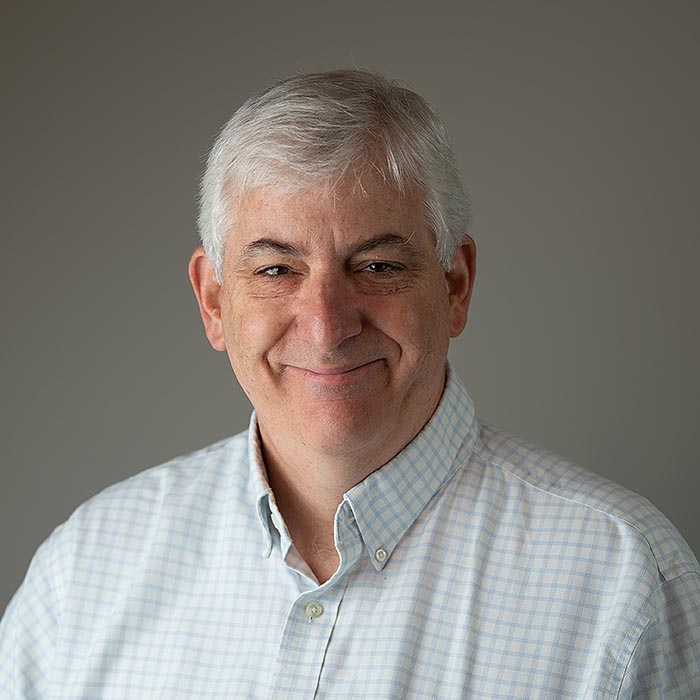
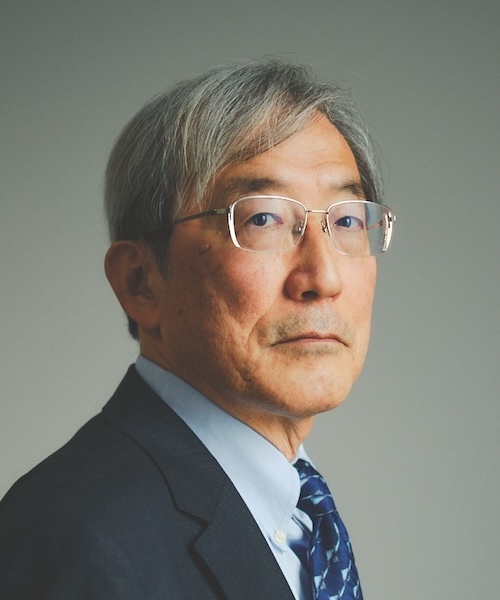
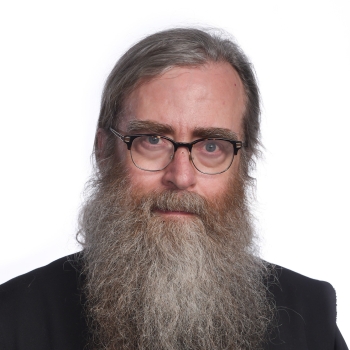
John Grout is the David C. Garrett Jr. Professor of Business Administration and Chair of the Technology, Entrepreneurship, and Data Analytics Department at Berry College, within the Campbell School of Business. He previously served as dean of the school and returned to full-time faculty in 2016, continuing his leadership in academic innovation. His research focuses on quality management, particularly mistake-proofing (poka-yoke), lean manufacturing, and the impact of user innovation on supply chains. He has made significant contributions to healthcare process improvement, with publications guiding error reduction in clinical settings. The recent articles reflect a strong trend in applying operational excellence to healthcare systems, integrating concepts from manufacturing into medical process design. His work emphasizes designing systems that prevent errors through structural and procedural safeguards, supported by economic and behavioral models. Scientific Awards: Shingo Prize for Excellence in Manufacturing (2004) for 'The Human Side of Mistake-Proofing' John Grout has advised various organizational improvement initiatives and led the development of Berry College’s Creative Technologies program and the HackBerry Lab makerspace. His grants include work supported by the Agency for Healthcare Research and Quality (AHRQ), resulting in influential publications on healthcare process safety. He has also consulted widely with firms to improve operational reliability. He is actively involved in academic leadership, curriculum development, and cross-disciplinary innovation, particularly in integrating technology and entrepreneurship into undergraduate education.
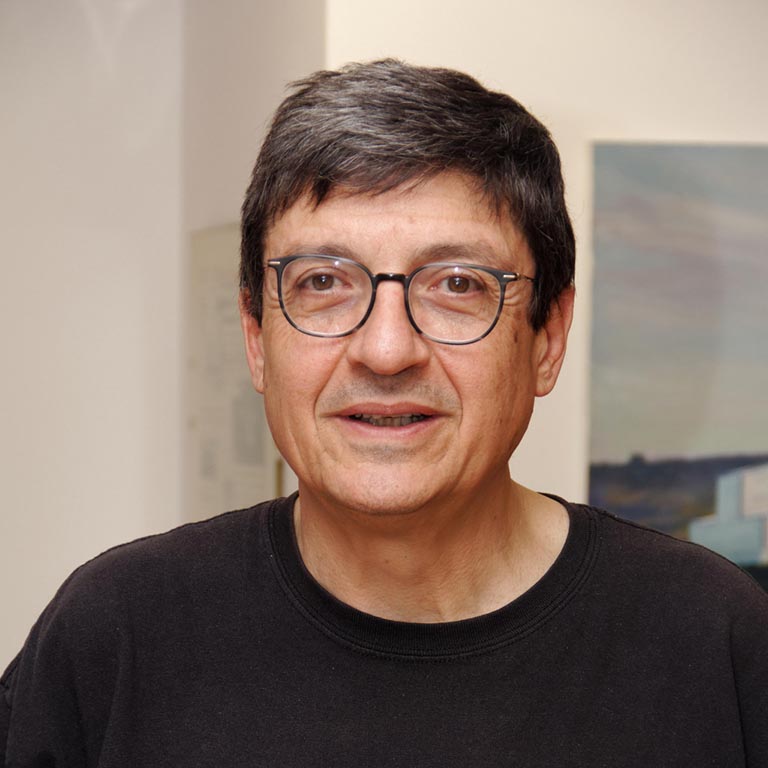
Associate Professor with Habilitation at the School of Engineering, University of Minho , where he also serves as a Senior Researcher at Centro ALGORITMI. Member of both the IEM R&D Group and LPSL R&D Lab. Education: Degree in Production Engineering (1989) - University of Minho MSc in Computer Integrated Manufacturing (1992) - Loughborough University Ph.D. in Scheduling and Process Planning Integration (1997) - University of Nottingham His research spans Lean Approaches across diverse environments including industry, healthcare, construction, offices, and education. Key focus areas include pull flow methods for complex production environments, stable continuous improvement systems , and the integration of Scrum methodology in educational settings. Recent publications show a clear trend toward applying lean principles in retail logistics, healthcare operations, and sustainability frameworks, with increasing emphasis on performance measurement systems and Science-Based Targets. He has authored the book "Continuous Improvement in Organizations" and published over 100 scientific articles with an h-index of 17 and 1131 citations. His current projects include "HOMLean - Hospital Operations Management" and a Smart Retail initiative with Sonae company funded by PRR program. He actively applies his expertise through project-based learning approaches in engineering education, having documented over ten years of experience with PBL at the University of Minho. His work bridges academic research with practical industry applications, particularly in lean manufacturing implementation across various sectors.
Prof. Dr. Michaela Hohkamp serves as Professor for Early Modern History/Space and Region at Leibniz University Hannover's Faculty of Philosophy within the Department of History. Previously, she held the Christian-Gottlob-Heyne-Professorship at Leibniz University Hannover (2011-2013) and was Professor for Theory and Methods in History and Gender History at the Free University of Berlin (2008-2011). Her academic journey began with studies in Medieval and Modern History, Sociology, Political Science, and Art History at the University of Göttingen (1978-1986), followed by doctoral work completed in 1998. She earned her habilitation at the Free University of Berlin in 2007. Her career includes significant research positions at the Max Planck Institute for History in Göttingen, a visiting fellowship at Stanford University (1997), and a guest position at the European University Institute in Florence (2003/2004). Professor Hohkamp's research centers on the history of early modern violence, power structures, family and kinship networks, women's and gender history, and historiography. Her groundbreaking work examines how kinship functioned as political infrastructure among European nobility, revealing how gendered relationships shaped political authority and conflict resolution. She has pioneered analysis of the conceptual boundaries between legitimate and illegitimate violence in early modern contexts, particularly through gendered lenses. Her scholarship consistently bridges historical methodology with anthropological approaches to kinship and social organization. Analysis of her publication trends reveals a deepening engagement with spatial dimensions of historical analysis in recent years, examining how geographical frameworks shaped political authority. Her work demonstrates remarkable continuity in exploring family networks as political tools while evolving to incorporate interdisciplinary perspectives on time, space, and representation. This evolution reflects broader shifts in historical methodology toward more integrated analyses of social, political, and spatial dimensions of early modern life. Her scholarly recognition includes: Fellowship at the Center for Interdisciplinary Research (ZiF), Bielefeld (2017) Fellowship from the Dr. Jacques Körfer Foundation (2005-2006) DAAD Scholarship (1988) Max Planck Society Fellowship (1986-1995) Professor Hohkamp has supervised five doctoral candidates to completion, including Detlef Berghorn, Sven Erdner, Svenja Müller, Friederike Willasch, and Julia Heinemann. Her research has been supported by Volkswagen Foundation funding for projects on denunciation practices, and she has held significant administrative roles including Research Dean of the Faculty of Philosophy at Leibniz University Hannover (2013-2015) and Dean of Studies at FU Berlin (2011). She currently serves as BAföG representative and Alumni Representative at the Historical Seminar. She maintains active involvement in multiple scholarly networks including the Working Group for Historical Women's and Gender Studies, the Working Group on Gender History of the Early Modern Period, the Family and Kinship Network of the German Studies Association, and the Historical Commission for Lower Saxony and Bremen's working group on Early Modern Period history. These affiliations demonstrate her commitment to collaborative, interdisciplinary research within her field.
Takahiro Fujimoto is a Professor at the Faculty of Commerce under the Institute for Business and Finance. He specializes in Business Administration and Technology & Operations Management, with a focus on the automotive industry and lean manufacturing. Research areas: Business Administration, Technology & Operations Management Academic rank: Professor His publications cover topics such as production systems, product development, and supplier networks, primarily in the automotive sector. His work includes influential books on lean manufacturing and strategic design. Scientific awards include: The Shingo Prize of Excellence Manufacturing (2000, 2001) Jai Doblin Award (1991) 日経図書文化賞 (Nikkei Book Culture Award, 1993) 組織学会高宮賞 (Takamiya Award of the Organizational Society, 1998) He teaches courses in production development management and technology & production management at the Graduate School of Business and Finance.
Henriette Steiner serves as Professor and Head of Section in the Section for Landscape Architecture and Planning and Society within the Department of Geosciences and Natural Resource Management at the University of Copenhagen's Faculty of Science. She previously held research positions at ETH Zurich and visiting professorships at MIT, BOKU Vienna, and the University of Geneva, establishing her as a leading international scholar in architectural history and spatial justice. Her educational background includes a PhD in Architecture from the University of Cambridge (2008) following five years as a Research Associate at ETH Zurich. Key appointments demonstrate progressive leadership: co-founder of the Department's Diversity Committee, PhD Coordinator for Landscape Architecture, Head of Studies during the coronavirus pandemic, and current elected member of the Faculty of Science PhD Committee. Steiner's research critically examines how historical structures—morals, ethics, politics, and cultural practices—shape built environments, with urgent focus on climate change, inequality, and pandemic recovery. Her work champions interdisciplinary collaboration and inclusive methodologies , particularly through recovering women's contributions to Danish architecture 1925–1975. Recent trends reveal expanding scope from architectural philosophy ( Tower to Tower , 2020) to pandemic-era spatial analysis ( Touch in the Time of Corona , 2021) and equity-focused urban futures ( Just Cities , 2025). Senior Scholar Fellowship, American Society for Architectural Historians Carlsberg Foundation Monograph Fellowship Faculty of Science Award for Research Communication (2024) Diversity Award nomination, Danish Foundation for Entrepreneurship (2023) As an academic leader, Steiner co-founded the Intersect community fostering arts-humanities-social sciences-design collaboration, and co-leads two major grants: Stories from Sofiegården (Augustinus Foundation) documenting alternative Copenhagen living arrangements as cultural heritage, and Learning from Collaboration (Realdania) building future design practices. Her current Women in Danish Architecture 1925–1975 project (2020–2025) has produced the award-winning Untold Stories monograph and digital exhibitions reclaiming women's architectural legacy. Steiner directs the Section's research ecosystem through inclusive team structures like the Women in Danish Architecture collective—comprising architectural historians, communications specialists, and visual designers—who actively dismantle 'lone genius' narratives through collaborative knowledge production.
Hirofumi Matsuo is Professor of Operations Management and IIS Director at Tokyo International University. He holds a Ph.D. from MIT (1984), an M.E. (1979), and a B.A. (1977) from Kyoto University, both in Applied Mathematics and Physics. His academic appointments include professorships at Okayama Shoka University (2020-2021), Kobe University (2004-2020), University of Tsukuba (1999-2004), and University of Texas at Austin (1995-1999), where he advanced from Assistant to Associate Professor (1984-1995). His research focuses on Operations Management , Supply Chain Management , Service Operations , and Production Planning , addressing challenges in resilience, coordination, and optimization across high-tech, energy, and manufacturing sectors. His publications emphasize practical applications in semiconductor, automotive, and retail industries, with recurrent themes of risk mitigation and adaptive strategies. Awards include: JSPS Grants-in-Aid for Scientific Research (C) (five terms between 2000-2021) Fred H. Moore Centennial Professorship (1997-1999) Global Research Fellow at UT Austin's IC2 Institute (1988-2020)
Gabriel Kikas is a part-time adjunct instructor in the Department of Political Science and Legal Administration at the University of Detroit Mercy since 2010. He holds a Ph.D. in International Relations from the University of St. Andrews, alongside degrees from Wayne State University, The American University, and the University of Detroit Mercy. Kikas has extensive teaching experience at multiple institutions including Macomb Community College and Henry Ford Community College. His research focuses on British-European Union dynamics, Scottish nationalism, Michigan's literary culture, 19th-century utopian communities, and the political writings of Jim Fairlie. Kikas has published over 20 book reviews in journals like Perspectives on Political Science and Driftwood Review , with recent work including analyses of Winnie Ewing's autobiography and contemporary political narratives. He also maintains a social blog for News that Moves , exploring current social issues through a cultural lens. Teaching specialties include American government, civil liberties, comparative politics, and international relations. His scholarly contributions span European political history, U.S. electoral systems, and labor studies, reflecting a commitment to interdisciplinary analysis across political theory and cultural studies.
Steve Blackburn is a research scientist at Google DeepMind and professor of computer science at the Australian National University in the College of Engineering and Computer Science. His primary research focus is on programming language implementation, with expertise spanning memory management, virtual machines, and performance analysis. He has served in significant leadership roles including Associate Dean for Diversity and Inclusion (2016-2019) and as Program Chair for PLDI 2015 and General Chair for PLDI 2023. Blackburn's research interests center on making software run faster and more power-efficiently on modern hardware. His primary areas include microarchitectural support for managed languages, fast and efficient garbage collection, and the design and implementation of virtual machines. He maintains a strong interest in sound methodology and infrastructure for successful research innovation. His work bridges theoretical computer science with practical systems implementation, with particular focus on memory management frameworks and performance benchmarking. His publication record reveals a consistent focus on memory management systems, with recent work exploring garbage collection in modern contexts including CRuby, Julia, mobile devices, and memory-disaggregated datacenters. His research shows an evolution from foundational garbage collection algorithms toward practical implementations addressing real-world constraints in contemporary programming languages and hardware platforms. A notable trend is his increasing focus on quantifying and understanding the true costs of garbage collection in production environments. Fellow of the ACM Blackburn has supervised numerous doctoral students including Zhen He, John Zigman, Robin Garner, Ting Cao, and currently advises Wenyu Zhao, Zixian Cai, and others. He has also served on multiple program committees for major conferences including PLDI, ASPLOS, ISMM, and OOPSLA, demonstrating his significant contributions to the programming languages and systems research community. His service includes editorial roles for ACM Transactions on Programming Language Applications and Systems from 2017-2020. He leads two major research infrastructure projects: the MMTk memory management framework and the DaCapo benchmark suite, both of which have become foundational tools for researchers in programming languages and systems. These projects reflect his commitment to shared research infrastructure and reproducible methodology in systems research.
Hoa Khanh Dam is Professor and Deputy Head of School (Research) & Head of Postgraduate Studies in the School of Computing and Information Technology at the University of Wollongong, Australia. He serves as Co-Director of the Decision System Lab where he leads research at the intersection of Software Engineering and Artificial Intelligence. His research focuses on developing AI-driven solutions for software quality, cybersecurity, and productivity enhancement. Key interest areas include: AI/IoT autonomous and cyber resilient systems Software Analytics and Mining Software Repositories Large Language Models for software engineering tasks Defect prediction and vulnerability analysis Agile project management optimization Analysis of Dam's 12 publications from 2018-2025 reveals consistent application of machine learning to software engineering challenges. His work shows progressive evolution from traditional ML techniques toward LLM-based frameworks, with major contributions in defect prediction (DeepJIT), vulnerability analysis, microservice recommendation, and agile effort estimation. The research demonstrates strong industry relevance through practical implementations in code review, component prediction, and security systems. Dam co-leads the Decision System Lab at UOW, which develops intelligent decision support systems using AI and data analytics. The lab's work bridges theoretical AI advancements with real-world software engineering applications, particularly in cybersecurity and autonomous systems development.
Paul Siewers is Associate Professor of English at Bucknell University and Orthodox Christian Chaplain serving the Bucknell community. He holds leadership roles as faculty coordinator of the Bucknell Greenway, Director of the Bucknell Program for American Leadership, founding convenor of the Bucknell Faculty Staff Christian Association, and Editor of The Paideia Review. A former William E. Simon Visiting Fellow at Princeton University's James Madison Program, he previously worked as an award-winning Urban Affairs Writer for the Chicago Sun-Times and National Correspondent for The Christian Science Monitor. His educational background includes: Ph.D. and M.A. in English, University of Illinois M.A. in Early British Studies, University of Wales M.S.J. from Medill School of Journalism Diploma in Pastoral Theology from St. John of Kronstadt Pastoral School Liturgical Training at Holy Trinity Monastery Siewers' research centers on the intersection of Christian theology, environmental thought, and literary resistance to totalitarianism. His work explores ecopoetics and ecosemiotics through medieval literature, nature philosophy, and 21st-century journalism. He investigates how early Christian and Celtic literary traditions inform contemporary ecological consciousness, while examining literary responses to authoritarian regimes and the role of 'Great Books' education in sustaining democratic discourse. His scholarship bridges theological inquiry with environmental humanities and media studies. His recent publications reveal persistent engagement with Orthodox Christian perspectives on ecology, political theology, and literary resistance. The works consistently connect historical theological concepts to modern crises—linking early Irish ecosemiotics to contemporary environmental thought, Dostoevskian universalism to current theological debates, and Cold War spirituality to emerging globalist ideologies. His Tolkien scholarship demonstrates how fantasy literature processes cultural trauma and spiritual longing. Scientific recognition includes: William E. Simon Visiting Fellowship in Religion and Public Life Award-winning Urban Affairs Writer designation from Chicago Sun-Times Siewers actively mentors through documentary projects like Stories of the Susquehanna Valley and coordinates sustainability initiatives via the President's Sustainability Council. His grant-funded work connects Bucknell to regional ecological and cultural preservation efforts, while his leadership in the American Leadership Program develops civic engagement frameworks rooted in classical education. Current projects survey Christian ecopoetics and comparative American-Russian ecosemiotics. He directs the Bucknell Greenway ecological corridor project and oversees the Stories of the Susquehanna Valley student documentary series, which explores regional history, conservation, and cultural identity through public television productions. These initiatives integrate academic research with community engagement, focusing on environmental stewardship and historical preservation in Pennsylvania's river valley ecosystems.
Jane Alver is a Senior Research Fellow at the University of Canberra specializing in Public Policy, Law, Civil Society, Gender Studies, and International Development. Her work centers on feminist perspectives within Pacific regional contexts, addressing structural inequalities through critical analysis of workplace cultures, political institutions, and transnational governance systems. Dr. Alver's research explores feminist alliance-building across Pacific diversity, gendered workplace dynamics, and the integration of autoethnography as a transformative research methodology. She investigates how gender intersects with race, class, and colonial histories in policy implementation, with particular focus on Sustainable Development Goal 5 (gender equality). Her methodological approach emphasizes lived experience narratives to challenge traditional knowledge production frameworks and advocate for inclusive institutional reforms. Analysis of her 2021-2025 publications reveals three dominant trajectories: (1) Pacific feminist solidarity through intersectional alliance-building, (2) critical examination of gendered labor in political institutions, and (3) innovative governance models for just transitions in resource management. Her work consistently bridges academic theory with policy applications, particularly in Australian-Pacific regional cooperation and workplace diversity initiatives. No scientific awards or fellowships were identified in available sources. While no student supervision details appear in current records, Dr. Alver's research demonstrates significant engagement with Pacific civil society organizations and Australian government bodies. Her evaluation work for the Defence Suicide Prevention Program indicates substantial grant-funded applied research, though specific funding mechanisms remain undocumented. Current projects focus on transforming parliamentary workplaces and advancing feminist regionalism through the Pacific Feminist Forum.
Syed Mehmood Hasan serves as Lecturer of Digital Engineering Management in the Department of Electronic Engineering at Royal Holloway, University of London. With extensive industry experience and academic expertise, he bridges theoretical knowledge with practical applications in manufacturing and service sectors across Pakistan and internationally. His academic foundation includes: PhD in Supply Chain Management from University of Greenwich (2013) M.Sc in Engineering Management from University of Greenwich (2006) BE in Industrial and Manufacturing Engineering from NED University of Technology (2003) Short Course in Business Incubation Management from University of Queensland (2015) Dr. Hasan's research centers on operational excellence through lean methodologies and supply chain innovation . His work spans Supply Chain Management, Operations Management, Project Management, Production Management, Strategic Management, and Organizational Systems. He specializes in developing practical frameworks that translate academic concepts into measurable industry improvements, particularly in manufacturing environments facing volatility and complexity. His recent publications reveal a strategic shift toward digital transformation in supply chain management, with emphasis on Industry 4.0 applications, inventory system optimization, and logistics digitalization frameworks. These works consistently connect theoretical models with real-world implementation challenges across diverse sectors including automotive, textiles, and pharmaceuticals. Dr. Hasan has secured significant research funding for critical projects including: TECH-I5.0-SCM: Technology Innovation, Industry 5.0 and Digital Supply Chains (2024-2027) Framework Development to Analyze CSFs and KPIs for Supply Chain Projects (2022-2023) Risk analysis of Pakistan's logistics network for pandemic resilience (2022-2023) CPEC logistics performance improvement (2022-2023) Green washing impact on consumer behavior (2022) With over 66 consultancy engagements documented since 2014, Dr. Hasan has implemented lean principles and supply chain innovations at major corporations including Toyota/Indus Motor Company, Siemens, Unilever, Abbott Laboratories, and numerous textile manufacturers. His industry work focuses on tangible outcomes: reducing waste by 15-30%, optimizing inventory systems, and improving production line efficiency through systematic process redesign.
Prof. Dr. Nesim K. Erkip is a faculty member at Bilkent University , holding the rank of Professor in Industrial Engineering and Engineering Management. Contact details include email nesim@bilkent.edu.tr and phone +90 (312) 290 1032. Education: Ph.D. in Industrial Engineering and Engineering Management (1984), Stanford University M.S. in Industrial Engineering and Engineering Management (1982), Stanford University B.S. in Industrial Engineering (1979), Middle East Technical University Research Interests: Focus on operational efficiency in supply chains and manufacturing systems, including inventory theory , scheduling , and just-in-time production , with interdisciplinary applications in solid waste management .
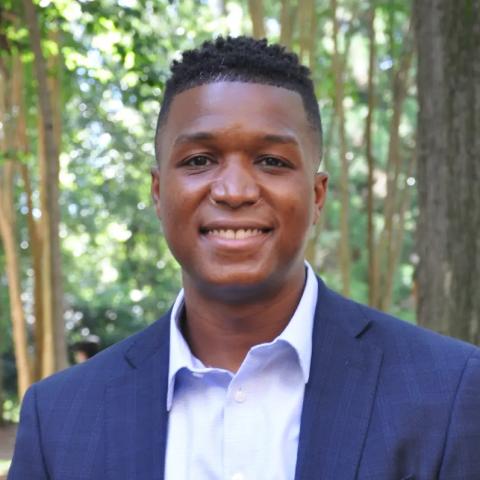
Joe F. Bozeman III is an Assistant Professor in the School of Civil and Environmental Engineering at the Georgia Institute of Technology's College of Engineering, with a courtesy appointment in the School of Public Policy. He serves as the SEI Lead for Ethics in Energy Transition and directs the Social Equity and Environmental Engineering Lab (SEEEL). His work bridges engineering practice with ethical considerations in climate change adaptation and mitigation strategies. Dr. Bozeman's educational background includes: Ph.D. in Industrial Ecology from University of Illinois at Chicago (2020) M.S. in Environmental Engineering from Wright State University (2010) B.S. in Environmental Engineering from Wright State University (2008) As an industrial ecologist, Dr. Bozeman focuses on developing ethical climate change adaptation and mitigation strategies. His research spans circularity analysis, food-energy-water nexus systems, sustainable urban systems, and life cycle assessment. His work uniquely integrates sociodemographic considerations into environmental engineering practice, examining how different demographic groups experience environmental impacts differently. This focus on systemic equity in industrial ecology applications has positioned him as a thought leader addressing the 'wicked' challenges of our time through cross-disciplinary collaboration with psychology, economic, and public health experts. Dr. Bozeman's scientific contributions have gained significant attention, with research featured in mainstream media outlets including NPR, the New York Post, Popular Science, and Free Speech TV. His work on U.S. food-consumption impacts across sociodemographic subgroups has particularly resonated with broader audiences. His publications demonstrate recognition through frequent citations and media coverage. With over a decade of experience in public and private sectors as an energy and environmental practitioner before joining Georgia Tech, Dr. Bozeman brings practical insights to his academic work. His SEEEL lab serves as a hub for integrating ethics, engineering, and community engagement, exploring innovative ways to merge technical findings with artistic expression for broader public accessibility. Dr. Bozeman maintains affiliations with multiple research centers at Georgia Tech, including Sustainable Systems, Renewable Bioproducts, Energy initiatives, and the Institute for Matter and Systems. His work on urban carbon management strategies, food-energy-water equity, and circular economy approaches demonstrates his commitment to creating more just and sustainable systems through engineering practice.
Joe Bradley is a Teaching Assistant Professor at the Carle Illinois College of Medicine within the University of Illinois at Urbana-Champaign system. He also holds a Clinical Assistant Professor position at the Technology Entrepreneur Center and serves as Director of Engineering Education & Entrepreneurship . His academic roles span multiple departments and schools including the Grainger College of Engineering and Gies College of Business . PhD in Systems Engineering from University of Illinois, Urbana MBA from Gies College of Business, University of Illinois, Urbana MS in Mechanical Engineering (minor Electrical Engineering) from Iowa State University, Ames BS in Aerospace Engineering from University of Michigan, Ann Arbor Bradley's research focuses on engineering education and entrepreneurship with specific expertise in innovation management , technology transfer , and socio-technical systems . He has contributed to curricular innovations in biomedical engineering education through publications like "Enhancing Biomedical Engineering Education Through Curricular Innovation: Developing Industry-Ready Engineers" (2025). His work examines complex engineered systems design and interdisciplinary team dynamics in capstone projects. Key awards include being named Entrepreneurial Mindset Fellow by the Academy for Excellence in Engineering Education (AE3) in 2022. Bradley has taught numerous courses across engineering domains including BADM 551 - Managing Intellectual Property and BIOE 570 - Seminar Series . He maintains active collaborations with institutions like Vanderbilt University 's EDEFI Laboratory and participates in professional societies including the BME Council of Chairs and American Society for Engineering Education (ASEE).