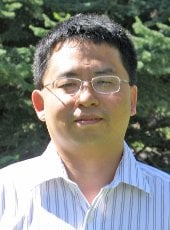
Nacira Agram is an Associate Professor at Kungliga Tekniska Högskolan (KTH), specializing in stochastic analysis, mean-field processes, and mathematical finance. She contributes to education through roles as Examiner and Teacher in advanced financial mathematics courses. Research Focus: Her work centers on stochastic differential equations with applications to financial markets, energy systems, and population modeling. Key areas include conditional McKean–Vlasov jump diffusions, singular control of stochastic Volterra equations, and deep learning applications in stochastic modeling. Publications: Recent research explores mean-field control, optimal stopping, and SPDEs with space interactions, emphasizing advanced mathematical techniques for financial and ecological systems. Teaching: Currently involved in courses like Financial Derivatives and Martingales and Stochastic Integrals , where she serves as course responsible and examiner.
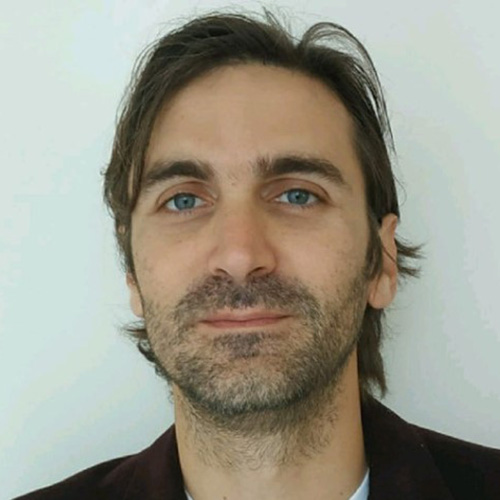
Dr. Silke Hamann is a researcher at the University of Amsterdam, Faculty of Humanities, Department of Linguistics. Her work bridges phonology and phonetics, focusing on the emergence of phonological features, perceptual cues in segmental contrasts, and the interaction of phonology with orthography and language acquisition. Current projects: diachronic loanword adaptation, congenital amusia's impact on speech perception, Bantu languages (with Nancy Kula and Laura Downing), Catalan studies (with Francesc Torres-Tamarit) Research interests span synchronic/diachronic phonology, phonetic perception, computational modeling of phonological acquisition, and cross-linguistic analysis of retroflex consonants. Her publications analyze phenomena in Korean, Japanese, Bantu languages, German, Portuguese, and Slavic languages, with recurring themes of cue weighting, phonological constraints, and orthographic influence. Recent articles highlight her focus on creaky voice diagnostics, loanword phonotactics, congenital amusia, and Bantu intonation systems. Collaborations with Nancy Kula (Bantu) and Francesc Torres-Tamarit (Catalan) underscore her international research network.
Prof. Dr. Francesca Biagini is a full Professor at the Department of Mathematics, University of Munich (LMU Munich) , leading the Stochastics and Financial Mathematics working group. She serves as Vice President for International Affairs and Diversity at LMU Munich since October 1, 2019, and as President of the Bachelier Finance Society (2022–2023). She is also a Correspondent of the Deutsche Aktuarvereinigung (DAV) and a member of the Executive Board of the Munich Risk and Insurance Center (MRIC) since 2017. Her research focuses on stochastic processes in financial markets , particularly asset price bubbles , default risk modeling , and robust hedging under model uncertainty. Recent work includes deep learning applications to bubble detection and non-linear affine processes for market dynamics. She actively contributes to academic leadership through teaching and publications, including 15+ recent articles on topics like liquidity-induced bubbles, machine learning calibration, and systemic risk transfer equilibrium. Her workgroup collaborates on quantLab initiatives and DAV certificate programs .
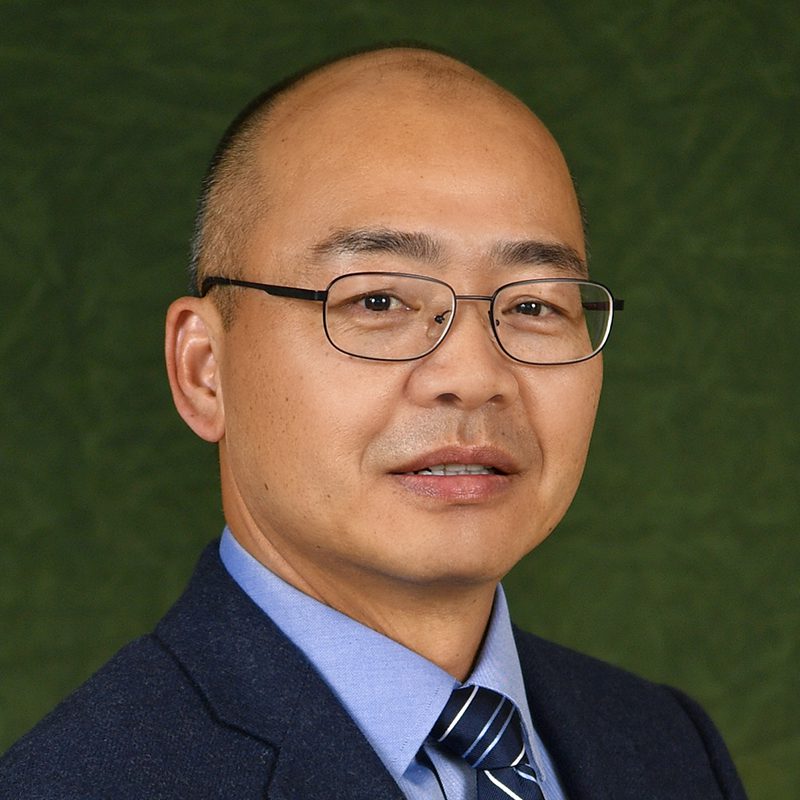
Chunpei Cai is an Associate Professor in the Department of Mechanical and Aerospace Engineering at Michigan Technological University. His work focuses on fluid dynamics, aerospace engineering, and computational fluid dynamics, with specializations in rarefied gas dynamics, plasma simulations, and electric propulsion systems. He holds a PhD from the University of Michigan (2005), and master's degrees from Cornell University (1999) and the Chinese Academy of Sciences (1997), along with a BEng from Harbin Engineering University (1994). Education: PhD, Aerospace Engineering, University of Michigan (2005) MS, Mechanical Engineering, Cornell University (1999) MS, Fluid Mechanics, Chinese Academy of Sciences (1997) BEng, Naval Architecture, Harbin Engineering University (1994) Dr. Cai's research explores non-equilibrium gas dynamics, plasma plume modeling, and gaseous jet impingement phenomena. He has contributed extensively to understanding collisionless plasma flows, electron temperature dynamics, and numerical methods for micro-scale gas flows. His studies bridge continuum and rarefied flow regimes, with applications in spacecraft propulsion and aerodynamics. Recent work includes analyses of jet loads under varying Knudsen numbers, plasma potential distributions, and stability of dilute plasma jets. His studies often involve advanced computational techniques like DSMC simulations and gaskinetic models. While no specific grants or awards are listed, his publications reflect sustained engagement with high-impact topics in fluid dynamics and plasma physics. His research groups likely focus on numerical modeling and experimental validation of gaseous and plasma flows in aerospace contexts.
Valentina Breschi is an Assistant Professor in the Control Systems Group at the Department of Electrical Engineering, Eindhoven University of Technology (TU/e). She holds a Ph.D. from IMT School for Advanced Studies Lucca, with postdoctoral and junior faculty experience at Politecnico di Milano. Her research focuses on data-driven control, jump model learning, meta-learning for system identification, and human-centered policy design for mobility systems. She contributes to UN Sustainable Development Goals related to sustainable infrastructure and innovation. Education: B.Sc. in Electronic and Telecommunication Engineering (University of Florence, 2011) M.Sc. in Electrical and Automation Engineering (University of Florence, 2014) Ph.D. in Control Systems (IMT School for Advanced Studies Lucca, 2018) Research Interests: Her work spans data-driven control methodologies, including LPV control, predictive control, and ethical frameworks for policy design. She explores applications in sustainable mobility, energy systems, and healthcare, emphasizing fairness and social impact. Labs/Teams: She is part of the Control Systems Group, collaborating on projects like the CONSIDER study and the design of fair-MPC frameworks. Her work integrates theoretical control principles with real-world applications in smart systems and social networks.
Norman R. Swanson is a Distinguished Professor and James Cullen Chair in Economics at Rutgers University. He holds a PhD from the University of California, San Diego, and a degree from the University of Waterloo. Primary Affiliations: Department of Economics, Rutgers University Previous Positions: Pennsylvania State University, Texas A&M University, Purdue University, IBM Canada His research focuses on financial econometrics , forecasting , machine learning and big data , and time series analysis . He has published over 100 peer-reviewed articles and served as editor for journals like the Journal of Econometrics and Journal of Business and Economic Statistics . His work often bridges theoretical econometrics with practical applications in finance and macroeconomics, emphasizing robustness and predictive accuracy. The articles listed reflect his expertise in volatility modeling , jump detection , data reduction , and forecasting methodology . Key trends include the use of shrinkage methods, factor models, and simulation-based testing in high-frequency financial and macroeconomic contexts. Scientific Awards: Fellow of the Journal of Econometrics Fellow of the International Association of Applied Econometrics He has acted as a visiting scholar at institutions like the University of Maryland and the Federal Reserve Bank of Philadelphia. His consulting work spans firms such as Union Bank of Switzerland and DFA Capital Management, with expertise as a legal expert witness in financial services cases.
Martin Forde is a Lecturer in Financial Mathematics at King's College London's Department of Mathematics, part of the Faculty of Natural, Mathematical & Engineering Sciences. He joined King's in 2011 and previously held roles as a Research Fellow at Dublin City University and Visiting Assistant Professor at the University of California, Santa Barbara. His research focuses on asymptotics for stochastic volatility models, Lévy processes, and diffusion-type processes, with applications in financial mathematics and quantitative finance. His work often involves large deviations theory and explores topics like volatility smile dynamics, rough volatility models, and optimal trade execution strategies. Key research interests include rough volatility, price impact models, Gaussian fields, and robust hedging of exotic options. He contributes to events such as the London-Paris Bachelier Workshop in Financial Mathematics and maintains an active publication record in journals like Risk , Quantitative Finance , and Mathematical Finance . His recent work addresses small-time and large-time asymptotics in models like the Rough Heston and Stein-Stein frameworks, as well as the analysis of multiplicative chaos and log-correlated Gaussian fields. Publications highlight advancements in understanding the behavior of financial derivatives under stochastic volatility, including papers on the conditional law of Bacry-Muzy fields, rough Bergomi model skew flattening, and optimal execution strategies under drift uncertainty. His research bridges theoretical probability and applied finance, with a focus on rigorous mathematical analysis of market dynamics and derivative pricing.
Katja Ignatieva is an Associate Professor at the School of Risk and Actuarial Studies, UNSW Business School, University of New South Wales. She holds a co-tutelle PhD in Finance from Goethe University Frankfurt (Germany) and Macquarie University Sydney, along with an MSc in Mathematics and Statistics from Humboldt University Berlin and Glasgow University. Her research focuses on quantitative finance, stochastic processes, energy markets, and actuarial risk modeling. Key research areas include energy price dynamics, portfolio risk management, mortality modeling, and systemic risk analysis. She has published extensively in top-tier journals, addressing topics such as volatility modeling, jump-diffusion processes, and commodity market dependencies. Educational background includes: PhD in Finance (2011), Goethe University Frankfurt & Macquarie University MSc in Mathematics & Statistics (2000s), Humboldt University Berlin & Glasgow University Her work bridges theoretical finance with practical applications in risk management and insurance. She has contributed to methodologies for pricing complex financial derivatives and managing longevity risk in variable annuities.
Frédéric Valentin is a Senior Researcher at the National Laboratory for Scientific Computing (LNCC) in Brazil, where he led the Department of Computational and Mathematical Methods from 2015 to 2021. He holds an INRIA International Chair (2018–2023) and served on the applied mathematics board of Brazil's National Science Foundation (CNPq) from 2017 to 2020. He currently leads the IPES Research Group and acts as the Brazilian Scientific Director for the Inria-Brasil partnership. His work focuses on computational and applied mathematics, particularly in developing innovative numerical methods for multiscale phenomena in engineering and life sciences. National Laboratory for Scientific Computing - LNCC (2015–2021) INRIA International Chair (2018–2023) Inria-Brasil Partnership (Scientific Director) Valentin's research involves partial differential equations, finite element methods, domain decomposition, and numerical analysis. He explores the integration of numerical algorithms with machine learning and high-performance computing, including applications to supercomputing projects like the Brazil-European Community's HPC4E initiative. His publications span over 60 high-impact journal articles and book chapters, primarily in computational mathematics and numerical analysis. He has co-advised over a dozen PhD students and postdoctoral researchers, contributing to international collaborations and advancing multiscale modeling techniques. Notably, he played a pivotal role in developing the Santos Dumont petaflop supercomputer at LNCC, the most advanced in Latin America.
Mario Annunziato is a Researcher in Mathematics at the Department of Physics, University of Salerno, since 2004. His work focuses on numerical methods for stochastic processes and optimal control. Institution: University of Salerno Department: Department of Physics Academic Rank: Researcher Research Interests include numerical solutions of PDEs and integral equations for stochastic processes, probability density function optimization, and modeling random phenomena. His work addresses positivity, monotonicity, and conservation in discrete PDFs. Article Trends span stochastic control frameworks, computational finance, biophysics applications, and numerical methods for jump-diffusion processes. Key topics involve Fokker-Planck equations, Hamilton-Jacobi-Bellman formulations, and splitting methods. Advising and Grants include teaching Numerical Analysis until 2013 and securing funding from the University of Salerno's FARB program, INdAM-GNCS, and the European Science Foundation's OPTPDE grants. He participated in the STRIKE Marie Curie ITN network. Labs & Teams : Collaborated with Prof. Alfio Borzì at Würzburg University and contributed to open-source tools like MATLAB Central File Exchange for PDP solvers.
Professor Petko Kalev is an Adjunct Professor in the Department of Accounting & Data Analytics at La Trobe University Business School. He has held academic roles including Professor of Finance at the University of South Australia (2010–2017) and Senior Lecturer/Lecturer at Monash University (1999–2010). He obtained a PhD in Financial Econometrics from Monash University (2002), an MSc in Statistics from the University of Melbourne (1994), and a B.Sc. in Mathematics from the University of Plovdiv (1982). His research focuses on Asset Pricing, Market Microstructure, Corporate Finance, Quantitative Finance, and Behavioural & Experimental Finance. Notably, he is recognized for contributions in market microstructure, including studies on asymmetric information, informed trading, and volatility modeling. Recent publications explore retail trader behavior, algorithmic trading dynamics, and carbon risk management in financial markets. He has secured research funding, including the 2020–2021 grant on stochastic variance-covariance risk in commodity and forex markets. His work frequently addresses topics like price discovery, market efficiency, and the impact of institutional vs. individual investor actions in turbulent markets. Key research trends in his articles include analyzing post-trade behaviors, lifecycle events' financial impacts, and the interplay between algorithmic trading and market volatility. His contributions bridge empirical finance with practical market mechanisms, emphasizing policy implications for market design and regulation.
Konstantinos Skindilias holds the position of Senior Lecturer in Data Science at the University of Greenwich's School of Computing and Mathematical Sciences, within the Faculty of Engineering and Science. Concurrently, he serves as a Director in a Big-4 firm advising investment banks, bridging academic and industry expertise. His qualifications include a BSc, MSc, and PhD in relevant fields. His research focuses on quantitative finance, stochastic modeling, derivatives pricing, and risk management. Key areas include market risk methodologies, volatility calibration, and energy commodity analysis. He specializes in developing models for contingent claims pricing, portfolio insurance strategies, and regulatory frameworks like SIMM. Publications emphasize advanced numerical techniques such as Markov chain approximations for derivatives pricing and volatility forecasting. His work addresses practical challenges in turbulent markets and energy security, with contributions to both theoretical and applied finance domains. No scientific awards or grants are explicitly listed in the provided information. His dual role in academia and financial services highlights his interdisciplinary engagement, though specific lab affiliations or teams are not detailed here.
Kayla King is a Professor in the Departments of Zoology and Microbiology & Immunology at the University of British Columbia (UBC) and holds a Professorial Fellowship at the University of Oxford. Her research focuses on the contemporary ecology and evolution of host-pathogen/parasite interactions, integrating experimental evolution, comparative genomics, and field studies. Key research interests include climate change impacts on pathogen virulence, biodiversity loss effects on disease dynamics, and the evolutionary consequences of host jumps. She investigates microbial diversity, symbiosis, and the interplay between environmental stressors and host immunity. Education Affiliations: University of British Columbia (UBC) University of Oxford (as Professorial Fellow) Research Interests: Dr. King’s work spans microbial ecology, evolutionary theory, and environmental change. She explores how warming temperatures and habitat fragmentation influence pathogen transmission and host resistance. Her team uses experimental systems to study virulence evolution, microbiome functions, and the ecological basis of disease emergence. Recent projects examine symbiotic relationships, stress responses in hosts, and the role of biodiversity in disease regulation. Lab & Collaborations: The King Lab operates across UBC and Oxford, focusing on interdisciplinary approaches to infectious disease dynamics. They collaborate on topics like protective microbiota, pathogen surveillance in wild animals, and applying evolutionary principles to disease control strategies. Awards: No specific awards listed in provided materials. Advising & Grants: While specific student names aren’t listed, the lab focuses on training researchers in experimental evolution and disease ecology. Funding sources include UBC’s Biodiversity Research Centre and academic excellence initiatives. Labs/Teams: King Lab (UBC Zoology & Microbiology & Immunology), part of the Biodiversity Research Centre’s collaborative network.
Don Chen is a Professor in the Department of Engineering Technology and Construction Management at the William States Lee College of Engineering, University of North Carolina at Charlotte, specializing in civil engineering technology and construction management. His research integrates advanced computational methods with infrastructure engineering to address critical challenges in transportation and construction systems. His educational background includes: Ph.D. in Civil Engineering, Iowa State University, Ames, IA, August 2006 M.S. in Civil Engineering, Iowa State University, Ames, IA, December 2002 B.S. in Civil Engineering, Tongji University, Shanghai, China, July 1992 Professor Chen's research focuses on Pavement Management Systems, Building Information Modeling (BIM), Parametric Modeling and Visualization, Accelerated Bridge Construction, and Deep Learning in Construction. His work develops innovative models for pavement performance prediction, BIM-based energy optimization, and construction process visualization, significantly advancing infrastructure management and sustainable construction practices through data-driven approaches and computational intelligence. His scientific recognition includes: LEED AP (Leadership in Energy and Environmental Design Accredited Professional) since June 2009 Autodesk Certified Professional: Revit Architecture (2018 to present) Professor Chen has secured substantial research funding as Principal Investigator (PI) and Co-PI on multiple grants, primarily from the North Carolina Department of Transportation (NCDOT) and buildingSMART International. His projects include "Development of Performance Curves for Composite Pavements in PMS" (NCDOT, 2015-2017), "Setting Appropriate Benefit/Condition Jumps for Pavement Treatments in PMS" (NCDOT, 2015-2017), "Evaluation of Benefit Weight Factors and Decision Trees for Automated Distress Data Models" (NCDOT, 2014-2016), and "Generating Construction Schedules Using OPEN BIM" (buildingSMART International, 2013). His scholarship of teaching and learning grant developed the Project-Based Integrated Work/Review Cycle (PBIWR) for accelerated construction education. He actively integrates BIM and deep learning technologies into construction engineering curricula and industry practices, developing frameworks for fenestration systems and energy-efficient building design while advancing pavement management methodologies through sophisticated performance modeling.
Prof. Dr. Silke Rolles is a Professor of Probability Theory at the Technical University of Munich (TUM) , specifically within the TUM School of Computation, Information and Technology. She has held this position since 2006 and previously held academic roles at the University of California, Los Angeles, the University of Zurich, and the Technical University of Eindhoven. Her research focuses on probability theory , particularly reinforced random processes , random processes in random environments , and statistical mechanics . Her recent work explores lattice Coulomb gas, supersymmetric hyperbolic sigma models, and localization phenomena. She was awarded the 2017 Golden Circle Teaching Award and the 2004 Stochastics Section Dissertation Prize . She has co-organized workshops such as Women in Probability and Stochastic Reinforcement Processes, and serves as an associate editor for probability journals.