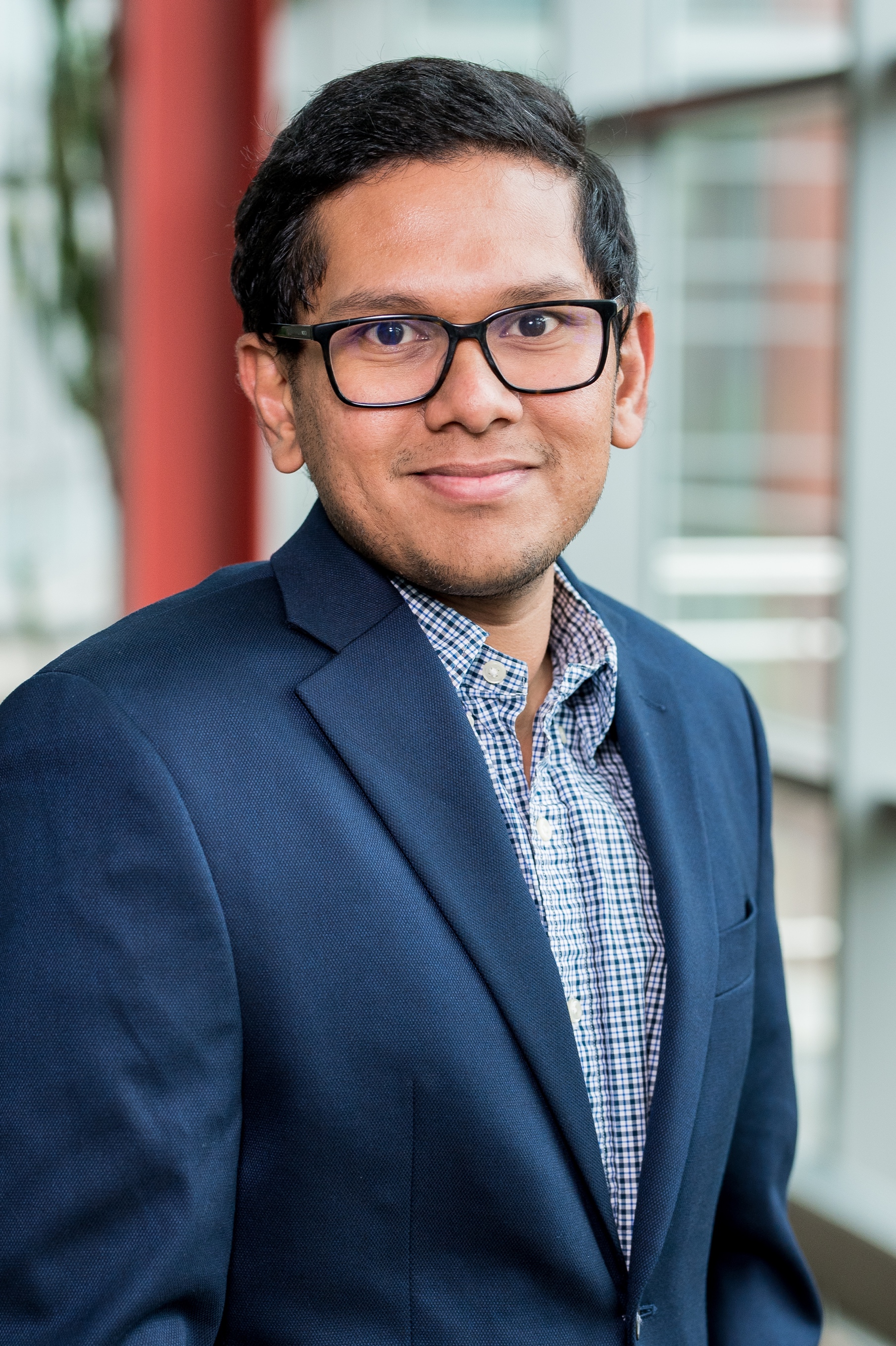
Nathan Judd is a Research Fellow in Statistics at the School of Mathematics, University of Birmingham. His research focuses on Bayesian non-parametric methods applied to modern slavery data and stochastic process modeling. He earned his PhD in Statistics from the University of Warwick (2024), MSc in Statistics from Lancaster University (2019), and BSc in Mathematics from the University of Kent (2018). Education: PhD in Statistics, University of Warwick (2024) MSc in Statistics, Lancaster University (2019) BSc in Mathematics, University of Kent (2018) Research themes include: Construction of non-diffusive Wright-Fisher processes Bayesian non-parametric models for crime-linkage analysis Testing methodologies for jumps in discretely observed stochastic processes Application of statistical models to socio-political challenges Recent publications demonstrate expertise in predictive modeling during disruptions, including the 2025 paper on zero-inflated mixed effects models for foodservice sales forecasting. Contact: n.a.judd@bham.ac.uk
Zhipeng Lu is currently an Associate Professor of Pharmacology and Pharmaceutical Sciences at the University of Southern California (USC) School of Pharmacy. His research focuses on understanding RNA molecules and their structural complexity as a second layer of genetic instructions beyond protein encoding. He directs the Lu Lab at USC, which develops and applies novel technologies to investigate RNA structures, interactions, chemical modifications, and functions in cellular processes and animal development. Dr. Lu's research interests center on "RNA machines" in living cells, with particular emphasis on how RNA molecules fold into structures and form intermolecular interactions to execute genetic instructions. His work spans multiple dimensions of RNA biology, including RNA structure-function relationships, RNA-protein interactions, RNA modifications, and the role of RNA in human diseases such as genetic disorders and viral infections. The lab combines computational, chemical, and biological approaches to elucidate fundamental mechanisms of RNA machines, with the ultimate goal of developing new understanding and therapies targeting human diseases. Analysis of Dr. Lu's publication history reveals a strong trajectory in RNA structure and interaction mapping technologies. His work has evolved from foundational studies on RNA processing and modification to developing innovative high-throughput methods like PARIS and RISE for analyzing RNA interactomes. Recent publications focus on specific RNA systems like XIST and snoRNAs, demonstrating how his lab has moved from method development to applying these tools to solve longstanding biological questions in epigenetics and RNA therapeutics. Dr. Lu has received numerous prestigious awards recognizing his contributions to RNA research: NHGRI K99/R00 NIH Pathway to Independence Award (2017-2022) RNA Society Scaringe Award (2017) Stanford University Jump Start Award for Excellence in Research (2016-2017) Damon Runyon-Sohn Fellowship (2015-2017) His research is supported by multiple funding sources from organizations including the National Institutes of Health and other foundations. The Lu Lab is actively recruiting PhD students and postdoctoral researchers to work on several cutting-edge directions including RNA structures, interaction networks, RNA modification mechanisms, and their roles in development and disease. The lab integrates biological, chemical, and computational approaches to advance RNA biology and push forward RNA medicine. The Lu Lab at USC is a dynamic research environment focused on "RNA machines" with recent highlights including solving aspects of the orphan snoRNA problem and discovering snoRNAs that control eMet tRNA activity. The lab's vision emphasizes creative exploration of RNA biology, with researchers encouraged to pursue innovative ideas much like "wild animals running in the African savannah." Current research directions include analysis of RNA structures, interaction networks, RNA modification mechanisms, and their roles in development and disease, with applications to genetic disorders, cancers, and viral infections.
Lina von Sydow is a Professor in Computational Science at Uppsala University's Department of Information Technology. She serves as Section Dean for the Mathematical-Computer Science Section since July 2023. Her academic journey includes becoming an Associate Professor in 2000, Senior Lecturer since 1997, and leading the Department of Information Technology from 2018 to 2023. PhD in Domain Decomposition Methods (1995, Uppsala University) Postdoctoral Fellow at Oxford University (1996-1997) Her research spans computational science with dual focuses on Computational Finance and Ice Sheet Modeling . In finance, she develops numerical methods for option pricing using PDEs, radial basis functions, and stochastic volatility models. In climate science, she contributes to ice sheet dynamics through full Stokes models and adaptive time-stepping approaches, particularly in simulating grounding line migration. Recent publications (2025) address gender disparities in IT education, including comparative analysis of admission trends and intervention studies to boost female enrollment. Earlier works (2020-2015) focus on high-order finite difference methods for financial derivatives, BENCHOP benchmarking projects, and preconditioning techniques for PDEs. Scientific awards include Excellent Teacher (2013) She actively collaborates on educational reforms, co-authoring studies like Gender-aware course reform in Scientific Computing (2013). Her leadership roles include Head of Department (2018-2023) and Section Dean (2023-present), influencing academic governance and interdisciplinary research. Labs and teams: Works with Uppsala University's Computational Science group, Elmer/ICE project collaborators (e.g., Per Lötstedt, Gong Cheng), and international partners in numerical finance and climate modeling.
The Atomic Quantum Optics Group at ICFO, Barcelona , led by Morgan W. Mitchell , investigates quantum phenomena at the interface of light and matter. The group develops advanced sensing technologies with applications in biomedicine, space science, and fundamental physics. Research focuses on ultra-cold atoms, high-coherence photons, and entanglement, aiming to understand and utilize atomic coherence for quantum technologies. Their work includes pushing sensitivity limits in magnetic field detection, quantum thermometry, and miniaturized quantum devices. Recent publications highlight advancements in cavity-enhanced spin detection , anomalous noise in SERF magnetometry , and spread-spectrum magnetic sensing . These studies span quantum optics, atomic physics, and applied quantum technologies. Scientific awards include mentoring students like Joanna Zielinska and Carlos Abellan , who won the UPC Thesis Prize. The group actively trains PhD students, postdocs, and visiting researchers in quantum technologies.
Charith Mendis is an Assistant Professor in the Siebel School of Computing and Data Science at the University of Illinois at Urbana-Champaign, with joint appointments in the Department of Computer Science, Electrical and Computer Engineering, and the Coordinated Science Lab. His research focuses on the intersection of compilers, program optimization, and machine learning systems. Dr. Mendis received his educational background from prestigious institutions: Ph.D. in Computer Science from Massachusetts Institute of Technology (2020) S.M. in Computer Science from Massachusetts Institute of Technology (2015) B.Sc. in Electronics and Telecommunication Engineering from University of Moratuwa (2013) His primary research interests center around compiler technology and machine learning systems. Mendis leads the ADAPT lab at UIUC, where his team works on creating high-performance ML optimization techniques and automated compiler construction using machine learning and formal methods. His work bridges the gap between traditional compiler design and modern machine learning approaches, with applications in tensor compilers, graph neural networks, and sparse computation. He has developed novel frameworks for optimizing deep learning workloads, verification of compiler transformations, and performance modeling for emerging hardware architectures. Mendis has established himself as a leading researcher in compiler optimization for machine learning systems, with a particular focus on tensor compilers, graph neural networks, and performance modeling. His recent publications demonstrate increasing sophistication in combining formal methods with machine learning techniques to solve challenging problems in compiler optimization and verification, with multiple papers accepted at top-tier conferences including OOPSLA, PLDI, POPL, and SIGMOD. His notable scientific achievements include: Google ML and Systems Junior Faculty Award (2025) DARPA Young Faculty Award (2024) NSF CAREER Award (2024) Distinguished Paper Award at POPL (2025) William A. Martin Thesis Award for Outstanding SM thesis, MIT (2015) Multiple teaching excellence awards at UIUC (2021-2023) Dr. Mendis actively mentors students through the ADAPT lab, offering research opportunities for undergraduates, master's students, and PhD candidates interested in compiler technology and machine learning systems. His research is supported by significant funding from the ACE center (part of JUMP 2.0), National Science Foundation (NSF), DARPA, IIDAI, and industry partners including Google, Intel, Amazon, and Qualcomm. He teaches advanced courses in compiler construction and machine learning for compilers. He leads the ADAPT lab at UIUC, which focuses on developing advanced compiler technologies for modern machine learning workloads. The lab maintains active collaborations with industry partners and has established itself as a leading research group in compiler optimization for AI systems. Current projects include tensor compilers, graph neural network optimization, and automated verification of deep learning systems.
Aleksandar Mijatović is a Professor of Probability at the Department of Statistics, University of Warwick, and Deputy Head of Department for Research. He was previously Chair in Probability at King's College London and Reader in Probability at Imperial College London. His research focuses on probability theory, stochastic processes, mathematical finance, numerical stochastics, and data science. He holds a Ph.D. in low-dimensional topology from Trinity College Cambridge and worked as a quantitative analyst in foreign exchange derivatives before academia. Research interests include stochastic analysis of processes with jumps, simulation methods (e.g., Monte Carlo), stochastic control, and applications in finance. He is a Fellow of the Alan Turing Institute and maintains a YouTube channel, Prob-AM, explaining his research. His work often bridges theoretical probability with practical applications in finance and data science. Key publications explore topics like reflected Brownian motion, Lévy processes, branching processes, and stochastic gradient descent. Collaborations with institutions like King’s College London and Imperial College London highlight his academic networks. His contributions span theoretical advancements and computational methodologies, with applications in risk management, option pricing, and algorithm development.
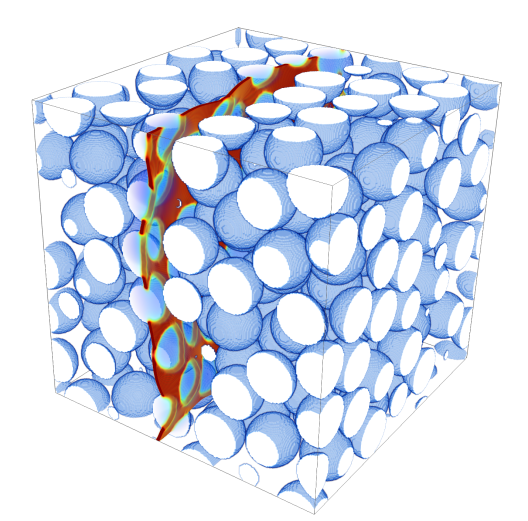
Professor Caterina Ida Zeppieri is an Associate Professor at the Institute for Numerical and Applied Mathematics , University of Münster, Germany. Her research focuses on homogenization theory, calculus of variations, and applications in material science. She leads the Analysis and Modelling Research Group , which explores variational methods and their computational implications. Research Interests: Her work centers on stochastic and deterministic homogenization of free-discontinuity problems, Γ-convergence, and the analysis of heterogeneous materials. She investigates mathematical models for fracture mechanics, phase transitions, and plasticity, often employing advanced techniques from calculus of variations and partial differential equations. Recent Contributions: Recent articles address topics such as strong approximation of SBV functions (2025), stochastic homogenization in perforated domains (2024), and gradient damage models (2022). These studies emphasize rigorous mathematical analysis with applications to real-world material behavior. Grants & Collaborations: Zeppieri’s research is supported by grants from the German Research Foundation (DFG), including projects within the Cluster of Excellence 2044 (e.g., C1: Evolution and Asymptotics). She collaborates with institutions globally, advancing interdisciplinary approaches to material modeling. Teaching: She teaches advanced courses like Applied Functional Analysis and Calculus of Variations , and mentors students through seminars and thesis supervision. Her group hosts regular colloquia and workshops, fostering academic exchange in applied mathematics.
Sylvain Faisan is a permanent Assistant Professor at ICube - MIV (University of Strasbourg, France). His research focuses on image processing, statistical modeling, and geometry, with applications in medical imaging and neuroscience. He works on advanced methodologies integrating machine learning and mathematical frameworks. Key Research Areas: Polarimetric image processing, retinal image registration, 3D statistical model comparison, topology-preserving image deformation, and fMRI brain mapping Technical Expertise: Bayesian inference, non-local means filtering, reversible jump MCMC algorithms, causal modeling, and constrained optimization His publications demonstrate interdisciplinary applications in optics, biomedical imaging, and computational anatomy. He contributes to developing algorithms that maintain physical admissibility and topological integrity in complex imaging problems.
Rafał Weron is a Full Professor at Wrocław University of Science and Technology, where he has held leadership roles since 2015, including Head of the Department of Operations Research and Business Intelligence and Chairman of the Scientific Discipline Council for Management and Quality Sciences. His expertise spans electricity price forecasting, computational economics, and risk management, with significant contributions to probabilistic forecasting methods. As a globally recognized scholar, he has received prestigious awards such as the Hugo Steinhaus Prize (2018) and the Tao Hong Award (2017). Key Affiliations : Wrocław University of Science and Technology; Polish Academy of Sciences (Statistics and Econometrics Committee); Polish Mathematical Society. Research Trends: Weron's work focuses on electricity price forecasting, leveraging machine learning and statistical models to enhance accuracy and reliability. His publications emphasize probabilistic forecasting frameworks, quantile regression, and hybrid modeling techniques, reflecting a commitment to methodological rigor and practical applications in energy markets. Scientific Awards: Top 1% globally ranked economist (IDEAS/RePEc, 2013-2022) World's Top 2% Most Widely Cited Scientist (2019-2021) 'Hugo Steinhaus' Prize (2018) Tao Hong Award (2017) Emerald Citation of Excellence (2017) Minister of Science & Higher Education Prize (2016) Commission of National Education Medal (2016)
Yohan PETETIN is an Associate Professor at Telecom SudParis (Institut polytechnique de Paris) in the CITI Department. His research focuses on Bayesian filtering, Monte Carlo methods, hidden Markov models, and multi-object tracking. He has authored over 20 peer-reviewed articles since 2011, with notable contributions in IEEE Transactions on Signal Processing and other top venues. His work bridges statistical signal processing with machine learning applications. PhD: Algorithmes de restauration bayésienne mono- et multi-objets dans des modèles Markoviens (2013, Telecom SudParis) HDR: Generative models for time series data (2023, Institut polytechnique de Paris) Research interests emphasize sequential Monte Carlo algorithms, particle filtering optimizations, and deep learning integration for time-series analysis. Recent work explores expressivity comparisons between recurrent neural networks and hidden Markov models. Teaching includes courses on probabilistic graphical models, Bayesian filtering, and deep learning across undergraduate and graduate programs at Telecom SudParis and affiliated institutions.
Maria Christina Mariani is a Professor and Department Chair in the Department of Mathematical Sciences at the University of Texas at El Paso (UTEP). Her interdisciplinary research bridges mathematics with applications in public health, geophysics, physics, and finance, with a focus on developing novel mathematical models for complex data analysis. Dr. Mariani earned her Ph.D. in Mathematics from the University of Buenos Aires in 1992, where she received an Outstanding dissertation award. She also holds an M.S. in Physics (1996) and an M.S. in Mathematics (1987), both from the University of Buenos Aires with highest honors. Her research interests span Applied Mathematics, Nonlinear partial differential equations, Stochastic differential equations, Machine Learning techniques, Mathematical Finance, Mathematical Physics, and Numerical Methods. She has developed mathematical models for medical data analysis (particularly breast cancer, heart disease, and prostate cancer), seismic and explosive data, and financial markets. Her work emphasizes the development of mathematical models to enhance understanding of medical data and extreme events in various phenomena. Dr. Mariani's recent research focuses on applying machine learning and stochastic models to complex data sets across multiple domains. Her work demonstrates consistent innovation in developing novel algorithms for medical diagnosis and prognosis, analyzing seismic data, and modeling financial markets using Levy processes, Ornstein-Uhlenbeck models, and wavelet techniques. She has mentored numerous students throughout her career, including PhD candidates, MS students, and post-doctoral researchers, demonstrating her commitment to academic development and knowledge transfer. Dr. Mariani has served as Department Chair and holds the Shigeko K. Chan Distinguished Professor title in Mathematical Sciences, reflecting her significant contributions to the field and institution.
Somayeh Moazeni is an Associate Professor at the School of Business, Stevens Institute of Technology. She holds a PhD in Computer Science from the University of Waterloo and has held academic appointments including Visiting Associate Professor at Northwestern University and Postdoctoral Research Associate at Princeton University. Her research focuses on Reinforcement Learning, Stochastic Dynamic Optimization, and applications in Energy Markets, Inventory Management, and Algorithmic Trading. She has authored over 30 peer-reviewed articles and serves as an associate editor for INFOR and PLOS One . Education: PhD (Computer Science, 2012), University of Waterloo; Postdoc (Operations Research, 2012-2014), Princeton University Industry Experience: Senior Risk Analyst at RBC (2011-2012), Risk Analyst at BMO (2010) Awards: IEEE Senior Member (2019), Anita Borg Institute GHC Faculty Scholar (2017), MITACS Poster Competition First Place (2009) Her research spans Bayesian Optimization , Resilient Network Design , and Energy Efficiency . Current funded projects include PSEG Foundation grants for energy resilience and NSF funding for distributed energy resource controls. She advises PhD students in Operations Research and Energy Systems and teaches graduate courses in Reinforcement Learning and Financial Engineering. Key Contributions: Developed stochastic optimization frameworks for energy storage, contact center reliability modeling, and risk-aware trading strategies. Her work on sequential learning for consumer-driven demand response programs has advanced smart grid applications.
Paolo Santucci de Magistris is a Professor of Econometrics at the Department of Economics and Finance of Luiss University (Rome) since February 2018 and previously served as Head of the Department from 2021 to 2024. He held roles as Associate Professor and Assistant Professor at Aarhus University (Denmark) from 2013 to 2018, with prior postdoctoral research at the University of Padova and CREATES. His education includes a PhD from the University of Pavia and visiting research at Northwestern University’s Kellogg School of Management. His research focuses on time series econometrics, financial econometrics, and energy economics, with emphasis on volatility modeling, liquidity risk, and climate impacts. Notable contributions include work on liquidity coverage in financial markets, cointegration models, and the interplay between wind energy and CO2 emissions. His publications span top journals like the Journal of Financial Economics and Journal of Econometrics , exploring topics ranging from stochastic volatility to climate policy analysis. Ongoing projects include research on option price dynamics, energy market connectedness, and risk-neutral density fitting via the RNDfittool MATLAB application. Prof. Santucci de Magistris collaborates internationally with institutions like CREATES and has contributed to policy-relevant studies on energy transition and financial stability. His methodological innovations include Bayesian econometric techniques and tools for analyzing financial risks embedded in derivatives markets.
Dr. Mingfeng Wang is a Senior Lecturer in Robotics and Autonomous Systems at Brunel University London, affiliated with the Department of Mechanical and Aerospace Engineering within the College of Engineering, Design and Physical Sciences. His research focuses on specialized robotic systems including continuum, legged, soft, precision farming, and miniaturized robots. Chartered Engineer (CEng) with Engineering Council UK Fellow of the Higher Education Academy (FHEA) Member of IEEE, IEEE-RAS, IMechE, and IFToMM Editorial roles: Associate Editor of International Journal of Advanced Robotic Systems (JCR-Q3); Associate Editor of Frontiers in Robotics and AI (JCR-Q2); Editor of Information Processing in Agriculture (JCR-Q1), Biomimetic Intelligence and Robotics (JCR-Q1), and STEM Education Research expertise includes: Continuum Robotics : Design of extra-slender continuum robots (diameter-to-length ratio Legged Robotics : Parallel mechanism-based biped and hexapod robots for extreme environments Miniaturized Robotics : Active locomotion and drug delivery in capsule endoscopes Soft Robotics : Compliant end-effectors and bio-inspired designs Precision Farming : Laser weeding systems and agricultural automation Key scientific awards: BRIEF award (2022) TAROS Best Paper Post Nomination (2022) IFToMM Asian-MMS Best Paper Award (2014) Recent publications focus on: Cochlear implant surgery robotics Passive compliance in train fluid servicing Snake-biomimetic sealing surfaces Parallel kinematic manipulators Capsule endoscope image enhancement Professional services include conference organization (TAROS 2023/2024 Steering Committee; TAROS 2024 Programme Chair) and journal refereeing for IEEE-ASME Transactions on Mechatronics and Scientific Reports.
Francesco Russo is a Professor of Exceptional Class at ENSTA Paris under the Applied Mathematics Unit (UMA) . He has held academic positions at INRIA-Ecole des Ponts (2008-2010) and Paris 13 University (1994-2008) , where he led the Probability and Statistics Team and the Financial Engineering Option in the MACS course. His research spans Stochastic Analysis , Financial Mathematics , and Probabilistic Models in Mathematical Physics , with applications to energy systems, control theory, and nonlinear PDEs. He co-organizes international seminars and conferences, including the Seminar in Probability-Statistics-Control and the Day Around Stochastic PDEs . Research Themes : Stochastic calculus via regularization, path-dependent PDEs, BSDEs, non-semimartingale models, fractional Brownian motion, and McKean-Vlasov equations with irregular coefficients. Projects : Leads the SDAIM (2023-27) project funded by ANR (France) and FAPESP (Brazil). Coordinated the ANR MASTERIE (2011-2013) program. Teaching : Courses include Elementary Stochastic Calculus (ENSTA), Discrete Models in Finance (ENSTA), and Stochastic Calculus (Master Paris-Saclay). Collaborations : Organizes seminars with institutions such as Luiss University (Rome) and EPFL (Lausanne). Collaborates with Brazilian teams (UNICAMP) and French institutions (CMAP, CentraleSupélec).