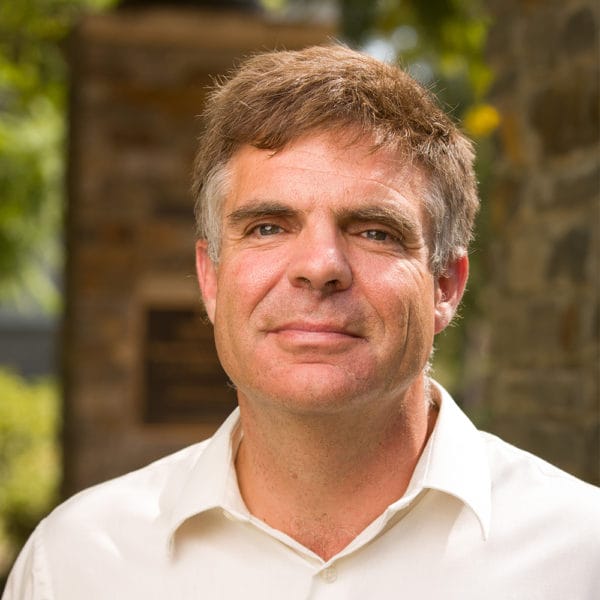
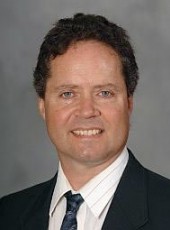
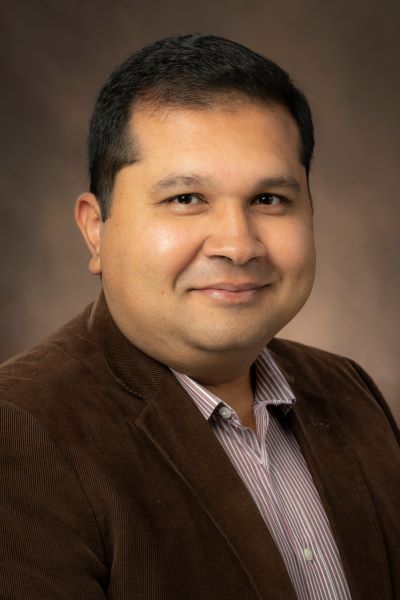
Andras FULOP is a Professor of Finance at ESSEC Business School in France, specializing in financial econometrics, asset pricing, and credit derivatives. He holds a Ph.D. in Finance from the Rotman School of Management (2006), an M.A. in Economics from the University of Toronto (2000), and an M.Sc. in Economics from Budapest University of Economic Sciences (1999). His career includes roles as Co-Head and Head of the Finance Department at ESSEC (2016–2019), Visiting Researcher at the Bundesbank (2016–present), and Research Consultant at the Hungarian National Bank (2012–2013). Research interests focus on Bayesian methods, structural credit risk modeling, market liquidity, and macrofinance. Notable works include studies on transparency initiatives in CDS markets, long-run risk models, and self-exciting jumps in asset prices. FULOP has received awards such as the 2023 EUROFIDAI-ESSEC Best Paper Award and the 2019 ESSEC Foundation White Project Award. He serves as an Associate Editor for the Journal of Financial Econometrics and Subject Editor for the Journal of Multinational Financial Management . His research articles span topics like real-time Bayesian learning in bond markets, news indices for country fundamentals, and computational methods for filtering diffusions. FULOP has advised multiple students on empirical asset pricing and chairs thesis juries at ESSEC. He has organized numerous conferences, including workshops on Bayesian econometrics and empirical finance.
Stefano Almi is an Associate Professor at the University of Naples Federico II. His research focuses on calculus of variations, partial differential equations, fracture mechanics, and optimal control, with applications in material science and elasticity. He has contributed to topics such as free discontinuity problems, nonlocal approximations, and geometric rigidity in multi-well systems. Almi has organized several conferences, including the upcoming 'Variational Analysis of complex systems in Materials Science, Physics and Biology' (Oct 2025) and 'Variational models in Materials Science-III' (Feb 2025). He has spoken at events like 'Recent progress in PDEs' (Feb 2025) and 'Beyond Elasticity: Advances and Research Challenges' (May 2022). His recent work explores mean-field limits, agent-based models, and fractional approaches to plasticity. He has collaborated extensively with researchers such as R. Durastanti, M. Friedrich, and F. Solombrino, producing publications in journals like Calculus of Variations and Partial Differential Equations and Mathematische Annalen .
Dr Graham Eatough is a Senior Lecturer in Theatre, Film & Television Studies at the University of Glasgow. He is a leading artist in theatre, visual art, and film, known for innovative interdisciplinary work with Suspect Culture theatre company (1996–2009) and collaborations with artists like Graham Fagen and Simon Starling. His theatre projects include How To Act , a contemporary Greek tragedy, and The Reason I Jump , an autism-focused adaptation staged in a Glasgow maze. He has received awards such as the Herald Angel Award (2015), Critics Award for Theatre in Scotland (2016), and Scotsman Fringe First (2017). Research interests span directing, dramaturgy, site-specific performance, and theatre’s engagement with autism. His work explores intersections between theatre and visual arts, often involving experimental staging and collaborative processes. Notable performances include Lanark: A Life in Three Acts (2015) and Nomanslanding (2015), blending environmental and theatrical elements. Grants include funding from the National Theatre of Scotland, Creative Scotland, and international commissions such as Sydney Harbour Foreshore and Ruhrtriennale. He supervises PhD students on topics like neurodiverse dramaturgy and archaeology-theatre intersections. Teaching focuses on directing, modernism, and practice-based research. He chairs the Limitless initiative to develop autism-inclusive drama programs with the National Theatre of Scotland and Royal Conservatoire of Scotland.
Henry Schellhorn is a Professor of Mathematics at Claremont Graduate University’s Institute of Mathematical Sciences. He joined CGU in 2005 and previously taught at the University of Lausanne. His research focuses on stochastic analysis, mathematical finance, traffic theory, and epidemiology, with notable contributions to liquidity modeling, credit risk, and optimal control in epidemiological systems. Schellhorn holds patents in autonomous vehicle lane-changing algorithms and financial risk management techniques, and co-authored a book on machine learning for asset pricing. Education PhD in Operations Research, University of California, Los Angeles (UCLA) MS in Operations Research, Stanford University Diplôme in Electrical Engineering, École Polytechnique Fédérale de Lausanne (EPFL) Research Interests Schellhorn’s work bridges stochastic processes, financial engineering, and applied mathematics. Key areas include: Stochastic control and its applications to epidemiology and finance Credit risk modeling and networked financial systems Liquidity analysis in financial markets Optimization of traffic and operational systems Machine learning in asset management Professional Contributions He has edited journals like the Journal of Applied Mathematics and Decision Sciences and organized symposiums on financial derivatives and energy markets. His research has been funded by institutions such as the Swiss National Research Fund and Fitch Ratings. Patents & Innovation US Patent 11192553: Lane-changing algorithms for autonomous vehicles US Patent 7010510: Variance reduction techniques for risk management Advising & Grants Schellhorn advised Tianmin Kong on a co-authored book and led a research team at Oracle developing Monte Carlo simulation systems for Value at Risk. His work continues to explore stochastic modeling in dynamic systems.
Ruojun Huang is a Courant Instructor at the Department of Mathematics within the Courant Institute of Mathematical Sciences at New York University. He earned his Ph.D. in 2017 from Stanford University, advised by Prof. Amir Dembo. His research focuses on probability theory, random processes, and stochastic analysis, with a particular emphasis on random walks, recurrence/transience properties, heat kernel estimates, and Markov processes. Education: Ph.D. in Mathematics, Stanford University, 2017 (Advisor: Amir Dembo) Research Interests: Probability Theory Random Processes Stochastic Processes Graph Theory Stochastic Control His work explores dynamic systems, including studies on random walks in evolving environments, IDLA cluster behavior, and time-dependent conductance models. Recent Articles Trends: A focus on advancing analytical techniques for stochastic systems, particularly in understanding recurrence properties of growing graphs and clusters, heat kernel behavior under time-varying conditions, and algorithmic approaches to stochastic control problems. Teaching: Taught Algebra and Calculus (Section 001) in the College of Arts and Science at NYU during Fall 2017. Grants & Advising: No specific grants or advisees listed, though his research collaborations include prominent figures like Amir Dembo and G. Papanicolaou. No lab affiliations explicitly mentioned.
Dr. Minh Nguyen is a Research Fellow in Probability Theory at Monash University's School of Mathematics. His research develops mathematical frameworks for self-interacting random processes, particularly reinforced random walks on graphs and integer lattices. Nguyen's work establishes fundamental properties of vertex-reinforced jump processes, including convergence behaviors on complete graphs and nonlinear reinforcement mechanisms. His publications rigorously analyze how local interaction rules generate complex global behaviors in stochastic systems. Additional research interests include combinatorial probability, random graph theory, and applications of stochastic methods to quantum phenomena. Nguyen serves as reviewer for leading probability journals and maintains international collaborations with researchers in Sweden and Australia.
Amin Hassan Zadeh is an Adjunct Professor in the Department of Statistical and Actuarial Sciences at Western University and Professor of Practice at Oregon State University. His research focuses on life insurance mathematics, mortality modeling, and quantitative finance applications in insurance. His current research examines mortality forecasting using Markovian processes, joint lifetime modeling with bivariate phase-type distributions, and applications of phase-type distributions in actuarial contexts. He has supervised multiple doctoral students in actuarial science and maintains industry connections as a Certified Appointed Actuary.
Geneviève Gauthier is a Full Professor in the Department of Decision Sciences at HEC Montréal, a leading business school in Canada. She holds a Ph.D. in Mathematics from Carleton University and an M.Sc. in Mathematics from UQAM. As a member of the Study and Research Group on Decision Analysis (GERAD) and a researcher at the Interuniversity Center for Research in Organizational Analysis (CIRANO), she bridges academic research with practical applications in quantitative finance. Her educational background includes: Ph.D. in Mathematics, Carleton University, Ottawa M.Sc. in Mathematics, Université du Québec à Montréal (UQAM) Professor Gauthier specializes in financial engineering with expertise spanning stochastic calculus, probability and statistics, mathematical modeling, pricing, risk management, and credit risk. Her research focuses on developing advanced mathematical models for financial markets, with particular emphasis on option pricing, volatility modeling, and credit risk analysis. She integrates machine learning techniques with traditional quantitative methods to address complex financial problems, contributing significantly to both academic literature and industry practice. Her recent publications demonstrate a strong trend toward integrating deep learning with traditional quantitative finance methods, particularly in hedging strategies and volatility surface modeling. She has made significant contributions to understanding the informational content of high-frequency option data and developing semi-closed-form solutions for complex derivatives. Her work spans energy markets, credit risk modeling, and the intersection of machine learning with traditional financial engineering approaches. Professor Gauthier has received numerous prestigious awards recognizing her contributions to finance and statistics: The Canadian Derivatives Institute CDI Conference Best Discussion Award (2022) Research Professorship in Financial Engineering at HEC Montréal (2019-2028) SSC Award for Impact of Applied and Collaborative Work (2018) Best Paper Award on Derivatives from the Northern Finance Association (2017) Best paper award in the Accounting and Finance section at the World Business and Economics Research Conference (2012) As an academic advisor, Professor Gauthier has supervised 69 students throughout her career, including 2 PhD candidates, 10 Master's theses, and 7 supervised projects in the last five years alone. Her PhD students have worked on advanced topics like multivariate stochastic volatility models and extreme events in financial markets, while her Master's students have explored areas ranging from VIX option pricing to electricity price forecasting. She teaches graduate courses in numerical methods, stochastic calculus, and machine learning applied to financial data. Professor Gauthier is actively involved with research groups including GERAD (Group for Research on Decision Analysis) and CIRANO (Centre for Interuniversity Research and Analysis on Organizations), where she collaborates with interdisciplinary teams to advance quantitative methods in finance and risk management. Her work often bridges theoretical developments with practical applications in the financial industry.
Sami Attaoui is a Full Professor of Finance and Head of the Finance Department at NEOMA Business School. He also serves as the Academic Director of the Global Executive MBA program. Holding a PhD in Management and Finance from the University of Paris Panthéon-Sorbonne, his research focuses on capital structure decisions, green financing, and financial asset valuation. His work bridges theoretical finance with practical corporate finance challenges, emphasizing the interplay between corporate debt structures and environmental economic factors. Key research areas include capital structure optimization, mergers & acquisitions financing, and green bond mechanisms. He has published extensively in top-tier journals such as Financial Management , Journal of Corporate Finance , and Journal of Economic Dynamics and Control . His recent studies explore the fundamentals of Sharpe ratios in commodity markets and the impact of ambiguity aversion on corporate leverage. Dr. Attaoui is an active member of professional organizations, including the Association Française de Finance and the American Finance Association. His academic contributions span theoretical models of debt prioritization, optimal payment methods in acquisitions, and the valuation of performance-sensitive debt instruments. While no specific awards are highlighted, his work has been presented at major international conferences such as the Eastern Finance Association Annual Meeting and the FMA European Conference. His teaching and research integrate real-world financial markets, emphasizing practical applications of financial theories. Current projects continue to explore the intersection of environmental finance, corporate governance, and innovative debt structures. Labs/Teams: Not explicitly mentioned in the provided materials.
Falko Baustian is a Researcher at the Institute of Mathematics, University of Rostock, working at the chair of Applied Analysis. He serves as the internationalisation representative for mathematics students seeking study abroad opportunities and teaches undergraduate mathematics courses. Dr. Baustian completed his doctoral studies at the University of Rostock, where he wrote his dissertation "Analyticity in time and space for a semilinear Cauchy problem" and his diploma thesis "The Black-Scholes models and complete markets" under the supervision of Prof. Dr. Peter Takáč. His research focuses on partial differential equations , with two primary strands: basis properties of eigenfunctions (particularly Fučík eigenfunctions for Dirichlet and Neumann boundary conditions) and applications to mathematical finance . His work bridges theoretical mathematics with practical financial applications, especially in derivative pricing and risk modeling. Dr. Baustian's publication record shows consistent research in nonlinear PDEs and financial mathematics. His recent work explores value adjustments (xVA) in derivative pricing, monotone iteration schemes for nonlinear PDEs in risk models, and spectral properties of nonlinear differential operators. Active international collaborations with University of West Bohemia, Ufa Federal Research Centre, and Université Toulouse 1 Capitole Regular presenter at international PDE conferences including UNC Greensboro and Marseille-Toulouse-Rostock Meetings Participant in Erasmus+ teaching mobility program As an educator, Dr. Baustian teaches Analysis courses at multiple levels and is actively involved with RHO e.V., a non-profit organization providing mathematics education beyond the standard curriculum for interested students in Mecklenburg-Vorpommern, including preparation for mathematics olympiads.
Dr. Brian D. Barkdoll is a Professor in the Department of Civil, Environmental, and Geospatial Engineering at Michigan Technological University. He holds a PhD in Civil Engineering from the University of Iowa, an MS in Environmental Engineering from the University of Cincinnati, and a BS in Civil Engineering from the University of Akron. Dr. Barkdoll has extensive experience in environmental and hydraulic engineering, with a focus on sedimentation, water distribution systems, and sustainable infrastructure design. He has conducted over $1.3M in research and is actively involved in professional societies such as ASCE and the American Academy of Environmental Engineers and Scientists (AAEES). His research interests include sediment transport, stream restoration, climate change impacts, and international development. Notable projects include studies on Great Lakes water levels, hydraulic efficiency in water systems, and eco-friendly sanitation solutions in developing countries. Dr. Barkdoll has published over 35 technical papers and has won prestigious awards like the Daniel W. Mead Award and the Chi Epsilon Teaching Excellence Award. Education: PhD, Civil Engineering, University of Iowa (1997) MS, Environmental Engineering, University of Cincinnati (1992) BS, Civil Engineering, University of Akron (1985) Dr. Barkdoll’s teaching includes courses on water resources engineering, hydraulic structures, and stormwater management. He has led funded projects totaling over $1.5M, including grants from USDA and NSF for studies on scour countermeasures, sediment behavior, and hydraulic modeling. His leadership roles include Chair of the ASCE Sedimentation Technical Committee and membership in 8 professional societies. Research Highlights: Climate change effects on precipitation patterns and infrastructure design Optimization of water distribution systems for energy efficiency Experimental studies on scour reduction techniques and hydraulic jump dynamics His recent work emphasizes sustainability, with projects addressing eco-efficiency in water systems and low-impact development strategies. Dr. Barkdoll regularly reviews proposals and papers for major journals and funding agencies, contributing to advancing hydraulic and environmental engineering practices globally.
Albert Shiryaev is a leading Russian mathematician currently serving as Professor and Head of the Probability Theory Department at the Moscow State University , Faculty of Mechanics and Mathematics. He has been affiliated with the Steklov Mathematical Institute since 1957 and was a member of the Russian Academy of Sciences (Correspondent member since 1997). Research Interests: A pioneer in probability theory and mathematical statistics , his work focuses on stochastic processes , optimal stopping , sequential analysis , and financial mathematics . His publications span over 170 scientific papers and 9 monographs, including foundational texts on martingales and stochastic calculus. Scientific Awards: Markov Prize (1974) Kolmogorov Prize (1994) Humboldt Research Award (1996) Honoris Causa degrees from Albert Ludwigs University and Amsterdam University Distinguished Professor of Moscow State University (2003) Leadership Roles: Shiryaev has led the Laboratory of Statistics of Stochastic Processes at Steklov Institute (1986–2002) and currently chairs the Probability Theory Department at MSU. He has held editorial leadership in journals like Theory of Probability and its Applications and Finance and Stochastics .
Michaela Szölgyenyi is a Professor at the Institute of Statistics within the Faculty of Technical Sciences at the University of Klagenfurt. Her research focuses on stochastic processes, numerical methods for stochastic differential equations (SDEs), and applications in financial and actuarial mathematics. She specializes in analyzing SDEs with irregular coefficients, including discontinuous drift and jump-diffusion dynamics. Her work emphasizes approximation methods for such equations, with contributions to optimal transport, risk theory, and insurance mathematics. She has published extensively on convergence rates, numerical schemes like the Euler-Maruyama and Milstein algorithms, and their applications in modeling financial and actuarial scenarios. She is affiliated with interdisciplinary projects and teaches courses related to stochastic analysis and mathematical finance.
Graeme Boswell is a Senior Lecturer in Mathematics at the University of South Wales, affiliated with the Faculty of Computing, Engineering and Science. He leads the BSc Mathematics program and focuses on applied mathematics, particularly in mathematical biology and ecology. His research explores fungal interactions, liquid crystals, and system dynamics, with a strong emphasis on mathematical modeling of biological systems. He has contributed to over 18 peer-reviewed articles since 2001, covering topics ranging from fungal mycelia networks to liquid crystal structures. His research interests include modeling nutrient influence on fungal competition, causal loop impacts in system dynamics, and the behavior of hyphal networks in heterogeneous environments. Recent work has addressed siderophore-iron interactions in fungi and the structural analysis of smectic-A liquid crystals. Boswell's articles often combine numerical solutions with ecological and physical systems modeling, reflecting his interdisciplinary approach. He maintains an active research profile with collaborations in mathematical biology and applied mathematics, and his work has been cited in numerous academic contexts, including patents and Wikipedia. His research page and Pure profile provide further details on his publications and ongoing projects.
Imran Mirza is an Associate Professor (with tenure effective 2025) in the Department of Physics at Miami University, where he leads the Theoretical Quantum Optics, Quantum Information, and Quantum Computing Lab. He holds affiliate faculty status in the Department of Computer Science and Software Engineering. He earned his Ph.D. in Physics from the University of Oregon. Dr. Mirza's research focuses on theoretical quantum optics with applications in quantum information processing and quantum computation. His group investigates light-matter interactions at atomic scales in open quantum systems, emphasizing quantum technologies and fundamental physics. Key research directions include: Quantum Optics and Open Quantum Systems Quantum Computing architectures Quantum Information Theory foundations Chiral waveguide quantum electrodynamics Analysis of recent publications (2022-2025) reveals strong emphasis on quantum electrodynamics in structured environments, with recurring themes of photon routing, quantum entanglement engineering, non-Markovian dynamics, and optomechanical control. Theoretical frameworks frequently involve Jaynes-Cummings and Tavis-Cummings models applied to disordered systems and quantum networks. Research Funding & Service: National Science Foundation LEAPS Program (PI) NSF Expand QISE Program (Co-PI with Dr. Samir Bali) College of Arts & Science and Physics Department startup funds Councilor at Council of Undergraduate Research (2021-2024) Steering Committee Member for SQuInT (2022-present) Academic Advisor for Physics Department (Class of 2022) Dr. Mirza advises multiple graduate and undergraduate researchers in quantum physics and maintains active collaborations with institutions including the University of Wisconsin-Madison. His lab investigates emerging quantum technologies while developing theoretical tools for complex quantum systems.