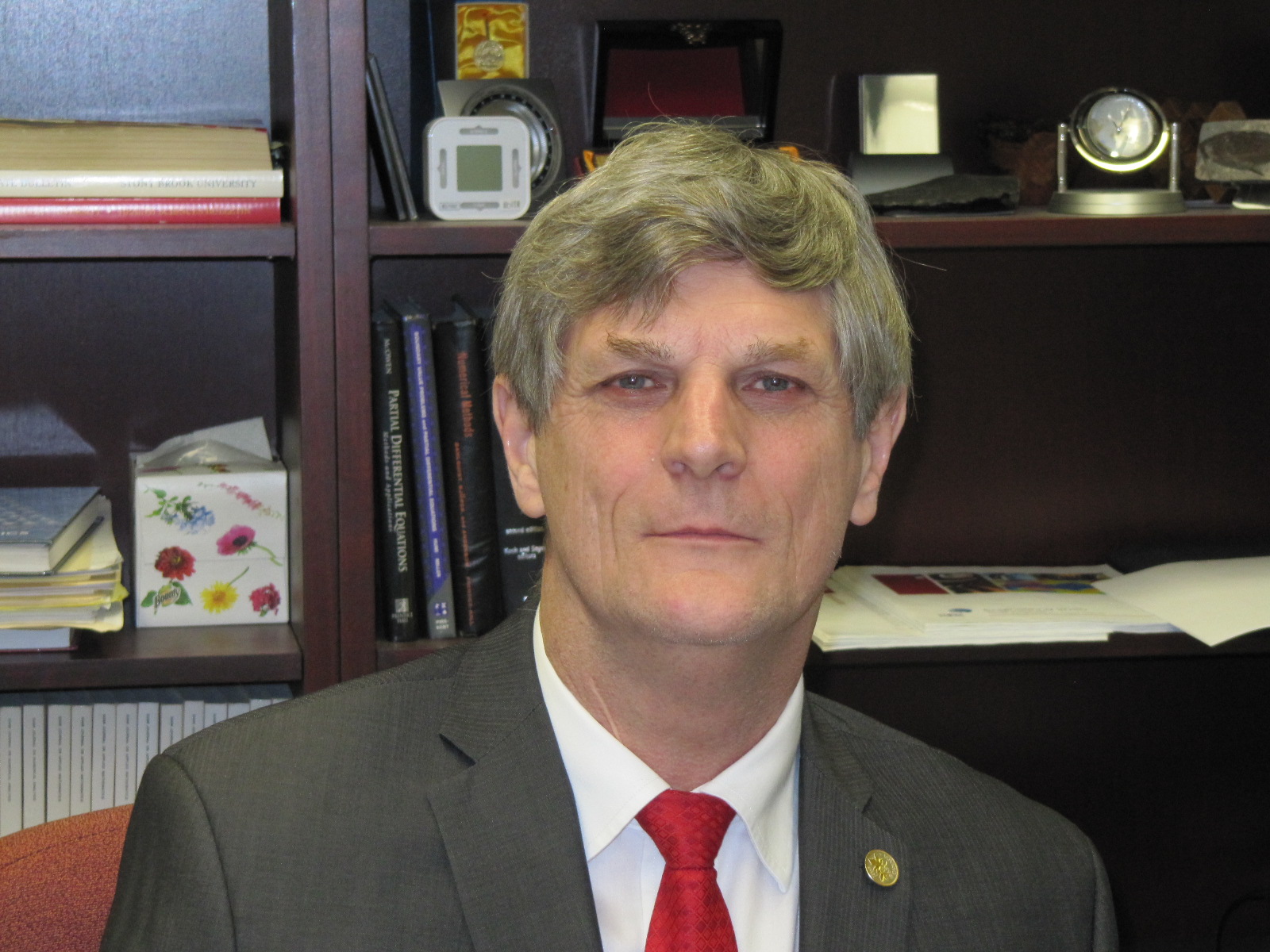
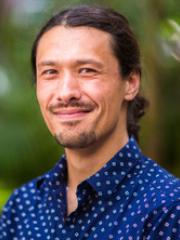
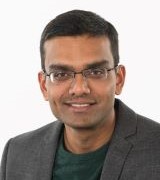
W. Brent Lindquist is a Professor in the Department of Mathematics and Statistics at Texas Tech University, affiliated with the TTU Mathematical Finance Program. His contact details include office location in the Mathematics & Statistics building (Room 104), phone (+1 806 834 2348), and email brent.lindquist@ttu.edu. His research spans computational financial mathematics, porous media flow, neuroscience applications, and quantum electrodynamics. Key contributions include dynamic asset pricing with market microstructure integration, pore-scale flow modeling using 3D micro-tomography, automated neuron morphology identification, and QED computations for electron magnetic moments. Recent work emphasizes ESG factor incorporation into financial models. Analysis of 2023–2025 publications reveals a dominant focus on sustainable finance, particularly ESG-integrated option pricing and portfolio optimization. Methodologies include random forests for market microstructure analysis, skew random walks for volatility modeling, and Lévy processes for Bitcoin dynamics. Cross-cutting themes involve hedonic real estate models with ESG factors and unified asset pricing frameworks bridging classical finance theories.
Prof. Dr. Rudi Zagst is a Professor of Mathematical Finance at the Technical University of Munich (TUM), where he serves as Head of the Department of Mathematical Finance within the TUM School of Computation, Information and Technology. He has held this position since 2001 and is actively involved in teaching, research, and academic leadership. In 2003, he was appointed as a second member of the Faculty of Economics, and since 2004, he has served as Deputy Chairman of the joint elite degree program 'Finance & Information Management' of the University of Augsburg and TUM. Prof. Zagst earned his doctorate in business mathematics from the University of Ulm, where he later completed his habilitation in 2000. His academic journey began with a professional career at HypoVereinsbank AG, where he served as Head of Product Development in Institutional Investment Management before becoming Managing Director of RiskLab GmbH in 1997. His research focuses primarily on financial engineering, risk management, and asset management, with particular emphasis on portfolio optimization, mathematical finance, and quantitative risk management. His work bridges theoretical finance with practical applications, often incorporating advanced mathematical techniques to solve complex financial problems. Recent publications demonstrate his continued interest in GARCH models, portfolio optimization under various constraints, and the application of machine learning techniques to financial problems. Analysis of his recent publications (2024-2025) reveals a strong focus on portfolio optimization under complex market conditions, particularly using GARCH models to capture volatility dynamics. His work increasingly incorporates machine learning techniques (as seen in the credit spread analysis paper) while maintaining rigorous mathematical foundations. Many papers explore the intersection of theoretical finance with practical investment strategies, reflecting his commitment to bridging academic research with real-world financial applications. Professor of the Year 2007 (awarded by Unicum Profession magazine) Prof. Zagst has supervised numerous bachelor's, master's, and doctoral theses through TUM's Finance and Actuarial Science research group. His collaborative work with industry partners through the TUM CAIR Labs and RiskFactory demonstrates strong connections between academic research and practical financial applications. He has received research funding through various industry partnerships with major financial institutions including Allianz, Munich Re, and ERGO Group AG. Prof. Zagst leads the Research Group Finance and Actuarial Science at TUM, which includes Professors Matthias Scherer, Aleksey Min, and Christoph Knochenhauer. The group maintains strong industry connections through the TUM CAIR Labs initiative, collaborating with over 25 financial institutions including Allianz, Munich Re, Deloitte, PwC, and KPMG. Their RiskFactory laboratory serves as a bridge between academic research and practical financial risk management applications in the industry.
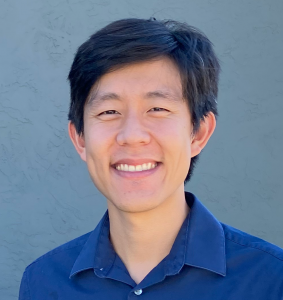
Justin Yim is an Assistant Professor at the Department of Mechanical Science and Engineering at the University of Illinois Urbana-Champaign (UIUC), where he runs the Novel Mobile Robots Lab (NMbL). His research focuses on enabling high-performance locomotion in robots through concurrent design of mechanisms and controllers, inspired by biological systems. He previously earned his PhD in Electrical Engineering from UC Berkeley (2020) and dual BS degrees in Mechanical Engineering and Applied Mechanics/Electrical Engineering from the University of Pennsylvania (2015), followed by a postdoctoral researcher role at Carnegie Mellon University (2020-2022). PhD, Electrical Engineering, University of California, Berkeley (2020) MSE, Robotics, University of Pennsylvania (2015) BSE, Mechanical Engineering and Applied Mechanics/Electrical Engineering, University of Pennsylvania (2015) His research explores legged robot design, bioinspired robotics, and locomotion dynamics, with a focus on overcoming terrain challenges through minimalist mechanical systems and control strategies. Recent work emphasizes squirrel-inspired jumping and landing mechanics, programmable substrates for locomotion studies, and energy-efficient robot mobility. Selected article trends highlight innovations in monopedal hopping with series-elastic actuators, bioinspired balance control, underactuated bipedal walkers, and cooperative cable-driven modular robots. His work bridges theoretical insights with practical applications in extreme-terrain mobility. NSF CAREER Award (2025): 'Extreme Robot Walking: Speed, Agility, and Efficiency via Reduced Degrees of Freedom' NASA Innovative Advanced Concepts Fellow (2025) Justin Yim actively mentors graduate students and leads research projects in the NMbL lab, which develops robots capable of walking, hopping, and rolling in complex environments. Recent lab achievements include a Best Demo award at the 2nd Unconventional Robots Workshop (2025) and awards for outstanding locomotion papers. He teaches courses such as ME 370 Mechanical Design I and SE 422 (ME 446, ECE 489) Robot Dynamics and Control.
Dr. Shuang (Cynthia) Cui serves as Assistant Professor of Mechanical Engineering in the Erik Jonsson School of Engineering and Computer Science at The University of Texas at Dallas, holding a joint faculty appointment at the National Renewable Energy Laboratory (NREL). Awarded the Eugene McDermott Distinguished Professorship in 2017, she pioneers research in energy-efficient materials and systems for sustainability. Her academic foundation includes: PhD from University of California, San Diego (2018) Master of Science in Thermal Engineering from Wuhan University Bachelor of Science in Energy Systems and Power Engineering from Wuhan University Dr. Cui's research targets critical energy challenges through advanced materials innovation. She develops polymeric desiccants for building humidity control that reduce air-conditioning energy use, and novel paper-drying methods achieving 60% energy savings in manufacturing. Her work spans thermal energy storage, nanoscale heat transfer, and grid-interactive building technologies, directly addressing global energy consumption in buildings and industrial processes through intelligent materials design. Her distinguished recognition includes: Eugene McDermott Distinguished Professorship for early-career research excellence NREL President’s Award for Exceptional Performance 2024 UTD Recognition of Outstanding Achievement in Research Research funding flows from the National Science Foundation, U.S. Department of Energy, Department of Defense, and private sector partners. She mentored the student team winning DOE’s 2024-2025 JUMP into STEM competition for wood pulp-based energy-saving building materials. Her collaborative work extends through UT Dallas’ Batteries and Energy to Advance Commercialization and National Security center and the U.S. Department of Energy’s Energy Earthshot Research Centers, driving translational sustainability solutions.
Paul Boersma is a Professor of Phonetic Sciences at the University of Amsterdam within the Faculty of Humanities. His research explores how phonetic, phonological, and morphological phenomena emerge through computational modeling using artificial neural networks and Optimality Theory, with a focus on multi-level constraint interactions and distributional learning. University of Amsterdam Faculty of Humanities Phonetic Sciences Key research areas include: Computational Modeling : Simulations of phonological category emergence from phonetic data Optimality Theory : Gradual Learning Algorithm applications BiPhon Framework : Parallel bidirectional phonology/phonetics models Statistical Learning : Cross-situational and distributional learning mechanisms Recent publications emphasize: 2025: Inclusive speech recognition systems using Whisper model 2025: F0 ratio analysis for creaky voice diagnostics 2024: Prosodic clitics in child speech and checked tones in Shanghai Chinese 2023: Distributional learning in developmental language disorder contexts 2022: Substance-free phonological features and ghost segment phenomena He has also contributed extensively to the Praat software for phonetic analysis, with continuous updates since 1993.
Eugene Feinberg is a Distinguished Professor in the Department of Applied Mathematics and Statistics at Stony Brook University's College of Engineering and Applied Sciences. He is renowned for his extensive contributions to Markov Decision Processes (MDPs), stochastic optimization, and inventory control. Research Interests: His work spans theoretical and applied aspects of Markov Decision Processes , stochastic optimization , inventory control , healthcare decision-making , and machine learning . He has particularly focused on solving complex decision-making problems under uncertainty, with applications ranging from operations research to medical decision-making. Scientific Awards: He has been honored with the title of Distinguished Professor , recognizing his outstanding contributions to his field. Advising and Grants: While specific details on students and grants are not provided, his prolific publication record and faculty status suggest active involvement in advising and securing research funding. Contact and Resources: His university webpage can be accessed at http://www.ams.sunysb.edu/~feinberg/ , and his Google Scholar profile is available at https://scholar.google.com/citations?user=LLt--pgAAAAJ&hl=en .
Dr. Jean-Christophe Nave is an Associate Professor in the Department of Mathematics and Statistics at McGill University. He holds a PhD from the University of California, Santa Barbara (2004), under advisors Xu-Dong Liu and Sanjoy Banerjee. Prior to McGill, he served as a Lecturer and Instructor at MIT's Mathematics Department (2005-2010). His research focuses on numerical analysis, partial differential equations, fluid mechanics, and computational methods for interface problems. He has led research groups involving postdocs, PhD, and undergraduate students, collaborating on projects like the Correction Function Method for PDEs and the Characteristic Mapping Method for advection problems. Education: Ph.D. in Applied Mathematics from UCSB (2004). Affiliations include the Institut des Sciences Mathematiques Steering Committee, Centre de Recherches Mathematiques Applied Math Lab, and CNRS-UMI. Active in teaching courses like Numerical Analysis I/II and Non-Linear Dynamics at McGill, with sabbatical periods noted in recent years. Research interests span numerical methods for PDEs, fluid-structure interaction, and multi-phase flows. His work integrates computational geometry and invariant numerical techniques, addressing challenges in complex fluid dynamics and interface-driven phenomena. Over 40 peer-reviewed publications and continuous contributions to the field of computational applied mathematics. Scientific advising includes over 20 graduate and undergraduate students, with notable alumni now in academia and industry. Collaborations include projects on volcano dynamics, fiber drawing instabilities, and concentrated solar power systems. His methods have advanced numerical simulations for engineering and physical systems involving discontinuous coefficients and sharp interfaces.
Dr. Eva-Maria Graefe is a Royal Society University Research Fellow and Senior Lecturer in the Department of Mathematics at Imperial College London. She specializes in quantum dynamics, focusing on the interplay between quantum and classical systems, particularly chaos and dissipation in non-Hermitian systems. Her research explores foundational questions such as how quantum motion relates to macroscopic physical laws and how dissipation can be engineered to control quantum behavior. Education: She earned her PhD in theoretical quantum physics from the Technical University of Kaiserslautern, Germany, followed by a postdoctoral position at the University of Bristol’s mathematical physics group. She joined Imperial College in 2010 as a Junior Research Fellow. Research Interests: Her work spans non-Hermitian quantum systems (e.g., PT-symmetric models), quantum chaos, semiclassical quantization, and Bose-Hubbard systems. She investigates exceptional points, Landau-Zener transitions, and the dynamics of open quantum systems with losses or gain. Her group is supported by the Royal Society and an ERC Starting Grant. Scientific Contributions: Notable achievements include studies on Husimi distributions in non-Hermitian systems, quantum-jump dynamics, and the semiclassical analysis of Bloch oscillations in dissipative lattices. Teaching & Outreach: She teaches quantum mechanics to undergraduates and Master’s students and engages in outreach to inspire high school students. She mentors a research group of PhD and Master’s students. Labs/Teams: Her lab focuses on theoretical and computational studies of quantum dynamics, supported by advanced grants and collaborations within Imperial’s Faculty of Natural Sciences.
Dr. David Sewell is a Senior Lecturer and Deputy Head of School (Teaching & Learning) at the School of Psychology, The University of Queensland. His research focuses on attention, learning, memory, and decision-making, with a strong emphasis on formal mathematical models of human cognition. He is affiliated with the Centre for Perception and Cognitive Neuroscience within the Faculty of Health, Medicine and Behavioural Sciences. Education: Bachelor (Honours) of Arts and Doctor of Philosophy, both from the University of Western Australia. David's research explores the intersection of cognitive psychology and computational modeling. Key areas include perceptual decision-making, attentional mechanisms, and the application of diffusion models to understand cognitive processes. His work also extends to sustainability and collective self-regulation through cognitive frameworks. The 15 most recent articles highlight his contributions to modeling decision thresholds in memory prioritization, analyzing gaze cueing effects, and investigating neural correlates of confidence in multisensory decisions. Collaborative projects frequently involve interdisciplinary approaches, combining neuroscience, psychology, and computational methods. He has supervised multiple PhD candidates, serving as Principal or Associate Advisor, with research topics ranging from visual categorization to metacognition in children. Current and past funding includes ARC Discovery Projects on collective self-regulation and category learning constraints.
Lars Augestad Lochstoer is a Professor of Finance at the UCLA Anderson School of Management, where he teaches Empirical Methods in Finance and Data Analytics and Machine Learning in the Master of Financial Engineering program. He previously held faculty positions at Columbia University and London Business School, and served on the Asset Allocation Advisory Committee for the Norwegian Sovereign Wealth Fund from 2016 to 2022. Dr. Lochstoer earned his Ph.D. in Finance from the University of California, Berkeley's Haas School of Business in 2005, following his Sivilingeniør Business Economics degree from the Norwegian University of Science and Technology in 1999. His research focuses on understanding the economic mechanisms that drive asset prices, including stock market return dynamics, cross-sectional stock returns, exchange rates, and commodity markets. He has made significant contributions to asset pricing literature, particularly in volatility expectations, risk-return tradeoffs, and currency risk. His publication record reveals a strong focus on behavioral aspects of asset pricing, with recurring themes of investor expectations, volatility dynamics, and market anomalies. His work often combines theoretical models with empirical evidence, frequently incorporating quantitative methods and data science approaches. Recent publications show increasing attention to currency risk and multi-horizon risk-return relationships, reflecting evolving market conditions and research interests. EFA Viz Risk Management Prize for best paper in Energy Markets, Securities and Prices (2009) Michigan Ross School of Business Mitsui Finance Symposium Best Discussant Award (2012) UCLA Anderson Excellence in Teaching Award (2017, 2020, 2021) RFS Distinguished Referee Award (2021) As an active member of the academic finance community, Lochstoer serves as an associate editor for the Review of Finance and the Critical Finance Review, having previously served in the same capacity for the Review of Financial Studies. His professional service includes committee roles in major finance associations and extensive reviewing for top finance and economics journals. He has also contributed to practical finance through his service on the Asset Allocation Advisory Committee for the Norwegian Sovereign Wealth Fund.
Colby Haggerty is an Assistant Professor at the Institute for Astronomy (IfA Mānoa) at the University of Hawaiʻi at Mānoa. He specializes in computational plasma physics, focusing on magnetospheric, heliospheric, and astrophysical systems. His research emphasizes collisionless plasma shocks, magnetic reconnection, and kinetic plasma turbulence. He holds a Ph.D. in Plasma Physics from the University of Delaware (2017) and conducted postdoctoral work at the University of Chicago (2017–2021). His work bridges theory, numerical simulations, and observational data analysis using advanced computational tools like Python, C++, Fortran, and MPI/OpenMP frameworks. Research Interests: He investigates collisionless plasma shocks and energetic particle acceleration (e.g., Earth’s bow shock, coronal mass ejections), plasma instabilities, magnetic reconnection dynamics, and the role of turbulence in energy dissipation. His studies often involve hybrid and particle-in-cell (PIC) simulations to model cosmic phenomena like supernova remnants and solar wind interactions. Articles & Trends: His recent publications highlight advancements in understanding shock-drift acceleration mechanisms, the saturation of plasma instabilities (e.g., Bell instability), and scaling laws for magnetic reconnection in asymmetric and relativistic regimes. Collaborations with institutions like NASA Goddard, Columbia University, and the University of Chicago underscore his interdisciplinary approach. He has also contributed to developing Python-based plasma physics tools (e.g., PlasmaPy) for the scientific community. Grants & Impact: His CAREER award (2024) supports studies on collisionless magnetic reconnection as a heliospheric process. He emphasizes computational methods and educational outreach, reflecting his dual focus on advancing science and training future researchers. Labs & Teams: While no specific lab is named, his work relies on collaborative networks with leading institutions, leveraging state-of-the-art simulation infrastructure to tackle complex plasma problems.
Gerda de Vries is a Professor in the Department of Mathematics & Statistical Sciences at the University of Alberta, Faculty of Science. Her research focuses on mathematical physiology, dynamical systems, and mathematical modeling, particularly in cellular biophysics, pattern formation, and systems biology. She has contributed extensively to understanding complex biological systems through interdisciplinary approaches combining mathematics and biology. Her work spans applications in radiation biology (e.g., cell cycle dynamics and low-dose radiation effects), biophysics (microtubule organization, motor proteins), ecology (predator-prey interactions, forest fire modeling), and education (adapting primary literature for STEM teaching). Recent research highlights include analyzing saddle-node bifurcations, bystander effects in radiation, and collective behavior in animal groups. De Vries has published over 50 peer-reviewed articles since 2000, with a focus on bridging abstract mathematical theory to concrete biological phenomena. Notable contributions include models of pancreatic β-cell dynamics, immune system versatility, and educational frameworks for mathematical biology. Her academic career includes leadership in curriculum development and interdisciplinary research, though no specific grants or awards are explicitly listed in the provided information.
Dr. Hak-Keung Lam is a Reader in the Department of Engineering at King's College London, part of the Faculty of Natural, Mathematical & Engineering Sciences. He holds an IEEE Fellowship and has been a Clarivate Web of Science Highly Cited Researcher since 2018. His research focuses on fuzzy control systems, neural networks, stability analysis, and their applications in biomedical and engineering domains. Education: Dr. Eng. (2000), B. Eng. (1995), both from Hong Kong Polytechnic University. Research Interests: Fuzzy modeling, neural network-based control, computational intelligence, machine learning, and biomedical applications such as ECG/EEG signal classification. His work bridges theoretical advancements with practical implementations in robotics, autonomous systems, and healthcare technology. Publications: Over 480 publications (as of 2023) in top-tier journals and conferences, with a focus on control systems, fuzzy logic, and intelligent systems. Recent work includes fault-tolerant control, cyber-physical systems, and explainable AI. Awards: IEEE Fellow (2019), 1st Place in PhysioNet Computing in Cardiology Challenge (2022). Grants/Projects: Active projects include fuzzy control system stabilization, autonomous robots in healthcare environments, and networked control of robotic systems. Labs/Teams: Center for Robotics Research, contributing to solutions for societal challenges through robot-centric approaches.
Ankush Agarwal is an Associate Professor in the Department of Statistical and Actuarial Sciences at the University of Western Ontario. His research focuses on mathematical finance, financial statistics, and Monte Carlo methods, with applications to risk management and derivatives pricing. He supervises PhD students in quantitative finance and has taught courses on Monte Carlo methods and advanced financial modeling at Western University. Education: PhD in Mathematics from Tata Institute of Fundamental Research (2015) Research interests span regime-switching models, longevity risk hedging, stochastic differential equations, and rare event simulation. His work combines theoretical probability with computational techniques for financial applications. Recent publications include studies on McKean-Vlasov SDEs, implied Sharpe ratio estimation, and optimal portfolio strategies under stochastic volatility. These works demonstrate his expertise in stochastic processes and financial engineering. Supervision: Current PhD advisees include Ying Liao, Buchun Wang, and Shuya Zhang at the University of Glasgow. Former advisees include Yongjie Wang and Yihan Zou.
Daniel Kious is a Reader at the University of Bath, where he serves as Head of the Statistics and Probability Group and is affiliated with the Prob-L@B research center. His work focuses on advanced probability theory, including random walks, branching processes, and reinforcement models. Research Interests: Random walks with self-interaction Random walks in dynamic random environments Branching processes and tree structures Reinforcement learning applications in probability Article Trends: His recent publications emphasize trapping phenomena, reinforcement mechanisms, and phase transitions in random processes. Key themes include spatial non-local branching, once-reinforced walks, and connections to statistical physics. Advising: Co-supervised PhD students: Wilfred Armfield, Pawel Rudnicki, Carlo Scali Postdoc supervision: Guillaume Conchon-Kerjan (EPSRC-funded), Umberto De Ambroggio (co-supervised with Matt Roberts) Organizational Contributions: Co-organized conferences like CUWB IV: Frontiers in Statistics and Probability, CUWB II: Probability-on-sea, and the Random Walks in Bath conference. Active in the Prob-L@B research center. Personal Interests: Brazilian Jiu Jitsu practitioner (blue belt at Gracie Barra Frome); contributed to mathematics popularization through a 2016 article for the French Committee for the Popularization of Mathematics (CIJM).