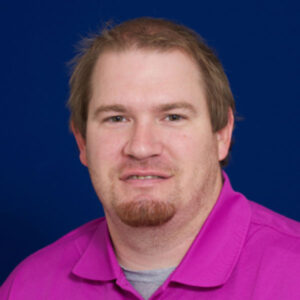
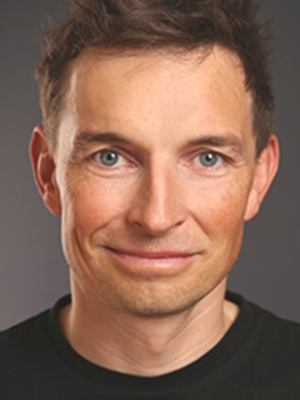
Dr. Joshua T. Weinhandl is an Associate Professor in the Department of Kinesiology at the University of Tennessee, part of the College of Education, Health, and Human Sciences. His research focuses on lower extremity injury biomechanics, movement coordination, and neuromuscular control deficits. He teaches courses such as KNS 332 Applied Anatomy and KNS 575 Matlab for Biomechanics. Education: PhD in Biomechanics, University of Wisconsin – Milwaukee MS in Biomechanics, Ball State University BS in Kinesiology, Grenville College Research Interests: Dr. Weinhandl investigates ACL injury mechanisms, knee osteoarthritis, chronic ankle instability, and musculoskeletal injury prevention using kinetic, kinematic, and electromyographic analyses. He emphasizes computational modeling and neuromuscular control to improve intervention strategies. Professional Activities: He serves as a reviewer for journals like Journal of Biomechanics and Medicine & Science in Sports & Exercise , and is a member of the American Society of Biomechanics and the American College of Sports Medicine. Labs: His work aligns with the Biomechanics/Sports Medicine Laboratory and other research groups within the department.
Dr. Jatin P. Ambegaonkar is a Professor in the School of Kinesiology, College of Education and Human Development at George Mason University, where he serves as Associate Dean for Research. He holds a PhD from the University of North Carolina Greensboro and is a Certified Athletic Trainer and Occupational Therapist. His translational research bridges laboratory science and community engagement to enhance performance, reduce injury risk, and improve health outcomes across populations. Research Focus: Dr. Ambegaonkar's work centers on interdisciplinary approaches to human movement, with emphasis on: Performing artists' health and injury epidemiology Biosensor applications in sports and dance Neuromechanical assessment and concussion management Falls prevention and quality of life in older adults Community-based health interventions for underserved populations His research vision— "Arts and Health for the Physically Active, Physical Activity for Health and Artists" —drives initiatives like the SMART Laboratory (co-founded in 2006) and the SHARe Consortium. Publications: His 80+ articles demonstrate consistent focus on injury mechanisms, dance science, and aging research, with recent emphasis on kinesiophobia (2024), multifactorial fall interventions (2024), and longitudinal dancer fitness (2023). Methodologies span systematic reviews, RCTs, biomechanical analyses, and community trials. Leadership & Grants: As founding co-director of the SMART Laboratory, he leads projects including: ACHIEVES: Free athletic healthcare for underserved students POISED: Falls prevention in older adults SHARe Consortium: Multidisciplinary injury prevention for artists He has secured $6.4M across 30 grants from the National Endowment for the Arts, Potomac Health Foundation, and others. Editorial Roles: Editor-in-Chief of the Journal of Dance Medicine & Science ; Editorial Board member for the Journal of Athletic Training ; reviewer for 25+ scientific journals.
Dr. Hak-Keung Lam is a Reader in the Department of Engineering at King's College London, part of the Faculty of Natural, Mathematical & Engineering Sciences. He holds an IEEE Fellowship and has been a Clarivate Web of Science Highly Cited Researcher since 2018. His research focuses on fuzzy control systems, neural networks, stability analysis, and their applications in biomedical and engineering domains. Education: Dr. Eng. (2000), B. Eng. (1995), both from Hong Kong Polytechnic University. Research Interests: Fuzzy modeling, neural network-based control, computational intelligence, machine learning, and biomedical applications such as ECG/EEG signal classification. His work bridges theoretical advancements with practical implementations in robotics, autonomous systems, and healthcare technology. Publications: Over 480 publications (as of 2023) in top-tier journals and conferences, with a focus on control systems, fuzzy logic, and intelligent systems. Recent work includes fault-tolerant control, cyber-physical systems, and explainable AI. Awards: IEEE Fellow (2019), 1st Place in PhysioNet Computing in Cardiology Challenge (2022). Grants/Projects: Active projects include fuzzy control system stabilization, autonomous robots in healthcare environments, and networked control of robotic systems. Labs/Teams: Center for Robotics Research, contributing to solutions for societal challenges through robot-centric approaches.
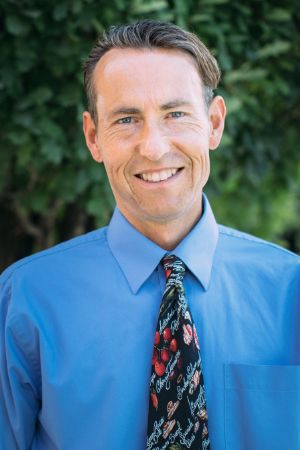
Eadric Bressel is a Professor and Head of the Department of Kinesiology and Health Science at Utah State University (USU). He holds a PhD in biomechanics from the University of Northern Colorado and earned his B.S. and M.S. in kinesiology from California State University, Fresno. Prior to joining USU in 2000, he was a postdoctoral fellow at the Auckland University of Technology's health and rehabilitation center. Education: PhD in Kinesiology (Biomechanics), University of Northern Colorado, 1999 MA in Kinesiology (Exercise Science), California State University, Fresno, 1995 BS in Kinesiology (Exercise Science), California State University, Fresno, 1994 Research Interests: Dr. Bressel focuses on biomechanical adaptations to therapeutic exercise in healthy and clinical populations. His work emphasizes spine stabilization exercises, determinants of balance, and aquatic rehabilitation strategies for conditions like osteoarthritis. Recent studies explore the efficacy of aquatic environments for improving motor learning, cognitive performance, and functional outcomes in older adults. Key Research Trends: His publications highlight the biomechanical benefits of aquatic training, including its impact on muscle function, postural control, and injury prevention. Cross-disciplinary studies integrate biomechanics with gerontology and sports medicine, addressing aging populations and athletic performance optimization. Awards: Excellence in Aquatic Physical Therapy Research Award (APTA Aquatic Section, 2016) Researcher of the Year (HPER Department, 2012) Employee of the Year (Kinesiology & Health Science Department, 2017) Top Professor Award (Mortar Board Senior Honor Society, 2004) Advising & Grants: Dr. Bressel has mentored over 40 graduate students, many of whom have contributed to studies on aquatic exercise, balance rehabilitation, and sports biomechanics. He has secured grants to investigate aquatic treadmill training for osteoarthritis, cognitive-aquatic interaction effects, and eccentric resistance protocols. Labs/Teams: His lab focuses on translational research integrating biomechanical analysis with clinical applications. Collaborations with institutions like the Auckland University of Technology and the American Physical Therapy Association highlight his commitment to bridging research and practice in aquatic therapy and sports science.
Zhijian Huang is an Associate Professor in the Department of Finance and Accounting at Saunders College of Business, Rochester Institute of Technology, with expertise in corporate finance, behavioral finance, and risk management. Education: B.Eng., Shanghai Jiaotong University (China) M.S., Michigan State University M.Eng., Cornell University Ph.D., Pennsylvania State University His research focuses on financial markets, cognitive dissonance in investor behavior, cryptocurrency volatility, and climate policy impacts on stock prices. Recent publications explore asymmetric responses to earnings news, social media sentiment effects, and credit risk modeling. Huang teaches courses in equity analysis, options/futures, and risk management, with a strong emphasis on derivative instruments and portfolio optimization strategies.
Dr Mark Quinn serves as Senior Lecturer and Programme Leader for BSc Sports Science and MSc Performance Analysis within the School of Health & Society at University of Salford. He leads modules including Advanced Performance Analysis and contributes to Biomechanics, Research Methods, and Applied Human Performance courses while supervising PhD candidates in sports science domains. His educational background includes a BSc (Hons) from Loughborough University (2007-2010) followed by a PhD from University of Central Lancashire (2013-2020) titled Athlete Monitoring in Rugby League: a focus on the conceptualisation, implementation and utilisation of a wellness questionnaire , which developed the Successful Implementation Framework for wellness questionnaires in high-performance sport. Quinn's research centers on performance analysis across multiple sports, with recent publications examining lacrosse officiating demands for the 2028 Olympics, goal-scoring movement patterns in professional soccer, and multidirectional speed training monitoring. His work consistently applies time-motion analysis to quantify physical demands across rugby league, Gaelic football, and lacrosse variants, emphasizing practical applications for athlete monitoring and performance optimization. As an applied practitioner, Quinn contributed to Wigan Warriors Rugby League's trophy-winning campaigns including Challenge Cup (2011, 2013), Super League Grand Final (2013, 2016), and World Club Challenge (2017). He previously served as Assistant Coach for England Wheelchair Rugby League, bridging his academic expertise with elite performance environments. His research aligns with UN Sustainable Development Goals for healthy lives and reduced inequality, conducted through the Centre for Human Movement and Rehabilitation where he investigates athlete self-report measures, training load monitoring, and wellness questionnaire implementation across diverse sporting contexts.
Ezio Preatoni is a Senior Lecturer in the Department for Health at the University of Bath, where he serves as Director of Internationalisation and Biomechanics Group coordinator. He holds affiliations with the Centre for Health and Injury and Illness Prevention in Sport, Bath Institute for the Augmented Human, and Centre for Bioengineering & Biomedical Technologies. His educational background includes a Master of Engineering in Biomedical Engineering and Doctor of Engineering in Bioengineering from Politecnico di Milano. Dr. Preatoni's research focuses on biomechanical analysis of human movement, motor coordination, and variability in relation to athletic performance and injury prevention. His work integrates neuro-motor assessment, sports biomechanics (rugby, walking, jumping), footwear technology, and health-focused wearable sensors. He employs dynamical systems approaches to understand movement adaptation and injury mechanisms. Recent publications demonstrate strong emphasis on wearable sensor validation (2025), including ear-based inertial measurement units for gait analysis, deep learning applications for joint moment estimation, and fatigue effects on movement coordination. This research advances quantitative methods for sports performance monitoring and clinical movement assessment. Awards & Honors: 2017 Internship Grant, International Society of Biomechanics in Sports Faculty Recognising Excellence Award (2022) Best Student Presentation Award at MobiUK 2025 (co-author) ISBS New Investigator Award finalist (2021) He leads multiple funded projects including FAL-VITAE (falls assessment using video/IMU technology) and Texo-Skeleton (textile-based exoskeletons). Currently accepting PhD students for projects in applied biomechanics, motor control, and sports technology. External roles include Board membership at International Society of Biomechanics in Sports and academic boards at University of Brescia.
Dr. Kevin J. Deluzio is an Associate Professor in the Department of Mechanical and Materials Engineering at Queen's University and serves as Dean of Smith Engineering. He holds a cross-appointment in the Centre for Health Innovation and is affiliated with the Canadian Orthopaedic Research Society and multiple biomechanics societies. His research focuses on musculoskeletal health, biomechanics of human locomotion, and knee osteoarthritis treatment evaluation. Dr. Deluzio earned his BSc (1988), MSc (1990), and PhD (1997) from Queen's University, followed by postdoctoral training at Harvard University. He previously held a faculty position at Dalhousie University, establishing the Dynamics of Human Motion Laboratory. Education: Bachelor of Science (Honours) in Mathematics and Engineering, Queen's University (1988) Master's of Science in Mechanical Engineering, Queen's University (1990) Doctor of Philosophy in Mechanical Engineering, Queen's University (1997) Post-doctorate in Orthopaedic Biomechanics, Harvard University (1999) Research Interests: Dr. Deluzio investigates biomechanical factors of musculoskeletal diseases (e.g., knee osteoarthritis), non-invasive therapies, and surgical treatments like total knee replacement. His work involves markerless motion capture systems and collaborations between engineering and medicine through the Human Mobility Research Centre at Kingston General Hospital. Grants & Awards: While no specific awards are listed, his research has been supported through academic appointments and institutional affiliations. Labs & Teams: Directs the Dynamics of Human Motion Laboratory and collaborates at the Human Mobility Research Centre, integrating engineering and medical expertise to advance musculoskeletal health solutions.
Dr. Christoph Leitner is a Research Fellow at ETH Zurich's Integrated Systems Laboratory under Prof. Luca Benini, focusing on biomedical and IoT applications. His work integrates printed piezoelectric transducers and flexible electronics with energy-efficient systems. He holds a PhD in Biomedical Engineering from TU Graz (2022) and has collaborated with institutions like Sant'Anna School of Advanced Studies and KTH Stockholm. Notable achievements include the Josef Krainer Young Researcher Award and Motorik Scholarship. Leitner's research spans ultrasonics, machine learning, and wearable devices, with contributions to muscle-tendon dynamics and real-time biofeedback systems. Education: PhD in Biomedical Engineering, TU Graz (2022), Advisor: Prof. Christian Baumgartner Previous roles: University Assistant (2006–2011) and R&D Engineer at Virtual Vehicle GmbH Research Interests: Convergent technologies merging biomedical engineering and IoT Ultrasound-based monitoring for musculoskeletal systems Energy-efficient embedded systems for wearable applications Collaborations & Awards: Recipient of Josef Krainer Young Researcher Award (2023) and Motorik Scholarship (2018) Active collaborations with University of Zurich, Veterinary University of Vienna, and Queensland University of Technology Labs & Projects: Integrated Systems Laboratory at ETH Zurich Developed a patented ultrasound-transparent tattoo-based SEMG system with Prof. Francesco Greco
Christian Helland serves as an Assistant Professor in the Department of Sport and Social Sciences at the Norwegian School of Sport Sciences (NIH). Additionally, he works as a consultant in the strength department at Olympiatoppen (the Norwegian Olympic Training Center), where he is responsible for physical training programs for beach volleyball, para table tennis, and rowing athletes. Christian holds a master's degree from the Institute of Physical Performance and has been engaged in both practical and theoretical lecturing since 2012. His professional background includes competing as a beach volleyball player at the World Tour level since 2014, which provides him with valuable practical experience to complement his academic work. Dr. Helland's research focuses on optimizing athletic performance through scientific approaches to physical training. His work examines strength development, jump and sprint performance metrics, tendon mechanics, and recovery processes in elite athletes. His research has significant practical applications for coaches and athletes seeking to improve performance while minimizing injury risk. His publication record demonstrates a strong focus on force-velocity profiling, strength and power testing methodologies, and the physiological responses to different training modalities. A recurring theme in his work is the comparison of different training approaches and assessment methods, particularly examining how strength-oriented versus power-oriented training affects recovery needs and performance outcomes. His research often involves collaborations with other leading sports scientists across Norway and internationally. Christian teaches courses in volleyball, coaching methodologies, sports psychology, and sports practice for children and youth. His practical experience as an elite athlete informs his teaching approach, bridging theoretical knowledge with real-world application.
Eduardo Saez De Villarreal Sáez is a Professor in the Department of Sports and Information Technology at Universidad Pablo de Olavide, where he is affiliated with the Center for Research in Physical and Sports Performance (CIRFD) and the AFSD Physical Activity, Health and Sport research group. His academic work spans both theoretical and applied aspects of sports science, with a particular focus on physical performance metrics and training methodologies. His research interests center on athletic performance optimization, with specific expertise in strength training methodologies, sprint mechanics, and resistance training adaptations. Dr. Saez De Villarreal's work frequently examines velocity-based training, blood flow restriction techniques, and the biomechanical aspects of athletic movement. His research bridges laboratory findings with practical applications for athletes across multiple sports disciplines including football (soccer), water polo, cycling, and even unique applications to professional bullfighting performance. Analysis of his recent publications (2024-2026) reveals a strong focus on velocity-based resistance training, with particular attention to velocity loss thresholds and their impact on strength development. His work demonstrates increasing sophistication in training methodology research, with systematic reviews and meta-analyses becoming more prominent alongside experimental studies. The research spans multiple sports contexts while maintaining a strong physiological and biomechanical foundation. Dr. Saez De Villarreal supervises doctoral students in the Physical Activity, Sports and Health Sciences program and collaborates with researchers internationally. His work shows consistent output with publications extending into 2026, indicating ongoing active research. His laboratory work appears to focus on practical applications of sports science research across various athletic populations, from youth athletes to professionals.
Martin Widdicks is a Teaching Associate Professor of Finance and Director of the MSF Program at the Gies College of Business, University of Illinois at Urbana-Champaign. He holds the Josef and Margot Lakonishok Faculty Fellow distinction and has been recognized as an outstanding teacher repeatedly since 2011. His academic background includes a PhD in Mathematical Finance (University of Manchester, 2002) and a BSc in Mathematics (Manchester, 1999). Research interests focus on mathematical finance, particularly derivative pricing methodologies, singular perturbation theory applications, and executive compensation models. He has developed frameworks for multi-asset option valuation and analyzed incentive structures in equity-based compensation. Recent work includes extracting market crash and bankruptcy signals from options data. Teaching responsibilities span core quantitative finance courses (FIN 502, FIN 503), derivatives (FIN 512), and advanced electives like Complex Derivatives (FIN 514) and Term Structure Models (FIN 516/517). His awards include the Shebik Faculty Fellowship (2021–2022) and Towey Faculty Fellowship (2019–2021). Notable publications include Journal of Futures Markets , Journal of Corporate Finance , and Mathematical Finance . His work bridges theoretical finance with practical applications in risk management and corporate decision-making.
Iain Spears holds dual academic appointments as Senior Lecturer in Sport & Exercise Science at Newcastle University's Faculty of Medical Sciences (Department of Biomedical Sciences) since May 2020, and as Lecturer in Biomedical/Sports Engineering at Nottingham Trent University's Department of Engineering since August 2019. His interdisciplinary position bridges sports science, biomechanics, and engineering applications in athletic performance. Dr. Spears' research focuses on several interconnected areas: Sports biomechanics and movement analysis Training load monitoring and performance assessment methodologies Injury prevention and rehabilitation strategies Technological applications in sports performance Physiological responses to exercise His publication record demonstrates methodological innovation, with recent work employing point-cloud processing for motion analysis, low-cost depth-sensing camera systems, and exergaming solutions for high-intensity training. Key research themes include differential ratings of perceived exertion, environmental effects on athletic performance, and cooling methodologies for endurance exercise. Dr. Spears' collaborative research network includes frequent co-authors Matthew Weston, Thomas Macpherson, and Sean McLaren, with publications appearing in high-impact journals such as Journal of Biomechanics, Sports Medicine, and Medicine and Science in Sports and Exercise. His work has practical applications across team sports, military training contexts, and rehabilitation programming.
Professor Craig Sale holds the position of Professor of Human Physiology and Nutrition at Manchester Metropolitan University (MMU) and previously led research initiatives at Nottingham Trent University (NTU). He specializes in investigating exercise and nutrition interventions, particularly focusing on bone and muscle adaptations. His roles include Co-Lead of NTU’s Health & Wellbeing Strategic Research Theme, Director of the SHAPE Research Centre, and REF Unit of Assessment Coordinator for UoA C24. His research spans bone metabolism, muscle performance, genetics, sports nutrition, biomechanics, and environmental physiology, with a commitment to impactful real-world applications. His research has addressed topics such as beta-alanine supplementation for exercise performance, diet/exercise interventions for bone health in athletes, and the biological actions of carnosine. He has supervised 17 completed PhD students and currently guides 8 more. His awards include Fellowship in the American College of Sports Medicine (ACSM) and a Section Editor role at the European Journal of Sports Sciences. Recent work emphasizes bone biomarker responses to exercise, myocardial carnosine roles, and pregnancy’s legacy on athletic performance.
Sinan Yıldırım is a Researcher in the Faculty of Engineering and Natural Sciences at Sabancı University, Turkey. His primary research focuses on Bayesian Statistics, Monte Carlo methods, and data privacy, with interdisciplinary applications in machine learning and signal processing. He holds a BSc and MSc in Electrical and Electronics Engineering from Boğaziçi University, followed by a PhD in Mathematical Statistics from the University of Cambridge. Postdoctoral research (2013-2015) at the University of Bristol’s School of Mathematics involved the EPSRC-funded project 'Intractable Likelihood: New Challenges from Modern Applications (i-like).' His work bridges theoretical statistics with practical problems in privacy, control systems, and energy optimization. Research interests emphasize Bayesian methodologies for privacy-preserving data analysis, dynamic modeling of complex systems, and stochastic optimization algorithms. Recent publications explore differential privacy in machine learning, Monte Carlo techniques for high-dimensional inference, and applications of Bayesian methods in robotics and energy systems. Advising and grants include contributions to multi-party resource sharing frameworks and privacy-aware algorithms. His work integrates computational methods with real-world challenges in engineering and policy modeling.