Laura Poppo, currently the Donald and Shirley Clifton Chair in Leadership at the University of Nebraska-Lincoln, has held faculty positions at Washington University, Virginia Tech, and the University of Kansas. Her research in strategic management influences diverse disciplines, with over 8900 Google citations. Academic Rank: Professor Department: Management Alma Mater: Ph.D. from Wharton School, University of Pennsylvania Her research focuses on outsourcing, alliances, vertical integration, contracting, trust , and business dynamics in China. Current work explores problem-solving, creativity, innovation, identity, and trust-repair in organizational contexts. Notable contributions include publications in top journals like Strategic Management Journal , Organization Science , and Journal of International Business Studies . Her 2019 Dan and Mary Lou Schendel Best Paper Prize recognizes her impactful research on contract and trust complementarity. In teaching, she applies empirically validated frameworks to enhance decision-making for undergraduates, graduates, and professionals, evidenced by the student-voted Bubb Award. Her expertise spans strategic planning, complex problem-solving, and CliftonStrengths®-based leadership development.
Dr. Piotr Dragon is an Assistant Professor at the Department of Social Psychology, Institute of Psychology, Jagiellonian University , and a member of the Centre for Social Cognitive Studies in Kraków. He holds dual degrees in Psychology (2010) and Sociology (2011) from Jagiellonian University, with a doctorate in Psychology (2015).
Dr Luke Kelleher is an Associate Professor in Environmental Policy at University College Dublin (UCD), working within the UCD School of Architecture, Planning and Environmental Policy. He is a member of the UCD Environmental Policy Group, a research-intensive faculty group central to national and international debates and policy action in environmental policy. Kelleher also serves as a Principal Investigator in the UCD Earth Institute and is a member of both BiOrbic, the National Bioeconomy Research Centre funded by Science Foundation Ireland, and the UCD Centre for Irish Towns. Dr Kelleher holds a BA and PhD from Queen's University Belfast, an MSc from the University of Ulster, and a UCD Professional Certificate in Creativity and Innovation for Education. Prior to joining UCD, he was a lead researcher at the University of Hertfordshire in its high-impact transport evaluation group. Before his academic career, he gained nearly 10 years of experience in the public service, including roles in local government, the Land Registers of Northern Ireland, Northern Ireland Water Service, and the global consulting firm RPS Group. Dr Kelleher's research focuses on two main areas: transport policy and environmental performance, and bioeconomy policy. His work applies strong theoretical and methodological expertise in spatial analysis, policy analysis and evaluation, stated preference techniques, and demand-side policy instruments. His research has been published in prestigious journals such as Energy Policy, Atmospheric Environment, Environment and Planning B, and Transport Research Part A, and presented at leading conferences including the World Conference on Transport Research and Transportation Research Board Annual Meeting. Analysis of Dr Kelleher's recent publications reveals a strong focus on the bioeconomy and its policy coherence, transport poverty, and just transition frameworks. His work often employs spatial analysis methodologies to address environmental policy challenges, with a particular emphasis on creating practical tools for policymakers. There's a clear trajectory showing increasing focus on the bioeconomy in his more recent work, while maintaining strong connections to transport policy and environmental justice issues. Dr Kelleher has secured research funding from multiple prestigious sources including the Economic and Social Research Council (ESRC), Northern Ireland Department of Education (DENI), Arts and Humanities Research Council (AHRC), and Science Foundation Ireland (SFI). Current projects include "Enable-BIO Project" funded by the Environmental Protection Agency, "Aerodynamic Design and CFD Analysis of Drag Reducing Appendable Devices for Large Ground Vehicles" funded by Science Foundation Ireland, and "Just Transition for Agriculture in the Circular Bioeconomy" (JusTACE) also funded by the Environmental Protection Agency. Dr Kelleher actively supervises PhD students and contributes to multiple educational programs including the BSc (City Planning & Environmental Policy), MRUP, MSc (Environmental Policy), the Graduate Diploma Bioeconomy with Business, and the BSc in Transport City Planning and Environmental Policy at Chang'an University. His teaching philosophy emphasizes active participation, critical analysis, and the development of informed judgment. Dr Kelleher maintains strong connections with policy makers at multiple levels, having provided expert advice to the European Commission, UK Department of Transport, Department of Education (DENI), Department of Agriculture, Food and Marine (DAFM), Department of Environment, Climate and Communications (DECC), and various city councils. He has been particularly active in the Heritage Council led Collaborative Town Centre Health Check Programme since 2016.
Tris Hedges is a Postdoc Research Fellow in the Department of Cross-Cultural and Regional Studies at the University of Copenhagen, currently on a 3-year Carlsberg Foundation fellowship. The first two years of this fellowship are being spent at the Affective Societies Research Centre in FU Berlin. Hedges' research project, 'The Politics and Affects of Doubt,' explores the intersections of phenomenological inquiry with contemporary social and political concerns. Hedges' research focuses on phenomenology, social ontology, and queer feminist philosophy, with particular attention to issues surrounding normalisation, gender, sexuality, and group identity. Their scholarly approach examines how social structures shape individual experiences through affective and phenomenological lenses, investigating concepts like doubt, discrimination, and identity formation. Recent work has increasingly addressed the political dimensions of affect and the phenomenology of social categories. The publication record reveals a strong trajectory in critical phenomenology with significant contributions to understanding social kinds, third-person sociality, and the affective dimensions of political doubt. Hedges' work consistently bridges continental philosophical traditions with contemporary social justice concerns, particularly in gender and sexuality studies. Carlsberg Internationalisation Fellowship (August 2025) DFI Visiting Fellowship for Junior Scholars (February 2024) Hedges has taught courses in Applied Phenomenology at the BA level during Fall 2022 and Fall 2023, as well as a Seminar in Ethics and Meta-ethics at the University of Copenhagen. Their teaching integrates theoretical philosophical frameworks with practical applications relevant to contemporary social issues. As part of their fellowship, Hedges maintains active collaboration with the Affective Societies Research Centre at FU Berlin, participating in interdisciplinary research on emotions in social contexts.
Maria Giulia Trupia is an Assistant Professor of Marketing at the Leonard N. Stern School of Business, New York University. She joined NYU Stern in July 2025, bringing expertise in understanding how time perception influences consumer behavior and well-being through experimental and longitudinal methodologies. Her research spans behavioral economics, psychology, and marketing. Academic Background: PhD in Management (Marketing specialization), IESE Business School MSc in Economics and Management of Arts, Culture, Media, and Entertainment, Bocconi University BSc in Economics and Management, LUISS University Research Interests: Time poverty and consumer well-being Temporal gains in judgment and decision-making Emotional experiences in behavioral marketing Scientific Awards: 2022 John A. Howard AMA Award (Honorable Mention) Prior Experience: Postdoctoral Scholar in Behavioral Decision Making, UCLA Anderson School of Management Digital Marketing Professional in Italy and the UK
Ifo Institute - Leibniz Institute for Economic Research at the University of MunichGermany
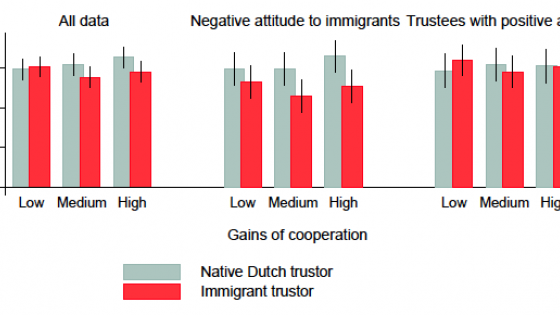
Sigrid Suetens is Professor at the Department of Economics of Tilburg University, where she conducts research at the intersection of experimental and behavioral economics. Her work examines fundamental questions about human cooperation, strategic decision-making, and social preferences through carefully designed laboratory and field experiments. Her primary research interests focus on understanding motives for cooperation in dilemma games (including strategic versus non-strategic motives, role of strategic environment, and guilt aversion) and ethnic discrimination. Suetens employs experimental methodologies to investigate how individuals make decisions in strategic environments and how social identity influences economic behavior. Her work demonstrates how experimental economics can provide insights into real-world social phenomena by testing theoretical predictions under controlled conditions. Suetens' publication record shows a clear trajectory from foundational work in game theory and decision-making toward increasingly applied research on social issues, particularly ethnic discrimination. Her recent papers (2022-2025) demonstrate growing interest in the intersection of experimental methods with labor economics and political economy, examining topics like meritocratic standards, coordination failure, and ethnic salience. The consistent appearance of her work in both economics-specific journals and multidisciplinary outlets reflects the broad relevance of her research. Suetens teaches courses in micro-economics and experimental economics at Tilburg University, contributing to the next generation of economic researchers. Her educational background includes a PhD in applied economics from the University of Antwerp (2005), which provided the foundation for her subsequent research career focused on experimental approaches to economic questions.
André Kuhn is a Full Professor of Criminal Law and Criminology at the Faculty of Law of the University of Neuchâtel since 2015, and concurrently holds a professorship in Criminology at the University of Geneva since 2010. Previously, he served as Associate Professor at the University of Lausanne until 2015, after which he was granted emeritus status. His distinguished career spans over three decades in criminal justice scholarship and practice. His educational background: Law degree, University of Neuchâtel, 1984 Diploma in Criminology, University of Lausanne, 1987 Doctorate in Criminology, University of Lausanne, 1992 Certificate and Diploma in Sports Management, IDHEAP and Swiss Olympic, 2001 Professor Kuhn's research focuses on criminological theory, judicial decision-making, and restorative justice. His seminal studies demonstrate how sanction units (days/weeks/months/years) affect sentencing severity, how evidence presentation order influences judicial verdicts through recency/primacy effects, and the absence of sex/nationality discrimination in Swiss criminal judgments. His insecurity research revealed community conviviality improves security perception while video surveillance polarizes political views. His scientific contributions have been recognized with: Bippert prize for doctoral thesis (1992) Credit Suisse Award for best teaching (2019) Kuhn has supervised numerous graduate theses across criminology, law, psychology, and sociology. He serves as co-director of Déviance et Société (since 2023) and previously co-edited the Revue internationale de criminologie (2007-2022). His policy impact extends through expert roles for the Council of Europe, UN, and Swiss federal/cantonal authorities on criminal justice reform. He directs research at the Romandie Center for Research in Criminology and co-founded key organizations including AJURES (Association for Restorative Justice in Switzerland) and the Innocence Switzerland Project (2019-2022), advancing evidence-based corrections and wrongful conviction remedies through interdisciplinary collaboration.
David Wright is an Associate Professor and Director of Graduate Studies at the Centre for Cultural and Media Policy Studies within the School of Creative Arts, Performance and Visual Cultures at the University of Warwick. He joined Warwick in 2008 and the Centre in 2009 after completing five years of post-doctoral research with the ESRC's Centre for Research into Socio-Cultural Change (CRESC) at the Open University. His PhD from the University of Nottingham in 2004 focused on work in the UK retail book trade. His research spans cultural policy, creative industries, and the memorialization of popular culture, with particular focus on statues and monuments to comedians and musicians. He has contributed significantly to understanding how digital technologies transform cultural policy and the future of creative work. His monograph Celebrity and Public Art: Memorialising Popular Culture is under preparation with Liverpool University Press, following his earlier work Understanding Cultural Taste (2015). Wright has been actively involved in major research projects including the evaluation of Coventry UK City of Culture 2021, special issues of Arts and the Market on Evaluating Cities of Culture, and a UKRI Policy Support Fund project on cultural devolution in the UK. His research often examines the relationship between universities and broader cultural ecosystems. He teaches across MA programs including Global Media and Communication (which he co-founded in 2010), International Cultural Policy and Management, Creative and Media Enterprises, and the BA in Media and Creative Industries. His teaching includes modules on Working in the Cultural and Creative Industries and The Mediated Self. Director of Graduate Studies at Centre for Cultural and Media Policy Studies Co-founded MA in Global Media and Communication (2010) Coordinated Work-in-Progress seminars for PhD students Regular contributor to multiple MA programs at Warwick Wright has received research funding from UKRI's Policy Support Fund and has collaborated with numerous academic and creative sector partners including Culture Commons. His work bridges academic research with practical cultural policy applications, particularly in local and regional contexts.
Kimin Lee is an assistant professor at the Graduate School of AI at Korea Advanced Institute of Science and Technology (KAIST), where he focuses on developing safe and capable decision-making agents. His research spans multiple aspects of artificial intelligence with a strong emphasis on safety and reliability. Dr. Lee completed his educational journey at KAIST, earning a Ph.D. in Electrical Engineering with a focus on Machine/Deep Learning (2015-2020), advised by Professor Jinwoo Shin. He also holds a Master's degree in Electrical Engineering (Wireless Communication Networks, 2013-2015) and a Bachelor's degree in Electrical Engineering (2009-2013), both from KAIST. His primary research interests include: Physical AI - developing AI systems that can interact safely and effectively with the physical world Alignment - particularly reinforcement learning from human feedback (RLHF) and scalable oversight techniques Monitoring - safety evaluation frameworks and benchmarking for AI systems LLM Agents - enhancing the capabilities and safety of large language model-based agents Dr. Lee's recent publications reveal a strong trajectory toward addressing critical challenges in AI safety. His work consistently bridges theoretical advances with practical applications, particularly in the areas of reinforcement learning, computer vision, and natural language processing. A notable trend in his research is the development of methods to evaluate and enhance the safety of AI systems, especially large language models and diffusion models, while maintaining or improving their capabilities. As an active member of the academic community, Dr. Lee serves as an area chair for major conferences including NeurIPS, ICLR, and ICML, and regularly reviews for top-tier AI venues. He has also organized workshops focused on safe and trustworthy AI agents. Dr. Lee's research group at KAIST appears to focus on AI safety and decision-making, with research projects spanning from theoretical foundations to practical implementations of safe AI systems. His collaborative work with institutions like UC Berkeley and Google Research demonstrates the interdisciplinary nature of his research approach.
Chia-Jung Tsay is an Associate Professor in the Management and Human Resources Department at the Wisconsin School of Business, University of Wisconsin-Madison, and a Faculty Affiliate at the Institute for Diversity Science. Her research bridges psychological science and business, examining nonconscious biases in professional decision-making processes across music, entrepreneurship, and organizational contexts. Her distinguished educational background includes: Ph.D. in Organizational Behavior and Psychology (secondary field in Music) from Harvard University A.B. in Psychology and A.M. in History of Science from Harvard University (Phi Beta Kappa) Advanced music training at The Juilliard School and Peabody Conservatory of Johns Hopkins University Professor Tsay's research centers on decision-making biases , particularly the naturalness bias where 'naturals' are favored over 'strivers', and the dominance of visual information in evaluations. Her work demonstrates how sight overrides sound in music competitions, how visuals dominate investor decisions in pitches, and how semantic ambiguities around 'talent' affect workplace judgments. This research critically informs diversity, equity, and inclusion initiatives by exposing hidden cognitive mechanisms that undermine meritocratic systems. Her publication trajectory reveals consistent focus on bias mechanisms, evolving from foundational music perception studies (2013) to entrepreneurial funding decisions (2021) and contemporary investigations of gratitude, goal orientation, and talent semantics. The work consistently identifies systematic deviations from rational evaluation across domains, with practical implications for reducing bias in hiring, promotion, and investment decisions. Her major recognitions include: Association for Psychological Science (APS) Rising Star World’s Best 40 Under 40 Business School Professors by Poets&Quants (2021) Best Paper Award from Diversity in Management and Organizations (2023) Professor Tsay mentors graduate students in organizational behavior while leading cutting-edge research. She recently secured competitive seed funding from UW-Madison's Institute for Diversity Science (2024) for projects at the business-diversity science intersection. Her work generates significant real-world impact through frequent media engagement and advisory roles. She actively collaborates within the Management and Human Resources department and Institute for Diversity Science, contributing to interdisciplinary initiatives that translate bias research into organizational practices. Her unique background in both music performance and psychology enables distinctive approaches to understanding human judgment in professional settings.
Vienna University of Economics and BusinessAustria
Univ.-Prof. Dr. Martin Spitzer holds the Chair of Civil Law and Civil Procedure at the Vienna University of Economics and Business (WU Wien), where he has been a full professor since 2011. He serves as Program Director for Business Law and Institute Director at WU. Professor Spitzer is Editor-in-Chief of the Austrian Jurists' Journal (ÖJZ) and the Austrian Legal Archives (ÖJA), and co-editor of prominent legal commentaries including the ABGB commentary ("KBB"). His academic work spans both traditional civil law topics and modern commercial legal challenges. Professor Spitzer's research interests focus on the intersection of substantive and procedural civil law, with particular emphasis on banking law, inheritance law, insolvency law, collective legal protection, credit security law, tort law, and contract law. His work often takes comparative and historical perspectives, examining how civil law principles apply in contemporary commercial contexts. He has published extensively across all fields of civil and civil procedure law, with recent work exploring digitalization of legal processes, climate change liability, and human rights violations in global supply chains. His recent scholarly output demonstrates a clear trend toward addressing contemporary legal challenges through traditional civil law frameworks. Many publications examine how digital transformation impacts civil procedure, with particular focus on video hearings and electronic evidence. Other significant themes include banking regulation in times of crisis, consumer protection in financial services, and the evolving relationship between administrative decisions and civil proceedings. His work consistently bridges theoretical legal scholarship with practical applications for legal professionals. Excellent Teaching Award (2021, 2020, 2016) Innovative Teaching Award (2017) Insolvency Law Prize (Main Prize, 2014) Cardinal Innitzer Promotion Prize (2012) Walther Kastner Main Prize (2012) Capital Markets Prize (2012) Professor Spitzer plays a significant role in legal education through his position as Program Director for Business Law at WU Vienna. He co-founded Austria's best-selling legal textbook series (PSK, Bürgerliches Recht) with Stefan Perner, now in its 7th edition. He has supervised numerous doctoral students and research assistants who contribute to the chair's publication projects. Beyond academia, he maintains strong connections with legal practitioners through continuing education events for the judiciary and legal profession, including the Vienna Civil Court Day and Austrian Lawyers' Civil Law Day. His work extends to media commentary, expert opinions for public and private clients, and projects addressing social responsibility such as pharmaceutical supply chain resilience. The chair under Professor Spitzer organizes several major scientific events including the Banking Law Forum (since 2019), Forum for Civil Law (since 2016), Private Law Course including Civil Procedure (since 2014), Insurance Law Day (since 2021), Vienna Civil Court Day (since 2019), and Vienna Civil Law Day (since 2023). These events bring together academics, practitioners, and judges to discuss current developments in civil law. The chair also houses the editorial team for the Austrian Jurists' Journal and oversees publication of standard commentaries on key Austrian legal codes.
Dr. Sarah Walker is an Assistant Professor in the School of Education at Durham University, UK, and a Fellow of the Wolfson Research Institute. She previously studied and worked as an academic at the University of Sydney, Australia. Her research focuses on individual differences in self-informant agreement in psychological assessments, emotion regulation (both self- and other-directed), and the impact of these processes on interpersonal outcomes, particularly in educational contexts. She explores how individuals regulate their own and others' emotions, including the role of humor, valuing, and receptive listening in relationships. Her work also examines the Dark Triad personality traits and their relationship with emotional intelligence, as well as the challenges of faking in self-report assessments. Key research themes include extrinsic emotion regulation strategies, the development of psychometric tools (e.g., the Regulating Others' Emotions Scale), and the interplay between personality traits and emotional processes. She has published extensively in peer-reviewed journals such as Emotion , Assessment , and Personality and Individual Differences . Dr. Walker collaborates internationally and is actively involved in mentoring prospective PhD students interested in emotion regulation dynamics in educational and interpersonal settings.
Chia-Jung Tsay is an Honorary Associate Professor at the University College London (UCL) School of Management, specializing in decision-making processes and interpersonal perception in performance contexts. She holds a Ph.D. in Organizational Behavior and Psychology from Harvard University, alongside degrees in Psychology, History of Science, and classical piano performance from Harvard, Juilliard, and Peabody Conservatory. Tsay’s research explores how visual cues influence professional evaluations, such as investor pitches and music competitions, revealing systematic biases in judgments. Her work bridges psychology, business, and music, with notable findings published in journals like Proceedings of the National Academy of Sciences and Management Science . Tsay has been recognized as an APS Rising Star and featured globally in media outlets including the BBC, Harvard Business Review , and Time . She has taught at institutions such as Oxford, Wharton, and Tsinghua University. Education A.B. in Psychology (Harvard University) A.M. in History of Science (Harvard University) Ph.D. in Organizational Behavior and Psychology (Harvard University) Classical Piano Performance Degrees (Juilliard School, Peabody Conservatory) Key Research Themes Impact of visual information on professional judgments Expertise and nonconscious biases in performance evaluations Cognitive barriers in negotiations and public policy Awards & Recognition APS Rising Star (2013) "World’s Best 40 Under 40 Business School Professors" (Poets&Quants, 2021) Grants & Advising Tsay’s research has been supported by grants from institutions including the National Science Foundation. She advises on organizational behavior and has mentored scholars across interdisciplinary fields. Her work intersects academic, artistic, and policy domains, emphasizing real-world applications of behavioral insights.
Jennifer Hawkins is an Associate Research Professor of Philosophy at Duke University's Trinity College of Arts & Sciences. She holds affiliations with the Trent Center for Bioethics, Humanities, & History of Medicine and external institutions such as the National Institutes of Health and Tulane University's Murphy Institute. Her research spans normative theory, applied ethics (particularly in disability and dementia care), and the intersection of philosophy with medical ethics. She teaches courses like Introduction to Ethical Theory and Medical Ethics, emphasizing practical and theoretical ethical frameworks. Education includes a PhD (2000) and MA (1997) from Princeton University, and a BA (1994) from Reed College. Hawkins has received recognition as a Faculty Fellow at Harvard's Edmond J. Safra Center for Ethics (2004). Her work challenges traditional approaches to decision-making capacity assessment and advocates for nuanced ethical frameworks in healthcare, including patient autonomy and surrogate decision-making. She also explores the philosophical implications of artistic creativity, suffering, and well-being beyond purely mental states. Her external collaborations reflect interdisciplinary engagement with global health ethics and disability studies. Key contributions include critiques of cognitive-focused capacity assessments in medicine and arguments for integrating value-based perspectives in bioethics. Her publications bridge theoretical philosophy with applied challenges in clinical settings, emphasizing interdisciplinary solutions to ethical dilemmas in healthcare and beyond.
Clare Chambers is a Professor of Political Philosophy and a Fellow at Jesus College, University of Cambridge. Her work bridges feminism , liberalism , and bioethics , focusing on social justice and bodily integrity. Her research spans key areas such as: Gender equality and beauty norms Liberal theories of autonomy Political implications of unmodified bodies Intersectionality in feminist thought Legal and ethical aspects of body modification Recent publications like Intact (2022) and Freedom & Equality (2024) emphasize how bodily autonomy intersects with social justice, critiquing practices from cosmetic surgery to gender recognition frameworks. Academic articles employ analytical and continental philosophy traditions to examine autonomy, equality, and state neutrality. Notable awards include: 2018 David Easton Award She contributes to public discourse through media appearances and serves on editorial boards while holding leadership roles at Jesus College and the Nuffield Council on Bioethics.