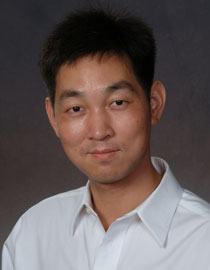
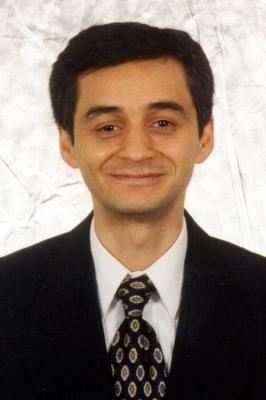
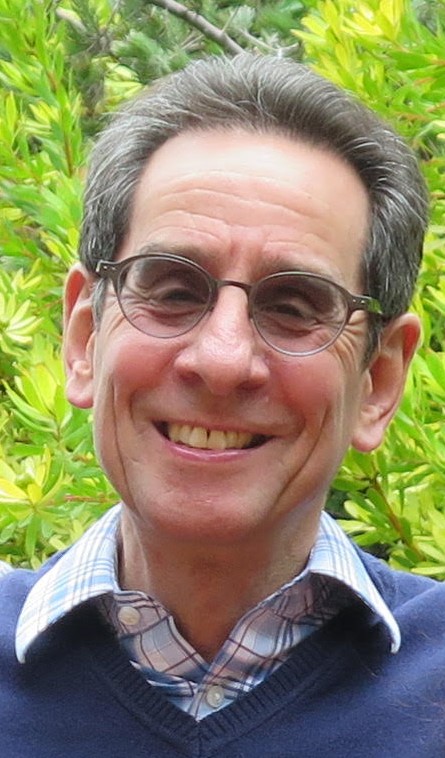
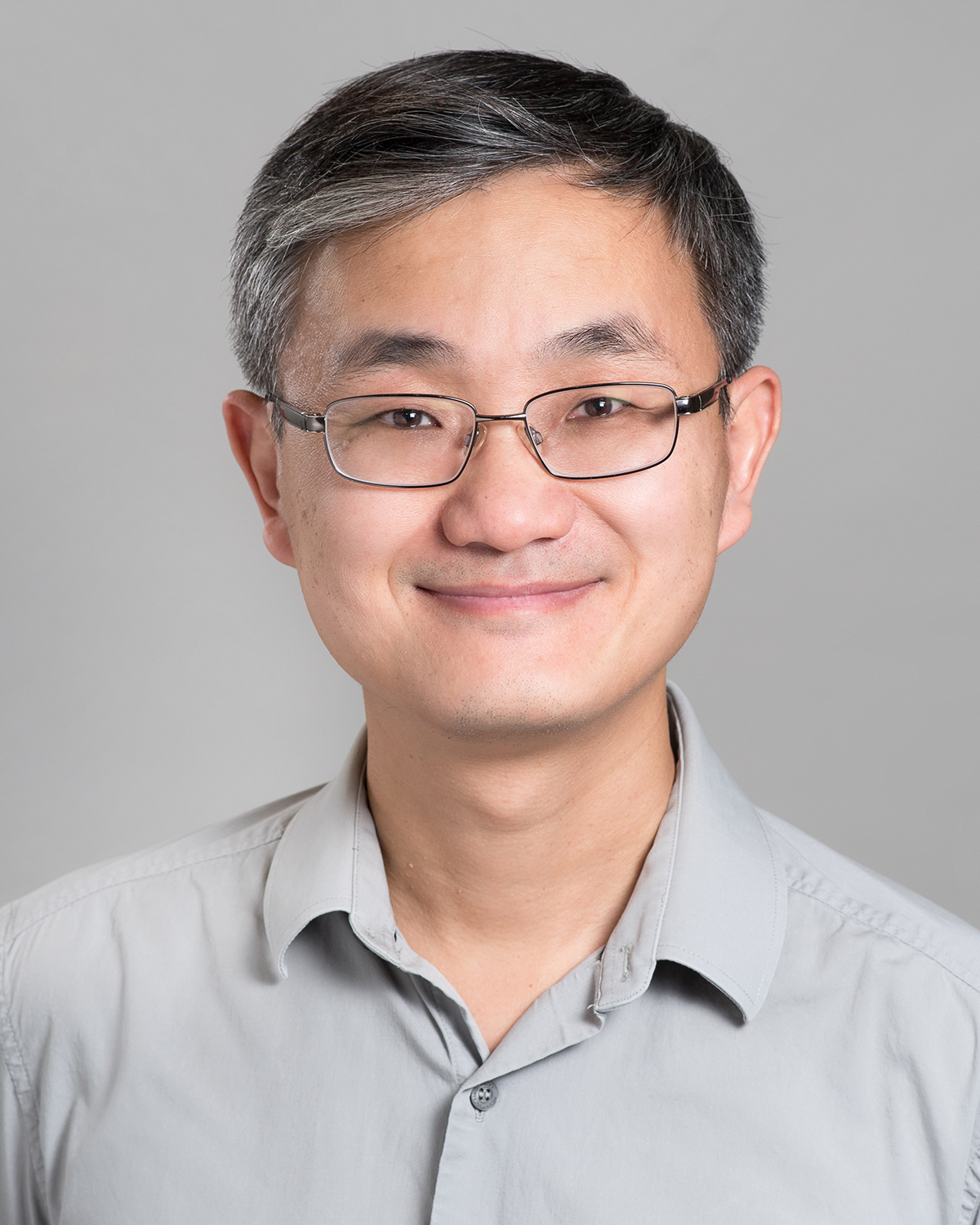
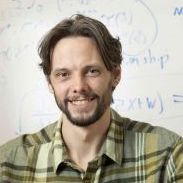
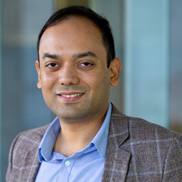
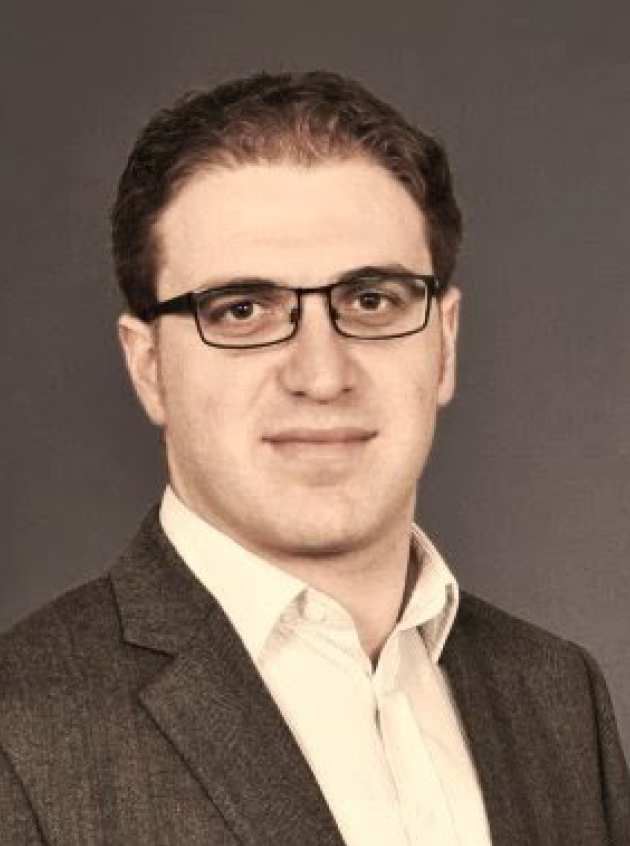
Prof. Anxiao (Andrew) Jiang is a Professor in the Department of Computer Science & Engineering at Texas A&M University, with a courtesy appointment in Electrical and Computer Engineering. He holds positions in both departments and has affiliations with research groups focused on coding theory and data storage systems. His research spans information theory, coding for non-volatile memories, algorithms, machine learning, and wireless networks. Ph.D. in Electrical Engineering from Caltech (2004) M.S. in Electrical Engineering from Caltech (2000) B.Sc. in Electronic Engineering from Tsinghua University (1999) His research interests emphasize coding for flash memories, error correction, and machine learning applications. Key contributions include innovations in rank modulation, trajectory codes, and joint source-channel decoding. Recent work explores deep learning and analog computing error mitigation. Publications highlight advancements in error-correcting codes, secure storage systems, and AI-driven data analysis. His work on fingerprint denoising won 2nd place in the ECCV 2018 competition. Awards include the NSF CAREER Award (2008) and IEEE Best Paper Award (2009). Jiang advises numerous graduate and undergraduate students, focusing on coding theory, machine learning, and storage systems. His lab develops practical solutions for next-generation memory technologies and robust neural networks.
Dr. Faramarz Fekri is the John Pippin Chair Professor and ECE-GTRI Fellow at Georgia Tech's School of Electrical and Computer Engineering. He leads the SENTINEL Research Lab, focusing on interdisciplinary research in machine learning, semantic communication, causal discovery, and biomarker sensing. His work bridges theoretical foundations with practical applications in federated learning, neuro-symbolic AI, and molecular communication. He has held editorial roles at IEEE Transactions journals and has received numerous awards including IEEE Fellow (2015) and the Sony Faculty Research Innovation Award (2018). His research spans over 150 publications, with recent emphasis on differentiable inductive logic programming, adversarial defense frameworks, and compressed sensing systems. Education: B.Sc./M.Sc. from Sharif University, Ph.D. from Georgia Tech. Affiliations include the Center for Machine Learning and the Center for Energy and Geo Processing (CeGP). Current projects include learning via inductive logic reasoning, neuro-symbolic reinforcement learning, and causal discovery from data. Notable achievements include developing BP-based trust systems, network compression frameworks using finite-field wavelets, and frameworks for analog joint source-channel coding. His SENTINEL Lab collaborates on biomarker sensing and molecular communication in biological systems.
Paul H. Siegel is a Professor in the Department of Electrical and Computer Engineering at the University of California, San Diego (UCSD), within the Jacobs School of Engineering. He holds an Endowed Chair at the Center for Memory and Recording Research (CMRR) and is affiliated with the California Institute for Telecommunications and Information Technology (Calit2) and the Center for Wireless Communications (CWC). He previously served as Director of CMRR from 2000 to 2011 and maintains an active research and teaching presence at UCSD. Ph.D. in Mathematics, Massachusetts Institute of Technology, 1979 S.B. in Mathematics, Massachusetts Institute of Technology, 1975 Prof. Siegel's research centers on the mathematical foundations of signal processing and coding, with applications to digital data storage and wireless communications. His work spans constrained coding, error-correcting codes, trellis modulation, and algorithm design. He has made foundational contributions to matched spectral null codes, finite-state modulation, and coding for partial response channels. His recent publications emphasize coding for flash and non-volatile memories, polar and LDPC codes, and interference mitigation in high-density storage. His 15 most recent publications (2021–2018) demonstrate continued leadership in constrained coding, shaping codes, insertion/deletion channels, and neural network-based detection. The research integrates deep information-theoretic analysis with practical applications in storage systems, particularly flash and magnetic recording. Topics include rate-compatible codes, locally recoverable codes, polar coding for asymmetric channels, and robust neural networks using coding principles. IEEE Fellow (1997) IEEE Information Theory Society Paper Award (1992) IEEE Communications Society Leonard G. Abraham Prize (1993) IEEE Communications Society Data Storage Technical Committee Best Paper Award (2007) IEEE Information Theory Society Padovani Lecturer (2015) Member, National Academy of Engineering (2008) Best Graduate Teacher Award (2009–2010, 2015–2016) Best Undergraduate Teacher Award (2017–2018) Teacher of the Year, Jacobs School (2007–2008) Outstanding Mentor Award (2020–2021) Prof. Siegel has advised numerous Ph.D. and Master’s students, including Joseph B. Soriaga, Henry D. Pfister, Mohammad H. Taghavi, and Eitan Yaakobi. He has received research funding from industry and government agencies for projects in data storage and communications. He served as Editor-in-Chief of IEEE Transactions on Information Theory (2001–2004) and has held editorial roles in multiple IEEE journals. He co-organizes the Annual Non-Volatile Memories Workshop (NVMW) at UCSD, fostering collaboration in next-generation memory technologies. His primary research lab is the Center for Memory and Recording Research (CMRR), a leading interdisciplinary research center focused on magnetic, optical, and solid-state data storage technologies. CMRR supports projects in coding, signal processing, device physics, and system architecture. Prof. Siegel leads a team of graduate students and postdoctoral researchers investigating advanced coding schemes for emerging memory systems.
Dr. Olga Kondrateva is a researcher specializing in small satellite networks , with a focus on machine learning applications for data transmission optimization . Her work addresses critical challenges in low-Earth-orbit (LEO) satellite communication , including short contact times , bandwidth limitations , and high packet loss probabilities . Key contributions include novel techniques for joint source-and-channel coding , incremental neural network updates , and mathematical optimization frameworks like Benders decomposition for scalable satellite network planning. Education: PhD (implied by "Dr." prefix) Research Interests Olga’s research bridges machine learning and network optimization in constrained satellite environments. She develops methods to enhance reliability and efficiency of onboard neural networks, prioritizes model parameter updates, and designs communication protocols for Earth observation missions . Her work often leverages vector quantization and linear programming to address unique challenges like intermittent connectivity and dynamic mission requirements . Publication Trends Her recent publications (2022–2024) emphasize progressive neural network updates , fault tolerance , and throughput optimization in LEO satellite networks. Themes include bandwidth-efficient transmission , model compression , and incremental learning to adapt to changing mission needs.
Frank R. Kschischang is a Distinguished Professor of Digital Communication in the Edward S. Rogers Sr. Department of Electrical and Computer Engineering at the University of Toronto, where he has been a faculty member since 1991. He also served as the Associate Chair for Graduate Studies from 2015 to 2018, and is a registered Professional Engineer in Ontario, Canada. Education: B.A.Sc. (Honours) in Electrical Engineering, University of British Columbia, 1985 M.A.Sc. in Electrical Engineering, University of Toronto, 1988 Ph.D. in Electrical Engineering, University of Toronto, 1991 Research Interests: Professor Kschischang’s research is centered on channel coding techniques and their application to wireline , wireless , and optical communication systems . His work spans error-correcting codes , LDPC codes , network coding , and iterative decoding algorithms . He has contributed foundational results in factor graphs , staircase codes , and nonlinear Fourier transform-based communication . Scientific Awards: IEEE Fellow (2006) Fellow of the Royal Society of Canada (2012) Fellow of the Canadian Academy of Engineering (2018) Canada Research Chair (Tier I, 2001–renewed 2008) Killam Research Fellow (2010) IEEE Information Theory Society Paper Award (2018) IEEE Communications Society & IT Society Joint Paper Award (2010) Canadian Award in Telecommunications Research (2012) University of Toronto Distinguished Professor of Digital Communication (2015) Aaron D. Wyner Distinguished Service Award, IEEE ITSoc (2016) Advising & Grants: Professor Kschischang has supervised a large cohort of graduate students and postdoctoral fellows. His recent PhD graduates include Masoud Barakatain, Lei M. Zhang, Christopher G. Blake, Siddarth Hari, and Siyu Liu. Current and former group members are actively supported by NSERC, Canada Foundation for Innovation, and industrial partners. Labs & Teams: He leads an active research group within the Communications Group at the University of Toronto. The group focuses on theoretical and experimental aspects of coding and communication, with strong ties to the Optical Networks Laboratory and Institute for Optical Sciences . The lab maintains open-source software tools such as ZipperSim and ZMG for research and education.
Professor Wei Yu is a Canada Research Chair (Tier 1) in Information Theory and Wireless Communications at the University of Toronto , Department of Electrical and Computer Engineering. He received his Ph.D. in Electrical Engineering from Stanford University (2002) and B.A.Sc. in Computer Engineering and Mathematics from University of Waterloo (1997). Key roles: IEEE Fellow, Fellow of Canadian Academy of Engineering, Member of Royal Society of Canada Editorial leadership: IEEE Transactions on Wireless Communications, IEEE Transactions on Information Theory Research Interests span network information theory, convex optimization, wireless communications, and broadband access networks. His work focuses on multiuser information theory, MIMO systems, and 5G/6G network optimization. Publications reflect expertise in reconfigurable intelligent surfaces (RIS), covariance-based activity detection, and fractional programming for signal processing. Scientific Recognition includes multiple IEEE Best Paper Awards (2008, 2017, 2021), NSERC Steacie Fellowship (2015), and the 2024 IEEE Joint Communications/Information Theory Society Paper Award. He is a Clarivate Highly Cited Researcher. Teaching Contributions include ECE1502 (Information Theory), ECE431 (Digital Signal Processing), and ECE1505 (Convex Optimization), with a focus on mathematical foundations and practical applications in communications.
Karl-Ludwig Besser serves as Assistant Professor in the Division of Communication Systems within Linköping University's Department of Electrical Engineering since January 2025. Previously, he completed a postdoctoral fellowship at Princeton University's Department of Electrical and Computer Engineering (March 2023–December 2024), following his 2022 PhD from Technische Universität Braunschweig. His academic foundation includes: Dipl.-Ing. in Electrical Engineering, Technische Universität Dresden (2018) PhD in Electrical Engineering, Technische Universität Braunschweig (January 2022) Dr. Besser's research centers on ultra-reliable communication systems , physical layer security under resource constraints , and copula-based modeling of channel dependencies . His work bridges theoretical information theory with practical machine learning applications, particularly in reconfigurable intelligent surfaces (RIS) and integrated sensing-communication (ISAC) systems. Recent publications demonstrate expertise in secret-key budget management for resilient networks and UAV swarm coordination using 3D beamforming techniques. Analysis of his 15 most recent publications (2024–2025) reveals three dominant themes: (1) RIS optimization using physics-informed neural networks addressing mutual coupling challenges, (2) fundamental limits of physical layer security in dependent fading channels with secret-key budgets, and (3) machine learning solutions for UAV mobility management and mmWave resource allocation. His work consistently targets ultra-reliable low-latency communication (URLLC) requirements for next-generation networks. As part of Linköping University's Communication Systems division, Dr. Besser contributes to research initiatives including Wireless Communications for Distributed Intelligence and Integrated Sensing and Communications (ISAC) . While specific grant details aren't documented in source materials, his research aligns with European 6G initiatives and national security-focused wireless projects. The division actively supervises 25+ PhD students across topics including drone swarm communication, energy-efficient signal processing, and smart city sensor networks, where Dr. Besser likely participates in student mentorship.
Galen Reeves is an Assistant Professor at Duke University with a joint appointment in the Department of Electrical and Computer Engineering and Department of Statistical Science since Fall 2013, reflecting his interdisciplinary expertise bridging engineering and mathematical sciences. His research establishes rigorous theoretical frameworks at the intersection of information theory, machine learning, and statistical signal processing, focusing on fundamental limits in high-dimensional inference problems. His academic background features elite training across top institutions: PhD in Electrical Engineering and Computer Sciences, University of California, Berkeley (2011) MS in Electrical Engineering, University of California, Berkeley (2007) BS in Electrical and Computer Engineering, Cornell University (2005) Reeves' research centers on mathematical foundations of data science, with seminal contributions to compressed sensing, tensor estimation, and coding theory. He investigates information-theoretic bounds for estimation problems, develops efficient algorithms like approximate message passing, and analyzes generative AI model behavior under recursive training conditions. His work demonstrates how statistical physics approaches solve complex problems in communication theory and high-dimensional statistics. Analysis of his 2021-2025 publications reveals three dominant trends: breakthroughs in channel capacity using Reed-Muller codes, theoretical analysis of generative models and diffusion sampling, and fundamental limits in tensor/matrix estimation. These works consistently integrate information theory with machine learning, emphasizing scalability challenges in high dimensions and algorithmic robustness under heteroskedasticity. His scientific recognition includes: NSF VIGRE fellowship supporting postdoctoral research at Stanford University (2011-2013) NSF CAREER award (2018) for Theoretical Foundations for Probabilistic Models with Dense Random Matrices While no specific students are documented in the source text, his faculty position entails graduate mentorship in both ECE and Statistical Science departments. Research funding primarily stems from the NSF CAREER grant advancing probabilistic modeling, complemented by earlier fellowship support. His collaborations span Stanford University, EPFL, TU Delft, and Microsoft Research. Though no dedicated lab is mentioned, his joint appointment fosters cross-departmental research at Duke, particularly in projects like 'Modeling Traffic with Self Driving Cars' which applies statistical learning to autonomous systems. His work maintains strong ties to industry through past Microsoft Research internships and ongoing computational applications in communications and AI.
Luca Pezzarossa is an Associate Professor in the Department of Applied Mathematics and Computer Science at the Technical University of Denmark (DTU). His research focuses on real-time systems, embedded computer systems, digital microfluidics, compiler optimizations, and hardware accelerators. He leads projects such as the Edu4Chip: Joint Education for Advanced Chip Design in Europe initiative and supervises PhD students in areas like compiler optimizations for neural networks and speech enhancement algorithms. His academic journey includes contributions to interdisciplinary fields, combining computer engineering with biomedical applications such as biochip design and PCR optimization. He actively engages in open-source tool development, particularly using the Chisel framework for hardware design education and research. Key research themes include: Real-time systems and time-predictable architectures Compiler-driven optimizations for constrained devices Digital microfluidics for lab-on-a-chip systems Edge computing and TinyML applications Recent publications highlight innovations in microplastic detection on edge devices, dynamic channel pruning for speech enhancement, and parallel execution engines for digital microfluidics. His work aligns with sustainable development goals through environmental applications and energy-efficient technologies. Current projects involve: PhD Supervision: Andrea Cerioli (Compiler Optimizations), Riccardo Miccini (AI-to-Neural Network Mapping), Ehsan Khodadad (Time-predictable Systems) Research Grants: EU-funded Edu4Chip (2023–2025), multiple industry-academia collaborations Labs and teams: Leads the Embedded Systems Engineering group at DTU, focusing on interdisciplinary hardware-software co-design for real-world applications. Active in developing open-source frameworks for education and research.
Michel KIEFFER is a Professor in Signal Processing for Communications at Paris-Sud University and a researcher at the Laboratoire des Signaux et Systèmes (L2S), Gif-sur-Yvette, France. He holds a Ph.D. (1999) and Habilitation (2005) from Université Paris-Sud. Previously, he served on part-time leave at Laboratoire de Traitement et Communication de l’Information (CNRS-Télécom ParisTech, 2009–2016) and was a junior member of the Institut Universitaire de France (2011–2016). His research focuses on joint source-channel coding, signal processing for communication networks, and robust control systems. Key contributions include works on multimedia transmission reliability, UAV localization, and fault identification in power grids. He co-authored over 100 publications and books like Applied Interval Analysis (Springer, 2001) and Joint Source-Channel Decoding (Academic Press, 2009). He serves as Associate Editor for Signal Processing (since 2008) and IEEE Transactions on Communications (2012–2016). His work spans interdisciplinary areas such as energy systems, robotics, and telecommunications, addressing challenges in real-time data transmission, network slicing, and distributed control.
Prof. Rob Maunder is a Professor of Electronics & Computer Science at the University of Southampton. He holds a BEng (First Class Honours) in Electronic Engineering (2003) and a PhD in Telecommunications (2007). His research focuses on joint source/channel coding, wireless communication algorithms, and hardware implementations. He leads projects funded by EPSRC and the Royal Society, including work on 5G non-terrestrial networks and reconfigurable intelligent surfaces. Rob is the founder and CTO of AccelerComm Ltd, commercializing his research via soft-IP solutions. He has held roles from Lecturer (2007) to Professor (2017), and is a Chartered Engineer (IET), IEEE Senior Member, and IET Fellow. His work spans MIMO systems, iterative receivers, and deep learning applications in communications. Key honors include Fellowships from the IET (2017) and Higher Education Academy (SFHEA). He supervises PhD students, such as Arumjeni Mitayani, and collaborates with industry partners like Thales. Current research emphasizes energy-efficient wireless networks, next-gen modulation techniques, and hardware-software co-design.
Prof. Saikat Guha holds the Clark Distinguished Chair Professorship in the Department of Electrical and Computer Engineering at the University of Maryland, College Park. He leads the Photonic Quantum Systems (PhoQuS) group, focusing on quantum information theory applications to quantum optics, quantum-limited photonic systems, and cross-disciplinary innovations in information theory, error correction, and network theory. His research spans quantum-enhanced classical communications, quantum network architectures, photonic sensing with non-classical light, and quantum-limited imaging. Notable projects include NSF-funded initiatives for quantum interconnects in ion trap quantum computers and quantum networking protocols. He is recognized as an IEEE Fellow for contributions to quantum communication. Teaching includes a new undergraduate/graduate course Information in a Photon (ENEE 439G/739G), introducing quantum light principles for information processing. His group collaborates on experimental proof-of-concept systems, including entanglement-enhanced LiDAR, fiber-optic gyroscopes, and quantum-optimal coronagraphs for exoplanet detection. Research Labs: Photonic Quantum Systems (PhoQuS) Lab Grants: $5M NSF Convergence Accelerator Award (Quantum Interconnects) $1M NSF Project (Quantum Network for Trapped-Ion Computers) Awards: IEEE Fellow (2023) Key advising contributions include PhD student Itay Ozer (optomechanics) and postdoc Yu Shi (quantum entanglement studies). His work bridges foundational theory with practical implementations, aiming to achieve quantum-limited performance in real-world systems.
Ramesh Pyndiah is a Professor at IMT Atlantique's Microwave Optics (OPT) Department, a leading institution in digital communications research. With over 30 journal papers and 100 conference publications, his work focuses on advanced channel coding techniques, particularly block turbo codes, Reed-Solomon codes, and joint source-channel coding. Research Interests : Digital communications, turbo coding, joint source-channel coding, OFDM, wireless sensor networks, optical wireless systems. Leadership : Director of Research & Innovation at IMT Atlantique, Deputy Director of COMIN Labs (2014-2017), Chair of IEEE ComSoc France Chapter (2000-2014). His research trends show a strong emphasis on error correction for high-efficiency wireless and optical systems, with recent work on LDPC codes , network coding , and low-complexity decoding . He has supervised 17 PhD students in areas like video coding, UWB systems, and DNA-inspired coding. Awards : 2001 SEE Blondel Medal, IEEE Senior Membership (2001), leadership roles in ICC, Globecom, and Turbo Code symposia. Patents : 17 innovations in high-frequency mixers, phase shifters, and error correction coding.
Deniz Gündüz is a Professor of Information Processing at Imperial College London's Electrical and Electronic Engineering Department, leading the Information Processing and Communications Lab. He also serves as Deputy Head of the Intelligent Systems and Networks Group and holds a part-time faculty position at the University of Modena and Reggio Emilia. His research focuses on wireless communications, information theory, machine learning, and privacy, with significant contributions to semantic communication systems and AI-native networks. He has held visiting roles at Princeton University and the University of Padova. Dr. Gündüz is an Area Editor for IEEE Transactions on Communications and IEEE JSAC, and a former Distinguished Lecturer of the IEEE Information Theory Society. His awards include the IEEE Communication Society Early Achievement Award (2017), ERC Starting Grant (2015), and multiple best paper recognitions. He has organized major conferences and workshops, including the first MLCOM workshops on machine learning for communications. Education: B.S. (2002) from METU, Turkey; M.S. and Ph.D. (2004, 2007) from NYU Polytechnic School of Engineering. Prior roles include Research Associate at CTTC Barcelona, Consulting Assistant Professor at Stanford, and postdoctoral positions at Princeton. His work spans theoretical foundations and practical implementations, emphasizing interdisciplinary solutions for next-generation networks. Research Interests: Semantic communications, distributed learning, 6G systems, privacy-preserving techniques, and AI integration in communication networks. His recent work explores neural compression for cloud RAN, over-the-air computation, and federated learning optimizations. Awards and Roles: IEEE JSAC Series Editor (Machine Learning in Networks), IEEE Transactions on Wireless Communications Editor, and organizer of major conferences. His team's achievements include breakthroughs in joint source-channel coding and adversarial jamming defenses.
Marc Adrat is an Honorary Professor at RWTH Aachen University and Head of the Software Defined Radio research group at Fraunhofer Institute for Communication, Information Processing and Ergonomics (FKIE). His dual role combines academic teaching with cutting-edge industrial research in communications engineering. Education: Diplom-Ingenieur in Electrical Engineering (1997), RWTH Aachen University Dr.-Ing. (PhD) in 2003 from Institute of Communication Systems and Data Processing (IND), RWTH Aachen Research Focus: Prof. Adrat specializes in channel coding , modulation techniques , and iterative decoding with particular emphasis on polar codes , BICM-ID systems , and EXIT chart analysis . His work bridges theoretical foundations with practical implementations in software-defined radio systems. His recent research directions include applying machine learning techniques (particularly genetic algorithms) to optimize communication systems, developing autoencoder-based signal enhancement methods, and advancing spectrum monitoring technologies for cognitive radio applications. Awards & Recognition: Best Paper Award at ICMCIS 2022 for work on spectrum monitoring techniques Appointed Honorary Professor by RWTH Aachen University in June 2024 Teaching & Supervision: Since 2009, he has taught courses on Modern Channel Coding for Wireless Communications and Advanced Coding and Modulation at RWTH Aachen. His teaching covers both theoretical foundations and practical implementations of modern communication systems. Laboratories & Teams: At Fraunhofer FKIE, he leads the Software Defined Radio research group, focusing on developing flexible, reconfigurable radio systems for military and civilian applications. The group works extensively on real-time implementations of advanced coding and modulation schemes.