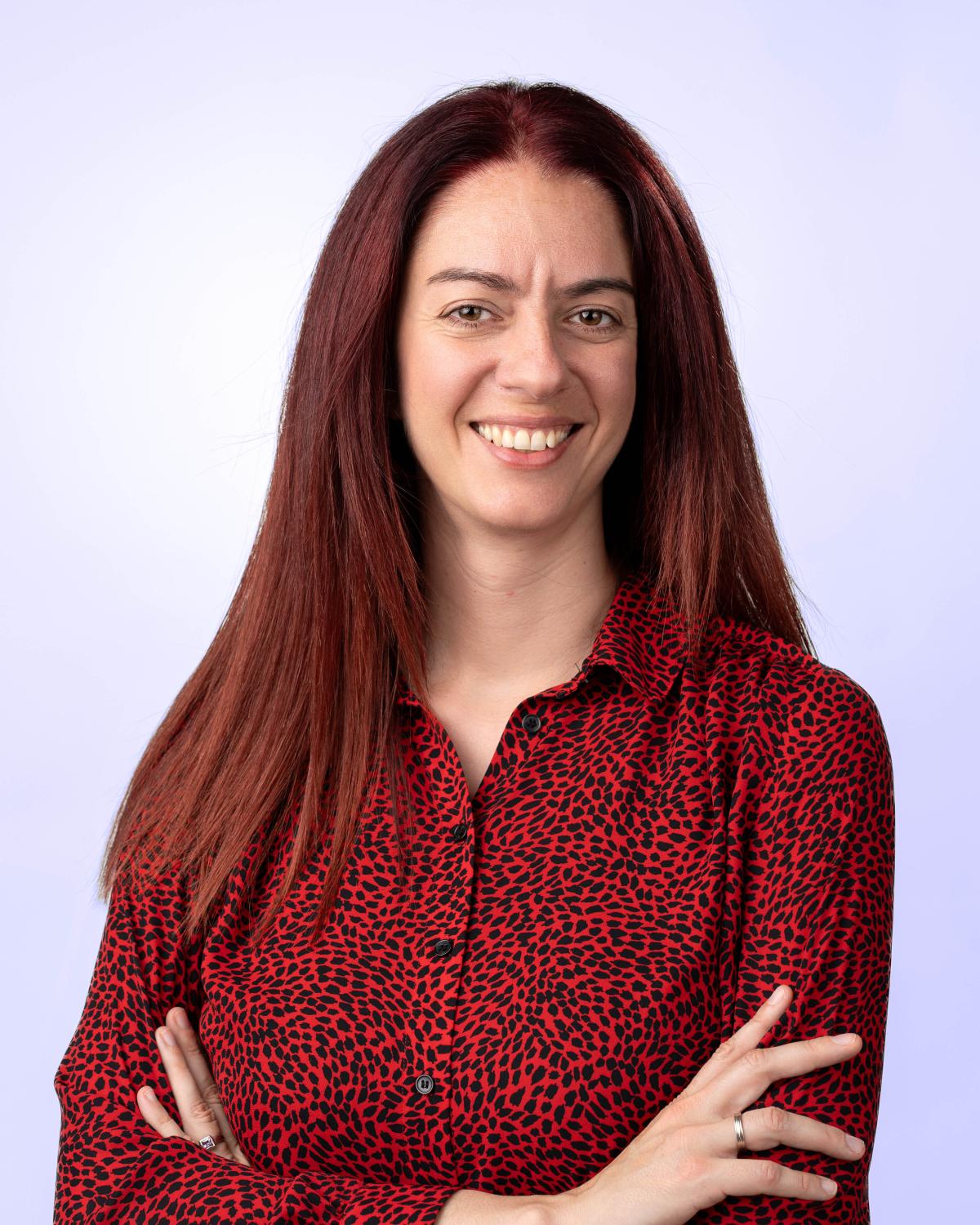
Prof. Eleni Chatzi is a Full Professor and Chair of Structural Mechanics at ETH Zurich's Department of Civil, Environmental and Geomatic Engineering. She holds a PhD from Columbia University (2010) and has held roles from Assistant to Full Professor at ETH since 2010. Her research focuses on intelligent structural monitoring and data-driven asset management, emphasizing nonlinear dynamics and sensor integration. Affiliations : Institute of Structural Engineering, European Academy of Wind Energy (EAWE President), Swiss Community for Computational Methods (SWICCOMAS Chair) Research interests include Structural Health Monitoring (SHM), system identification, and advanced simulation tools. She pioneered work on data-driven diagnostics and self-aware infrastructure, supported by grants like the ERC Starting Grant (2015). Awards include the 2020 Walter L. Huber Prize and 2024 SHM Person of the Year Award. Her work spans wind energy infrastructure, metamaterials for vibration control, and AI-driven structural analytics. Over 600 publications and 200k+ citations highlight her impact. She teaches computational science and structural dynamics in ETH's programs and collaborates globally on sustainable infrastructure projects.
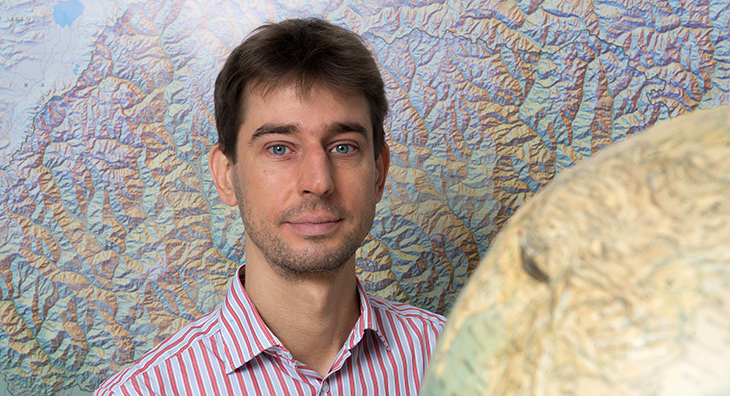
György Hetényi is an Associate Professor at the Institute of Earth Sciences, University of Lausanne, specializing in large-scale geophysics. His research focuses on mountain-building processes, earthquake dynamics, and tectonic deformation of the Himalayas and Alps. He leads the AlpArray project, deploying the largest academic seismic network in Europe. Since 2015, he has held an SNSF Assistant Professorship, advancing to his current role in 2020. Education: Bachelor's in Geophysics at Eötvös University (Budapest) Master's and PhD at École Normale Supérieure (Paris), studying Himalayan deformation Research Interests: Combining seismic and gravity data to model crustal structures, numerical modeling of orogenic processes, and educational seismology initiatives in Nepal. Active in field campaigns across Bhutan, Nepal, and the Ivrea-Verbano Zone. Publications: Over 48 peer-reviewed articles since 2007, emphasizing crustal imaging, seismic tomography, and Himalayan tectonics. Recent work includes participatory gravity modeling challenges and pan-Alpine gravity database development. Awards: Prize of the Chancellery of the Universities of Paris (2007) for doctoral research on Himalayan deformation. Teaching & Outreach: Developed the 'Geophysics Across Scales for Geologists' module in the UNIL-UNIGE program. Co-leads the Nepal School Seismology Network, integrating low-cost seismic education tools. Grants & Projects: AlpArray, DIVE (scientific drilling in Ivrea Zone), and seismic hazard assessments in Bhutan. Collaborates with international networks like ICDP and European seismic consortia. Labs/Teams: Part of the Institute of Earth Sciences (UNIL) and leads the OROG3NY project on mountain-building dynamics.
Andrea Del Prete is an Associate Professor in the Industrial Engineering Department at the University of Trento (Italy) since 2022. His research focuses on robot control, reinforcement learning, trajectory optimization, and numerical algorithms for dynamic systems. He leads the Interdepartmental Robotics Lab (IDRA) and has previously held roles as a tenure-track assistant professor at the University of Trento (2019-2021), a research scientist at the Max-Planck Institute for Intelligent Systems (2018), and an associated researcher at LAAS-CNRS (2014-2017) working with the HRP-2 humanoid robot. Earlier, he conducted PhD and post-doc research at the Italian Institute of Technology (2010-2013) on iCub robot control. PhD in Robotics (2013) - Italian Institute of Technology MEng in Computer Engineering (2009) - University of Bologna BSc in Computer Engineering (2006) - University of Bologna Dr. Del Prete specializes in merging learning and model-based techniques for safe robot control, particularly in legged systems. His work bridges trajectory optimization (TO) with reinforcement learning (RL) to overcome local minima challenges (CACTO/CACTO-SL algorithms) and develops robust controllers for humanoid and quadrupedal robots in unstructured environments. He explores viability kernels in MPC, safety certificates, and bi-level optimization for co-designing hardware/control policies. Key application areas include mountain rescue robotics (ALPINE platform), aerial maneuver recovery, and energy-efficient legged locomotion. His recent publications (2023-2025) emphasize numerical optimization algorithms, multi-contact locomotion, and hybrid control frameworks. Topics span from analytical integral optimization (2025) to climbing robots for mountain operations (2025), demonstrating a trajectory from theoretical algorithm development to real-world robotic applications. Research keywords include robotics, numerical optimization, and machine learning, with sub-fields like MPC for dynamic systems, humanoid control, and terrain adaptation. As an educator, he teaches advanced courses on: Optimization and Learning for Robot Control (48-hour master's course) Optimization-based Control of Legged Robots (12-hour PhD course) Task-Space Inverse Dynamics (3-hour PhD course) Current PhD advisees include Mohammad Hasan Yeganegi (generalization bounds for imitation learning), Pietro Noah Crestaz (numerically-efficient RL), Veronica Campana (ergodic control for defect detection), Elisa Alboni (data-efficient model-based RL), and Gianni Lunardi (MPC for legged locomotion).
Michael Herbst is an Assistant Professor (tenure-track) at EPFL, holding a joint appointment in the School of Basic Sciences (SB) and the School of Engineering (STI). He leads the Mathematics for Materials Modelling (MatMat) research group, focusing on error control in atomistic simulations, density-functional theory (DFT), and interdisciplinary computational methods. His work bridges mathematics, materials science, and computer science, emphasizing robust algorithms and Julia-based software development. Herbst holds a PhD from Heidelberg University and has held postdoctoral positions at RWTH Aachen and Inria Paris. He is a core member of the MARVEL and CESMIX research centers. Education: 2018: Dr. rer. nat. (magna cum laude), Heidelberg University 2009–2013: BA and MSci (1st class) in Natural Sciences, University of Cambridge 2008–2009: Studies in Mathematics/Physics, TU Kaiserslautern Research Interests : Herbst's research centers on developing reliable computational methods for materials modeling, including error estimation in DFT, black-box SCF algorithms, and Julia-based tools like the Density-Functional Toolkit (DFTK). His work addresses challenges in high-throughput simulations, numerical stability, and interdisciplinary collaboration across mathematics, physics, and computer science. Grants & Projects : MARVEL Center for Computational Design (EPFL) CESMIX Center for Extreme-Scale Simulations (MIT) EMC² Project (Sorbonne/Inria/École des Ponts) Awards : HGS MathComp PostDoc Fellowship (2018–2021) DAAD Travel Funding (2018) Exploratory Research Space Fund (RWTH Aachen, 2022) Labs & Teams : Head of the MatMat group at EPFL, focusing on error-controlled simulations and open-source software development.
Dr. Agostina Torres is a researcher affiliated with the Professur für Pflanzenökologie (Plant Ecology Professorship) at ETH Zürich. Her current postdoctoral research focuses on understanding how climate change impacts forest plant communities in Mount Rainier National Park, USA. She employs long-term vegetation data, functional trait analysis, and ecological modeling (e.g., Joint Species Distribution Models) to study community reassembly processes along elevational gradients. Her work emphasizes the role of functional traits and historical contingencies, such as priority effects, in shaping species interactions and biodiversity dynamics. Research Interests: Torres investigates community assembly mechanisms under environmental change, with a focus on plant communities and mutualistic networks. She integrates field experiments, observational data, and phylogenetic approaches to develop predictive frameworks for biodiversity conservation and ecosystem management. Recent projects explore the temporal dimension of community dynamics, including germination phenology's influence on early assembly stages. Labs/Teams: She collaborates with groups at ETH Zürich using comprehensive datasets on vegetation, climate, and species traits. Her work supports predictive models for anticipating biodiversity changes in response to global shifts.
Prof. Pavan Ramdya, the DSM-Firmenich Next Generation Chair in Neuroscience at École Polytechnique Fédérale de Lausanne (EPFL), leads the Neuroengineering Laboratory. His research focuses on reverse-engineering biological intelligence in Drosophila melanogaster to inspire neuroprosthetics, robotics, and AI. He holds a PhD in Neurobiology from Harvard University and completed postdoctoral training in robotics (EPFL), neurogenetics (UNIL), and bioengineering (Caltech). University: École Polytechnique Fédérale de Lausanne (EPFL) School: School of Life Sciences Academic Rank: Professor His lab employs computational, engineering, genetic, and microscopy approaches to study neural population dynamics, biomechanics, and gene expression in limb-dependent behaviors. Key research trends from his publications include neuromechanical modeling of Drosophila , sensory-motor integration, and AI-robotics synergy for biological discovery. HFSP Career Development Award Swiss National Science Foundation Eccellenza Grant UNIL Young Investigator Award in Basic Science FENS-Kavli Network of Excellence member The lab mentors doctoral researchers such as Sibo Wang, Victor Stimpfling, and Femke Hurtak, alongside postdoctoral fellows like Jasper Phelps and alumni including Victor Lobato Rios. Collaborations span robotics (Auke Ijspeert), microrobotics (Sakar), and computational imaging (Fua).
Quentin Denoyelle is an Associate Professor at MAP5 (CNRS UMR 8145) at Université Paris Cité. Prior to this, he conducted postdoctoral research at the Biomedical Imaging Group (BIG) of Michael Unser at EPFL and earned his PhD in Applied Mathematics under Gabriel Peyré and Vincent Duval at CEREMADE, Université Paris-Dauphine. His research focuses on sparse inverse problems convex optimization algorithms machine learning applications signal and image processing . He is based at Université Paris Cité, working within the MAP5 laboratory, a CNRS joint research unit (UMR 8145).
Steven Johnson is a Full Professor of Physics at ETH Zurich and heads the Institute for Quantum Electronics. He holds a joint appointment at the Paul Scherrer Institute (PSI), leading the experimental laser group at the SwissFEL x-ray free-electron laser. He earned a BSc in Mathematics and Physics from Harvey Mudd College (1997) and a PhD in Physics from UC Berkeley (2002). His research focuses on atomic-scale dynamics in materials, leveraging light-matter interactions, ultrafast laser techniques, and x-ray methods to study condensed matter systems. He has pioneered work on coherent vibrational excitations, THz-driven spin dynamics, and structural phase transitions. Johnson’s contributions include advancing femtosecond x-ray diffraction and developing novel experimental tools for probing material behavior at ultrafast timescales. Education: BSc (Harvey Mudd College, 1997), PhD (UC Berkeley, 2002) Affiliations: ETH Zurich (since 2020), PSI (since 2003), SwissFEL collaboration Roles: Head of PSI’s Pump Laser Group, Member of ETH Zurich’s Physics Department Strategy Commission His honors include the Advanced Light Source Doctoral Fellowship (2001) and NSF Graduate Fellowship (1997). He collaborates internationally with institutions like SLAC and Vanderbilt University, focusing on multiferroics and ultrafast magnetism. His group’s work integrates laser systems at SwissFEL to enable cutting-edge pump-probe experiments across biology, chemistry, and physics.
Gianluca Iori is a Professor at ETH Zurich, holding the Professorship for X-ray Imaging. His work focuses on advanced imaging techniques, including synchrotron-based computed tomography, with applications in biomedical engineering, materials science, and cultural heritage preservation. He leads projects such as the BEATS beamline at SESAME, advancing non-destructive examination of materials ranging from ancient artifacts to biomedical tissues. Research Interests: Medical imaging and bone structure analysis using QCT and synchrotron CT. Characterization of historical materials, such as Roman glass and faience beads, to understand degradation and preservation. Development of computational tools like Alrecon and Ciclope for advanced image reconstruction and finite element modeling. Beamline instrumentation and collaboration at SESAME for interdisciplinary research. Key Contributions: His research bridges biomedical and archaeological studies, leveraging synchrotron technology to address challenges in bone mechanics, cultural heritage preservation, and material characterization. He is actively involved in SESAME’s beamline development, enhancing global access to synchrotron facilities. Labs/Teams: Gianluca Iori collaborates with the SESAME synchrotron team and leads the BEATS beamline project. His work integrates laboratory and synchrotron-based techniques, fostering interdisciplinary innovation in imaging and materials science.
Coline Mollaret is a Research Fellow at the Department of Geosciences, University of Fribourg, Switzerland. Her work focuses on geophysical monitoring and inversion techniques to study mountain permafrost dynamics. She leads the SNSF-funded project Tipping points and resilience of mountain permafrost under increasing frequency of heat waves (TREAT) and has held roles including Maîtresse-assistante in Geophysics and Senior Researcher in Physical Geography.
Amirreza Razmjoo Fard is a PhD student and Researcher at École Polytechnique Fédérale de Lausanne (EPFL), affiliated with the School of Engineering (STI) and the Robot Learning and Interaction (RLI) Group at the Idiap Research Institute. Supervised by Dr. Sylvain Calinon, he focuses on developing adaptive, efficient, and intelligent robotic control methods for contact-rich environments and constrained scenarios. Research Areas: Generative AI (diffusion models, flow matching), Model composition (product of experts), System dynamics, Control theory, Physics-based simulation (Isaac Sim) Key Goals: Bridging theory and real-world applications, enhancing robot autonomy, interaction, and physical intelligence His work spans publications at top robotics conferences like IROS, CoRL, RSS, and ICRA, with a Best Paper Finalist recognition at RSS 2024. Notable methods include CCDP for diffusion policy composition, CDF for differentiable robot geometry, and D-LGP for hybrid planning. He has also collaborated with Honda Research Institute Europe during a six-month internship.
Christian Hauck is a Professor in the Department of Geosciences at the University of Fribourg, Switzerland. His research focuses on mountain permafrost dynamics, cryosphere studies, and geophysical monitoring techniques. He leads projects using advanced geophysical methods such as electrical resistivity tomography (ERT) and seismic refraction to study subsurface ice content, active layer dynamics, and permafrost degradation in alpine and polar environments. His work integrates field observations with numerical modeling to address climate change impacts on frozen ground systems. Key areas include Antarctic permafrost (Deception Island), Swiss Alps permafrost networks, and the development of petrophysical joint inversion techniques for subsurface characterization. Teaching: His academic role includes contributing to geosciences education at the University of Fribourg, though specific course details are not elaborated here. Research Grants: His projects are supported by grants focusing on cryosphere monitoring and climate change studies, as evidenced by collaborative field experiments and long-term data collection initiatives. Labs/Teams: He collaborates with the Department of Geosciences' research groups specializing in permafrost, geomorphology, and geophysical instrumentation. Notable collaborations include Antarctic fieldwork under TSP/ANTPAS projects and alpine permafrost network installations in the Swiss Alps. Future Work: Ongoing projects aim to enhance automated geophysical monitoring systems and model permafrost responses to extreme climatic events.
Michael F. Herbst is a tenure-track Assistant Professor at the Swiss Federal Institute of Technology Lausanne (EPFL) with joint appointments in Mathematics and Materials Science. He leads the Mathematics for Materials Modelling (MatMat) research group, focusing on algorithm development for quantum-chemical simulations of solids and error control in computational modeling. His work bridges mathematics, solid-state physics, and computer science through interdisciplinary research. His research interests include: Density-functional theory (DFT) and Kohn-Sham equations Error propagation in materials property predictions High-throughput screening algorithms Julia programming for scientific computing Tensor networks and reduced basis modeling Self-consistent field convergence methods Recent publications highlight his contributions to: Efficient response property calculations in DFT Rotationally equivariant machine learning operators GPU-accelerated electronic structure methods Polarizable continuum solvation models Robust black-box quantum chemistry algorithms Open-source software development Teaching activities span mathematics, computer science, and chemistry curricula, including interdisciplinary workshops on electronic structure numerics and Julia programming for materials science. He has mentored PhD students Bruno Ploumhans and Niklas Frederik Schmitz.
Dr. Valery Vishnevskiy is a Lecturer at the Department of Information Technology and Electrical Engineering at ETH Zürich , affiliated with the Biomedical Imaging Group . His research focuses on advanced medical imaging techniques, particularly in cardiac MRI , ultrasound , and machine learning applications . He contributes to projects involving 4D flow MRI reconstruction , speed-of-sound imaging , and motion-corrected diffusion tensor analysis . Primary Affiliation : ETH Zürich, Department of Information Technology and Electrical Engineering Research Interests : Biomedical Imaging, MRI Reconstruction, Ultrasound Physics, Cardiac Imaging, Deep Learning His recent work emphasizes self-supervised learning for medical imaging, including the development of FlowMRI-Net for accelerated 4D flow MRI and Speed-of-Sound Imaging using diverging waves. Publications span hyperpolarized 13C metabolic imaging , viscoelasticity reconstruction , and probabilistic sampling optimization . Dr. Vishnevskiy's contributions to deformable image registration include methods for handling sliding interfaces in abdominal and cardiac imaging, with applications in respiratory motion compensation and tissue ablation monitoring . He also explores mathematical models for enzyme activity analysis and behavioral pattern detection.
Dr. Dieter Werthmüller is a Lecturer at the Department of Earth and Planetary Sciences (D-EAPS) at ETH Zurich, affiliated with the Institute of Geophysics. His research focuses on geophysical methods, particularly electromagnetic induction, data assimilation in geosciences, and applications to geothermal energy and environmental monitoring. He specializes in near-surface geophysics, geothermal reservoir modeling, and the integration of geophysical datasets for subsurface characterization. His work emphasizes open-source software development for geophysical modeling, such as the emg3d and empymod tools. He has contributed to studies on electromagnetic monitoring of geothermal systems, rainwater lenses in polders, and temperature changes in near-surface environments. His recent articles highlight advancements in joint inversion techniques, CSEM applications for gas hydrates, and ocean-bottom seismometer calibration. Dr. Werthmüller collaborates on projects involving geothermal energy systems, environmental hydrology, and marine geophysics. His research addresses challenges in subsurface imaging, parameter sensitivity analysis, and the development of modular frameworks for geophysical data interpretation.