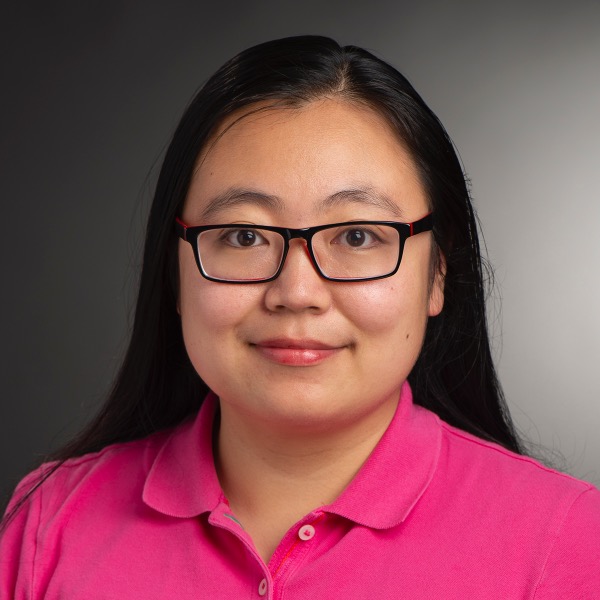
Cathy Wu is the Class of 1954 Career Development Associate Professor in Civil and Environmental Engineering at MIT, affiliated with the Institute for Data, Systems, and Society (IDSS). Her research bridges machine learning, optimization, and urban systems, with a focus on mixed autonomy systems in mobility. She holds degrees from MIT (B.S., M.Eng in EECS) and a Ph.D. from UC Berkeley (EECS). Education: B.S. and M.Eng in Electrical Engineering and Computer Science, MIT (2012-2013) Ph.D. in Electrical Engineering and Computer Science, UC Berkeley (2018) Research Interests: Reinforcement Learning and Machine Learning Large-scale Optimization and Control Theory Mobility Systems and Urban Infrastructure Implications of AI and Automation Her work emphasizes interdisciplinary collaboration, involving transportation, computer science, and public policy. She founded the Interdisciplinary Research Initiative within the ACM Future of Computing Academy to advance cross-disciplinary computing research. Key Projects: Includes Flow (open-source RL framework for traffic control), eco-driving incentive mechanisms, and mixed autonomy traffic optimization. Her articles address congestion mitigation, autonomous vehicle integration, and scalable supervision strategies. Awards: Recipient of fellowships, best paper awards, and teaching honors (specific names unlisted). Engagement: Collaborations with institutions like Microsoft Research, OpenAI, and Caltrans. Active in policy-oriented initiatives and education through IDSS programs.
Bing Yan is an Assistant Professor in the Department of Electrical and Microelectronic Engineering at Rochester Institute of Technology (RIT), affiliated with the Kate Gleason College of Engineering. She holds a B.S. in Information Management from Renmin University of China (2010), and M.S. and Ph.D. degrees in Electrical Engineering and Statistics from the University of Connecticut (2012–2017). Prior to RIT, she was an Assistant Research Professor at the University of Connecticut. Dr. Yan’s research focuses on power system optimization , including grid integration of renewables (wind/solar), microgrid operations, distributed energy systems, and manufacturing scheduling. She has published over 30 peer-reviewed articles and secured grants from the National Science Foundation (including a CAREER Award), Department of Energy, and industry partners like Brookhaven National Laboratory and ABB. Her work emphasizes mixed-integer linear programming and machine learning applications in energy systems. Notable contributions include stochastic unit commitment models for wind farms, voltage control via deep reinforcement learning, and multi-layer weather models for PV prediction. She advises on projects involving grid resilience, smart manufacturing, and data-driven optimization. Awards: National Science Foundation Faculty Early Career Development (CAREER) Award Multiple NSF grants, DOE grants, and industry contracts Teaching: Courses include Circuits I , Electric Power Transmission & Distribution , and Advanced Power Systems . She also mentors students through co-op programs and independent studies. Labs/Teams: Leads the Intelligent Lab of Power and Manufacturing (ILPM), focusing on multidisciplinary solutions for energy and manufacturing systems. The lab emphasizes hands-on training and innovation in smart grid technologies and sustainable energy systems.
Maria Leonilde Rocha Varela is an Associate Professor with Habilitation at the School of Engineering, University of Minho, Portugal, where she also serves as a Senior Researcher at the Algoritmi Research Centre. She has been an integrated member of the Algoritmi Research Centre since 2012 and works in the Department of Production and Systems. Dr. Varela earned her degree in Production Engineering from the University of Minho in 1994, completed a Master's in Computer Integrated Production at DPS-UMinho in 1999, and received her Ph.D. in Production and Systems from the University of Minho in 2007. Her primary research focuses on Manufacturing Management, particularly Production Planning, Control and Optimization, and Collaborative Paradigms, Networks and Decision Making Models. She maintains extensive international collaborations with institutions worldwide including the National Institute of Industrial Engineering, VSB-Technick Univerzita Ostrava, University of Belgrade, and others. Her research spans Web Applications and Services for supporting Engineering and Production Management, with increasing emphasis on Artificial Intelligence, Robotic Process Automation, and Industry 4.0/5.0 applications. She has made significant contributions to scheduling algorithms, optimization techniques, and decision support systems for manufacturing environments. Analysis of her recent publications reveals a strong trend toward integrating Artificial Intelligence with traditional manufacturing processes, particularly in Robotic Process Automation applications. Her research increasingly focuses on sustainable manufacturing practices, with numerous publications addressing energy efficiency, environmental sustainability, and resource optimization. There is a clear emphasis on multi-objective optimization approaches to solve complex manufacturing problems, particularly in distributed job shop scheduling. Her work demonstrates an evolution from traditional production planning methods to more advanced AI-driven approaches for Industry 4.0 and 5.0 environments. Dr. Varela has held significant academic leadership roles, currently serving as the director of the master's course in Engineering and Quality Management at DPS-UMinho. She previously coordinated the industrial management and systems subgroup from 2012 to 2021 and was part of the steering committee for the master's course in systems engineering between 2016 and 2019. She has successfully supervised more than 70 MSc projects, with over 15 currently ongoing, focusing on Production and Systems Engineering. Her supervision encompasses collaborative management models, traditional decision approaches, and web-based platforms incorporating AI techniques. She coordinates research projects including 2 concluded Ph.D. projects and 6 ongoing ones. She collaborates as a research member in several R&D projects with national and international industrial enterprises and institutions, and in international Erasmus projects. Dr. Varela is an active participant in the academic community, serving on editorial boards of several international journals and as a member of organizing and scientific committees for numerous international conferences. She is a member of several prestigious research networks including the Euro Working Group of Decision Support Systems (EWG-DSS), Institute of Electrical and Electronics Engineers (IEEE), Industrial Engineering Network, and the Institute of Industrial and Systems Engineers (IISE).
Rémy DUPAS is an Associate Professor with HDR (Habilitation à Diriger des Recherches) specializing in operations research, scheduling algorithms, and vehicle routing optimization. His work focuses on dynamic systems, genetic algorithms, and real-time logistics solutions. He has contributed extensively to the field through publications in journals like European Journal of Operational Research and International Journal of Innovative Computing and Applications . His research interests include vehicle routing problems (VRP), cyclic scheduling in manufacturing systems, and metaheuristics for dynamic optimization. He has developed innovative approaches using genetic algorithms and neural networks to address real-world logistics challenges, such as time-dependent travel times and flexible time windows. He has advised four PhD students, including Xin ZHAO (2004–2008), Haiyan HOUSROUM (2002–2005), and Guillaume CAVORY (1997–2000), focusing on topics like dynamic vehicle routing and evolutionary algorithms. His HDR thesis, Amélioration de performance des systèmes de production : apport des algorithmes évolutionnistes aux problèmes d’ordonnancement cycliques et flexibles , underscores his expertise in optimizing industrial systems. Key contributions include book chapters on metaheuristics for vehicle routing in dynamic contexts and conferences on topics like the traveling repairman problem and simulation platforms for dynamic vehicle tours.
Liji Shen is Professor of Operations Management and Chairholder at WHU – Otto Beisheim School of Management, Campus Vallendar, Germany. She is affiliated with the Supply Chain Management Group and leads research in scheduling, optimization, and sustainable manufacturing. Her academic journey includes a Ph.D. and Habilitation from Technische Universität Dresden, and she has held visiting scholar positions at institutions including École des Mines de Saint-Étienne and Huazhong University of Science and Technology. Ph.D. (Dr.rer.pol.), summa cum laude, Technische Universität Dresden (2009) Habilitation, Technische Universität Dresden (2015) Master of Business Administration (Dipl.-Kffr.), Technische Universität Dresden (2006) Liji Shen's research focuses on Operations Management , particularly scheduling optimization in manufacturing systems. Her work spans flexible job shops , parallel machine scheduling , energy-efficient production , and sequence-dependent setup times . She applies advanced techniques such as evolutionary algorithms , hybrid metaheuristics , and mathematical programming to solve complex industrial problems. Her recent publications emphasize sustainability through energy-aware scheduling and time-of-use pricing models. The 15 most recent publications highlight a consistent research trajectory in production scheduling , with increasing emphasis on energy efficiency , distributed manufacturing , and real-world constraints like eligibility and delivery times. Her work frequently appears in top journals such as European Journal of Operational Research , IEEE Transactions on Evolutionary Computation , and Computers & Operations Research , often in collaboration with leading researchers like Dauzère-Pérès, Mönch, and Buscher. Scientific Awards: European Journal of Operational Research, Best Paper Award (2021) DFG and TU Dresden, 'Support the Best' Prize for Outstanding Researchers (2013) Dr. Feldbausch-Prize for Best Dissertation, TU Dresden (2010) Scholarship for Young Researchers in Saxony (2006–2009) DAAD Prize for Best Foreign Students (2007) Best Master’s Thesis, German Operations Research Society (2007) Liji Shen has been an active advisor and researcher, leading projects in operations research and industrial optimization. Her editorial role on Operations Research Perspectives underscores her standing in the academic community. She has directed research labs and collaborated internationally, contributing to both theoretical advancements and practical applications in manufacturing and logistics. No specific grants are mentioned, but her sustained publication record and leadership roles indicate strong research support. She leads the Operations Management research group at WHU, focusing on algorithmic solutions for complex scheduling problems. Her team investigates energy-aware production, hybrid flow shops, and distributed systems, aiming to bridge the gap between theoretical models and industrial implementation. The lab collaborates with researchers across Europe and China, fostering a global research network in operations research and supply chain management.
Morteza Ghobakhloo is a Senior Lecturer and Researcher at Uppsala University , affiliated with the Department of Civil Engineering and Industrial Engineering (Industrial Engineering) and the Institute for Research on Conflicts of Goals in Sustainable Social Transition . His email is morteza.ghobakhloo@angstrom.uu.se . He focuses on digital transformation, sustainability, and human-centric technologies. Research Interests: Morteza’s work bridges Industry 4.0/5.0 , Sustainable Manufacturing , and Generative AI applications. His studies explore blockchain, big data analytics, and smart technologies in supply chain resilience, energy efficiency, and organizational innovation. Article Trends: Recent publications highlight Industry 5.0’s role in sustainable supply chains, AI-driven healthcare optimization, and blockchain for socioenvironmental solutions. He employs hybrid methodologies like PLS-fsQCA, ANN, and simulation modeling across sectors including energy, healthcare, and tourism.
Nicolas Zufferey is a Full Professor of Operations Management at the University of Geneva, Switzerland, where he has served since 2008. He leads research in optimization methods for complex systems, focusing on applications in supply chain management, production planning, inventory control, and transportation logistics. His affiliations include the Research Institute of Management and collaborations with CIRRELT (Transportation & Logistics) and GERAD (Decision Analysis). Education: PhD in Operations Research (EPFL, 2002), MSc/BSc in Mathematics (EPFL) Prior Experience: Postdoc at University of Calgary (2003–2004), Assistant Professor at Université Laval (2004–2007) Research Interests: His work emphasizes developing advanced metaheuristics (e.g., VNS, Tabu Search, PSO) for challenging optimization problems. Key domains include: Multi-objective scheduling with resource constraints Inventory deployment under uncertainty Network design for supply chains and transportation systems Publications: Over 150 peer-reviewed articles across journals like European Journal of Operational Research , Transportation Research , and INFORMS Journal on Computing . Recent work addresses electric vehicle routing, drone integration in delivery systems, and robust decision-making under uncertainty. Collaborations: Engaged with 35+ universities and 27 private companies globally. Active in applying operations research to industrial problems (e.g., Swiss railways, luxury watch production, pharmaceutical networks).
Dr. Adel Aazami is an Assistant Professor at the Institute of Transport Economics and Logistics at Vienna University of Economics and Business (WU Vienna) since 2023. His academic journey began with a B.Sc. in Industrial Engineering from University of Tehran (2010-2014), followed by an M.Sc. (2014-2016) and Ph.D. (2016-2021) from Iran University of Science and Technology (IUST), Tehran. Prior to his current position, he worked as a Postdoctoral Researcher at Sharif University of Technology (2021-2022) and was a Visiting Researcher at the University of Toronto (2020). His educational background includes: Ph.D. in Industrial Engineering (2016-2021) - Iran University of Science and Technology (IUST), Tehran, Iran M.Sc. in Industrial Engineering (2014-2016) - Iran University of Science and Technology (IUST), Tehran, Iran B.Sc. in Industrial Engineering (2010-2014) - University of Tehran, Tehran, Iran Dr. Aazami's research spans multiple interconnected domains within operations research and supply chain management. His primary focus areas include Operations Research and Optimization, Supply Chain and Logistics, Production and Distribution/Transportation Planning, Competition and Game Theory, Stochastic Programming, and Decomposition Algorithms. His work demonstrates a strong emphasis on developing mathematical models and optimization algorithms for complex supply chain problems, particularly those involving perishable goods, competitive environments, and sustainability considerations. He has made significant contributions to integrating environmental factors into traditional logistics problems and developing robust optimization approaches for supply chain networks. Analysis of Dr. Aazami's publication record reveals a consistent trajectory of increasingly sophisticated research in supply chain optimization. His work shows a clear progression from foundational mathematical optimization techniques to increasingly complex integrated problems involving multiple stakeholders, uncertainty, and environmental considerations. A notable trend is his focus on perishable products within supply chains, developing models that account for limited product lifetimes while optimizing across multiple echelons of the supply chain. More recently, his research has expanded to incorporate green logistics considerations, developing algorithms that balance economic and environmental objectives in transportation and distribution problems. His notable scientific achievements include: Winner of the 'Best Student' award among nationwide students evaluated by the Iranian Ministry of Science (2020) Winner of the Iranian Nobel Prize (known as the Alborz National Foundation Prize) (2019) Winner of the Best Student Award at IUST (2018) Winner of the Top Researcher Award at IUST (2018) Annual Awards of the National Elites Foundation Iran (2015-2020) Dr. Aazami has extensive teaching experience across multiple Iranian universities including Tehran University, Amirkabir Technical University, Isfahan University, Yazd University, Zanjan University, Damghan University, Abrar University and Iran Technical University. His peer review activities include reviewing for prestigious journals such as Soft Computing, Expert Systems with Applications, and Annals of Operations Research. While specific grant information isn't detailed in the provided text, his research output suggests active engagement with complex optimization problems relevant to transportation and logistics industries. At WU Vienna, Dr. Aazami is part of the research team at the Institute of Transport Economics and Logistics, working alongside other faculty members including Prof. Kummer and Prof. Wakolbinger. His research integrates theoretical optimization methods with practical applications in transportation and logistics, contributing to the institute's focus on sustainable and efficient supply chain solutions.
Yoshitaka Tanimizu is a Professor at the School of Creative Science and Engineering, Faculty of Science and Engineering, Waseda University. His research focuses on intelligent manufacturing systems, scheduling optimization, and human-centered production models. He holds a Doctor of Engineering degree from Osaka University and maintains an active research laboratory.
Abdelkader Mekhalef Benhafssa serves as a Teacher-Researcher at CESI Engineering School within the Engineering and Digital Tools research team. His work spans industrial engineering, robotics, and sustainable manufacturing systems. Education: Doctorate in Electrical Engineering (2017) Master's degree in Electrical Engineering specializing in Electrical Networks and High Voltage Techniques (2013) His research focuses on optimizing production systems through multi-agent simulations, human-robot collaboration in Industry 5.0 contexts, and energy-efficient manufacturing. Key areas include flow simulation, autonomous vehicle scheduling in logistics, and electrostatic separation techniques for plastic waste recycling. His experimental work examines tribocharging mechanisms and particle behavior in recycling processes. Publications reveal a strong trend toward human-centric manufacturing systems, with recent work (2023-2025) emphasizing collision avoidance algorithms, dynamic scheduling for autonomous vehicles, and energy-conscious production planning. Earlier research (2014-2018) established expertise in electrostatic separation for plastic waste recycling. Supervision & Projects: Supervised Kader Sanogo's 2024 thesis on optimizing transport tasks for collaborative robots in Industry 5.0 Currently supervising Nesrine Hebbadj's research (2024-2027) on human-centered production planning Leading DYNALOG project (2025-2027) on robotic intra-logistics systems His work integrates industrial engineering with environmental sustainability, particularly through advanced recycling technologies for plastic waste and energy-efficient production systems.
Daniela Guericke is an Assistant Professor at the University of Twente in the Department of Industrial Engineering & Business Information Systems. Her research contributes to UN Sustainable Development Goals in Artificial Intelligence, Health, Energy, Climate, and Circular Economy. She specializes in modeling, simulation, optimization, and data science for energy systems and sustainable industry. Research Trends: Daniela's recent work focuses on Stochastic network optimization for district heating systems Multi-objective scheduling with energy tariffs Hydrogen railway infrastructure design Renewable energy community planning Demand response integration in large-scale energy systems Labs & Collaborations: She collaborates with the CITIES project (Centre for IT-Intelligent Energy Systems) and contributes to advancements in smart grids, energy efficiency, and circular economy frameworks.
Jessica Olivares is an Assistant Professor of Supply Chain Management at the Shannon School of Business, Cape Breton University. Her expertise spans supply chain resilience, digital twins, and Industry 5.0, with a focus on mitigating disruptions in global networks. Dr. Olivares contributes to both academic research and practical solutions for sustainable supply chain management. Her academic credentials include: B.S. in Industrial Engineering, University of the Americas Puebla (UDLAP), Mexico M.S. in Industrial Engineering, University of the Americas Puebla (UDLAP), Mexico Ph.D. in Industrial and Manufacturing Systems Engineering, University of Windsor, Canada Dr. Olivares' research centers on supply chain management, with specific interests in disruption recovery, digital twin applications, and sustainable design. She explores how Industry 5.0 principles can humanize smart manufacturing while enhancing resilience. Her work addresses critical gaps in perishable food supply chains and resource distribution during crises, integrating risk assessment with technological innovation to build robust systems. Her recent publications (2021-2025) show a strong emphasis on digital twins for supply chain resilience, with increasing attention to sustainability and multi-objective optimization. She has pioneered frameworks for recovery from major disruptions, including pandemic impacts, and investigates energy-aware scheduling in manufacturing. Her scholarship bridges theoretical models with real-world applications in food systems and global networks. No scientific awards were documented in the available sources. Information on graduate student supervision and research funding was not provided, though her active publication record suggests engagement in scholarly mentorship and potential grant-supported projects. No details about laboratories or research teams were mentioned.
Mr. Jean-Charles Billaut is a Professor at the Polytechnic School of Tours (EPU) within the University of Tours, affiliated with the Computer Science Department and the Fundamental and Applied Computer Science Laboratory of Tours (LIFAT). His primary research focuses on Operational Research, particularly in scheduling theory, production planning, and logistics optimization, with notable contributions to healthcare and food supply chain systems. He has held leadership roles, including Director of the Computer Science Laboratory since 2007 and Editor-in-Chief of the European Journal of Operational Research since 2007. His work bridges theoretical advancements and real-world applications, addressing challenges in multi-agent scheduling, robust production systems, and emergency logistics. Key collaborations include optimizing chemotherapy production and medical sample dispatching, reflecting his commitment to impactful operational research. His research often employs metaheuristics and exact methods to solve complex scheduling and routing problems, emphasizing sustainability and resilience in supply chains.
Olga Ristić is an Associate Professor at the Department of Information Technologies, Faculty of Technical Sciences Čačak, University of Kragujevac, Serbia. Her office is located at Svetog Save 65, Čačak (Office No. 237), and she can be contacted via phone (+381 32 302-714) or email. She holds a Diploma in Technics and Informatics (1997), a Master's in Technical Sciences (2006), and a PhD in Information Technologies and Systems (2016), all from the University of Kragujevac. Her research focuses on: Software testing methodologies and quality assurance Modeling and simulation of complex systems Optimization algorithms for industrial applications Educational technology and IT pedagogy Mobile applications and information systems reliability Her recent publications emphasize interdisciplinary approaches, with strong trends in machine learning applications for cybersecurity, optimization in Industry 4.0 systems, educational technology innovations, and sustainable energy management. She frequently employs simulation techniques and algorithm development across diverse domains. She has led or contributed to eight Ministry of Science-funded projects: Curriculum development for IT education programs Software quality assurance frameworks Industrial system reliability modeling Food supply chain optimization Deregulated energy distribution systems At the Faculty of Technical Sciences, she coordinates courses across all academic levels, including Data Structures, Software Testing, Mobile Applications, and Quality of Software. She also conducts professional development seminars on database design and ISTQB certification.
Morteza Davari is an Associate Professor at SKEMA Business School (France) and Visiting Professor at KU Leuven (Belgium). He holds a Ph.D. in Operations Research from KU Leuven (2016), an M.Sc. in Advanced Business Studies (2012), and a B.Sc. in Industrial Engineering (2011). His research focuses on Combinatorial Optimization, Stochastic Optimization, and their applications in Sports Planning, Project Scheduling, and Supply Chain Management. Professional affiliations include: SKEMA Business School: Full-time faculty since 2020 (Assistant Professor until 2024) KU Leuven: Visiting faculty since 2020, Postdoctoral Researcher (2017–2020) Research interests span: Exact algorithms for scheduling problems Resource-constrained project scheduling Sports timetabling Data-driven optimization Uncertainty management in operations Notable contributions include: Developed hybrid scheduling models integrating inventory constraints Pioneered proactive/reactive scheduling frameworks Designed multi-league sports scheduling algorithms Modeling pandemic ripple effects on supply chains Academic leadership roles include: PhD co-supervisor for 5 ongoing/done theses Jury member for multiple international PhD defenses Reviewer for top journals like European Journal of Operational Research and Annals of Operations Research Labs/Teams: Active contributor to SKEMA's Centre for Analytics and Management Science.