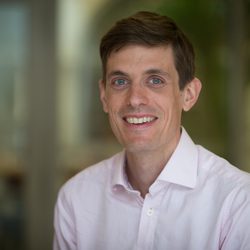
Michael A Osborne is Professor of Machine Learning at the University of Oxford and leads the Bayesian Exploration Lab . He serves as Director of the EPSRC Centre for Doctoral Training in Autonomous Intelligent Machines and Systems and co-directs the Oxford Martin AI Governance Initiative. His research focuses on Bayesian optimization, Gaussian processes, and probabilistic numerics with applications in quantum devices, battery modeling, and AI governance. Key Positions: Professor of Machine Learning, University of Oxford Official Fellow, Exeter College Co-founder of Mind Foundry Lead Researcher, Oxford Martin Programme on Technology and Employment Research Themes: Probabilistic modeling for quantum systems Uncertainty quantification in energy storage AI safety and societal impact analysis Automated experimental design Quantum device calibration Probabilistic numerical methods Technical Contributions: Bridging reality gap in quantum devices Efficient Bayesian quadrature techniques Personalized neurostimulation algorithms Automated measurement protocols Quantum-classical hybrid ML
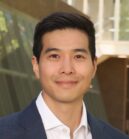
Panos Ipeirotis is a Professor at the Leonard N. Stern School of Business at New York University, affiliated with the Department of Technology, Operations, and Statistics. He also serves as the George A. Kellner Faculty Fellow and is associated with the Center for Data Science and Computer Science departments at NYU. PhD in Computer Science (Columbia University, 2004) MSc in Computer Science (Columbia University, 2001) BSc in Computer Engineering & Informatics (University of Patras, 1999) His research spans crowdsourcing, machine learning, human-AI collaboration, online labor markets, and social media analytics. He pioneered human-machine loop systems that combine human and machine intelligence to achieve superior outcomes. His work has applications in data quality assurance, visual media search (e.g., Google Project Glass), and economic valuation of user-generated content. Recent publications focus on algorithmic fairness in hiring systems, occupational segregation analysis, and theoretical advancements in crowdsourcing consensus mechanisms. Earlier work includes foundational studies on data quality in crowdsourcing platforms, economic impacts of product reviews, and query optimization for text-centric tasks. 2015 Lagrange Prize in Complex Systems NSF CAREER Award SIGKDD Test of Time Award (2020) Multiple Best Paper awards (WWW 2011, KDD 2008, SIGMOD 2006) He has received significant grants, including a $1.5 million Google Research Grant (2013) for integrating crowdsourcing with machine learning algorithms. His work bridges computer science, economics, and social psychology, with implications for policy-making and business strategy.
Professor Sarah Hall serves as the 1931 Professor of Geography and a Fellow at St John’s College, University of Cambridge. She is a Senior Fellow and Deputy Director at UK in a Changing Europe , where she examines UK-EU relations and the economic geography of post-Brexit financial services. Her research integrates cultural economy and political economy frameworks to analyze the spatial impacts of global financial shifts on cities, particularly focusing on London’s role as a financial hub and its evolving ties with China and the EU. Education: MA, PhD Her work, funded by the ESRC, British Academy, Leverhulme Trust, and Nuffield Foundation, explores how macroeconomic transitions—such as Brexit, China’s financial rise, and finance-led capitalism—reshape regional economies. She employs geographically sensitive approaches to bridge academic, public, and policy debates. Research Trends across her 2023–2015 publications emphasize: Post-Brexit financial services job displacement and regulatory divergence State capitalism’s role in Chinese banking expansion into London Interlocking corporate-policy networks between EU financial centres Offshore RMB market dynamics in the UK Marketization of higher education and elite recruitment Scientific Recognition : British Academy Mid-Career Fellowship (2016–17) Fellow of the Academy of Social Sciences (2020) She contributes to Geoforum as Co-Editor-in-Chief and mentors prospective PhD students in economic geography and financial geopolitics.
Matthew Bidwell is a Professor of Management at the Wharton School of Business, University of Pennsylvania . His research focuses on evolving employment relationships, career dynamics, and human resource management in modern labor markets. He serves as faculty co-director of the Wharton People Analytics Initiative and faculty director of the Wharton CHRO Program. Ph.D., MIT Sloan School S.M., Political Science, MIT M. Chem, Oxford Bidwell's research examines international career mobility , managerial contracting , and organizational labor market strategies . His work reveals complex relationships between global mobility and compensation, and analyzes how institutions like search firms shape career trajectories. Recent publications show trends in cross-border employment , executive career progression , and status-driven wage dynamics . His studies utilize longitudinal datasets and organizational personnel records to uncover patterns in managerial mobility. Scientific Recognition Wharton Teaching Excellence Award (2020) ASQ Scholarly Contribution Award (2017) John T. Dunlop Outstanding Scholar Award (2014) Sloan Foundation Industry Studies Fellowship (2010-2012) Bidwell has served as Senior Editor at Organization Science and contributes regularly to business media outlets. His teaching emphasizes evidence-based people management through the People Analytics course at Wharton.
Dr. Tracy Hecht is an Associate Professor of Management and Graduate Program Director of the PhD Program in Business Administration at the John Molson School of Business, Concordia University . She earned her PhD in Industrial and Organizational Psychology from the University of Western Ontario. Her research focuses on the interplay between work, family, and other life roles, particularly how these interactions influence job search behaviors, career trajectories, and well-being. Key themes include work-family boundary management, career procrastination, and the impact of multi-role dynamics on professional outcomes. As an Associate Editor at the Journal of Organizational Behavior , Dr. Hecht contributes to advancing scholarly discourse in her field. Her work has been published in top-tier journals such as Journal of Applied Psychology and Journal of Occupational and Organizational Psychology . Recent research highlights include studies on gender differences in job search intensity and the psychological mechanisms behind career decision delays. Her teaching and supervision span the Management (MSc) and Business Administration (PhD) programs. While no specific grants or labs are explicitly noted, her research consistently addresses contemporary challenges at the intersection of work and personal life, offering actionable insights for organizations and policymakers.
Prof. Andreas Gulyas is an Assistant Professor of Macroeconomics at the Department of Economics, University of Mannheim, and a research affiliate at IZA. He holds a Ph.D. from UCLA and a M.Sc. from the University of Vienna. His research focuses on Macroeconomics, Labor Economics, Search Theory, and Machine Learning applications in economics. Education: Ph.D. in Economics, UCLA, Los Angeles, USA M.Sc. in Economics, University of Vienna, Austria Research Interests: Gulyas examines labor market dynamics, monetary policy impacts, wage transparency, and the consequences of job displacement. His work combines theoretical models with empirical analysis, often employing field experiments and machine learning techniques to explore labor market inefficiencies and policy implications. Notable areas include cross-country comparisons of economic inequality and pandemic-induced unemployment effects. Articles Trends: His recent work emphasizes labor market policies, wage structures, and macroeconomic shocks. Key themes include the role of fringe benefits in job search behavior, monetary policy's heterogeneous effects, and pandemic-related unemployment disparities. Machine learning is increasingly used to analyze heterogeneous outcomes in displacement scenarios. Awards: No scientific awards listed. Advising/Grants: No advising records or grant information provided in available texts. His current research is likely supported through institutional funding and affiliations like IZA. Labs/Teams: Affiliated with the AEE Seminar at Mannheim, contributing to collaborative economics research initiatives.
Luisa Veronis is a Full Professor in the Department of Geography, Environment and Geomatics at the University of Ottawa, Faculty of Arts. Her research focuses on migration studies, refugee resettlement, and Francophone immigration in minority contexts, with an emphasis on social, economic, and cultural dimensions of integration. She holds the University of Ottawa Research Chair in Immigration and Franco-Ontarian communities. Ph.D. in Social Geography, University of Toronto (2006) MA in Social Geography, University of Toronto (1999) BA Honors in Social Anthropology, McGill University (1997) Her work examines how policies, economic conditions, and cultural contexts influence migrant decision-making. She leads interdisciplinary projects like the SSHRC-funded Ottawa Multicultural Media Initiative and co-leads studies on skilled migrant resilience and refugee settlement. Her research spans Ottawa-Gatineau, Toronto, Latin America, and Africa. Recent publications highlight social media’s role in pandemic-era labor market integration, governance structures in migration, and transnational practices. She supervises graduate students on topics related to Francophone immigration and social cohesion. She serves on the editorial board of Cahiers de Géographie du Québec and collaborates on grants including SSHRC Partnership Grants and Insight Grants. Her current teaching includes courses on geographies of globalization and transnational migration. Fieldwork expertise includes Ottawa-Gatineau, Toronto, and Latin American regions, with a focus on multicultural media and community-based research methods.
Roberto M. Fernandez is the William F. Pounds Professor at MIT Sloan School of Management, with over 35 years of experience in academia. He previously held the rank of Full Professor at Stanford University's Graduate School of Business. His expertise spans organizational behavior, social networks, and human resources, with over 60 published articles and research papers. He has been honored with multiple teaching awards including the Jamieson Prize (2009), Frank E. Perkins Award (2011), and MIT Sloan Outstanding Teacher Award (2023-2024). Education: BA in Sociology (Harvard University, magna cum laude), MA and PhD in Organizational Sociology (University of Chicago). Research Interests: Gender disparities in hiring, labor market dynamics, social networks' role in employment, and AI's impact on national security. Executive Education: Leads programs on organizational transformation, AI strategies, and enterprise-wide change management. Co-leads the AI for National Security Program for the U.S. government. International Engagement: Worked with organizations in over 40 countries, including consulting for top executives in industries like automotive, finance, and healthcare. Awards also include election as a Fellow of The American Academy of Political and Social Sciences (2012) and recognition for mentoring through the Committed to Caring Award (2023).
J. Daniel Kim is an Assistant Professor of Management at the Wharton School, University of Pennsylvania, where he teaches MBA and PhD courses on entrepreneurship and innovation. His research focuses on high-growth entrepreneurship, venture scaling, strategic human capital, mergers and acquisitions, innovation, and labor markets. PhD - MIT Sloan School of Management BA - Dartmouth College His research explores: Startup hiring challenges and firm-driven search strategies Timing and risks of venture scaling Post-acquisition employee retention patterns Founder impact on organizational change Immigrant founder contributions to entrepreneurship Key article trends show: Focus on talent dynamics in high-growth firms Analysis of organizational antecedents in acquisitions Quantitative approaches using population-level data Interdisciplinary connections between entrepreneurship, strategy, and economics Debunking myths about founder demographics Linkage between labor market mechanisms and startup performance Scientific recognition includes: Multiple Teaching Excellence Awards at Wharton (2024-2020) Best Paper Prize from Strategic Management Society (2020) Kauffman Dissertation Fellowship (2017) MIT Sloan Doctoral Thesis Prize (2019) Prof. Kim serves as an economist with the United States Census Bureau and has published in top journals including Strategic Management Journal , Organization Science , and American Economic Review: Insights . His work has been featured in The Wall Street Journal , New York Times , and Financial Times .
Michael J. Nakkula is a Professor of Practice and Chair of the Human Development and Quantitative Methods Division at the University of Pennsylvania Graduate School of Education. His research focuses on resilience and possibility development in youth, particularly in urban schools and low-income communities. He leads initiatives such as Project IF (Inventing the Future) to study optimal youth development and collaborates with organizations like Applied Research Consulting and Jobs for the Future. His work includes a decade-long longitudinal study on Early College High Schools funded by the Bill and Melinda Gates Foundation, examining how these schools enhance college readiness and academic identity. He also studies 'second-chance' charter schools and global 'possibility projects' in India, China, and beyond, aiming to help youth actualize their aspirations. Dr. Nakkula's research integrates counseling, mentoring, and educational strategies to foster student success. Collaborations with institutions like Search Institute and the Project for School Innovation highlight his commitment to bridging research and practice. Media engagements, including commentary on LGBTQ student support programs and pandemic-era educational challenges, underscore his public impact.
Tatjana Schnell is a Professor of Existential Psychology at MF Norwegian School of Theology, Religion and Society, where she has worked since October 2020. She also holds a fellowship at the Humanistic University Berlin (since 2024). Her professional journey includes academic training in psychology, theology, religious studies, and philosophy across Germany, the UK, and Austria, with a doctorate from the University of Trier (Germany) and habilitation from the University of Innsbruck (Austria), where she founded the Existential Psychology Lab. Education : Psychology, Theology, Religious Studies, and Philosophy from the University of Göttingen, University of London, University of Heidelberg, and University of Cambridge Degree : Doctorate in Psychology (University of Trier, Germany) Habilitation : Psychology (University of Innsbruck, Austria) Tatjana Schnell's research focuses on existential themes including meaning in life, existential health, death attitudes, alienation, and religious/spiritual/secular worldviews. Her work bridges individual psychology with societal and environmental implications, with extensive international collaborations and publications. She has authored key works like "The Psychology of Meaning in Life" (2nd ed., 2025) and "Sinn finden" (2024). Her recent publications examine pandemic psychology, existential resources in gifted adults, workplace spirituality, and meaning-based interventions for chronic pain and cancer rehabilitation. Her research projects include "Making Sense of Volunteering," "Sinnmacher - The Meaning App," and studies on existential resources in palliative care. The Tatjana Schnell website provides further details about her work. Fellow : Humanistic University Berlin (2024) Tatjana Schnell has developed innovative tools like the Sources of Meaning Card Method (SoMeCaM) and Meaning in Work Inventory (ME-Work), with validated versions across multiple cultures. Her work emphasizes the practical application of existential psychology in mental health, organizational behavior, and ecological engagement. She founded the Existential Psychology Lab at the University of Innsbruck and continues to lead impactful research at MF Norwegian School of Theology, Religion and Society.
Gaston Chaumont is an Assistant Professor of Economics at the University of Rochester, affiliated with the Department of Economics in the School of Arts & Sciences. He holds a PhD from Penn State University (2019). His research focuses on Macroeconomics, International Macroeconomics, Labor Economics, and Monetary Economics, with particular emphasis on topics like sovereign debt dynamics, self-fulfilling crises, and wealth inequality. His academic background includes significant contributions to understanding the interplay between monetary policy and fiscal interactions, sovereign risk, and the role of firm behavior in economic activity. He has also explored behavioral finance phenomena, such as the GameStop and AMC stock market events, through the lens of self-fulfilling beliefs. His work frequently integrates empirical evidence, including scanner data and case studies from emerging economies like Chile. Chaumont’s publications span theoretical and applied research, addressing issues like debt crises, financial market liquidity, and the implications of search frictions in labor and asset markets. His research highlights the interconnectedness of macroeconomic stability, policy design, and market dynamics. No academic awards or grants are explicitly listed in the provided materials. While no advisee students are mentioned, his research trajectory suggests active involvement in mentoring graduate students through his academic role. He is based at 229 Harkness Hall, with contact details including a university phone line and professional webpage.
Ruth Kanfer is a Professor of Psychology at the Georgia Institute of Technology's School of Psychology, specializing in adult learning, motivation, and career development. Her research addresses the impacts of technological advancements, demographic shifts, and global economic changes on work and career trajectories. She co-directs the PARK Lab, focusing on topics such as self-regulation in job search, motivational dynamics, and the psychology of workplace environments. Dr. Kanfer holds a Ph.D. in Psychology from Arizona State University and has contributed to seminal works on aging and workforce diversity. She is a Fellow of prominent organizations including the Academy of Management and the American Psychological Association, and has received prestigious awards such as the SIOP's William R. Owens Scholarly Achievement Award. Her research employs mixed-methods approaches, including experimental studies and large-scale field research. Key themes include adult learning efficacy, team-based motivation, and the design of workspaces to enhance employee well-being. Dr. Kanfer has led projects funded by the Sloan Foundation and the National Academy of Sciences, emphasizing interdisciplinary collaboration. Notable contributions include studies on the future of work, the role of future time perspective in career decisions, and the application of a 'whole-person' framework to adult learning. Her work has been published in journals like Journal of Applied Psychology and American Psychologist . She actively participates in professional committees, including the Sloan Research Network on Aging and Work and the National Academy of Sciences' How People Learn II initiative.
Javier Fernandez Blanco is an Associate Professor and Chair of the Department of Economics and Economic History at the University Autonomous of Barcelona (UAB), affiliated with the Barcelona School of Economics (BSE). He holds a PhD in Economics from the University of Minnesota (2008) and degrees in Economics and Mathematics from the Universitat de Barcelona. His research focuses on labor markets, public insurance design, and macroeconomic policy, with a particular interest in unemployment dynamics, household insurance mechanisms, and aging populations. He has held visiting positions at the University of Toronto (2018-19 as Visiting Associate Professor), UNSW Sydney (2012), and Carlos III University of Madrid (2008-12). His work has been published in top journals like the International Economic Review, Journal of Economic Theory, and European Economic Review. He has secured research grants, including two BSE Seed grants as Principal Investigator, and contributed to national research initiatives. He currently co-directs research projects on labor markets and education, and has advised numerous PhD and master’s students. His awards include fellowships from the Generalitat, Ramon Areces Foundation, and University of Minnesota. He actively participates in academic service, including organizing conferences, serving on editorial boards, and holding leadership roles in academic governance at UAB and BSE.
Dr. Lata Narayanan is a Professor in the Department of Computer Science and Software Engineering at Concordia University, Montreal, Canada. Her research spans theoretical and applied aspects of distributed systems, with a focus on algorithms for mobile agents, communication networks, and sensor networks. Department: Computer Science and Software Engineering University: Concordia University Research Interests Lata Narayanan specializes in algorithms for mobile robots and ad hoc networks , with expertise in routing on distributed networks , parallel algorithms , and social network analysis . Her work addresses challenges in sensor network optimization, barrier coverage, and time-energy tradeoffs for evacuation systems. Article Trends Her recent publications (2021-2025) emphasize game theory for network dynamics, cloud resource allocation , and temporal graph exploration . Key themes include strategic diversity, truck-drone delivery logistics, and energy-sharing protocols for mobile agents.