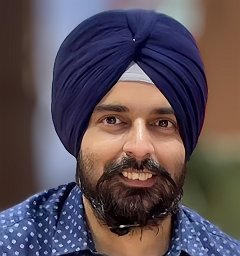
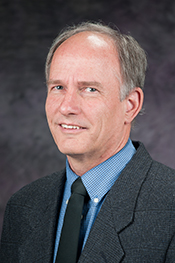
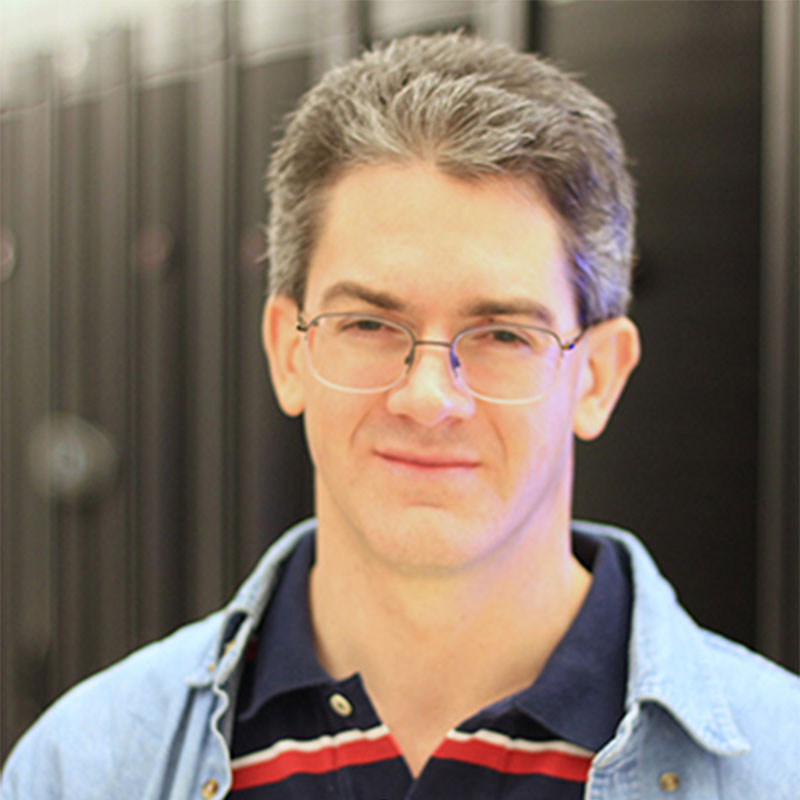
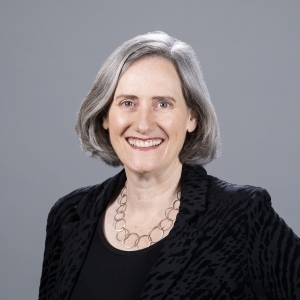
Dr. Xinxin Hu is an Associate Professor at the University of Houston-Downtown in the Department of General Business, Marketing, and Supply Chain under the Marilyn Davis College of Business. Her research focuses on decision-making under uncertainty, supply chain contracts, and retail management. PhD in Operations Management, University of Michigan MA in Statistics, University of Michigan BA in Operations Research, Fudan University Her research interests center on supply chain optimization, with a focus on lateral transshipment strategies, risk management, and sustainable operations. She has published in top journals like Management Science , OMEGA , and Production and Operations Management . Recent publications highlight her work in wind energy integration, decentralized inventory systems, and competitive distribution strategies. Her service roles include leadership positions in university academic policy and college-level scholarship committees.
Gagandeep Singh is a tenure-track Assistant Professor in the Department of Computer Science at the University of Illinois at Urbana-Champaign (UIUC). His work focuses on creating intelligent computing systems with formal guarantees about behavior and safety, integrating Machine Learning, Formal Methods, and Systems research. Affiliation: University of Illinois at Urbana-Champaign; VMware Research Research Interests: Formal Methods, Machine Learning, Artificial Intelligence, Programming Languages, Neural Network Verification, Automatic Differentiation His research emphasizes scalable verification techniques for neural networks, abstract interpretation, and systems integration. Recent work trends include applying formal methods to ensure safety in deep learning models and optimizing numerical analysis through domain decomposition and convex hull approximations. He contributes to academic communities as a committee member in conferences like POPL, VMCAI, PLDI, and SAS, while authoring key publications in top venues such as POPL, PLDI, OOPSLA, and SAS.
Mitchell L. Neilsen is a Professor in the Department of Computer Science at Kansas State University's College of Engineering, where he also serves as the graduate program director. He holds the Warren and Gisela Kennedy - Carl and Mary Ice Keystone Research Scholar position and maintains an active research program with multiple ongoing projects. His educational background includes a Ph.D. in Computer Science (1992), M.S. in Computer Science (1989), and M.S. in Mathematics (1987), all from Kansas State University, plus a B.S. in Mathematics Education from the University of Nebraska-Kearney (1982). After beginning his career as an assistant professor at Oklahoma State University, he returned to K-State in 1996. Research Interests: Cyber-Physical Systems: Design, Analysis, Verification of systems integrating computing, networking, and physical processes Distributed Systems: Algorithms, design, and analysis of distributed computing systems Scientific Computing: Computational Fluid Dynamics, Finite Element Analysis, High Performance Computing, and Simulation Application Areas: Agriculture technology, Dam safety analysis, Mobile applications, Natural resources management, and Real-time Embedded Systems His research program shows clear evolution toward agricultural technology applications, particularly high-throughput phenotyping, while maintaining strong foundations in cyber-physical systems and scientific computing. Recent publications indicate increasing integration of machine learning and computer vision techniques into traditional research areas. Research Funding: National Science Foundation U.S. Department of Agriculture Sandia National Laboratories Department of Homeland Security Private industry partners Dr. Neilsen has mentored numerous graduate students through their M.S. and Ph.D. programs, with recent advisees focusing on applications in agricultural technology, dam safety, and embedded systems. His advising approach emphasizes practical applications of theoretical computer science concepts. Current Teaching (Fall 2024): CIS 450 - Computer Architecture and Operations CIS 625 - Concurrent Software Systems CIS 720 - Advanced Operating Systems
Ian M. Hughes is an Assistant Professor in the Industrial/Organizational Psychology program at North Carolina State University's Department of Psychology within the College of Humanities and Social Sciences. His research focuses on workplace social exchanges, employee well-being, and occupational health psychology. He holds a Ph.D. from Bowling Green State University (2023) following prior degrees from the same institution (M.A., 2021) and the University of Central Florida (B.S., 2019). Dr. Hughes' work examines how social support dynamics and workplace mistreatment affect psychological, physiological, and behavioral outcomes. He also investigates politics and work, social media's impact, and human-animal interaction. His research has been published in high-impact journals such as the Journal of Occupational Health Psychology and Computers in Human Behavior . He leads the PAWW (Psychology, Animals, Work, and Well-being) lab, exploring interdisciplinary connections between these areas. Recent studies highlight trends in understanding unhelpful workplace support mechanisms, pet ownership's spillover effects on work performance, and the psychological impacts of doomscrolling. His work bridges organizational behavior with health psychology, emphasizing practical applications for improving workplace climates and employee well-being. Though no formal awards are listed, his prolific publication record (over 20 articles since 2019) indicates sustained academic impact. His CV provides further details about grants, lab activities, and collaborative projects. He advises the PAWW lab team but no named students are listed in available materials.
Jürgen Sauer is a Full Professor at the University of Fribourg , affiliated with the Department of Psychology under the Faculty of Letters and Human Sciences . With over 120 publications, his research focuses on Human-Machine Interaction , Usability Testing , User Experience (UX) , and Automation Design , particularly in high-stakes environments like X-ray baggage screening and spaceflight simulations . Email: juergen.sauer@unifr.ch Phone: +41 26 300 7622 Address: RM 01 bu. C-1.117, Rue PA de Faucigny 2, 1700 Fribourg Orcid: 0000-0003-2105-1694 His research projects, funded by the Swiss National Science Foundation (FNS), include: Improving work design for airport security officers (2019-2024): Developed pictorial scales for measuring psychological constructs in security environments. Social stress and support in hybrid teams (2018-2023): Investigated machine-induced social stressors and mitigation through social support. Automation in visual inspection tasks (2014-2018): Examined adaptable automation for baggage screening and system reliability effects. Usability testing effectiveness (2012-2016): Analyzed cultural background impacts and non-usability product features influencing test outcomes. Key contributions include the Luggage Inspection Simulation (LIS) environment for modeling work environments and the development of pictorial usability scales for multilingual applicability. His work bridges ergonomics , human factors , and applied psychology , with notable collaborations with researchers like Adrian Schwaninger and Andreas Sonderegger . His recent publications (2025-2014) analyze: Human-machine performance under false alarms and miscues Social stressor dynamics in hybrid teams Usability scale animation effects Phubbing behavior in professional contexts Accessible website design for non-disabled users
Nelson Nicolas Higuera Ruiz is a PreDoc Researcher at the Vienna University of Technology, affiliated with the Faculty of Informatics' Knowledge-Based Systems research group. His work bridges logic programming and deep learning for explainable AI. Research Focus: Neurosymbolic AI, Visual Question Answering (VQA), Answer Set Programming (ASP), and hybrid reasoning systems Projects: Leads optimization research in the LCS (2017–2025) project, developing neurosymbolic approaches for intelligent systems Key Contributions: Pioneering adaptive large-neighbourhood search algorithms for ASP optimization, modular neurosymbolic architectures, and contrastive explainability frameworks for VQA Collaborations: Active in international workshops and conferences including IJCAI, AAAI, and CLeaR, frequently collaborating with researchers like Thomas Eiter and Johannes Oetsch Publications: Focus on neurosymbolic integration, optimization algorithms, and explainability across AI, logic programming, and computer vision domains
Tania Cerquitelli is a Full Professor in the Department of Control and Computer Science (DAUIN) at Politecnico di Torino, where she leads research in data science, concept-drift management, and inclusive AI technologies. She is a member of SmartData@PoliTO, the GEDI Observatory for Gender Equality, and serves in leadership roles related to social affairs and community policies at the university level. She also acts as a scientific advisor for the partnership with Accenture. Her research interests span Data Science , Concept-Drift Management , Database Systems , Conversational Data Science , and Industry 4.0 . She applies AI and machine learning to industrial, societal, and ethical challenges, particularly in promoting inclusive communication and gender equality in research. The most recent publications highlight her work in explainable AI, concept drift detection, multimodal diagnostics, and AI for social good. Her research integrates machine learning, natural language processing, and computer vision to address real-world problems in manufacturing, healthcare, agriculture, and education. She is an Associate Editor for several prestigious journals including Expert Systems with Applications , Computer Networks , Future Generation Computer Systems , and Knowledge and Information Systems . She has served on the program committees of major conferences such as ECML PKDD, EDBT/ICDT, and ACM KDD, and has been a reviewer and selection committee member for ETH Zurich and EMPA. She actively supervises PhD students and teaches a wide range of courses including Data Science and Database Technologies, Business Intelligence for Big Data, and Gender and Diversity in Research. She is involved in multiple national and international research projects such as E-MIMIC, WEBFARE, and EnABLES, focusing on inclusive AI, smart data, and industrial applications. Her lab affiliations include the DBDM - Database and Data Mining Group (DAUIN) and the Interdepartmental Center SmartData@PoliTO - Big Data and Data Science Laboratory , where she contributes to advancing data science methodologies and their societal impact.
Liji Shen is Professor of Operations Management and Chairholder at WHU – Otto Beisheim School of Management, Campus Vallendar, Germany. She is affiliated with the Supply Chain Management Group and leads research in scheduling, optimization, and sustainable manufacturing. Her academic journey includes a Ph.D. and Habilitation from Technische Universität Dresden, and she has held visiting scholar positions at institutions including École des Mines de Saint-Étienne and Huazhong University of Science and Technology. Ph.D. (Dr.rer.pol.), summa cum laude, Technische Universität Dresden (2009) Habilitation, Technische Universität Dresden (2015) Master of Business Administration (Dipl.-Kffr.), Technische Universität Dresden (2006) Liji Shen's research focuses on Operations Management , particularly scheduling optimization in manufacturing systems. Her work spans flexible job shops , parallel machine scheduling , energy-efficient production , and sequence-dependent setup times . She applies advanced techniques such as evolutionary algorithms , hybrid metaheuristics , and mathematical programming to solve complex industrial problems. Her recent publications emphasize sustainability through energy-aware scheduling and time-of-use pricing models. The 15 most recent publications highlight a consistent research trajectory in production scheduling , with increasing emphasis on energy efficiency , distributed manufacturing , and real-world constraints like eligibility and delivery times. Her work frequently appears in top journals such as European Journal of Operational Research , IEEE Transactions on Evolutionary Computation , and Computers & Operations Research , often in collaboration with leading researchers like Dauzère-Pérès, Mönch, and Buscher. Scientific Awards: European Journal of Operational Research, Best Paper Award (2021) DFG and TU Dresden, 'Support the Best' Prize for Outstanding Researchers (2013) Dr. Feldbausch-Prize for Best Dissertation, TU Dresden (2010) Scholarship for Young Researchers in Saxony (2006–2009) DAAD Prize for Best Foreign Students (2007) Best Master’s Thesis, German Operations Research Society (2007) Liji Shen has been an active advisor and researcher, leading projects in operations research and industrial optimization. Her editorial role on Operations Research Perspectives underscores her standing in the academic community. She has directed research labs and collaborated internationally, contributing to both theoretical advancements and practical applications in manufacturing and logistics. No specific grants are mentioned, but her sustained publication record and leadership roles indicate strong research support. She leads the Operations Management research group at WHU, focusing on algorithmic solutions for complex scheduling problems. Her team investigates energy-aware production, hybrid flow shops, and distributed systems, aiming to bridge the gap between theoretical models and industrial implementation. The lab collaborates with researchers across Europe and China, fostering a global research network in operations research and supply chain management.
Harutyun Ishkhanovich Avetisyan is a Professor and Head of the Basic Department "System Programming" at the Faculty of Computer Science of the National Research University Higher School of Economics (HSE). He began his tenure at HSE in 2017 and brings 30 years of scientific and teaching experience to his role. Additionally, he serves as the Director of the Institute for System Programming of the Russian Academy of Sciences (ISP RAS), a position he has held since 2015. Avetisyan holds numerous prestigious academic distinctions, including being elected as an Academician of the Russian Academy of Sciences in 2019 and as a Corresponding Member in 2016. He earned his Doctor of Physical and Mathematical Sciences degree in 2012 and was awarded the academic title of Associate Professor in 2009. His educational background includes a specialty in "Applied Mathematics" from Yerevan State University (1993). His research focuses on three main areas: analysis and transformation of programs, software security, and parallel and distributed computing technologies. These interests are reflected in his extensive publication record and leadership in major research initiatives. His work bridges theoretical computer science with practical applications in cloud computing, secure data storage, and high-performance computing systems. Avetisyan's scholarly contributions demonstrate a consistent focus on system programming challenges, particularly in the areas of code analysis, optimization, and security. His recent publications indicate a growing interest in cloud computing paradigms, smart city infrastructure, and energy-efficient computing solutions. His research has significant implications for both academic theory and industrial applications in software development. Among his notable recognitions, Avetisyan was awarded the medal of the Order "For Merit to the Fatherland" 2nd degree in 2021 for his significant contributions to science and dedicated service. He also serves on the editorial boards of several prestigious journals including "Programming" (since 2015) and "Proceedings of the Institute for System Programming of the RAS" (since 2010). Throughout his career, Avetisyan has led and participated in numerous research grants funded by the Ministry of Education and the Russian Foundation for Basic Research. His professional trajectory shows steady progression from postgraduate studies (1997-2000) to research fellow (2000-2002), deputy director of ISP RAS (2002-2015), and ultimately director of the institute (2015-present). At HSE, Avetisyan teaches courses in parallel programming and mentor seminars for master's students in Software Engineering. His teaching philosophy emphasizes the integration of cutting-edge research with practical software development skills, preparing students for careers at the forefront of computer science.
Morteza Ghobakhloo is a Senior Lecturer and Researcher at Uppsala University , affiliated with the Department of Civil Engineering and Industrial Engineering (Industrial Engineering) and the Institute for Research on Conflicts of Goals in Sustainable Social Transition . His email is morteza.ghobakhloo@angstrom.uu.se . He focuses on digital transformation, sustainability, and human-centric technologies. Research Interests: Morteza’s work bridges Industry 4.0/5.0 , Sustainable Manufacturing , and Generative AI applications. His studies explore blockchain, big data analytics, and smart technologies in supply chain resilience, energy efficiency, and organizational innovation. Article Trends: Recent publications highlight Industry 5.0’s role in sustainable supply chains, AI-driven healthcare optimization, and blockchain for socioenvironmental solutions. He employs hybrid methodologies like PLS-fsQCA, ANN, and simulation modeling across sectors including energy, healthcare, and tourism.
Michael Hyland is an Associate Professor in the Department of Civil and Environmental Engineering at the Samueli School of Engineering, University of California, Irvine. His research focuses on the modeling, analysis, and optimization of smart urban transportation systems, with particular emphasis on shared autonomous vehicles, microtransit integration with fixed-route transit, and sustainable mobility solutions. He employs methodologies from operations research (optimization, Markov decision processes), statistical modeling (discrete choice, regression), and economic analysis to address challenges in urban mobility. Education: Ph.D., Civil and Environmental Engineering (Transportation), Northwestern University, 2018 M.Eng., Civil and Environmental Engineering (Transportation), Cornell University, 2013 B.S. Civil and Environmental Engineering, Cornell University, Magna Cum Laude, 2013 His recent research explores emerging mobility paradigms through topics such as dynamic fleet management, vehicle miles traveled (VMT) impacts, equity in job accessibility, electricity demand implications of e-bikes, and human-machine collaborative planning frameworks. The work often combines large-scale simulation with interpretable modeling techniques. Hyland leads the Hyland Lab , which develops computational tools for evaluating integrated transportation systems. The lab's work spans theoretical modeling (e.g., state-space representations, decomposition heuristics) and applied policy analysis (e.g., assessing Senate Bill 1 infrastructure projects, AV-era parking reforms, and micromobility deployment strategies).
Greg Ganger is the Jatras Professor of Electrical and Computer Engineering at Carnegie Mellon University and Director of the Parallel Data Lab (PDL). His research focuses on computer systems, including cloud computing, storage systems, distributed systems, and machine learning infrastructure. He holds a Ph.D. in Computer Science and Engineering from the University of Michigan and completed postdoctoral work at MIT. Education: Ph.D., M.S., and B.S. in Computer Science from the University of Michigan (1991–1995). Research Interests: Ganger leads projects in cloud computing, storage/file systems, operating systems, and systems for big data and large-scale machine learning. Recent work includes optimizing cloud resource scheduling, developing sustainable storage solutions, and improving ML cluster efficiency. The PDL explores storage system architecture, file systems, and leveraging new storage technologies like non-volatile memory (NVM). Awards: 2021 OSDI Best Paper, 2021 SOSP Best Paper, 2021 SoCC Test of Time Award, and 2021 R&D 100 Award. His team's work on Kangaroo caching and MACARON cloud caching exemplifies cutting-edge contributions. Advising & Grants: Advises graduate students in ECE and Computer Science. Active in grants related to distributed storage, cloud systems, and ML infrastructure. Collaborates with industry partners like Los Alamos National Lab on storage systems. Labs/Teams: Directs the Parallel Data Lab (PDL), a leading research group in storage and distributed systems. Collaborates with CMU’s CyLab on security aspects of storage systems and ML infrastructure.
Joan Walker is the Department Chair and T.Y. and Margaret Lin Professor of Civil and Environmental Engineering at the University of California, Berkeley. She holds a Ph.D. in Transportation Systems from MIT (2001), an M.S. in Transportation from MIT (1994), and a B.S. in Civil Engineering from UC Berkeley (1991). Prior to UC Berkeley, she served as Director of Demand Modeling at Caliper Corporation and as Assistant Professor of Geography and Environment at Boston University (2004-2008). Walker’s research intersects behavioral modeling, discrete choice analysis, travel behavior, and transportation planning. Her work focuses on enhancing models for transportation decision-making by incorporating social influences, environmental attitudes, and lifestyle factors. She has led major projects on autonomous vehicles, pandemic mobility shifts, and sustainable transportation policy. Presidential Early Career Award for Scientists and Engineers (PECASE) National Science Foundation CAREER Award UC Berkeley Hellman Family Faculty Fund Best Paper Award, AGIFORS Scheduling & Strategic Planning Her students have received numerous accolades including the UCCONNECT Outstanding Student of the Year and Women’s Transportation Seminar Leadership Legacy Scholarships. Walker’s grants include NSF CAREER funding and UC Transportation Center projects. She co-directs the Center for Global Metropolitan Studies and has served as Acting Director of the Institute of Transportation Studies.
Nicolas Zufferey is a Full Professor of Operations Management at the University of Geneva, Switzerland, where he has served since 2008. He leads research in optimization methods for complex systems, focusing on applications in supply chain management, production planning, inventory control, and transportation logistics. His affiliations include the Research Institute of Management and collaborations with CIRRELT (Transportation & Logistics) and GERAD (Decision Analysis). Education: PhD in Operations Research (EPFL, 2002), MSc/BSc in Mathematics (EPFL) Prior Experience: Postdoc at University of Calgary (2003–2004), Assistant Professor at Université Laval (2004–2007) Research Interests: His work emphasizes developing advanced metaheuristics (e.g., VNS, Tabu Search, PSO) for challenging optimization problems. Key domains include: Multi-objective scheduling with resource constraints Inventory deployment under uncertainty Network design for supply chains and transportation systems Publications: Over 150 peer-reviewed articles across journals like European Journal of Operational Research , Transportation Research , and INFORMS Journal on Computing . Recent work addresses electric vehicle routing, drone integration in delivery systems, and robust decision-making under uncertainty. Collaborations: Engaged with 35+ universities and 27 private companies globally. Active in applying operations research to industrial problems (e.g., Swiss railways, luxury watch production, pharmaceutical networks).
Dr. Adel Aazami is an Assistant Professor at the Institute of Transport Economics and Logistics at Vienna University of Economics and Business (WU Vienna) since 2023. His academic journey began with a B.Sc. in Industrial Engineering from University of Tehran (2010-2014), followed by an M.Sc. (2014-2016) and Ph.D. (2016-2021) from Iran University of Science and Technology (IUST), Tehran. Prior to his current position, he worked as a Postdoctoral Researcher at Sharif University of Technology (2021-2022) and was a Visiting Researcher at the University of Toronto (2020). His educational background includes: Ph.D. in Industrial Engineering (2016-2021) - Iran University of Science and Technology (IUST), Tehran, Iran M.Sc. in Industrial Engineering (2014-2016) - Iran University of Science and Technology (IUST), Tehran, Iran B.Sc. in Industrial Engineering (2010-2014) - University of Tehran, Tehran, Iran Dr. Aazami's research spans multiple interconnected domains within operations research and supply chain management. His primary focus areas include Operations Research and Optimization, Supply Chain and Logistics, Production and Distribution/Transportation Planning, Competition and Game Theory, Stochastic Programming, and Decomposition Algorithms. His work demonstrates a strong emphasis on developing mathematical models and optimization algorithms for complex supply chain problems, particularly those involving perishable goods, competitive environments, and sustainability considerations. He has made significant contributions to integrating environmental factors into traditional logistics problems and developing robust optimization approaches for supply chain networks. Analysis of Dr. Aazami's publication record reveals a consistent trajectory of increasingly sophisticated research in supply chain optimization. His work shows a clear progression from foundational mathematical optimization techniques to increasingly complex integrated problems involving multiple stakeholders, uncertainty, and environmental considerations. A notable trend is his focus on perishable products within supply chains, developing models that account for limited product lifetimes while optimizing across multiple echelons of the supply chain. More recently, his research has expanded to incorporate green logistics considerations, developing algorithms that balance economic and environmental objectives in transportation and distribution problems. His notable scientific achievements include: Winner of the 'Best Student' award among nationwide students evaluated by the Iranian Ministry of Science (2020) Winner of the Iranian Nobel Prize (known as the Alborz National Foundation Prize) (2019) Winner of the Best Student Award at IUST (2018) Winner of the Top Researcher Award at IUST (2018) Annual Awards of the National Elites Foundation Iran (2015-2020) Dr. Aazami has extensive teaching experience across multiple Iranian universities including Tehran University, Amirkabir Technical University, Isfahan University, Yazd University, Zanjan University, Damghan University, Abrar University and Iran Technical University. His peer review activities include reviewing for prestigious journals such as Soft Computing, Expert Systems with Applications, and Annals of Operations Research. While specific grant information isn't detailed in the provided text, his research output suggests active engagement with complex optimization problems relevant to transportation and logistics industries. At WU Vienna, Dr. Aazami is part of the research team at the Institute of Transport Economics and Logistics, working alongside other faculty members including Prof. Kummer and Prof. Wakolbinger. His research integrates theoretical optimization methods with practical applications in transportation and logistics, contributing to the institute's focus on sustainable and efficient supply chain solutions.