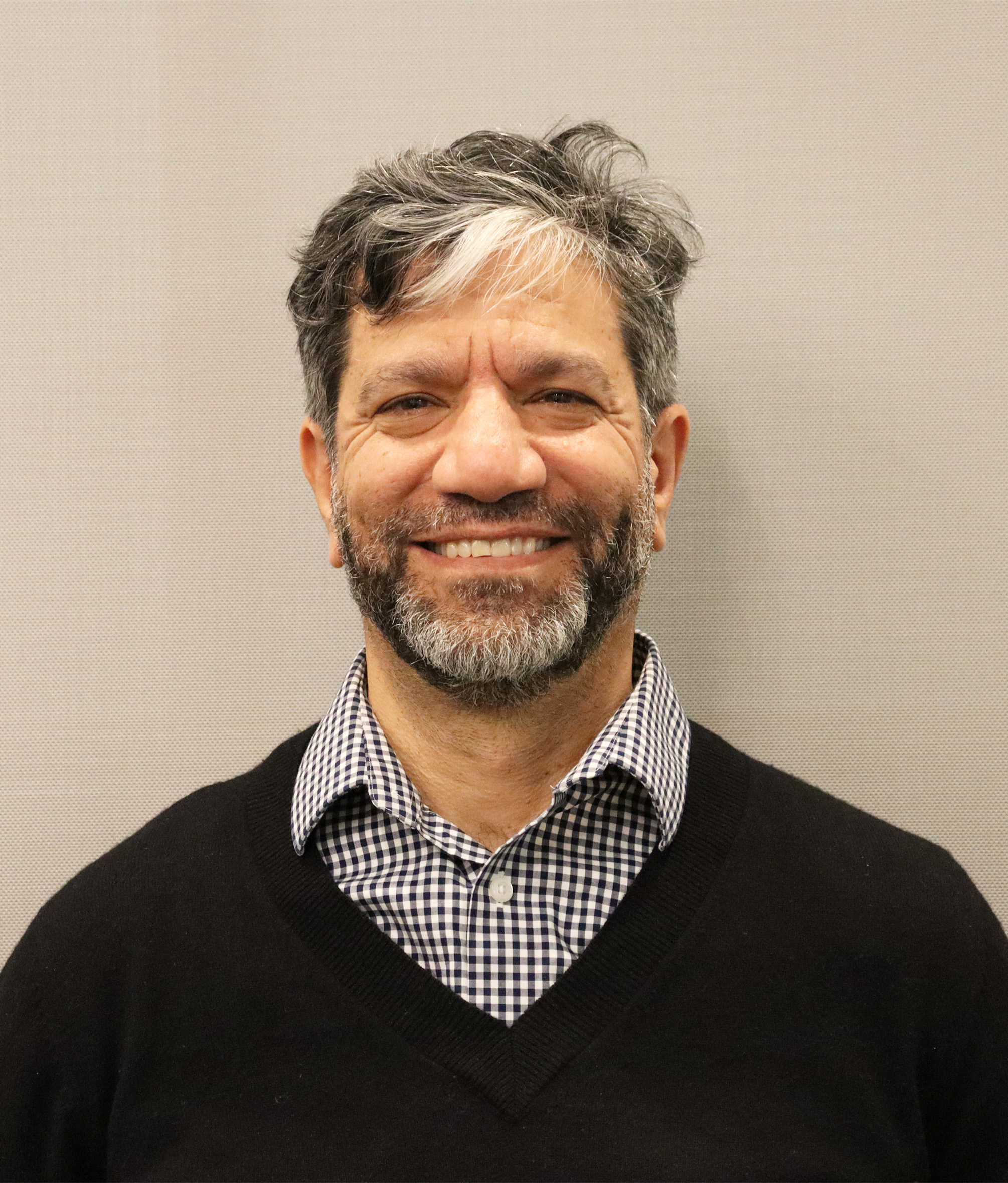
Mohsen Goudarzi is an Associate Professor of Islamic Studies at Harvard Divinity School (HDS), part of Harvard University. He joined the faculty in 2021 after teaching at the University of Minnesota. His academic background includes a PhD from Harvard University and an MA from Stanford University. His research focuses on the Qur’an and early Islamic history, employing literary, linguistic, comparative, and historical approaches. Key interests include the Qur’an’s role in Late Antique religious developments, Islamic exegetical traditions (tafsīr), and theological frameworks (kalām). His current projects explore the Qur’anic worldview’s interpretation and the significance of Meccan cultic rituals to early Islamic identity. He has received teaching excellence awards, including a certificate from the University of Minnesota’s Center for Educational Innovation and three teaching distinctions from Harvard’s Office of Undergraduate Education. Research outputs include groundbreaking articles on Qur’anic exegesis, cultic practices, and interreligious dynamics. Notable works analyze the Qur’an’s engagement with Abrahamic traditions, ritual practices in Mecca, and the textual history of early Islamic manuscripts. His collaborative work on the Ṣan‘ā’1 codex redefined understandings of early Qur’anic canonization. Teaching spans HDS and Harvard’s Faculty of Arts and Sciences (FAS), covering Islamic studies, Qur’anic studies, and religious history. He advises students in HDS programs and contributes to interdisciplinary initiatives at the intersection of theology, history, and textual criticism.
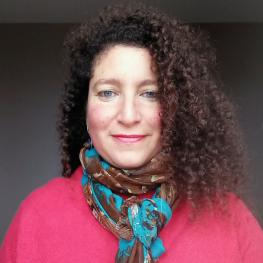
Cynthia Gabbay is a researcher at the Institute of Cultural History and Theory, Humboldt University of Berlin, and is completing her Habilitation at the University of Orléans, France. She is a multilingual poet, translator, and editor specializing in Jewish and Romance languages with primary affiliations in Jewish studies and Latin American research. Her educational background includes a Ph.D. from the Hebrew University of Jerusalem and ongoing Habilitation research at the University of Orléans. Ph.D.: Hebrew University of Jerusalem Habilitation: Rémélice Laboratory, University of Orléans Gabbay's research explores Jewish diaspora experiences in Latin America through interdisciplinary lenses of translation studies, multilingualism, and historical memory. She investigates how cultural legacies are preserved through literature and bibliographic projects, with particular focus on Argentina's Jewish communities and transnational connections to Iberian history. Her work bridges literary analysis, archival research, and creative practice as a poet and translator. Recent publications demonstrate a trend toward examining traumatic historical events through Jewish cultural frameworks, connecting Argentine Jewish settlements with Spanish Civil War narratives. This reflects growing scholarly interest in comparative diaspora studies and the role of literature in reconstructing fragmented histories. Scientific recognition includes: Maurice Amado Foundation Fellowship at University of Pennsylvania German Research Foundation Project Grant for 'The Jewish Library in Argentina' New Frontiers in Contemporary Jewish Life Fellowship (2025-2026) Gabbay coordinates the Network for the Study of Jewish Translation and Multilingualism and serves on the administrative board of the Latin American Jewish Studies Association (LAJSA). As editor-in-chief of the Latin American Jewish Studies Series (De Gruyter), she oversees scholarly publications while co-editing the journal Lingua Franca: The History of the Book in Translation . Her upcoming event 'Figuring Dystopia in 'Ho! Literary Magazine' (November 2025) continues her exploration of literary responses to historical trauma. She founded and coordinates Simania: Salon Readings, creating platforms for multilingual literary exchange within the Latin American Jewish Studies Association framework.
Walid A. Saleh is a Professor of Islamic Studies at the University of Toronto , holding appointments in both the Near and Middle Eastern Civilizations department and the Department for the Study of Religion . His scholarship focuses on the Qur’an , Quranic exegesis (Tafsir), Islamic apocalyptic literature , and Biblical reception in Islam . PhD from Yale University (2001) Recipient of Mellon New Directions Fellowship (2014) and Konrad Adenauer Fellow (2017) Editor of the Routledge Qur’an Series His research analyzes Quranic chronology , manuscript traditions , and Islamic intellectual history . Recent publications examine periodization in Sunni tafsir, late Ottoman book culture, and the reception of al-Bayḍāwī's Anwar al-tanzīl . Articles explore topics from Quranic death narratives to medieval Islamic cosmology . Key article themes: Quranic identity formation , Islamic manuscript studies , exegetical methodology He has edited critical texts like al-Biqa`i's Bible treatise and serves on editorial boards for the Journal of the American Academy of Religion and Journal of Qur'anic Studies . His teaching includes advanced courses in Arabic paleography and Quranic hermeneutics .
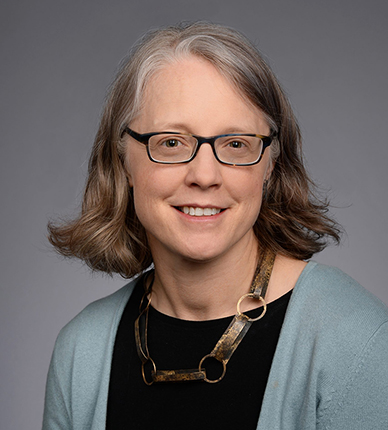
Kristin Schwain is a Professor in the Department of Art History at the University of Missouri's School of Visual Studies. She holds a PhD in Art History and Humanities from Stanford University and a BA in Art History and Humanities from Valparaiso University. Her interdisciplinary research examines marginalized objects and practices in American art history, emphasizing their cultural significance through lived experience. Her educational background includes: PhD in Art History and Humanities, Stanford University BA in Art History and Humanities, Valparaiso University Dr. Schwain's research centers on American Material and Visual Culture, Art and Religion, Arts of the African Diaspora, and Public Humanities. She investigates overlooked artifacts to reveal their influence on everyday life, challenging assumptions about modernization's impact on religious expression. Her work bridges historical analysis with contemporary relevance through studies of traditional craft, artist books, photojournalism, and mass-produced objects as lenses into social practices. Her recent publications demonstrate consistent focus on art-religion intersections in American cultural history, from Henry Ossawa Tanner's biblical paintings to Afro-Cuban religious themes in Ediciones Vigía artist books. This body of work reveals evolving methodologies for uncovering marginalized narratives through interdisciplinary frameworks spanning visual culture, material studies, and diaspora scholarship. Her scholarly recognition includes: First Biennial National Basketry Association Book Award for Rooted, Revived, Reinvented: Basketry in America Dr. Schwain has secured major grants from the Smithsonian Institution, Luce/American Council of Learned Societies, Center for the Study of Religion and American Culture, and Georgia O’Keeffe Museum Research Center. Her collaborative public humanities projects with the Missouri School of Journalism's Pictures of the Year International and Scruggs-Vandervoort-Barney department store collection demonstrate institutional partnerships that translate academic research into community engagement. She actively collaborates with the Museum of Art and Archaeology at the University of Missouri on exhibitions like Rooted, Revived, Reinvented: Basketry in America and Juan Roberto Diago: Foraged Materials, Assembled Histories , fostering cross-generational dialogues through multi-venue traveling shows and digital initiatives including The iCatalog .
Professor Esra Özyürek is a faculty member in the Faculty of Divinity at the University of Cambridge, holding the title of Sultan Qaboos Professor of Abrahamic Faiths and Shared Values . She also serves as the CIP Academic Director and acts as a Supervisor under the guidance of Ayesha Ulhaq, Djan Sauerborn, Imad Ahmed, Peach Hoyle, and Zain Bin Bayah. Her academic positions include roles as a University Teaching Officer and part of the Religious Studies specialists group within the academic staff. Professor Özyürek's educational background includes a PhD from the University of Michigan and undergraduate degrees in Sociology and Political Science from Boğaziçi University, Istanbul. Her research interests are expansive and interdisciplinary, focusing on secularism, Islam and Muslims in Western societies, Muslim-Jewish relations, religious conversion, empathy in interfaith contexts, Holocaust memory, civil religion, and regional studies of Turkey and Germany. These areas reflect a deep engagement with contemporary religious dynamics, cultural diversity, and historical memory. Professor Özyürek is currently accepting PhD students but is not available for consultancy. She is affiliated with the School of Arts & Humanities and contributes to its research initiatives and graduate programs. Her professional narrative highlights academic leadership and supervision. She collaborates within the CIP (Centre for Interfaith Practices?) team , fostering dialogue on shared values among Abrahamic faiths. While no specific grants are mentioned, her work likely involves collaborative projects given her supervisory roles and academic directorship.
D. Andrew Teeter is a Professor of Hebrew Bible at Harvard Divinity School (HDS), affiliated with the Committee on the Study of Religion and Near Eastern Languages & Civilizations. He joined HDS in 2008 and specializes in the literature and religious thought of the Hebrew Bible, with a focus on its historical contexts and interpretive reception in Second Temple Judaism. His research emphasizes ancient poetics, intertextuality, and early Jewish biblical interpretation, particularly within the Dead Sea Scrolls. Teeter holds an MA from the University of Wisconsin–Madison and a PhD from the University of Notre Dame. His teaching spans the literature, history, and theology of the Hebrew Bible, with attention to ancient and modern interpretive traditions. Current research projects include reconstructing the grammar of biblical poetics and analyzing textual transmission processes in Second Temple Jewish literature. He regularly teaches courses at HDS and Harvard’s Faculty of Arts and Sciences, focusing on Hebrew Bible studies, ancient Jewish literature, and biblical interpretation. His publications explore topics such as biblical symmetry, exegesis in Dead Sea Scrolls, and coherence in ancient Jewish texts. Teeter’s work bridges biblical scholarship with broader questions about ancient literary conventions and historical reading practices, contributing to interdisciplinary discussions in religious studies and Near Eastern languages.
Aleksandra Pomiecko is a Lecturer in Modern History at King's College London, specializing in Eastern European and Soviet history. She has held teaching positions at the University of St Andrews, the University of Manitoba, and the University of Toronto, and was a postdoctoral fellow at the Mandel Center for Advanced Holocaust Studies. PhD, University of Toronto MA, Uniwersytet Jagielloński Her research focuses on war and violence in twentieth-century Eastern Europe, particularly paramilitary activity, partisan movements, and local experiences of conflict. She explores topics such as Belarusian nationalism, post-war insurgency, and the role of religious institutions during the Holocaust. Recent publications examine paramilitarism in Polish borderlands, Soviet nation-building policies, and religious resistance in wartime Poland. Her work contributes to understanding the longue durée of paramilitary dynamics and their global implications. Scientific awards: Postdoctoral Fellowship at the Mandel Center for Advanced Holocaust Studies
Dr. Daniel Matlin is a Reader (equivalent to Associate Professor) in the History of the United States since 1865 at King's College London, affiliated with the Faculty of Arts & Humanities and the Department of History. He joined King's in 2012 after previous academic positions at Queen Mary University of London (as Leverhulme Early Career Fellow) and Cambridge University, where he served as Director of Studies at the Centre for History and Economics. His research examines the intersection of race, intellectual life, and urban space in 20th-century America, with specializations in: African-American intellectual/cultural history Civil rights and Black Power movements Historical constructions of race and Black diasporic identity Urban history (particularly Harlem and New York City) Jazz history and cultural expression Publication analysis reveals consistent focus on Harlem as both physical space and cultural symbol, with interdisciplinary approaches bridging history, visual culture, musicology, and urban studies. His works critically analyze racial representation, community formation, and the politics of space. Awards & Honors: Arthur Miller Centre First Book Prize for On the Corner: African American Intellectuals and the Urban Crisis Leverhulme Early Career Fellowship He actively supervises PhD students in African-American history, civil rights, black nationalist thought, and 20th-century cultural history. Grant-funded projects include 'Race Capital? Harlem as Place and Symbol since 1900.' Matlin engages extensively with public history through lectures at institutions like the National Theatre and Black Cultural Archives.
Sohail Hashmi is a Professor of International Relations and Politics at Mount Holyoke College , where he has taught since 1994. His work bridges Western and Islamic moral and political philosophy, focusing on ethics in international relations, religion and politics, and Middle East politics. Education: Ph.D., A.M., A.B. from Harvard University; M.A. from Princeton University. Hashmi specializes in comparative international ethics , particularly just war theory and peacebuilding, alongside Islamic political ethics , including civil society, pluralism, and humanitarian intervention. His research examines the intersection of Islamic thought with international law and contemporary issues like poverty relief and territorial boundaries. Scientific Awards and Grants: Carnegie Scholars Fellowship (2005), National Endowment for the Humanities, Social Science Research Council, and W. Alton Jones Foundation grants. Notable Publications: Editor of Just Wars, Holy Wars, and Jihads: Christian, Muslim, and Jewish Encounters and Exchanges (Oxford University Press, 2012) and Islamic Political Ethics: Civil Society, Pluralism, and Conflict (Princeton University Press, 2009). His recent work analyzes ethical pluralism, ISIS, and the impact of international law on Islamic theory.
Kyeyoung Park is Professor of Anthropology and Asian American Studies at UCLA, holding the Korea Times-Hankook Ilbo Endowed Chair in Korean-American Studies. She is a sociocultural anthropologist whose work focuses on inequality, social justice, and the migration of people, particularly displaced populations and their relationship to political economy, critical race theory, and transnationalism. Her research spans Korean American communities in the United States and Korean diaspora communities in Latin America, examining how structural forces shape cultural beliefs and ideologies across different contexts. Ph.D., City University of New York (1990) Professor Park's research centers on urban anthropology, inequality across race, class, and gender dimensions, migration and diaspora studies, and transnational processes. She examines how structural imperatives of migration lead to transformations in gender, kinship, family, politics, and religion among Korean diaspora communities. Her work employs intersectional analysis to understand multi-ethnic relations, with particular focus on Korean communities in both the United States and Latin America, exploring how axes of inequality impact racial minorities and their relationships with each other in global contexts. Her recent scholarship demonstrates consistent focus on Korean diaspora communities across the Americas, bridging urban anthropology with critical race theory to examine how race, class, and gender intersect in immigrant experiences. She has made significant contributions to understanding Korean-Latino relations in Los Angeles and Korean immigrant entrepreneurship in South American textile industries, reflecting her broader interest in immigrant adaptation and inter-ethnic dynamics across diverse geographic settings. Professor Park has received numerous prestigious awards and grants for her scholarship: 1998 Outstanding Book Award from the Association for Asian American Studies for "The Korean American Dream: Immigrants and Small Business in New York City" 1997-98 Visiting Scholar Award from the Russell Sage Foundation 2016-19 Research Grant from The Republic of Korea's Ministry of Education and Korean Studies Promotion Service 2008-09 Translation Grant from The Overseas Korea Foundation for "The Korean American Dream" 2008-09 AAP Faculty Recognition Award from UCLA Professor Park has secured substantial research funding throughout her career, including multiple grants from The Academy of Korean Studies, Korea Foundation, and UCLA research programs. Her funded projects have examined Korean diaspora communities across the Americas, with particular focus on transnational connections between Korean American and Latin American contexts. She has served as Principal Investigator on projects exploring Korean routes of migration in the Americas and second-generation Korean American transnationalism, demonstrating her sustained commitment to understanding immigrant experiences through anthropological and interdisciplinary lenses. Professor Park has been actively involved with UCLA's Center for Korean Studies (CKS) and the International Institute, where she served as Deputy Program Chair for Korean Studies in Latin America from 2006-2011. Her collaborative work extends to research teams examining Korean diaspora communities across the Americas, including partnerships with scholars in Latin America. She has also participated in interdisciplinary initiatives such as UCLA's Urban Humanities Institute Faculty Research Seminar, reflecting her commitment to cross-disciplinary approaches to understanding migration, diaspora, and transnational processes.
Jane Garnett is a Tutor in Modern History at Wadham College, University of Oxford. She holds affiliations with the Faculties of History and Theology, and contributes to the interdisciplinary MSt in Women’s Studies. Her research spans intellectual, cultural, and religious history since the 19th century, with a focus on gender, visual culture, and diasporic communities. Co-author of Spectacular Miracles (2013), analyzing miracle-working images in Italy Co-edited works on religion and diaspora in modern cities (2013-2016) Contributed to debates on economic ethics and Christian moral philosophy Led Leverhulme Trust-funded project on diaspora and religious identity in East London (2011-2015) Her methodological approach integrates interdisciplinary frameworks, collaborating with historians, social scientists, and art historians. She has organized public exhibitions in Britain and Italy, exploring visual experience and cultural identity. Jane Garnett’s scholarly contributions earned the ACE/Mercers' Book Award (2014) and recognition in Oxford’s Vice-Chancellor's Diversity Awards (2022). Supervises postgraduate research in British/European history, Women’s Studies, and History of Art Teaches courses on feminist research, Victorian intellectual history, and art in France
Prof. Jessica Roitman is a Full Professor at Vrije Universiteit Amsterdam, holding dual appointments in the Faculty of Social Sciences and Humanities (Religious History and Heritage) and the Amsterdam Sustainability Institute. She specializes in Jewish Studies, focusing on social and cultural history of Jews from the early modern period through the 19th century, with expertise in Caribbean, Atlantic, and colonial histories. She co-leads the 'Traces of the Transcendent' research programme at CLUE+ and serves as editor-in-chief for the Journal of Early American History . Her roles include supervising BA, MA, and PhD theses and teaching courses on antisemitism, Amsterdam Jewish Culture, and religious heritage. Education: PhD in History, Leiden University (2009) MA in Latin American Studies, Vanderbilt University (1996) BA in Religion, Maryville College (1993) Her research explores intersections of minorities, ethnicity, and religion in colonial contexts. She actively engages in public discourse through media contributions addressing contemporary issues like academic activism and university policies. She serves on the board of Stichting Het Menasseh Ben Israel Instituut, furthering Jewish socio-cultural research.
Richard Steigmann-Gall is an Associate Professor of History at Kent State University's Department of History, within the College of Arts & Sciences. He previously served as Director of the Jewish Studies Program (2004–2010). Holding degrees from the University of Michigan (BA, MA) and the University of Toronto (PhD), his research focuses on religion and Nazi Germany, transatlantic fascism, and antisemitism. His seminal work, *The Holy Reich: Nazi Conceptions of Christianity, 1919-1945*, has been translated into Spanish, Portuguese, and Italian, earning widespread academic and public acclaim. His research has been supported by grants from institutions like the Social Science and Humanities Research Council of Canada, the Max Planck Institute, and the U.S. Holocaust Memorial Museum. Dr. Steigmann-Gall has presented globally, including at Georgetown, NYU, Cambridge University, and the University of Sydney. He is a recipient of the Distinguished Teaching Award from Kent State's College of Arts & Sciences (2004) and has been a frequent media commentator on fascism and modern political movements. Research & Education: His expertise spans Nazism’s religious dimensions, comparative fascist ideologies, and the cultural underpinnings of antisemitism. Current projects include a chapter on religion and genocide in pre-WWII American fascist thought for *American Fascism: Past and Present* (Cambridge). He has published in journals like *German History*, *Journal of Holocaust Research*, and *Totalitarian Movements and Political Religions*. Teaching & Outreach: Dr. Steigmann-Gall teaches courses on modern European history, fascism, and the Holocaust. He has mentored students in topics including Nazi Germany and transnational extremism, and his pedagogical approach has been recognized through teaching awards and nominations. He has also engaged with public discourse through media appearances in *The New York Times*, *The Daily Beast*, and documentaries on the History Channel. Awards & Grants: Distinguished Teaching Award (2004) Grants from the Max Planck Institute, SSHRC, and the U.S. Holocaust Memorial Museum Collaborations & Networks: He has collaborated on edited volumes and contributed to projects at institutions worldwide, reflecting his commitment to transnational historical inquiry.
Professor Ben Outhwaite serves as Head of the Taylor-Schechter Genizah Research Unit at Cambridge University Library, a position he has held since 2006 following seven years as a Genizah researcher. His academic career is centered on the linguistic and historical analysis of Hebrew manuscripts from the Cairo Genizah collection. His educational background includes a B.A. in Hebrew Studies, M.Phil. in Medieval Hebrew literature, and Ph.D. from Christ's College, Cambridge. Supervised by Professor Geoffrey Khan, his doctoral thesis examined the grammatical description of Hebrew letters in the Genizah. Professor Outhwaite's research focuses on Hebrew language transmission during the Middle Ages, encompassing Biblical Hebrew vocalization traditions, medieval Hebrew as a communication medium, the form and function of medieval Hebrew Bibles, and the documentary history of communities depositing manuscripts into the Cairo Genizah. His work bridges linguistic analysis with historical context to illuminate Jewish life under Islamic rule. His publication trends reveal consistent contributions to Genizah scholarship, with recent work emphasizing economic history (Nile water pricing), religious polemics, manuscript transmission, and cross-cultural Jewish communities. The articles demonstrate deep engagement with documentary fragments while expanding into broader historical and linguistic contexts. Research funding has been secured from prestigious institutions including the AHRC, British Academy, Wellcome Foundation, and Andrew W. Mellon Foundation. He serves as series editor for Brill’s ‘Cambridge Genizah Studies’ and has contributed to major exhibitions like ‘Discarded History: the Genizah of Medieval Cairo’. The Taylor-Schechter Genizah Research Unit operates within Cambridge University Library, maintaining one of the world's most significant collections of Hebrew and Jewish manuscripts. The unit collaborates internationally on digitization projects and hosts the annual Genizah Lecture, Fragment of the Month features, and scholarly symposia.
Dr. Darren O'Byrne is a historian of modern Germany at the Department of German and Dutch , affiliated with Wolfson College at the University of Cambridge . His academic journey includes a PhD in History from Cambridge and prior degrees in History and Politics (BA) and International Relations (MA) from University College Dublin. Research focuses on German politics, administration, and bureaucracy from 1871 to the present Specializes in civil service under Weimar and Nazi regimes Co-edited Handbook Ideologies in National Socialism (2024) and a critical edition of sports journalist Willy Meisl’s writings Recent projects include a monograph on senior Nazi civil servants ( Hitler's Mandarins , forthcoming) and a biography of Willy Meisl. His publications span journal articles, book chapters, and interviews on topics like Nazi ideology, interwar sports journalism, and contemporary debates about memory. He is a Fellow at Wolfson College and teaches Modern German History.