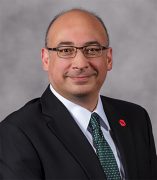
Richard Brenner is a Professor and Head of Department at the Department of Physics and Astronomy , Uppsala University. He is a key member of the ATLAS detector team at the CERN Large Hadron Collider (LHC) , focusing on instrumentation development and real-time data processing for dark matter detection. His work bridges semiconductor detector signals with machine learning systems , emphasizing radiation resistance in high-energy environments. Role: Head of Department of Physics and Astronomy Affiliation: Uppsala University and CERN Research Focus: Dark Matter, Higgs Boson, Particle Physics His recent 15 publications (2025) span topics like dark matter searches , Higgs boson production , vector boson fusion , and machine learning applications in data analysis. Keywords include High Energy Physics , Experimental Physics , and Quantum Interactions , with subfields such as Collider Physics , Detector Engineering , and Theoretical Modeling
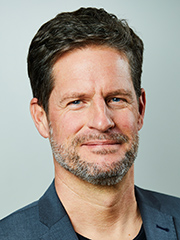
Prof. Dr. Andre Schöning is a Full Professor (W3) at the Physics Institute of Heidelberg University since 2009, specializing in experimental particle physics. He serves as Co-Spokesperson of the Mu3e Collaboration and leads research in detector development and high-energy physics experiments. Research Interests: Search for the decay μ→eee with the Mu3e Experiment at PSI Development of High-Voltage Monolithic Active Pixel Sensors (HV-MAPS) Track trigger systems for ATLAS and future colliders Physics analysis with ATLAS and historical H1 experiment data Wireless data transmission technologies for particle detectors His recent publications demonstrate strong focus on detector technology development, particularly for muon experiments and high-rate tracking systems, alongside significant contributions to Standard Model physics measurements at the LHC. The research spans both hardware development and sophisticated data analysis techniques. Scientific Recognition: CERN Fellowship (1997-1999) University of Hamburg dissertation award (1997) Association of the Friends and Sponsors of DESY dissertation award (1997) Prof. Schöning has secured substantial research funding from DFG and BMBF from 2009-2025, including leadership of the DFG Research Unit on Lepton Flavor Violation with Mu3e. He maintains active collaborations including WADAPT, Mu3e, ATLAS, and the long-standing H1 collaboration. His research group operates within the High-Energy Physics division of Heidelberg's Physics Institute, working on cutting-edge detector systems for current and future particle physics experiments, with particular emphasis on precision measurements requiring novel detector technologies.
Dr. Peter Sadowski is an Associate Professor at the University of Hawaii at Mānoa in the Department of Information and Computer Sciences. His research focuses on machine learning and artificial intelligence, with an emphasis on deep learning applications in science and engineering. Ph.D., Computer Science, University of California, Irvine (2016) B.S., Computer Science, California Institute of Technology (2009) Dr. Sadowski's research explores the intersection of machine learning and scientific domains. He develops deep learning models to solve complex problems in physics, astronomy, and climate science, while advancing foundational neural network techniques like random backpropagation. His recent publications highlight deep learning's versatility, including applications in antimatter physics, particle physics, and interdisciplinary collaborations. Current projects aim to improve computational models for scientific data analysis and climate adaptation. NSF CAREER Award (2023) for machine learning in climate adaptation DOE Solar Forecasting Competition Prize (2022) NSF Awards (2021) for self-supervised learning in microbiome science and astronomy Dr. Sadowski teaches machine learning courses and runs an open AI seminar for students and faculty. He contributes to open-source machine learning tools like SHERPA (Hyperparameter optimization) and Keras tutorials.
Salvatore Rappoccio is a Professor in the Department of Physics at the University at Buffalo, part of the College of Arts and Sciences. His research focuses on high-energy particle physics experiments, particularly within the Compact Muon Solenoid (CMS) collaboration at the Large Hadron Collider (LHC). He explores solutions to the hierarchy problem, investigates boosted jets and top quark physics, and examines quantum chromodynamics (QCD) through jet substructure analysis. Education: BS in Physics, Boston University (2000) PhD in Physics, Harvard University (2005) Postdoctoral Research at Johns Hopkins University (2007–2012) Research Interests: Dr. Rappoccio’s work addresses the mass discrepancy between the Higgs boson and Planck scale, leveraging LHC collisions (up to 13 TeV) to study particles like the Higgs, top quark, and W/Z bosons. He specializes in boosted hadronic particles, jet substructure, and QCD dynamics within collider environments, particularly focusing on novel physics beyond the Standard Model. Awards: CMS LHC Physics Center Distinguished Researcher Award (2015) European Physical Society High Energy and Particle Physics Prize (2013) – Recognizing the Higgs boson discovery Research & Grants: His work involves analyzing proton-proton collision data to search for new physics phenomena, including heavy resonances, vector-like quarks, and top quark partners. He contributes to CMS detector development, particularly silicon pixel tracking systems. Labs/Teams: Active in the CMS Collaboration, focusing on jet physics and LHC-based experiments.
Ian Moult is an Assistant Professor in the Physics Department at Yale University. He specializes in theoretical particle physics, focusing on quantum field theory techniques for high-energy experiments. His work emphasizes Effective Field Theories and innovative experimental strategies like Jet Substructure analysis for the Large Hadron Collider (LHC). Education: B.Sc. from University of British Columbia (2011), Ph.D. in Theoretical Particle Physics from MIT (2016). Postdoctoral experience: UC Berkeley/LBL (2016–2019), SLAC/Stanford (2019–2021). Research interests include developing universal frameworks for complex experiments, optimizing discovery potential for new physics at the LHC, and advancing understanding of the strong interactions via Jet Substructure analysis. No specific awards or grants are listed in the provided text.
Robert Szafron serves as a Scientist in the High Energy Theory group at Brookhaven National Laboratory's Physics Department since 2021, having progressed from Assistant Scientist (2021-2022) to Associate Scientist (2023-2024) before attaining his current position in 2025. Prior to BNL, he held research appointments at CERN (Senior Research Fellow, 2019-2020), TU Munich (Postdoctoral Fellow, 2016-2019), and the University of Alberta (Postdoctoral Fellow, 2012-2016). His research centers on theoretical high-energy physics with core expertise in collider physics , precision computations , and effective field theories . Specialized areas include bound state physics, QCD and QED corrections, power corrections, and gravitational soft theorems. His methodological approach combines advanced perturbative techniques with resummation methods to address precision Standard Model calculations and beyond-Standard-Model phenomena. Analysis of his publication record (2011-2023) reveals consistent contributions to leading journals like Journal of High Energy Physics and Physical Review Letters, with recent work focusing on N3LO cross sections, muon g-2 anomalies, subleading-power corrections in B-physics, and wino dark matter calculations. His research demonstrates strong international collaboration patterns and addresses critical precision frontiers in particle physics. No scientific awards were mentioned in the available documentation. Information regarding student advising, research grants, or specific mentorship activities was not provided in the source materials. Szafron operates within Brookhaven National Laboratory's High Energy Theory group, a U.S. Department of Energy national lab facility specializing in theoretical particle physics. His work contributes to BNL's broader mission in advancing fundamental understanding of particle interactions through rigorous mathematical frameworks and computational techniques.
Jesse Thaler is a Professor of Physics at the Massachusetts Institute of Technology (MIT), where he has been a faculty member since 2010. He is affiliated with the MIT Center for Theoretical Physics - a Leinweber Institute (CTP-LI), the Laboratory for Nuclear Science (LNS), the Statistics and Data Science Center (SDSC), and the Institute for Data, Systems, and Society (IDSS). Since 2020, he has served as the inaugural Director of the NSF Institute for Artificial Intelligence and Fundamental Interactions (IAIFI). Thaler received his Sc.B. in Math/Physics from Brown University in 2002, followed by a Ph.D. in Physics from Harvard University in 2006. From 2006 to 2009, he was a Miller Research Fellow at the University of California, Berkeley. His research focuses on theoretical particle physics, particularly on fusing quantum field theory with machine learning techniques to address fundamental physics questions. His work spans three main areas: Data Science and AI/ML applications in particle physics, Collider Physics and QCD, and Beyond the Standard Model physics. He is an expert in jet physics, which involves studying collimated sprays of particles produced at the Large Hadron Collider (LHC), and he investigates jet substructure to enhance searches for new phenomena and understand gauge theory dynamics. His research also explores strategies for probing dark matter at the LHC and theoretical structures of supersymmetry. Data Science and AI/ML: Merging deep learning with physics principles for improved particle physics analysis Collider Physics and QCD: Developing new theoretical frameworks for analyzing collider data Beyond Standard Model: Exploring dark matter detection strategies and theoretical extensions to the Standard Model Thaler has received numerous prestigious awards including being named an American Physical Society (APS) Fellow in 2022 and receiving a Simons Investigator Award in the same year. Other notable honors include the Fermilab Distinguished Scholar (2018-2020), Simons Fellowship in Theoretical Physics (2018), Frank E. Perkins Award for Excellence in Graduate Advising (2017), and the Presidential Early Career Award for Scientists and Engineers (2012). As an advisor, Thaler has mentored numerous Ph.D. students, postdoctoral researchers, and undergraduate students. His research group has produced significant work in jet physics, machine learning applications for particle physics, and beyond the standard model physics. He has also secured substantial research funding through grants from the Department of Energy and other agencies. Thaler leads the Thaler Research Group at MIT and serves as Director of the NSF AI Institute for Artificial Intelligence and Fundamental Interactions, which brings together researchers from MIT, Northeastern University, Harvard University, and Tufts University to advance AI research with applications to fundamental physics.
Roger William Lewis Jones is a Professor and Head of the Department of Physics at Lancaster University . His career spans experimental high-energy particle physics, QCD research, and global computing infrastructure development for large-scale scientific projects like ATLAS and the Rubin Observatory. ATLAS experiment (LHC) for CP violation studies in B-physics NA62 experiment for strange quark physics LEGEND collaboration for neutrino research Leadership in GridPP and Worldwide LHC Computing Grid Research Focus : Experimental particle physics with emphasis on CP violation, QCD dynamics, and data-intensive computing systems. His work bridges hardware development (e.g., tracking detectors) and software innovation (e.g., Grid computing farms across UK institutions). Recent Publications highlight precision measurements in jet physics, Higgs decays, and searches for new particles like heavy neutral leptons. Articles span 2025 with collaborations on ATLAS and NA62, focusing on detector calibration, cross-section analysis, and beyond-Standard-Model signatures. Leadership Roles : Chair of NorthGrid Management Board Former Chair of STFC Particle Physics Advisory Panel (2019-2022) Chair of Institute of Physics Head of Department Forum Steering Committee (2019-2024) Key contributor to GridPP and Worldwide LHC Computing Grid
Carlo Dallapiccola is a Professor and Graduate Program Director in the Department of Physics at the University of Massachusetts Amherst, actively contributing to the ATLAS experiment at CERN's Large Hadron Collider. His research is central to advancing experimental particle physics through searches for new phenomena and precision measurements of Standard Model processes. University: University of Massachusetts Amherst School: College of Natural Sciences Department: Department of Physics Academic Rank: Professor Emails: carlod@physics.umass.edu, carlo.dallapiccola@cern.ch Location: Lederle Graduate Research Tower, Amherst, MA His research interests lie at the forefront of high-energy physics, focusing on experimental searches for physics beyond the Standard Model , particularly long-lived new particles that decay with displaced vertices, a signature of models like gauge-mediated supersymmetry breaking and dark sectors. He is deeply involved in the performance and upgrade of the ATLAS detector , including the muon spectrometer and the new inner tracker (ITk) for the High-Luminosity LHC. His work also encompasses Higgs boson physics , top quark studies , and precision electroweak measurements , all requiring advanced data analysis and detector calibration techniques. The recent articles highlight a strong trend toward precision Higgs physics , including searches for rare decays (H→μμ, H→ZZγ), Higgs self-coupling via pair production, and CP properties in tau decays. There is also a significant focus on exotic and beyond-Standard-Model signatures , such as leptoquarks and vector-like quarks, alongside the development of advanced data analysis methods using machine learning and neural simulation-based inference for parameter estimation and jet flavor tagging. His leadership is evident in collaborative efforts, with no individual scientific awards listed in the provided text. He advises graduate students as Graduate Program Director, fostering the next generation of physicists. His work is supported by major international collaborations and grants from agencies funding high-energy physics research, though specific grants are not detailed here. He is a key member of the ATLAS collaboration and has contributed to major detector upgrade projects like the New Small Wheel and the ITk. His research integrates data from the LHC with sophisticated computing frameworks, placing him at the heart of one of the largest scientific endeavors in history.
Cibran Santamarina Ríos is a Professor in the Department of Particle Physics at the University of Santiago de Compostela, affiliated with the Faculty of Physics and the Galician Institute of High Energy Physics (IGFAE). He earned his PhD in 2001 with a thesis on the detection of Pionium half-life in the DIRAC experiment under Dr. Bernardo Adeva Andany and Dr. Máximo Pló Casasús. His research focuses on high-energy physics, experimental particle physics, and CP violation studies, with contributions to experiments at LHCb and DIRAC. His work spans meson and baryon decay analyses, heavy ion collisions, and rare particle interactions. Key themes include lepton flavor violation, jet substructure, and precision measurements of CP asymmetries. Education: PhD in Physics, University of Santiago de Compostela (2001) Research Interests: Cibran specializes in experimental high-energy physics, particularly in particle detectors and data analysis. His studies explore exotic meson states, jet physics, and fundamental symmetries like CP violation. Recent work includes analyzing baryon decays, charm and beauty quark dynamics, and probing Standard Model limits through rare processes. His collaborations with LHCb and other particle physics groups highlight his role in advancing precision measurements in collider experiments. Articles Trends: The most recent publications emphasize CP violation mechanisms, charmonium spectroscopy, and jet quenching in heavy-ion collisions. He also investigates lepton flavor violation and angular distributions in B-meson decays, contributing to tests of lepton universality. These studies often involve large datasets from the LHC, focusing on both theoretical and experimental advancements. Awards & Grants: No awards explicitly mentioned, though his sustained research output suggests institutional or collaborative grant funding for experimental projects. Labs/Teams: Active in the GAES High Energy Physics Group and collaborates with the LHCb experiment at CERN, contributing to detector development and data analysis frameworks.
Pierre-Hugues Beauchemin is a Professor of Physics & Astronomy at Tufts University, affiliated with the School of Arts and Sciences. His research focuses on experimental high-energy physics, particularly within the ATLAS experiment at CERN’s Large Hadron Collider (LHC). He leads efforts in precision measurements of the Standard Model, searches for dark matter via missing energy signatures, and optimization of the ATLAS trigger system, with a focus on the Missing Energy trigger. Education: PhD in High Energy Physics, McGill University (2005) MSc in High Energy Physics, Université de Montréal (2000) BSc in Mathematics and Physics, Université de Montréal (1999) Research Interests: Experimental High Energy Physics, dark matter detection, quantum chromodynamics (QCD), Standard Model precision studies, and epistemological aspects of particle physics experiments. His work combines data analysis at the LHC with software development for detector operations. Grants & Funding: Recipient of U.S. Department of Energy grants for High Energy Physics research at Tufts (2018–2021 and ongoing). Professional Roles: Coordinator of the ATLAS ETmiss Trigger Group (2014–2016), Monte Carlo Production and Simulation Trigger Coordinator (2016), and contributor to the Standard Model Group at CERN. Active in workshops such as the Corfu2017 conference on particle physics. Labs/Teams: Integral member of the ATLAS Collaboration, focusing on detector operations and data analysis for new physics searches.
Christophe Royon is a Foundation Distinguished Professor at the University of Kansas, leading research in high-energy particle physics with a focus on collider experiments at the Large Hadron Collider (LHC). His work primarily involves analyzing data from the CMS experiment to explore fundamental questions in particle physics, such as dark matter detection, Higgs boson properties, and quantum chromodynamics (QCD) dynamics. Research interests include probing new physics scenarios through precision measurements of top quark interactions, vector boson production, and jet substructure. He actively contributes to studies of heavy ion collisions to understand quark-gluon plasma behavior and gluon saturation effects. His experimental expertise spans detector calibration, systematic uncertainty quantification, and machine learning applications in data analysis. Notable achievements include the APS Award for collaboration with Brazil (2017-2018), recognizing his international research contributions. His recent publications (2024-2025) highlight advancements in measuring W boson properties, constraining Higgs Yukawa couplings, and discovering anomalous top quark pair production signals. Dr. Royon collaborates extensively with global physics communities, advancing experimental techniques for future collider projects like the Electron Ion Collider (ECCE). His work bridges theoretical predictions with experimental validation, contributing to both precision Standard Model tests and searches for physics beyond the Standard Model.
Nikos Varelas serves as Senior Vice Provost for Academic Programs, Student Success, and Effectiveness and LAS Distinguished Professor of Physics at the University of Illinois Chicago (UIC), within the College of Liberal Arts and Sciences Department of Physics. His leadership spans institutional administration and international particle physics collaborations. His academic foundation includes a PhD in Physics from the University of Rochester (1994) and a BS in Physics from the University of Athens (1985). Prof. Varelas' research centers on experimental high energy particle physics , specializing in precision Quantum Chromodynamics (QCD) measurements and searches for physics beyond the Standard Model. His work investigates dark matter candidates, extra spatial dimensions, quantum black holes, and Higgs boson properties through the CMS experiment at CERN's Large Hadron Collider. As a key contributor to the 2012 Higgs boson discovery, his group developed critical CMS trigger systems including the Level-1 Calorimeter and High-Level Trigger. Recent publications reveal intense focus on top quark physics, Higgs characterization, and QCD precision measurements using advanced machine learning techniques. His work leverages full LHC datasets to probe new physics signatures while refining Standard Model parameters through multidifferential cross-section analyses. His scientific recognition includes: Fellow of the American Association for the Advancement of Science University of Illinois Scholar Senior Fellow of the LHC Physics Center at Fermilab Prof. Varelas has held pivotal roles including CTEQ Collaboration co-spokesperson, American Physical Society Division of Particles and Fields Executive Committee member, and Fermilab Users Executive Committee Chair. As current President of the Association for Undergraduate Education at Research Universities and Noble Schools Board Director, he demonstrates deep commitment to academic leadership beyond research. His Senior Vice Provost role underscores institutional impact on student success initiatives. He leads the UIC High Energy Particle Physics Group within the CMS collaboration, driving technical innovations in trigger systems while mentoring next-generation physicists through cutting-edge LHC research.
Ayana T. Arce serves as Associate Professor of Physics within the Department of Physics at Duke University's Trinity College of Arts & Sciences, a position she has held since 2016 after advancing from Assistant Professor (2010-2016). Her research centers on experimental particle physics using the ATLAS detector at CERN's Large Hadron Collider, focusing on phenomena beyond the Standard Model including Higgs boson properties and jet substructure analysis. Education: Ph.D. in Physics, Harvard University (2006) B.S. in Physics, Princeton University (1998) Research Focus: Dr. Arce's work bridges theoretical predictions and experimental verification through precision measurements of proton-proton collisions. Her expertise spans trigger system development, heavy resonance searches, and calibration of large-radius jets—critical for identifying new physics signatures. She actively contributes to advancing analysis techniques for boosted objects and diboson resonances. Publication Trends: Her 15-year publication record (2008-2024) demonstrates consistent leadership in ATLAS collaboration efforts, evolving from foundational detector studies to cutting-edge Run 3 trigger systems. Recent work emphasizes real-time data processing for high-luminosity operations while maintaining rigorous statistical validation of Standard Model predictions. Grant Funding: Secured major support including: National Science Foundation REU Sites (2022-2027, 2018-2022, 2015-2019, 2009-2015) for undergraduate nuclear physics research Department of Energy grant (2013-2025) for High Energy Physics at Duke Brookhaven National Laboratory project (2024-2025) for ITK Module Assembly Collaborations: As a core ATLAS collaboration member at CERN, she participates in international data analysis working groups and contributes to detector upgrade projects for future LHC runs. Her external relationship with CERN is formally documented through Duke University's conflict of interest management system.
Johannes Haller is a Professor of Experimental Particle Physics at the University of Hamburg , affiliated with the Institute of Experimental Physics under the Faculty of Mathematics, Informatics and Natural Sciences. He actively contributes to the CMS experiment at the LHC , focusing on physics beyond the Standard Model, boosted objects, and Higgs boson studies. Since 2023, he chairs the Particle Physics Division of the German Physical Society (DPG) and serves on multiple national and international committees. PhD in Particle Physics (Universität Heidelberg, 2003) Diploma in Physics (Universität Heidelberg, 2000) His research spans collider experiments from LEP (OPAL) to HERA (H1) , ATLAS , and now CMS . His group develops AI-based algorithms for CMS trigger systems and participates in global electroweak fits through the Gfitter collaboration. Recent work explores flavor anomalies , heavy Higgs bosons , and medium effects in heavy-ion collisions . Selected scientific responsibilities include: Spokesperson for BMBF-FSP-104 “Elementarteilchenphysik mit dem CMS–Experiment” (2021–2024) Managing Director of Institute of Experimental Physics (2016–2019) Co-organizer of major conferences like EPS-HEP2023 His research group includes Master’s students Syed Sajal Hasan, Balduin Letzer, Parth Patil, Christian Sammoray, and Emre Toka.