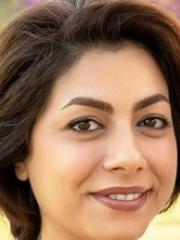
Mohammad Alshibli serves as an Assistant Professor in the Department of Computer Systems at Farmingdale State College under a 10-month appointment, teaching courses including Introduction to Robotics, Computer Networks, Operating Systems, Database Systems, Programming Languages (C/C++/C#/Python/Matlab/Java/VB.NET), and Artificial Intelligence. His academic credentials: Ph.D. in Computer Science and Engineering (Artificial Intelligence and Robotics), University of Bridgeport, 2018 Master's in Computer Science, Albalqa Applied University, Elsalt, Jordan, 2011 B.S.c in Computer Science, Philadelphia University, Amman, Jordan, 2006 His research integrates Robotics, Artificial Intelligence, and Machine Learning to develop cognitive robotic systems for electromechanical disassembly sequencing and navigation optimization. Recent work presented at Farmingdale State College's Celebration of Scholarship and the LI Regional Virtual CSTEP Research Conference demonstrates applications in 3D-printed sketching robots, orthogonal array robust design, and heuristic optimization algorithms for end-of-life product disassembly.
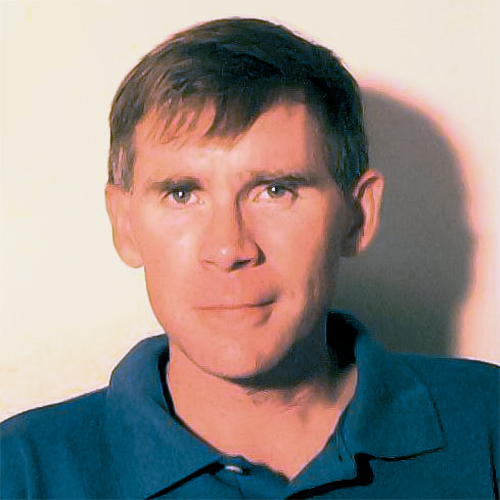
Prof. Dr.-Ing. Delf Egge was a renowned academic in geodesy, hydrography, and software engineering. He served as a Professor at HafenCity University Hamburg (HCU) since 2006, previously at the Hamburg University of Applied Sciences (HAW Hamburg) from 1987–2005. His research focused on satellite positioning, multibeam echo sounder data processing, and geospatial software development using Java and MATLAB. He was a key figure in establishing international standards for hydrographic education through his membership on the FIG/IHO/ICA Board. Notable contributions include pioneering work in GNSS precise point positioning and the development of certified hydrography courses. Egge passed away unexpectedly on August 7, 2015, leaving a lasting impact on geomatics education and research. Career Highlights: Professor at HCU (2006–2015) and HAW Hamburg (1987–2005) Assistant Professor of Civil Engineering, University of Washington (1985–1987) Member of the FIG/IHO/ICA International Board (since 2003) Contributed to the International Maritime Academy, Trieste (1991–2004) Research Interests: Egge’s work bridged theoretical geodesy and practical applications. His studies on satellite positioning advanced real-time geoscience applications, while his focus on multibeam echo sounder data processing revolutionized marine survey methodologies. He also led software development initiatives, creating tools like GEOTRANS for coordinate transformation and exploring Java-based solutions for ECDIS systems. Publications & Recognition: Over 15 key publications span hydrographic standards, GNSS techniques, and educational frameworks. His work emphasized interdisciplinary collaboration and practical field applications. Egge’s legacy includes foundational contributions to hydrographic education and geomatics innovation. Affiliations: Deutsche Hydrographische Gesellschaft (DHyG) Deutscher Verein für Vermessungswesen German Hydrographic Consultancy Pool (GHyCoP) Advisory Board
Prof. Paul F. Whelan is a Full Professor and holds a Personal Chair in Computer Vision at Dublin City University's School of Electronic Engineering. He joined DCU in 1990 and established the Vision Systems Laboratory (1990) and the Centre for Image Processing & Analysis (CIPA, 2006). His research focuses on image segmentation, mathematical morphology, texture analysis, and their applications in medical imaging, industrial vision, and computer-aided diagnosis. He has authored 3 books and over 190 peer-reviewed publications, filed 7 patents since 2007, and spun out Jaliko Ltd to commercialize imaging technology. Education: BEng (First Class Honours) in Electronic Engineering, DCU MEng in Electronic & Computer Engineering, University of Limerick PhD in Computing Mathematics/Computer Vision, Cardiff University Professional Roles: Director of CIPA (2006–2015) Elected Member of DCU Governing Authority (2006–2011) President of Irish Pattern Recognition and Classification Society (1998–2007) Member of IAPR Governing Board & IFCS Council Research Contributions: Developed the NeatVision/IPA Toolbox (Java/MATLAB), licensed biomedical technology, and contributed to €7M+ in competitive research funding. His work bridges translational research in medical imaging and industrial applications. Affiliations: Fellow of IET, Senior Member of IEEE, Chartered Engineer, and Royal Irish Academy nominee (2009–2013).
Professor Mohamed K. Kamara is an Adjunct Professor in Computer Science and Cyber Security at Webster University, the University of the Potomac, and the University of the District of Columbia. He holds a Ph.D. in Information Technology Security from George Mason and Walden Universities (2013), along with advanced degrees in Telecommunications Engineering and multiple IT certifications. With over 20 years of academic experience, Dr. Kamara has served as Dean of Computer Science at the American College of Commerce and Technology (2009-2017), and developed the graduate curriculum in Telecommunications at Stratford University. He has also held roles in curriculum development, accreditation review (ABET), and chaired the graduate council. His research focuses on Wireless and Cloud Computing dependability, using tools like MATLAB and Java for analysis. He has authored three books on Cyber Security, Cognitive Theory, and Internet Usage. Notable awards include recognition for community-building in higher education.
Mariusz Kleć is a Researcher and faculty member at the Polish-Japanese Academy of Information Technology (PJATK) , affiliated with the Faculty of Information Technology and the Department of Multimedia . He is currently completing his PhD in Computer Science, focusing on music processing with deep neural networks. His work bridges computer science, music engineering, and machine learning, emphasizing practical applications in recommendation systems and healthcare. Education: PhD in progress (2014–present): Research on music classification and organization using DNNs. Postgraduate Sound Engineering (2014–2015): Project on equalizer and dynamic processor usage in music production. MSc in Computer Science (2005–2010): Thesis on sound similarity for music recommendation systems. High School of Visual Arts (2000–2005): Focus on visual identity design. Technical Expertise: Full-stack web development (Java, JavaScript, React, NodeJS, MongoDB), machine learning, graphic design (Adobe Suite), and audio engineering. Research Interests: Mariusz explores intersections of music processing, AI, and multimedia systems. His projects include: Music recommendation systems leveraging personality traits and neural networks. Automated genre recognition using deep learning and wavelet transformations. Applications of AI in healthcare for early symptom detection. Professional Experience: Administrator of Recording Studio (PJATK, 2012–present): Manages equipment and event coordination. Internship at Sony Stuttgart (2013): Developed an audio classification DNN in MATLAB. Web developer (2008–2011): Front-end and WordPress projects, SharePoint system administration. Labs/Teams: Active contributor to the CLARIN-PL project (2019–2021) for speech tool development. Collaborates with the Multimedia Department on sound design and data mining.
Thaddeus A. Roppel is an Associate Professor in the Department of Electrical and Computer Engineering at Auburn University's College of Engineering. His work spans teaching, research in robotics and sensor systems, and academic outreach. He is actively involved in curriculum development, senior design coordination, and lab leadership. University: Auburn University School: College of Engineering Department: Electrical and Computer Engineering Position: Associate Professor His research focuses on cooperative robotics, sensor fusion, MEMS sensors, and neural network applications in odor analysis. He leads the Sensor Fusion Laboratory and has contributed to interdisciplinary projects involving intelligent systems and technology readiness assessment. His educational initiatives include Java-based electronics demos, wireless curriculum development, and capstone design mentoring. The recent publications reflect a strong trend in intelligent sensing, robotics, and engineering education. Key themes include real-time signal processing, neural networks for pattern recognition, technology maturity assessment (TRL), and innovative teaching tools. His work bridges theoretical research with practical implementation in academic and outreach contexts. Scientific Awards: No formal awards listed in available texts. Dr. Roppel advises students through senior design and graduate research, particularly in robotics and sensor systems. He has led projects funded through academic and outreach grants, including senior design initiatives and the proposed Auburn Technology Museum. He is also involved in service, such as coordinating Engineers Without Borders and maintaining educational web resources. He leads the Sensor Fusion Laboratory at Auburn University, which focuses on integrating sensor data using neural networks and intelligent algorithms. The lab supports student research in mobile robotics, odor detection, and cooperative systems. He also promotes broader engineering outreach through virtual museum development and safety education.
Sohie Lee serves as Senior Lecturer in the Department of Computer Science at Wellesley College, specializing in introductory programming instruction and cognitive science applications. She teaches hands-on lab courses including CS110 (JavaScript web form validation), CS111 (Java image manipulation), CS112 (MATLAB brain MRI visualization), and CS230 (Java GUI/database interfaces). Her educational background includes: B.S. from Cornell University M.S. from Stanford University Ph.D. from University of California-San Diego Lee's research bridges cognitive science and computer science, focusing on computational models of brain functions—particularly short-term memory mechanisms through neurophysiological data analysis. She actively develops pedagogical approaches for introductory CS education, with emphasis on promoting female participation and evaluating programming environment impacts (graphical drag-and-drop vs. text-based editors) on knowledge retention. Her work addresses critical gaps in accessible computing education through curriculum innovation. She currently advises honors thesis projects, most recently examining how programming interface design influences long-term coding comprehension. Lee contributes to Wellesley's mission of broadening participation in computing through inclusive teaching practices and curriculum development targeting underrepresented students.
Anh-Dung Nguyen is a Researcher at INRIA Grenoble Rhone-Alpes and a member of the CITI Lab, collaborating with Dr. Razvan Stanica and Dr. Marco Fiore on mobile data analytics. He holds a PhD in Computer Science from INP Toulouse (2013) and prior degrees from INSA Toulouse in networks and telecommunications (2009). His research focuses on mobile and wireless networking, including mobile data analytics, delay-tolerant networks, mobile cloud computing, and network localization. Current work includes contributions to the ANR ABCD project for 5G network analysis. Past projects include DGA-funded studies on mobile sensing and drone localization, alongside his PhD on dynamic network modeling for opportunistic routing, funded by the French Ministry of Higher Education and Research (MESR). His research has been recognized with a nomination for the Leopold Escande Prize (2013) for best doctoral thesis at INP Toulouse. Teaching includes network programming (24h) at INSA Lyon and introductory computer science (60h in JAVA) at ISAE-ENSICA. He has developed simulation tools like the STEPS mobility model and algorithms for dynamic network analysis. His work spans peer-reviewed journals (Elsevier Ad Hoc Networks), conferences (SIGCOMM, INFOCOM), and collaborations with industry partners.
Professor Kathryn Kasmarik is a distinguished academic at the University of New South Wales, Australian Defence Force Academy (UNSW Canberra), where she serves in the School of Systems & Computing as a Professor of Computer Science. She has held significant leadership positions including Deputy Head of School (Teaching) for the School of Engineering and IT from 2018-2021 and Head of School (Acting) establishing the new School of Systems and Computing at UNSW Canberra from 2023-2024. Her research interests focus on building swarming robots that can evolve their own collective behaviors, with extensive work in artificial intelligence, swarm robotics, and human-swarm interaction. As co-founder of the UNSW Canberra AIR (AI and Robotics) Group, she leads cutting-edge research in autonomous systems. Her technical expertise spans Python, Java, and MATLAB programming, Android application development, artificial neural networks, reinforcement learning, game theory, and swarm intelligence algorithms. Professor Kasmarik's publication record shows a clear trajectory toward increasingly sophisticated swarm robotics applications, with recent work focusing on deep reinforcement learning for collective motion, human-swarm interaction interfaces, and practical applications in environmental monitoring and industrial settings. Her research demonstrates strong interdisciplinary connections between computer science, cognitive psychology, and engineering applications. She has received research funding from prestigious organizations including the Australian Research Council and Defence Science and Technology Group, supporting her work on swarm robotics and AI applications. Professor Kasmarik has demonstrated strong leadership in academic administration, transitioning from Deputy Head of School to establishing a new School of Systems and Computing. Her teaching experience includes innovative approaches to computer science education, as evidenced by her early work on puzzle-based learning for introductory computer science courses. Her laboratory work centers around the AIR Lab (air-cbr.github.io), where her team develops and tests swarm robotics systems with applications ranging from environmental sensing to military applications.
Hanna Moussa is an Affiliate Assistant Professor in the Department of Mechanical Engineering at Texas Tech University and a member of the STEM CORE interdisciplinary research center. Her academic appointment bridges engineering and medical physics, with a focus on radiation applications in healthcare and space environments. Her educational background includes: B.S. and M.S. in Physics from University of Massachusetts at Lowell Ph.D. in Nuclear Engineering with Radiological Engineering concentration from University of Tennessee at Knoxville Dr. Moussa's research centers on Medical and Health Physics , leveraging over 20 years of expertise with Monte Carlo Radiation Transport Codes (MCNP4B-6, MCNPX) to model radiation interactions with biological tissues. Key application areas include radiation dosimetry (dose, exposure, LET), shielding design , cancer risk assessment , and space radiation . She investigates heavy ion beam fragmentation effects during radiation therapy and low-dose mammogram impacts on breast tissue. A significant innovation is her development of AdipoGauge software for quantitative analysis of microscopic biological images using Java and MATLAB, enabling measurement of physical changes in concentration, growth rates, and cancer cell proliferation. Analysis of her 15 most recent publications reveals two dominant research trajectories: (1) Radiation physics applications in medical dosimetry (particularly breast tissue exposure) and space environments, and (2) Obesity-metabolism research examining nutritional interventions (fish oil, curcumin, vitamin D) on adipose tissue inflammation, metabolic disorders, and breast cancer progression. Renewable energy studies (wind/solar prediction and assessment) form a secondary but persistent theme. No scientific awards were documented in the provided materials. While student advising details were not specified, her research program demonstrates active grant-funded work across radiation physics, biomedical imaging, and metabolic health, with collaborations spanning medical, engineering, and computational domains. Dr. Moussa operates within Texas Tech's STEM CORE ecosystem, which facilitates interdisciplinary projects through its virtual lab repository and faculty development initiatives. Her AdipoGauge software represents a core technical contribution, enabling quantitative image analysis for nutrition, biology, and cancer research teams. Current projects include radiation therapy optimization, mammogram dose assessment, and obesity-related metabolic studies using murine models.
Dr. Krishna Kaphle is a Professor of Mathematics at the University of Maine at Fort Kent (UMFK). He holds offices in 212 Nadeau Hall and has been teaching college-level mathematics and statistics for over 20 years, following prior experience in middle and high school math education. His academic background includes a Ph.D. in Mathematics from Texas Tech University, alongside two Master of Science degrees—one in Mathematics and another in Statistics. Educational Background: PhD in Mathematics: Texas Tech University MS in Mathematics MS in Statistics Research & Expertise: Dr. Kaphle’s research focuses on Functional Data Analysis, integrating concepts from Functional Analysis and Statistics. He is skilled in computational tools such as MATLAB, Maple, SAS, R, and Microsoft Excel, and has familiarity with programming languages like Java and C++. His work emphasizes practical applications of mathematical and statistical methodologies. Professional Contributions: Though no specific grants, awards, or publications are listed, his expertise in computational mathematics and statistical analysis suggests contributions to applied research and educational development. He has no formally listed advisees or students. Labs/Teams: None explicitly mentioned in the provided text.
Dr. Azin Janani is a Lecturer at the School of Electrical Engineering and Computer Science, University of Queensland. She is a member of the Electromagnetic Research Group where she conducts research on signal processing and disease classification using electromagnetic technologies for medical applications. Her educational background includes: B.S. in Biomedical Engineering from Amirkabir University (Tehran Poly-Technique), Iran (2008) M.S. in Biomedical Engineering from Amirkabir University (Tehran Poly-Technique), Iran (2010) Ph.D. from Flinders University, Australia (2019) Dr. Janani specializes in artifact removal, feature extraction, and disease classification from various biological signals including Electrocardiogram (ECG), Phonocardiogram (PCG), and Electroencephalogram (EEG). Her expertise in electromagnetic imaging has led to innovations in non-invasive diagnostic tools, particularly for liver disease detection. She is proficient in Python, Matlab, Java, and C programming languages, supporting her development of computer-aided diagnosis systems. Her recent publications demonstrate a strong focus on portable electromagnetic devices for medical diagnostics, with particular emphasis on torso imaging and liver health monitoring. These works integrate antenna design, signal processing, and biomedical applications to create novel diagnostic approaches that could transform non-invasive medical testing. Her notable recognition includes: Australian Endeavour Postgraduate Scholarship (2016) Dr. Janani is actively involved in research supervision and grant-funded projects. She currently supervises PhD research on portable electromagnetic devices for dental vitality testing. Her current funding includes an NHMRC IDEAS Grant (2025-2027) for developing a Portable Electromagnetic Torso Scanner, demonstrating her leadership in translating research into practical medical applications. As a key member of the Electromagnetic Research Group at the University of Queensland, Dr. Janani collaborates with interdisciplinary teams including Professor Amin Abbosh, Sasan Ahdi Rezaeieh, and Amin Darvazehban to advance electromagnetic sensing technologies for healthcare applications. Her work bridges electrical engineering, computer science, and medical diagnostics to create innovative solutions for challenging healthcare problems.
Dr. Charles Conner is a Professor of Engineering at Capitol Technology University, where he has held a full-time faculty position since transitioning from part-time teaching in 1984. He specializes in digital signal and image processing, with expertise in DSP Assembly/C++, MATLAB/Octave, and Linux systems development. Dr. Conner has also been instrumental in securing ABET accreditations for the university and held adjunct roles earlier in his career. His career spans over four decades in academia and industry, including roles as a Staff Scientist at Morehead State University’s Space Science Center, contributing to small satellite control software and the Lunar IceCube mission. He has developed critical systems such as the core Flight System (cFS) and AMMOS Instrumentation Toolkit (AIT). His technical skills include embedded systems design, Verilog/VHDL, and web development using Java/XML/Perl/Python. Research interests focus on signal/image processing, Linux systems, and aerospace applications. Notable projects include thermographic defect detection algorithms and free-space optical communication synchronization using Haar wavelets. His work bridges theoretical research and practical engineering, with contributions to both academic conferences and industry projects. Awarded multiple Esteemed Professor titles from Alpha-Chi Honor Society and recognized in Who’s Who publications, Dr. Conner emphasizes service, including Outstanding Service accolades at Capitol College and the Space Operations Institute. He advises IEEE student chapters and fosters interdisciplinary collaboration between engineering disciplines. Dr. Conner holds a B.S.E.E. (magna cum laude) and M.S.E.E. from the University of Maryland, and a Ph.D. in Electrical Engineering from Catholic University of America. He remains active in technical communities, including the Laurel Linux Users’ Group and Alpha-Chi Honor Society.
Dr Ryan Cunningham serves as a Lecturer in Data Science within the Department of Computing and Mathematics at Manchester Metropolitan University. His academic profile centers on developing advanced deep learning systems for medical image analysis, with particular focus on real-time skeletal muscle assessment via ultrasound and facial expression recognition in video sequences. His work bridges computer science and healthcare to address neurological disorders including motor neuron disease and dystonia. Education: Ph.D in Computing, Manchester Metropolitan University (2012-2015) BSc in Artificial Intelligence, Manchester Metropolitan University (2009-2011) HND in Computing, The Manchester College (2007-2009) Dr Cunningham's research spans machine learning, deep learning, computer vision, and medical image analysis with consistent application to healthcare challenges. His primary focus involves developing convolutional neural networks for ultrasound-based muscle segmentation and real-time analysis to enable early disease diagnosis. Recent work extends to facial expression recognition using 3D-CNNs and generative models for both macro and micro-expressions in long-duration videos, demonstrating interdisciplinary innovation at the intersection of AI and clinical medicine. His technical expertise includes MATLAB, Python, Java, and C/C++ for implementing complex algorithms into practical software solutions. Analysis of his 15 most recent publications reveals a strong trajectory in medical AI applications, with 60% focused on ultrasound-based muscle analysis for neurological disorders and 40% on facial expression recognition systems. Key technical trends include progression from foundational segmentation models to efficient lightweight architectures (2021), integration of temporal modeling for video sequences (2021), and recent exploration of generative approaches for expression synthesis (2023). The research consistently targets real-world clinical utility through real-time processing capabilities and automated diagnostic tools. Scientific Awards: No scientific awards or fellowships are documented in the provided materials. Dr Cunningham currently supervises a PhD candidate investigating deep learning applications for macro and micro facial expressions in high spatiotemporal resolution videos. His teaching responsibilities include postgraduate instruction in High Performance Computing and Big Data, specifically covering TensorFlow as a deep learning framework. Previous teaching experience includes advanced undergraduate programming courses, demonstrating commitment to both research and pedagogy. While no specific grants are mentioned, his research output suggests active engagement with medical imaging and AI funding streams. His work is conducted within Manchester Metropolitan University's Department of Computing and Mathematics, leveraging institutional resources including the Dalton Building facilities. The research direction indicates collaboration with medical professionals and neurology specialists, though specific lab affiliations or research teams are not explicitly documented. Current projects focus on extending deep learning capabilities for real-time ultrasound analysis and advancing facial expression recognition systems for clinical applications in neurological assessment.
Joachim Wirth is a Lecturer at the Lucerne School of Computer Science and Information Technology (HSLU). He holds a Dr. sc. techn. (PhD) from ETH Zurich and a Diplom-Mathematiker from Heidelberg University. His professional experience spans roles as a Senior Software Engineer at companies like Agathon AG and Leica Geosystems, alongside academic appointments at multiple Swiss institutions including ZHAW Winterthur and HTW Rapperswil. His technical competencies include advanced software development (C++, C#, Java), computer mathematics (Matlab, Maple), computer graphics (WebGL, OpenGL), robotics programming (ABB RAPID, KUKA), and microcontroller systems (Raspberry Pi, Arduino). He has also contributed to research projects such as 'XR in Higher Education Mathematics,' focusing on integrating extended reality into STEM education. Prior roles include scientific work at the CIM-Zentrum Muttenz and clinical research projects at University Hospital Basel. His work bridges applied software engineering with academic instruction, emphasizing practical skills in computer science and robotics.