The Courtauld Institute of Art, University of LondonUnited Kingdom
Antony Eastmond is the Acting Executive Dean and Deputy Director at The Courtauld Institute of Art, holding the AG Leventis Professorship in Byzantine Art. He leads academic strategy across departments including History of Art, Conservation, and Public Engagement. His research focuses on Byzantine art and the Caucasus, exploring cultural interchange between Christian and Islamic worlds. Eastmond studied History at Oxford before completing an MA and PhD in Byzantine Art at The Courtauld, specializing in medieval Georgian art. His research interests include art’s role in identity formation, frontier regions, and inscription studies. Notable grants include the Getty Foundation’s Connecting Art Histories network and a Leverhulme Major Research Fellowship. Eastmond has supervised numerous PhD students, many focusing on medieval Georgian, Byzantine, and Armenian art. Key publications include Tamta's World (2017) and Art and Identity in Thirteenth-Century Byzantium (2004). He has edited volumes on Byzantine-Trebizond relations and medieval inscriptions, reflecting his commitment to interdisciplinary research. Eastmond’s work bridges art history with archaeology, emphasizing material culture’s role in understanding historical narratives.
Ziming Zhang is an Assistant Professor in the Department of Electrical and Computer Engineering at Worcester Polytechnic Institute (WPI) , with additional affiliations in Data Science and Robotics Engineering. He previously held research roles at Mitsubishi Electric Research Laboratories (MERL) and Boston University. PhD in Computing (2013) from Oxford Brookes University , UK MS in Computing Science (2010) from Simon Fraser University , CA BS in Computer Science and Technology (2005) from Northeastern University , China Research interests span computer vision , machine learning , and their applications in point cloud processing , medical imaging , autonomous driving , and IoT . He leads the Vision, Intelligence, and System Laboratory (VISLab) at WPI. Recent publications focus on 3D reconstruction , hyperbolic learning , and robust classifiers . Awards include the R&D100 Award 2018 and NSF funding for data-efficient deep learning. PhD Students: Yecheng Lyu (co-supervised), Guojun Wu (co-supervised), Hangrui Zhang, Xuechu Yu Master's Students: Yun Yue, Yuping Shao Visiting Scholars: Fangzhou Lin His lab partners with industry and academic institutions, focusing on autonomous systems , robotics , and scientific imaging projects.
Dr. Shima Hamidi is Assistant Professor in the Department of Environmental Health and Engineering at the Bloomberg School of Public Health, Johns Hopkins University. She is also a core faculty member of the Bloomberg American Health Initiative and holds the Bloomberg Assistant Professorship in American Health in Environmental Challenges. Her academic background includes a PhD from the University of Utah (2015), an MSc from the Technological University of Malaysia (2009), and a BA from Shiraz University (2005). PhD, University of Utah, 2015 MSc, Technological University of Malaysia, 2009 BA, Shiraz University, 2005 Dr. Hamidi's research centers on the built environment, transportation, housing, and social determinants of health, with a strong focus on equity and urban sprawl. Her work explores how urban form influences public health outcomes such as life expectancy, traffic safety, food access, and upward mobility. She utilizes geospatial data and longitudinal analysis to assess the impacts of urban planning policies. Her recent publications (2020–2024) reflect a sustained focus on transportation equity, urban form, and public health. Key themes include ride-hailing versus fixed-route transit preferences, cycling safety in bikeshare cities, high-tech cluster geography, and the effectiveness of growth management policies. These works demonstrate interdisciplinary engagement with urban economics, environmental health, and policy analysis. Dr. Hamidi has received numerous honors, including: Endowed Chair in Environmental Challenges, Bloomberg American Health Initiative (2020–) Eno Fellow, Future Leaders Development Program (2015) Ivory Medal for Doctoral Scholarship, University of Utah (2015) Best Poster Award, Association of Collegiate Schools of Planning (2017) Presidential Fellow, University of Texas at Arlington (2017) She has advised students, such as Ahoura Zandi, and previously led the Center for Transportation Equity, Decisions and Dollars (CTEDD) at the University of Texas at Arlington, directing a multi-university consortium on transportation and health. Her research has been supported by the US Department of Transportation and widely cited in national media including the Wall Street Journal and CNN Money. Dr. Hamidi leads research initiatives that integrate urban planning with public health, contributing to policy-relevant science on sustainable and equitable urban development.
Professor Peter Stewart is a leading scholar in ancient art history, currently serving as Professor of Ancient Art at the University of Oxford, Director of the Classical Art Research Centre (CARC), and a Fellow of Wolfson College. His academic journey includes roles at The Courtauld Institute of Art (Reader in Classical Art) and Reading University (Lecturer in Classics and Curator of the Ure Museum). Stewart specializes in Roman provincial art, Gandhara art, ancient Greek textiles, and cross-cultural artistic exchanges across Eurasia. He oversees the Beazley Archive at CARC, a pivotal resource for ancient art research. His research focuses on sculptural traditions, material culture, and the reception of classical art. Notable works include Statues in Roman Society , The Social History of Roman Art , and Gandharan Art and the Classical World . He frequently publishes on Gandhara's artistic connections, Roman imperialism's artistic impacts, and the global dimensions of ancient art. Teaching interests span Greek and Roman art and archaeology. Recent publications emphasize interdisciplinary approaches to Gandharan Buddhist contexts, Roman sarcophagi, and collecting practices. His work bridges archaeological evidence with cultural history, addressing themes like connoisseurship, provenance, and ancient aesthetics' contemporary relevance. As CARC Director, Stewart coordinates international workshops on Gandhara's connections and supervises projects on sculpture collections like Wilton House's. His research highlights art as a medium of cultural dialogue, imperial control, and transregional exchange.
Siv Rebekka Runhovde is a Research Fellow at the Department of Ethnography, Numismatics, Classical Archaeology and University History, University of Oslo. Her work focuses on cultural heritage crime, wildlife trafficking, and policing strategies. Current affiliation: University of Oslo Role: Research Fellow Research group: CULTcrime (Cultural Heritage Crime Network) Her research examines: Illicit trade in cultural objects and wildlife Policy-practice gaps in law enforcement Policing specialization in art theft investigations Decoupling of policy and practice in illegal wildlife trade Security challenges in museum accessibility Runhovde’s publications highlight tensions in transnational ivory trade enforcement, militarization of wildlife policing, and discretionary practices in art markets. She contributes to green criminology through analyses of conservation crime and enforcement ethics.
André Chappatte is an Assistant Professor at the University of Geneva's Global Studies Institute , where he works on social anthropology and Islamic practices in West Africa. He previously served as a researcher and research group leader at the Zentrum Moderner Orient (ZMO) in Berlin for six years before returning to Geneva in April 2020 with an Eccellenza Grant from the Swiss National Science Foundation. Research Focus : Moral becoming in West African Muslim societies Intra-African migration patterns Urban marginality and social dynamics Material culture and Chinese consumer goods Phenomenological approaches to nocturnal rituals Notable Trends : His recent work examines corporate Islam's expansion in rural West Africa, urban dynamics through marginal spaces, and the evolving relationship between globalization and local traditions. Scientific Awards : Eccellenza Grant (Swiss National Science Foundation) Academic Contributions : He teaches the course Anthropology of Muslim Societies in Sub-Saharan Africa for the African Studies Master's program and maintains an active research blog ( CECIRWA ) documenting fieldwork phases.
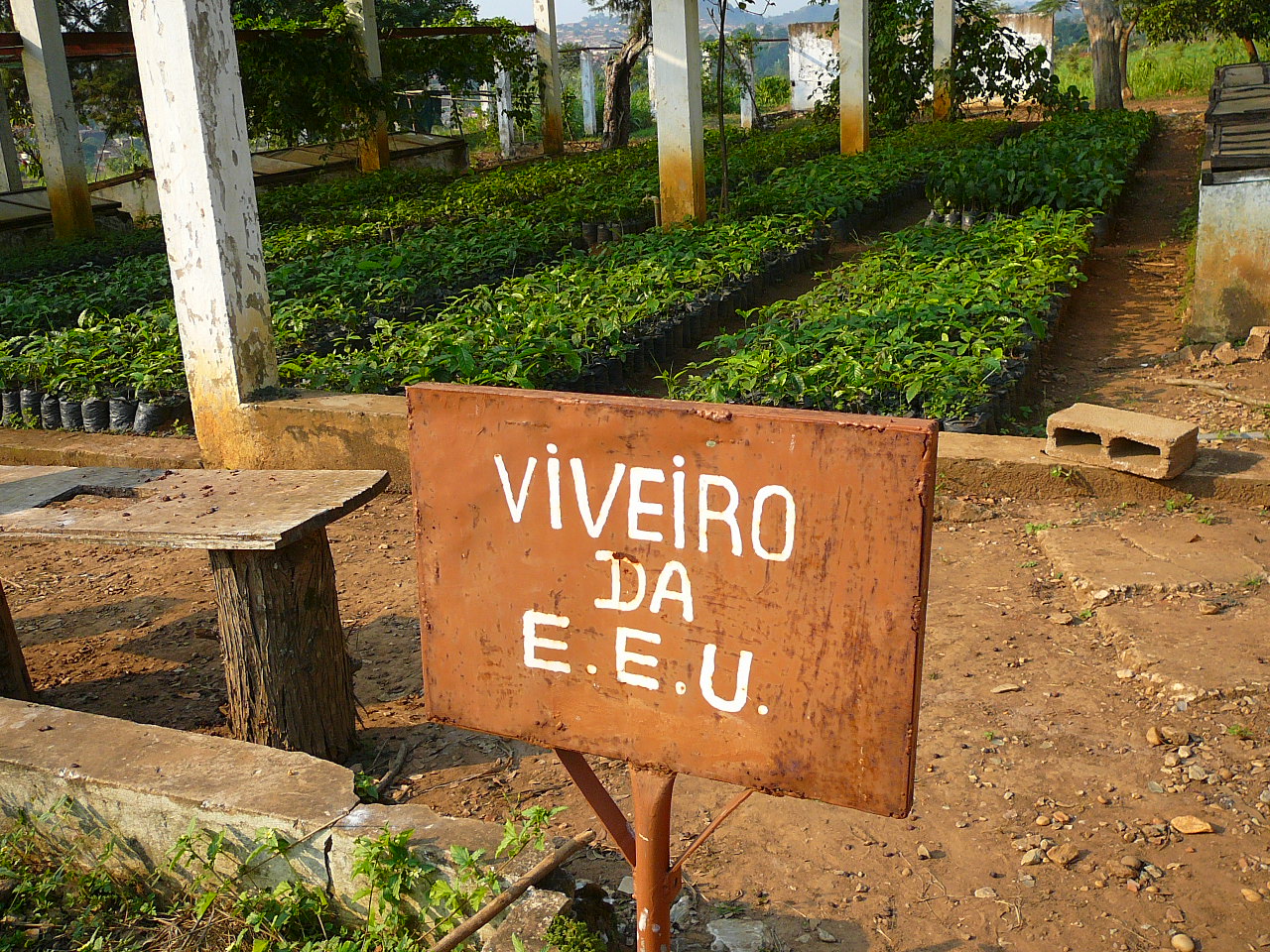
Dr. Jelmer Vos is a Senior Lecturer in the Department of History at the University of Glasgow, specializing in African history with a focus on the Atlantic slave trade , labor history , and commodity history . After earning his PhD at the University of London (SOAS), he held postdoctoral positions at Emory University and Universidade Nova de Lisboa before joining Glasgow in 2018. He previously taught at Old Dominion University in Virginia. His research centers on northern Angola, particularly the history of the Kingdom of Kongo and its engagement with Christianity, global commerce, and colonial labor systems. Current projects examine Angolan coffee cultivation through social, economic, and environmental lenses, and he co-leads the African Coffee Histories research network with Professor Jonathan Morris. Key publications include Coffee and Colonialism in Angola, 1820–1960 (2025) and Kongo in the Age of Empire, 1860–1913 (2015). His work has been supported by grants from the Leverhulme Trust and Scottish Funding Council , among others. Teaching includes Honours courses on the Atlantic slave trade and Postgraduate courses on commodity histories and global slavery. He supervises diverse research projects in African and Atlantic history.
Jill Caskey is a Professor at the University of Toronto, holding dual appointments as Chair of the Department of Visual Studies at the Mississauga campus (UTM) and faculty in the Department of Art History at the St. George campus. Her cross-disciplinary role reflects her expertise in medieval art , architecture , and cultural exchange across the Mediterranean. PhD, Yale University MA, Yale University AB, Bryn Mawr College Her research focuses on cultural dynamics among religious communities in southern Italy and Sicily, examining portable arts , pilgrimage practices , and liturgical spaces . Caskey's work challenges traditional Eurocentric art historical narratives, advocating for a Global Middle Ages framework that highlights interconnected artistic traditions. Key publications include co-authoring the textbook Art and Architecture of the Middle Ages: Exploring a Connected World (2022) and analyzing case studies like the Angevin-era seal at Bari (2021), Salerno ivories, and Norman stucco reliefs. Her grants from the Getty Foundation , Kress Foundation , and SSHRC support fieldwork and collaborative initiatives like The Global Past Research Initiative (2023). Fellow, American Academy in Rome 2022-2024 Connaught Global Challenge Award Caskey's administrative service as Chair of Visual Studies and her contributions to academic discourse through conference presentations (e.g., 'Webs of Gold' at the 2022 Naples Field Seminar) further demonstrate her leadership in expanding medieval art historiography.
Fabien Blanchot is a University Professor at Université Paris Dauphine-PSL, where he heads the Management and Regulations research team at the DRM Laboratory. He serves as scientific director of the Trust, Cooperation and Management chair, director of the Dauphine MBA in Human Resources Management, co-head of the Master's degree in Human Resources Management, and director of multiple international MBA programs across several countries including Lebanon, Algeria, Ivory Coast, Madagascar, Morocco, Indian Ocean, Senegal, and Tunisia. His extensive administrative roles include being a director on the board of Paris Dauphine - PSL, president of the disciplinary section regarding users, and member of various boards including the DRM board and MSO board. Professor Blanchot's research focuses on business mergers, inter-firm cooperation dynamics, and management, with particular emphasis on intercultural management and trust-based management. His work explores strategic alliances, organizational trust mechanisms, and the complexities of international business integration. His research methodology combines theoretical frameworks with practical applications, often drawing on James S. Coleman's social theory to analyze organizational behavior and trust dynamics in business contexts. His publications reveal a consistent focus on trust as a central theme in organizational management, spanning from theoretical explorations of trust foundations to practical applications in strategic alliances, mergers and acquisitions, and international business contexts. The research shows evolution from early work on partnership models and joint ventures to more recent investigations of trust in democratic institutions and citizen participation, indicating expanding theoretical scope while maintaining core management focus. Officer in the Order of Academic Palms (2017) Auditor of the Institute of Advanced Studies in Science and Technology (IHEST, Jeanne Barret class of 2017-2018) Professor Blanchot has held significant leadership positions including vice-president of the board of directors (2012-2016), president of the Ethics, Social Responsibility and Sustainable Development Committee, and editor-in-chief of the Paris-Dauphine newsletter. He has been instrumental in the EQUIS accreditation process (2008-2014) and serves as associate editor-in-chief of the Revue Management International. His expertise is sought by organizations including the Agency for the Evaluation of Research and Higher Education (AERES), the Association Progrès du Management, and ASAP France where he served as vice-president. At the DRM Laboratory, Professor Blanchot leads research on management regulations and trust dynamics. His Trust, Cooperation and Management chair serves as an interdisciplinary platform bringing together academics and practitioners to explore trust mechanisms in organizational contexts. The chair facilitates research collaborations, organizes conferences, and develops educational programs focusing on trust-based management approaches across different cultural and organizational settings.
Prof. Dr. Dominik Bonatz is a Full Professor and Director of the Institute of Ancient Near Eastern Archaeology at the Faculty of History and Cultures, Freie Universität Berlin. He serves as a Principle Investigator in the Excellence Cluster "Topoi – The Transformation of Space and Knowledge in the Ancient World" and leads multiple research projects including the German-Turkish project at Gercin Höyük and the German-Syrian project at Tell Fekheriye. His academic focus spans the Archaeology of Political Space , Syro-Hittite Iconography , and Megalithic Cultures of Southeast Asia . Positions : Full Professor (2003–present), Director of Institute (2003–present), Spokesperson for "Pictorial Construction of Space(s)" (2012–present), Head of "Shirin International – Syrian Heritage in Danger" (2015–present) Education : PhD in Ancient Near Eastern Archaeology (1997), MA in Ancient Near Eastern Archaeology (1993), both from Freie Universität Berlin His research integrates visual anthropology with archaeological landscape studies , emphasizing the performance of images in political contexts. Key projects include the Digital Corpus of Ancient West Asian Seals and fieldwork in Syria, Turkey, and Indonesia. Publications cover funerary monuments , megaliths , and Assyrian ritual art , reflecting his interdisciplinary approach. The 15 most recent publications (up to 2016) reveal a focus on: Late Bronze Age political structures in Mesopotamia, Assyrian and Aramaean visual culture, Indonesian megaliths, and digital storytelling applications in archaeology. These works span keywords from Archaeology of Death to Materiality of Rituals , with sub-fields addressing hybrid cultural symbolism and ancient media studies . Teaching and Mentorship : With over 110 courses taught since 1998, Prof. Bonatz has supervised 20 PhD students and 42 Master's candidates. He currently mentors 12 PhD students, 8 Master students, and 2 Postdocs, while coordinating Erasmus exchange programs for the Faculty of History and Cultures. Projects : He leads the Tell Fekheriye excavation (DFG funded since 2009), directs the Tanah Datar project in Sumatra, and organizes international workshops on topics like "Cast in Space" and "Archaeology of the Upper Mesopotamian Piedmont".
Emily Ruiz Puerta is a Postdoctoral Researcher at the Arctic Centre, University of Groningen (Faculty of Arts, Arctic and Antarctic studies department) and a Guest Researcher at the Globe Institute, University of Copenhagen. Her work focuses on ancient and modern genomics with a specialization in Arctic archaeology and anthropological studies under the ArcHeritage network. Dr. Ruiz Puerta earned her PhD in Ancient Genomics and Arctic Archaeology from the University of Groningen in October 2024, with her dissertation titled "The use of ancient genomes to unveil the evolutionary history and social implications of Atlantic walruses hunting during the last 5000 years in the Arctic." She previously completed a Master's degree in Sustainability, Conservation, and Spatial Planning from AgroParisTech and the MNHN of Paris, following her Bachelor's in Biology from Universidad Cayetano Heredia, Peru. Her research interests center on understanding genetic adaptations of species through ecological and archaeological lenses. Dr. Ruiz Puerta has conducted international research internships focused on genetic adaptation in various species, including camels, South American fur seals, and Atlantic walruses. She has developed a particular interest in human-animal-environment interactions through an anthropological lens. Her work aims to connect the past with the present to inform sustainable futures, contributing to UN Sustainable Development Goals related to environmental protection and biodiversity. Dr. Ruiz Puerta's research output demonstrates a strong focus on Arctic ecosystems, particularly examining the evolutionary history and human impact on marine mammal populations. Her work combines ancient DNA analysis with archaeological evidence to understand how climate change and human activities have shaped biodiversity in the Arctic region over millennia. She has made significant contributions to our understanding of walrus population dynamics, Norse exploitation patterns, and the broader implications for conservation biology. Stu Innes memorial student Travel Bursary (2022) Dr. Ruiz Puerta has been actively involved in the ArcHeritage network and was previously part of the MSCA-EU SeaChanges project (2019-2023), which investigated thresholds in human exploitation of marine vertebrates. Her work involves collaboration with Canadian Inuit communities, integrating traditional knowledge with scientific methods to locate archaeological sites and understand ancestral hunting practices. As part of the Arctic Centre at the University of Groningen, Dr. Ruiz Puerta works within a multidisciplinary team focused on Arctic research, contributing to our understanding of how past environmental changes can inform future climate adaptation strategies.
Southern University of Science and Technology (SUSTech)China
Dr. Luke Gibson is an Associate Professor at the School of Environmental Science and Engineering, Southern University of Science and Technology (SUSTech). He leads transboundary research projects in tropical forests across China and Southeast Asia, focusing on biodiversity conservation amid anthropogenic disturbances like forest fragmentation, wildlife trade, and green energy development. His work has been published in Science and Nature , and widely covered by international media such as the New York Times and BBC . PhD, National University of Singapore (2014) MSc, University of California, San Diego (2010) BA, Princeton University (2005) His research program centers on mitigating human impacts on tropical biodiversity. Key projects include quantifying mammal extinction rates post-forest fragmentation, analyzing green energy's ecological trade-offs, and resolving conservation conflicts around introduced species. Publications span topics like ivory trade policies, ecological monitoring methodologies, and conservation ethics. Selected articles demonstrate expertise in tropical forest ecology, wildlife trade, and sustainable development. Themes include assessing biodiversity gradients in disturbed ecosystems, evaluating renewable energy's environmental costs, and pioneering transboundary conservation strategies. 2015 Wang Gung Wu Medal & Prize 2015 World Future Foundation PhD Prize in Environmental and Sustainability Research 2013 President’s Graduate Fellowship, NUS 2012 Best Graduate Researcher Award, NUS 2012 Top Graduate Researcher Award, NUS
Bathsheba R Demuth is the Dean’s Associate Professor of History and Environment and Society at Brown University, directing the Native American and Indigenous Studies Initiative. Her research focuses on Arctic environments and Indigenous communities, particularly in the Russian and North American Arctic. She holds a PhD from UC Berkeley (2016) and prior degrees from Brown University (BA/MA 2006/2007). Demuth’s work bridges environmental history, political ecology, and Indigenous studies, emphasizing intersectional analyses of capitalism, colonialism, and ecological change. Her award-winning book Floating Coast: An Environmental History of the Bering Strait (2019) examines 200 years of resource extraction and governance in the Arctic, showing how Indigenous knowledge systems resisted capitalist and socialist exploitation. Demuth teaches courses on environmental humanities, energy histories, and Arctic sovereignty. She has received prestigious fellowships including the Andrew Carnegie (2020-22) and Mellon-ACLS (2015) awards. Her research extends to walrus conservation, Soviet environmental policy, and contemporary climate impacts on Arctic communities. Demuth’s work appears in American Historical Review , Nature , and Emergence Magazine , with frequent media commentary in Atlantic , New Yorker , and CBC Radio. Current projects explore beaver-based restoration, permafrost science, and nonhuman agency in historical narratives.
Norwegian University of Science and TechnologyNorway
James H. Barrett is a Professor of Medieval and Environmental Archaeology at NTNU's Department of Archaeology and Cultural History. He specializes in ecological globalization, medieval archaeology, and the historical ecology of marine resources. His research integrates archaeological science, history, and zooarchaeology to explore trade networks involving fish, furs, and ivory, particularly focusing on the intersections between Indigenous producers and urban consumers. Notably, he leads the ERC Synergy Project 4-OCEANS, investigating global historical ecology through marine taxa analysis, and coordinates the Northern Seas Synthesis project analyzing archaeological fish bone records. Prior to NTNU, Barrett held positions at the Universities of Toronto (1996–1998), York (1999–2007), and Cambridge (2007–2021), where he remains a Senior Research Fellow at the McDonald Institute for Archaeological Research. His work emphasizes sustainability and oceanic studies, aligning with NTNU's strategic research priorities. He has led collaborative projects like the Demise of the Atlantic Grey Whale and the SeaChanges Innovative Training Network, and co-authored exhibitions like 'Havets elfenbein/Sea Ivories.' Research interests include the socio-economic impacts of resource depletion, historical ecology of marine species (walrus, cod, herring), and glacial archaeology in Jotunheimen. His recent articles address ancient DNA applications, historical fish populations, and interdisciplinary methods in archaeology. Barrett’s contributions bridge scientific and humanistic approaches, offering critical insights into humanity’s ecological past.
Associate Professor Radha Ivory is an Associate Professor in Law at the University of Queensland (UQ), affiliated with the Faculty of Business, Economics and Law and the School of Law. She specializes in transnational regulation of corruption, corporate crime, and human rights. Her interdisciplinary research examines domestic and international laws governing powerful economic and political actors, focusing on unintended consequences of anti-corruption measures and asset recovery laws. Key roles include advising the World Bank and UN, and contributing to projects in Ukraine and Colombia. Education: Bachelor of Arts (International Relations & German), UQ Bachelor of Laws (Honours I), UQ PhD (summa cum laude), University of Basel Research Interests: Radha’s work bridges transnational criminal law, human rights, and global governance. Current projects address human rights impacts of asset recovery laws, corporate liability reforms, and the securitization of integrity regulations. Her approach integrates legal, socio-legal, economic, and sociopolitical methodologies. Articles Trends: Her recent publications analyze negotiated settlements in foreign bribery cases, asset recovery mechanisms, corporate liability frameworks, and transnational legal ordering. These contributions highlight tensions between anti-corruption efforts and human rights protections, emphasizing interdisciplinary policy solutions. Awards: Her book Corruption, Asset Recovery, and the Protection of Property in Public International Law (Cambridge UP) was launched by former Australian Treasurer Peter Costello. Grants: Received UQ Early Career Researcher grant (2017) for studying compliance in anti-bribery law. Advisory Roles: Advisory Board member for the Bribery Prevention Network (Australia), and consultant to the World Bank and UN Office of the High Commissioner for Human Rights. Previously held roles at the Basel Institute on Governance and the NGO Building Safer Organisations. Labs/Teams: Collaborates with the Centre of Research Excellence on Achieving the Tobacco Endgame and contributes to transnational research networks including the Basel Institute’s ICAR.