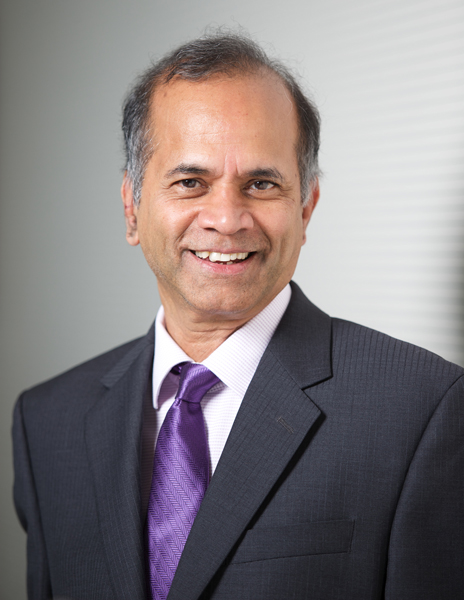
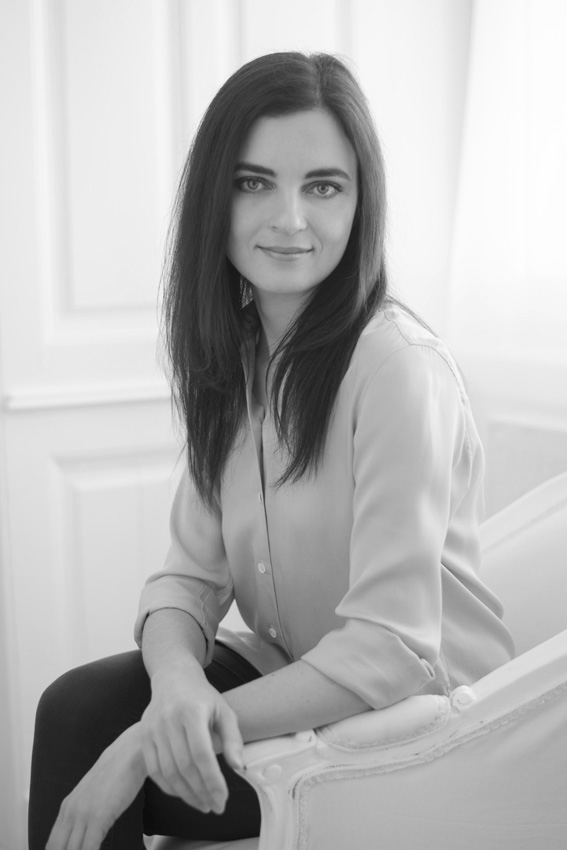
Robert Tichy is a full Professor at the Institute of Analysis and Number Theory, Technische Universität Graz. His research spans number theory, stochastic analysis, and computational mathematics. He has held significant administrative roles including Department Head (1994-2000), Dean of Mathematical and Physical Sciences (2003-2009), and Vice-Dean (2010-2017). Tichy is a Corresponding Member of the Austrian Academy of Sciences and has served on editorial boards for journals like the Journal of Number Theory and The Ramanujan Journal .
Hubert Missbauer is a Full Professor for Production and Logistics Management at the University of Innsbruck. He holds a Diploma (1982) and Doctorate (1986) in Business Administration from the University of Linz, with a Habilitation in Business Administration (1994) focusing on manufacturing planning systems. His research emphasizes production planning concepts, workload control, and optimization in manufacturing systems, particularly in steel production. He co-organizes the International Working Seminar on Production Economics and serves on the editorial board of the International Journal of Production Economics . Research interests include order release optimization, production scheduling in steel industries, and quantitative methods in operations management. Recent work focuses on Lagrangian decomposition algorithms, behavioral perspectives in workload control, and integrated scheduling in steel production processes. He has published extensively in top-tier journals like International Journal of Production Research and European Journal of Operational Research . Education: University of Linz (Diploma 1982, PhD 1986, Habilitation 1994) Affiliations: Institute for Information Systems, Production and Logistics Management at University of Innsbruck Key Projects: Steel production scheduling, iterative LP-simulation algorithms, behavioral studies in manufacturing control Editorial Roles: Guest Editor for International Journal of Production Economics since 2020 His work bridges theoretical models (e.g., clearing functions, transient analysis) with practical applications in industries like steelmaking and construction. Recent presentations include discussions on Lagrangian approaches at the INFORMS Annual Meeting (2024) and EURO conferences.
Alexander Haberl is a Researcher at TU Wien, affiliated with the Department of Numerical Analysis (Forschungsbereich Numerik). He holds degrees including Dipl.-Ing., Dr.techn., and BSc. His research focuses on adaptive numerical methods, computational efficiency, and finite element methods. He has contributed to the development of adaptive algorithms for nonlinear operators and boundary element methods (BEM), emphasizing optimal convergence rates and computational cost analysis. Key research areas include adaptive finite element methods (FEM), boundary element methods, and iterative solvers for nonlinear systems. His work addresses challenges in scientific computing, such as designing algorithms with provable optimality properties and minimizing computational resources. Haberl has collaborated extensively with Dirk Praetorius, Stefan Schimanko, and others on projects involving inexact solvers and preconditioned conjugate gradient (PCG) methods. Publications highlight contributions to monotone operators, Helmholtz equation solutions, and electrostatic capacity computations on complex geometries. His research bridges theoretical numerical analysis and practical computational engineering, with applications in structural mechanics and wave propagation. Haberl’s advising includes Michael Innerberger, who explored instance optimality in adaptive FEM. He is part of TU Wien’s Network Lab and actively contributes to conferences and workshops on adaptive methods and numerical algorithms.
Tom van Dijk serves as an Assistant Professor in the Formal Methods and Tools group at the University of Twente, where he conducts cutting-edge research in formal verification and develops practical software tools for the verification community. His work bridges theoretical computer science with real-world applications in model checking and synthesis. His educational background includes: PhD in Computer Science (2016), University of Twente. Thesis: Sylvan: Multi-core Decision Diagrams MSc in Computer Science (2012, cum laude), University of Twente. Thesis: The parallelization of binary decision diagram operations for model checking BSc in Computer Science (2010), University of Twente. Thesis: Analysing And Improving Hash Table Performance Van Dijk's research centers on formal verification with specialization in parity games and binary decision diagrams . He pioneers multi-core parallel algorithms for symbolic model checking, focusing on practical implementations that scale to industrial problems. His work integrates SAT/SMT solving , reactive synthesis , and algorithm optimization to advance the state-of-the-art in verification tooling. His publication trajectory reveals consistent innovation in parity game solving, evolving from foundational work on tangle-based algorithms to recent contributions in reproducibility and AI-aided verification. The 2024 papers demonstrate expanding scope into educational technology while maintaining core focus on game-solving efficiency and synthesis techniques. His key recognitions include: Dutch national M&I Informatie Scriptieprijs 2012 (2nd place) for MSc thesis Best paper award at SPIN 2017 for distributed BDD research Van Dijk actively mentors students and seeks collaborations: Student Supervision : Welcomes BSc/MSc students for projects on parity games and BDDs Tool Development : Maintains open-source research tools (Sylvan, Oink, Knor) Community Service : Serves on 20+ program committees including CAV and TACAS As core member of the Formal Methods and Tools group, he contributes to major verification frameworks including LTSmin, Storm, and IscasMC. His Lace work-stealing framework underpins parallelization in multiple verification tools, while ongoing projects focus on polynomial-time parity game solutions and AI integration in verification workflows.
Gerald Kuba is ao. Univ. Prof. (Associate Professor) at the University of Natural Resources and Life Sciences, Vienna (BOKU) , Institute of Mathematics, Gregor-Mendel-Straße 33, 1180 Wien. His research centres on analytic number theory, lattice-point problems, enumeration of discrete structures such as metric spaces, topologies, and Hamel bases, and set-theoretic real analysis. He has been involved in three Austrian Science Fund (FWF) projects led by Werner Georg Nowak, serving as sub-project leader or scientific staff between 1998 and 2012, all devoted to lattice points and analytic number theory. Since then he has continued an active solo publication record with over 80 refereed articles. Research interests Analytic number theory & lattice-point asymptotics Enumerative combinatorics of metric, ultrametric and ordered spaces Set-theoretic real analysis – decompositions of ℝ, Cantor sets, saltus functions Functional equations and didactics of mathematics Recent publications (2025-2021) explore connected Hamel bases in Hilbert spaces, functional equations of Cauchy type, Cantor sets as fields, and counting discrete structures, illustrating a persistent focus on combining classical analysis with enumerative problems. Presentations & outreach Invited talk “On the differentiability of certain saltus functions” , Mathematics Colloquium, University of Vienna, 2009 No doctoral students or supervised theses are recorded in the BOKU database under his name; no personal grants after 2012 are shown. He remains affiliated with the Institute of Mathematics and continues to publish actively, hence is regarded as an active faculty member.
Rama Chellappa is the Bloomberg Distinguished Professor at Johns Hopkins University (JHU), holding primary appointments in the departments of Electrical and Computer Engineering and Biomedical Engineering, under the Whiting School of Engineering and School of Medicine, respectively. He is affiliated with the Center for Imaging Science, Center for Language and Speech Processing, Institute for Assured Autonomy, and Mathematical Institute for Data Science. Previously, he spent 29 years at the University of Maryland as a College Park Professor and held roles at the University of Southern California and Purdue University. His research focuses on computer vision, machine learning, artificial intelligence, pattern recognition, and biometrics, with applications in smart cars, forensics, 2D/3D facial modeling, and medical diagnostics. Notable contributions include work on Markov random fields, 3D structure recovery, deep learning for face recognition, and gait recognition. He has published over 900 papers, achieving an h-index of 140. Rama Chellappa has been honored with prestigious awards, including the US National Academy of Engineering membership (2023), IEEE Jack S. Kilby Medal (2020), and K.S. Fu Prize (2012). He is a Fellow of multiple organizations, including IEEE, IAPR, and AAAS. His current collaborations at JHU School of Medicine involve applying computer vision to analyze facial expressions for monitoring stroke/dementia patients, autism detection in children, and digital pathology.
Lorenzo Sauras-Altuzarra is a Researcher at the Research Unit of Computational Logic at Vienna University of Technology (Austria). His research focuses on enumerative combinatorics, logic, proof theory, recursion theory, number theory, and geometry of numbers. He has actively contributed to interdisciplinary work, merging logic with discrete geometry and algebra. PhD in Mathematics (2024): Vienna University of Technology MSc in Mathematics (2018): University of Vienna BSc in Mathematics (2015): University of Zaragoza His research interests include the calculation of integer sequences, irrationality/transcendence studies, and iteration processes. He explores applications of Baaz’s generalization method to number theory, particularly Fermat numbers, and their factorization properties. His work often bridges abstract logic with concrete number-theoretic problems. Recent publications span topics like factorial function arithmetic terms, lattice properties of complex matrices, and Fermat number factors. He has presented widely, including at the Conference on Techniques from Logic in Mathematics (Austria) and the 32èmes Journées Arithmétiques (France). He has organized events like the Conference on Techniques from Logic in Mathematics (2023, Austria) and contributed to over 15 academic events globally since 2016. His presentations address proof theory, Hilbert’s 10th problem, and geometric descriptions of number-theoretic structures.
Ekaterina Fokina is an associate professor at the Institute of Discrete Mathematics and Geometry, Vienna University of Technology. Her research focuses on computable model theory, equivalence relations, and algorithmic properties of structures. Projects: Stand-alone Project P27527, Elise Richter Project V206, Stand-alone Project P23989, Lise Meitner Project M1188. Collaborators: V. Harizanov, D. Turetsky, N. Bazhenov, L. San Mauro, P. Semukhin, S. Goncharov, J. Knight, R. Miller. Her work investigates categoricity spectra, bi-embeddability, and the complexity of equivalence relations. Key contributions include solving the long-open Covering Problem for Martin-Löf randomness and analyzing the computational complexity of the Finite Intersection Principle. She has published in journals like Annals of Pure and Applied Logic , Archiv für Mathematische Logik und Grundlagenforschung , and Journal of Symbolic Logic . Articles supported by FWF grants explore computable categoricity, equivalence relation complexity, and parameterized complexity theory. Her recent work includes bi-embeddability spectra, degree spectra, and intrinsic complexity bounds. Scientific Awards: Elise Richter Fellowship (FWF V206) Lise Meitner Fellowship (FWF M1188) She has contributed to understanding algorithmic randomness, effective versions of the Axiom of Choice, and hyperarithmetic isomorphism complexity.
Stefan Schimanko is a Researcher affiliated with the Numerical Research Department at the Faculty of Mathematics and Geoinformation , Vienna University of Technology (TU Wien). His primary focus is on numerical analysis and computational methods for engineering applications, particularly in the areas of adaptive finite element methods (FEM), boundary element methods (BEM), and isogeometric analysis (IGA). He holds a Dipl.-Ing. (engineering diploma), Dr.techn. (doctorate in technical sciences), and BSc degree. His research emphasizes improving computational efficiency and accuracy in adaptive algorithms, with a focus on nonlinear operators, iterative solvers, and optimal complexity analysis. Recent contributions include studies on IGABEM stability in MATLAB, quasi-optimal adaptive algorithms, and preconditioned conjugate gradient (PCG) solvers for BEM. Collaborations with renowned researchers like Dirk Praetorius and Gregor Gantner highlight his active role in advancing adaptive numerical methods. Key achievements include demonstrating the quasi-optimal computational costs of adaptive FEM/BEM and developing localized smoothness control for isogeometric BEM. His work bridges theoretical numerical analysis with practical engineering applications, ensuring methods are both mathematically rigorous and computationally feasible. Education: BSc, Dipl.-Ing., Dr.techn. (Technical Sciences) Labs/Teams: Part of TU Wien's Numerical Research Department and Network Lab projects
Pierre Bienvenu is a Research Scientist at the Johann Radon Institute for Computational and Applied Mathematics (RICAM), part of the Austrian Academy of Sciences, since June 2025. Previously, he held postdoctoral positions at the Technische Universität Graz (2021-2022), the Max Planck Institute for Mathematics in Bonn (2020-2021), and the Institut Camille Jordan in Lyon/St-Etienne (2018-2020). He also served as a Teaching Fellow at Trinity College Dublin (2022-2023) and as a Lecturer at the American University in Paris in Spring 2018. His educational background includes a PhD in Mathematics from the University of Bristol (2014-2018), supervised by Julia Wolf, with a thesis titled "Linear, bilinear and polynomial configurations in function fields and the primes." Bienvenu's research lies at the intersection of arithmetic combinatorics, number theory, and harmonic analysis. He employs analytic, combinatorial, probabilistic, and algebraic methods to study problems in additive combinatorics, such as configurations in prime numbers, sum-product estimates, and density of sumsets. His work has strong connections to ergodic theory and theoretical computer science, particularly in pseudorandomness and error-correcting codes. His recent publications, spanning from 2017 to 2025, focus on density constraints, intersective sets, power monoids, and transference principles in additive combinatorics. These works often involve deep applications of higher-order Fourier analysis and the Green-Tao method, addressing fundamental questions about the structure of sets of integers and primes. As a member of RICAM, Bienvenu contributes to the institute's research groups in computational mathematics and number theory, collaborating with an international network of mathematicians on cutting-edge problems in arithmetic combinatorics.
Harald Fripertinger is a part-time lecturer at the University of Graz, affiliated with the Department of Mathematics and Scientific Computing. His academic work spans functional equations, iteration theory, coding theory, and mathematical music theory. Teaches courses like Codierung und Kryptographie (VU 3st.) and Forschungsseminar aus Funktionalgleichungen und Iterationstheorie II (2st.). Develops and maintains the SYMMETRICA computer algebra system for combinatorial and group-theoretic computations. Research interests include: Functional equations and iteration theory, focusing on formal power series and Lie-Gröbner series. Coding theory, particularly error-correcting linear codes and their classification. Mathematical music theory, analyzing tone rows, tropes, and tiling problems in music. Combinatorics under group actions, with applications to finite structures and enumeration. Projects involve symmetry classes of mappings, cycle indices for linear groups, and computational methods in algebraic combinatorics. Contact : harald.fripertinger@uni-graz.at