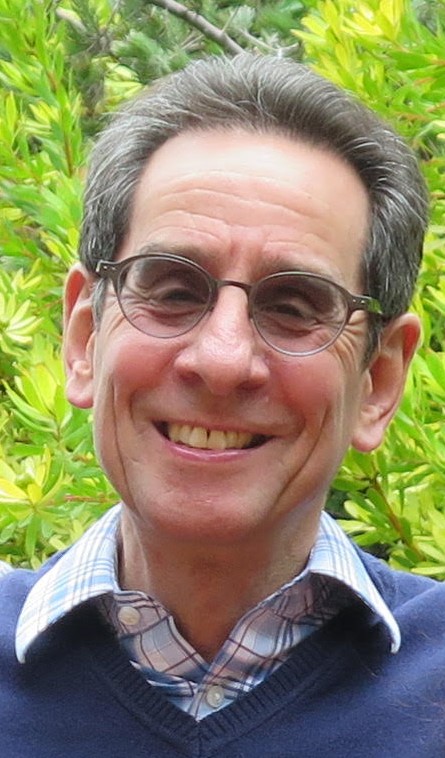
Jossy Sayir is an Affiliated Lecturer and Senior Research Associate in the Department of Engineering at the University of Cambridge . Holding a Dipl. El.-Ing. ETH and Dr. Techn.-Wiss. from ETH Zurich, Sayir’s work bridges Information Theory and Bioinformatics , focusing on DNA-based data storage and error correction systems. They serve as Director of Studies in Engineering at Newnham College and coordinate Engineering Admissions. Interdisciplinary collaboration with the European Bioinformatics Institute Research on DNA data storage efficiency and cost reduction Expertise in channel coding, source coding, and 5G algorithms Teaching spans mathematics and information engineering modules in Part I Engineering Tripos, with Part II contributions on information theory, error control coding, and cryptography. Sayir also oversees data compression labs and serves as Wine Committee Chair, reflecting diverse interests in food, coffee, wine, music , and jazz . Best Lecturer Award, 2017-18 Research Fellowships in coding theory Key research trends include DNA storage encoding , LDPC decoders , polar code optimization , and Sudoku-inspired constraint coding . Sayir’s work addresses both theoretical and practical challenges in high-density data storage and next-generation communication protocols .
Pierre Duhamel is a researcher affiliated with the Signals and Systems Laboratory, focusing on digital signal processing, communication systems, and multimedia security. His work spans theoretical and applied research in network coding, image compression, and channel coding. Primary affiliation: Signals and Systems Laboratory Research roles: Academic researcher, inventor (patents in image coding) Research interests: Duhamel's work addresses challenges in signal processing (e.g., wavelet transforms, L∞ norm compression), communication systems (e.g., robust decoding, WiMAX MAC protocols), and multimedia security (asymmetric watermarking, screen content coding). He explores optimization techniques for wireless networks and error resilience in multimedia transmission. Recent publications (2024–2025) reflect trends in image and signal processing , network optimization , and communication security , with applications to hyperspectral imaging, turbo coding, and cooperative wireless systems.
Dr. Masoud Salehi is an Associate Professor and Associate Chair for Graduate Studies in the Department of Electrical and Computer Engineering at Northeastern University, USA. He holds a BS (Summa Cum Laude) from Tehran University and MS/PhD from Stanford University. Previously, he worked at Isfahan University of Technology and Tehran University. His research focuses on error-correcting codes, information theory, digital communications, and physical-layer security. He has authored influential textbooks including Communication Systems Engineering (Prentice-Hall) and Contemporary Communication Systems Using MATLAB . Education: BS (Tehran U.), MS/PhD (Stanford U.). Visiting Professor at Eindhoven University of Technology (1988-1989). Research Interests : Network information theory, source-channel matching, data compression, turbo coding, coding for fading channels, digital watermarking. Recent work emphasizes physical-layer security in multi-user wireless networks and jamming mitigation strategies. Grants & Industry : Supported by NSF, GTE, NUWC, CenSSIS, Analog Devices. Consulted for Teleco Oilfield Services and AT&T. Awards : 2024 Outstanding Faculty Service Award. Editorial Board member of International Journal of Electronics and Communications . Key Contributions : Developed precoding techniques for MIMO systems, game-theoretic jamming mitigation, and LDPC decoding algorithms. Active in the Institute of Information Assurance (IIA) and Communications, Control & Signal Processing research group at Northeastern.
Professor Robert G. Maunder is affiliated with the University of Southampton and leads research in wireless communications, algorithms design, and hardware implementation. He has been with the School of Electronics and Computer Science since 2000, advancing from Lecturer to Professor in 2017. BEng (First Class) in Electronic Engineering (2003) PhD in Telecommunications (2007) His research focuses on joint source/channel coding and optimizing wireless communication systems through algorithm-hardware co-design. Recent work includes 5G non-terrestrial networks, OTFS modulation, and quantum code decoding. Key collaborators include Prof. Lajos Hanzo and Prof. Sir Bashir Al-Hashimi. Selected awards: IEEE Senior Member (2012), Chartered Engineer (IET, 2013), Fellow of the IET (2017). He supervises PhD student Arumjeni Mitayani and founded AccelerComm Ltd to commercialize soft-IP solutions.
Lajos Hanzo is a distinguished Professor at the University of Southampton's School of Electronics and Computer Science (ECS), where he has established himself as a leading authority in wireless communications and signal processing. His academic profile showcases extensive contributions to the field with over 1400 publications and significant recognition through multiple prestigious fellowships. Dr. Hanzo received his degree in electronics in 1976 and his doctorate in 1983, followed by an honorary doctorate in 2009. His educational background laid the foundation for a career that has continually evolved with communication technologies from early wireless systems through to contemporary 6G research and quantum communications. Hanzo's research spans wireless communications, optical wireless systems, MIMO technologies, and increasingly intersects with artificial intelligence applications for next-generation networks. His work demonstrates remarkable synergy between theoretical foundations and practical implementations, addressing challenges in spectral efficiency, channel capacity, and reliable transmission across diverse communication scenarios. He has made seminal contributions to space-time coding, non-orthogonal multiple access (NOMA), and index modulation techniques that have influenced multiple generations of wireless standards. Analysis of his recent publications reveals a clear progression toward more complex communication paradigms, with increasing focus on 6G technologies, integration of deep learning with traditional communication theory, and exploration of quantum-inspired communication approaches. His work consistently addresses the tension between theoretical capacity limits and practical implementation constraints, with recent papers demonstrating particular interest in millimeter-wave communications, visible light communication, and massive connectivity solutions for IoT applications. FREng (Fellow of the Royal Academy of Engineering) FIEEE (Fellow of the IEEE) FIET (Fellow of the Institution of Engineering and Technology) Fellow of EURASIP (European Association for Signal Processing) DSc (Doctor of Science) While specific details of his advising activities aren't prominently featured in the provided materials, Hanzo's extensive publication record spanning multiple decades suggests significant mentorship of graduate students and postdoctoral researchers. His research has clearly attracted substantial funding to support investigations across wireless communications, with particular emphasis on coding theory, MIMO systems, and next-generation network architectures. The collaborative nature of his recent work indicates ongoing engagement with international research consortia addressing 5G evolution and 6G standardization.
Bo Bernhardsson is a Professor in Automatic Control at the Department of Automatic Control, Faculty of Engineering (LTH), Lund University. He has been a full-time professor at Lund since 2010, following a decade (2001–2010) as an Expert in Mobile System Design and Optimization at Ericsson. He is affiliated with major research initiatives including ELLIIT (Excellence Center in Information Technology), LCCC (Lund Center for Control of Complex Engineering Systems), and WASP-AS (Wallenberg AI, Autonomous Systems and Software research school), where he has played a leadership role since 2016. His research focuses on modeling and control of uncertain and large-scale systems, with applications spanning industrial automation, mobile communications, particle accelerators, biomedical systems, and navigation technologies. He integrates theoretical control methods with practical implementations, particularly under constraints such as communication limitations, noise, and delays. His recent publications reveal a strong trend in networked control, communication-constrained estimation, and optimization-based control design. The works span theoretical advances in signal estimation under SNR constraints, event-based and stochastic control, and practical applications like IMU-radio fusion for navigation and RF field control in particle accelerators. Keywords include Control Theory, Communication Systems, Optimization, Signal Processing, and Networked Control , with subfields such as encoder-decoder co-design, virtual antenna arrays, and dynamic programming for time-delay systems. PhD in Control, Lund University, 1992 Professor in Automatic Control, Lund University, since 1999 Expert, Mobile Systems, Ericsson, 2001–2010 Bo Bernhardsson has supervised over 20 PhD and licentiate students, including Jacob Bergstedt (immune system modeling), Anders Mannesson (navigation and radio), and Erik Johannesson (control under communication constraints). His research has been funded by major entities such as the European Spallation Source and the Wallenberg Foundation. He teaches advanced courses in Linear Systems, Convex Optimization, and Robust Control, and has contributed significantly to both academic and industrial advancements in control engineering. He leads and collaborates on interdisciplinary projects involving real-time control, autonomous systems, and machine learning, often in partnership with industry and international research centers. His work in the RobotLab at LTH and on cloud-based control systems highlights his engagement with emerging technologies.
Victoria Kostina is a Professor of Electrical Engineering and Computing and Mathematical Sciences at the California Institute of Technology (Caltech). Her research bridges information theory , coding theory , and wireless communications , with a focus on the nonasymptotic regime to understand fundamental limits of delay-constrained systems. Bachelor's, Moscow Institute of Physics and Technology Master's, University of Ottawa PhD, Princeton University Her work explores the intersection of random processes , concentration of measure , and control theory to develop theoretical frameworks for modern communication systems. She has pioneered techniques for finite blocklength information theory and feedback communication , analyzing stability and performance in stochastic environments. Victoria's publications span channel coding , source-channel coding , and control with communication constraints , with a focus on practical applications in real-time systems . Her research has advanced the understanding of data compression , error exponents , and quantization in nonasymptotic scenarios. Notable scientific recognitions include: Princeton Electrical Engineering Best Dissertation Award (2013) NSF CAREER Award (2017) J. K. Wolf ISIT Student Paper Award Finalist (2021) She actively supervises students in the Computing and Mathematical Sciences (CMS), Control and Dynamical Systems (CDS), and Electrical Engineering (EE) PhD programs and leads the development of the SPECTRE Toolbox for finite blocklength information theory.
Shunsuke Horii is an Associate Professor at the Center for Data Science, Waseda University. His research spans information theory, coding theory, statistical learning theory, and data science applications. He actively collaborates with industry through initiatives like the Waseda Data Science Consortium. Education: Ph.D. in Science and Engineering from Waseda University (2009), Master's from Waseda University Graduate School of Science and Engineering (2004). Research Focus: Addresses causal effect estimation in data science using Bayesian decision theory, sparse modeling, and optimization techniques like ADMM and variational inference. Develops efficient algorithms for multiuser communication, matrix completion, and privacy-preserving distributed computing. Teaching: Instructs courses on statistics literacy, data science, and programming with Python/R across multiple academic quarters. Grants: Leads projects funded by Japan Society for the Promotion of Science, including causal inference frameworks, product recommendation systems, and business analytics. Publications: 21 papers with 61 Scopus citations, focusing on LP decoding, Bayesian hierarchical models, and statistical causal analysis.
Rodrigo C. de Lamare is a Reader in the Department of Electronics at the University of York, United Kingdom. He holds a Diploma from UFRJ, an MSc and PhD from PUC-RIO, and is a Member of the Institution of Engineering and Technology (MIET) and Senior Member of IEEE (SMIEEE). His educational background includes a Postgraduate Certificate of Academic Practice from the University of York (2008), a PhD in Structures and algorithms for multiuser detection and interference suppression in DS-CDMA systems from PUC-RIO (2004), a Master's in Speech coding at rates below 2 kb/s from PUC-RIO (2001), and a Diploma in A CELP speech coder for Brazilian Portuguese from UFRJ (1998). Dr. de Lamare's research spans multiple areas of signal processing and communications, with a strong focus on adaptive algorithms for wireless systems. His work addresses fundamental challenges in multiuser detection, interference suppression, beamforming, and space-time processing. He has made significant contributions to reduced-rank adaptive filtering techniques that balance performance with computational complexity, which is crucial for practical implementation in modern communication systems. His publication record shows a consistent trajectory of high-impact research in IEEE journals and conferences, with recent work focusing on large-scale MIMO systems, cooperative communications, and advanced signal processing techniques for next-generation wireless networks. The research demonstrates increasing complexity in addressing interference management in dense wireless environments while maintaining computational feasibility. As an educator, Dr. de Lamare teaches courses in Error Control Coding, Detection and Estimation Theory, Digital Signal Processing, Information Theory, Engineering Mathematics, and Emerging Technologies, reflecting the breadth of his expertise. His academic supervision includes work with PhD students and visiting academics, though specific names are not provided in the available information. His professional activities encompass extensive conference participation and contributions to the academic community through technical program committees and editorial work.
Dr. Maximilian Stark is a Lecturer at the Institute of Communications, TU Hamburg. His research focuses on machine learning-driven advancements in communication systems, particularly applying the information bottleneck method to decoding algorithms, signal processing, and quantization techniques. His work bridges theoretical information theory with practical implementation challenges in coding and channel design. Key research areas include LDPC and polar codes optimization, low-bitwidth decoding architectures, and distributed signal processing frameworks. Recent publications emphasize adaptive learning systems for error resilience under quantization constraints and hardware-efficient receiver design. Dr. Stark's academic contributions span over 20 peer-reviewed articles since 2016, with a strong emphasis on integrating machine learning principles into traditional communication engineering problems. Notable themes include neural decoding paradigms, resource-constrained quantization strategies, and distributed information compression methods. No scientific awards explicitly listed. Academic advising details and lab affiliations are not provided in source materials.
Samer Lahoud is an Associate Professor and University Research Chair at the Faculty of Computer Science, Dalhousie University, where he leads research in wireless networks, IoT, and resource optimization. He joined Dalhousie in 2023 after holding academic positions at the University of Rennes and Saint Joseph University in Lebanon, and working as a researcher at IRISA laboratory and as a research engineer at Nokia Bell Labs Europe. His educational background includes a PhD in Computer Science and Networks from IMT Atlantique, Rennes (2006), and a Habilitation (HDR) from Université Paris-Saclay (2023), both in France. Dr. Lahoud's research focuses on enhancing wireless network performance through adaptive and energy-efficient solutions. Key areas include radio resource allocation in cellular and LPWAN, full-duplex communications, and game-theoretic models for multi-operator networks. His work bridges theoretical models with real-world applications in smart agriculture, smart cities, and industrial IoT. He has made significant contributions to LoRaWAN propagation modeling and developed open-source simulators for RL-based resource allocation. His recent publications reflect a strong trend toward intelligent, learning-based, and game-theoretic approaches for optimizing LPWANs, 5G RAN slicing, and full-duplex networks. The articles emphasize energy efficiency, reliability, and scalability in IoT systems, with increasing integration of machine learning and federated learning paradigms. University Research Chair - Established Scholar, Dalhousie University Dr. Lahoud has co-supervised over 10 students, including postdoctoral researchers, PhD, and master's candidates. He has led multidisciplinary research projects funded by national and international agencies, particularly in LPWAN for smart agriculture. He also played a key role in establishing a joint IoT master's program between Saint Joseph University and Paris-Saclay University. He leads a research team focused on wireless systems and has developed open-source tools such as the LoRa-MAB simulator and FDOFDMA-Simulator. His lab fosters international collaboration between institutions in Canada, France, and Lebanon, promoting student mobility and knowledge transfer.
Dr. Hasan Ahmed serves as a Senior Lecturer and Director of Partnership Development within the School of Computing and Communications at Lancaster University. Based at InfoLab21, he maintains dual affiliations with the Communication Systems research group and the Vice-Chancellor's Office, reflecting his academic and strategic partnership roles. His research bridges theoretical and applied domains across communications engineering and computer science. His primary research areas include: Wireless Communications (VANET connectivity, MIMO-UWB channel modeling, TETRA systems) Cryptography (rank code cryptosystems, key pre-distribution for WSN) Network Security (electricity theft detection, intrusion detection systems) Machine Learning (CNN applications for security analytics) Image Processing (face recognition, segmentation algorithms) Smart Grids (energy efficiency, infrastructure security) Publications from 2010-2023 reveal an evolution from foundational work in communication theory toward AI-driven security solutions. Early contributions (2010-2012) focus on ray tracing for UWB channel modeling and VANET traffic flow, while post-2017 research increasingly applies neural networks to face recognition and smart grid security. The 2021-2023 papers demonstrate high-impact integration of deep learning for electricity theft and intrusion detection in critical infrastructure. Dr. Ahmed supervises PhD student Naif Alshammari and leads partnership development initiatives. His work with the Communication Systems group at InfoLab21 emphasizes collaborative projects in communication technologies and ICT security, though specific grant details remain unreported in the source materials. His administrative role as Director of Partnership Development indicates strategic leadership in institutional collaborations beyond core academic duties. He is embedded within Lancaster University's InfoLab21 ecosystem, contributing to the Communication Systems research group's focus on next-generation networks, IoT security, and wireless infrastructure. This environment supports his interdisciplinary work spanning electrical engineering and computer science frameworks.
Ramesh Pyndiah is a Professor at IMT Atlantique's Microwave Optics (OPT) Department, a leading institution in digital communications research. With over 30 journal papers and 100 conference publications, his work focuses on advanced channel coding techniques, particularly block turbo codes, Reed-Solomon codes, and joint source-channel coding. Research Interests : Digital communications, turbo coding, joint source-channel coding, OFDM, wireless sensor networks, optical wireless systems. Leadership : Director of Research & Innovation at IMT Atlantique, Deputy Director of COMIN Labs (2014-2017), Chair of IEEE ComSoc France Chapter (2000-2014). His research trends show a strong emphasis on error correction for high-efficiency wireless and optical systems, with recent work on LDPC codes , network coding , and low-complexity decoding . He has supervised 17 PhD students in areas like video coding, UWB systems, and DNA-inspired coding. Awards : 2001 SEE Blondel Medal, IEEE Senior Membership (2001), leadership roles in ICC, Globecom, and Turbo Code symposia. Patents : 17 innovations in high-frequency mixers, phase shifters, and error correction coding.
Andrew Singer is the Dean of the College of Engineering and Applied Sciences and a Professor in the Department of Electrical and Computer Engineering at Stony Brook University. Previously, he held roles at the Grainger College of Engineering, University of Illinois Urbana-Champaign, including positions as Associate Dean for Innovation and Entrepreneurship. His research spans signal processing, underwater acoustic communications, biomedical acoustics, and entrepreneurship. He leads projects like the MAGIC Automated Acoustics Laboratory and Augmented Listening Technology, focusing on audio signal enhancement, wearable devices, and underwater communication systems. Research interests include adaptive signal processing, turbo equalization, and biomedical applications of acoustics. Notable contributions include high-data-rate ultrasonic communication through biological tissues and real-time video streaming using acoustic channels. His work integrates machine learning and physical models to address challenges in acoustics, communications, and biomedical engineering. Recent articles explore reliable measurement in unreliable systems, underwater source localization, and bio-inspired signal processing techniques. Awards and recognitions are not explicitly listed but his extensive publications and leadership roles highlight his contributions to the field. Advised students and collaborators span academia and industry, including roles at Apple, Amazon, and defense agencies. Current initiatives include developing mechatronic systems for acoustic research and advancing assistive listening technologies.
Paul H. Siegel is a Professor in the Department of Electrical and Computer Engineering at the University of California, San Diego (UCSD), within the Jacobs School of Engineering. He holds an Endowed Chair at the Center for Memory and Recording Research (CMRR) and is affiliated with the California Institute for Telecommunications and Information Technology (Calit2) and the Center for Wireless Communications (CWC). He previously served as Director of CMRR from 2000 to 2011 and maintains an active research and teaching presence at UCSD. Ph.D. in Mathematics, Massachusetts Institute of Technology, 1979 S.B. in Mathematics, Massachusetts Institute of Technology, 1975 Prof. Siegel's research centers on the mathematical foundations of signal processing and coding, with applications to digital data storage and wireless communications. His work spans constrained coding, error-correcting codes, trellis modulation, and algorithm design. He has made foundational contributions to matched spectral null codes, finite-state modulation, and coding for partial response channels. His recent publications emphasize coding for flash and non-volatile memories, polar and LDPC codes, and interference mitigation in high-density storage. His 15 most recent publications (2021–2018) demonstrate continued leadership in constrained coding, shaping codes, insertion/deletion channels, and neural network-based detection. The research integrates deep information-theoretic analysis with practical applications in storage systems, particularly flash and magnetic recording. Topics include rate-compatible codes, locally recoverable codes, polar coding for asymmetric channels, and robust neural networks using coding principles. IEEE Fellow (1997) IEEE Information Theory Society Paper Award (1992) IEEE Communications Society Leonard G. Abraham Prize (1993) IEEE Communications Society Data Storage Technical Committee Best Paper Award (2007) IEEE Information Theory Society Padovani Lecturer (2015) Member, National Academy of Engineering (2008) Best Graduate Teacher Award (2009–2010, 2015–2016) Best Undergraduate Teacher Award (2017–2018) Teacher of the Year, Jacobs School (2007–2008) Outstanding Mentor Award (2020–2021) Prof. Siegel has advised numerous Ph.D. and Master’s students, including Joseph B. Soriaga, Henry D. Pfister, Mohammad H. Taghavi, and Eitan Yaakobi. He has received research funding from industry and government agencies for projects in data storage and communications. He served as Editor-in-Chief of IEEE Transactions on Information Theory (2001–2004) and has held editorial roles in multiple IEEE journals. He co-organizes the Annual Non-Volatile Memories Workshop (NVMW) at UCSD, fostering collaboration in next-generation memory technologies. His primary research lab is the Center for Memory and Recording Research (CMRR), a leading interdisciplinary research center focused on magnetic, optical, and solid-state data storage technologies. CMRR supports projects in coding, signal processing, device physics, and system architecture. Prof. Siegel leads a team of graduate students and postdoctoral researchers investigating advanced coding schemes for emerging memory systems.