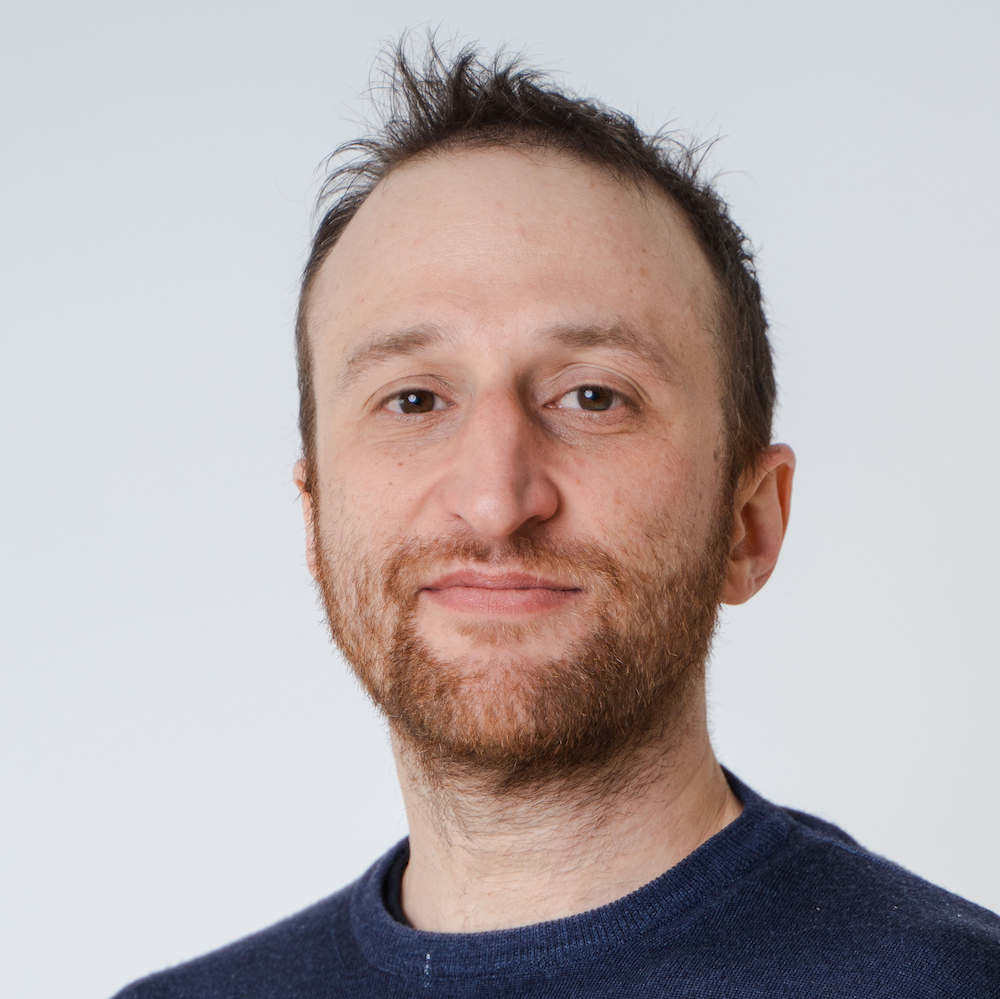
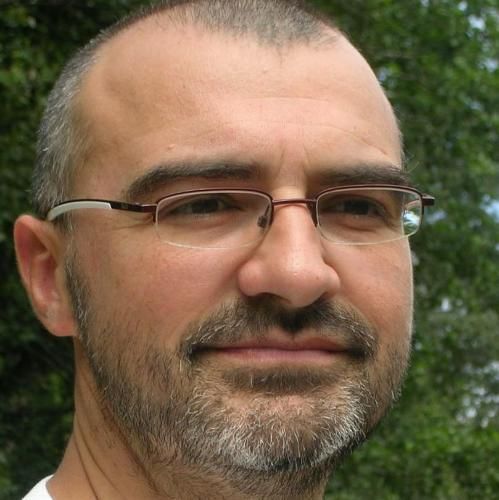
Paolo Rota is a tenure-track Assistant Professor at the University of Trento, affiliated with the Department of Information Engineering and Computer Science (DISI) and the Center for Mind/Brain Sciences (CIMeC). His research lies at the intersection of computer vision, machine learning, and multimodal AI, with a strong emphasis on vision-language models and activity recognition. His research interests include zero-shot action recognition, temporal action localization, open-world recognition, and person image synthesis. He explores how large multimodal models can be leveraged for practical applications in video analytics and industrial AI, often developing training-free or source-free adaptation methods that improve model generalization. Recent publications show a consistent trend in utilizing large vision-language models (e.g., CLIP, LMMs) for tasks such as image classification, domain adaptation, and action recognition, emphasizing simplicity, zero-shot capabilities, and real-world applicability. His work frequently appears in top venues including CVPR, NeurIPS, ICCV, and ICIAP. He actively mentors PhD students including Benedetta Liberatori, Jiaqi Liu, Yan Shu, Shiyao Xu, and Alessandro Conti, often co-advising with faculty such as Elisa Ricci and Nicu Sebe. He also contributes to teaching, including delivering lectures on machine learning for the MSc in Data Science program. He co-founded Mountain Maps, a startup using AI to enhance outdoor navigation and mountain exploration. His work bridges academic research and practical innovation, aiming to increase the real-world impact of AI systems.
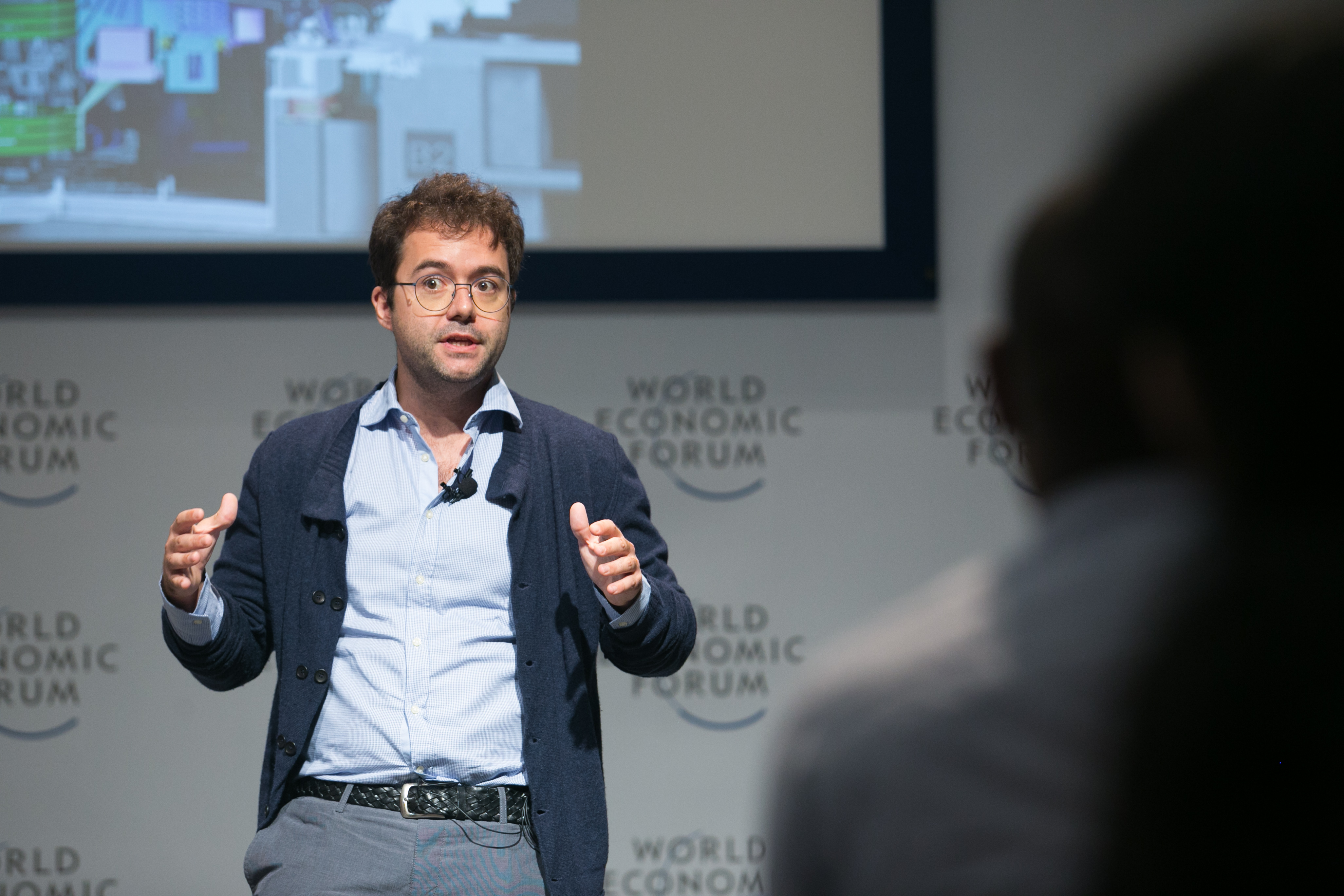
Francisco Manuel Bernal Martínez is an Associate Professor in the Department of Mathematics at Carlos III University of Madrid. His research focuses on numerical methods, partial differential equations, and computational mathematics, with applications in industrial engineering and materials science. He leads projects such as 'Financiación adicional 5º año (2022)' and collaborates on initiatives like 'Clustering Automático de Comportamientos de Invertebrados en Libertad mediante Imagen 3D.' His work emphasizes domain decomposition algorithms, radial basis functions, and stochastic control problems. He has advised at least one PhD thesis and holds grants from regional and national funding bodies. Key research interests include meshless methods, probabilistic domain decomposition, and uncertainty quantification in energy systems. Recent publications highlight advancements in hybrid algorithms for large-scale PDEs and volatility modeling. Bernal Martínez actively participates in academic networks and has presented at international conferences on computational methods and industrial mathematics.
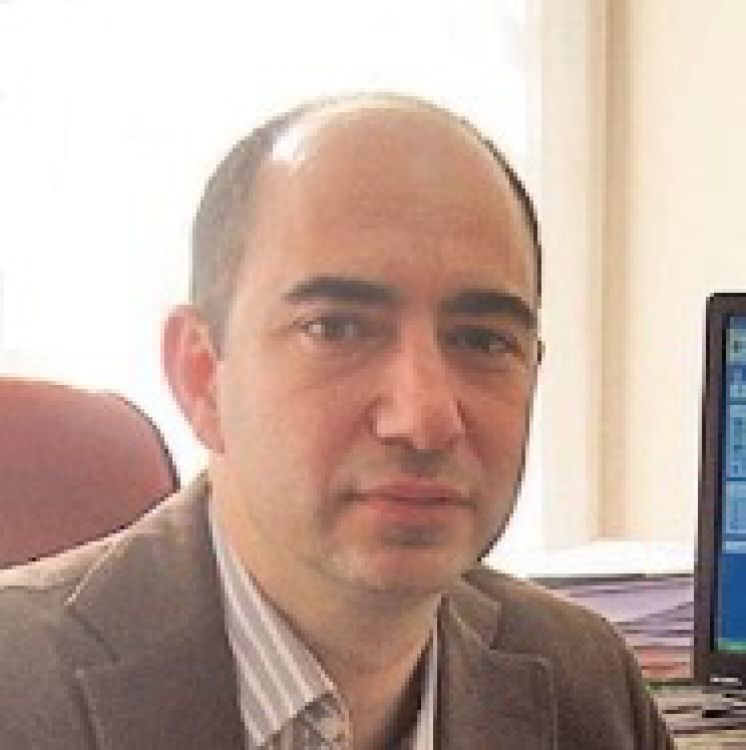
Santiago Badia is a Full Professor of Computational Science and Engineering at Universitat Politècnica de Catalunya (UPC), holding an adjoint researcher position at the International Center for Numerical Methods in Engineering (CIMNE). He leads the Large Scale Scientific Computing (LSSC) group at CIMNE, focusing on finite element methods, numerical analysis, and high-performance computing. His research emphasizes fluid dynamics, multiphysics problems, and scalable solvers for large-scale systems. Previously, he worked at Politecnico di Milano and Sandia National Labs. He developed the FEMPAR software framework, a parallel finite element tool for PDE simulations, achieving landmark scalability (e.g., 60 billion unknowns on 458,672 cores). FEMPAR is recognized in the High-Q Club of European codes. His expertise includes discontinuous Galerkin methods, XFEM, and domain decomposition preconditioners. Research interests span metal additive manufacturing, superconductor devices, and nuclear engineering applications. Awards include FEMPAR's High-Q Club inclusion. He advises PhD and MSc students (e.g., Jesus Bonilla, Eric Neiva, Marc Olm) and has open positions in postdoc/PhD levels. His team includes researchers like Javier Principe and Alberto Martín. Ongoing projects involve advancing parallel algorithms, multiphysics simulations, and software scalability for exascale computing.
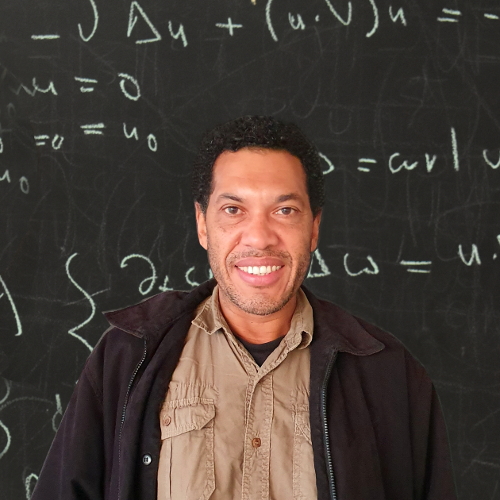
Prof. Manuel Sierra Castañer is a full professor at the Technical University of Madrid (UPM), serving as the Dean of the School of Telecommunications Engineering since May 2021. He holds a Telecommunication Engineering degree (1994) and a PhD (2000), both from UPM. His career includes roles as assistant and associate professor, research positions at Tokyo Tech and EPFL, and leadership in antenna measurement systems and international projects. He is a Senior Member of IEEE and Fellow of AMTA, with research focused on planar antennas and measurement systems. Notable achievements include the IEEE APS 2007 Schelkunoff Prize and leadership roles in EurAAP (Vice-Chair, General Chair for EuCAP 2022). He directed 7 PhD theses and led projects like FUTURE-RADIO and TERASENSE. His administrative roles include Director of International Cooperation at UPM (2010–2020) and leadership in the European School of Antennas. Key contributions span antenna design for 5G, satellite communications, and energy harvesting. He has authored 40+ journal papers and pioneered phaseless near-field techniques, robotic antenna measurement systems, and 3D-printed antenna components. His work bridges academic research with industry applications, emphasizing sustainable engineering education and global collaboration.
Jose Miguel Reynolds Barredo is an Associate Professor and Director of the Doctorate in Plasmas and Nuclear Fusion at Carlos III University of Madrid. His research focuses on plasma physics, magnetohydrodynamics (MHD), and energy systems resilience. He leads studies on stellarator reactor design, plasma confinement optimization, and the integration of renewable energy into power grids. His work spans advanced MHD equilibrium solvers (e.g., SIESTA, FLIPEC) and fusion device optimization for ITER and Wendelstein 7-X. He also investigates climate impacts on renewable energy efficiency and power grid stability under high renewable penetration. Notable contributions include HVDC grid segmentation strategies and non-axisymmetric plasma transport modeling. Key Areas: Fusion reactor design, MHD stability, power grid resilience, climate-energy interactions Tools: SIESTA, FLIPEC, GENE, OPA cascading blackout model Projects: Doctorate in Plasmas and Nuclear Fusion, W7-X bootstrap current studies, climate-energy system interdependencies Research emphasizes computational plasma physics and interdisciplinary energy solutions, blending theoretical, numerical, and applied engineering approaches.
Dr. Lluis Batet Miracle is a Professor at the Universitat Politècnica de Catalunya (UPC) with the Department of Physics . He leads the Advanced Nuclear Technologies Research Group (ANT) and has contributed extensively to nuclear fusion technology, thermal hydraulics, and liquid metal systems. His work spans reactor safety analysis, tritium processing, and magnetohydrodynamic modeling. Expertise : Nuclear Engineering, Plasma Physics, Computational Fluid Dynamics, Fusion Reactor Design, Tritium Management Notable Projects : CONSOLIDER TECNO-FUS (2009-2013), EURATOM collaborations, HCLL Breeding Blanket Systems for ITER Research Trends : Recent publications focus on helium solubility in liquid metals, bubble dynamics in fusion blankets, and MHD simulations under nuclear conditions. His work combines atomistic modeling, high-fidelity CFD, and experimental validation for tritium and hydrogen systems in fusion reactors. Collaborations : Regularly works with Luis Sedano, Eduardo Ríos, Jordi Martí, Francesc Reventos, and Elisabet Mas de les Valls Grants : Involved in Horizon Europe, EURATOM, and Spanish National Research programs
Alexandre Santos Francisco is Professor of Fluid Mechanics at Fluminense Federal University (Universidade Federal Fluminense) in Brazil, holding a PhD in Nuclear Engineering. He will soon serve as Visiting Professor at the ERC Advanced Grant project DyCon under Prof. Enrique Zuazua (FAU, University of Deusto, and Universidad Autónoma de Madrid), focusing on computational mathematics and porous media research. His academic credentials include: PhD in Nuclear Engineering (1994–2000), Federal University of Rio de Janeiro Master's Degree in Nuclear Engineering (1990–1993), Federal University of Rio de Janeiro Bachelor's Degree in Mechanical Engineering (1984–1990), Federal University of Rio de Janeiro Internship at Petrobras (1988) Francisco's research centers on porous media, computational mathematics, and computational fluid mechanics, with emphasis on numerical methods for heterogeneous media flows. His work bridges nuclear engineering safety, environmental contaminant transport, and industrial process optimization through advanced simulation techniques. Analysis of his 15 most recent publications reveals dominant trends in multiscale modeling for porous media, parallel computing implementations, and reliability assessment in nuclear systems. Key application areas include waste disposal simulation, steam generator integrity, and multiphase industrial processes, consistently integrating mathematical rigor with engineering challenges. No scientific awards are documented in the provided materials. While student advisement details are absent, his upcoming ERC Advanced Grant project DyCon involvement signifies active grant-funded research. The project will expand his work on mathematical control theory for complex systems under Prof. Zuazua's supervision. He collaborates internationally through the ERC DyCon project, leveraging expertise in numerical methods to address multiscale dynamics in porous media, with future work likely advancing computational techniques for energy and environmental applications.
Francisco Manuel Fernández Rivera is a Professor at the University of Santiago de Compostela, affiliated with the Department of Electronics and Computing under the Faculty of Physics. His research focuses on high-performance computing, parallel algorithms, and LiDAR data analysis. He leads the ARQCOMP research group and is part of the Center for Research in Intelligent Technologies (CITIUS). His work addresses challenges in NUMA systems optimization, sparse matrix computations, and geospatial data processing. He holds a PhD from the University of Santiago de Compostela (1988), with a thesis on algorithm partitioning in hypercube computers. His research spans parallel computing frameworks, LiDAR-based infrastructure analysis, and performance modeling of distributed systems. Recent projects include developing thread migration strategies for NUMA architectures and creating tools for LiDAR data visualization and simulation. Key contributions include advancements in LiDAR-based pathfinding, energy-efficient NUMA system management, and parallelization techniques for irregular codes. His work bridges theoretical computer architecture with practical applications in urban planning and environmental monitoring.
María Concepción Bermúdez Edo serves as a State Researcher at the Polytechnic University of Cartagena's Faculty of Sciences, maintaining an active research career from 1999 to 2025. Her work centers on advancing computational mathematics through rigorous numerical analysis methodologies. Her primary research explores iterative solution techniques for nonlinear systems, with specialization in Newton-type methods, wavelet applications for Maxwell's equations, and convergence analysis of high-order algorithms. This includes significant contributions to k-step iterative schemes, damped parameter optimization, and non-Fréchet differentiable operator handling. Analysis of her 13 journal publications reveals consistent focus on algorithmic efficiency and mathematical foundations across computational electromagnetics and differential equations. The 2017 wavelets overview demonstrates cross-disciplinary integration of numerical analysis with electromagnetic theory, while her 2009 mentoring publication highlights engagement in faculty development initiatives within the Faculty of Sciences.
Stefano Discetti is a Full Professor in the Department of Aerospace Engineering at Universidad Carlos III de Madrid, leading the Aerospace Engineering Research Group. His work bridges experimental fluid dynamics, machine learning, and flow control. Key research themes include turbulence characterization, heat transfer enhancement, and advanced measurement techniques like PIV/PTV. He has developed data-driven methods for flow estimation, sensor placement optimization, and physics-informed neural networks. Research Trends from his publications show a focus on: Machine learning for turbulent flow reconstruction (GANs, CNNs, KNN) Non-intrusive sensing from wall measurements Manifold learning and reduced-order modeling Heat transfer control via plasma actuators and passive structures Time-resolved diagnostics using hybrid experimental/numerical approaches Projects include principal roles in EU and national grants like NEXTFLOW (2021-2026) and EXCALIBUR (2023-2026), with industry collaborations at Airbus and TU Delft.
Jose Enrique Adsuara Fuster is a Researcher at the Department of Computer Science and Artificial Intelligence within the School of Engineering at Universitat de Valencia. He earned his PhD in 2017 with the thesis 'Improved numerical methods for elliptic problems in astrophysics' supervised by Dr. Miguel-Ángel Aloy Toras and Dr. Pablo Cerdá-Durán. He belongs to the ERI Image Processing Laboratory (IPL) and focuses on numerical methods for astrophysical simulations. His research bridges computational mathematics and astrophysics, specializing in iterative solvers like the Scheduled Relaxation Jacobi method and their equivalence to classical algorithms. His work emphasizes improving convergence rates for elliptic PDEs relevant to astrophysical phenomena. No scientific awards or student supervision details are listed in available sources. The three articles since 2016 show a consistent focus on numerical analysis for astrophysical applications, particularly elliptic PDEs and iterative methods. His publications appear in computational physics journals, with collaborations within the IPL group.
Germán Rodrigo is a tenured Research Professor at the Instituto de Física Corpuscular (IFIC) , a joint centre of the Spanish National Research Council (CSIC) and the University of Valencia . After earning his PhD in 2003 under Arcadi Santamaria, he held post-doctoral positions at KIT Karlsruhe and CERN before returning to Valencia in 2008. He currently leads the quantum–phenomenology group within the theoretical physics department. His research straddles high-energy collider phenomenology and quantum computing. Rodrigo is internationally recognised for turning multi-loop Feynman integrals into causal, loop-tree-dual forms and for implementing the resulting algorithms on real quantum hardware. Key achievements include the first quantum calculation of loop integrals, quantum jet clustering at the LHC, and quantum amplitude estimation with error mitigation. Recent work (2022-2025) focuses on: Quantum integration of decay rates and fragmentation functions Graph-based quantum algorithms for causal multi-loop configurations Adaptive importance sampling on quantum annealers and gate-based devices Factorisation-breaking studies in triple-collinear splitting with massive partons He advises three doctoral students and is PI on a national Spanish grant supporting the group’s quantum-technologies programme. No personal e-mail is publicly listed; contact is handled through the IFIC secretariat.
Shimpei Futatani is a researcher at the Universitat Politècnica de Catalunya (UPC) within the Advanced Nuclear Technologies Research Group (ANT). He holds a doctoral degree and specializes in plasma physics, magnetohydrodynamics (MHD), and nuclear fusion research, with a focus on edge-localized modes (ELMs), turbulence suppression, and plasma confinement in tokamaks. His work integrates nonlinear MHD simulations, experimental validation, and code development (e.g., JOREK) to advance fusion energy technologies. Research interests include plasma edge dynamics, ELM control mechanisms, and ITER-relevant scenarios. He collaborates on projects like the JT-60SA tokamak and contributes to experiments on JET and ASDEX Upgrade. His studies address MHD stability, particle transport, and the role of energetic ions in fusion plasmas. Key projects include the development of hybrid kinetic-MHD models and pellet-triggered ELM simulations. He actively participates in the EUROfusion program, focusing on plasma control and turbulence mitigation strategies for future fusion reactors.
Ana Corberán Vallet is an Associate Professor in the Department of Statistics and Operations Research at the Faculty of Mathematics, Universitat de València, Spain. She is a member of the PROMEDyA research group, focusing on prediction and optimization under uncertainty using dynamic stochastic models. Her research lies at the intersection of Bayesian statistics, time series forecasting, and epidemiological modeling. She specializes in developing and applying Bayesian stochastic models to real-world problems, particularly in public health, such as modeling the spread of respiratory syncytial virus. Her work often integrates simulation-based inference and spatial statistics for health survey data. Her recent publications show a strong trend toward spatial and hierarchical Bayesian modeling, especially in health applications, with a focus on small area estimation and ordinal data analysis. She frequently collaborates with experts in mathematical epidemiology and biostatistics. She earned her Ph.D. from the Universitat de València in 2009, supervised by Dr. José Domingo Bermúdez Edo and Dr. Enriqueta Vercher González. Her doctoral work centered on Bayesian multivariate exponential smoothing models. She has published in journals such as Statistics in Medicine , Biometrical Journal , and Journal of Statistical Planning and Inference . Ana Corberán Vallet advises students and collaborates on interdisciplinary research projects involving statistical modeling of health and biological systems. She is actively involved in research without mention of external grants or awards in the provided texts. She is associated with the PROMEDyA research group, which works on dynamic stochastic models for prediction and optimization under uncertainty, particularly in health and operational contexts.
Jésica De Armas is an Associate Professor at the Department of Economics and Business, Universitat Pompeu Fabra (UPF) in Barcelona, Spain. She holds a prestigious Ramon y Cajal Fellowship from the Spanish Ministry of Science and Innovation, recognizing her outstanding research contributions. Her academic career spans multiple institutions, with previous postdoctoral positions at the Open University of Catalonia (UOC) and the University of La Laguna (ULL). PhD in Computing (Cum Laude) from University of La Laguna (2012) Computer Engineering degree with special award for best academic record Ramon y Cajal Fellowship recipient (2022) PhD Extraordinary Award from University of La Laguna (2012) PhD Award from Spanish Association of Artificial Intelligence (AEPIA) (2014) Her research focuses on developing and applying optimization techniques to solve complex real-world problems. She specializes in combinatorial optimization, metaheuristics, and machine learning approaches applied to logistics, transportation, and health care systems. Her work bridges theoretical advancements with practical implementations, particularly in vehicle routing, scheduling, and resource allocation problems. She has established herself as a leading researcher in optimization for social good, with significant contributions to humanitarian logistics and health care delivery systems. Dr. De Armas's publications reveal a strong trajectory in operations research with applications spanning multiple domains. Her research shows a clear evolution from theoretical optimization methods toward increasingly complex real-world applications, particularly in health care and social services. Her most recent work demonstrates a sophisticated integration of simulation, machine learning, and optimization techniques to address challenges in refugee resettlement, home care services, and public infrastructure planning. The consistent publication in high-impact journals reflects her growing influence in the field of operations research. Ramon y Cajal Fellowship (2022) Best Paper Award from Energies (2019) Luis Azcárraga Award from ENAIRE Foundation (2017) PhD Award from Spanish Association of Artificial Intelligence (2014) PhD Extraordinary Award from University of La Laguna (2012) HPC-Europa2 Fellowship (2011) Dr. De Armas has successfully secured multiple competitive research grants and has advised numerous students across various academic levels. She has served as Principal Investigator for projects including REASON (2024-2027) on optimizing health care delivery in rural areas, and previously led the EPHoCaS project (2020-2022) focused on sustainable home care services for the elderly. Her advising portfolio includes three PhD students to completion and numerous master's and undergraduate thesis students, demonstrating her commitment to mentoring the next generation of researchers. Her research has led to tangible industry applications, particularly in vehicle routing optimization where her algorithms have been implemented by companies as key business tools. Dr. De Armas maintains an active international research network with collaborations spanning institutions in Edinburgh, Nottingham, Cosenza, Boulder, Hamburg, and Montreal. Her work on the ROAR-NET research network demonstrates her leadership in advancing optimization algorithms research across European institutions. She has also contributed significantly to the academic community through conference organization, including the International Conference on Computational Logistics (ICCL2022) and the Metaheuristics International Conference (MIC 2017).