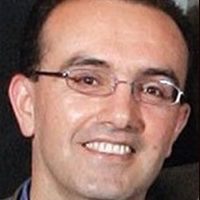
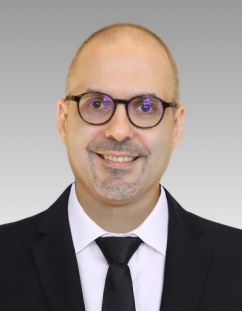
Chun-Yi Su is a Professor in the Department of Mechanical, Industrial and Aerospace Engineering at Concordia University. His research focuses on advanced control systems, mechatronics, robotics, and precision engineering. He specializes in nonlinear control, hysteresis compensation, and adaptive systems applied to soft actuators, UAVs, and smart materials. Key research areas include: Control of dielectric elastomer actuators Fault-tolerant cooperative control of unmanned aerial vehicles (UAVs) Adaptive neural network-based control for nonlinear systems Data-driven approaches for power electronics and energy systems Recent work emphasizes: Soft robotics actuation mechanisms Fractional-order control strategies Resilient control under cyber-physical attacks Biomimetic robotic systems His lab develops innovative solutions for smart materials, mechatronic systems, and autonomous robotics. Applications span renewable energy systems, biomedical devices, and aerospace engineering. Active in collaborative research with industry partners.
Ramy H. Gohary is an Assistant Professor in the Department of Systems and Computer Engineering at Carleton University. His research focuses on advanced wireless communication systems, including machine-to-machine communications, Internet-of-Things (IoT), MIMO systems, convex optimization, differential geometry applications in signal processing, and information-theoretic aspects of multiuser systems. Principal Investigator for Ericsson-Carleton Strategic Partnership projects on 5G+ wireless networks Research emphasizes fairness, cross-layer design, cooperative communications, and jamming-resistant detection techniques His recent work explores direction-of-arrival estimation, non-coherent communication in jamming environments, and distributed MIMO architectures. Publications highlight applications of differential geometry, optimization techniques, and sparse signal recovery in modern wireless systems. He actively contributes to advancements in channel modeling, beamforming, and energy-efficient network design.
Amir H. Banihashemi is a Professor of Systems and Computer Engineering at Carleton University, holding a P.Eng. designation. He earned his B.A.Sc. from Isfahan University of Technology, M.A.Sc. from Tehran University, and Ph.D. from the University of Waterloo. His academic career includes postdoctoral research at the University of Toronto and roles such as Director of the Broadband Communications and Wireless Systems (BCWS) Centre at Carleton until 2013. He has authored over 100 publications in top-tier journals and conferences, focusing on coding theory, digital communications, and signal processing. Notable awards include the 2017 IEEE Ottawa Section Outstanding Engineer Award and Carleton's Research Achievement Awards (2006, 2012). His research group actively explores LDPC codes, compressed sensing, and spectrum sensing in cognitive radios. Key contributions include error floor analysis, trapping set elimination, and efficient decoding algorithms. Education: B.A.Sc. Electrical Engineering, Isfahan University of Technology (GPA 19.4/20) M.A.Sc. Communication Engineering, Tehran University (GPA 18.74/20) Ph.D. Electrical and Computer Engineering, University of Waterloo Research Interests: Digital and Wireless Communications Coding and Information Theory Signal Processing Algorithms LDPC Codes Design and Analysis Recent Projects: Compressed Spectrum Sensing for Cognitive Radios (2021 FED Research Award) Error Floor Mitigation in LDPC Decoding Trapping Set Characterization Awards highlight his pioneering work in error correction coding and digital communications. His funded research includes NSERC Discovery Grants and industry partnerships. He has supervised numerous graduate students and advised postdoctoral fellows in coding theory and communications.
Samer Lahoud is an Associate Professor and University Research Chair at the Faculty of Computer Science, Dalhousie University, where he leads research in wireless networks, IoT, and resource optimization. He joined Dalhousie in 2023 after holding academic positions at the University of Rennes and Saint Joseph University in Lebanon, and working as a researcher at IRISA laboratory and as a research engineer at Nokia Bell Labs Europe. His educational background includes a PhD in Computer Science and Networks from IMT Atlantique, Rennes (2006), and a Habilitation (HDR) from Université Paris-Saclay (2023), both in France. Dr. Lahoud's research focuses on enhancing wireless network performance through adaptive and energy-efficient solutions. Key areas include radio resource allocation in cellular and LPWAN, full-duplex communications, and game-theoretic models for multi-operator networks. His work bridges theoretical models with real-world applications in smart agriculture, smart cities, and industrial IoT. He has made significant contributions to LoRaWAN propagation modeling and developed open-source simulators for RL-based resource allocation. His recent publications reflect a strong trend toward intelligent, learning-based, and game-theoretic approaches for optimizing LPWANs, 5G RAN slicing, and full-duplex networks. The articles emphasize energy efficiency, reliability, and scalability in IoT systems, with increasing integration of machine learning and federated learning paradigms. University Research Chair - Established Scholar, Dalhousie University Dr. Lahoud has co-supervised over 10 students, including postdoctoral researchers, PhD, and master's candidates. He has led multidisciplinary research projects funded by national and international agencies, particularly in LPWAN for smart agriculture. He also played a key role in establishing a joint IoT master's program between Saint Joseph University and Paris-Saclay University. He leads a research team focused on wireless systems and has developed open-source tools such as the LoRa-MAB simulator and FDOFDMA-Simulator. His lab fosters international collaboration between institutions in Canada, France, and Lebanon, promoting student mobility and knowledge transfer.
Dr. Ian D. Marsland is an Associate Professor in the Department of Systems and Computer Engineering at Carleton University, Faculty of Engineering and Design. He holds a Ph.D. in Electrical Engineering from the University of British Columbia and has been a faculty member since 1999. His research is centered on wireless digital communications, with a focus on error control coding, noncoherent detection, iterative decoding, and indoor localization. B.Sc.Eng. (Honours) in Mathematics and Engineering, Queen's University, 1987 M.Sc. in Electrical Engineering, University of British Columbia, 1994 Ph.D. in Electrical Engineering, University of British Columbia, 1999 His research interests span wireless digital communications , including indoor localization using wireless networks , error control coding (LDPC, turbo, polar codes) , noncoherent receiver design , and applications of iterative decoding . His work bridges theoretical communication systems with practical implementation in modern wireless networks. The analysis of his recent publications (2020–2024) reveals a strong trend toward advanced modulation and coding schemes such as SCMA , faster-than-Nyquist signaling , and polar codes , often integrated with machine learning (e.g., neural network-aided detection) and high-resolution localization techniques. His work frequently appears in high-impact IEEE journals like IEEE Transactions on Communications and top conferences including ICC and GlobeCom . Dr. Marsland has not been explicitly mentioned as receiving scientific awards in the provided texts. He actively advises graduate students and has collaborated extensively with researchers including H. Yanikomeroglu , R.H. Gohary , and T. Shehata . His research has been supported through academic grants and industrial partnerships, though specific grant details are not listed. He supervises work in areas such as MIMO systems, SCMA, polar coding, and indoor positioning. Dr. Marsland leads a research group focused on wireless communications and signal processing, with active projects in next-generation multiple access, low-latency detection, and robust communication in fading and interference-prone environments. His lab contributes to both theoretical advancements and practical implementations in modern wireless systems.
Dr. Ian D. Marsland is an Associate Professor in the Department of Systems and Computer Engineering at Carleton University (Faculty of Engineering and Design). He holds a Ph.D. from the University of British Columbia and has been affiliated with Carleton since 1999. His research focuses on wireless digital communications, noncoherent receiver design, error control coding, and indoor localization using wireless networks. He has contributed to advancements in SCMA, FTN signaling, and polar codes, with a strong emphasis on iterative decoding applications. Education: B.Sc.Eng. (Honours) in Mathematics and Engineering, Queen's University (1987) M.Sc. in Electrical Engineering, University of British Columbia (1994) Ph.D. in Electrical Engineering, University of British Columbia (1999) Research Interests: Wireless communication systems (stationary/mobile) Error control coding (LDPC, turbo, polar codes) Noncoherent receiver design Faster-than-Nyquist (FTN) signaling and neural network-aided detection Multidimensional constellations for SCMA systems Indoor localization via wireless networks Recent Research Trends: Dr. Marsland’s recent work emphasizes low-complexity detection algorithms for FTN signaling, SCMA constellation design, and polar code optimization. His publications highlight advancements in throughput-based coding, sphere decoding for SCMA, and high-resolution positioning techniques using MUSIC-based methods. Grants & Advising: While specific grants or student advisees are not detailed in the provided texts, his research portfolio indicates sustained involvement in collaborative projects with industry and academic partners. His lab focuses on next-generation wireless systems and signal processing innovations. Labs & Teams: His research is conducted within Carleton’s Department of Systems and Computer Engineering, emphasizing interdisciplinary work in communications and signal processing. Collaborators include researchers from institutions like the University of Toronto and industry partners.
Frank R. Kschischang is a Distinguished Professor of Digital Communication in the Edward S. Rogers Sr. Department of Electrical and Computer Engineering at the University of Toronto, where he has been a faculty member since 1991. He also served as the Associate Chair for Graduate Studies from 2015 to 2018, and is a registered Professional Engineer in Ontario, Canada. Education: B.A.Sc. (Honours) in Electrical Engineering, University of British Columbia, 1985 M.A.Sc. in Electrical Engineering, University of Toronto, 1988 Ph.D. in Electrical Engineering, University of Toronto, 1991 Research Interests: Professor Kschischang’s research is centered on channel coding techniques and their application to wireline , wireless , and optical communication systems . His work spans error-correcting codes , LDPC codes , network coding , and iterative decoding algorithms . He has contributed foundational results in factor graphs , staircase codes , and nonlinear Fourier transform-based communication . Scientific Awards: IEEE Fellow (2006) Fellow of the Royal Society of Canada (2012) Fellow of the Canadian Academy of Engineering (2018) Canada Research Chair (Tier I, 2001–renewed 2008) Killam Research Fellow (2010) IEEE Information Theory Society Paper Award (2018) IEEE Communications Society & IT Society Joint Paper Award (2010) Canadian Award in Telecommunications Research (2012) University of Toronto Distinguished Professor of Digital Communication (2015) Aaron D. Wyner Distinguished Service Award, IEEE ITSoc (2016) Advising & Grants: Professor Kschischang has supervised a large cohort of graduate students and postdoctoral fellows. His recent PhD graduates include Masoud Barakatain, Lei M. Zhang, Christopher G. Blake, Siddarth Hari, and Siyu Liu. Current and former group members are actively supported by NSERC, Canada Foundation for Innovation, and industrial partners. Labs & Teams: He leads an active research group within the Communications Group at the University of Toronto. The group focuses on theoretical and experimental aspects of coding and communication, with strong ties to the Optical Networks Laboratory and Institute for Optical Sciences . The lab maintains open-source software tools such as ZipperSim and ZMG for research and education.