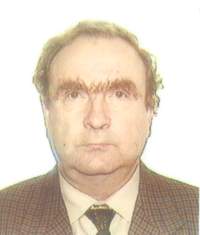
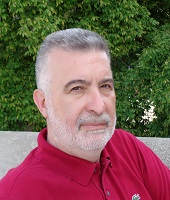
Mihai Lucanu is a Professor at the Gh. Asachi Technical University of Iasi , serving as Dean of the Faculty of Electronics and Telecommunications. His academic work focuses on advanced power electronics and electromagnetic phenomena. Subjects taught: Industrial Electronics, Power Electronics, Pulse Width Modulation Techniques Research areas: Power Converters, Fuzzy Controllers, Electromagnetic Scattering Research Highlights: His expertise spans power electronics optimization, including soft switching converters , power factor correction , and multi-level inverters . In computational electromagnetics, he specializes in Wave Iterative Process simulations for complex scattering problems. Academic Output: His publications cover topics from high-frequency AC choppers to electromagnetic diffraction analysis, with recent 2025 work on voltage ripple and neural network implementations in 3D semiconductor technology. Contact: mlucanu@etc.tuiasi.ro
Dr. Eng. Radu Pentiuc is a Lecturer in the Department of Electrotechnics at the Faculty of Electrical Engineering, University Stefan cel Mare of Suceava. He holds a doctorate in Electrical Technologies (1997) from Universitatea "Gh. Asachi" din Iași and specializes in electric traction systems, industrial power applications, and advanced motor design. With industrial experience prior to his academic career, he bridges theoretical and practical engineering concepts. Research Focus: His work centers on optimizing electric motor efficiency, particularly in hybrid and linear induction systems. Key investigations include electromagnetic field analysis, toroidal inductor configurations, and reducing border effects in motor design. His research extends to industrial power systems, energy conversion technologies, and electric traction applications for railway systems. Publications: His articles (1994-1998) predominantly explore electromagnetic motor design, computational modeling of hybrid systems, and efficiency optimization. Recurring themes include toroidal inductors, magnetic flux analysis, and novel approaches to linear induction motor construction. Student Advising & Projects: Supervised 12+ diploma projects (1993-1998) resulting in functional prototypes, including: Reactive energy compensation devices Electromagnetic braking systems Linear motor designs Industrial power control systems Research Contracts: Coordinated/participated in 13 projects, including: Minimizing technological outputs at SPIT Bucovina SA Optimizing solar energy conversion installations Developing low-speed induction motors Hybrid motor design algorithms Patents: Contributed to 6 inventions including asynchronous linear motors, low-speed induction motors, and electromagnetic drive systems.
Radu MICULESCU is a Professor in the Department of Mathematics and Computer Science at the Faculty of Mathematics and Computer Science, Transilvania University of Brașov. His research focuses on fractal geometry, Lipschitz functions, and iterated function systems (IFS). Notable contributions include studies on Hutchinson-Barnsley fractals, Lipschitz spaces, and invariant measures of fractal systems. He has authored influential works such as the book Lipschitz Functions (2019, Springer), which explores Lipschitz analysis in depth. His research interests emphasize theoretical aspects of fractal interpolation, metric space dynamics, and operator theory. Recent work includes advancements in generalized IFS frameworks, fuzzy fractal structures, and applications of Markov-type operators to fractal measures. MICULESCU’s publications span over three decades, with key contributions in Proceedings of the American Mathematical Society , Journal of Mathematical Analysis and Applications , and Annales Academiae Scientiarum Fennicae . His work bridges pure mathematics with geometric modeling, offering foundational insights into fractal geometry and functional analysis. He collaborates on topics such as Lipschitz function extensions, invariant measures, and fractal surface interpolation. His research often emphasizes the interplay between topology, metric spaces, and algebraic structures in fractal systems.
Adriana Buica is a Lecturer at the Babeş-Bolyai University , within the Faculty of Mathematics and Computer Science . She specializes in Dynamical Systems , Differential Equations , and Bifurcation Theory . She teaches courses such as Dynamical Systems (IE sem 2) and supervises labs/seminars. Her research focuses on topics like Ulam-Hyers stability, periodic solutions, and nonlinear oscillations. She has authored over 50 publications, including works on bifurcations, Melnikov functions, and inverse Jacobi multipliers. She is also the author of two books: Principii de coincidenţă şi aplicaţii (2001) and Periodic Solutions of Nonlinear Systems (2006). She actively contributes to academic communities via courses on MS Teams and is reachable at abuica@math.ubbcluj.ro .
Maria Kovaci is a Senior Lecturer at the Department of Communications, Faculty of Electronics and Telecommunications, Politehnica University of Timisoara. She has been affiliated with the university since 1999, holding roles as preparator (1999–2002), assistant (2002–2013), and currently serving as Șef de lucrări (Head of Works) since 2013. Her PhD in 2009, supervised by Prof. Miranda Naforniță, focused on improving turbo code performance in flat fading channels. Educations: PhD in Electronics and Telecommunications (2009), Politehnica University of Timisoara Key Research Areas: Turbo coding, metamaterials, supercapacitors, spintronics, wireless communications, and information theory Her research emphasizes optimizing communication systems through advanced coding techniques and material science innovations. Notable contributions include interleaver design for turbo codes, supercapacitor material optimization, and multiferroic nanocomposite studies. Over 50 peer-reviewed papers and four co-authored books reflect her expertise in telecommunications and materials engineering. Recent articles (2023–2024) explore supercapacitor energy density and conductive polymer coatings, while earlier work (2015–2020) addresses turbo coding performance in fading channels and metamaterial applications. She has received awards including the 2013 Excellence Award at IManE Conference and 2005 Dean’s Excellence Diploma. Grants: Postdoctoral funding via POSDRU/159/1.5/S/137070 (2014) Advising: Supervised diploma project on WIMAX routing protocols (student: Savastre Dorian, 2018) Administrative roles include organizing International Symposium of Electronics and Telecommunications (ISETC), serving as Chair (2014), and editorial work for the Scientific Bulletin (UPT). She is also an active reviewer for IEEE conferences and journals since 2002.
Andreea FULGA is an Associate Professor at the Department of Mathematics and Computer Science, Faculty of Mathematics and Computer Science, Transilvania University of Brașov. Her research focuses on Fixed Point Theory and Operator Theory, with applications in nonlinear analysis, functional equations, and fractional calculus. She has contributed extensively to the field through peer-reviewed articles in journals like Journal of Fixed Point Theory and Applications and Discrete and Continuous Dynamical Systems . Her work explores advanced contraction mappings (e.g., Proinov, Suzuki, and Meir-Keeler types) in various metric spaces (b-metric, modular, and fuzzy metric spaces), with applications to integral equations, variational inequalities, and medical diagnostics (e.g., heart disease detection). Recent publications (2022–2025) emphasize theoretical advancements and interdisciplinary applications. Dr. FULGA collaborates internationally, evidenced by co-authorships with scholars like Erdal Karapınar and Abdon Atangana. Her research bridges abstract mathematical concepts with real-world problems in energy systems and healthcare.
Cristina Maria PĂCURAR is an Assistant Professor at the Department of Mathematics and Computer Science, Faculty of Mathematics and Computer Science, University of Pitesti. Her research focuses on fractal geometry, fixed point theory, and iterated function systems with applications in epidemiology and optimization. She has published extensively on topics such as fractal interpolation, contraction mappings, and mathematical modeling of disease spread. Research interests include: Fractal interpolation schemes and their applications Fixed point theory in metric spaces Optimization algorithms for tourism and pandemic scenarios Analysis of complex systems using fractal dimensions Her notable works include analyzing the spread of COVID-19 using fractal methods and optimizing tourist routes during pandemics. She has also contributed to post-quantum cryptography and hash-based signature schemes. Publications highlight interdisciplinary approaches, combining pure mathematics with real-world applications in health and tourism. Ongoing work explores new directions in fixed point theory and fractal interpolation techniques.
Anna Soós is an Associate Professor at the Hungarian Mathematics and Informatics Institute, Faculty of Mathematics and Informatics, Babes-Bolyai University (Cluj-Napoca, Romania). She holds a PhD in Mathematics (2002) and has been active in stochastic analysis, fractal theory, and approximation methods. Her academic career includes leadership roles such as Vice-Rector for Curriculum and Hungarian Studies (2012–present) and Vice-Dean of the Faculty of Mathematics and Informatics (2008–2012). Education: MSc in Mathematics (Babes-Bolyai, 1982), MSc in Computer Science (Eötvös Loránd University, 1996), PhD in Mathematics (Babes-Bolyai, 2002) Her research focuses on deterministic and random fractals, stochastic differential equations, and homogenization on fractal structures. She has contributed to stochastic analysis through: Developing contraction methods in probabilistic metric spaces Wavelet approximations for SDE solutions Fractal interpolation techniques Scientific awards include: Bolyai János Research Fellowship Erasmus and CEEPUS Fellowships Domus Hungarica Scientiarum et Artium Grants World Bank Project Participation Anna Soós has coordinated international research projects like ERASMUS IP DSL2013 and FP7/MASCIL, while organizing conferences including the International Symposium on Numerical Analysis and Approximation Theory and Central European Functional Programming Summer Schools.
Prof. Dr. Adrian-Olimpiu Petruşel is a distinguished Professor at the Faculty of Mathematics and Informatics, Babes-Bolyai University in Cluj-Napoca, Romania. Currently serving as Prorector of the university (since 2020) and appointed as Interim Rector starting in 2025, he has held numerous academic leadership positions including Dean of the Faculty of Mathematics and Informatics (2012-2020) and Pro-Dean (2008-2012). A highly respected researcher in fixed point theory and nonlinear analysis, he ranks among the top 2% most influential scientists worldwide according to Stanford University's analysis (2020-2023). Educational Background: Undergraduate Studies: 1982-1986, Faculty of Mathematics and Informatics, Babes-Bolyai University Cluj-Napoca Doctoral Studies: 1990-1994, Faculty of Mathematics and Informatics, Babes-Bolyai University Cluj-Napoca PhD Thesis: "Technica punctului fix în teoria operatorilor multivoci şi aplicaţii la incluziuni diferenţiale" (Fixed Point Technique in the Theory of Multivalued Operators and Applications to Differential Inclusions) Prof. Petruşel's research primarily focuses on Fixed Point Theory , Nonlinear Operators , and Differential Equations . His work spans theoretical developments in metric fixed point theory, applications to differential and integral equations, and interdisciplinary connections with dynamical systems. He has made significant contributions to the theory of multivalued operators, particularly in the areas of weakly Picard operators, fiber contraction principle, and Ulam-Hyers stability. His research demonstrates exceptional depth in both pure mathematical theory and practical applications across various scientific domains. Analysis of Prof. Petruşel's recent publications (2024-2025) reveals continued innovation in fixed point theory, with particular emphasis on multi-valued Feng-Liu operators, vector-valued metric spaces, and applications to differential equations. His work maintains strong connections between abstract fixed point results and concrete problems in mathematical physics, optimization, and integral equations. The interdisciplinary nature of his research is evident in collaborations spanning mathematics, physics, and engineering applications. Scientific Recognition: Premiul Universitatii "Babes-Bolyai" (2002) for the seminal book "Fixed Point Theory 1950-2000: Romanian Contributions" Profesor Bologna distinction (2021) awarded by AOSR student organization Ranked among the top 2% most influential scientists worldwide (2020-2023) by Stanford University and SciTech Strategies Full member of Academia Oamenilor de Stiinta din Romania (since 2020), previously associate member (2016) and corresponding member (2018) As an academic advisor, Prof. Petruşel has successfully supervised 15 PhD students since 2004, contributing significantly to the next generation of mathematicians specializing in nonlinear analysis. His editorial leadership is remarkable, serving as Editor-in-Chief of "Fixed Point Theory - An International Journal" and co-Editor-in-Chief for several other prestigious journals including "Fixed Point Theory and Applications" (Springer). He has coordinated numerous national and international research programs, demonstrating sustained excellence in both theoretical research and academic leadership.
Dorin Andrica is a Professor at the Faculty of Mathematics and Computer Science at Babeș-Bolyai University in Cluj-Napoca, Romania. With a career spanning over three decades at the same institution, his work bridges multiple disciplines including Critical Point Theory , Nonlinear Analysis , Approximation Theory , and Number Theory , particularly focusing on Elementary Mathematics and Olympiad/Contest problems . PhD in Mathematics (Babeș-Bolyai University, 1992) Two decades of research grants, including the European Network 'Geometric Analysis' (2001–2004) and DAAD Fellowship (1993). His publications often explore Diophantine equations , prime gaps , and geometric inequalities , with notable contributions like Andrica's Conjecture — a famous unsolved problem in number theory. Recent works highlight dynamic geometry, cyclotomic polynomials, and advanced combinatorial identities, reflecting his interdisciplinary approach. Andrica has co-organized the European Summer School 'Spaces with singularities and monopols' (Cluj-Napoca, 1999) and serves on editorial boards of multiple journals, including Studia Univ. 'Babeș-Bolyai'-Mathematica and Gazeta Matematica . His Erdős number is 2.
Sara LAAFAR serves as an Assistant Researcher at the Laboratory of Complex Heterostructures and Multifunctional Materials within Romania's National Institute of Materials Physics (INFIM), focusing on interdisciplinary research bridging advanced materials development and signal processing systems. Her research portfolio spans two distinct domains: Materials Science: Specializing in mesoporous TiO 2 scaffolds for self-cleaning surfaces with antimicrobial properties Signal Processing: Developing reconstruction algorithms for multi-band communications in Software Defined Radio systems Recent publications demonstrate her dual expertise through high-impact work on photo-catalytic surface engineering achieving 100% self-cleaning efficiency with 60-80% visible light transmission, and novel iterative methods for randomly sampled signal reconstruction showing superior performance over conventional SVD approaches. Her work exhibits strong technological applicability in environmental engineering and telecommunications infrastructure. She operates within INFIM's Laboratory of Complex Heterostructures and Multifunctional Materials, which focuses on synthesizing and characterizing next-generation functional materials for industrial applications.