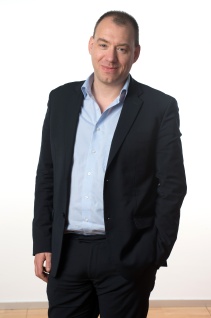
Ellen F. Davis is the Amos Ragan Kearns Distinguished Professor of Bible and Practical Theology at Duke University Divinity School. She holds a Ph.D. from Yale University (1987) and an M.Div. from Church Divinity School of the Pacific (1983). Her research focuses on biblical interpretation’s role in addressing contemporary issues like environmental crises and interfaith relations. Davis is affiliated with the Duke Initiative for Science & Society and has authored eight books and numerous articles. Her teaching includes courses such as Hope for Creation?: An Exilic Perspective , Psalms as Prayer of the Heart , and Biblical Hebrew Syntax . She has led grants on African biblical interpretation, field education for pastors, and initiatives in Sudan, supported by institutions like the Duke Endowment and the Issachar Fund. Key research interests include eco-agrarian readings of Scripture, ethical eating practices, and the intersection of prophecy with social justice. Davis’ work bridges academic scholarship and practical theology, emphasizing how biblical texts inform Christian life and public engagement. Recognition includes media features in The Christian Century and Duke Divinity Magazine , highlighting her contributions to environmental theology and interfaith dialogue.
Prof. Gary A. Anderson serves as the Hesburgh Professor of Catholic Thought in the Department of Theology at the University of Notre Dame. He received his Ph.D. from Harvard University and has established himself as a leading scholar in biblical interpretation and theological studies through his extensive publication record spanning multiple decades. His research focuses on: Biblical interpretation, particularly of the Hebrew Bible/Old Testament Theological implications of ancient religious texts Jewish-Christian relations and dialogue Ethical dimensions of biblical traditions Sin, charity, and religious practice in historical context Anderson's scholarly work demonstrates a consistent integration of historical-critical methods with theological reflection, creating bridges between academic biblical scholarship and religious tradition. His recent publications continue to explore the theological significance of biblical narratives, particularly regarding the Tabernacle and concepts of charity. His major publications include multiple award-winning books published by prestigious academic presses such as Yale University Press, Baker Academic, and Eerdmans. As the Hesburgh Professor of Catholic Thought, Anderson plays a significant role in mentoring graduate students and contributing to theological education at one of America's leading Catholic universities, though specific details about his advisees are not provided in the available information.
Dr. Jason Tatlock is a Professor of History at Georgia Southern University's Armstrong Campus, affiliated with the College of Arts and Humanities and the Department of History since 2007. He specializes in Middle Eastern and Mediterranean History, with research interests spanning ancient religious practices, human rights, and conflict studies. Tatlock has received notable awards, including the Armstrong Atlantic State University Award for Distinguished Faculty Service to the Community (2010) and the Outstanding Advisor Award (2009). His teaching focuses on prehistoric Mediterranean contexts and contemporary Middle Eastern issues, as seen in courses like HIST 3225, HIST 3352, and HIST 5244. Education: Bachelor of Theology, Prairie Bible College (1997) M.A. in Ancient History of Syro-Palestine, Jerusalem University College (1999) M.A. & Ph.D. in Near Eastern Studies, University of Michigan (2006) Research Interests: Tatlock’s research bridges ancient and modern contexts, emphasizing human sacrifice in ancient cultures, human rights in contemporary conflicts, and the interplay between religion and political systems. He explores historical memory in the Israeli-Palestinian conflict, prehistoric Mediterranean societies, and how biblical texts influence modern global governance. His work often intersects archaeology, textual analysis, and interdisciplinary perspectives on pedagogy and media representation. Publications Trends: Recent work (2019–2023) highlights critical analyses of human sacrifice in religious traditions and media, Middle Eastern historical narratives, and postcolonial theological frameworks in Africa. Earlier publications (2006–2013) focus on biblical rituals, death practices in antiquity, and the United Nations’ engagement with religious themes. Awards & Recognition: Armstrong Atlantic State University Award for Distinguished Faculty Service to the Community (2010) Armstrong Atlantic State University Outstanding Advisor Award (2009) Outstanding Graduate Student Instructor, Near Eastern Studies Department, University of Michigan (2004) Advising & Grants: His advising excellence was recognized in 2009 with the Outstanding Advisor Award. No grants explicitly listed, but his research on human rights and historical conflicts suggests potential grant-funded projects. Active in community service through the Armstrong campus, aligning with his 2010 award.
Christophe Nihan is a University Professor of Old Testament Studies at the Faculty of Protestant Theology, University of Münster, where he has served since April 2021. Previously, he was Associate Professor at the University of Lausanne (2009-2021), and held academic positions at the University of Geneva and University of Lausanne. His scholarly profile centers on Pentateuchal research, particularly priestly traditions, biblical rituals, the religious history of Israel in its Near Eastern context, and prophetic literature, with special focus on the book of Ezekiel. Nihan completed doctoral studies at the University of Lausanne (2000-2005), following studies in Protestant Theology (1994-1999) and philology and philosophy (1991-1998), all at Lausanne. His academic trajectory demonstrates consistent specialization in biblical scholarship with growing institutional responsibilities. His research portfolio reveals deep engagement with priestly literature, particularly in Leviticus and related texts. Nihan examines ritual practices, legal traditions, and theological frameworks within their historical contexts, employing sophisticated textual criticism and composition history methods. His work frequently addresses the relationship between different biblical traditions, especially the interplay between priestly, Deuteronomistic, and prophetic materials. The interdisciplinary nature of his scholarship connects textual analysis with historical, archaeological, and comparative religious perspectives, offering nuanced interpretations of ancient religious practices and their evolution. His 2007 monograph From Priestly Torah to Pentateuch: A Study in the Composition of the Book of Leviticus represents a significant contribution to Pentateuchal studies. Professor Nihan currently leads EXC 2060 A3-31 on 'Entstehung und Transformationen der Reinheitskonzepte im Judentum der persischen und hellenistischen Zeit im Kontext des antiken Mittelmeerraums' (Development and Transformations of Purity Concepts in Judaism during the Persian and Hellenistic Periods) and coordinates a subproject within the DFG Cluster of Excellence at the University of Münster. His editorial work includes significant volumes like Text and Ritual in the Pentateuch (2021) and Mosaics: Studies on Ancient Israel (2021). At Münster, Nihan teaches diverse courses including 'Introduction to the Old Testament,' seminars on Israel and Transjordan, the Hexapla of Origenes, sacrifices in the Old Testament, and doctoral colloquia on current problems in Old Testament research. His teaching spans foundational topics for beginners to specialized subjects for advanced scholars, reflecting his comprehensive expertise across textual, historical, and theological dimensions of biblical studies.
Dr. Hans van den Herik is a Visiting Assistant Professor of Old Testament at the Evangelical Theological Faculty Leuven, Belgium (2020–present), and an Affiliate Researcher at Protestant Theological University (PThU), Netherlands (2018–present). Previously, he served as an External Lecturer in Old Testament at ETF Leuven (2016–2019). His email is hans.vandenherik@etf.edu . Education : Ph.D., Vrije Universiteit Amsterdam (2016) Drs. theol., Utrecht University (1991) VWO diploma (gymnasium), Guido de Brès School (1984) Research interests focus on Old Testament theology and prophetic literature , particularly the interpretation of Ezekiel and Isaiah . His work explores Biblical hermeneutics , the relevance of prophetic texts for Christian theology , and theological implications of naming and sacrificial laws . He also engages with commentary analysis and historical-theological positions in Dutch Protestantism. Publication trends include interdisciplinary approaches to Ezekiel through modern art (surrealism), theological significance of biblical names , and hermeneutics of salvation prophecies . He contributes extensively to Biblical commentary and historical-theological analysis . Academic affiliations include the Societas Doctorum Ecclesiae (Protestant Church Netherlands) and the Old Testament Study Group in the Netherlands and Belgium .
James W. Watts is Professor of Hebrew Bible and Ancient Near Eastern Traditions in Syracuse University's Department of Religion. His scholarly work focuses on biblical interpretation, ritual studies, and the social function of sacred texts, with particular expertise in the Pentateuch and Leviticus. Dr. Watts earned his Ph.D. from Yale University in Hebrew Bible/Old Testament Studies and his M.Div. from Southern Seminary in Louisville, Kentucky in New Testament Studies. His research explores how ancient Israelites understood ritual practices described in biblical texts, particularly temple sacrifices in Leviticus, and how these evolved into scriptural traditions. Watts examines the rhetorical strategies used in biblical texts to convey religious meaning and authority, challenging readers to transcend communal biases to understand ancient contexts. Watts has authored several influential books including Understanding the Pentateuch as a Scripture (2017), Leviticus 1-10 (2013), and Ritual and Rhetoric in Leviticus: From Sacrifice to Scripture (2007). His publications consistently address how biblical texts functioned as authoritative scripture in ancient contexts and continue to shape religious practice today. His scholarly approach emphasizes understanding what biblical texts meant to ancient Israelites while considering their ongoing significance for contemporary interpretation and religious communities.
Dr. David Westfall is an Associate Professor of Theology at Dordt University , where he has taught courses on biblical literature, interpretation, and languages since Fall 2019. His academic journey includes a Ph.D. in New Testament from the University of St Andrews, an M.Div. from Gordon-Conwell Theological Seminary, and a B.A. in Classical Studies & Greek from Calvin College. Research Focus: Biblical theology, substitutionary atonement, participation in Christ, Second Temple traditions, and linguistic analysis of scripture. Key Contributions: Explores connections between Exodus and Pauline theology (forthcoming 2022), and examines martyrdom themes in Matthew’s Gospel (2020).
Dr. Liane Feldman is an Assistant Professor in New York University's Skirball Department of Hebrew and Judaic Studies, specializing in Hebrew Bible and biblical criticism. She earned her Ph.D. in Hebrew Bible from The University of Chicago and holds M.A. degrees from Yale University and Boston College. Dr. Feldman's research focuses on the Priestly Source within the Pentateuch, examining ritual sequences, narrative constraints, and documentary composition. Her work bridges traditional Jewish faith with modern biblical scholarship, exploring how critical approaches can revitalize contemporary Judaism. She argues that "current biblical scholarship which undermines the traditional belief in the textual integrity of the Torah and its accurate historicity provides a precious opportunity to engender a spiritual revitalization of traditional Judaism." Her scholarly contributions primarily analyze the Books of Leviticus and Numbers, with particular attention to ritual systems, tribal allotments, and the documentary layers within the Priestly writings. Dr. Feldman has published significant works including "The Consuming Fire: The Complete Priestly Source, from Creation to the Promised Land" and "The Story of Sacrifice: Ritual and Narrative in the Priestly Source."
Josselin Roux is a Lecturer in Religious History and Anthropology at the Catholic University of the West (UCO), serving in the Faculty of Theology and Religious Sciences. He holds an Extraordinary Professor title (canonical) and is a statutory member of UMR 8167 'Orient & Mediterranean' (Classical and Late Antiquity). As coordinator of the research team 'The Bible & its Readings' since 2012, he has led interdisciplinary projects on biblical interpretation, including programs on rumor dynamics, celestial models, and gendered narratives. His research focuses on gestures, dance, and sociohistorical approaches to biblical texts, with particular attention to female figures and irony in scripture. Roux has organized scholarly events like study days on biblical intertextuality and authored works on themes such as the Queen of Sheba episode, Jephthah’s daughter, and Deborah’s leadership. Roux has directed academic programs (e.g., State Master’s and Canonical License programs) and served as Vice-Dean for Research (2014-2016). He contributes to teaching Hebrew, biblical literature, and exegesis, while also engaging in public outreach through lectures and artistic collaborations, such as an oratorio based on the Jephthah narrative. His leadership includes managing the regional research network 'Citizen Dynamics in Europe' (2010-2014) and securing grants, notably a €30,000 award from the Caritas Veritatis Foundation for his 'Rumors and Fame' project. He actively participates in international conferences and peer review for journals like Science et Esprit and Théologiques .
Dr. Yitzhaq Feder serves as a Lecturer at the University of Haifa, specializing in Biblical Studies with particular focus on Hebrew Bible, ritual systems, and Ancient Near Eastern comparative religion. His academic work bridges textual analysis with anthropological, psychological, and medical historical perspectives to examine foundational biblical concepts. His research interests center on the psychological and cultural foundations of biblical ritual systems, particularly exploring how embodied experiences shaped moral metaphors in ancient Israel. Feder's work demonstrates sophisticated interdisciplinary approaches that connect biblical scholarship with cognitive science, medical anthropology, and cross-cultural comparison, revealing how ancient Israelite concepts of purity, impurity, and blood rituals functioned within their broader Ancient Near Eastern context. Analysis of Feder's publication trends reveals consistent thematic development across his career, with early work focusing on blood expiation rituals (2011) evolving into comprehensive studies of purity systems (2021). His articles demonstrate methodological consistency in employing comparative frameworks while addressing diverse topics from biblical war ethics to menstrual purity laws, consistently contextualizing biblical texts within their ancient milieu rather than through modern ethical frameworks. Feder's scholarly contributions include two major monographs: Blood Expiation in Hittite and Biblical Ritual: Origins, Context and Meaning (Society of Biblical Literature, 2011) and Purity and Pollution in the Hebrew Bible: From Embodied Experience to Moral Metaphor (Cambridge University Press, 2021), the latter representing significant advancement in understanding the cognitive foundations of biblical purity concepts. His academic advising and grant activities are not documented in the available materials, though his extensive publication record suggests active research engagement. Feder frequently contributes to contemporary discussions through platforms like TheTorah.com, addressing both specialized academic audiences and broader public readership interested in biblical scholarship.
Dr. Naphtali Meshel serves as a Senior Lecturer in the Departments of Comparative Religion and Bible at the Hebrew University of Jerusalem, where he also earned his Ph.D. His academic work bridges religious studies and biblical scholarship with specialized focus on ritual systems. Meshel's research centers on ancient Israelite religious practices, particularly sacrificial systems and biblical narratives. His work employs generativist approaches to analyze ritual structures and explores subversive readings of biblical characters. He combines expertise in Hebrew Bible with cross-cultural insights from Sanskrit literature on ritual gained during post-doctoral studies in India. His publications reveal consistent engagement with textual inconsistencies in sacrificial laws and narrative ambiguities in biblical accounts. Meshel's scholarship demonstrates particular interest in how ritual functions within ancient religious frameworks and how narratives construct divine-human relationships. Meshel has authored the monograph The "Grammar" of Sacrifice: A Generativist Study of the Israelite Sacrificial System (Oxford University Press) alongside significant journal articles examining biblical texts through comparative ritual lenses. His work contributes to ongoing scholarly conversations about purity systems and narrative interpretation in ancient religious contexts.
William K. Gilders is an Associate Professor in the Department of Religion at Emory University. He holds a Ph.D. in Religious Studies (Judaism in Antiquity) from Brown University (2001), an M.A. from McMaster University (1993), and a B.A. from the University of Toronto (1990). His research focuses on religion and culture, ancient Mediterranean societies, biblical studies, LGBTQ+ spirituality, and ritual theory. He is the author of *Blood Ritual in the Hebrew Bible: Meaning and Power* (Johns Hopkins, 2004) and has published articles exploring biblical rituals through anthropological frameworks. Dr. Gilders currently researches the cultural memory of Harvey Milk, examining how his legacy is contested and memorialized in LGBTQ+ communities. His work bridges ancient religious practices and modern social movements, emphasizing collective memory and cultural agency. Contact: william.gilders@emory.edu | Office: S205 Callaway Memorial Center.
Prof. Tova Ganzel is a Professor at the Multidisciplinary Department of Jewish Studies at Bar-Ilan University and Head of the Cramim Jewish Studies Honors Program. She previously served as director of the Midrasha – Institute for Advanced Torah Studies at Bar-Ilan University and is a certified women's halakhic advisor (yo'etzet halakha). Dr. Ganzel holds a Ph.D. in Bible from Bar-Ilan University. Her academic journey reflects deep commitment to both traditional Jewish learning and academic biblical scholarship, navigating the complex interface between religious faith and critical academic inquiry. Prof. Ganzel's research focuses on prophetic literature, ancient Near Eastern temples and second temple texts, the Jewish reception of biblical criticism from the eighteenth century to the present, and women as Halakhic Professionals. She has established herself as a leading scholar on Ezekiel's prophecies, particularly examining how his temple vision draws on Babylonian architectural elements. Her work bridges traditional religious belief and academic biblical scholarship, exploring how modern Orthodox Jews can engage with critical scholarship while maintaining religious commitments. Her publications demonstrate consistent focus on temple studies, Ezekiel's prophecies, and faith-criticism interface. Recent works examine Babylonian influences on Ezekiel's temple vision, discrepancies between Ezekiel's sacrificial system and the Torah, and broader implications of biblical criticism for religious believers. The trajectory shows increasing sophistication in addressing how religious communities can integrate academic insights without compromising faith. Among Prof. Ganzel's notable achievements: Recipient of the prestigious Tikvah Fellowship Author of multiple scholarly books including "Ezekiel's Visionary Temple in Babylonian Context" (2021), "Contextualizing Jewish Temples" (2020), "Ezekiel: From Destruction to Restoration" (2020), and "The Believer and the Modern Study of the Bible" (2019) Co-editor of "People of Faith and Biblical Criticism" (בעיני אלוהים ואדם: האדם המאמין ומחקר המקרא) Prof. Ganzel has created vital spaces for dialogue between religious scholars and academic Bible scholars. She co-organized a two-year seminar at Beit Morasha in Jerusalem (5772-5773/2012-2014) that brought together rabbis, Torah scholars, and academic Bible scholars. As a woman scholar in Orthodox Jewish settings, she has navigated unique challenges in establishing herself as a respected Bible scholar while maintaining traditional religious commitments. Her work has been particularly influential in helping Modern Orthodox believers reconcile faith with academic biblical scholarship.