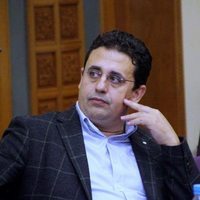
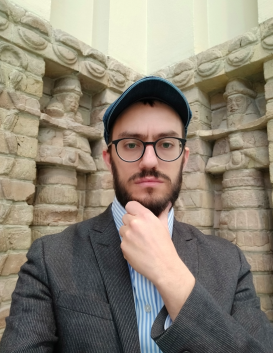
Mohsen Goudarzi is an Associate Professor of Islamic Studies at Harvard Divinity School (HDS), part of Harvard University. He joined the faculty in 2021 after teaching at the University of Minnesota. His academic background includes a PhD from Harvard University and an MA from Stanford University. His research focuses on the Qur’an and early Islamic history, employing literary, linguistic, comparative, and historical approaches. Key interests include the Qur’an’s role in Late Antique religious developments, Islamic exegetical traditions (tafsīr), and theological frameworks (kalām). His current projects explore the Qur’anic worldview’s interpretation and the significance of Meccan cultic rituals to early Islamic identity. He has received teaching excellence awards, including a certificate from the University of Minnesota’s Center for Educational Innovation and three teaching distinctions from Harvard’s Office of Undergraduate Education. Research outputs include groundbreaking articles on Qur’anic exegesis, cultic practices, and interreligious dynamics. Notable works analyze the Qur’an’s engagement with Abrahamic traditions, ritual practices in Mecca, and the textual history of early Islamic manuscripts. His collaborative work on the Ṣan‘ā’1 codex redefined understandings of early Qur’anic canonization. Teaching spans HDS and Harvard’s Faculty of Arts and Sciences (FAS), covering Islamic studies, Qur’anic studies, and religious history. He advises students in HDS programs and contributes to interdisciplinary initiatives at the intersection of theology, history, and textual criticism.
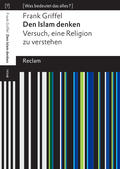
Frank Griffel is the Louis M. Rabinowitz Professor of Religious Studies at Yale University, where he has been teaching since 2000. His academic work is deeply rooted in Islamic intellectual history, focusing on theology, philosophy, and the interplay between reason and revelation. He holds a PhD from the Freie Universität Berlin and previously worked as a research fellow at the Orient Institute in Beirut. University: Yale University Department: Department of Religious Studies Academic Rank: Professor His research expertise lies in classical and post-classical Islamic philosophy, particularly the works of al-Ghazālī, Fakhr al-Dīn al-Rāzī, Avicenna, and Averroes. He has made significant contributions to understanding how philosophical discourse evolved in the Islamic world after the so-called classical period, challenging the notion of decline and highlighting the emergence of new genres such as ḥikma . His scholarship bridges theology and philosophy, examining how Muslim thinkers reconciled Aristotelian and Neoplatonic ideas with Islamic doctrine. Griffel’s most recent major work, The Formation of Post-Classical Philosophy in Islam (2021), redefines the field by demonstrating the continuity and innovation in 12th-century Islamic thought. His earlier book, Al-Ghazali’s Philosophical Theology (2009), is widely regarded as a seminal study. He has also published extensively on topics such as apostasy, virtue ethics, and the reception of philosophical texts, with articles spanning from 2011 to 2025. His work often appears in major academic handbooks and journals, and he has edited and translated key texts into German, Arabic, and Turkish. Islamic Philosophy Islamic Theology (Kalām) Post-Classical Islamic Thought Al-Ghazālī Studies Fakhr al-Dīn al-Rāzī Avicenna and Averroes Griffel has contributed to collaborative volumes such as Shari’a: Islamic Law in the Contemporary Context and Islam and Rationality , and his research engages with both historical and contemporary debates in Islamic thought. He has no listed scientific awards or students in the provided texts, but his influence is evident through citations and scholarly engagement. He maintains an active research profile, with recent publications addressing ambiguity, contradiction, and the popularization of philosophy in medieval Islam. He has held affiliations with the University of Oxford as a Faculty Member in the Faculty of Theology and Religion, indicating a strong international academic presence. His work continues to shape the understanding of Islamic intellectual history, particularly in the West.
Mohamed Ajouaou is an Assistant Professor at Vrije Universiteit Amsterdam's Faculty of Religion and Theology, specializing in Religious Beliefs and Ethics. His research examines Islamic theology within contemporary European contexts. Research focuses on Islamic spiritual care practices, theological ethics in healthcare, and Muslim community dynamics in the Netherlands. Recent publications investigate vaccination ethics during pandemics and pedagogical approaches to religious literacy. Analysis of publications reveals strong emphasis on practical theology, Muslim identity in secular societies, and ethical frameworks for community engagement. No specific awards documented. Teaching includes the graduate course 'Islamitische theologie/Kalam' (Islamic Theology). Leads projects like 'Professionaliseringsprogramma Imams in Nederland 3' focusing on clergy education reform. Frequently contributes expert commentary on Islamic practices in Dutch media regarding fasting, conversion narratives, and religious education policy.
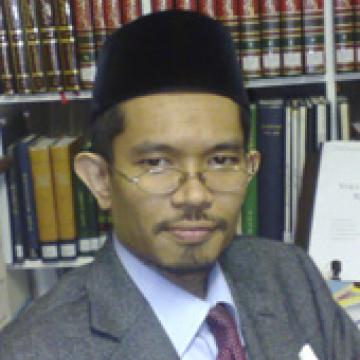
Afifi al-Akiti serves as University Research Lecturer in Islamic Studies at the University of Oxford's Faculty of Theology and Worcester College, holding additionally the KFAS Fellowship in Islamic Studies at the Oxford Centre for Islamic Studies. His academic profile centers on medieval Islamic intellectual traditions with institutional ties spanning Oxford's theological faculty, constituent college, and specialized research centers. His research investigates Islamic theology (kalam), philosophy (falsafa), and science through analysis of al-Ghazali's engagement with Greek philosophy—particularly Avicenna—and explores science-religion dynamics in Islamic civilization. Specialized interests include medieval Arabic manuscripts, Moroccan religious lithographs (Hajariyyat), Islamic astronomy (ilm al-falak), and Shafi'i jurisprudence. Current editorial projects focus on al-Ghazali's Madnun corpus and a 9th-century astronomical manuscript by Nastulus concerning Byzantine lunar-solar gearing mechanisms. Publication trends reveal consistent scholarly engagement with medieval Islamic philosophy's contemporary relevance, particularly through al-Ghazali's works addressing modernity, ethics of war, and prophethood concepts. His output bridges historical textual analysis with current debates in Islamic thought, demonstrating methodological rigor in manuscript studies while maintaining applied relevance to modern theological discourse. Key recognition includes: KFAS Fellowship in Islamic Studies Al-Akiti actively shapes academic discourse through convening the 'Islam and Science' seminar series (2009) and the Islamic Studies panel for the International Society for Religion, Literature and Culture conference (2010). His public engagement includes BBC documentaries on 'Science and Islam' and 'The Muslim Tommies' (2009), preparation of the 'Sciences and Arts in Early Islam' exhibition at Oxford's Museum of the History of Science (2010-11), and participation in the Oxford Scriptural Reasoning Group—demonstrating commitment to interdisciplinary knowledge translation beyond traditional academic boundaries.
Dr. Tajul Islam is a Lecturer in Islamic Studies at the School of Languages, Cultures and Societies , University of Leeds , where he has been a member of staff since 2009. He also holds a visiting position at the University of the Punjab, Lahore. His academic work bridges traditional Islamic scholarship and critical theory, and he is a co-founder of Critical Muslim Studies (CMS) at Leeds, a framework aimed at centering Muslim subjectivity and decolonizing knowledge production in higher education. Education: BA in Arabic and Islamic Studies — University of Leeds PhD in Arab and Islamic Studies — University of Exeter Dr. Islam’s research encompasses a wide range of fields, including Islamic Theology (kalam) , Qur’anic Studies , Hadith , Islamic Law , Islamic Philosophy , Islamism , Islamophobia , antisemitism , racism , Biblical Studies , and Madrasa studies . His teaching emphasizes inclusivity and sensitivity to contemporary issues of identity and prejudice. His recent publications reflect a strong interdisciplinary trend, combining religious studies with food ethics, digital humanities, and decolonial theory. Key themes include theological minimalism , racial justice in early Islam , Islamic reform , and cross-traditional dialogue . He frequently presents at international conferences and public events on topics such as decolonial imagination, fatwa borrowing, and Muslim identity. Scientific Contributions and Recognition: Co-authored a well-cited article on Hanafi fiqh and British Muslims’ views on cultured meat. Published on Qur’anic phonetics and automatic lexis extraction. Contributed to encyclopedias on Ibn Mujahid and the Bible’s use in Islamophobic discourse. Co-founded the Iqbal Centre for Critical Muslim Studies. Dr. Islam supervises a diverse cohort of PhD students on topics ranging from blasphemy laws and translation studies to female religious authority and Qur’anic coherence. He has successfully guided over 15 doctoral candidates to completion. He is also involved in collaborative research and international academic partnerships, particularly with institutions in Pakistan. Labs and Research Groups: Co-Director, Iqbal Centre for Critical Muslim Studies Member of research groups in Arabic Cultural Studies , Conflict , and History
Hakan Coruh is a Senior Lecturer in Islamic Studies at the Centre for Islamic Studies and Civilisation, Charles Sturt University. He joined the university in 2015 as a lecturer and was promoted to Senior Lecturer in November 2021. Dr. Coruh has served as the Higher Degree Research Coordinator (HDR) for master's and PhD candidates at the center from 2020 to 2022. He is actively involved in multiple academic associations including the Australian Association of Islamic and Muslim Studies (AAIMS), CRES (Centre for Religion, Ethics and Society), and PAPER (Practical and Public Ethics Research group) at Charles Sturt University. Dr. Coruh obtained his Bachelor of Divinity (Ilahiyat) degree from the Faculty of Divinity at Sakarya University. In 2007, he completed his master's degree in Qur'anic exegesis (tafsīr) at the same university. Between 2003 and 2008, he actively participated in academic circles and centers such as İSAM (Centre for Islamic Studies) in Istanbul. In 2015, he successfully earned his PhD from Australian Catholic University, focusing his research on the early modern exegesis of the Qur'an, specifically studying the works of Said Nursi, Muhammad 'Abduh, and Sir Ahmad Khan. Dr. Coruh specializes in Qur'anic exegesis (tafsīr) and actively teaches and writes on subjects related to Qur'anic studies, classical exegesis, and contemporary approaches to the Qur'an and Islam. His academic interests encompass various fields, including classical and modern Qur'anic exegesis, contemporary Islamic thought, Islamic Legal Theories (usul al-fiqh) and Jurisprudence (fiqh), Islamic Ethics (akhlaq), Islamic theology, Medieval Classics (Islamic, Christian, and Jewish), and Comparative Theology. His teaching includes subjects such as Usul al-Tafsir, Usul al-Fiqh, Islamic Family Law and Society, and Islamic Jurisprudence of Five Pillars. Dr. Coruh's research output shows a strong focus on Qur'anic hermeneutics, particularly examining the works of key figures like Bediuzzaman Said Nursi and Muhammad 'Abduh. His publications demonstrate interdisciplinary approaches, connecting Islamic studies with contemporary issues such as religious freedom, science and religion dialogue, bioethics, and interfaith relations. He has made significant contributions to understanding the relationship between traditional Islamic scholarship and modern contexts, especially regarding topics like religious freedom (Qur'an 2:256), the methodology of Qur'anic exegesis, and Islamic responses to contemporary challenges. Dr. Coruh supervises multiple research students, including PhD candidates David Drennan, Sarkhan Gasimov, and Nadia El-Mouelhy (as co-supervisor), as well as Master's students Ikramullah Ahmad and Ensar Cutahija. His supervision topics cover diverse areas such as Islamic legal theory, interfaith relations, and contemporary Islamic thought. Dr. Coruh is actively engaged with various academic communities, serving as a member of the CISAC Research Team, CISAC School Board, Sufi Studies Network at Monash University, and the Comparative Theology Reading Group at Australian Catholic University. In 2023, he held a visiting research fellow position at the Center for Islamic Legislation and Ethics (CILE) at Hamad Bin Khalifa University in Qatar.
Cristina Cerami is a Research Director (DR2) at the French National Centre for Scientific Research (CNRS), affiliated with the SPHERE laboratory (UMR 7219) and the Center for the History of Arab and Medieval Sciences and Philosophies (CHSPAM). She holds leadership roles as Deputy Director of SPHERE, Director of CHSPAM, and head of multiple research axes including 'History of Philosophy from Antiquity to the Classical Age' and 'Metaphysics and Science'. She has been a prominent figure in the French academic research landscape since 2008. Her research interests lie at the intersection of philology and theoretical philosophy, focusing on ancient and medieval Arabic philosophies. She specializes in Aristotle, Averroes, and Greco-Arab peripateticism, with particular expertise in physics, cosmology, metaphysics, logic, and the theory of demonstration. Her methodological approach combines meticulous textual analysis with deep philosophical interpretation, emphasizing the interplay between logic, natural philosophy, and metaphysics in reconstructing Aristotelian and post-Aristotelian systems. The trends in her publications show a sustained focus on reconstructing the philosophical systems of Averroes and Avicenna through detailed commentary and comparative analysis. Her work frequently explores the transmission and interpretation of Aristotelian texts in the Arabic tradition, the epistemological foundations of demonstration, and the metaphysical implications of physical theories. She has contributed extensively to understanding the structure of Aristotelian natural philosophy and its reception across Greek, Arabic, Hebrew, and Latin traditions. Scientific Awards: Gilberto Bernardini Prize for best doctoral thesis (2006/2007) Emilio Bocca Prize for best doctoral thesis (2006/2007) Cerami has been actively involved in research leadership and academic service , coordinating international projects like PHYSIKA, serving on editorial boards of major journals including Arabic Sciences and Philosophy and Documenti e Studi sulla Tradizione Filosofica Medievale , and participating in numerous national selection committees. She has organized several international colloquia and seminars, demonstrating strong academic networking and community building. Her teaching includes lecturing at Sorbonne University and the University of Paris. She is also Deputy Secretary of SIHSPAI (International Society for the History of Arab and Islamic Sciences and Philosophy). Her work is supported by major research institutions and centers, including CNRS and international collaborations, reflecting her standing as a leading scholar in the history of Arabic and medieval philosophy.
Prof. Dr. Omer Faruk Erdogan is a faculty member in the Department of Philosophy and Religious Sciences at Dumlupınar University's Faculty of Theology. He holds a PhD in Islamic Philosophy from Ankara University (2014) and has served as a professor since 2025, previously as an associate professor (2019-2025) and lecturer (2014-2019). His academic career includes roles such as Vice Dean (2021), Department Head (2021-2024), and coordinator for the Mevlana Exchange Program. His research focuses on Islamic Philosophy, Logic, and Theology, with notable work analyzing Avicenna and Ghazali's philosophical debates. He has authored over 49 publications, including books like Tehâfüt and Its Tradition (2024) and Islamic Philosophy (2023). His research explores ontological debates, theological-philosophical interactions, and medieval Islamic thought. Key projects include studies on mental health and religious perspectives, and interdisciplinary approaches to pandemic-era social sciences. Awards and scholarships: none listed. He advises on numerous theses and contributes to academic teams via editorial roles and conference presentations.
Robert G. Morrison is the George Lincoln Skolfield, Jr. Professor of Religion and Middle Eastern and North African Studies at Bowdoin College, where he also directs the Middle Eastern and North African Studies Program. He joined Bowdoin in 2008 after serving on the faculty at Whitman College from 2001 to 2008. His research lies at the intersection of religion, science, and intellectual history, with a focus on the academic study of Islam and Judaism. His work explores the role of science—particularly astronomy, cosmology, and natural philosophy—in Islamic and Jewish texts, as well as in broader comparative theological frameworks. His publications reflect a deep engagement with medieval Islamic and Jewish scientific thought, including major contributions to the New Cambridge History of Islam and the Cambridge History of Science . His articles examine topics such as lunar crescent visibility, celestial motion, natural theology, and the ethical dimensions of astronomy, revealing a consistent interest in how religious worldviews shape and are shaped by scientific reasoning. 2009 World Prize for the Book of the Year of the Islamic Republic of Iran in Islamic studies Morrison has advised numerous graduate students and mentored junior scholars, though specific names are not listed in the available text. His research has been supported by academic institutions and scholarly presses, enabling the publication of monographs and co-edited volumes on intellectual exchange in the medieval Mediterranean. He has also delivered public lectures at Harvard Divinity School and participated in media discussions on Islam and science. He is affiliated with the Department of Religion at Bowdoin College, where his work contributes to interdisciplinary programs in Middle Eastern and North African Studies. His forthcoming book, Merchants of Knowledge , promises to further illuminate the networks of scholarly exchange between the Ottoman Empire and Renaissance Europe.
Laura Hassan is an Associate Professor at the Faculty of Asian and Middle Eastern Studies, University of Oxford, specializing in Islamic intellectual traditions. Her academic work bridges historical theology, philosophy, and science studies with particular expertise in post-classical Islamic thought. She maintains an active research profile with ongoing publications through 2024 focusing on theological anthropology, philosophy of language, and comparative religion. Her primary research examines: Historical development of Ash‘arī theological tradition Interactions between medieval Islamic philosophy (falsafa) and theology (kalām) Epistemological frameworks in classical Islamic scholarship Religion-science dialogues in medieval and contemporary contexts Critical editions and analyses of works by key figures like al-Āmidī and al-Rāzī She received the Gorgias Press Classical Islamic World Book Prize for her monograph examining creation theories in Ash‘arism and Avicennism. Her scholarly contributions consistently engage with manuscripts and primary sources to reconstruct medieval Islamic intellectual debates.
Fouad Ben Ahmed is the Shawwaf Visiting Professor at Harvard University's Department of Near Eastern Languages & Civilizations (NELC), serving a full academic year (2024-2025). He is a Moroccan scholar specializing in the history of philosophy and Kalam in Muslim contexts, with particular emphasis on the post-Ghazālī to post-Ibn Rushd period. He holds a PhD from Mohammed V Agdal University (2008) and has been a professor at Dar El Hadith El-Hassaniyya (affiliated with Al-Qarawiyyin University) since 2009. His research focuses on medieval Islamic intellectual history, including Ibn Rushd (Averroes), Arabic logic, and the interplay between philosophy and theology in Muslim contexts. Key works include editing Ibn Ṭumlūs’s Compendium on Logic (Brill, 2020) and co-authoring the Stanford Encyclopedia entry on Ibn Rushd with Robert Pasnau. Ben Ahmed has held visiting roles at institutions like Foggia, Aix-Marseille, and the University of Cologne. He actively contributes to international societies such as SIEPM and SIHSPAI, and leads the Philosmus Foundation. His recent publications (2021–2024) explore Ibn Rushd’s reception in Ḥanbalī contexts, Ibn Ṭumlūs’s logical methods, and the transmission of philosophical texts in medieval Islamic regions.
Dr. Abdul-Bashid Shaikh is a Lecturer (Part-time) in Arabic and Islamic Studies at the University of Leeds, affiliated with the School of Languages, Cultures and Societies under the Faculty of Arts, Humanities and Cultures. He is based in the Department of Arabic, Islamic and Middle Eastern Studies and serves as a Personal Tutor within the Leeds for Life framework. BA in Arabic and Islamic Studies, University of Leeds (2001) MA in Qur'anic Studies, University of Leeds (2003) PhD in Comparative Religion, University of Leeds (2011), focusing on creation in Abrahamic faiths His research spans Islamic Studies, Qur'anic Studies, medieval and modern theology, interfaith dialogue, Middle Eastern history, and contemporary issues such as Islamophobia and ethnic media . He explores themes of peace, reconciliation, religious symbolism, and the intersection of religion with modernity and public life. His recent publications reflect a strong trend in interreligious comparison, media representation of Muslims, and responses to global crises like the pandemic and geopolitical conflicts . He frequently analyzes how religious traditions interpret events, symbols, and ethics in modern contexts, with a particular focus on British Muslim identity and interfaith understanding. Dr. Shaikh is actively involved in public scholarship and media engagement, contributing to debates on Islamophobia, religious freedom, and interfaith relations. Regular contributor to BBC, Sky News, France24, and La Razón (Spain) Feature columnist for La Razón Internacional Media commentator on events such as the Batley Grammar School cartoon controversy and the fall of Kabul He supervises postgraduate research on topics including gender in Islamic literature, Prophet Muhammad representation, and organ donation in Islam. He has participated in AHRC-funded collaborative networks and served on ethics and admissions committees. His work bridges academic rigor with public engagement, emphasizing dialogue, tolerance, and the relevance of religious thought in contemporary society. Dr. Shaikh is also involved in interfaith initiatives, including serving as Secretary of the North Kirklees Interfaith Council (2012–2015), and has undertaken government-sponsored delegations to India to foster Muslim-British dialogue. He is a Fellow of the Higher Education Academy and contributes to modules on Middle Eastern studies, religion, and conflict.
Mustafa YILDIZ is an Associate Professor at the Faculty of Theology , Karabük University , Turkey. He specializes in Kalam (Islamic theology) and Philosophy , with expertise in metaphysics, logic, and comparative religious studies. PhD in Kalam, Marmara University (2014) MA in Philosophy, Harran University (2007) Bachelor's in Theology, Atatürk University (2000) His research focuses on: Classical Islamic theological debates (e.g., cosmology, nature of divine will) Philosophical intersections between Islamic and Western traditions Role of logic in theological reasoning Historical analysis of Ottoman and medieval Islamic texts Ethical frameworks in Islamic and secular contexts Recent publications explore topics like the metaphysical implications of the Metaverse and comparative studies between Ibn Khaldun and Islamic philosophical traditions. He has advised over 10 graduate students in theology and philosophy projects since 2014.
Max Planck Institute for the History of ScienceGermany
Yehuda Halper is an Associate Professor in the Department of Jewish Philosophy at Bar Ilan University, specializing in medieval philosophical intersections between Greek, Arabic, Hebrew, and Latin traditions across Europe, North Africa, and the Middle East. His research focuses on Aristotelian dialectics, the reception of Platonic ideas in Jewish thought, and the adaptation of philosophical methods within religious frameworks. Schneeweiss Chair in Jewish Philosophy and Ethics Director of Israel Science Foundation project 'Hebrew Traditions of Aristotelian Dialectics' Co-organizer of Israel Institute for Advanced Studies research group Research Interests: Halper examines how medieval Jewish and Islamic thinkers engaged with classical philosophy, particularly through translation traditions, dialectical disputations, and the integration of empirical knowledge into scholastic frameworks. His work addresses metaphysical skepticism, the role of allegory in scripture, and the dialectical training of medieval scholars. Scientific Awards: Goldstein-Goren Book Award (2021) for Jewish Socratic Questions in an Age without Plato Alon Fellowship (2016) for outstanding young researchers Publications Trends: Halper's recent works analyze medieval Hebrew adaptations of Aristotelian logic, Zeno's paradoxes in scholastic contexts, and the dialectical structures in philosophical-religious debates. His scholarship spans textual analysis, conceptual frameworks, and cross-cultural intellectual transmission. Academic Leadership: Currently directs ISF-funded research on Aristotelian dialectics in Hebrew traditions and holds a named chair at Bar Ilan University.
Asst. Prof. Sibel Kaya is affiliated with the Faculty of Theology at Erciyes University, where she holds a position in the Kalam department. Her academic journey includes a Doctorate from Erciyes University (2013–2020), a Master's from Ankara University (2009–2012), and an undergraduate degree in Religious Education from Ankara University (2004–2008). Her research focuses on Islamic theology, particularly divine attributes, Quranic semantics, and Maqasid al-Sharia. Recent work explores the intersection of divine attributes with ethical concepts like human rights and the theological implications of possible existence. She has published extensively in peer-reviewed journals such as Islamic Studies and Bilimname , and her conference presentations include topics on Quranic exegesis and Islamic philosophy. She currently serves as the Head of Department (2023–2024) and actively participates in thesis committees. Her authored books include Necessity in Divine Actions - Obligation in Allah (2021) and chapters in edited volumes like On the Path to Understanding Revelation III (2022). She is also involved in academic administration and language education training.