François Déroche is a Professor at the Collège de France since 2015, holding the History of the Qurʾān, Text and Transmission chair. A renowned specialist in Arabic manuscripts, his work bridges codicology, Quranic textual history, and Islamic archaeology. Research focuses on Quranic manuscript transmission from Late Antiquity to the Umayyad dynasty Member of the Académie des inscriptions et belles-lettres (Institut de France) Expert in Arabic paleography and early Islamic book culture His recent lecture series The Medinese Koran (2025-2026) explores Quranic textual evolution through historical manuscripts. Publications emphasize material analysis of early Quranic codices and their socio-political contexts. Scientific Awards : Member of the Académie des inscriptions et belles-lettres Scientific Member of the Institut français d'études anatoliennes
National Institute of Oriental Languages and CivilizationsFrance
Delphine Allès is a University Professor at the National Institute of Oriental Languages and Civilizations (INALCO) in Paris, France, where she serves as Vice-President responsible for board of directors, organization and resources. She is a leading scholar in International Relations with a focus on Southeast Asia, particularly Indonesia, and specializes in non-Western approaches to international relations, religion in global politics, and Indo-Pacific security dynamics. Her research interests span multiple interconnected domains: Religion and International Relations Non-Western Approaches to International Relations Diplomacy, Security and Multilateral Cooperation in Southeast Asia (Indonesia / Indo-Pacific) Civilizational Narratives Global International Relations and Area Studies Allès's scholarly work demonstrates a consistent focus on decentralizing International Relations theory through empirical studies of Southeast Asian practices. Her recent publications examine the Indo-Pacific concept, religious diplomacy between Russia and Indonesia, and critiques of Western-centric security frameworks. She has pioneered research on how non-Western civilizations conceptualize international order, particularly through religious frameworks. Professor Allès serves on the editorial boards of multiple prestigious journals including European Journal of East Asian Affairs, Global: Jurnal politik internasional, and Archipel. She is also Scientific manager of the AMI-SHS DECRIPT program focused on crises and civilizational narratives. Her administrative leadership includes membership on the Scientific and Strategic Council of Pôle Asie (MEAE) and the board of the French Political Science Association. Previously, she directed the International Relations department at INALCO (2018-2023) and co-edited the journal Etudes internationales (2021-2024).
Hatem Bazian is a co-founder and Professor of Islamic Law and Theology at Zaytuna College, the first accredited Muslim liberal arts college in the U.S., and a lecturer at the University of California, Berkeley, in Near Eastern and Asian American Studies. His academic career includes roles as an adjunct professor at Boalt Hall School of Law (2002–2007) and visiting professor at Saint Mary’s College of California (2001–2007). He founded the Islamophobia Research and Documentation Project (2009) and the Islamophobia Studies Journal (2012), both addressing systemic Othering of Muslims and Islam. His work critiques settler colonialism, particularly in Palestine, and advocates for decolonial frameworks. He also serves as national chair of American Muslims for Palestine and board member of organizations like the Islamic Scholarship Fund. Research focuses on Islamic law, Middle Eastern studies, and countering Islamophobia. He has authored books like Palestine … it is something colonial (2023), analyzing Palestinian history through settler colonialism. His articles address economic critiques (e.g., federal bailouts, militarism) and university reform, emphasizing racial equity and decolonizing education. He is a columnist for Turkish media and a vocal advocate for Palestinian rights, linking grassroots activism with academic scholarship.
Mohamed Saki is a Lecturer in English linguistics at the University of Brest , affiliated with the research unit Heritage and Creation in Text and Image (EA 4249) . His work focuses on discourse analysis , argumentation , and genre analysis , with a particular interest in multicultural narratives , digital communication , and political rhetoric . Coordinator of international relations for UFR Letters and Human Sciences Research Interests : Discourse and genre analysis Argumentation and political communication Translation studies and paratextual elements Digital spaces and social media discourse Multicultural identity construction Publication Trends : His 15 most recent articles (2015-2023) analyze discourse strategies in political speeches, digital activism (e.g., #NotInMyName), and multimodal health communication . Key subfields include transitivity patterns , translator's notes , heterotopic public spaces , and intersubjective positioning in literary and political texts. Email : mohamed.saki@univ-brest.fr
Cristina Cerami is a Research Director (DR2) at the French National Centre for Scientific Research (CNRS), affiliated with the SPHERE laboratory (UMR 7219) and the Center for the History of Arab and Medieval Sciences and Philosophies (CHSPAM). She holds leadership roles as Deputy Director of SPHERE, Director of CHSPAM, and head of multiple research axes including 'History of Philosophy from Antiquity to the Classical Age' and 'Metaphysics and Science'. She has been a prominent figure in the French academic research landscape since 2008. Her research interests lie at the intersection of philology and theoretical philosophy, focusing on ancient and medieval Arabic philosophies. She specializes in Aristotle, Averroes, and Greco-Arab peripateticism, with particular expertise in physics, cosmology, metaphysics, logic, and the theory of demonstration. Her methodological approach combines meticulous textual analysis with deep philosophical interpretation, emphasizing the interplay between logic, natural philosophy, and metaphysics in reconstructing Aristotelian and post-Aristotelian systems. The trends in her publications show a sustained focus on reconstructing the philosophical systems of Averroes and Avicenna through detailed commentary and comparative analysis. Her work frequently explores the transmission and interpretation of Aristotelian texts in the Arabic tradition, the epistemological foundations of demonstration, and the metaphysical implications of physical theories. She has contributed extensively to understanding the structure of Aristotelian natural philosophy and its reception across Greek, Arabic, Hebrew, and Latin traditions. Scientific Awards: Gilberto Bernardini Prize for best doctoral thesis (2006/2007) Emilio Bocca Prize for best doctoral thesis (2006/2007) Cerami has been actively involved in research leadership and academic service , coordinating international projects like PHYSIKA, serving on editorial boards of major journals including Arabic Sciences and Philosophy and Documenti e Studi sulla Tradizione Filosofica Medievale , and participating in numerous national selection committees. She has organized several international colloquia and seminars, demonstrating strong academic networking and community building. Her teaching includes lecturing at Sorbonne University and the University of Paris. She is also Deputy Secretary of SIHSPAI (International Society for the History of Arab and Islamic Sciences and Philosophy). Her work is supported by major research institutions and centers, including CNRS and international collaborations, reflecting her standing as a leading scholar in the history of Arabic and medieval philosophy.
Professor Hakim BEN OTHMAN holds a Professorship in Accounting at ICN Business School (France), with 25 years of academic experience spanning research, teaching, and professional practice. His work focuses on Fintech, financial reporting standards (IFRS), corporate governance, and social responsibility disclosures. He has held leadership roles including President of the Research Committee at the American University of Malta (AUM) and chaired the Accounting Group at Tunisia’s first U.S.-style business school. He is an accredited trainer with ITTCC and has served on editorial boards for four ABS/ABDC-ranked journals. Education: He earned a PhD in Accounting from the University of Tunis (2005), followed by two Habilitation à Diriger des Recherches (France/Tunisia). He holds an MBA from ISCAE (1998) and a Bachelor’s in Accounting from Carthage University (1995). Research Interests: His work bridges accounting practices with technological advancements (blockchain/Fintech), sustainability (UN SDGs), and cross-cultural studies on tax evasion/corruption. Notable contributions include machine learning analyses of E-government efficacy and cultural impacts on financial behaviors. He has been awarded the Emerald Literati Prize (2016/2017) and the U.S. IVLP program for entrepreneurship development. Teaching: He teaches courses on blockchain technologies, financial data analysis, and accounting standards across institutions like ICN (France), PSU (Saudi Arabia), and the American University of Malta. Recent courses include blockchain strategies at the Paris La Defense campus and fintech’s role in sustainable finance. Professional Experience: Formerly a consultant at Deloitte and KPMG, he led ACCA training programs and participated in AACSB accreditation processes. He has supervised 9 PhD students and reviewed numerous doctoral theses internationally, serving on Tunisia’s National Examiner Board for academic hiring.
Martin Aranguren is a CNRS Junior Professor affiliated with the Centre for Research on Social Inequalities (CRIS) at Sciences Po. His research bridges micro-level social interactions and macro-level social inequalities, employing diverse methodologies including field experiments, interviews, and statistical analysis. He holds a PhD from École des Hautes Études en Sciences Sociales and earned his HDR in 2024, qualifying him to supervise doctoral research. His research interests include: Social Interaction Nonverbal Communication Emotions Discrimination (racial, religious, ethnic) Health Disparities and Mental Health Inequalities Field Experiments and Behavioral Measurement Bayesian Statistics His recent publications reveal a strong focus on discrimination in urban public spaces, particularly examining how race, religion (e.g., Islamic headscarves), and health behaviors (e.g., mask-wearing) influence everyday interactions. His work often uses field experiments in cities like Paris, Brussels, and Vienna to measure subtle forms of bias. A recurring theme is risk compensation during the pandemic, where adopting one safety measure (e.g., masks) leads to reduced adherence to others (e.g., distancing), with significant gender differences observed. His scientific contributions include leading major research projects such as: MIDI (2018–2021) : Studied misrecognitive discrimination using field experiments. GERICO (2021–2022) : Funded by ANR, investigated risk compensation during Covid-19. He also contributes to academic discourse through editorial roles and peer reviewing. He serves on the editorial board of Appartenances & Altérités and has reviewed for journals including Annals of Behavioral Medicine , Ethnic and Racial Studies , and PLoS ONE . He teaches quantitative methods, including Research Design and Regression Analysis, in the Sociology Master’s program at Sciences Po. His methodological rigor and interdisciplinary approach position him as a leading figure in contemporary sociological research on inequality.
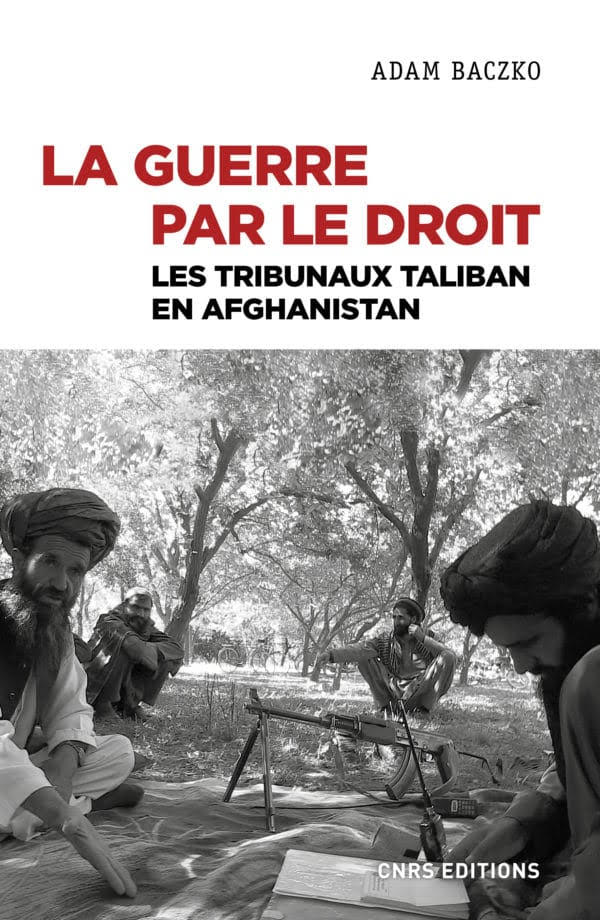
Adam Baczko is a Research Fellow at CNRS (Centre National de la Recherche Scientifique) affiliated with Sciences Po's Center for International Studies (CERI) in Paris. His work focuses on the formation of legal institutions by armed movements in contexts of armed conflict, with particular expertise on Afghanistan and Syria. Baczko has conducted extensive fieldwork in conflict zones across Afghanistan, Syria, Iraq, and the Democratic Republic of Congo, examining how non-state actors establish judicial systems during civil wars. His research interests include the sociology of civil wars, Taliban tribunals in Afghanistan, armed conflict in Syria, and Western military interventions. Baczko approaches these topics through a comparative lens, analyzing how legal institutions function in multiple conflict settings to identify patterns and variations in how armed movements establish governance structures. His fieldwork methodology emphasizes direct observation and interviews in dangerous environments, which he argues provides epistemological privilege over desk-based research on conflict zones. Baczko's publications reveal a consistent focus on how legal systems operate in civil wars, particularly examining the Taliban's judicial apparatus in Afghanistan as a case study of how armed movements use law as a strategic tool. His work demonstrates how the Taliban's courts contributed to their eventual victory by providing accessible, reliable justice that contrasted with the failures of the Western-backed government system. His comparative approach extends to Syria, where he has documented similar dynamics of competing legal orders. Order, Conflict and Violence Fellow at Yale University Visiting Fellow at the Institut für die Wissenschaften vom Menchen (IWM) Trajectories of Change Fellow at the Zeit-Stiftung Ebelin und Gerd Bucerius Baczko has been actively involved in the ERC program 'Social Dynamics of Civil Wars' since 2016, working under Gilles Dorronsoro at the University of Paris 1 Panthéon-Sorbonne. His multilingual capabilities (French, English, Spanish, Polish) facilitate his comparative research across multiple conflict zones. He has been a vocal advocate for the importance of fieldwork in conflict zones despite security challenges, arguing that direct observation provides irreplaceable insights into how civil wars function.
Stéphane Lacroix is an Associate Professor of Political Science at Sciences Po and a permanent researcher at the Centre for International Research (CERI). He serves as co-director of Sciences Po's Chair of Religious Studies. An Arabist specializing in the Middle East, Lacroix holds fluency in five languages: French (mother tongue), English, Arabic, Spanish, and functional Russian/German. His research focuses on religious politics in the Arab world, particularly examining Salafism, Islamic movements, and state-religion dynamics in Saudi Arabia and Egypt. Key themes include revolutionary Islamism, religious dissent, and political transitions following the Arab Uprisings. His methodological approach combines extensive field research with historical and political analysis. Lacroix's publications reveal consistent scholarly engagement with Middle Eastern religious politics across three decades. His work demonstrates evolving focus from Saudi Islamism (2010-2011) to Egyptian revolutionary dynamics (2015-2018), culminating in contemporary analyses of Salafism (2024). The publications show increasing interdisciplinary scope, integrating political science, religious studies, and security perspectives. Lacroix teaches graduate courses including: The Dynamics of Religion in the Contemporary World Islam and Politics in a Changing Middle East States and Social Transformation in the Arab World States and Societies in the Arab World Research Training Workshop on the Middle East As a core CERI researcher, Lacroix contributes to the center's mission of interdisciplinary international research. His leadership in the Chair of Religious Studies shapes academic discourse on religion's political dimensions. While specific grant details aren't public, his co-edited volumes with Cambridge University Press and Harvard University Press indicate significant research funding support.
National Institute of Oriental Languages and CivilizationsFrance
Haque Shahzaman is an HDR lecturer specializing in Urdu language at the Institut National des Langues et Civilisations Orientales (INALCO) in Paris, France. He serves as Program Director for Master and Bachelor programs in Urdu and is Co-Head of AXIS 1 "Linguistic policies, representation, multilingualism" within the PLIDAM research team. Previously, he held leadership positions including Co-Director of the South Asia and Himalayan Department (2019-2022), Deputy Director (2016-2019), and Head of International Relations (2016-2020). His research focuses on family language policies, sociolinguistics of Urdu, Urdu-speaking diaspora in Europe, and Urdu as a language of Islam in the Indian subcontinent. He has conducted extensive research on language transmission in immigrant families, particularly examining how Urdu-speaking communities maintain their linguistic heritage in European contexts. His work also explores linguistic landscapes in refugee camps, Urdu journalism in France, and the sociopolitical context of Urdu in India. Dr. Shahzaman's recent publications demonstrate a strong focus on the intersection of language, migration, and identity. His research reveals how emotional factors, religious practices, and spatial contexts shape family language decisions among Urdu-speaking immigrants. He has documented the challenges of Urdu language maintenance in France, analyzed linguistic invisibility in multilingual environments, and examined the role of Urdu in clandestine labor markets. His scholarly work consistently addresses the tension between language preservation and adaptation in diaspora communities. As an active academic, Shahzaman participates in numerous international conferences, regularly publishes in peer-reviewed journals, and has edited significant volumes on family language policy. He serves on the Inalco Press Committee and has contributed to the ANR LIMINAL research project on linguistic and intercultural mediations in international migration contexts. His work bridges theoretical linguistics with practical applications for language education and policy.
Jennifer Takhar is an Associate Professor at SKEMA Business School in Lille, France, specializing in Marketing. Previously, she held positions at Institut Supérieur de Gestion (2018–2024) and has been a Research Associate at Celsa Sorbonne Université since 2006. She earned her Doctorate in Social Sciences from Sorbonne Université in 2008. Her research focuses on intersections between biotechnology markets and consumer behavior, particularly in menopause advocacy, transhumanist consumption, and FemTech industries. Key areas include digital health movements, embodied health activism, and qualitative marketing methodologies. She has published in top journals like Social Science & Medicine , Marketing Theory , and Journal of Marketing Management . Dr. Takhar’s work addresses urgent issues such as equitable menopause care, the impact of social media on health perceptions, and the commodification of reproductive technologies. Recent projects include editing All Change! Marketing and Consuming the Menopause Transition (Routledge, 2025) and exploring transhumanist visions in biotechnology markets. She serves on the editorial boards of Journal of Marketing Management and Journal of Customer Behavior . Her interdisciplinary approach bridges marketing theory with critical cultural studies, addressing ethical and societal impacts of technological advancements in healthcare.
Ghassen Bouslama is an Associate Professor in the Finance department at NEOMA Business School. He holds a DEA in Management Sciences from the University of Toulouse I and a Doctorate in Management Sciences from the University of Reims Champagne-Ardenne. Education: DEA from University of Toulouse I, PhD from University of Reims Champagne-Ardenne His research focuses on bank-SME relationships, financing international growth for SMEs, capital structure, and Islamic finance. He has published in journals such as Revue Française de Gestion and Research in International Business and Finance , with recent work on sovereign Sukuk as infrastructure financing tools in Africa. Notable scientific contributions include studies on organizational architecture impacts on SME lending and Islamic finance frameworks in Western education. He actively participates in international conferences and has authored case studies on corporate valuations and mergers.
Houmam Saad is a Syrian archaeologist and researcher affiliated with the École Pratique des Hautes Études - PSL , where he is supported by the PAUSE program. He previously led archaeological efforts in Syria as head of the Excavations and Archaeological Studies Department at the General Directorate of Antiquities and Museums since 2019. His work focuses on Syrian cultural heritage, particularly in Damascus and Palmyra. Education: Master’s in Islamology from EPHE-PSL (2016), International Diploma in Heritage Studies (INP-Paris, 2012), PhD in Archaeology (Damascus, 2013). Dr. Saad’s research spans archaeology , cultural heritage preservation , and Digital Humanities , including 3D digitization and satellite-based damage monitoring. His current projects involve publishing 20 years of Damascus excavations, documenting conflict-related heritage loss, and teaching at the Master’s program in "History of Art and Archaeology." He has contributed to high-profile initiatives like the 3D digitization of Palmyra and the Krak des Chevaliers with ICONEM, showcased in exhibitions at the Grand Palais and Cité de l'Architecture. His scientific work emphasizes the universal value of cultural heritage amid war, regime changes, and looting. Scientific Awards: PAUSE fellowship (2025). Dr. Saad is actively involved in heritage safeguarding, leading the PROCLAC unit, and preparing publications on Byzantine mosaics and Crusades-era artifacts. He also trains students on conflict-induced challenges in archaeology.
Mathieu Tillier is a Professor of Medieval Islamic History at the Faculty of Arts and Humanities, Sorbonne University. He specializes in early Islamic judicial systems, papyrology, and interfaith legal dynamics in the Middle East. Tillier holds a PhD from Université Lumière-Lyon 2 (2004) and has held academic positions at Aix-Marseille Université and Oxford University, supported by a Marie Skłodowska-Curie fellowship. His research explores the evolution of Islamic legal institutions, particularly focusing on the role of qadis and the integration of religious minorities. Notably, he received the Sheikh Zayed Book Award (2023) for his groundbreaking work The Invention of the Qadi , which examines judicial pluralism in 8th-century Egypt. His research extends to Fatimid legal practices, early Quranic codices, and material culture analysis through papyrus and silk documents. Tillier collaborates extensively with institutions like the Institut français du Proche-Orient and co-authored studies on devotional texts and legal anthropology. His work bridges historical analysis with interdisciplinary methods, emphasizing textual and material evidence to reconstruct social dynamics in early Islamic empires. Education: PhD in History, Université Lumière-Lyon 2 (2004) Aggregation in Arab Studies (1999) Accreditation to Supervise Research (2013) Research Focus: Tillier’s work centers on the judicial reforms under Umayyad and Abbasid caliphates, papyrus-based legal records, and the coexistence of Islamic, Jewish, and Christian legal frameworks. He has pioneered studies on Fatimid marriage contracts, Quranic codices, and the socio-political role of qadis in medieval Egypt. His methodologies integrate textual analysis, material science, and comparative legal history. Grants & Collaborations: Supported by European Marie Skłodowska-Curie grants, Tillier has collaborated with Oxford University and the Institut français du Proche-Orient. His recent projects include co-authoring analyses on devotional texts with Naïm Vanthieghem and examining ink composition in early Quranic manuscripts. Awards: The Sheikh Zayed Book Award (2023) recognizes his monumental contribution to understanding early Islamic judicial systems. His work has been translated into multiple languages, influencing global scholarship on medieval Islamic studies.
Saarthak Singh is a Lecturer at the École française d'Extrême-Orient (EFEO) in Paris, specializing in South Asian art history. His research focuses on medieval Central India, examining architectural history, epigraphic practices, and cultural constructions of difference. He holds a PhD from New York University (2023) supervised by Finbarr Barry Flood, and previously trained at the University of St Andrews and SOAS. Before joining EFEO in 2024, he initiated a postdoctoral project at Ghent University (2023-2028) on architectural studies of coexistence and conflict supported by the Flanders Science Foundation. His research explores: Landscape and urban development in medieval Indian cities Epigraphic traditions and material culture of writing Architectural transformations of religious spaces Cross-cultural exchanges in pre-modern South Asia Talismanic objects and performative traditions Recent publications focus on Sultanate-era architecture, epigraphic practices, and cultural ecology, demonstrating consistent engagement with material culture and spatial politics in medieval South Asia. His work frequently employs interdisciplinary approaches combining art history, archaeology, and textual analysis. Awards include: Association of Art Historians Award (2015) UC Berkeley Dissertation Prize in Art History (2024) He co-directed a British Library-funded digitization project (2021-2023) on Sufi archives in Madhya Pradesh and teaches courses on Indian architecture, material culture, and pre-colonial history. Current research includes the Central India Research Group and Asia Registrations Online databases.