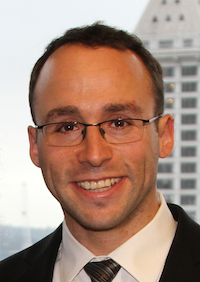
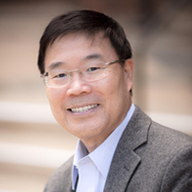
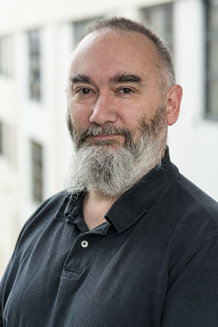
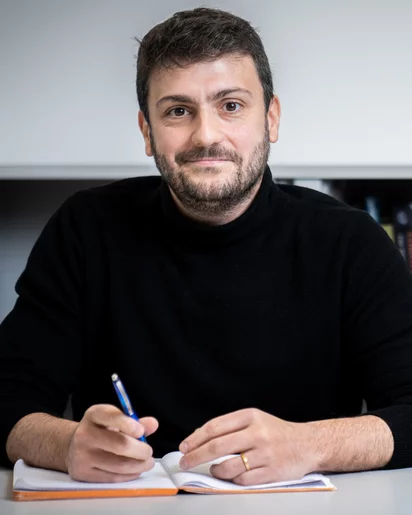
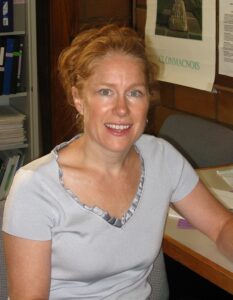
John Heron is an Associate Professor in the Department of Materials Science and Engineering at the University of Michigan. His research focuses on epitaxial growth of complex oxide thin films and heterostructures to engineer new electronic phenomena for next-generation devices. B.S. in Physics, University of California, Santa Barbara (2007) M.S. in Materials Science and Engineering, University of California, Berkeley (2011) Ph.D. in Materials Science and Engineering, University of California, Berkeley (2013) His work explores ferroic materials like (anti)ferromagnets and (anti)ferroelectrics, utilizing techniques such as X-ray diffraction, scanning probe microscopy, and magnetotransport measurements. The Ferroelectronics Lab (http://ferroelectronicslab.com) employs in-situ transfer systems for high-quality oxide and metal growth. Recent publications emphasize magnetoelectric switching, entropy-stabilized oxides, and spintronic devices. Current teaching includes MSE500 Materials Physics and Chemistry. No explicit scientific awards or students are listed in the provided texts.
Aleksandr (Sasha) Aravkin is Associate Professor in the Department of Applied Mathematics and Adjunct Associate Professor of Health Metrics Sciences, Mathematics, and Statistics at the University of Washington. He serves as Director of Mathematical Sciences at the Institute for Health Metrics and Evaluation (IHME), where he leads the Mathematical Sciences and Computational Algorithms team and contributes to strategic direction for applying mathematical sciences to analytic challenges. Dr. Aravkin earned his PhD in Mathematics (Optimization) and MS in Statistics from the University of Washington in 2010, following a BSc in Mathematics and Computer Science in 2004. His educational background forms the foundation for his interdisciplinary research approach. His research expertise spans large scale optimization, machine learning, data science, convex and variational analysis, algorithm design, robust statistics, inverse problems, and uncertainty quantification . These methodologies are applied across diverse domains including health metrics, computational medicine, tracking and navigation, seismic imaging, computational finance, and neuroscience. Dr. Aravkin has pioneered approaches for fusing physics-based and data-driven models, enabling innovative solutions to complex problems. Dr. Aravkin's publication record demonstrates a strong focus on health metrics and Global Burden of Disease studies, with recent work emphasizing meta-analytic approaches for risk-outcome relationships. His research spans epidemiological modeling, health effects of various exposures, and forecasting disease burden across populations. The publications reveal a consistent pattern of high-impact work in top journals including The Lancet and Nature Medicine, often addressing critical public health questions through rigorous statistical and mathematical frameworks. At IHME, Dr. Aravkin has led significant projects including the Burden of Proof Studies (2019-2024) which analyzed 153 risk-outcome pairs, and COVID-19 Modeling (2020-2023) where his team developed forecasting models and excess mortality estimation methods. He has also been instrumental in developing the Evidence Score model, requiring novel algorithmic approaches. His work bridges theoretical mathematical sciences with practical applications to improve global health policy and practice.
Xiaoqing Pan is a Professor and Henry Samueli Endowed Chair in Engineering at the University of California, Irvine, with dual appointments in the Department of Materials Science and Engineering and the Department of Physics and Astronomy. He serves as Director of the Irvine Materials Research Institute (IMRI) and the Center for Complex and Active Materials (NSF MRSEC). A renowned electron microscopy expert, Pan has developed advanced transmission electron microscopy (TEM) techniques for atomic-scale material characterization. Ph.D., Universität des Saarlandes, Germany (1991) His research focuses on atomic-scale structure-property relationships in oxide heterostructures, ferroelectrics, nanocatalysts, and 2D functional materials. Pan leads development of novel 4D-STEM and momentum-resolved vibrational electron microscopy methods to study single-atom catalysts and complex oxides. With over 400 high-impact publications in Nature , Science , and Nature Materials , his work has been recognized by major fellowships and awards from the American Ceramic Society, American Physical Society, and National Science Foundation. Pan's recent work includes: Atomic-scale analysis of grain boundary phonon anisotropy Advances in FeSe/SrTiO 3 interface electron-phonon coupling Plastic waste upcycling through carbon intermediate interception Control of metal-support interactions in photocatalysts Strain engineering in high-entropy oxide films His laboratory at UCI represents the forefront of materials characterization technology development.
Simon Crouch is a Senior Research Fellow in Biostatistics at the University of York's Health Sciences department. With a strong mathematical background from Cambridge and Warwick, he leads the analytics team within the Epidemiology and Cancer Statistics Group and works closely with the Haematological Malignancy Research Network (HMRN) and Cardiovascular Health team. His work focuses on statistical modeling of complex epidemiological data related to hematological malignancies. University of Cambridge: MA, MMath in Mathematics University of Warwick: PhD in Mathematics University of Lancaster: MSc in Medical Statistics Dr. Crouch specializes in the statistical modeling of complex epidemiological data, with particular focus on hematological malignancies. His research encompasses predictive modeling, event history analysis, and machine learning applications in cancer epidemiology. He has made significant contributions to understanding myelodysplastic syndromes, lymphoma classification, and survival analysis in blood cancers through population-based studies. His work often involves collaboration with international registries including the European Myelodysplastic Syndromes Registry (EUMDS) and the Haematological Malignancy Research Network. Analysis of his recent publications reveals a strong focus on myelodysplastic syndromes (MDS), with particular attention to risk stratification, survival analysis, and treatment outcomes. His work increasingly incorporates genomic and molecular data to refine disease classification and prediction models. The trend shows progression from purely statistical methodology development toward integrated translational research that combines clinical, genomic, and epidemiological data to improve patient outcomes. Extensive publication record with 113 research outputs including 66 articles, 21 patents, and numerous meeting abstracts Active participation in major international research consortia including MDS-RIGHT and ImmunAID Significant contributions to the development of statistical methodologies for cancer epidemiology Dr. Crouch actively supervises PhD students in mathematical and statistical modeling applied to cancer epidemiology, with particular interest in time-to-event models, complex longitudinal models, and simulation techniques. His research has been supported through multiple projects, including the European Myelodysplastic Syndromes Registry and the MDS-RIGHT project focused on facilitating informed decision-making in hemato-oncology. He contributes to the Advanced Health and Social Statistics module for postgraduate students at the University of York.
Dr. Imad El Haddad serves as Group Head of the Molecular Cluster and Particle Processes group at the Laboratory of Atmospheric Chemistry (LAC), part of the Center for Energy and Environmental Sciences at Paul Scherrer Institute (PSI), Switzerland, since 2018. Previously, he held positions as Tenured Scientist and Deputy Head (2018-2019), Senior Scientist in the Smog Chamber group (2015-2018), and Postdoctoral Fellow (2011-2015) at PSI. His research aims to quantify how anthropogenic emissions alter atmospheric pollutant composition and impact Earth's climate and public health through molecular-level analysis using advanced mass spectrometry techniques. His academic background includes: Ph.D. in Atmospheric Chemistry, University of Provence, Marseille (2007-2011) Master's in Environmental Sciences (with distinction, rank 1/9), University of Provence (2006-2007) Master's in General Chemistry (with distinction, rank 1/10), Saint-Joseph University of Beirut (2005-2006) Bachelor of Science in Chemistry (with distinction, rank 1/14), Saint-Joseph University of Beirut (2002-2005) El Haddad's work centers on molecular fingerprinting of atmospheric aerosols , utilizing mass spectrometry (GC/MS, HPLC/APCI-MS2, HPLC/ESI-MS2) to identify primary and secondary molecular markers. He conducts smog chamber experiments to characterize emissions from wood burning, traffic, and cooking processes, determining secondary organic aerosol potential and oxidation state evolution. His group also studies in-cloud aqueous-phase aging and collaborates with global modelers to link aerosol composition to climate forcing and health outcomes like oxidative stress. Recent publications (2025-2024) reveal three dominant trends: (1) rigorous molecular-scale analysis of secondary aerosol formation under varying humidity/temperature, (2) source apportionment breakthroughs in diverse regions (India, Europe, Arctic) using 14C and AMS data, and (3) quantification of health-relevant aerosol properties such as oxidative potential through DTT assays. High-resolution mass spectrometry is a consistent methodological thread across these studies. His scientific awards include: MENRT research fellowship from French ministry of research (2007-2010) Excellence Scholarship (top 1% student, University of Saint Joseph, 2005) Distinction Prize (best student, University of Saint Joseph, 2005) As Group Head, El Haddad oversees the Molecular Cluster and Particle Processes group's research direction and mentorship of junior scientists. While specific grant details are absent from the text, his leadership in multi-institutional publications (e.g., CERN CLOUD, iCUPE) implies active grant management and international collaboration. The group's work bridges laboratory simulations, field deployments, and health/climate modeling to address air pollution complexities. The Molecular Cluster and Particle Processes group develops cutting-edge online/offline mass spectrometers for 1 Hz-resolution atmospheric analysis. They deploy instruments in laboratory smog chamber experiments and global field studies, focusing on molecular marker identification, emission source characterization, and aging process quantification. Collaborations with biochemists and climate modelers extend their impact beyond pure aerosol physics into health risk assessment and policy-relevant climate science.
Canan ATILGAN is a Professor at the Faculty of Engineering and Natural Sciences, Sabanci University, Istanbul, Turkey. She has held leadership roles including Dean (2018-2020), Director of the Graduate School (2018-2020), and President of the Science Academy (2021-present). Her research focuses on computational tools for protein conformational transitions, allosteric communication, and antibiotic resistance mechanisms. Ph.D. (1996) and B.S. (1991) in Chemical Engineering from Boğaziçi University A pioneer in perturbation-response scanning and network-based protein modeling, her work bridges biophysics, structural biology, and molecular evolution. She has supervised 15 PhD and 17 MS students, emphasizing accessible computational biophysics education through workshops and seminars. Her recent publications highlight allosteric mechanisms in biosensors, β-lactam resistance via TolC dynamics, and evolutionary fitness landscapes. Awards include EMBO and Academia Europaea membership, L’Oréal Turkey Young Women Scientist Fellowship, and TÜBA-GEBİP Distinguished Young Scientist Award. President, Science Academy (2021) EMBO Elected Member (2023) TÜBA-GEBİP Distinguished Young Scientist (2004) She leads the MIDST Lab, contributes to Turkish science communication via sarkac.org, and organizes 'Dialogues in the MIDST' workshops for graduate students. Her work integrates theoretical models with experimental validation in iron transport proteins and resistance mechanisms.
Professor Bill O'Neill is a Fellow in Engineering at Downing College and holds the Professor of Laser Engineering position at the University of Cambridge. He leads the Centre of Industrial Photonics and focuses on cutting-edge laser-based manufacturing technologies. BSc (Essex) MSc (Essex) MA PhD (Imperial) His research spans high-power laser applications in materials processing, including aerospace alloys, medical alloys, ceramics, and polymers. He investigates ultra-short laser-matter interactions (femtosecond pulses) for thermal-free machining and nanofabrication techniques aimed at developing personal factory systems. Key projects include electron backscattered diffraction analysis (EBSD) validation of material responses and £10M UK research council-funded innovations. Publications highlight advancements in laser microstructuring, x-ray collimation, and cold gas dynamic spray technologies. His work trends toward precision manufacturing, materials science, and photonics applications. As head of the Centre of Industrial Photonics, O'Neill's team explores nanoparticle manipulation for on-demand fabrication of complex products, envisioning a future where desktop printers create micro/nano devices.
Privatdozent Dr. Andreas Faust is a leading researcher at the European Institute for Molecular Imaging (EIMI) at the University of Münster, where he heads the Chemical Targeting Lab. His work focuses on developing innovative imaging agents for medical diagnostics, particularly in radiopharmaceutical chemistry and molecular imaging. He maintains strong affiliations with the Department of Nuclear Medicine at the University Hospital Münster and participates in the "Cells in Motion" excellence cluster, contributing to cutting-edge research at the intersection of chemistry, medicine, and imaging technology. Dr. Faust completed his chemistry studies at the University of Münster, earning his Diploma in 1999, followed by his doctoral degree (Dr. rer. nat.) in 2003 with research on artificial caffeine receptors. His academic journey continued with positions at the Department of Organic Chemistry and the Department of Nuclear Medicine before becoming head of the chemistry group at EIMI in 2011. Dr. Faust's research centers on organic and medicinal chemistry with specialization in radiopharmaceutical chemistry . His team develops novel tracers for diagnostic molecular imaging using positron emission tomography (PET), single-photon emission computed tomography (SPECT), optical imaging, and photoacoustic imaging. A significant portion of his work focuses on creating specific ligands for the alarmins S100A8/S100A9 and bacteria-specific tracers based on complex carbohydrates or siderophores. His research has important applications in inflammation imaging, infection diagnostics, and cancer theranostics, with emphasis on improving metabolic stability and target specificity of imaging agents. His publication record demonstrates consistent contributions to molecular imaging, with recent work emphasizing bacteria-specific PET tracers, inflammation imaging targeting S100 proteins, and novel optical imaging probes. The research shows a clear trajectory toward developing clinically applicable imaging agents with improved specificity and metabolic stability, particularly in the areas of infection diagnostics and inflammation monitoring. 2017: Best Poster Award at Symposium "Molecular Imaging Agents in Medicine," Groningen 2009: Young Investigator Award at Deutscher Röntgenkongress, Berlin 2005: Best Scientific Poster Award at 4th Annual Meeting of the Society of Molecular Imaging, Köln Dr. Faust leads multiple significant research projects, including as Coordinator of a project on immune cell distribution imaging (2019-2024) and as Principal Investigator for CRC-project A03 "Targeting of S100A8/A9 for imaging of inflammatory disorders" and research on vascular graft infections (both 2021-2024). His Chemical Targeting Lab comprises a multidisciplinary team working at the intersection of chemistry, microbiology, and medical imaging, securing substantial funding from the Innovative Medicines Initiative and DFG Collaborative Research Centre. The Chemical Targeting Lab maintains state-of-the-art facilities for chemical synthesis, radiochemistry, and biological testing. The lab collaborates extensively with microbiologists, clinicians, and imaging specialists to translate basic research into clinical applications. Current research directions include optimizing bacterial imaging probes for clinical diagnostics and developing new inflammation-specific tracers for early disease detection, with particular focus on S100A9-targeted imaging and siderophore-based bacterial detection systems.
Amber Doiron is an Assistant Professor and Graduate Program Director in the Department of Electrical and Biomedical Engineering at the University of Vermont (UVM), part of the College of Engineering and Mathematical Sciences. Her research focuses on developing biomaterials and nanotechnology solutions for drug delivery systems, wound care, and MRI contrast agents. Applications include combating bacterial biofilms, detecting inflammation, and studying nanoparticle-cell interactions. Doiron holds an M.S. and Ph.D. in Biomedical Engineering from the University of Texas at Austin. She completed her postdoctoral training as the T. Chen Fong Fellow in Radiology and Chemical Engineering at the University of Calgary. She also served as Chief Scientific Officer at NanoPulse Biosciences, a startup developing gold nanoparticle biomedical applications. Her research interests span biomaterials design, nanomedicine, and translational applications. Key areas include drug delivery mechanisms, magnetic resonance imaging contrast agents, and strategies to disrupt biofilm infections. She actively integrates education through courses like BME 5150 (Nanobiomaterials) and BME 2050 (Materials and Transport). Recent work explores nanoparticle-based inflammation detection, synergistic antimicrobial therapies, and cerebrovascular effects of nanoparticles. Her lab investigates ROS generation in biofilm control and metabolite-depleting materials for anti-biofilm strategies, supported by grants like the NSF CAREER award. Doiron’s educational initiatives include project-based learning approaches and STEM outreach programs aimed at expanding gender diversity in engineering. Her lab’s interdisciplinary focus bridges materials science, biomedical applications, and clinical translation.
Olivier Tougait is a Professor at the Chemistry, materials and processes for sustainable nuclear power (CIMEND) department within the Unité de Catalyse et Chimie du Solide (UCCS) at Université Lille . He specializes in solid-state chemistry, nuclear materials, and actinide-based compounds, with a focus on understanding fuel cycle processes for nuclear energy. Academic Background: PhD in Chemistry (1998, Université de Rennes1), Postdoctoral Fellow at Northwestern University (1998-2000). Career: Lecturer at Rennes1 (2000-2014), now Professor at UCCS since 2014. Collaborations include the French Alternative Energies and Atomic Energy Commission (CEA) , Orano , and Framatome . Research Interests: Actinide-based intermetallic compounds Phase diagrams of nuclear materials Magnetocaloric properties Fuel cycle process optimization Synthesis and thermodynamic behavior of uranium alloys Collaborative industrial nuclear R&D Publications since 2012 focus on: Uranium-molybdenum fuel characterization Germanium/Aluminum substitution in actinide systems Thermal stability of uranyl peroxide nanoclusters Crystallographic analysis of heavy-fermion materials Labs: Directs the joint research laboratories LR4CU and LRC PUMA, which collaborate with Orano and Framatome on nuclear fuel cycle innovations.
Audrey Fikes is an Assistant Teaching Professor in the Department of Chemistry at North Carolina State University (NC State), affiliated with the Integrative Sciences Initiative (ISI). She focuses on inorganic and bioinorganic chemistry, particularly iron homeostasis mechanisms and metalloprotein interactions. Her research also explores osmium-based clusters, coordination polymers, and chemical probe development for cellular studies. Her affiliations include the College of Sciences and the ISI, with an office in Dabney Hall 840. While no awards or grants are explicitly listed, her work emphasizes interdisciplinary approaches to chemical tool design and materials synthesis. She is part of NC State's Department of Chemistry faculty, contributing to undergraduate and graduate education in chemistry. Research interests span synthetic inorganic chemistry, redox-active systems, and applications in biochemistry. Her publications highlight advancements in ligand behavior analysis, cluster reactivity, and microwave-assisted synthesis techniques.
Etienne Boutin is a Postdoctoral Researcher at the Laboratory of Renewable Energy Science and Engineering (LRESE) at École Polytechnique Fédérale de Lausanne (EPFL), affiliated with the School of Engineering and Institute of Mechanical Engineering . His work focuses on electrochemical and photo-electrochemical systems for CO 2 and CO reduction, particularly toward methanol production. Email: etienne.boutin@epfl.ch Office: MED 0 2923 (Bâtiment MED), Station 9, 1015 Lausanne His research spans Renewable Energy , Electrochemistry , and Catalysis , with a focus on molecular catalysts, reaction mechanisms, and modeling for low-temperature CO 2 reduction systems. Recent work explores confined molecular catalysts, surface charge boundary conditions, and hybrid solar-driven devices. The LRESE lab at EPFL supports his research into sustainable chemical processes, including the design of photocathodes, porous carbon electrodes, and strategies for carbon utilization. His publications from 2019–2025 highlight advancements in methanol synthesis, formaldehyde quantification, and catalyst stability.
Majed S. Fataftah is an Assistant Professor of Chemistry at the University of Illinois, affiliated with the College of Liberal Arts & Sciences. He leads the Fataftah Research Group, focusing on physical inorganic chemistry at the intersection of chemistry, physics, and materials science. His research emphasizes synthetic chemistry to control photophysical properties for quantum information science, magnetic properties for novel materials, and reactivity modeling for catalysis. Education : B.S. in Chemistry & Biochemistry, University of Washington (2013) Ph.D. in Chemistry, Northwestern University (2019) Postdoctoral Fellow, Yale University (2019–2023) Research Interests : Inorganic and bioinorganic chemistry: synthesis, spectroscopy, electronic structure Metal-organic frameworks Molecular magnetism Quantum information science Key Research Themes : Students in his lab develop expertise in synthesizing small molecules/materials, X-ray crystallography, magnetometry, and advanced spectroscopic techniques (EPR, UV-vis-NIR, Mössbauer). Recent work includes studies on nickel-iron clusters, mixed-valence iron complexes, and vanadium-based molecular qubits. Labs/Teams : The Fataftah Group (2024) includes researchers like Garrett, Austin, Mari, Arsha, Joshua, Adrienne, Cayden, and Gwen, though formal student lists are not explicitly documented.
Andreas Duit is a Professor of Political Science at Stockholm University and also serves as a Guest Professor at the Political Science Unit, Luleå University of Technology. His academic work focuses on comparative environmental politics with special emphasis on the role of the state in addressing environmental challenges. Department of Political Science, Stockholm University Guest Professor, Political Science Unit, Luleå University of Technology Former visiting scholar at the Workshop in Political Theory and Policy Analysis at Indiana University, Bloomington Former visiting scholar at the Department of Political Science, University of Washington Professor Duit's research centers on comparative environmental politics, particularly examining how states address environmental challenges. His work employs quantitative methods and cross-national panel data analysis, with additional engagement in complex system analysis and survey research. His primary research interests include climate policy, environmental governance, sustainability transitions, and the relationship between welfare states and environmental policy. Analysis of Professor Duit's recent publications reveals a strong focus on climate governance mechanisms, environmental state development, and the interplay between political institutions and environmental outcomes. His research spans multiple analytical levels from international climate agreements to domestic policy implementation, with particular attention to how different governance structures affect environmental performance across countries. GREENTRANS: The Great Green Transformation – Politics, Markets and Civil Society in the Anthropocene (funded by Marcus and Marianne Wallenberg Foundation) THERAPY: The Electoral Ramifications of Environmental Policy (funded by FORMAS) GLEAN: A Global Survey of Learning, Participation and Ecosystem Management in Biosphere Reserves GRACE: Governing the Anthropocene – Environmental Policy and Outcomes in a Comparative Perspective Professor Duit has secured significant research funding from major Swedish research organizations including FORMAS, MISTRA, the Swedish Research Council, and the Marcus and Marianne Wallenberg Foundation. His research portfolio demonstrates a consistent focus on understanding the political dimensions of environmental challenges and identifying effective governance approaches for sustainability transitions.
Katherine Lanigan is Professor of Chemistry in the Department of Chemistry and Biochemistry at University of Detroit Mercy's College of Engineering & Science, teaching General Chemistry, Quantitative Analysis, and Instrumental Analysis since joining the faculty in 2001. Her educational background includes: Ph.D. in Chemistry, University of Iowa (1996) B.S. in Chemistry, University of Dayton (1990) Dr. Lanigan's research integrates analytical chemistry with environmental science through two primary avenues: trace metal analysis in ecological systems using FAAS, XRF, and UV/vis spectroscopy, and investigations of photocatalytic reactions involving nanoparticles for contaminant degradation. Her secondary focus examines adsorbed species at liquid/solid interfaces of metal oxide films using ATR-FTIR, with recent expansion into cloud point extraction methods for metal preconcentration in water samples. These efforts address critical environmental monitoring and remediation challenges. Analysis of her 2015-2024 publications reveals dual expertise in environmental analytical chemistry and pedagogical innovation, with environmental work emphasizing practical metal detection techniques and education research developing theme-based water quality activities across instructional levels. Her scientific recognition includes: National Institute of Health ReBUILDetroit Pilot Project Course Development Award (2017, co-PI) UDMPU Faculty Research Awards (2016, 2015) Dr. Lanigan has mentored 38 students since 2002, with alumni pursuing dentistry (University of Detroit Mercy, Case Western, Michigan, Pennsylvania), medicine, and chemistry careers. Her secured funding supports both research instrumentation and educational development initiatives. The active Lanigan Research Group currently comprises Jisoo Kim, Heewoong Kim, and Tina Lee, with Kelly Cho, Alina Varghese, and Abdel El Sayed joining for Fall 2025 projects on photocatalytic nickel oxidation and drinking water metal analysis.