
Nini Pryds is a Professor and Head of the research section 'Functional Oxide Materials' at the Department of Energy Conversion and Storage, Technical University of Denmark (DTU). He leads a team of 25+ researchers focusing on memristors, piezoelectricity, thermoelectricity, electrostriction, and functional oxide thin films. His work bridges physics and chemistry to design novel electronic states in oxide interfaces. Education: UDTU (likely Technical University of Denmark, potential typo). External roles include Editor of Applied Surface Science and Editorial Board Member of APL-Materials . Research interests revolve around quantum phenomena in oxide interfaces, stability enhancement of ionic conductors via coherent interface design, and mechanically tunable magnetism. Key contributions include modulation-doping at oxide interfaces, high mobility 2DEG discovery, and stabilizing δ-Bismuth oxide through multilayer structures. Recent publications emphasize oxide metamaterials, strain-mediated properties, and defect dynamics. Supervises active PhD projects on oxide heterostructures, thermoelectrics, and piezoelectricity. His work aligns with UN Sustainable Development Goals related to clean energy and innovation.
جستجوی استاد راهنمای دانشگاهی
برای مسیر پژوهشیتان، استاد راهنما، استاد دانشگاه و پژوهشگر مناسب را پیدا کنید و با آنها ارتباط بگیرید.
نمایش ۱-۱۵ از ۴۹ استاد راهنما
اطلاعات پروفایلها از صفحات عمومی دانشگاهها گرفته شده و ممکن است بهروز نباشد.

- 2D Materials
- Nanoscale Electronics
- Optoelectronics
- +۳ مورد دیگر
Andras Kis is a Full Professor at the École Polytechnique Fédérale de Lausanne (EPFL), affiliated with the School of Engineering (STI) across multiple institutes including the Institute of Electrical Engineering (IEL), Institute of Materials Science (IMX), and teaching programs in Electrical Engineering (SEL-ENS). He leads the Laboratory of Nanoscale Electronics and Structures (LANES) and serves on the PhD program committee for Microsystems and Microelectronics. PhD, EPFL (2003) MS, Physics, University of Zagreb (1999) Baccalaureate, MIOC High School Research Focus: Pioneering work on 2D materials for electronic and optoelectronic devices, particularly transition metal dichalcogenides like MoS2 and PtSe2. His research spans: Transistor design with atomically thin semiconductors Excitonic devices and valleytronics Nanofluidics and ionic logic Optical properties of 2D heterostructures Scalable fabrication of 2D materials Defect engineering and doping techniques Scientific Impact: Based on analysis of 15 most recent publications, his work focuses on advancing 2D materials for next-generation electronics through innovations in: Van der Waals heterostructures Thermoelectric and optoelectronic applications Nanofabrication techniques Spintronic and quantum transport phenomena Memristive and neuromorphic devices Characterization of electronic and optical properties Awards & Recognition: Fellow of the Institute of Electrical and Electronics Engineers (IEEE) Lotfi A. Zadeh Award for Emerging Technologies (2024) Highly Cited Researcher (Clarivate Analytics) Teaching & Academic Leadership: Currently teaching courses including Lab in Nanoelectronics , Physical Models for Micro and Nanosystems , and Semiconductor Devices II . He has supervised over 20 PhD students in his research group at EPFL. Laboratory & Collaborations: Directs the Laboratory of Nanoscale Electronics and Structures (LANES) which focuses on fundamental and applied research in 2D materials and nanoelectronic devices. His work bridges materials science, condensed matter physics, and microelectronics engineering.

Alvin Ng Theng Hawمشاهده پروفایل
دانشیار مدعو
Alvin NG Theng Haw is an Adjunct Associate Professor at the Division of Information Technology and Operations Management, College of Business (Nanyang Business School), Nanyang Technological University (NTU). He combines over 20 years of global leadership experience in Sales and Product Management with academic roles, including serving as a Senior Career Fellow and executive coach for NTU’s Global Executive MBA and Full-Time MBA programmes. His work focuses on integrating Digital Transformation, Internet of Things (IoT), and Artificial Intelligence for Business into strategic frameworks. Research Interests : Alvin specializes in leveraging Digital Transformation and Advanced Technologies (IoT, AI) to drive business innovation. His publications in materials science demonstrate interdisciplinary applications of these technologies to fields like Soft Robotics, Self-Healing Materials, and Wearable Electronics. His expertise extends to Smart Cities, Sustainability Technology, and Industry 4.0, where he applies business strategies to technological challenges. Contributions : As a founding member of the World Economic Forum’s Digital ASEAN Skills Task Force, he advocates for digital literacy and skills development. His industry experience includes roles in networking, software, cloud platforms, and biorenewable materials, reflecting a bridge between business and engineering.
- Electrochemistry
- Nanomaterials
- Energy Storage
- +۶ مورد دیگر
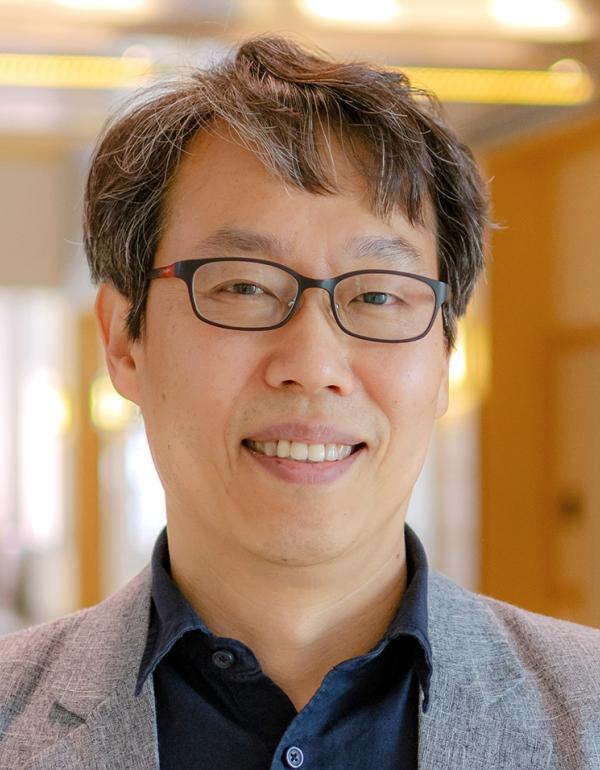
Sang Bok Lee is a Professor of Chemistry & Biochemistry at the University of Maryland. His research focuses on electrochemistry of heterogeneous nanomaterials for energy storage systems, nanopore transport properties, and biosensor development. He specializes in advanced materials for high-power batteries and electrochromic devices, with a strong emphasis on solid-state electrolyte interfaces and protective coatings. Research Interests: Electrochemistry of nanomaterials for energy storage Transport properties of nanopores Solid-state battery interfaces Biosensor design and nanoparticle toxicology Targeted drug delivery systems Chemical and biochemical separation techniques Recent work highlights include developing aluminum nitride protective layers for solid electrolytes, optimizing hot-pressed argyrodite electrolytes, and advancing in situ Raman diagnostics for battery materials. His studies on magnesium anode protection and lithium metal anode engineering have significantly impacted rechargeable battery technologies. Publications reflect a focus on nanomaterial synthesis, electrochemical stability, and energy storage innovations. No academic awards or student advisement details were explicitly cited in the text.
Hu Yunfeiمشاهده پروفایل
دانشیار
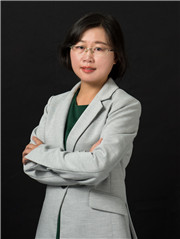
Associate Professor Hu Yunfei is affiliated with the School of New Materials and New Energy at Shenzhen University of Technology , where she leads the New Energy Systems and Smart Microgrids Laboratory . She is a member of the China Renewable Energy Society and Guangdong Solar Energy Association . PhD in Materials Processing Engineering (2005), South China University of Technology Bachelor of Engineering (2000), South China University of Technology Her research focuses on new energy systems , solar-storage direct-flexible systems , and high-efficiency photovoltaic devices , including perovskite solar cells , tandem solar cells , and transparent conductive oxides . Her work spans fundamental materials science and applied energy systems. The 15 most recent publications highlight her expertise in polycrystalline silicon thin films , transparent conductive oxides , perovskite solar cells , and optoelectronic materials . These works reflect trends in improving solar cell efficiency, stability, and manufacturing scalability. She has led projects such as the development of consumer solar power optimizers , optical performance testing for bifacial solar panels , and industrial collaborations on silicon ribbon substrates . Her projects are funded by institutions like the Norwegian Science Foundation and National Natural Science Foundation of China . At Shenzhen University of Technology, she oversees the New Energy Systems and Smart Microgrids Laboratory , integrating advanced materials and system design for renewable energy applications.

Nikita Kavokineمشاهده پروفایل
استادیار
Nikita Kavokine serves as Tenure Track Assistant Professor at École Polytechnique Fédérale de Lausanne (EPFL) within the School of Basic Sciences . His dual appointments span the Institute of Chemical Sciences and Engineering (ISIC) and the School of Chemical Sciences and Engineering (SCGC) , where he leads the Quantum Plumbing Lab (LNQ) and contributes to graduate teaching. Based at Building CH A2 398 in Lausanne, he maintains active research and instructional roles across EPFL's chemistry and chemical engineering programs. His research pioneers quantum nanofluidics and nanoscale transport phenomena , focusing on electron-ion coupling mechanisms in confined geometries. Key investigations include quantum friction in water-carbon interfaces, hydroelectric energy conversion through nanochannels, and plasmon-hydron resonances in two-dimensional materials. His work bridges condensed matter physics, electrochemistry, and fluid dynamics to develop fundamental principles for next-generation nanofluidic devices and quantum sensors. Analysis of his 15 most recent publications (2023-2025) reveals three dominant research thrusts: quantum-enhanced energy conversion (evident in hydroelectric drag and electron cooling studies), non-classical ion transport (including ionic Coulomb blockade and interaction confinement), and emergent quantum hydrodynamics (momentum tunneling, collective modes). These publications consistently integrate advanced numerical methods with nanoscale experimental systems, establishing new paradigms for solid-liquid quantum interactions. Kavokine currently supervises three PhD students: Gispert Peter , Lu Hao , and Rigaux Killian David . His teaching portfolio includes graduate courses in Statistical Mechanics for Chemistry and Nanofluidics , emphasizing theoretical frameworks for many-particle systems and nanoscale fluid dynamics. Research funding supports his laboratory's exploration of quantum effects in nanofluidic channels, though specific grant details are not provided in source materials. The Quantum Plumbing Lab (LNQ) operates at the forefront of nanoscale quantum transport research, utilizing advanced nanofabrication and characterization techniques to probe electron-ion coupling phenomena. The lab's interdisciplinary team combines expertise in quantum physics, electrochemistry, and fluid dynamics to investigate fundamental limits of energy conversion and transport at atomic scales, with particular focus on graphene-based systems and angstrom-scale confinement.
Yuhang Huمشاهده پروفایل
دانشیار
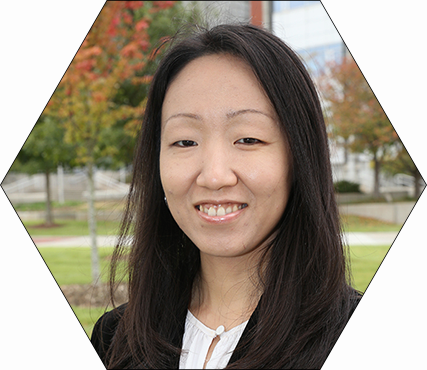
Dr. Yuhang Hu is an Associate Professor at the Georgia Institute of Technology, affiliated with the George W. Woodruff School of Mechanical Engineering and the School of Chemical and Biomolecular Engineering. Her research focuses on soft active materials, particularly hybrid systems combining solid and liquid components. She explores chemo-mechanical modeling, mechanical characterization of soft materials, and the development of dynamic multi-functional materials for applications like energy conversion and biomedical devices. Education: Ph.D. in Engineering Sciences from Harvard University (2011), M.S. in Applied Physics (Harvard, 2009), and prior degrees from Nanyang Technological University and Shanghai Jiao Tong University. She previously held positions at the University of Illinois at Urbana-Champaign and Harvard. Research Interests: Soft materials mechanics, stimuli-responsive gels, bio-inspired materials, and material characterization challenges. Her work integrates experimental and theoretical approaches to bridge mechanics and materials chemistry. Outreach: Active in STEM education through initiatives like B.T. Washington Elementary STEM Academy and the Midwest Experimental Mechanics Student Conference. Her lab emphasizes interdisciplinary innovation at the Chemomechanics of Soft Materials Lab.

Aleksandra Radenovic is a Full Professor at École Polytechnique Fédérale de Lausanne (EPFL) holding multiple positions across the institution. She is a Full Professor at the Laboratory of Nanoscale Biology (LBEN) within the School of Engineering (STI), a Full Professor in Teaching at the School of Life Sciences (SV), and a Full Professor in Teaching at the School of Engineering (STI). Additionally, she serves as Co-Director of both the IBI-STI and IBI-SV administrative units, and is a Member of both the STI School direction and SV School direction. Dr. Radenovic received her PhD from the University of Lausanne in 2003, where she worked with Prof. Dietler in the Laboratory of Physics of Living Matter. Prior to that, she studied physics at the University of Zagreb from 1994-1999, and completed her baccalaureate at a Classical gymnasium in 1994. She conducted postdoctoral research at the University of California, Berkeley from 2004-2007 in the group of Prof. Liphardt. Her research focuses on single molecule biophysics, with particular emphasis on developing techniques and methodologies based on optical imaging, biosensing, and single molecule manipulation. Her laboratory works on three major research directions: (i) developing and using nanopores as platforms for molecular sensing and manipulation, particularly solid-state nanopores in glass nanocapillaries and 2D-material membranes; (ii) studying biomolecular function, especially protein and nucleic acid interactions, using force-based manipulation techniques like optical tweezers and Anti-Brownian Electrokinetic traps; and (iii) developing super-resolution optical microscopy based on single molecule localizations for quantitative cellular imaging. Her work bridges physics, engineering, and biology to create innovative tools for understanding molecular processes at the nanoscale. Analysis of her recent publications reveals a strong focus on nanofluidics, 2D materials (particularly MoS 2 and hBN), nanopore sensing, super-resolution microscopy, and the development of novel instrumentation for biophysical applications. Her research demonstrates increasing interdisciplinary collaboration, integrating materials science, nanotechnology, and biological applications to address fundamental questions in molecular biophysics. Dr. Radenovic has received numerous prestigious awards and grants, including: 2021: ERC Advanced Grant 2021: Optica Fellow 2016: CCMX Materials challenge award 2015: SNSF-ERC Consolidator Grant 2010: ERC Starting Grant 2003: SNSF Fellowship She has successfully advised numerous PhD students whose research spans single molecule biophysics, nanofluidics, and optical techniques. Her laboratory, the Laboratory of Nanoscale Biology (LBEN), is well-equipped for advanced biophysical research, with capabilities in nanopore fabrication, optical trapping, super-resolution microscopy, and 2D materials characterization. Dr. Radenovic has secured significant research funding through competitive grants, including multiple ERC grants, which have supported her innovative research program at the intersection of physics, engineering, and biology.

Yujia Zhangمشاهده پروفایل
استادیار
- Bioiontronics
- Microengineering
- Synthetic tissues
- +۳ مورد دیگر
Yujia Zhang is a Tenure Track Assistant Professor at the School of Engineering , École Polytechnique Fédérale de Lausanne (EPFL), leading the Laboratory for Bio-Iontronics (BION) since January 2025. His work focuses on developing iontronic biointerfaces and hybrid intelligent systems for biomedical applications. Academic Affiliations: EPFL School of Engineering, STI-SMT SMT-ENS PhD program committee Research Themes: Droplet-based iontronics, synthetic tissues, advanced manufacturing Research Trends from his publications emphasize microscale droplet iontronics , soft energy systems , and biohybrid interfaces , with applications in neurostimulation , tumor modeling , and biomedical devices . Scientific Awards : 2023: Early-career Research Scientist Representative, UK Parliamentary & Scientific Committee 2022: Excellent Doctoral Dissertation, Chinese Academy of Sciences 2021: Outstanding Doctoral Thesis, Chinese Institute of Electronics 2020: Special Prize for President Scholarship, Chinese Academy of Sciences Academic Contributions include mentoring PhD students and teaching microfabrication technologies. His lab develops 3D-printed synthetic tissues and droplet networks for interactive biological communication.
Joshua Edel is a Professor of Biosensing & Analytical Sciences at Imperial College London's Department of Chemistry within the Faculty of Natural Sciences. He specializes in developing trace analyte analytical platforms, including bioanalytical sensors for clinical applications. His work focuses on single-molecule detection, nanopore sensors, and microfluidic systems. Edel has published over 180 research articles and secured prestigious grants like the ERC Starting Grant (2011) and ERC Consolidator Award (2017). His research spans nanobiotechnology, plasmonic sensors, and biosensor innovation. Education: PhD in developing single-molecule detection within microfluidic systems from Imperial College London (2003). Postdoctoral research at Cornell University (School of Applied and Engineering Physics) and a fellowship at Harvard University's Rowland Institute (single-molecule biophysics). Research Interests: Edel’s lab pioneers techniques such as high-throughput droplet microfluidics, optical/electrical single-molecule sensors, and plasmonic nanopore sensors. His work addresses challenges in diagnostics, nanoelectronics, and structural chemistry. Key areas include developing selective biosensors for clinical samples and advancing nanoscale probing technologies. Grants & Awards: ERC Starting Grant (2011): Rare event bioanalysis ERC Consolidator Award (2017): Selective single-molecule biosensors Funding from EPSRC, Wellcome Trust, and industrial partners Advising & Labs: Edel leads projects in Imperial’s Department of Chemistry and collaborates across disciplines. His lab develops cutting-edge tools like nanoscale tweezers for single-cell analysis and nanofluidic platforms for biomarker detection. He actively consults in biosensing technology.

Theresia Arbring Sjöström is an Assistant Professor at Linköping University, affiliated with the Department of Science and Technology (ITN) and the Laboratory of Organic Electronics (LOE). Her research focuses on overcoming biological barriers through multidisciplinary approaches, including electrophoretic drug delivery systems (iontronics), precision medicine, and organic bioelectronics. She integrates material science, computational modeling, and device engineering to develop innovative solutions for drug delivery challenges in neurological diseases and cancer treatment. Key research interests include programmable implantable drug systems, miniaturized chemical interfaces, and translating scientific breakthroughs into clinical applications. Collaborations span academia and industry, emphasizing preclinical validation and practical solutions. Recent work highlights include iontronic pumps for brain tumor chemotherapy and micropipettes for neuronal modulation. Her contributions to organic bioelectronics have advanced neurotransmitter release systems operating at synaptic speeds. Future efforts aim to further bridge device physics with biophysics, fostering precision medicine through dynamic implants.

Xenofon Strakosasمشاهده پروفایل
استادیار
Xenofon Strakosas is an Assistant Professor at Linköping University's Department of Science and Technology (ITN), affiliated with the Laboratory of Organic Electronics (LOE) within the Faculty of Science and Engineering. His research focuses on organic bioelectronics, particularly the integration of electronic systems with biological tissues. Key projects include developing conductive hydrogels for 3D bioprinting, enzymatic polymerization of organic conductors on lipid membranes, and in vivo fabrication of soft electrodes for electronic medicine. Recent breakthroughs include growing electrodes in living tissue using injectable gels and achieving precise drug delivery via proton-trapping ion pumps. Supported by a SEK 10 million donation from the Stig Wadström Foundation, his work bridges technology and biology to address neurological diseases and human-machine interfaces. His lab collaborates across disciplines, leveraging organic electronics for biosensors, neural interfaces, and sustainable energy solutions. Publications emphasize advanced materials, electrochemical platforms, and biomedical applications. Current research trends prioritize biocompatibility, in vivo compatibility, and precise control of electronic-ionic interactions. Awards and recognitions include Physics World's 2023 major breakthrough designation for electrode growth in living tissues. Future directions include scalable bioelectronic systems and next-generation medical therapies.
- Bioengineering
- Systems Biology
- Fluid Dynamics
- +۳ مورد دیگر
Sumita Pennathur is a Professor in the Department of Mechanical Engineering at the University of California, Santa Barbara. Her research focuses on nanoscale systems, integrating physics, biology, chemistry, and engineering to develop micro- and nanofluidic tools for biomedical applications. She leads the Pennathur Laboratory, pioneering innovations in electrokinetic transport, biosensors, and point-of-care diagnostics. Her academic honors include being a Fellow of the American Institute for Medical and Biological Engineering (2021), a DARPA Young Faculty Award (2008), and the prestigious Presidential Early Career Award in Science and Engineering (2010). Her work emphasizes both fundamental science and practical technological advancements, such as insulin pump improvements and glucose monitoring systems. Key Research Areas: Bioengineering, Nanofluidics, Electrokinetics, MEMS/NEMS, Biomedical Sensors Labs/Teams: Pennathur Laboratory (specializing in micro/nanofluidic systems) Grants/Funding: DARPA support, NSF grants, and industry collaborations Her recent projects include developing self-calibrating glucose sensors, enhancing insulin infusion set longevity, and creating bio-inspired nanofluidic diodes. These innovations bridge fundamental research and clinical applications, addressing critical challenges in healthcare and diagnostics.

Professor Daniel Simon is the Head of Unit and Principal Investigator in the Laboratory of Organic Electronics (LOE) at Linköping University (LiU). He leads research in organic bioelectronics, focusing on iontronics, conductive polymers, and bioelectronic interfaces. His work bridges electronics and biology, enabling applications in neural modulation, drug delivery, and plant electrophysiology. Simon holds a PhD in Physics from UC Santa Cruz (2007) and advanced through roles at LOE from postdoc (2007–2011) to Assistant (2013–2016), Associate (2016–2022), and full Professor (2022). He also oversees the Wallenberg Initiative Materials Science for Sustainability (WISE). His research spans iontronic pumps for targeted chemotherapy, electronic plant growth control, and neuroelectronic devices. Key projects include implantable ion pumps for brain tumor treatment, lipid membrane-integrated electronics, and biohybrid systems using conductive hydrogels. Collaborations involve Karolinska Institute, Umeå Plant Science Centre, and industry. Notable achievements include the first supercapacitor in plants, microfabricated ion pumps for epilepsy relief, and enzyme-mediated polymerization techniques. His work emphasizes translational bioelectronics, with applications in personalized medicine and sustainable materials.
Jae-Chun Jeonمشاهده پروفایل
پژوهشگر
Dr. Jae-Chun Jeon is a leading experimental physicist at the Max Planck Institute of Microstructure Physics in Halle, Germany, where he works within the NISE department (Nano-Systems from ions, spins and electrons). He joined the institute in 2018 after completing his postdoctoral fellowship at the University of Alberta, Canada. His research focuses on spintronics, unconventional computing devices, and cryogenic systems, with emphasis on developing novel memory and logic technologies for next-generation computing. Dr. Jeon earned his Ph.D. in condensed matter physics from the University of Alberta, Edmonton, Canada, in 2016. He continued his research as a postdoctoral fellow at the same institution, focusing on strongly correlated magnetic oxide materials for spintronic and neuromorphic applications before joining the Max Planck Institute. Dr. Jeon's research centers on unraveling the physics of complex systems including spintronics, correlated oxides, and atomically engineered materials to discover their advanced functionalities. He specializes in manipulating spin textures and states using spin electrons, with particular focus on current-induced domain wall motion and spin-orbit torque-induced magnetization switching for memory and logic applications. His work explores the potential of racetrack memory for both conventional binary memory and unconventional analogue systems such as probabilistic-bit and neuromorphic devices. His recent publications demonstrate a strong focus on advanced spintronic devices, particularly racetrack memory systems, domain wall logic, and Josephson junctions for quantum applications. The research spans fundamental physics of chiral domain walls, spin-orbit torque effects, and novel materials for spin-based computing. His work frequently appears in high-impact journals including Science, Nature family journals, and Advanced Materials, reflecting the significance of his contributions to the field. Dr. Jeon's research is supported by cutting-edge facilities including atomically thin film deposition systems, state-of-the-art electronics, and advanced device fabrication techniques such as electron beam lithography and ion beam etching/deposition. His work involves close collaboration with the research group led by Prof. Stuart Parkin, a director at the Max Planck Institute of Microstructure Physics.