Professor Daniel Segrè is a faculty member at Boston University, holding the title of Professor of Biology, Bioinformatics, and Biomedical Engineering. His research focuses on systems biology, microbial ecology, and metabolic engineering, with an emphasis on understanding complex biological networks and their applications in bioenergy and biomedicine. Segrè leads the Segre Lab ( segrelab.bu.edu ), where theoretical and computational approaches are applied to study metabolism, microbial interactions, and synthetic biology. Segrè earned his PhD from the Weizmann Institute of Science, Israel. His work bridges fundamental science and applied engineering, addressing topics such as microbial community dynamics, metabolic pathway design, and environmental microbiome applications. Research Interests: Systems biology of metabolism, evolution of biochemical networks, microbial interactions, bioinformatics, and environmental microbiome engineering. His lab develops computational models (e.g., COMETS) to simulate microbial ecosystems and design synthetic microbial communities for climate change mitigation and bioenergy production. Teaching: Courses include BE 777 (Computational Genomics), BF 821 (Bioinformatics Seminar), and BF 571 (Dynamics and Evolution of Biological Networks). These courses reflect his expertise in integrating computational methods with biological systems analysis.
Yimin D. Zhang is an Associate Professor in the Department of Electrical and Computer Engineering at Temple University's College of Engineering, where he leads the Advanced Signal Processing (ASP) Lab. His research spans statistical signal processing, array processing, radar, wireless communications, and convex optimization. Research Interests: Dr. Zhang's work focuses on cutting-edge signal processing techniques including compressive sensing, sparse arrays, time-frequency analysis, and robust beamforming. These are applied to radar systems, satellite navigation, assisted living, and wireless networks. His research addresses core challenges in target localization, direction-of-arrival estimation, and spectrum-efficient joint radar-communication systems. The recent publications highlight a strong trend in exploiting sparsity, virtual arrays, and deep learning to enhance resolution and robustness in radar and communication systems. Themes include multi-frequency processing, low-rank matrix recovery, and optimized OFDM waveforms for dual-function systems. Scientific Awards: 2016 IET Radar, Sonar and Navigation Premium Award 2017 IEEE Aerospace and Electronic Systems Society Harry Rowe Mimno Award 2018 IEEE Signal Processing Society Young Author Best Paper Award (coauthor) Advising and Grants: Dr. Zhang has served as Principal or Co-Principal Investigator on over $6 million in research funding from the NSF, AFRL, ONR, and DARPA. While student advisees are not listed, his leadership of the ASP Lab suggests active mentorship of graduate researchers. He contributes extensively to the academic community as an associate editor for IEEE Transactions on Signal Processing and editor for Signal Processing journal, and serves on key IEEE technical committees. Labs and Teams: He directs the Advanced Signal Processing (ASP) Lab at Temple University, which focuses on developing novel algorithms for real-world applications in radar, communications, and navigation. Previously, he led the Wireless Communications and Positioning Lab and the RFID Lab at Villanova University.
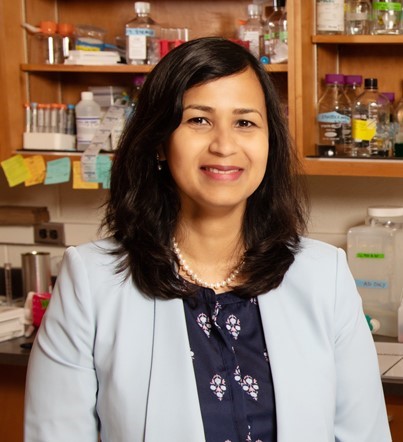
Aditi Das is a Full Professor in the School of Chemistry and Biochemistry at the Georgia Institute of Technology, College of Sciences. She leads the Das Laboratory, which focuses on the biochemistry and chemical biology of lipids, particularly studying cytochrome P450 enzymes and their role in lipid metabolism, endocannabinoid systems, and inflammatory pathways. Her educational background includes: B.Sc. in Chemistry from St. Stephen's College M.Sc. in Chemistry from Indian Institute of Technology, Kanpur (I.I.T) Ph.D. in Chemistry from Princeton University Postdoctoral research at Northwestern University (NSF-NSEC fellow) and Beckman Institute for Advanced Science and Technology, University of Illinois UC Professor Das's research interests center around understanding the physiological role of lipids in sustaining homeostasis and their implications in disease states such as neurodegenerative disorders, cancer, and cardiovascular diseases. Her laboratory specializes in: Enzymology of cytochrome P450s, particularly CYP2J2 epoxygenase Metabolism of ω-3 and ω-6 fatty acids and their derivatives Minor cannabinoid metabolism by cytochrome P450 enzymes Discovery of novel anti-inflammatory lipid metabolites and endocannabinoids Mechanistic studies of membrane proteins using nanodisc technology Her work bridges biochemistry, chemical biology, and pharmacology to uncover novel therapeutic targets related to lipid signaling pathways. Analysis of Professor Das's recent publications (2023-2025) reveals a strong focus on cannabinoid metabolism by cytochrome P450 enzymes, with particular emphasis on how these metabolic processes generate bioactive compounds that interact with the endocannabinoid system. Her research increasingly explores the therapeutic potential of omega-3 derived endocannabinoid epoxides in inflammatory and neurodegenerative conditions. The use of nanodisc technology for studying membrane proteins in near-native environments remains a consistent methodological thread throughout her work, enabling detailed mechanistic insights into enzyme function. Professor Das has received numerous prestigious awards recognizing her research excellence and teaching: 2024 NIH Outstanding Researcher Award (MIRA R35) for established investigators 2024 Vasser Woolley Faculty Fellowship 2023 Plenary Lecture at the International Society of the Study of Xenobiotics (ISSX) 2021 E.L.R. Stokstad Award 2019-2021 List of Teachers Ranked as Excellent 2019 Eicosanoid Research Foundation Young Investigator Award 2019 Zoetis Research Excellence Award 2019 Mary Swartz Rose Young Investigator Award 2015 National Scientist Development Award from the American Heart Association 2022 El Sohly Award from the American Chemical Society Professor Das actively mentors a diverse group of students and postdoctoral researchers, with several former lab members now holding faculty positions or working at prestigious institutions. Her laboratory has secured significant funding from NIH, NSF, and other sources to support research on lipid metabolism, cannabinoid pharmacology, and membrane protein biochemistry. Notable grants include an NIH R35 Outstanding Investigator Award (MIRA), an NIH R21 grant from NIDA, and multiple collaborative grants with other research groups. The Das Laboratory operates within the Petit Institute of Bioengineering and Biosciences (IBB) at Georgia Tech, utilizing state-of-the-art facilities for biochemical and biophysical studies. The lab specializes in nanodisc technology to study membrane proteins in near-native environments, with particular expertise in cytochrome P450 enzymes and their interactions with lipid substrates. Recent work has expanded into collaborative projects involving lipidomics, structural biology, and translational applications of lipid signaling research.
Prof. Dr. Dominik Schwarz is a faculty member at the Faculty of Physics , Bielefeld University. His research focuses on Cosmology and Particle Physics , particularly in the areas of Dark Energy , Dark Matter , Cosmological Inflation , and Large-Scale Structure Formation . He contributes to projects like the International LOFAR Telescope Consortium and the SFB-TRR 211 on strongly interacting matter. APART Fellow of Austrian Academy of Sciences Humboldt Fellow CERN Fellow His recent work explores the cosmic dipole anisotropy , axion density perturbations , and multi-wavelength cosmic web mapping . He also advances data science infrastructure through the PUNCH4NFDI consortium.
Professor Patricia H. Reiff is a Professor in the Department of Physics and Astronomy at Rice University and Associate Director for Outreach Programs at the Rice Space Institute. Her research focuses on space plasma physics, magnetospheric dynamics, auroras, and space weather. She has led missions like the Magnetospheric Multiscale (MMS) and contributed to the Dynamics Explorer, Polar, and Cluster missions. Reiff has pioneered public education initiatives, including the Discovery Dome portable planetarium system and the 'Totality!' planetarium show, reaching global audiences. She has trained fourteen PhD students and directs the Master of Science Teaching (MST) program, which has produced 36 teacher alumni as of 2024. Education: B.S. Physics (Oklahoma State University, 1971), M.S. Space Science (Rice University, 1974), and Ph.D. Space Physics and Astronomy (Rice University, 1975). Her research uses data from missions like MMS and citizen science projects like Citizen CATE to study magnetic reconnection and space weather effects. Key research interests include solar wind-magnetosphere-ionosphere interactions, magnetospheric reconnection, and the societal impacts of space weather. She has authored over 160 refereed publications and holds an H-index of 40. Reiff’s awards include AGU Fellow (1997), the Athelstan Spilhaus Award (2009), and NASA Group Achievement Awards. She is a vocal advocate for STEM education, frequently appearing in media to discuss eclipses and space science, including her role as a solar eclipse tour guide and science commentator.
Prof. Jaume Sanz Subirana is a Tenure Full Professor of Mathematics at the Universitat Politècnica de Catalunya (UPC), BarcelonaTECH, and a Senior GNSS Scientific Researcher. He has been affiliated with the Department of Mathematics since 1983. His primary research focuses on GNSS data processing algorithms, ionospheric sounding, and high-accuracy navigation systems like WARTK and Fast-PPP. He co-founded the spin-off company gAGE-NAV S.L. in 2009 and served on the European Space Agency's GNSS Scientific Advisory Group (2018-2022). Prof. Sanz Subirana holds a Physics degree (1982) and a PhD in Galactic Dynamics (1987) from the Universitat de Barcelona. He has authored over 100 peer-reviewed papers (50+ in top JCR journals), 200 conference works, five books (including ESA-commissioned volumes), and holds four patents. His work has earned four best paper awards and UPC's Merit Recognition for teaching excellence. His research group, gAGE/UPC, specializes in GNSS navigation algorithms, ionospheric monitoring, and SBAS/GBAS systems. Key contributions include ionospheric gradient monitoring, real-time kinematic positioning, and mitigation of space weather effects on navigation signals.
Cathryn Mitchell is a Professor of Radio Science and Royal Society Industry Fellow at the University of Bath, specializing in ionospheric physics, position, navigation, and timing (PNT). She leads research in the Space & Telecoms Research Group (STAR), focusing on radio propagation, data assimilation, and space weather impacts on communication systems. Her work bridges theoretical, computational, and experimental approaches, with applications in satellite navigation, climate monitoring, and defense sectors. Her research interests include ionospheric tomography, HF communications, and the development of robust PNT systems. Mitchell collaborates extensively with industry partners like Spirent Communications on future navigation technologies and space weather resilience. She has held roles such as Academic Director of the Doctoral College and contributes to interdisciplinary projects like the DRIIVE initiative exploring ionospheric variability with EISCAT-3D radar. Recent work emphasizes ionospheric effects during geomagnetic storms (e.g., the 2024 Gannon Storm) and cooperative autonomous systems under communication constraints. Her projects are funded by the Royal Society, Natural Environment Research Council (NERC), and ESA, addressing challenges in space weather forecasting and PNT system reliability. Awards: Royal Society Industry Fellow (2022–present) Key Projects: Royal Society Industry Fellowship on Future PNT Technologies DRIVERS (DRIIVE): Ionospheric Variability Studies EISCAT-3D FINESSE: Ionospheric Structuring Analysis Mitchell’s lab, STAR, integrates academic and industrial partnerships to advance space weather applications and sustainable navigation systems, contributing to UN Sustainable Development Goals related to climate action and innovation.
Prof. Dr.-Ing. habil. Michael Meurer is a Universitätsprofessor (University Professor) at RWTH Aachen University, holding the Chair of Navigation with a joint appointment at the German Aerospace Center (DLR). His work focuses on satellite navigation, particularly GNSS (Global Navigation Satellite Systems), with applications in low Earth orbit (LEO), safety-critical systems, and autonomous driving. Research Interests GNSS signal integrity and error analysis LEO-based augmentation systems Multi-antenna positioning techniques Spatial signal processing Navigation for autonomous systems Publications highlight his contributions to GNSS error modeling, spoofer detection, and resilient positioning systems. Recent work emphasizes LEO constellations, distributed antenna architectures, and signal integrity monitoring. Contact Email: michael.meurer@nav.rwth-aachen.de Address: Mies-van-der-Rohe-Str. 15, 52074 Aachen Phone: +49 8153 28 3065 Teaching includes courses on satellite navigation, safety-critical navigation systems, and multisensorial navigation architectures.
Paul Withers is a Professor and Chair of the Department of Astronomy at Boston University. He leads research on planetary atmospheres and ionospheres, with a focus on Mars and Venus, and serves as Principal Investigator on multiple NASA-funded research projects. Education: B.A. in Physics, 1998, Queens' College, Cambridge University M.S. in Physics, 1998, Queens' College, Cambridge University M.A., 2001, Queens' College, Cambridge University Ph.D. in Planetary Science, 2003, University of Arizona Professor Withers' research focuses on the upper atmospheres and ionospheres of terrestrial planets, particularly Mars and Venus. His work involves analyzing spacecraft data and developing theoretical models to understand how solar flux, neutral atmospheres, magnetic fields, and ionospheres interact under unique planetary conditions. He has made significant contributions to understanding the response of the Martian ionosphere to solar flares, the structure of the Venus ionosphere, and meteoric plasma layers in planetary ionospheres. His research often involves multi-instrument campaigns and coordinated observations across different spacecraft missions including Mars Express, MAVEN, and Venus Express. Analysis of Professor Withers' recent publications reveals a strong emphasis on Martian ionospheric dynamics, particularly its response to solar activity and its variability under different conditions. His work frequently combines data from multiple missions to create comprehensive models of planetary upper atmospheres. He has developed important methods for analyzing radio occultation data and reconstructing atmospheric properties from entry, descent, and landing measurements. Major Funded Projects: "Characterizing the topside bulge in the ionosphere of Mars" (NASA Mars Data Analysis Program, 2014, $144K) "Integration of MAVEN neutral and plasma observations" (NASA MAVEN Participating Scientist Program, 2013, $284K) "Radio occultation studies at Mars" (NASA Early Career Fellowship Program, 2013, $99K) "EDL reconstruction for MSL" (NASA, JPL contract, 2012, $199K) "Meteoric plasma layers on Venus and Mars" (NASA Planetary Atmospheres Program, 2012, $232K) Professor Withers has been actively involved in mentoring students and collaborating with international researchers. He serves as a key member of the Mars Upper Atmosphere Network (MUAN) and has contributed to community white papers for planetary science decadal surveys. His work supports future Mars landers through atmospheric modeling and surface pressure prediction, with direct applications to mission planning and execution. He has presented his research at numerous international conferences including the American Geophysical Union meetings, Division for Planetary Sciences meetings, and European Planetary Science Congress. His work has important implications for understanding planetary climate evolution, space weather effects on technological systems, and the search for habitable environments beyond Earth.
Jaime Peraire is the H.N. Slater Professor of Aeronautics and Astronautics at MIT, affiliated with the School of Engineering. He leads research in computational mechanics, aerodynamics, and numerical methods for partial differential equations, with key roles as former Department Head (2011-2018) and Director of the Aerospace Computational Design Lab (1993-2011). His expertise spans finite element methods, shock capturing algorithms, and high-order numerical techniques applied to hypersonic flows, space weather, and metamaterials. Education includes a Ph.D. from the University of Wales (1986) and engineering degrees from the University of Barcelona (1983, 1987). He holds prestigious awards like the T.J. Hughes Medal (2015) and the Ildefons Cerdá Medal (2015). His work bridges computational science and engineering, with contributions to discontinuous Galerkin methods, mesh adaptivity, and GPU-accelerated simulations. Research interests emphasize high-fidelity modeling of compressible flows, plasma dynamics, and terahertz spectroscopy. Notable projects include MIT’s space weather modeling initiative and metamaterial fabrication using atomic layer lithography. His labs collaborate across MIT’s Schwarzman College of Computing, IDSS, and CCSE to advance computational tools for aerospace and environmental systems. Awards: Over 10 major prizes, including NASA Exceptional Achievement (1997) and IACM Young Researchers Award (1998). Grants/Advising: Led NSF-funded space weather projects and advised numerous PhD students in computational engineering. Labs: Aerospace Computational Design Lab, MIT Schwarzman College of Computing collaborations.
Scott England is a Professor in the Department of Aerospace and Ocean Engineering at the College of Engineering, Virginia Polytechnic Institute and State University. He serves as the Project Scientist for NASA’s Ionospheric Connection Explorer (ICON), Co-Investigator for Global-scale Observations of the Limb and Disk (GOLD), and Participating Scientist for Mars Atmosphere and Volatile Evolution (MAVEN). Education PhD, University of Leicester (UK), 2005 MPhys First Class Honors, University of Leicester (UK), 2001 England’s research focuses on planetary atmosphere-space environment interactions, particularly gravity waves, atmospheric tides, and ionosphere-thermosphere coupling on Earth and Mars. His work integrates NASA mission data (ICON, GOLD, MAVEN) with numerical modeling to study thermal dynamics, wind systems, and solar flare impacts. Recent publications highlight his expertise in thermospheric gravity wave science, planetary wave-induced ionospheric variability, and Mars atmosphere studies using EMUS and IUVS instruments. Articles span topics like Seasonal variability of DE3/DE2 tides , Transient Martian hot oxygen corona , and Shock-induced plasma dynamics . Scientific Honors 2020 Dean's Award for Teaching Excellence 2016 RHG Exceptional Achievement for Mars Science As a professional leader, England served as Thermospheric Lead for the 2019 Planetary Mission Concept Studies Program and on the National Academy of Sciences Decadal Survey panel. He manages Virginia Tech’s participation in the Virginia Space Grant Consortium and has contributed to high-performance computing committees.
Vladimir A. Rakov is a distinguished professor and co-director of the International Center for Lightning Research and Testing (ICLRT) at the University of Florida’s Department of Electrical and Computer Engineering. His primary research focuses on lightning physics, atmospheric electricity, and lightning protection. He holds affiliations with prestigious organizations such as the American Geophysical Union (AGU), IEEE, and the Society of Automotive Engineers (SAE). Education: Rakov earned a PhD (1983) and MS (1977) in Electrical Engineering from Tomsk Polytechnic University. His professional memberships include roles in AGU, IEEE, and the International Commission on Atmospheric Electricity (ICAE). He has chaired committees for international lightning conferences and contributed to standards development for lightning protection systems. Research: Rakov’s work spans lightning initiation, return stroke modeling, and electromagnetic effects. He has authored over 200 peer-reviewed articles, including seminal books like Lightning: Physics and Effects . His team conducts field experiments using rocket-triggered lightning and advanced instrumentation. Notable achievements include studies on lightning-induced voltages, X-ray emissions, and safety standards for aircraft and infrastructure. Awards: Rakov has received numerous accolades, including the IEEE Richard R. Stoddart Award (2019) and Honorary Doctorate from the Russian Academy of Sciences (2015). His research impacts global lightning protection practices and aerospace safety.
Thomas C. M. Lee is a Distinguished Professor of Statistics and Associate Dean of the Faculty in Mathematical and Physical Sciences at the University of California, Davis, within the College of Letters and Science. He holds a prominent position in the Department of Statistics and serves as a key academic leader at UC Davis. Education: B.App.Sc. (Math) from University of Technology, Sydney, Australia (1992) B.Sc. (Hons) (Math) with University Medal from University of Technology, Sydney, Australia (1993) Ph.D. from Macquarie University and CSIRO Mathematical and Information Sciences, Sydney, Australia (1997) Professor Lee's research spans multiple areas of statistics with a focus on developing innovative methodologies. His work particularly emphasizes nonparametric and semiparametric modeling , statistical learning , and statistical image and signal processing . He has made significant contributions to applying statistical methods across various scientific disciplines, demonstrating the versatility and power of statistical approaches in solving complex real-world problems. His research often bridges theoretical developments with practical applications, creating methodologies that are both mathematically sound and practically useful. Scientific Awards and Honors: Elected Fellow of the American Association for the Advancement of Science (AAAS, 2019) Elected Fellow of the American Statistical Association (ASA) Elected Fellow of the Institute of Mathematical Statistics (IMS) Elected Senior Member of the IEEE Professor Lee has held significant editorial roles including serving as Editor-in-Chief for the Journal of Computational and Graphical Statistics (2013-2015) and currently as Review Editor for the Journal of the American Statistical Association. From 2015 to 2018, he chaired the Department of Statistics at UC Davis. He has taught numerous statistics courses including STA 13 (Elementary Statistics), STA 131C (Introduction to Mathematical Statistics), STA 243 (Computational Statistics), and STA 401 (Statistical Consulting). His leadership extends beyond research to academic administration, where he has shaped statistics education and departmental direction at UC Davis.
Dr. Gaël Kermarrec is a researcher at the Boundary Layer Meteorology Group , part of the Institute of Meteorology and Climatology within the Faculty of Mathematics and Physics at Leibniz University Hannover . His work focuses on atmospheric turbulence, GNSS applications, and remote sensing for environmental monitoring. Boundary layer meteorology Turbulence theory GNSS signal processing Terrestrial laser scanning Climate change impacts Geodetic time series analysis His research integrates advanced mathematical models like LR B-splines and Matérn covariance with large eddy simulations to study: Atmospheric turbulence effects on optical/GNSS signals Hydrospheric mass loading Deformation analysis of terrain/port infrastructure Climatic sea-level changes Machine learning for remote sensing The 15 most recent articles (2025-2023) demonstrate his focus on: GNSS-based turbulence detection AI-enhanced climate mapping Advanced surface approximation techniques Multi-sensor data fusion Stochastic modeling of geodetic observations Environmental impacts on optical measurements He has developed tools like the Klimascanner QGIS plugin for urban climate resilience and contributes to: Understanding atmospheric scale lengths Improving TLS/GNSS deformation monitoring Analyzing hydrospheric changes Wavefront modeling Ionospheric corrections
Minna Palmroth is a Professor of Computational Space Physics at the University of Helsinki 's Faculty of Science , leading the Department of Physics 's Space Physics Research Group. She directs the Kestävän avaruustieteen ja -tekniikan huippuyksikön (Centre of Excellence in Sustainable Space Science and Technology) and serves as the principal investigator for the Vlasiator hybrid-Vlasov simulation framework.