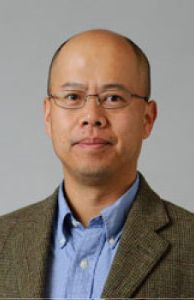
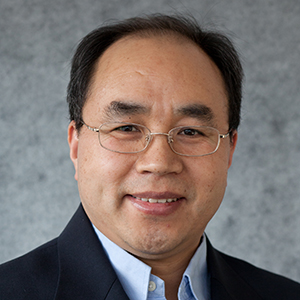
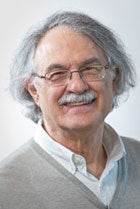
Eric W. Schmidt is a Distinguished Professor of Medicinal Chemistry at the University of Utah, with adjunct appointments in Biological Sciences and Chemistry. His research focuses on natural products chemistry, biosynthesis, synthetic biology, and pharmaceutical applications of marine animal microbiomes. University of California, San Diego (BS, PhD) Research areas include: Biosynthesis in animals and their microbiomes Synthetic biology approaches to chemical engineering Drug design from marine natural products Metagenomic analysis of symbiotic relationships Neuroactive compound discovery Antibiotic development against resistant pathogens His lab has pioneered methods for: Biosynthetic gene cluster identification Heterologous expression in E. coli Enzymatic modification of peptides Chemical analysis of marine invertebrates Recent publications highlight discoveries in: Marine animal chemical defense mechanisms Evolution of biosynthetic pathways Antibiotic resistance profiling Ionic channel-targeting compounds Peptide macrocyclization techniques Lipid-polyketide biosynthesis continuum Email: ews1@utah.edu Honors include: Distinguished Professor recognition
Tarmo Tamm is a Researcher at the Intelligent Materials and Systems Lab, University of Tartu. His work focuses on conducting polymers, soft actuators, and biomaterials , with emphasis on applications in biomedical engineering, nanotechnology, and electrochemistry. He holds a primary affiliation with the University of Tartu and has authored/co-authored over 100 peer-reviewed articles since 2002. His research spans material characterization, actuator design, and polymer electrolyte systems. Key projects include development of biocompatible hydrogels (e.g., sea cucumber-derived materials), soft exoskeletons inspired by spider leg mechanics, and sustainable paper recycling processes . Tamm’s publications highlight interdisciplinary collaboration with institutions globally, addressing topics like ion mobility in PEDOT films, microbial interactions with silicone foams, and encapsulation techniques for biomedical actuators. His work often bridges fundamental material science with practical applications, such as energy storage systems and medical devices. Current research trends emphasize electrochemomechanical systems and bioinspired materials , with growing focus on sustainable materials engineering.
Li Yiju is an Assistant Professor and doctoral supervisor in the Department of Mechanical and Energy Engineering at the Southern University of Science and Technology (SUSTech) . He earned his Ph.D. in Materials Science and Engineering from Harbin Engineering University in 2018 and was a joint Ph.D. student at the University of Maryland, College Park from 2015 to 2017. He conducted postdoctoral research at Peking University (2018-2021) and Hong Kong University of Science and Technology (2021-2022). Education: Ph.D. in Materials Science and Engineering, Harbin Engineering University (2013-2018) Joint Ph.D. student, University of Maryland, College Park (2015-2017) B.S. in Applied Chemistry (Energy Electrochemistry), Harbin Engineering University (2009-2013) Research Interests: Dr. Li's research lies at the intersection of energy storage , materials science , and micro/nano-manufacturing . His work focuses on high-energy-density lithium metal batteries , solid-state batteries , and advanced electrolyte design . He also pioneers interfacial photothermal steam conversion and leverages cutting-edge techniques like 3D printing , electrospinning , and Joule heat pulse for energy applications. Scientific Impact: With over 100 publications in journals like Nature Energy , Joule , Advanced Materials , and PNAS , his work has garnered 17,000+ citations and an H-index of 60 . His research has been highlighted by Nature and international media like ScienceDaily and VOA News . Awards & Recognition: Clarivate Global Highly Cited Researcher (2020-2022) Stanford University’s Top 2% Scientists (2022) National Postdoctoral Program for Innovative Talent (2018) Peking University Boya Postdoctoral Fellowship (2018) Editorial & Leadership Roles: He serves as an editorial board member for journals like Journal of Energy Chemistry and The Innovation and as a reviewer for Nature Communications , Advanced Materials , and others. Grants & Projects: National Natural Science Foundation of China China Postdoctoral Innovative Talent Support Program Beijing Natural Science Foundation Analog Devices Project
Maxim V. Berezovski is a Full Professor in the Department of Chemistry and Biomolecular Sciences at the University of Ottawa , Faculty of Science. His research focuses on bioanalytical chemistry , aptamer development , and biomarker discovery , particularly in cancer and immune cell biology. His lab specializes in Kinetic Capillary Electrophoresis (KCE) , aptamer-based biosensors, and single-cell analysis. Research interests include: Therapeutic and diagnostic applications of nucleic acid and peptide aptamers Biomarker identification for cancers (e.g., breast, glial tumors) Proteomic/metabolomic analyses of exosomes and extracellular vesicles Recent work emphasizes aptamer-driven innovations, such as: Fluorescence-guided brain tumor surgery Quantitative detection of SARS-CoV-2 proteins Molecular imaging of tumors using infrared-labeled aptamers Publications span aptamer engineering , cancer diagnostics , and environmental impacts on proteomics . Collaborations focus on interdisciplinary applications in medicine, biotechnology, and environmental science.
Jesús del Alamo serves as the Donner Professor of Science within MIT’s Department of Electrical Engineering and Computer Science, leading cutting-edge research in semiconductor device physics with applications spanning logic, high-frequency, and power electronics. His work bridges fundamental materials science with practical device engineering to address next-generation computing challenges. Academic Credentials: PhD, Stanford University MS, Stanford University Research Focus: Professor del Alamo’s expertise centers on transistor physics and semiconductor device innovation, particularly III-V compound semiconductors (InGaAs, GaN) and diamond MOSFETs. Current investigations target reliability mechanisms in GaN transistors for RF/power applications, novel analog computing architectures, and electrochemical ionic synapses for neuromorphic hardware. His group pioneers atomic-scale fabrication techniques like thermal atomic layer etching for sub-5nm devices while exploring quantum confinement effects in vertical nanowires. Publication Evolution: Recent work (2023-2025) demonstrates a strategic shift toward neuromorphic computing, with 60% of publications focusing on electrochemical synapses and ferroelectric memories for AI acceleration. This builds upon decades of transistor scaling research, now converging with materials innovations in HfZrO 2 ferroelectrics and protonic conductors to enable energy-efficient analog deep learning hardware. Award Recognition: Louis D. Smullin Award for Excellence in Teaching Amar Bose Award for Excellence in Teaching Intel Outstanding Researcher Award Semiconductor Research Corporation Technical Excellence Award Semiconductor Industry Association-Semiconductor Research Corporation University Researcher Award Collaborative Leadership: He directs research within MIT’s Microsystems Technology Laboratories (MTL), collaborating with faculty including Bilge Yildiz (electrochemical systems) and Ju Li (computational materials). Current projects integrate device physics with neuromorphic algorithms, supported by semiconductor industry partnerships focused on translating fundamental discoveries into practical AI hardware solutions. Research Infrastructure: His group operates within MIT’s MTL cleanroom facilities, utilizing advanced characterization tools for in-situ device analysis and leveraging partnerships with industry leaders in semiconductor manufacturing to prototype novel transistor architectures.
Jinghui Luo is a Research Professor and Principal Investigator at the Paul Scherrer Institute's Laboratory for Multiscale Bioimaging in Switzerland. Her research focuses on neurodegenerative diseases, particularly amyloid protein aggregation mechanisms. Luo's team investigates amyloid oligomers using nanopore engineering, cryo-electron microscopy, and single-molecule techniques to understand their role in Alzheimer's and Parkinson's diseases. Key research areas include α-synuclein phase separation, tau protein dynamics, and metal ion interactions with amyloid proteins. Her recent work demonstrates strong emphasis on protein oligomer characterization, liquid-liquid phase separation phenomena, and developing innovative trapping methods for single-molecule analysis. Publications consistently integrate structural biology with biophysical approaches. Luo has received prestigious awards including the NIH Director's Early Independence Award and Siebel Scholarship. She currently mentors six graduate students and postdoctoral researchers in her laboratory.
Professor Bruce J. Hinds serves as the Campbell Professor in the Department of Materials Science & Engineering at the University of Washington, where he relocated in July 2014 after nine years at the University of Kentucky. His pioneering work focuses on nanoscale membrane technologies with applications spanning water purification, energy storage, and medical devices. Hinds' academic foundation includes: B.S. in Chemistry, Harvey Mudd College (1991) M.S. in Chemistry, Northwestern University (1992) Ph.D. in Inorganic Chemistry, Northwestern University (1996) His research centers on engineering active nanometer-scale architectures inspired by natural protein channels, particularly carbon nanotube membranes exhibiting 10,000-fold enhanced fluid flow. Current projects target programmable transdermal drug delivery, electrochemical water remediation, and biochemical separation systems. The lab's innovations include an award-winning artificial kidney prototype using photoelectrochemical membranes for nutrient recovery during dialysis. Recent publications (2014-2018) reveal escalating integration of electrochemical control with biomimetic membranes, advancing applications in protein separation, addiction treatment, and energy storage. This trajectory demonstrates convergence of nanofluidics, materials science, and biomedical engineering to solve critical healthcare and environmental challenges. His accolades include: NSF Early Career Award (2004) Presidential Early Career Award (PECASE, NIH) (2009) JSPS Post-Doctoral Fellowship (1998) Kavli Frontiers of Science Fellow (2010) Supported by prestigious grants including NSF CAREER and PECASE funding, Hinds mentors graduate researchers in developing membrane platforms that electro-pump biomolecules for dialysis innovation and environmental applications. His lab collaborates with the Molecular Engineering & Sciences Institute to transform theoretical nanofluidic principles into compact medical devices. The Hinds Lab pioneers 'active' membrane technologies at the University of Washington's Molecular Engineering & Sciences Institute, focusing on electro-pumped biomolecular systems. Recent breakthroughs include transdermal nicotine delivery validation and continuous protein separation platforms, with ongoing work targeting commercialization of dialysis-enhancing membranes that recover essential nutrients during treatment.
Robert J. Doerksen is Professor of Medicinal Chemistry in the Department of BioMolecular Sciences at the University of Mississippi School of Pharmacy , Associate Dean of the Graduate School , and Research Professor in the Research Institute of Pharmaceutical Sciences . Since 2004 he has combined computational chemistry with experimental collaborations to advance drug discovery, particularly in glycoscience and cannabinoid research. Education: B.S. (Double First Class Honours) in Mathematics & Physics, University of New Brunswick, 1986 Graduate Diploma in Christian Studies, Regent College, Vancouver, 1996 Ph.D. in Chemistry, University of New Brunswick, 1998 (Advisor: Prof. Ajit Thakkar) Postdoctoral Fellow, UC Berkeley (with Prof. Martin Head-Gordon) Postdoctoral Fellow, University of Pennsylvania (with Prof. Michael Klein) Research Interests: Dr. Doerksen’s laboratory develops and applies computational medicinal chemistry approaches spanning chemoinformatics , molecular dynamics , virtual screening , and machine learning to understand how small molecules interact with proteins. Central themes include: Glycoscience : lectin–glycan interactions, glycosyltransferase regulation, glycomimetic design. Cannabinoids : CB1/CB2 receptor allosteric modulation, cannabidiol pharmacology, synthetic cannabinoid SAR. Neglected & Infectious Diseases : malaria, hepatitis B, tuberculosis, SARS-CoV-2, urinary-tract infections. Drug Delivery & Formulation : nanoparticle coatings, pharmacokinetic optimization, bioavailability enhancement. Publications Trend: Over 2023–2025 his 15 most recent papers reveal intense activity at the intersection of AI-driven discovery , glycobiology , and cannabinoid pharmacology , with emphasis on anti-infective, anticancer, and CNS-active agents. Key contributions include first-in-class MraY inhibitors for TB, cannabinoid-inspired antivirals against SARS-CoV-2, and glycomimetic antagonists of bacterial adhesins for UTI prevention. Scientific Awards & Honors: UM School of Pharmacy Faculty Service Award (2015–2016) UM School of Pharmacy Faculty Service Award (2010–2011) Editorial Boards: Molecules , AIMS Biophysics , Pharmaceutical Sciences , Perspectives in Medicinal Chemistry Repeated NIH, DoD, NSF, Wellcome Trust, and international grant-review panels (2010–present) Guest Editor for multiple special issues in Molecules and Frontiers journals Advising & Mentoring: As Associate Dean, Dr. Doerksen oversees University-wide graduate programs, chairs the Graduate Recruiting Fellowship and Scholarship Committee, and mentors students across disciplines. Faculty advisor for the UM chapters of the Christian Pharmacists Fellowship International (since 2005) and Taiwanese Student Association (2022–2025). He actively participates in PhD and MS thesis committees worldwide and has delivered NSF GRFP information sessions to support trainee funding. Laboratories & Teams: He directs research within the Computational Chemistry and Bioinformatics Research CORE (CCBRC) , fostering collaborative projects involving medicinal chemists, structural biologists, pharmacologists, and data scientists. The group leverages high-performance computing resources at the University of Mississippi to perform large-scale virtual screening, AI/ML model development, and integrative structural biology studies.
Malay K. Das is a Professor in the Department of Mechanical Engineering at the Indian Institute of Technology Kanpur . With a PhD from PennState, his career spans advanced research in thermofluid science, focusing on energy systems, carbon capture, and battery thermal management. B. E. (University of Calcutta), M. Tech. (IIT Kanpur), PhD (PennState) Teaches graduate-level courses like Machine Learning for Engineers and Mathematics for Engineers Leads two research laboratories: Energy Conservation and Storage Laboratory and Gas Hydrate Research Laboratory Research Interests: Computational Fluid Dynamics (CFD) applications in energy systems Physics-informed machine learning for thermofluid applications CO2 Sequestration and Methane Hydrate Reservoirs Thermal Management of Batteries and Fuel Cells Modeling Transport Phenomena in Porous Media Recent Publication Trends: His work focuses on energy conversion , gas hydrate dynamics , and advanced materials for electrochemical systems . Key areas include Lattice Boltzmann Methods , viscoelastic flow analysis , and nanofluid applications in carbon capture. Advising: Currently supervising PhD students Sourav Dhawan (CO2 Hydrates), Randeep Ravesh (Methane Recovery), Ayaj A. Ansari (Coalbed Methane), and Pawan K. Pandey (Cerebral Aneurysm Flow). Labs and Teams: Leads the Energy Conservation and Storage Laboratory (8 PhD graduates, 3 in progress) and Gas Hydrate Research Laboratory (2 PhD graduates, 1 in progress). Research teams work on fuel cells , CO2 sequestration , and graphene-based nanomaterials for energy applications.
Fatemeh Khalili-Araghi serves as an Associate Professor in the Department of Physics at the University of Illinois at Chicago (UIC), where she leads computational research on membrane protein dynamics and ion channel mechanisms. Her work bridges theoretical physics and biological applications through advanced molecular modeling techniques. Dr. Khalili-Araghi's academic foundation includes: B.S. in Physics from Sharif University of Technology, Tehran, Iran (2001) Ph.D. in Physics from the University of Illinois at Urbana-Champaign (2010) Following her doctoral studies, she completed a postdoctoral fellowship at the University of Chicago (2010-2013) focusing on NaK ATPase simulations. Her research specializes in molecular dynamics investigations of claudin-15 channel selectivity, strand flexibility, and pore architecture, with recent expansion into energy materials including lithium-oxygen batteries and ionic liquid electrolytes. Current projects employ computational approaches to resolve ion conduction mechanisms and phase separation phenomena at molecular scales. Analysis of her 2017-2025 publications reveals consistent leadership in computational biophysics of membrane proteins, particularly claudin channels, while increasingly addressing energy storage challenges. Her work demonstrates sophisticated integration of molecular dynamics with thermodynamic and kinetic analyses across biological and materials systems, yielding high-impact insights published in journals like Nature and Journal of General Physiology. No scientific awards were documented in available sources. Information regarding student advising and research grants was not specified in source materials. Dr. Khalili-Araghi directs the Fatemeh Khalili Research Group at UIC, maintaining active collaborations in computational biophysics and materials science through advanced simulation methodologies.
Dr. Enyuan Hu is a Chemist in the Chemistry Division at Brookhaven National Laboratory (BNL) and an Adjunct Professor in the Department of Materials Science and Chemical Engineering at Stony Brook University. He leads research on advanced battery systems including lithium metal, lithium-sulfur, and solid-state batteries, serving as a principal investigator in BNL's Electrochemical Energy Storage Group and co-PI for the Battery500 and LENS Consortia. His educational background includes: Ph.D. in Mechanical Engineering from Stony Brook University (2009-2015) M.S. in Environmental Engineering from Guangzhou Institute of Energy Conversion (2005-2008) B.E. in Environmental Engineering from Southeast University (2001-2005) Dr. Hu's research focuses on electrochemical energy storage with emphasis on interfacial chemistry in batteries. He pioneered synchrotron x-ray total scattering for characterizing battery interphases and neutron total scattering for studying oxygen redox reactions in cathodes. His work addresses critical challenges in battery safety, energy density, and cycle life through advanced material design and electrolyte engineering. Analysis of his 15 most recent publications (2018-2024) reveals dominant themes in interphase engineering for lithium metal anodes, oxygen redox stabilization in cathodes, and sodium-ion battery development. His studies employ multimodal characterization techniques to unravel complex degradation mechanisms across diverse battery chemistries, with significant contributions to understanding polysulfide reactivity and enabling ultra-high voltage operation. His major recognitions include: Clarivate Highly Cited Researcher (2022-2024) IBA Early Career Award (2023) Three-time Top10 Discovery honoree at Brookhaven Lab (2017, 2018, 2021) ESRF Scientific Highlight (2022) As co-PI of the DOE-funded Battery500 Consortium (targeting 500 Wh/kg lithium-metal batteries) and LENS Consortium (focusing on low-cost sodium-ion storage), Dr. Hu directs multi-institutional research efforts supported by substantial federal grants. He mentors early-career scientists within BNL's collaborative framework and serves as Associate Editor for Nano Energy. His work operates within BNL's Electrochemical Energy Storage Group, leveraging world-class facilities including the National Synchrotron Light Source II and Center for Functional Nanomaterials for advanced battery characterization and development.
Yao Lin is a Professor in the Department of Chemistry at the University of Connecticut . He was previously a George W. Beadle Postdoctoral Fellow at Argonne National Laboratory and the University of Chicago (2005-2008). Holding a Ph.D. from the University of Massachusetts, Amherst and a B.S. from Fudan University, Lin's research focuses on cooperative supramolecular polymerizations, folding cooperativity in complex macromolecules, and biomimetic materials synthesis. Education : Ph.D. (University of Massachusetts, Amherst), B.S. (Fudan University, Shanghai, P.R.C.) Postdoctoral : George W. Beadle Postdoctoral Fellow, Argonne National Laboratory & University of Chicago Lin investigates supramolecular polymerizations of synthetic macromolecules and nanoparticles, with emphasis on folding cooperativity in large macromolecules. His work includes synthesis of macromolecular channels, multicatalytic enzyme-polymer assemblies for biomass conversion, and artificial regulation of protein activities via cyclic protein-polymer structures. His recent publications (2022-2025) explore strain-responsive synthetic polypeptides, helical-helical block copolymers for ion transport, spider silk-inspired copolypeptides, and curvature-guided surface polymerization on gold nanorods. These studies span polymer chemistry, biomaterials engineering, and nanotechnology. Contact: yao.lin@uconn.edu | Research Group Website
Huayang Zhu is a Research Associate Professor in the Department of Mechanical Engineering at Colorado School of Mines, specializing in computational modeling of chemically and electrochemically reacting fluid flows for energy conversion systems. His work bridges fundamental electrochemistry with practical clean-energy applications. His academic credentials include: PhD in Mechanical Engineering from University of Maryland-College Park MS in Fluid Mechanics from Peking University, China BS in Mechanics from Peking University, China Dr. Zhu's research centers on fuel cell and battery technologies, with deep expertise in solid oxide systems, electrochemical kinetics, and porous media transport. He develops advanced computational models for combustion processes, catalytic reactors, and hydrogen production systems, emphasizing the integration of thermal, chemical, and fluid dynamic phenomena in clean-energy applications. His methodology combines theoretical frameworks with practical software implementations for system optimization. Analysis of his 2023-2025 publications reveals dominant themes in solid oxide fuel cell aviation integration, protonic ceramic electrolysis, and lithium-ion battery impedance modeling. Key innovations include 3D stack-integrated autothermal reformers for aircraft, MIEC membrane reactors for hydrogen production without external power, and multi-defect transport modeling in ceramic electrolytes. His work consistently addresses cross-cutting challenges in energy density, thermal management, and system scalability across electrochemical devices. Regarding academic mentorship and research funding, the source materials contain no explicit references to student supervision, grant awards, or sponsored projects.
Dr. Georges Belfort is the Russell Sage Professor of Chemical and Biological Engineering at Rensselaer Polytechnic Institute (RPI), with dual roles as an Institute Professor and member of the National Academy of Engineering. His expertise spans membrane technology, bioseparations, and protein misfolding, with a focus on advancing mRNA vaccine purification, antimicrobial peptide design, and organic solvent nanofiltration. Education: BS in Chemical Engineering from University of Cape Town (UCT), PhD in Engineering from University of California, Irvine (UCI). Research Interests: His work integrates engineering and biotechnology to address challenges in separations science. Key areas include: Development of novel polymer membranes for high-efficiency separations Mechanistic studies of protein-membrane interactions and amyloidogenesis Optimization of mRNA purification processes for vaccine manufacturing Design of anti-microbial peptides targeting bacterial membranes Awards: ACS Murphree Award (2008) AIChE Separations Award (2000) Inductee into National Academy of Engineering (2003) Featured as one of the “100 Chemical Engineers of the Modern Era” (AIChE Centennial, 2008) Advances & Impact: Over 30 years, his research has produced transformative technologies in membrane science, including tunable polymer brushes, ligand-functionalized membranes, and methods to combat protein misfolding. Current efforts emphasize scalable mRNA purification systems critical to pandemic response and personalized medicine. His career includes over 500 publications and 50+ patents, with active collaborations in academia and industry advancing next-generation separation systems.
Dr. Akanksha Menon is an Assistant Professor in the Woodruff School of Mechanical Engineering at Georgia Tech, leading the Water-Energy Research Lab (WERL). Her research focuses on sustainable energy and water technologies at the water-energy nexus, including solar desalination, thermal energy storage, and functional materials. She holds a PhD (2018) and MS (2015) in Mechanical Engineering from Georgia Tech, and a BS from Texas A&M University at Qatar (2013). Her work addresses climate change mitigation through innovations like solar-driven desalination systems, thermal energy storage materials, and energy-efficient building technologies. Key research interests include lower critical solution temperature (LCST) mixtures, thermoresponsive ionic liquids, and salt hydrates for energy applications. Dr. Menon has received prestigious awards such as the NSF Career Award (2023), ACS Doctoral New Investigator Award (2023), and the U.S. Department of Energy Women @ Energy recognition (2021). Her lab collaborates with industry and national labs to bridge research with real-world applications, emphasizing decarbonization and sustainable resource management. Her contributions span publications on solar energy integration, functional materials for energy harvesting, and techno-economic frameworks for desalination. She actively mentors students and advocates for women in STEM through initiatives like the Energy Club @ Georgia Tech and Berkeley Lab’s Water Wednesday’s program.