Markos Anastasopoulos is Associate Professor at the National and Kapodistrian University of Athens, specializing in optical/wireless networks and mobile computing. His research focuses on 5G/6G network convergence, intent-based management, and AI-driven optimization for telecommunications. Recent publications address THz-optical integration, federated learning in transport networks, and semantic-aware radio systems. Applied work includes intelligent asset management for railways and techno-economic analyses of network deployments. Recognized with best dissertation and best paper awards, his research bridges theoretical networking with industrial applications in transportation and cloud infrastructure.
Dong Chen is an Associate Professor in the Department of Computer Science at the Colorado School of Mines. His research focuses on building data-driven experimental systems in Cyber-Physical Systems (CPS), IoT, Embedded AI, and Embodied AI, with applications in smart devices, homes, cities, and renewable energy systems. He leads the Next Generation Cyber-Physical Systems Laboratory (CPSLab), emphasizing open-source systems and datasets. Dr. Chen holds PhDs in Electrical and Computer Engineering (2018, University of Massachusetts Amherst) and Computer Science (2014, Northeastern University). His work addresses security, privacy, sustainability, and efficiency in smart environments. Notable contributions include SolarFinder, SolarTrader, PrivacyGuard, and VoiceAttack, which tackle challenges in IoT privacy, energy trading, and adversarial attacks. He received the NSF CAREER Award (2023) and is a member of Sigma Xi, ACM, AAAI, and IEEE. His research spans system design, AI applications, and cross-cutting domains like solar energy modeling and edge computing. Current projects include AgileDART (edge stream processing) and SolarDetector (satellite-based PV array identification). Advising and collaborations: Dr. Chen seeks PhD and undergraduate students with strong CS/EE backgrounds. His lab focuses on CPS/IoT security, energy systems, and AI-driven solutions. He has published extensively on topics ranging from smart grid optimization to adversarial machine learning.
Maurice E. Dawson is an Associate Professor and Director of the Center for Cyber Security and Forensics Education (C²SAFE) at Illinois Institute of Technology's College of Computing. He holds multiple advanced degrees, including a Ph.D. in Cybersecurity from London Metropolitan University and a Postdoc in Information Science from Universidade Fernando Pessoa. His research focuses on software assurance, IoT security, and critical infrastructure protection, with over 150 peer-reviewed publications and book chapters. Affiliations: Illinois Tech, Fulbright Specialist Program, IEEE Senior Member Grants: Over $100K in grants from U.S. State Department, USAID, and others for cybersecurity initiatives in Africa and the Middle East. Research Interests: Explores hyperconnectivity risks, dark web extremism, and cross-border cybersecurity collaboration. His work bridges academic research with practical applications in developing nations, focusing on IT training and infrastructure resilience. Awards & Recognition: Recipient of Teaching Excellence Awards (2019, 2021), Fulbright Specialist grants (Botswana, Saudi Arabia), and volunteer service medals. Media engagements include ABC7 Chicago and Illinois Public Media for cybersecurity commentary. Advising & Grants: Supervised multiple USAID-funded ICT projects in Senegal and Guinea, training local agricultural and tech professionals. Served on advisory boards for CTU and VIU, and editorships for journals like International Journal of Hyperconnectivity and IoT . Labs & Teams: Leads C²SAFE lab at Illinois Tech, specializing in incident response, digital forensics, and AI-driven security solutions. Collaborates with international institutions on cybersecurity education frameworks.
George Alexandropoulos is an Associate Professor at the Department of Informatics and Telecommunications, National and Kapodistrian University of Athens. His research focuses on telecommunications, signal processing, and reconfigurable intelligent surfaces (RIS) for next-generation wireless networks. He has contributed to advancements in integrated sensing and communications (ISAC), 6G technologies, and holographic beamforming. His work includes experimental validation of RIS prototypes, optimization of RIS-assisted systems, and analysis of secure communication strategies. Research interests include RIS hardware design, channel modeling, and applications in IoT, UAV communications, and disaster recovery networks. He explores topics like energy-efficient RIS operation, multi-RIS coordination, and RIS-enabled localization. His studies often address challenges at sub-THz frequencies, mutual coupling effects, and hardware impairments. Publications emphasize practical implementations of RIS in both indoor and outdoor settings, with a focus on real-world performance evaluation. Awards and grants are not explicitly mentioned, but his extensive publication record indicates significant academic contributions. His research often integrates machine learning for RIS configuration and reinforcement learning for resource optimization in dynamic networks.
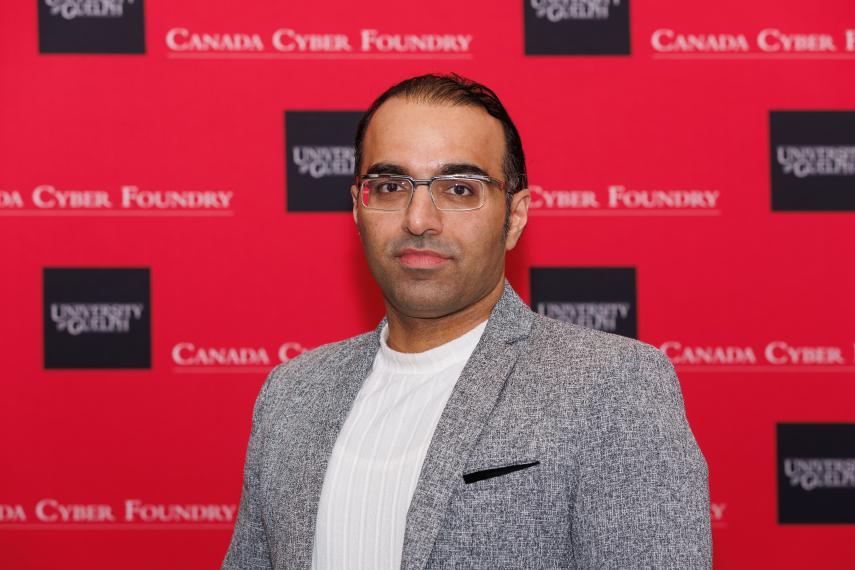
Dr. Ali Dehghantanha is a Professor and Canada Research Chair in Cybersecurity and Threat Intelligence (Tier 2) at the University of Guelph's School of Computer Science. He founded the Cyber Science Lab, the Master of Cybersecurity and Threat Intelligence (MCTI) program, and the Canada Cyber Foundry. His expertise spans cybersecurity, AI, and critical infrastructure protection, with a focus on federated learning, threat intelligence, and enterprise risk management. Research Interests: Cybersecurity & AI Integration Federated Learning Security IoT and Industrial Cyber-Physical Systems Adversarial Machine Learning Cyber Threat Intelligence Automation His research emphasizes practical applications, such as securing agri-food systems, blockchain-enabled frameworks, and autonomous cybersecurity solutions. Notable achievements include the IEEE Outstanding Leadership Award (2021) and leadership in national cybersecurity initiatives. Recent Contributions: Recent work explores federated learning for privacy-preserving threat detection in IoT, AI-driven malware hunting, and autonomous systems for intrusion detection. His publications highlight interdisciplinary approaches to cybersecurity challenges in critical sectors like agriculture and transportation. Awards: Canada Research Chair (2020–present), IEEE Outstanding Leadership Award (2021). Labs & Initiatives: Cyber Science Lab: Pioneering research in AI-driven cybersecurity Canada Cyber Foundry: Bridging academic and industry cybersecurity innovation MCTI Program: Training next-generation cybersecurity professionals
Dr. Andrew Yang is an Associate Professor of Computer Science and Computer Information Systems at the University of Houston-Clear Lake's College of Science and Engineering. His research focuses on computer security, wireless and mobile computing, networking, performance measurement, and cybersecurity education. His publications demonstrate a consistent focus on cybersecurity challenges, educational frameworks, and emerging technologies. Recent work explores AI ethics, IoT security, blockchain applications, and cybersecurity workforce development, reflecting a pattern of addressing contemporary technological vulnerabilities through both technical solutions and pedagogical approaches.
Paul Pop is a Professor at the Department of Applied Mathematics and Computer Science, Technical University of Denmark (DTU). He holds the position of Professor within the Embedded Systems Engineering group at DTU Compute. His academic journey includes a Ph.D. in Computer Systems from Linköping University, Sweden (2003), followed by roles as an Assistant Professor there before joining DTU in 2006. Dr. Pop's research focuses on systems engineering methodologies for embedded and cyber-physical systems, with emphasis on modeling, analysis, optimization, and real-time guarantees. His work addresses challenges in time-sensitive networking (TSN), automotive systems, industrial automation, and fog computing. Key application areas include safety-critical systems, mixed-criticality architectures, and sustainable industrial IoT solutions aligned with UN SDGs. He leads major research projects such as G3C (Green Computing & Communication Continuum), TRANSACT (Safety-Critical Cyber-Physical Systems), and AgroRobottiFleet (Agricultural Robotics). His contributions span 194 publications in journals/conferences and 31 active/completed projects, emphasizing interdisciplinary collaboration. Dr. Pop advises doctoral students in embedded systems and serves as Principal Investigator on EU-funded initiatives. His technical expertise includes TSN configuration tools (TSNConf), fog computing platforms (FORA), and microfluidic biochip design. He actively contributes to industry standards through IEEE 802.1 TSN working groups and collaborates internationally with institutions like Nordic Innovation and EU Horizon programs.
Dr. Sheldon Williamson is a Professor and NSERC Canada Research Chair in Electric Energy Storage Systems for Transportation Electrification at Ontario Tech University's Department of Electrical, Computer and Software Engineering, Faculty of Engineering and Applied Science. His research focuses on advanced energy storage technologies, power electronics, and their integration into transportation systems and smart grids. Education: Ph.D. (Electrical Engineering, Illinois Institute of Technology, 2006), M.S. (Electrical Engineering, Illinois Institute of Technology, 2002), B.E. (Electrical Engineering, University of Mumbai, 1999). Research Interests - Electric Energy Storage Systems for Transportation Electrification - Battery Management Systems (BMS) and Thermal Safety - Wireless Power Transfer and Charging Infrastructure - Cyber-Physical Security in EV Systems - Smart Grid Integration of Renewable Energy Publications : Over 50 peer-reviewed articles from 2021–2025, focusing on battery technologies, power electronics, and electrification challenges. Key themes include solid-state batteries, cloud-based BMS architectures, and dynamic wireless charging systems. No scientific awards explicitly listed in provided texts. Active in academic leadership and curriculum development within the department.
Dr. Adel Abusitta is an Assistant Professor in the Department of Computer Engineering and Software Engineering at Polytechnique Montréal, where he conducts research at the intersection of artificial intelligence and cybersecurity. With expertise in secure and resilient AI systems, IoT security, and malware analysis, Dr. Abusitta has established himself as a significant contributor to the field of AI-powered cybersecurity solutions. Education: PhD in Computer Engineering from Polytechnique Montréal Postdoctoral Fellow at University of Montréal Postdoctoral Fellow at McGill University Dr. Abusitta's research focuses on developing secure and trustworthy artificial intelligence systems with applications in cybersecurity. His work spans several critical areas including explainable AI for security applications, AI-powered malware analysis, intrusion detection systems, and IoT security. He has made significant contributions to the understanding of how AI can be both secured against attacks and used to enhance security systems. His research addresses the dual challenge of making AI systems resilient to adversarial manipulation while leveraging AI's capabilities to detect and prevent cyber threats in complex environments like cloud computing and IoT networks. Analysis of Dr. Abusitta's recent publications reveals a strong focus on the intersection of AI and cybersecurity, particularly in developing robust anomaly detection systems, explainable security solutions, and resilient architectures for IoT environments. His work demonstrates a consistent trajectory toward making AI systems both more secure and more useful for security applications, with increasing emphasis on practical implementations that can withstand real-world challenges. Dr. Abusitta has collaborated extensively with Defence Research and Development Canada (DRDC) on projects related to AI-powered data analytics for discerning malware intent. He has also worked with industrial partners through the Institute for Data Valorization (IVADO) to develop privacy-preserving machine learning techniques that maintain accuracy while protecting sensitive information. His research has practical applications in critical infrastructure protection and secure AI deployment.
Professor Eddie Ball is a Professor of Radio Frequency Engineering at the University of Sheffield's School of Electrical and Electronic Engineering, and a UKRI Future Leaders Fellow (2021-2028). He leads the Electromagnetics, Wireless Hardware & RF Devices research theme and directs the EPSRC Millimetre Wave Measurement Laboratory. His expertise spans RF circuit/system design, SDR, and millimeter-wave technologies, with a focus on IoT applications and hardware manufacturing. Qualifications: Ph.D., University of Sheffield (2024) M.Eng (1st class), University of York (1996) Chartered Engineer Research Interests: Novel RF circuit/system design Millimeter-wave transceivers and antennas RF-MMIC and SiGe design IoT radio systems and blockchain integration Low-cost, high-performance wireless protocols Teaching: Creator and instructor for EEE6239: Radio Transceiver System & Circuit Design 2nd-year course leader for VHF Synthesiser for Wireless Communications Labs/Teams: EPSRC Millimetre Wave Measurement Laboratory Future Millimetre Wave RF Transceiver Architectures Project
Johan Eker is a Professor at the Department of Automatic Control at Lund University and an Adjunct Professor at ELLIIT: the Linköping-Lund initiative on IT and mobile communication . He is also a member of the LTH Profile Area: AI and Digitalization and LU Profile Area: Natural and Artificial Cognition . His research focuses on control engineering, telecommunications, cloud computing, real-time systems, IoT, and anomaly detection. He actively contributes to UN Sustainable Development Goals through his work. He has received notable awards including the Best paper runner-up award at IEEE CloudNet 2023 , Best Paper Award at RTCSA 2004 , and Best Student Paper Award at RTCSA 1999 . Key projects include: AORTA: Advanced Offloading for Real-Time Applications (2023–2025) ICS: Industrial Cloud Sandbox (2019) AutoDC: Autonomous datacenter for long-term deployment (2018–2021) He has organized workshops such as the Real-Time Cloud Workshop and serves on the advisory board for Internet of Things and People (IoTaP) .
Raghubir Singh is a Lecturer in the Department of Computer Science at the University of Bath, specializing in edge AI and distributed machine learning systems for optimization problems with scientific and social applications. Education: Doctor of Engineering in Computer Science, University of Bristol (Thesis: Computation Offloading in Heterogeneous Networks) Research interests: Digital Health Data Science Distributed AI Ubiquitous Computing Data Engineering Edge Intelligence His work explores edge computing's potential to unlock societal benefits through efficient AI deployment. Publication trends indicate strong focus on edge-cloud continuum optimization, carbon-neutral networks, and health informatics, spanning computer science, AI, and IoT domains with practical implementations in gaming and pandemic response. Scientific awards: Fellow of the Higher Education Academy Teaching: Delivers advanced postgraduate instruction in machine learning and deep learning methodologies.
Dr. Dan Ionescu is a Professor at the University of Ottawa's School of Electrical Engineering and Computer Science, Department of Electrical and Computer Engineering. He has been affiliated with the university since 1985, contributing extensively to teaching and research. His career includes visiting professorships at École Nationale Supérieure de Télécommunications (Paris) and Universitat Politècnica de Catalunya (Barcelona). He founded the Machine Intelligence Research Laboratory (1988) and the Network Computing and Control Research Laboratory (NCCT, 1999), which he currently directs. His research spans Artificial Intelligence, Machine Vision, Distributed Computing, Network Control, and Formal Methods. Notable contributions include methodologies in Expert Systems, Image Processing, Temporal Logic, and Network Management. His work has received industrial and governmental grants from CITO, Nortel, NSERC, and others. Recent research focuses on Web-based collaborative platforms (e.g., UC-IC, Watch-Together), Autonomic Computing, and AI applications in gesture control and 3D IR camera systems. Dr. Ionescu’s technical leadership includes pioneering the first distributed network management platform with industry partners and designing the NCIT*net 2 network architecture. His current interests include AI-driven solutions for cybersecurity, medical imaging, and IoT-enabled disaster response systems. He has advised numerous projects in AI ethics, quantum computing, and real-time control systems. His research trends emphasize interdisciplinary innovation, combining AI with healthcare (e.g., MRI analysis, deepfake detection), cybersecurity (GAN-based intrusion detection), and IoT (Salv AIoT platform). Collaborations with IBM CAS and Diatem Networks highlight his industry-academia integration. His legacy includes over 40 years of impactful contributions to computing and engineering education.
Young Lee is a Senior Lecturer in Computing at Macquarie University, affiliated with the School of Computing and three research centers: Data Horizons Research Centre, Future Communications Research Centre, and Smart Green Cities Research Centre. His research focuses on edge computing, blockchain technology, fog computing, and resource scheduling in distributed systems, with a strong emphasis on applications in IoT, healthcare, and sustainability. He has led or contributed to over 150 research outputs since 2005, including influential works on edge-based video analytics, blockchain frameworks, and cloud-edge resource optimization. Dr. Lee's projects include 'Extreme-Scale Computing for Big Data Analytics' (2016–present) and 'Synergising the Power of the Cloud with the Power of the Crowd' (2016–present), demonstrating expertise in scalable computing and cloud-crowd integration. His work bridges theoretical advancements in scheduling algorithms with practical implementations in energy-efficient data centers and mobile edge environments. Research interests span edge computing architectures, blockchain oracles, and fog caching strategies, with recent contributions to carbon-conscious travel systems and malware detection frameworks. His interdisciplinary approach addresses challenges in resource allocation, network security, and distributed system efficiency.
Roles and Affiliations: Sukhpal Singh Gill is a Lecturer (Assistant Professor) in Cloud Computing at Queen Mary University of London (QMUL), UK. He leads the GillNet Research Lab and is the Editor-in-Chief of the International Journal of Applied Evolutionary Computation (IJAEC) . He also serves as an Associate Editor for journals like IEEE IoT and Nature Scientific Reports. As Programme Director for MSc Advanced Computer Science and MSc Business Analytics, he contributes to curriculum development and education excellence. Research Interests: His research focuses on Cloud Computing, Edge AI, Internet of Things (IoT), and Energy Efficiency. He explores AI-driven solutions for resource management, security, and sustainable computing. Key areas include fog-edge integration, serverless computing frameworks, and healthcare applications. Publications and Impact: With over 200 peer-reviewed publications (including IEEE TCC, Elsevier JSS, and ACM TOIT), Dr. Gill has achieved 12,500+ citations and an H-index of 54 (Google Scholar). His work has been featured in IEEE Spectrum and Tech Monitor. Notable contributions include frameworks like HealthEdgeAI (healthcare systems), CloudAISim (cloud simulation), and EdgeAISim (edge computing modeling). Awards and Recognition: Recognized with the 2024 IEEE Outstanding Reviewer Award, Elsevier Editor’s Choice Award, and Queen Mary Education Excellence Award. He is a Fellow of the Higher Education Academy (FHEA). Teaching and Leadership: Teaches modules like Cloud Computing (Postgraduate) and Semi-structured Data Modeling. Leads the Networks and Systems Teaching Group (N&STG) and chairs academic misconduct panels. Advocates for inclusive curriculum design and intercultural development in higher education. Labs and Collaborations: The GillNet Lab develops next-generation systems for EdgeAI, CloudAIBus, and CloudAISim. Collaborates with institutions like Lancaster University, The University of Melbourne, and industry partners on fog-cloud IoT ecosystems.