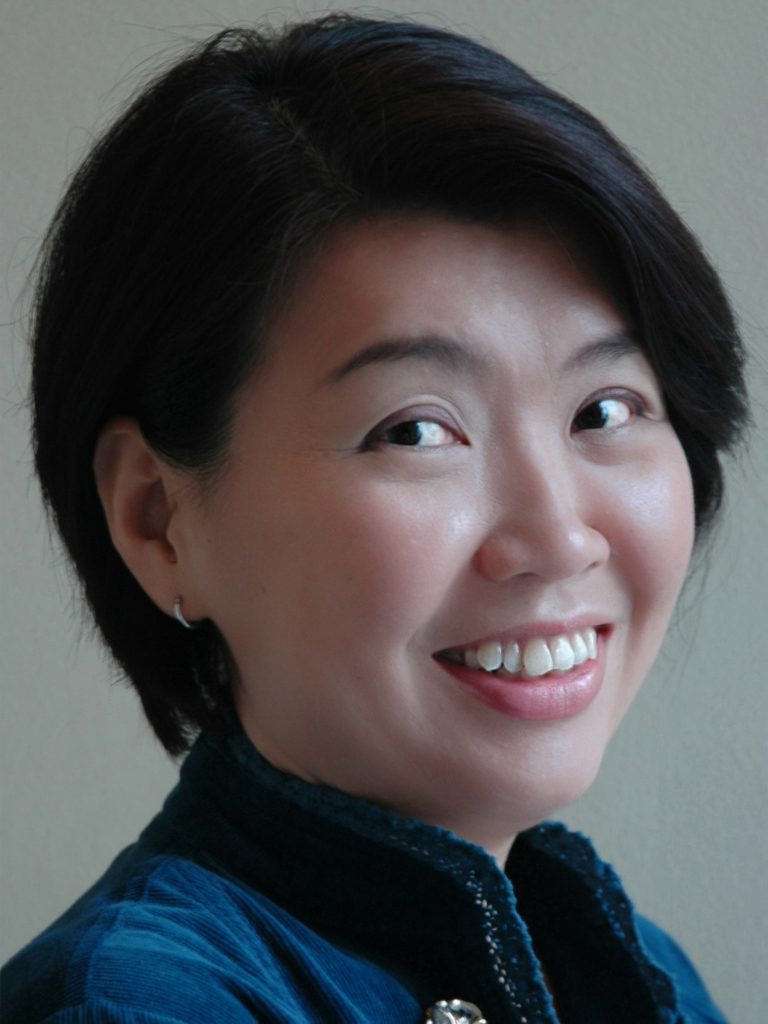
ONG Soh Khim is a Professor in the Department of Mechanical Engineering at the National University of Singapore (NUS) and a member of the NUS Graduate School. She is a Fellow of CIRP (International Academy for Production Engineering), the first Asian and fourth female Fellow globally. Her research focuses on augmented reality (AR) and digital twins in manufacturing, with applications in assistive technology and sustainable design. She has authored/co-edited 6 books, over 300 journal/conference papers, and holds an H-index of 66 (Google Scholar) and 52 (Scopus). She has held leadership roles, including serving as a Nominated Member of the Singapore Parliament (2005–2006) and on multiple NUS governance boards. Her honors include the Singapore Youth Award (2004), M. Eugene Merchant Award (2004), and the 2021 Long Service Medal. She advocates for gender diversity in STEM, leading initiatives like the Girls2Pioneers program. Her current roles include Senior Principal Investigator at NUS Research Institutes in Suzhou and Guangzhou, and Visiting Professorships at Chinese universities.
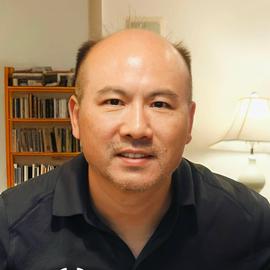
Dr. Baijian "Justin" Yang serves as the Associate Dean for Research at Purdue Polytechnic Institute and is a Professor in the Department of Computer and Information Technology at Purdue University. He earned his Ph.D. in Computer Science from Michigan State University, with Master's and Bachelor's degrees in Automation (EECS) from Tsinghua University. Dr. Yang has established himself as a leader in multiple interdisciplinary research domains. Dr. Yang's educational background includes: PhD in Computer Science, Michigan State University (2002) MS in Automation (EECS), Tsinghua University (1998) BS in Automation (EECS), Tsinghua University (1995) His research interests span multiple cutting-edge domains with practical applications: Cybersecurity : Developing novel approaches for threat intelligence, security education, and network defense Big Data : Creating innovative algorithms for dimension reduction, regression with categorical variables, and tensor decomposition Applied Machine Learning : Implementing AI solutions in healthcare, manufacturing, and forestry applications Digital Forestry : Using UAV imagery and remote sensing for forest management and tree species classification Dr. Yang's publication record demonstrates significant impact across multiple disciplines, with recent work focusing on spatial transcriptomics analysis (SiGra), delirium detection using limited-lead EEG, and visual localization technologies. His research bridges theoretical advances with practical applications in healthcare, manufacturing quality control, and environmental monitoring. The interdisciplinary nature of his work is evident in collaborations spanning computer science, healthcare, forestry, and manufacturing domains. His scientific achievements have been recognized with numerous awards: 2023 HRSA Building Bridges to Better Health Competition Winner (Phase 1) and 2nd place ($100,000 prize) in Phase 3 2023 Outstanding Faculty Award in Engagement, Department of Computer and Information Technology, Purdue University 2021 Leadership in Manufacturing Award, Manufacturing Times Digital (MxD) 2021 Good to Great Award, Purdue Polytechnic 2020 Outstanding Faculty Award in Discovery, Department of Computer and Information Technology 2019 University Faculty Scholars, Purdue University As an educator and mentor, Dr. Yang has advised numerous graduate students through their PhD and Master's research. His leadership extends to significant service roles including serving as Faculty Champion for the Holistic Safety and Security research impact area at Purdue Polytechnic from 2018 to 2021, board membership with ATMAE (2014-2016), and participation in the IEEE Cybersecurity Initiative Steering Committee (2015-2017). He holds valuable industry certifications including CISSP, MCSE, and Six Sigma Black Belt, demonstrating his commitment to bridging academic research with industry practice. Dr. Yang leads multiple research projects including "Digital Forestry" for developing tools to quantify forest function, "CHEESE" (Cyber Human Ecosystem of Engaged Security Education), and "CICI" (Supporting Controlled Unclassified Information with a Campus Awareness and Risk Management Framework). His work on "Applied Machine Learning" focuses on solving real-world problems, while his "Dimension Reduction and Memory Amnestic Big Data Regression" project innovates computational algorithms for large-scale data analysis.
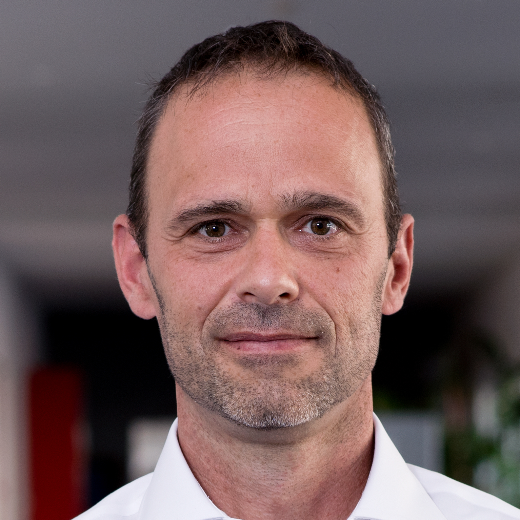
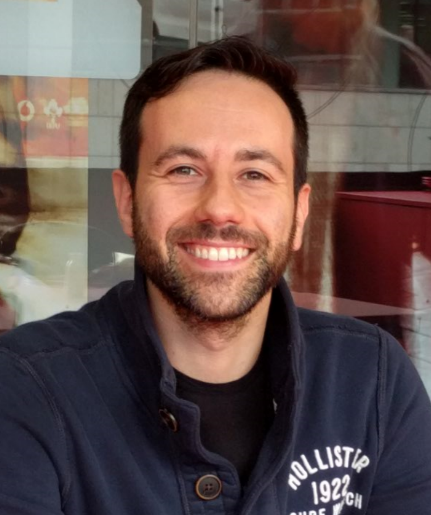
Oswald Lanz is a tenured full professor at the Faculty of Engineering of the Free University of Bozen-Bolzano , leading the Visual Computing Lab . He holds a Ph.D. in Computer Science and a Mathematics degree from the University of Trento. Prior to his current role, he was a researcher and head of research at FBK Trento. He is an endowed professor collaborating with Covision Lab , an AI hub in Bressanone, and coordinates the board of professors for the PhD in Computer Science program since 2025. His research focuses on Computer Vision, Deep Learning, and Video Analytics , with applications in sports technology, medical imaging, and industrial automation. Key achievements include the Amazon AWS Machine Learning Research Award (2020) , ACM Multimedia Best Paper (2015) , and Best Student Paper at ICIAP (2007) . He co-organized the ELLIS-VISMAC Winter School (2025) and chaired ICIAP 2019 . His work spans novel view synthesis, action recognition, and anomaly detection, supported by patents in video tracking and detection. He teaches courses like Deep Learning and Artificial Intelligence in undergraduate and graduate programs. Recent projects such as 5VREAL integrate 5G, edge computing, and AI for sports analysis. His collaborations bridge academia and industry, exemplified by his role in Covision Lab and multidisciplinary initiatives like DSS4LCO for food supply chains. Lanz’s publications emphasize spatiotemporal modeling, neural architecture search, and hybrid machine vision systems.
Dalibor Radovanović is a researcher at Singidunum University , affiliated with the Faculty of Business Informatics . His work spans cybersecurity, blockchain technologies, and their applications in business and IoT systems. Education: Doctoral Dissertation (2016, Singidunum University) Master's & Basic Studies (Faculty of Business Informatics) Secondary Education: ETŠ Nikola Tesla Research Interests include: Security frameworks for IoT and blockchain integration Smart card and wireless network vulnerabilities E-governance and corporate IT audit methodologies Machine learning applications in cybersecurity Environmental performance optimization in agribusiness Publication Trends reveal a focus on blockchain (2022), cybersecurity (2009-2022), and IT governance (2010-2017). His work bridges theoretical analysis with practical implementations in Serbia's digital economy. Collaborations with scholars like Marko Šarac and Saša Adamović highlight interdisciplinary approaches to securing financial systems, educational institutions, and industrial IoT applications.
Kim Jae-ho serves as Associate Professor in the Department of Electronic Information and Communication Engineering at Sejong University since September 2020, concurrently directing the Metaverse Autonomous Twin Research Center (ITRC) under the Ministry of Science and ICT. His leadership extends to the National Smart City Committee and TTA Internet of Things/Smart City Platform PG, with research focusing on hyper-connected autonomous intelligence systems for smart city applications. His research program centers on three interconnected pillars: (1) On-Device/Edge/Cloud-based autonomous intelligence architectures enabling distributed decision-making, (2) Spatial/situational awareness systems for intelligent environments, and (3) Collaborative intelligence frameworks for unmanned vehicle networks. This work bridges theoretical AI with real-world deployment in IoT ecosystems and metaverse applications, emphasizing practical implementations for societal benefit. Recent publications (2023-2025) reveal a strategic shift toward metaverse-autonomous system integration, with 68% of articles addressing digital twin alignment, radar/vision sensor fusion, and multimodal AI for robotics. Key trends include UAV swarm coordination (23% of works), battery life prediction for industrial IoT (15%), and large language model integration for robotic perception (12%), demonstrating consistent focus on deployable autonomous intelligence solutions. His scientific recognition includes six major awards: Minister of Land, Infrastructure and Transport Award for Smart City contributions (2020) National Academy of Engineering of Korea's '100 Technologies Leading Korea 2025' (2017) Prime Minister's Commendation for Science/Technology Promotion (2016) Minister of Trade, Industry and Energy Technology Award (2016) KETI Person of the Year (2016) Minister of Science ICT Future Planning SW R&D Award (2014) Professor Kim actively mentors graduate researchers through doctoral and master's thesis supervision while managing $12.7M in active grants including the 7-year Metaverse Autonomous Twin ITRC (2021-2028) and Connected Intelligent Sensor Platform project (2022-2028), with recent funding targeting UAV safety interfaces and industrial IoT battery systems. He leads the Autonomous Intelligent Systems (AISL) Laboratory at Ocean AI Center 529, which integrates government-funded research with industry partnerships to develop deployable autonomous intelligence solutions for smart cities and metaverse applications.
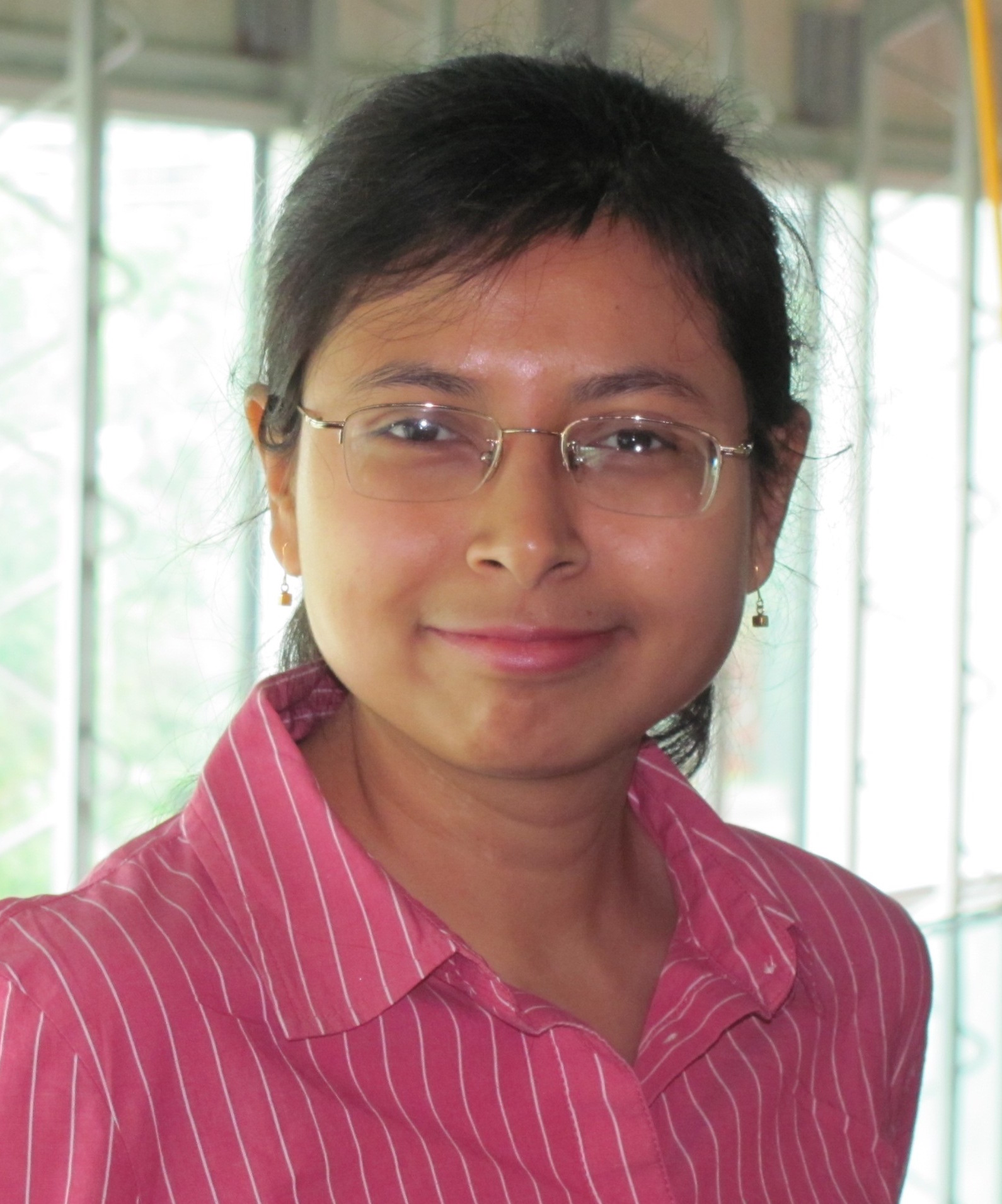
Sushmita Ruj is an Associate Professor in the School of Computer Science and Engineering at the University of New South Wales (UNSW), Sydney. She serves as the Faculty of Engineering Lead for the UNSW Institute for Cybersecurity (IfCyber) and as the Taste of Research (ToR) Coordinator within the School of Computer Science and Engineering. Her academic journey includes previous positions as a Senior Research Scientist at CSIRO's Data61 (2019-2022), Associate Professor at the Indian Statistical Institute, Kolkata, and Assistant Professor at the Indian Institute of Technology (IIT), Indore. Dr. Ruj's primary research interests focus on applied cryptography, post-quantum cryptography, cybersecurity, blockchains, and data privacy. She designs practical, efficient, and provably secure protocols for real-life applications, with particular emphasis on critical infrastructure including smart grids, cloud computing, ad hoc networks, and data sharing frameworks. As quantum technology advances, her work increasingly focuses on developing quantum-safe algorithms to ensure a more secure Internet infrastructure. Her research spans multiple domains including cryptographic key management, proofs of storage, verifiable computation, vector commitments, and privacy-enhancing technologies for cloud and IoT environments. Her recent publications demonstrate a strong trend toward post-quantum cryptography solutions, with particular emphasis on blockchain applications, DNS security, and privacy-preserving protocols for industrial IoT. The research shows increasing focus on practical implementations of theoretical cryptographic concepts, with applications across multiple sectors including finance, healthcare, and critical infrastructure. Her work bridges the gap between theoretical cryptography and real-world security challenges, with growing emphasis on the transition from classical to quantum-resistant systems. Best Paper Award at ACISP 2024 JNCA Best Survey Award (2023) NSW Innovation Award (iAward) Merit Winner (2022) Women in Science Award from CSIRO (2020) ACM Senior Member (2016) IEEE Senior Member (2015) Samsung GRO award (2014) Dr. Ruj has successfully mentored numerous PhD and Master's students, with many of her former students now holding academic positions at institutions like IIT Indore, TU Wien, and CISPA Helmholtz Center. She has secured significant competitive funding including multiple Australian Research Council (ARC) grants, Samsung GRO Award, NetApp Faculty Fellowship, Cisco Academic Grant, and IBM Research grant. Her current research portfolio includes projects on blockchain-based quantum-safe digital medical passports, embedding trust in digital IDs, and resilience of supply chain unstructured data. As Faculty of Engineering Lead for IfCyber, Dr. Ruj plays a key role in UNSW's cybersecurity research initiatives. She has served on editorial boards for prestigious journals including IEEE Transactions on Information Forensics and Security and has held leadership positions in major conferences such as ACISP 2021 and Indocrypt 2020. She was also a member of the working group on "Blockchain For Cybersecurity" for the National Blockchain Roadmap of Australia and the first Blockchain Working group set up by the Reserve Bank of India.
Brandon Lucia is a Professor in the Department of Electrical and Computer Engineering at Carnegie Mellon University's College of Engineering. He holds the Kavčić-Moura Professorship and leads the Abstract research group. As CEO and co-founder of Efficient Computer Corp., he bridges academic research with commercial applications in energy-efficient computing. Dr. Lucia received his Ph.D. in Computer Science and Engineering from the University of Washington in 2013, following an MS from the same institution in 2010 and a BS in Computer Science from Tufts University in 2007. His research focuses on the intersection of computer architecture, computer systems, and programming languages, particularly in energy-constrained environments. His primary research interests include intermittent computing, energy harvesting computers, orbital edge computing, and parallel computing systems. Lucia's work addresses fundamental challenges in creating programmable, reliable computing devices that operate without batteries by harvesting energy from their environments, with applications in sensing, medical implants, and space systems. He also investigates software systems and architectures for making parallel computing correct, reliable, and efficient in the post-Moore's Law era. Lucia's publication record shows a clear trajectory toward orbital edge computing and nanosatellite systems, with recent work focusing on computational constellations, visual navigation for satellites, and energy-efficient processing in space. His research spans both theoretical foundations of intermittent computing and practical implementations in hardware and software. 2021 Sloan Research Fellowship 2018 NSF CAREER Award 2018 ASPLOS Best Paper Award IEEE MICRO Top Picks in Computer Architecture (2009, 2010, 2016) 2015 OOPSLA Best Paper Award 2019 IEEE TCCA Young Computer Architect Award 2022 Engineering Faculty Award As an advisor, Lucia has mentored numerous graduate students including Brad Denby, Zhuo Cheng, and Kyle McCleary, many of whom have become co-authors on his significant publications. His lab developed the world's first batteryless PocketQube nanosatellite (Tartan-Artibeus-1), which was deployed to low-Earth orbit aboard the SpaceX Transporter-3 Rocket. Lucia's research has received funding from sources including NSF, DARPA, Google, and VMware, supporting both fundamental research and practical implementations of energy-harvesting computing systems.
Michael J. Freedman is the Robert E. Kahn Professor of Computer Science at Princeton University and co-founder/CTO of Timescale. He received his Ph.D. from NYU’s Courant Institute and degrees from MIT. Current roles: Professor, Co-founder & CTO Affiliations: Princeton University, SNS Group, CITP Associate Education: Ph.D. (NYU), S.B./M.Eng. (MIT) His research spans distributed systems, networking, and security, with innovations like CoralCDN, DONAR, and Ethane. His work impacts decentralized content delivery, software-defined networking, and privacy-enhancing technologies. His recent publications address scalable fusion algorithms, GPU acceleration for data systems, and distributed GPU resource management. These works intersect with cloud infrastructure, network optimization, and security. Scientific honors include: Presidential Early Career Award for Scientists and Engineers (PECASE) Sloan Fellowship NSF CAREER Award Office of Naval Research Young Investigator Award Test of Time Award (Theory of Crypto Conference) ACM SIGOPS Mark Weiser Award He advises graduate students like Sam Ginzburg and Ashwini Raina, who joined Meta AI and Timescale post-PhD. His projects have secured substantial grants, including $110M Series C funding for Timescale. Key labs/teams: Princeton SNS Group Co-founder, Timescale (enterprise data platform) Co-founder, iobeam (IoT analytics, acquired by Timescale) Collaboration with FCC on Consumer Broadband Test Contributions to OpenFlow/SDN standardization
Amrita Roy Chowdhury is an Assistant Professor in the Department of Computer Science at the University of Michigan, Ann Arbor. Her research focuses on developing systems that enable safe, decentralized data analytics while ensuring provable privacy guarantees through the synergy of differential privacy and cryptography. Key research areas: Data Privacy, Cryptography, Secure Data Analytics, and Privacy-Preserving Machine Learning. Recent work explores prompt sanitization for LLMs (NDSS 2026), robust graph analysis (ASIACCS 2025), and metric differential privacy (CCS 2024). She has received awards including Best Paper at Private ML@ICLR'24 and Best Poster at ITA'23. Current Ph.D. advisees include Mushtari Sadia, Yiyi Sun, and Samanway Sadhu. Her work spans conferences like IEEE S&P, CCS, USENIX Security, and ICML.
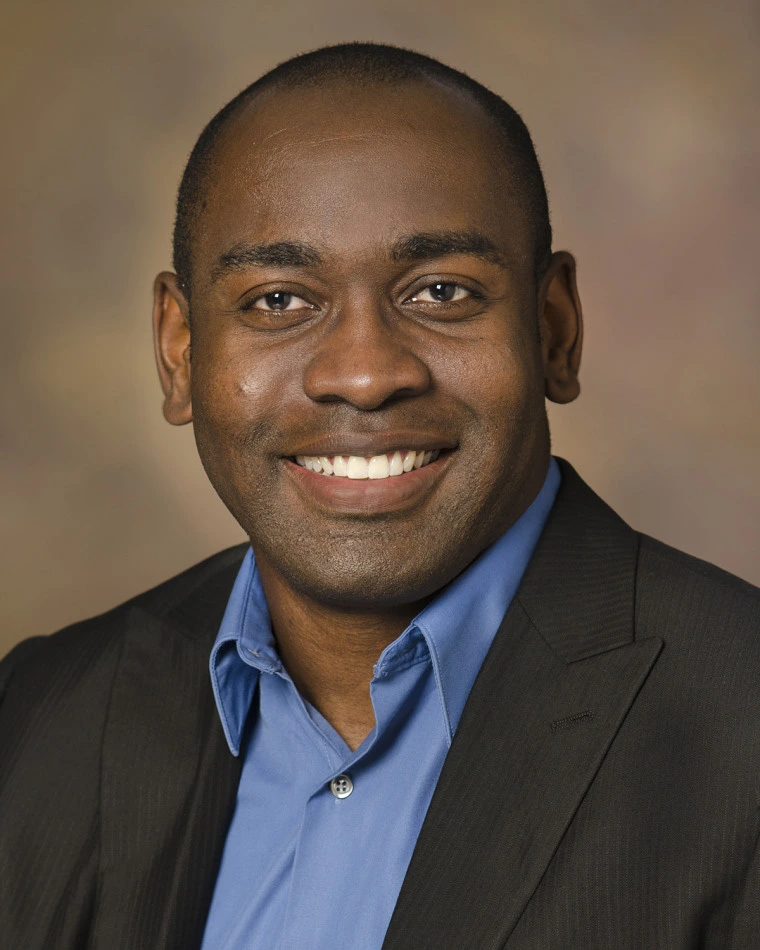
Tosiron Adegbija is an Associate Professor in the Department of Electrical and Computer Engineering at the University of Arizona, where he serves as Director of Graduate Studies and Thomas R. Brown Endowed Fellow. He is a member of the Graduate Faculty and actively contributes to research and teaching in computer architecture and embedded systems. Education: PhD in Electrical and Computer Engineering, University of Florida, 2015 MS in Electrical and Computer Engineering, University of Florida, 2011 BS in Electrical Engineering, University of Ilorin, Nigeria, 2005 His research centers on energy-efficient computing with a focus on bio-inspired computer architecture , including spiking neural network (SNN) accelerators and in-memory computing. He also explores domain-specific architectures , adaptable memory systems , and microprocessor optimizations for IoT . His work leverages novel memory technologies like STT-RAM to enhance performance and reduce energy consumption in embedded and resource-constrained systems. Recent publications highlight trends in hybrid SNN acceleration, domain-specific accelerator generation, and system-level design space exploration. His research is increasingly focused on neuromorphic computing, automated hardware design, and ultra-efficient architectures using emerging materials like antiferromagnetic tunnel junctions. Scientific Awards: National Science Foundation (NSF) CAREER Award (2019) Elected IEEE Senior Member (2020) Best Paper Award at IEEE ISVLSI (2014) Teaching Award, University of Arizona (2018) ACM GLSVLSI Travel Award (2015) He advises numerous graduate and undergraduate students, many of whom have pursued careers at institutions like Pacific Northwest National Labs, Micron Technology, and Amazon. He has secured significant funding, including a $1.9M NSF FuSE2 grant for energy-efficient computing. His lab collaborates with UA Physics, CMU, and UNL. He has also developed educational tools for Chipyard and RISC-V, supporting hands-on learning in computer architecture. Labs and Research Teams: Leads a research group focused on bio-inspired and domain-specific computing, fostering innovation in energy-efficient hardware. The lab emphasizes hardware/software co-design, neuromorphic engineering, and real-world deployment in IoT and biomedical applications.
Gian Antonio Susto is an Associate Professor at the Department of Information Engineering , University of Padova . With a Ph.D. in Information Technology and post-doctoral experience at National University of Ireland, Maynooth, he leads research in Machine Learning , Semiconductor Manufacturing , and Industrial IoT . His work bridges Anomaly Detection , Continual Learning , and Algorithmic Fairness with applications in Hydroelectric Power Plants , Particle Accelerators , and Smart Mobility . B.Sc. and M.Sc. in Controls Engineering, University of Padova (cum laude) Ph.D. in Information Technology, University of Padova (2013) Post-Doc at National University of Ireland, Maynooth (2012-2013) Assistant Professor at University of Padova (2013-2021) His research focuses on Explainable AI , Virtual Metrology , and Deep Learning for manufacturing and infrastructure monitoring. Recent projects include the AIMS5.0 (AI for Manufacturing Sustainability) and MICS (Circular Economy in Italy) initiatives. His publications span Engineering Applications of Artificial Intelligence , IEEE Transactions , and Information Processing & Management , with 15+ recent papers on topics like Fault Diagnosis , Continual Learning , and Fair Ranking . Key scientific awards include: IEEE CCTA Best Student Paper Award (2021) IP&M 2020 Ph.D Paper Award Best Industry Paper Award, European Workshop on Advanced Control and Diagnosis (ACD 2019) He has supervised Ph.D. students on projects involving Particle Accelerators , Plant Behavior Modeling , and Explainable AI , with alumni now at institutions like Max Planck Institute , IBM , and Scripps Research . Current teaching includes Reinforcement Learning and Explainable Machine Learning at graduate and Ph.D. levels.
Dr. Rajkumar Buyya is a Redmond Barry Distinguished Professor at the University of Melbourne and Founder & CEO of Manjrasoft , a spin-off commercializing cloud innovations. He has held visiting roles at Imperial College London , University of Birmingham , and Tsinghua University . Research Interests : His work spans Cloud Computing , Edge Computing , Grid Systems , and Energy-Efficient Computing , focusing on utility-driven resource allocation, simulation tools, and scalable IoT application frameworks. He pioneered the CloudSim toolkit and Aneka Cloud technologies. Scientific Awards : IEEE Fellow (2015), Web of Science Highly Cited Researcher (2016-2021) Khwarizmi International Award (2020), Scopus Researcher of the Year (2017) Frost & Sullivan New Product Innovation Award (2010), IEEE TCSC Medal (2009) Impact : Authored over 850 publications, including the widely adopted textbook Mastering Cloud Computing . Graduated 54 PhD students now in leadership roles at institutions like Newcastle University and companies such as IBM , Google , and Amazon . His research has driven global adoption of cloud/edge technologies in 50+ countries.
Dr. Yujie Tang is an Assistant Professor in the Faculty of Computer Science at Dalhousie University, Canada, where she has been serving since September 2022. Prior to this, she was an Assistant Professor at Algoma University (2019–2022) and a Post-Doctoral Fellow at the University of Waterloo (2017–2019). Her academic journey includes a PhD from the University of Waterloo and earlier degrees from Harbin Institute of Technology and Lanzhou Jiaotong University. PhD – University of Waterloo (2017) M.E. – Harbin Institute of Technology, Shenzhen, China B.E. – Lanzhou Jiaotong University, Lanzhou, China Her research focuses on intelligent networking and computing technologies for future IoT and 5G/6G systems. Key areas include Internet of Vehicles (IoV), AI-empowered edge computing, resource management in heterogeneous networks, software-defined networking, and UAV-assisted communications. She employs machine learning and optimization techniques to design energy-efficient and high-performance network protocols. The most recent publications reflect a strong trend in applying AI and machine learning to solve complex problems in vehicular networks, edge caching, and spectrum management. Her work spans top-tier IEEE journals such as IEEE Transactions on Vehicular Technology , IEEE Internet of Things Journal , and IEEE JSAC , with a clear emphasis on real-world deployable solutions for next-generation wireless systems. Faculty Research Startup Fund, Dalhousie University, 2022 NSERC Discovery Grant, 2021–2026 Algoma University Research Fund, 2021 Faculty Research Startup Fund, Algoma University, 2019 Best Speaker Award, University of Waterloo, 2017 Faculty of Engineering Award (4 times), University of Waterloo, 2013–2017 University of Waterloo Graduate Scholarship, 2013–2015 International Doctoral Student Award, 2012–2016 Graduate Research Studentship (twice), 2011–2012 Provost Doctoral Entrance Award for Women, 2011 Dr. Tang actively supervises graduate and undergraduate students and has secured competitive research grants, including the NSERC Discovery Grant. She serves on the technical program committees of major IEEE conferences such as INFOCOM, GLOBECOM, and ICC, and regularly reviews for top journals like IEEE JSAC , IEEE TWC , and IEEE TVT . She currently leads a research group focusing on B5G/6G networks, IoV, and edge computing, and she is actively recruiting new students and visiting scholars. Her research group operates within the Faculty of Computer Science at Dalhousie University, where she leads projects in intelligent resource management, AI-driven networking, and integration of space-air-ground networks. She is a member of IEEE, IEEE Communications Society, and IEEE Vehicular Technology Society.
David Gesbert serves as Professor and Director of EURECOM, a leading research institution in Sophia Antipolis, France, specializing in digital sciences. Previously heading the Communications Systems Department, he now directs EURECOM while leading the Foundations & Algorithms research group within the Communication Systems Department. His leadership spans institutional administration and cutting-edge research supervision. Dr. Gesbert's research portfolio demonstrates exceptional depth across communications theory and wireless networking: Communication theory and information theory fundamentals Signal processing for wireless networks with emphasis on robustness Machine learning applications for decentralized network optimization Connected robotics and UAV-enabled flying radio access networks 6G wireless architecture with focus on AI integration Distributed decision making under information uncertainties His publication trajectory reveals a strategic evolution from classical communication theory toward AI-integrated wireless systems, particularly focusing on UAV-aided networks and connected robotics for 6G. Recent work emphasizes learning-based approaches for network optimization under asymmetric information conditions, with growing emphasis on sustainability and green communications. Dr. Gesbert's scientific recognition includes: Fellow of IEEE (2011) and Asia Pacific Artificial Intelligence Association (2021) Thomson-Reuters List of Highly Cited Researchers in Computer Science Multiple Best Paper Awards at IEEE conferences (EW 2017, ICC 2019) ERC Advanced Grant recipient for the PERFUME project on Smart Device Communications 3IA Chair funding for AI for future IoT Networks 2019 Winner of 'Fundamental research project of the year' by French SCS He actively mentors PhD students and researchers, welcoming collaboration in his research domains. His group secures substantial research funding including ERC grants, 3IA Chairs, and participation in major European projects like the WINDMILL ITN Marie Curie project on Machine Learning in Wireless Communications. Dr. Gesbert serves on editorial boards and regularly delivers keynotes at premier international conferences, establishing himself as a thought leader in next-generation wireless communications.
Ningning Hou is a Lecturer in Computing (IoT/Networking) at Macquarie University's School of Computing. They are affiliated with the Future Communications Research Centre and Data Horizons Research Centre. Previously, they served as a Postdoctoral Fellow at The Hong Kong Polytechnic University (PolyU) and earned their PhD in Computer Science from PolyU in 2021, followed by a B.Eng. in Telecommunication Engineering from Beijing University of Posts and Telecommunications (2017). Research Interests: Low Power Wide Area Networks (LPWANs) Internet-of-Things (IoT) Wireless Sensing and Networking Wireless Security Recent research focuses on enhancing LoRa communication through innovations like full-duplex gateways (FDLoRa) and scalable logical channels (XGate), addressing challenges in network scalability, signal interference, and security threats. Their work spans topics such as data aggregation efficiency, antenna diversity, and covert channel mitigation. Advising: Actively seeking self-motivated PhD students and researchers for projects in LPWANs, edge computing, and wireless security. Labs/Teams: Involved with Future Communications Research Centre and Data Horizons Research Centre.