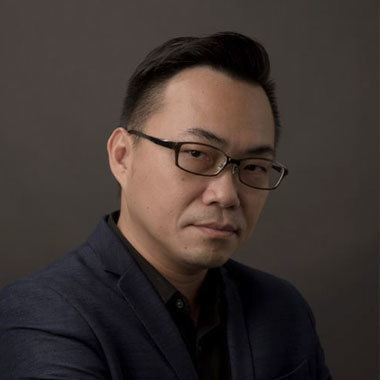
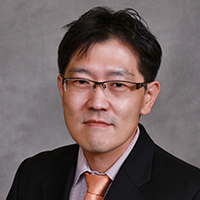
Dr. Qiang Fu is a Senior Lecturer at RMIT University's School of Computing Technologies, specializing in Cloud, Networked Systems, and Security. He holds a PhD from The University of Queensland and is actively involved in industry collaborations. His research focuses on Internet and Cloud-based systems, including Content Delivery Networks (CDNs), data centre design, Cyber-Physical Systems (CPS)/IoT, virtualization, and SDN/NFV. Recent work emphasizes network telemetry, fault detection, and IoT workflow optimization. He has published extensively in top-tier journals and conferences like IEEE Transactions and IFIP NOMS. Dr. Fu supervises PhD/Master students in areas such as network security, cloud computing, and IoT. His projects are often industry-funded and address real-world challenges like network scalability and blockchain integration. He is open to supervising students in these domains through RMIT's scholarship programs.
Affiliations & Roles Michele Albano is an Associate Professor at the Department of Computer Science, Aalborg University, Denmark. He is affiliated with The Technical Faculty of IT and Design, focusing on research in IoT, Cyber-Physical Systems, and Edge Computing. He leads the Productive4.0 project (2017–2020), funded by Horizon Europe, addressing Industry 4.0 challenges in product lifecycle management. His work integrates formal verification tools like Uppaal with real-world applications in robotics, energy systems, and blockchain-based platforms. Research Interests Albano's research spans IoT architecture optimization , energy-efficient systems , and model-driven engineering . He develops tools for autonomous exploration algorithms (MAES), edge-cloud resource orchestration, and fault-tolerant computation offloading. His work bridges theoretical models (e.g., Uppaal SMC) with practical implementations in smart grids and robotic systems. Recent projects include blockchain-based crowdsourcing for machine learning and energy-aware thermal dynamics estimation in buildings. Collaborations & Impact He collaborates with the European Industry 6.0 community, contributing to the Arrowhead Framework for interoperable IoT systems. His research outputs include 112 publications, with 2025 highlights in human-inspired robotics and cognitive cloud frameworks. Media coverage in 2024–2025 highlights his work on green IT and secure API generation. Albano advises students on system modeling (e.g., ACSmt plugin development) and edge computing optimization. Labs & Teams His research group focuses on Cyber-Physical Systems and Smart Grids , with contributions to tools like RoutesMobilityModel and FlexHousing. He actively participates in workshops on New Trends in Software Architecture (SATrends '24) and IEEE conferences on Industrial Informatics.
Héctor Chinchero Villacis is an Assistant Professor in the Department of Electronics at the University of Alcalá. His research focuses on smart lighting systems, IoT integration in buildings, and energy management solutions. He is a member of the GEINTRA research group, which specializes in Electronic Engineering applications for intelligent spaces and transport. Chinchero holds a PhD from the University of Oviedo (2021), where his thesis addressed LED driver development for smart buildings using controllable reactive elements. Education: PhD in Electronics Engineering, Universidad de Oviedo (2021) Research Interests: His work combines power electronics innovation with IoT technologies to enhance energy efficiency in smart infrastructure. Key areas include: Magnetic control of DC-DC converters for LED applications Energy management systems for public lighting and microgrids IoT-based precision agriculture and home energy monitoring Human-centered lighting parameters for wellbeing optimization Recent Contributions: Recent publications highlight advancements in low-cost emergency lighting solutions, magnetic control techniques for power electronics, and distributed energy systems for Amazonian regions in Ecuador. His work bridges theoretical power electronics with practical smart infrastructure implementations. Labs/Teams: Active contributor to the GEINTRA research group, focusing on applied electronic engineering innovations for smart environments.
Chong Keng Hua is a Faculty Instructor at Singapore University of Technology and Design (SUTD), specializing in urban design and community development. His work focuses on fostering inclusive, resilient neighborhoods through smart community design, participatory approaches, and data-driven strategies. He explores aging-friendly urban environments, public space activation, and the intersection of technology with urban sociology. Research interests include smart cities, participatory governance, and spatial equity. His recent work emphasizes leveraging big data (e.g., WiFi sensing, GPS trajectory analysis) to understand urban behaviors and inform evidence-based design. Projects like the 'Community Enablement Playbook' and 'Public Soundscape Design' showcase his interdisciplinary approach to urban challenges. Publications from 2024 highlight strategies for neighborhood resilience, smart community frameworks, and organizational collaboration networks. Earlier works (2019–2021) delve into resident segmentation, mobility analytics, and aging-friendly public spaces. His research bridges technical innovation with social equity, addressing high-density urban contexts like Singapore's public housing estates. Chong contributes to capstone design projects at SUTD, mentoring students on real-world urban challenges such as reusable container systems ('Makan Guru'), noise reduction ('Let's Talk Less Noise'), and inclusive pathways ('Safe Paths for All'). These projects reflect his commitment to applied, community-focused solutions.
Edlira Dushku is a Tenure Track Assistant Professor at the Department of Electronic Systems, Aalborg University (Denmark), affiliated with the Cyber Security Group. She holds a PhD in Computer Science from Sapienza University of Rome and has held postdoctoral positions at DTU Compute, Denmark. Her research focuses on IoT Security, Cybersecurity, Blockchain, and Fog Computing, particularly in remote attestation and hardware security. Education: 2023: University Pedagogical Programme, Aalborg University 2016–2020: PhD in Computer Science, Sapienza University of Rome 2013: MSc in Computer Science, University of Tirana 2010: BSc in Computer Science, University of Tirana Research Interests: Dr. Dushku specializes in securing IoT devices and distributed systems through remote attestation, blockchain applications, and machine learning-based security. She explores challenges in fog computing, PUF protection, and adversarial defense mechanisms. Her work emphasizes trust management and public verifiability in IoT ecosystems. Teaching: She teaches courses like Security in IoT and Cloud Architectures (MSc) and Computer System Security (BSc) at Aalborg University. Previously, she was an academic supervisor for students with special needs at DTU. Grants & Projects: Coordinator of the EUopStart proposal for MSCA (2024) Guest editor for MDPI Sensors Special Issue on IoT Security Program chairs for multiple conferences (e.g., FMEC 2021) Lab & Collaborations: Collaborates with industry partners like Terma and Develco Products, focusing on applied IoT security solutions. Her work bridges academia and industry through co-supervised theses and real-world system implementations.
Matti Mäntysalo is a Professor in the Department of Electrical Engineering at the Faculty of Information Technology and Communication Sciences, Tampere University. His research focuses on advanced materials for energy storage systems, printed electronics, and biomedical applications. He leads projects on supercapacitors, flexible/stretchable electronics, and biosensors, with a strong emphasis on sustainability and biodegradability. Mäntysalo has authored over 130 publications and contributed to initiatives like the ECOtronics research project (2019–2022). His work integrates material science, nanotechnology, and engineering to develop next-generation energy storage solutions and wearable medical devices. Key contributions include dopamine-functionalized supercapacitors, piezoelectric PLLA sensors for cardiovascular monitoring, and 3D-printed biodegradable electrodes. He also explores scalable manufacturing techniques such as roll-to-roll printing for monolithic supercapacitors and membrane-based energy systems. Mäntysalo serves as an editorial board member for special issues on flexible sensors and MEMS technologies. His research bridges fundamental science and practical applications, addressing challenges in IoT, smart packaging, and sustainable electronics. Recent efforts include self-powered e-tattoo sensors and zero-discharge microbial electrolysis cells.
Tae-Hoon Kim is a Professor in the Department of Computer Information Technology and Graphics at Purdue University Northwest. He holds a Ph.D. in Information Science from the University of Pittsburgh, an M.S. in Interdisciplinary Telecommunications from the University of Colorado Boulder, and a B.S. in Mechanical Engineering from Oklahoma State University. His research focuses on cybersecurity education, wireless sensor networks, data-driven analysis using machine learning, and AR-based educational tool development. Current projects are funded by the Army Research Office, NSF, NSA, and industry partners. Research interests span network security, data science, and innovative educational technologies. He actively develops interactive tools for K-12 and college cybersecurity education using augmented reality and data visualization techniques. Teaching specialties include network protocols, IoT, blockchain, and big data analytics. His publications address topics ranging from biomass energy prediction models to cultural heritage glyph analysis. Teaching responsibilities include courses on LAN/WAN design, network security, AI, and mobile applications. Over 20 years of academic experience includes advising student projects in cybersecurity and data science.
Dr Luke Shi is a Lecturer in the School of Civil & Environmental Engineering at Queensland University of Technology (QUT) and an Adjunct Research Fellow at Monash University. His research focuses on urban stormwater management, digitalized water monitoring, and IoT applications. He leads a dynamic research team collaborating with academia and industry (e.g., Melbourne Water) on projects like real-time sensing frameworks and low-cost sensor development. Education: Doctor of Philosophy (Monash University) Affiliations: Co-Chair of the IWA/IAHR Real-time Control Working Group and Young Water Professional Representative at the International Water Association (IWA). Research interests include microbial risk assessment, pollution modeling, and sensor technology. Recent work emphasizes low-cost solutions for environmental health and real-time control systems in urban water infrastructure. Key awards include the Poul Harremoës Award 2021 and the Monash University Vice-Chancellor’s Award for Research Impact. Current PhD supervision spans IoT-enabled pollution monitoring, real-time control systems, and sensor development. Collaborations involve institutions like UNSW and industry partners such as South East Water.
Patricia J. Culligan is the Matthew H. McCloskey Dean of the College of Engineering and Professor of Civil and Environmental Engineering and Earth Sciences at the University of Notre Dame. She previously served as Chair and Carleton Professor at Columbia University, where she co-founded the Collaboratory@Columbia and was founding associate director of the Data Science Institute. She holds a Ph.D. from the University of Cambridge and a B.Sc. from the University of Leeds. Ph.D., University of Cambridge M.Phil, University of Cambridge B.Sc (Hons), Civil Engineering, University of Leeds Diploma in Language, Literature, and Civilization, Université d’Aix-Marseille III Her research focuses on geo-environmental engineering , sustainable urban infrastructure , and the integration of data science and sensing technologies to improve water, energy, and environmental management in cities. She investigates green infrastructure, urban hydrology, contaminant transport, and human behavior in built environments. Her work emphasizes interdisciplinary solutions to societal challenges like climate change and public health. Her recent publications reveal a strong trend in smart urban systems , particularly using LoRaWAN sensors , machine learning , and real-time monitoring for stormwater, green roofs, and urban trees. Themes include sustainability, resilience, equity in greenspace access, and energy behavior during crises like the pandemic. Distinguished Member, ASCE (2024) Fellow, AAAS Fellow, Institution of Civil Engineers (UK) H. Bolton Seed Medal, ASCE (2021) Chartered Engineer, UK Engineering Council Culligan has led major research initiatives with over $33 million in funding, mentored over 50 students, and served on National Academies and Government Accountability Office committees. She is a passionate advocate for diversity in STEM and interdisciplinary collaboration. She co-founded initiatives to broaden participation and has led curriculum development in data science for engineers. Her leadership bridges academia and real-world impact, emphasizing engineering for public good. She leads research on green infrastructure in cities like New York, managing teams that conduct field studies on bioswales, green roofs, and urban trees. Her lab integrates experimental and computational methods, fostering collaboration across engineering, data science, and social sciences.
Dr. Chongyan Gu is a Senior Lecturer in the School of Electronics, Electrical Engineering and Computer Science at Queen’s University Belfast, part of the Faculty of Engineering and Physical Sciences. Her research focuses on hardware security, particularly Physical Unclonable Functions (PUFs), approximate computing vulnerabilities, and IoT device security. She leads the EPSRC New Investigator Award-funded project on Hardware Security for Approximate Computing and has secured industry collaborations with LG-CNS and defense companies. Dr. Gu has received notable awards including the INVENT2015 Overall Winner and Pramod Subramanyan Presentation Award. Her research has been commercialized, such as licensing PUF technology for EV charging systems and defense applications. She collaborates internationally through EU projects with Fraunhofer and ETRI. Dr. Gu serves as an IEEE Senior Member, Guest Editor for IEEE TCAS-I, and editorial roles for conferences like IEEE ISCAS and AsianHOST. She has delivered tutorials at ASP-DAC and HiPEAC, emphasizing practical PUF design and hardware security challenges. Key technical contributions include PUF-based authentication protocols, machine learning-resistant security solutions, and vulnerability analysis in approximate computing. Her work addresses emerging threats like Rowhammer attacks and hardware Trojans, leveraging graph attention networks for detection. Recent publications highlight advancements in RRAM-based PUFs, FPGA implementations, and defense mechanisms for modern DRAM systems.
Péter Korondi is a Professor at the University of Debrecen in Hungary, affiliated with the Department of Electrical Engineering and Mechatronics . His work spans robotics, control theory, and industrial automation, with a focus on bio-inspired systems and human-robot interaction. Research Interests : Robotics, Mechatronics, Control Theory, Human-Robot Interaction, Industrial Automation, Sensor Fusion Recent Article Trends : Sliding mode control, friction compensation in micro-telemanipulation, path planning for mobile robots, smart industrial systems Collaborations : Co-authored works with Gabor Sziebig, Ferenc Tajti, Géza Szayer, and international researchers in IEEE Transactions , Sensors , and Acta Polytechnica Hungarica . Technological Focus : Development of rehabilitation devices, holonomic drive systems, and ethorobotics models inspired by animal behavior.
Bill Buchanan is a Professor at the School of Computing Engineering and the Built Environment, Edinburgh Napier University, and a member of the Centre for Algorithms, Visualisation and Evolving Systems. His work spans Information Visualization , Software Systems , Cybersecurity , and AI , focusing on innovative solutions for complex data challenges. Research Interests: Information visualization for hierarchical data, cybersecurity frameworks, machine learning in industrial IoT, and post-quantum cryptographic systems. Projects: Supervised PhD projects on visualizing overlapping classification hierarchies and biological network inference. Currently leads research in AI-driven human-robot interaction and secure Dockerized architectures. Publications: 15+ recent works on quantum agents, GANs for anomaly detection, homomorphic encryption, and advanced cryptographic techniques. Collaborations: Engages with biologists, AI researchers, and cybersecurity experts across institutions.
Ali Hassan is a researcher affiliated with the National University of Sciences and Technology (NUST), School of Electrical Engineering and Computer Science, Department of Computer and Software Engineering. His work spans multiple domains in computer science, engineering, and applied mathematics, focusing on areas such as machine learning, IoT, energy systems, and medical informatics. His research explores: Reinforcement learning applications for battlefield information systems IoT antenna design and performance evaluation Optimization of second-life battery systems in electric vehicles Transformers for real-time vehicle collision avoidance Image hashing techniques using visual attention models Neural network-based phasor estimation for power grids Biomedical sensor systems for non-invasive health monitoring Mathematical modeling of viral dynamics Recent publications demonstrate his emphasis on interdisciplinary approaches combining AI, signal processing, and sustainability. He has collaborated with institutions across Pakistan, France, Saudi Arabia, and the USA, with a focus on practical implementations in cybersecurity, energy optimization, and healthcare technology.
Seppo Törmä is a Senior Lecturer and Principal Lecturer at Metropolia University of Applied Sciences, specializing in computing and construction. He holds a D.Sc (Tech) in Computer Science and Engineering from Helsinki University of Technology (1997), an M.Sc (Tech) in Electrical Engineering (1988), and a Teacher's pedagogical qualification (AmO) from Haaga-Helia (2022). As the Head of the International Master's Programme in Computing in Construction, he focuses on advancing digitalization in construction through innovative methodologies. His competences include Artificial Intelligence, BIM Collaboration, Decentralized systems, Digital Twin, Information visualization, Interoperability, IoT, Knowledge graphs, Linked Data, Ontologies, Semantic Web, and Sustainable built environment. He leads projects such as RADIAL (digital models for construction), Digipurku (digital solutions for deconstruction), and HereUkraine! (educational support for rebuilding efforts). His research emphasizes semantic interoperability, ontology-based systems, and sustainable construction practices. Notable projects include developing the DRUMBEAT platform for federated building models and exploring peer-to-peer networks for linked building data. His work bridges information technology with construction workflows to enhance efficiency and sustainability. He has no listed scientific awards but has contributed to over 70 publications since 1988, focusing on BIM, Linked Data, and construction digitalization. His advising and grants are not explicitly detailed, but his leadership in academic and applied projects underscores his commitment to advancing the field. He is part of the Sustainable Development in Real Estate Team at Metropolia.
Professor Ville Viikari is a leading academic in antenna engineering and wireless systems at Aalto University's Department of Electronics and Nanoengineering. His work focuses on advanced antenna designs for mobile devices, 5G/6G networks, RF energy harvesting, and radar systems. He is affiliated with the Aalto University School of Electrical Engineering. Research interests include antenna arrays, coupled systems, and measurement techniques with applications in RFID, backscattering, and IoT. His innovations span frequency-reconfigurable antennas, shared-aperture designs, and millimeter-wave systems. Awards: IEEE Sensors Council Early Career GOLD Award (2010) Aalto Doctoral Thesis Award (2022) Young Researcher Award (2014) Key Projects: Zero Power Sensor Network (2010–2013) as project manager Development of 3D-printed antenna arrays and CMOS circulators Recent Work: Advances in Ka-band Vivaldi arrays and E-band transmitarrays AI-driven antenna optimization using swarm intelligence Wideband MIMO antennas for full-screen mobile devices His research group collaborates on cutting-edge projects blending antenna physics with emerging technologies like 6G and AI-driven design methodologies.