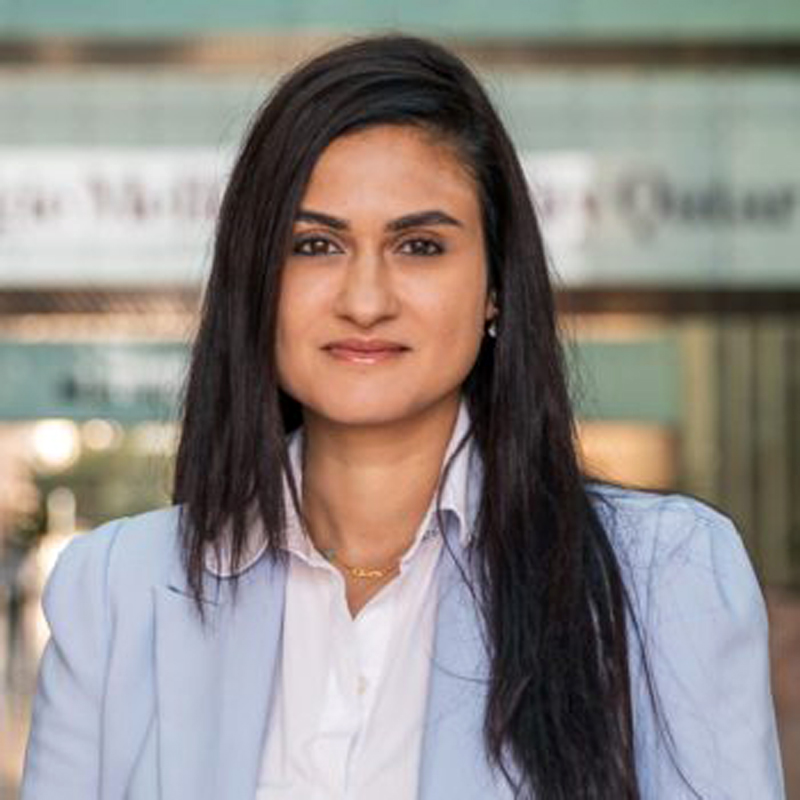
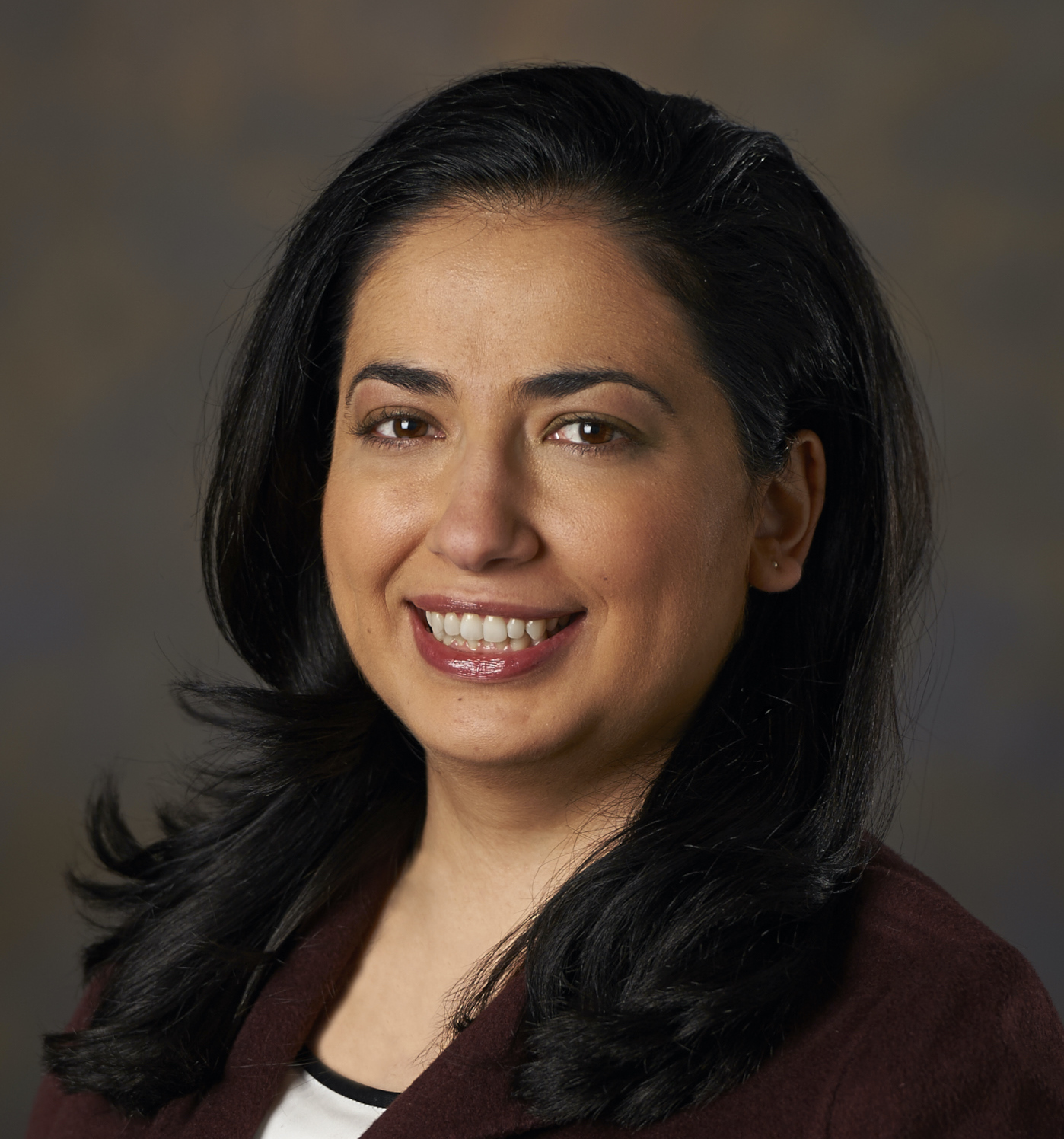
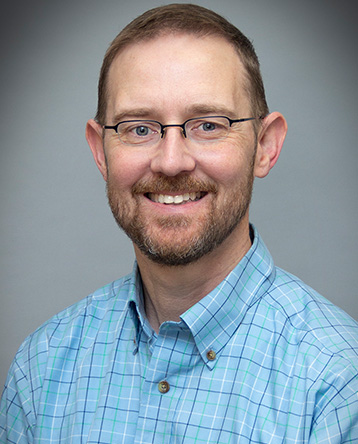
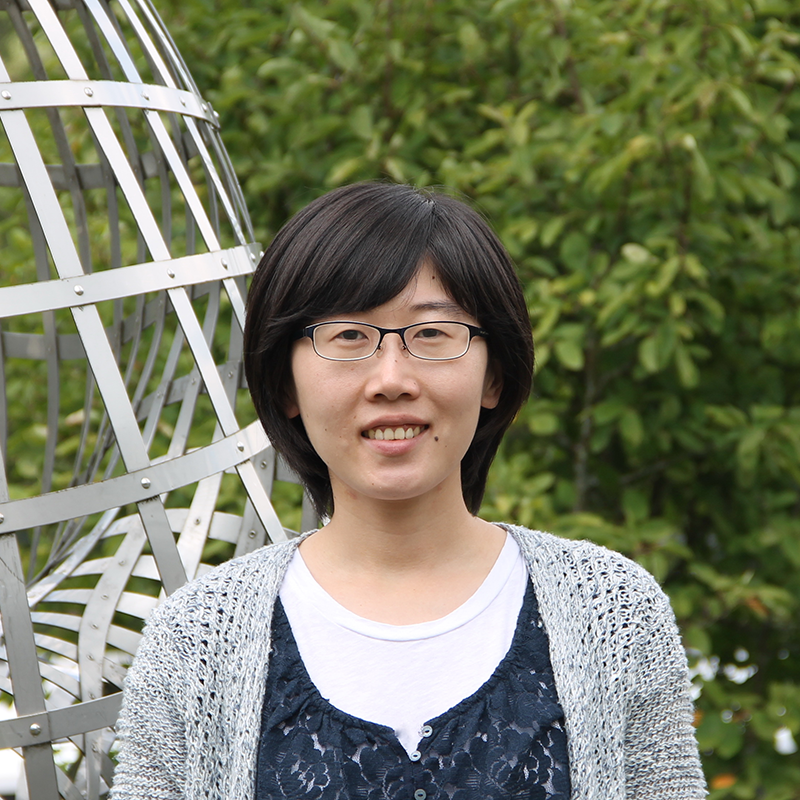
Layan El Hajj is an Associate Teaching Professor in the Department of Mathematics at Carnegie Mellon University Qatar, part of the Mellon College of Science. She holds a Ph.D. from McGill University and specializes in complex analysis, partial differential equations, and geometric function theory. Her research focuses on free boundary problems, logharmonic mappings, and univalent functions, with contributions to convexity, symmetry, and stability in mathematical analysis. Her work bridges theoretical advancements with applications in nonlinear PDEs, geometric mappings, and harmonic analysis. Notable areas include radial symmetry in elliptic PDEs, convexity of free boundaries, and properties of poly-analytic functions. She maintains an active Google Scholar profile and contributes to undergraduate and graduate education in mathematics.
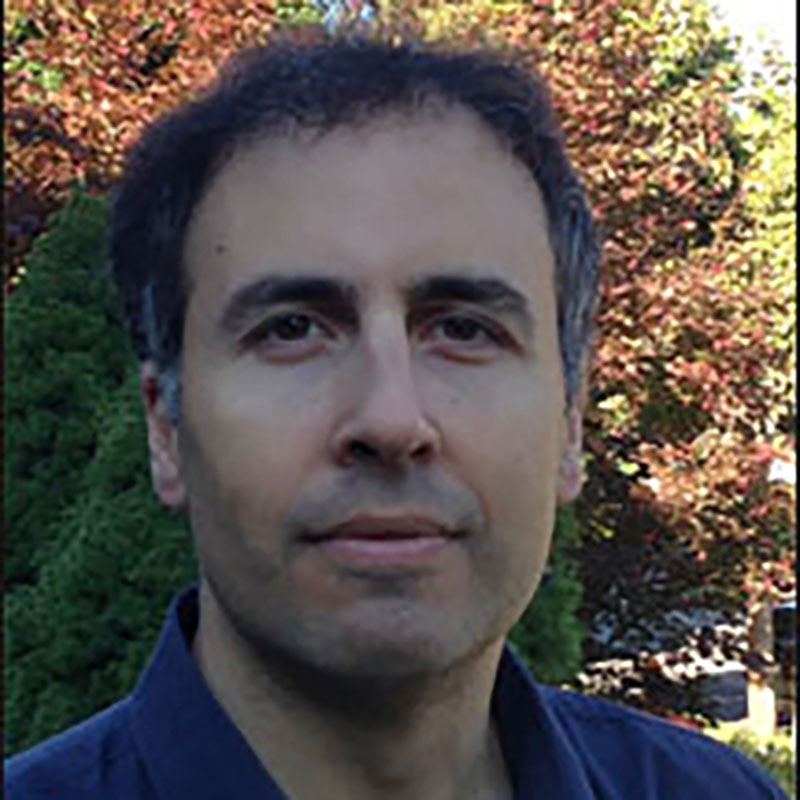
Christopher Genovese serves as Professor and Department Head of the Department of Statistics within Carnegie Mellon University's Dietrich College of Humanities and Social Sciences. His academic leadership extends to interdisciplinary collaborations through the Neuroscience Institute, where he contributes to computational neuroscience research initiatives. Dr. Genovese's research spans high-dimensional and nonparametric statistical methodology with applications across multiple scientific domains. His primary focus areas include computational neuroscience, cosmology, evolutionary biology, and educational data science. Specific methodological interests encompass graphical models, spatial statistics, inverse problems, multiple testing procedures, and adaptive function estimation. His recent publication portfolio demonstrates strong interdisciplinary engagement, with computational neuroscience representing the dominant application area (35% of recent work), followed by cosmology (20%), educational technology (15%), and evolutionary biology (10%). Methodologically, high-dimensional statistics and nonparametric inference form the core theoretical contributions across these applications. Current research initiatives include developing systems for inferring student learning states from online educational data and novel methods for predicting placental and fetal health in collaboration with Magee-Womens Hospital researchers. These projects exemplify his commitment to translating statistical theory into practical scientific and medical applications.
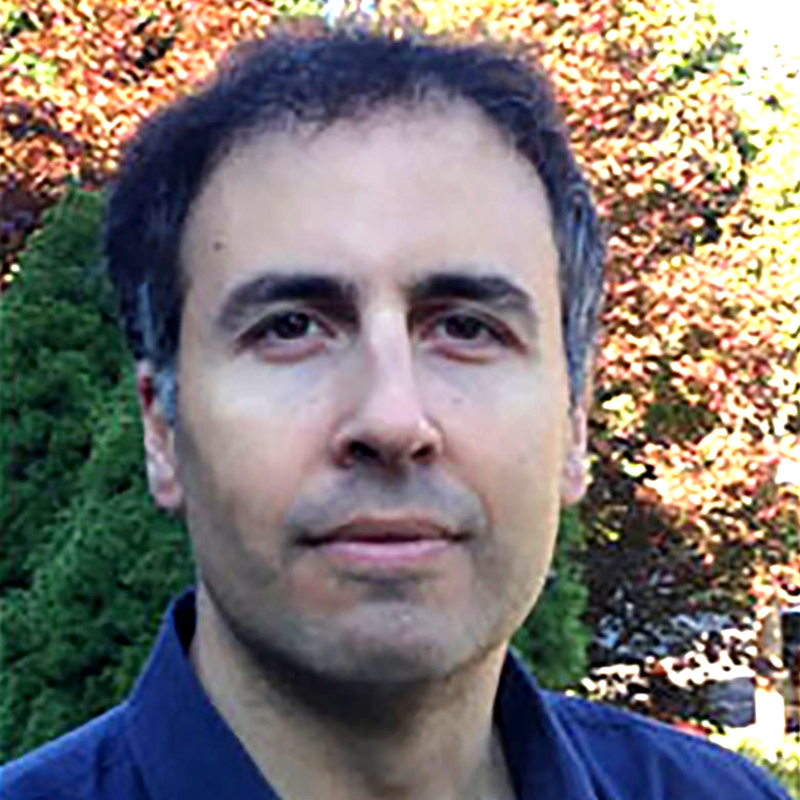
Chris Genovese serves as Professor and Chair of the Department of Statistics at Carnegie Mellon University within the Dietrich College of Humanities and Social Sciences. He earned his Ph.D. in statistics from the University of California, Berkeley in 1994 and has remained at Carnegie Mellon since then, rising to leadership of the department. His research program spans theoretical and applied statistics with emphasis on complex scientific problems: High-dimensional statistical methods Nonparametric inference techniques Graphical models and network analysis Computational neuroscience applications Cosmology and astronomical data analysis Genovese maintains active interdisciplinary collaborations across neuroscience, cosmology, astronomy, and evolutionary biology. His theoretical work focuses on confidence sets for nonparametric inference, adaptive function estimation, spatial statistics, inverse problems, and multiple testing procedures. Current projects include developing systems for inferring student learning states from online educational data and creating novel methods for predicting placental and fetal health in collaboration with Magee-Womens Hospital researchers. His research demonstrates the power of statistical methods to address challenging problems across diverse scientific domains.
Summary Ann B. Lee is a Professor in the Department of Statistics & Data Science and the Machine Learning Department at Carnegie Mellon University (CMU). She serves as Co-Director of the Ph.D. Program in Statistics. Previously, she was the J.W. Gibbs Assistant Professor at Yale University and a visiting researcher at Brown University. Her research focuses on developing statistical methods for complex data in physical sciences, including trust-worthy uncertainty quantification, likelihood-free inference, and applications in astronomy, climate science, and hurricane dynamics. Education: Ph.D. in Physics from Brown University (2002); M.Sc./B.Sc. in Engineering Physics from Chalmers University of Technology (Sweden). Key Research Interests: - Scientific Machine Learning - Uncertainty Quantification (UQ) - Likelihood-Free Inference - Tropical Cyclone Analysis - High-Dimensional Data Modeling She leads the STAMPS (STAtistical Methods for Physical Sciences) research group, which bridges classical statistics and machine learning. Recent work includes methods for estimating ocean thermal responses to hurricanes, probabilistic forecasting, and diagnostics for generative models. Her team collaborates with climate and astrophysics communities, hosting public webinars and symposia. Advising: Supervised over 15 PhD students, including graduates now in academia and industry. Current advisees include Luca Masserano and Alex Shen. Labs/Teams: Co-directs the STAMPS Research Center at CMU, launching in Fall 2024 as a university-wide initiative.
Ira Z. Rothstein is a Professor of Physics at Carnegie Mellon University's Department of Physics, Mellon College of Science. His academic journey includes a Ph.D. from the University of Maryland (1992) and an M.Sc. from Brown University (1987). He has held postdoctoral positions at the University of Michigan and UC San Diego before joining CMU in 1997. Professor Rothstein is a Fellow of the American Physical Society. His research focuses on applying Effective Field Theory (EFT) to diverse systems, including Higgs boson dynamics at the LHC, black hole physics (especially gravitational wave studies for LIGO), and quantum aspects of condensed matter systems like cold atomic gases and van Hove singularities in solids. Recent work includes calculating black hole spin effects on gravitational waveforms and exploring symmetry-driven phenomena in strongly coupled systems. Rothstein’s publications span high-impact journals like Physical Review Letters , Nuclear Physics B , and Journal of High Energy Physics . His work bridges quantum field theory with classical gravitational phenomena, emphasizing multi-scale problems and decoupling principles rooted in locality. He has developed novel EFT frameworks to address challenges in particle physics, astrophysics, and condensed matter physics. Key contributions include advancing methods for gravitational wave calculations, understanding non-Fermi liquid behavior in unitary gases, and probing quarkonium production via jet substructure analysis. His theoretical tools have been applied to dark matter annihilation rates and the interplay between scattering amplitudes and classical potentials in post-Minkowskian gravity.
Fatma Kilinc-Karzan is a Professor of Operations Research at the Tepper School of Business, Carnegie Mellon University, and holds the Frank A. and Helen E. Risch Faculty Development Chair. She is also an Associate Professor of Computer Science (by courtesy) and affiliated with the Algorithms, Combinatorics, and Optimization (ACO) PhD Program. Her career includes visiting roles at institutions like the Simons Institute at UC Berkeley and extensive professional service on editorial boards and conference committees. PhD in Industrial and Systems Engineering (minor in Mathematics) from Georgia Institute of Technology B.S. and M.S. in Industrial Engineering (minor in Information Systems) from Middle East Technical University Research Interests : Her work focuses on convex optimization , structured nonconvex optimization , and their applications in optimization under uncertainty (robust optimization, chance constraints), machine learning (preference learning from limited data), and business analytics . She explores theoretical aspects like semidefinite programming (SDP) relaxations, convex hull characterizations, and algorithmic efficiency for large-scale problems. Article Trends : Her recent publications emphasize semidefinite programs , rank-one function optimization , and chance-constrained programming with applications in portfolio optimization , healthcare , and recommender systems . Key methodologies include perspective reformulation , submodularity , and first-order algorithms . Scientific Awards : 2015 INFORMS Optimization Society Prize for Young Researchers 2014 INFORMS JFIG Best Paper Award Advising and Grants : She has advised over a dozen PhD students, many of whom won awards like the INFORMS Optimization Society Best Student Paper Prize. Her research is supported by grants including an NSF CAREER Award , ONR grant , and AFOSR grant . She collaborates with institutions like IBM and the Simons Institute.
John Kitchin is a Professor of Chemical Engineering at Carnegie Mellon University, affiliated with the College of Engineering. He leads the Kitchin Research Group, focusing on catalysis, energy systems, and the integration of machine learning into scientific discovery. His work bridges computational modeling and experimental validation, with contributions to surrogate models, materials development, and self-driving laboratories. Education: B.S. Chemistry (NCSU), M.S./Ph.D. Chemical Engineering (University of Delaware). Postdoctoral fellowship at the Fritz Haber Institute (Berlin). Tenure-track faculty since 2006. Research interests include catalyst design, energy storage, molecular simulation, and AI-driven experimentation. Key projects involve optimizing hydrogen infrastructure and accelerating discovery via graph neural networks and surrogate modeling. Awards include DOE Early Career Award (2010), Presidential Early Career Award (2011), and AIChE Innovation Award (2023). He holds the John E. Swearingen Professorship and has authored over 100 peer-reviewed articles. Labs/Teams: Kitchin Research Group, collaborating with industry and academia on materials and energy projects. Develops open-source tools like litdb and Claude-Light for scientific automation.
Yuejie Chi is the Sense of Wonder Group Endowed Professor of Electrical and Computer Engineering in AI Systems at Carnegie Mellon University, with affiliations in the Machine Learning Department and CyLab. She holds a Ph.D. from Princeton University and a B.Eng. (Hon.) from Tsinghua University. Her research focuses on theoretical foundations of data science, machine learning, signal processing, and inverse problems, with applications in sensing, imaging, and AI systems. Her work emphasizes interdisciplinary approaches at the intersection of statistics, optimization, and sensing. Notable achievements include contributions to high-dimensional structured signal processing, for which she received the inaugural IEEE Signal Processing Society Early Career Technical Achievement Award (2019) and the PECASE (2019). She is an IEEE Fellow (2023) and has been recognized as a Goldsmith Lecturer (2021) and Distinguished Lecturer (2022). Research interests include generative AI, reinforcement learning, nonconvex optimization, federated learning, and resource-efficient algorithms. Her group collaborates on projects such as data-driven materials research and agile waveform design for communication networks. She has advised numerous PhD students, many of whom have pursued academic and industry roles in leading institutions. Awards include the SIAM Activity Group on Imaging Science Best Paper Prize (2024), NSF/ONR/AFOSR young investigator awards, and leadership roles in top conferences like NeurIPS, ICML, and IEEE workshops.
Ann Lee is a Professor and Co-Director of the Ph.D. Program in the Department of Statistics & Data Science at Carnegie Mellon University, with a joint appointment in the Machine Learning Department. She has been at CMU since 2005, after serving as the J.W. Gibbs Assistant Professor of Applied Mathematics at Yale University. Her academic journey began with a PhD in Physics from Brown University in 2002, preceded by BSc and MSc degrees in Engineering Physics from Chalmers University of Technology in Sweden. Dr. Lee's educational background includes: PhD in Physics, Brown University MSc/BSc in Engineering Physics, Chalmers University of Technology, Sweden Her research focuses on developing statistical methodology for complex data and problems in the physical sciences, with particular emphasis on trust-worthy scientific inference and reliable uncertainty quantification. She works at the intersection of classical statistics and machine learning, developing methods for simulation-based inference and experimental design. Dr. Lee is especially interested in likelihood-free inference, calibrated probabilistic forecasting, and interpretable diagnostics of generative models, with applications in astronomy and hurricane intensity guidance involving satellite imagery and large surveys. Dr. Lee co-founded the STAMPS (STAtistical Methods for the Physical Sciences) research group with Mikael Kuusela in 2018, which is transitioning to a CMU Research Center in Fall 2024. The group hosts public colloquia-style webinars and weekly research meetings for students and faculty at CMU and UPitt. Her notable scientific contributions have been recognized through: Her paper "Detecting Distributional Differences in Labeled Sequence Data with Application to Tropical Cyclone Satellite Imagery" being selected for The Best of AOAS session at the 2023 Joint Statistical Meeting Her student Luca Masserano winning the ASA Best Student Paper Award at the 2023 Joint Statistical Meeting Her student Alex Shen winning a Poster Award at the Machine Learning and the Physical Sciences Workshop, NeurIPS 2023 Dr. Lee has advised numerous PhD students to completion, with research spanning statistical machine learning, high-dimensional statistics, and applications in physical sciences. She has secured research funding supporting her work on statistical methods for physical sciences and has collaborated extensively with researchers across disciplines. Her current research projects focus on advancing likelihood-free inference methods and applying them to challenging problems in climate science and astronomy. She leads the STAMPS research group, which is becoming a CMU Research Center in Fall 2024, and organizes workshops including the PHYSTAT-SBI workshop on "Simulation Based Inference in Fundamental Physics" and the Hammers & Nails workshop on "Frontiers in Machine Learning in Cosmology, Astro & Particle Physics."